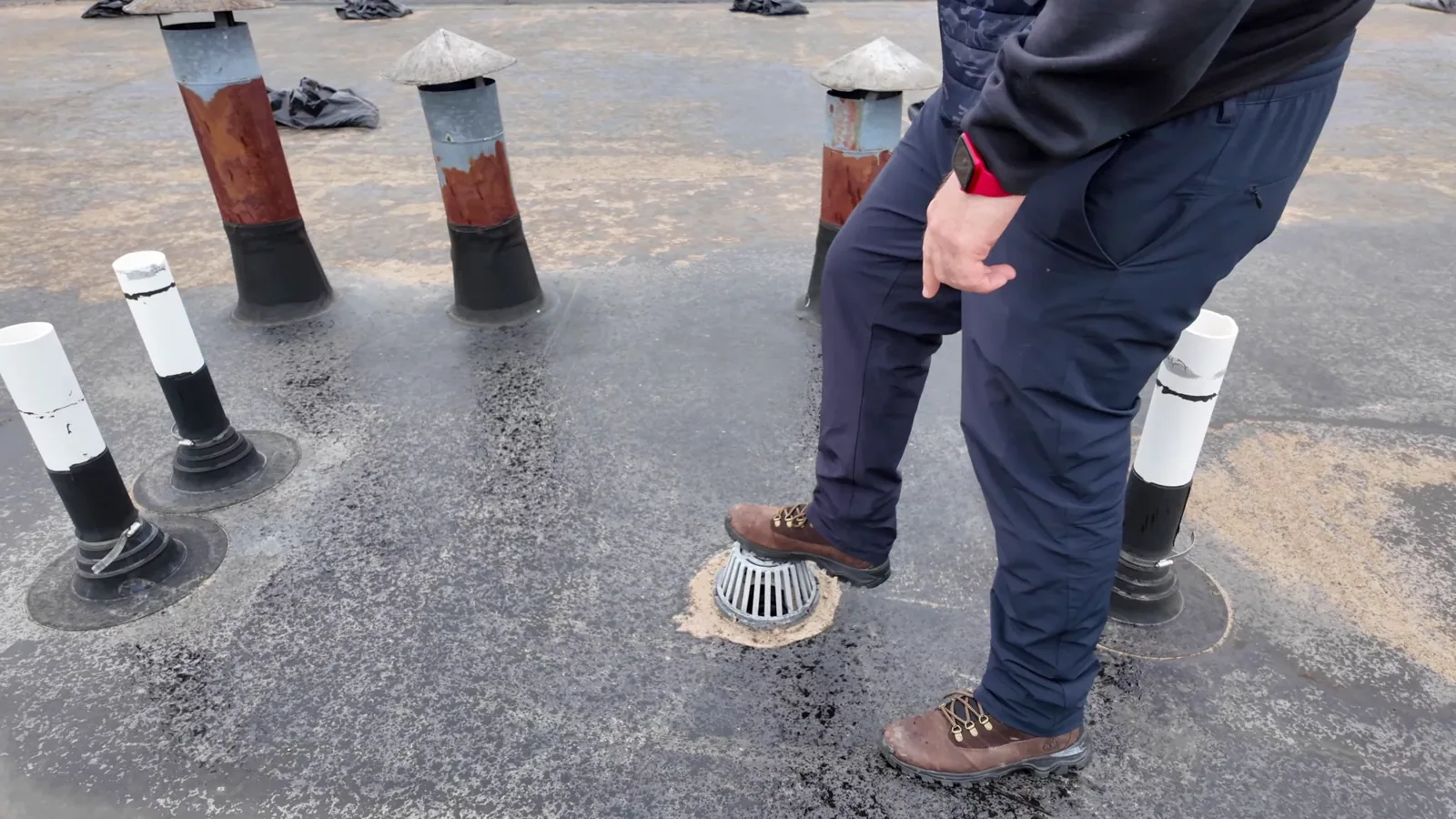
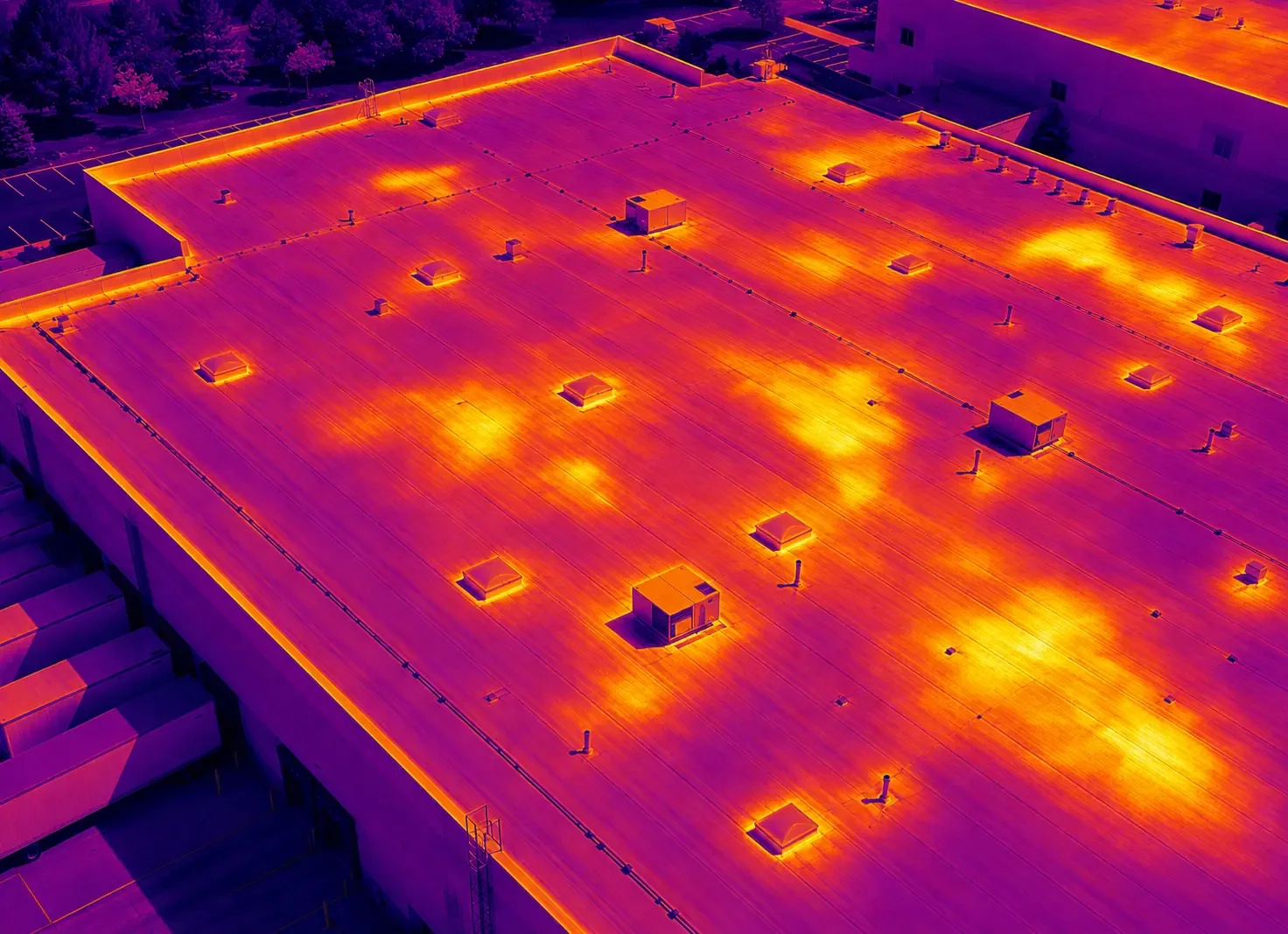
A roof field above stored goods can heat rapidly in summer while shaded areas around vents and equipment respond differently, concentrating movement at their connections. Warehouse roofing in Irving, TX, examines those material relationships with attention to the inventory and circulation below. Commercial Roofing Irving assesses seams, drainage and concealed layers before selecting repair or replacement work that can be sequenced with warehouse operations.
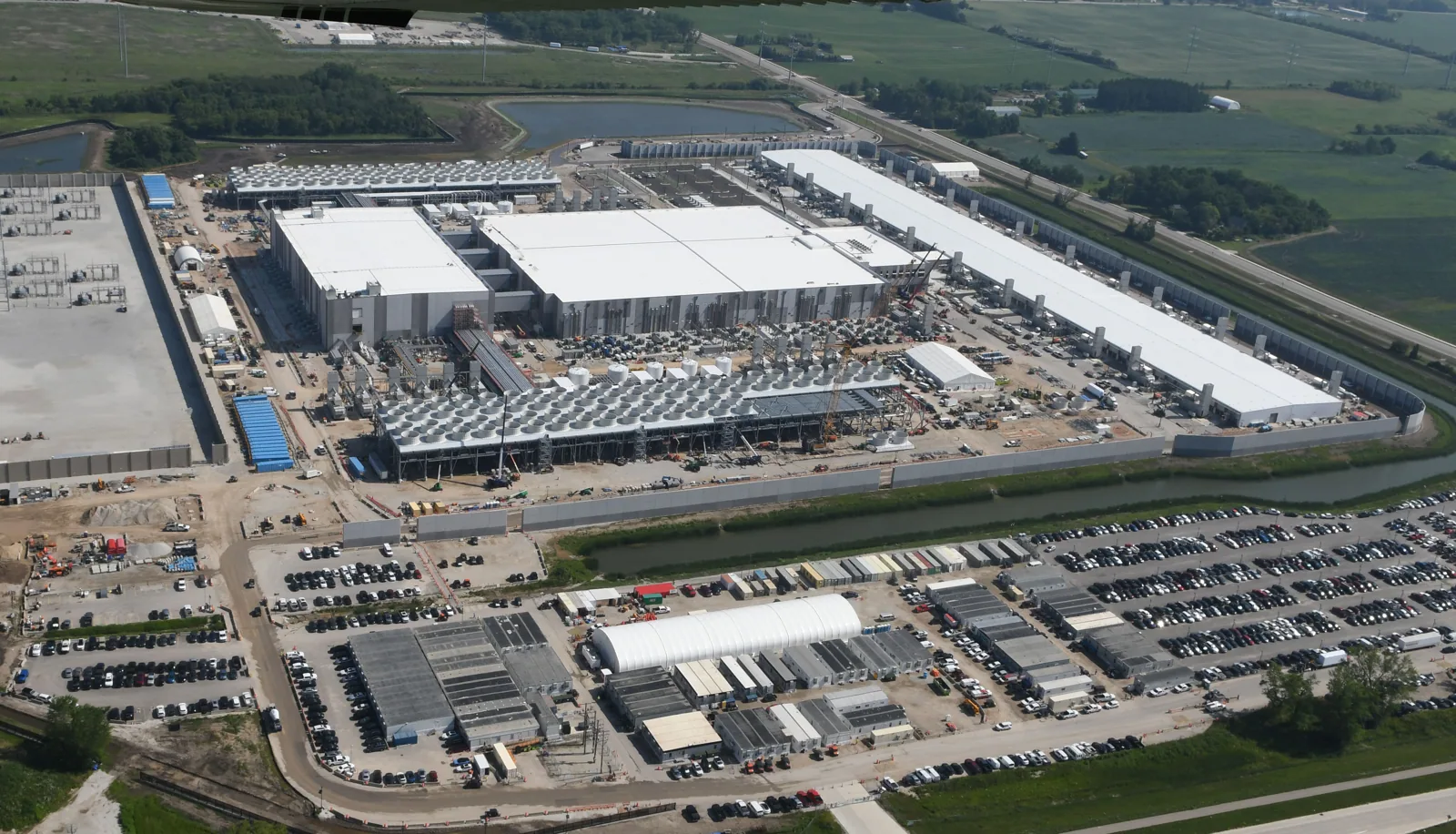
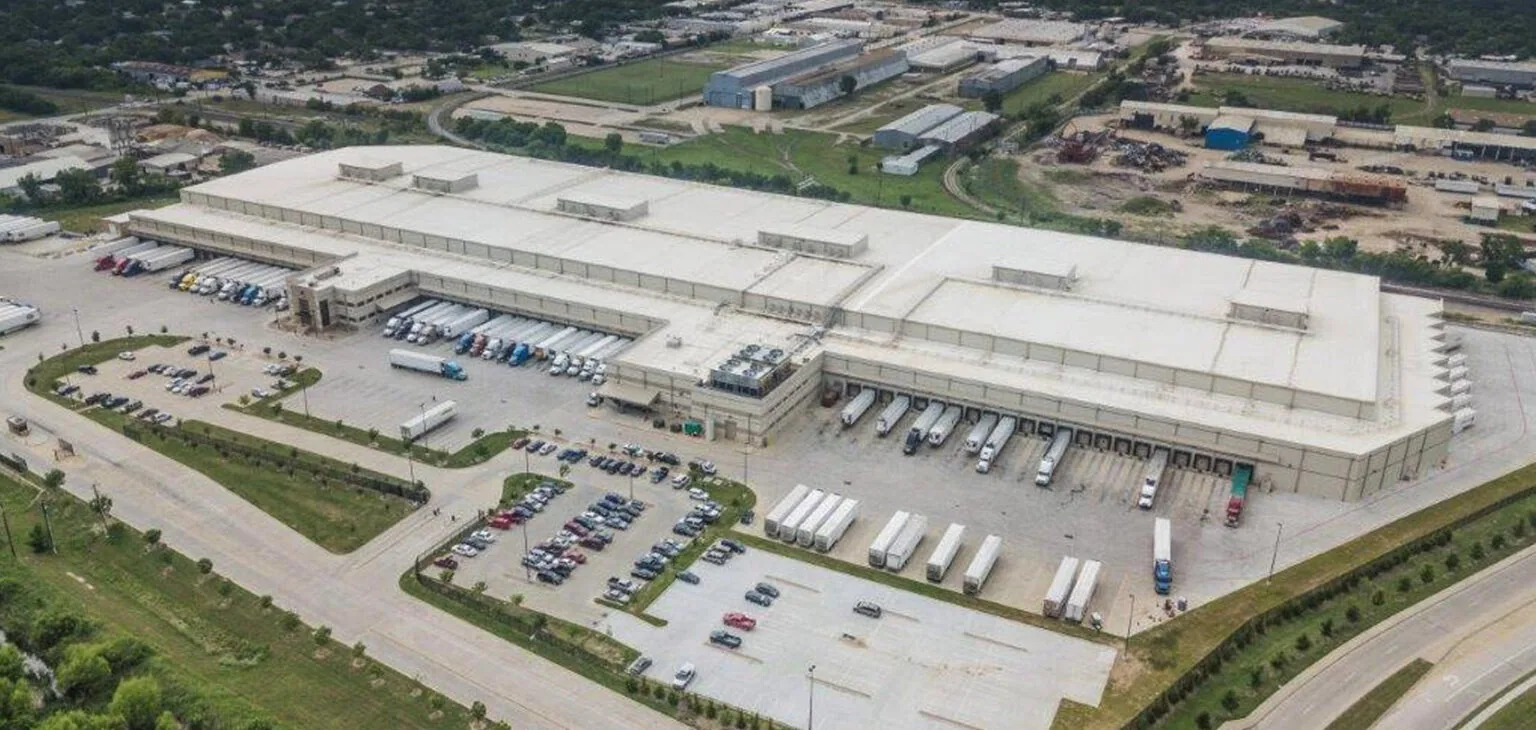
Nearby Grand Prairie has an established distribution role with warehouse and manufacturing buildings supported by interstate and rail access. Coppell's commercial inventory also includes warehouses. Those regional settings provide different access and staging needs for work serving the Irving area, while the actual roof assembly determines the construction method. Hot Dallas/Fort Worth summers and seasonal rain are considered alongside the building's storage conditions and equipment use.
A property used as a distribution center can require coordination with more frequent loading activity, while cold-storage roofing introduces a different temperature and moisture comparison through the assembly. We establish the actual use and operating conditions before planning those investigations. The roof scope then identifies which material and access questions arise from the warehouse's particular operation, rather than assigning identical details to every storage building.
Which roof areas sit above the most sensitive storage?
Inventory location affects the consequence of water entry and the protection needed during roof work. We relate interior storage and circulation to drains, penetrations and proposed removal areas, identifying where the manager needs to move or protect goods. Rack layouts and handling routes can also affect access for interior examination. Those operating details help establish work priorities without replacing the condition assessment required on the roof itself.
Warehouse leak tracing compares reported water locations with roof slope, deck direction and equipment above. Water can travel through concealed layers before reaching an aisle or storage position. We examine those paths and distinguish rainfall entry from another building-system issue where the observations warrant it. Active water threatening goods or energized equipment requires prompt protection, with emergency roof response available throughout the day and night.
How do seams and support change across the warehouse roof?
A large field can contain different roof sections, earlier repairs and variations in insulation or deck construction. We examine those changes rather than assuming a uniform covering means the assembly below is identical. A seam under tension near a vent may need detail correction, while a puncture along a service route can call for a contained patch. The investigation identifies suitable repair boundaries and any support deterioration that would prevent the connection from remaining dependable.
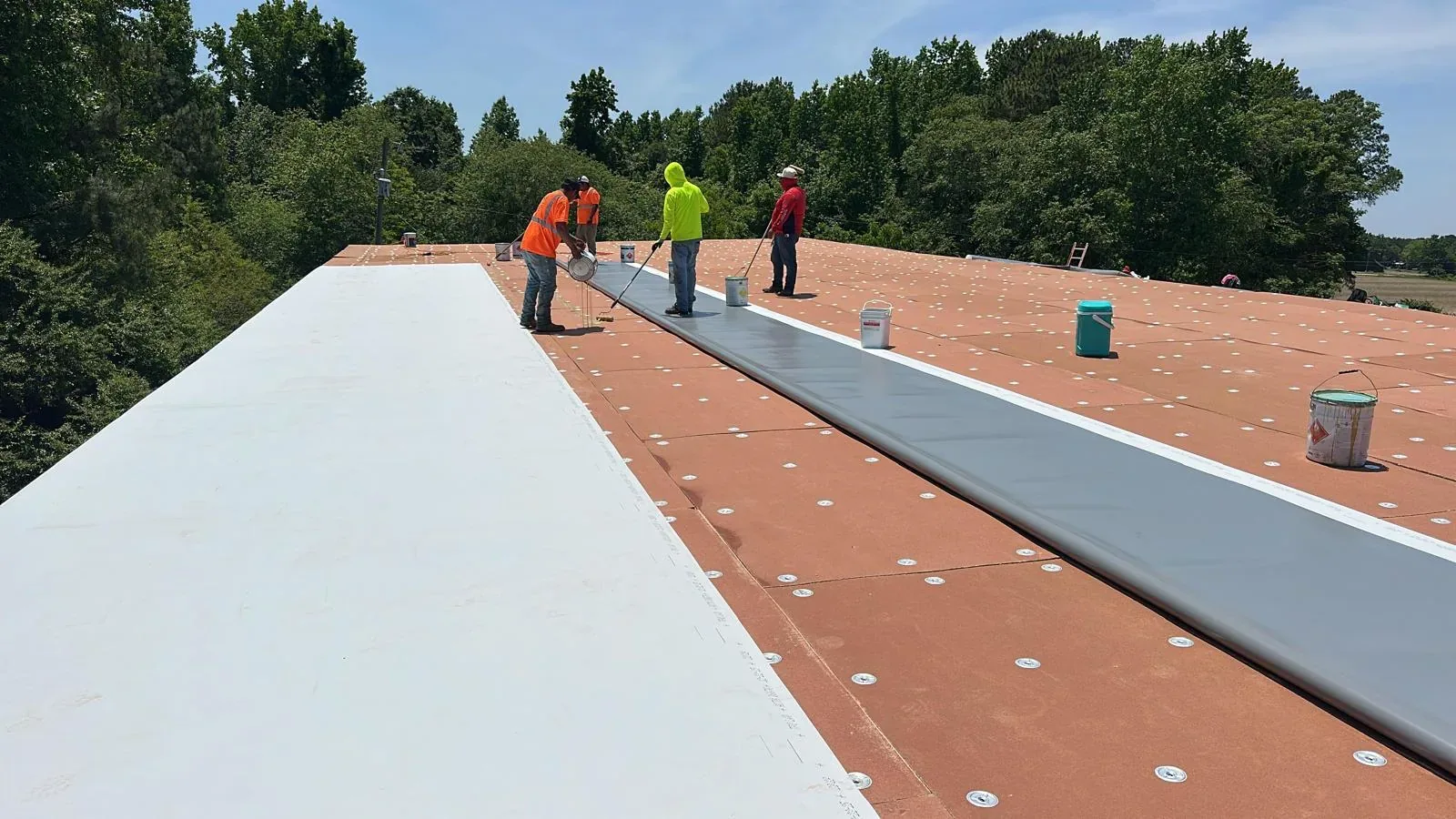
For TPO warehouse assemblies, welded laps and transitions are examined with attachment and substrate condition. Other membranes and metal coverings require their own repair methods. We identify the system before selecting compatible materials, including preparation at earlier patches. The roof's size does not make one method appropriate everywhere; each boundary must join material capable of supporting the correction and accommodate movement at the adjoining details.
Can the outlets receive runoff from the full field?
Drains and scuppers need clear approach routes as well as usable openings. Equipment curbs, walkways and later additions can interrupt flow across a warehouse field, leaving water retained away from the nearest outlet. We examine elevations and retained-water evidence before selecting a slope correction. Warehouse drainage work distinguishes clearing debris from rebuilding a drain connection or adjusting the assembly geometry.
Wet or compressed insulation can also create a depression, which needs assessment below the covering before more material is added above it. An infrared moisture investigation may help direct confirmation where the assembly and weather allow useful contrast. The findings establish whether removal should be contained or extend across a connected wet area. Drainage and moisture boundaries are compared together so the repair restores suitable support and a workable runoff path.
Where does equipment service create concentrated exposure?
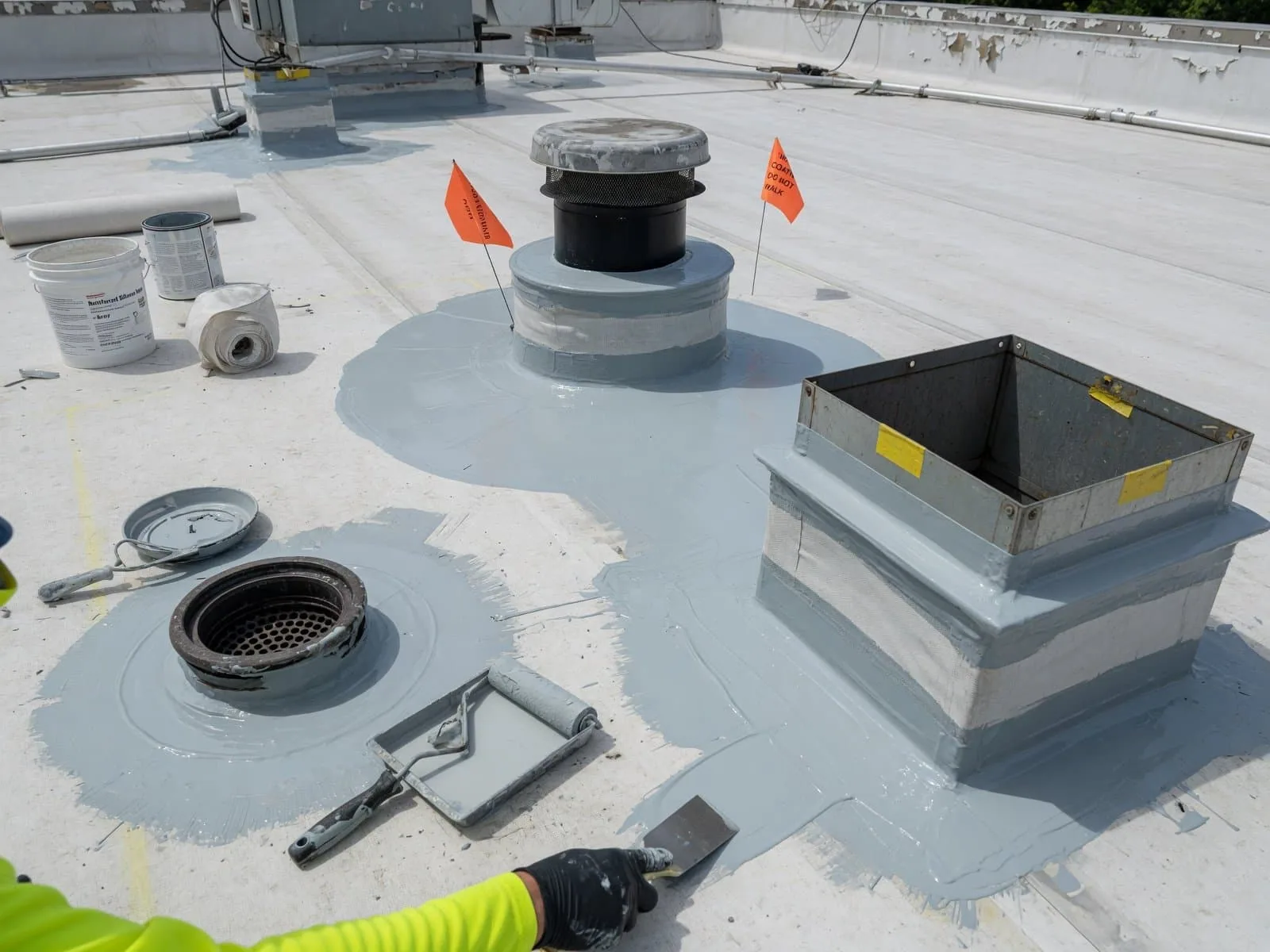
Ventilation units, pipe supports and access routes can concentrate traffic and material contact above a warehouse. We examine abrasion, punctures and displaced supports near those locations, then coordinate correction of the damaging condition as well as membrane repair. Suitable walkways should protect the covering without blocking runoff. Equipment service may also leave tools or loose components that require removal before they injure the roof or obstruct an outlet.
Equipment curb and support assessment identifies whether a connection needs lifting, disconnection or support redesign to be rebuilt correctly. The roof scope explains those interfaces before the work reaches them. Mechanical and structural requirements are coordinated where the proposed change affects load transfer or service operation. A visible seal around a curb does not settle the condition of its concealed upper termination or the support beneath the equipment.
How can removal be coordinated with loading and storage?
Material delivery, demolition and lifting need staging that remains separate from occupied loading routes. We identify the warehouse's operating windows and the roof areas that can be opened and closed under suitable conditions. Phased warehouse reroofing accounts for interior protection, drainage and concealed substrate work rather than selecting a daily area from production targets alone. The building manager is informed when findings change the reconstruction needs above stored goods.
For Grand Prairie warehouse properties, interstate and rail-supported distribution activity makes loading coordination a useful part of the planning, without establishing a particular building's schedule. We assess the actual access and equipment needs with the manager. Cost follows removal, wet-layer reconstruction, attachment, detail complexity and staging constraints. The comparison separates those work items so a contained repair and a larger roof project can be evaluated on the condition each would address.
Completed sections are examined at seams, outlets and connections to retained roofing, with suitable protection preserved while later phases continue. Maintenance needs include drain access, service routes and observation of repaired transitions. We provide located findings so future equipment work and roof care can distinguish the reconstructed areas from retained material and use compatible repair methods if another injury develops.
Commercial Roofing Questions
Can inventory remain below the section being reroofed?
The deck, removal method and interior exposure need assessment with the manager. Some storage areas may require movement or protection while others can remain outside the affected zone. We identify those limits before opening the roof and adjust them if concealed findings change the work. The plan follows the actual construction and stored material needs rather than assuming every warehouse bay can remain unchanged.
Will repairing the leak above one aisle stop water in another?
The entries and concealed water paths must be examined separately. A connected wet area may cross storage positions, while different details can create independent leaks. We compare reported timing and locations with the roof geometry, then establish the repair and moisture boundaries. The scope should explain that relationship rather than treating the nearest visible opening as the cause of every interior report.
Can roof work share our normal delivery route?
Staging and loading activity need coordination for safe material movement. Demolition, lifting or debris handling may require separation from ordinary deliveries during particular phases. We assess the available route and operating window with the manager before scheduling those activities. The roof sequence also needs suitable closure time, so a convenient delivery gap is compared with the work required above it.
What finding would expand a warehouse repair into replacement?
Widespread wet insulation, unstable attachment or unsuitable retained material can make contained reconstruction impractical. We establish the extent and compare sectional or broader replacement with repair. The recommendation identifies the affected layers and connections rather than relying on roof size or age alone. Operational constraints are then considered within the assembly option that corrects the actual deterioration.
Ready to review the roof scope?
Request a Roof Assessment