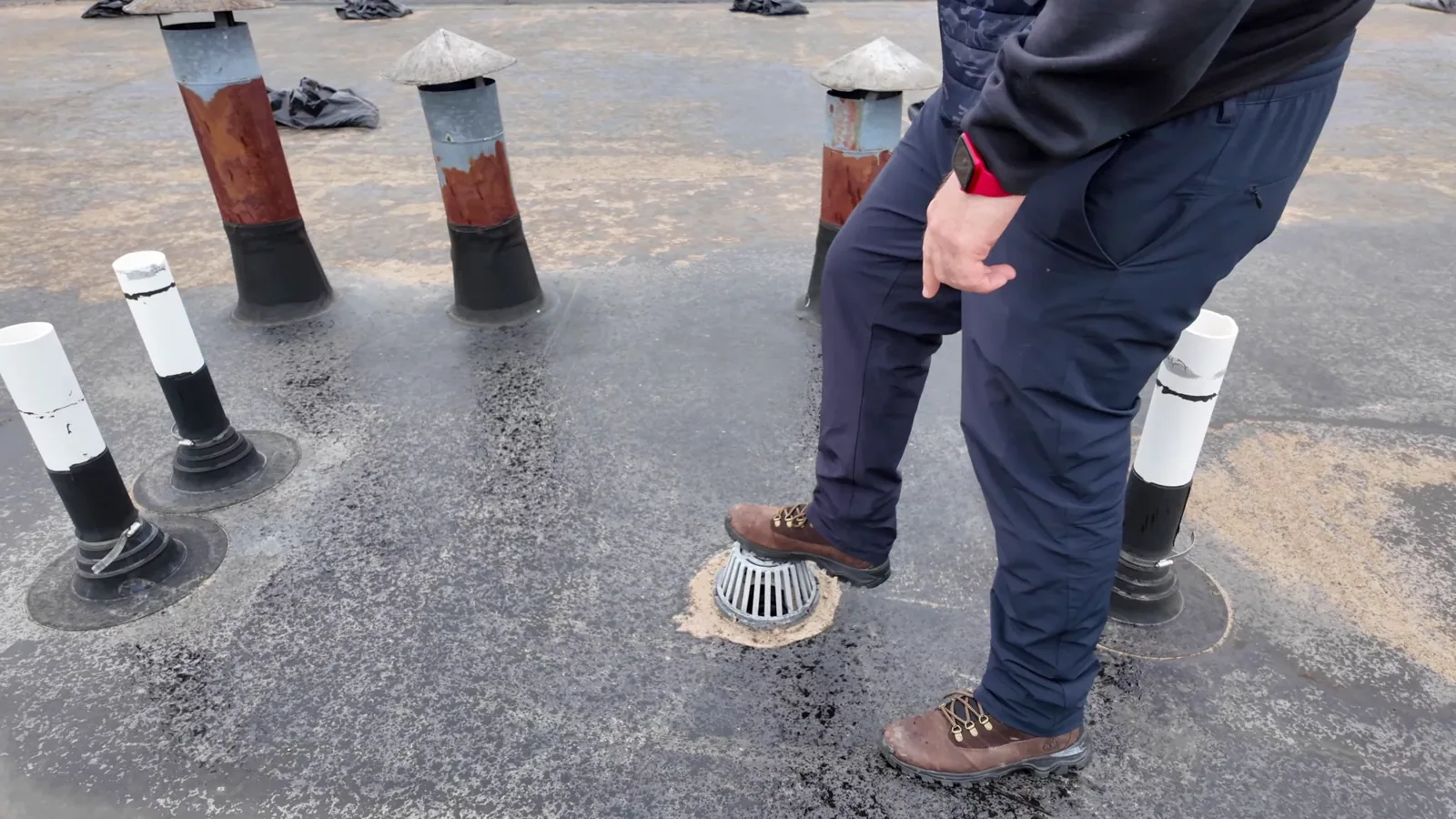
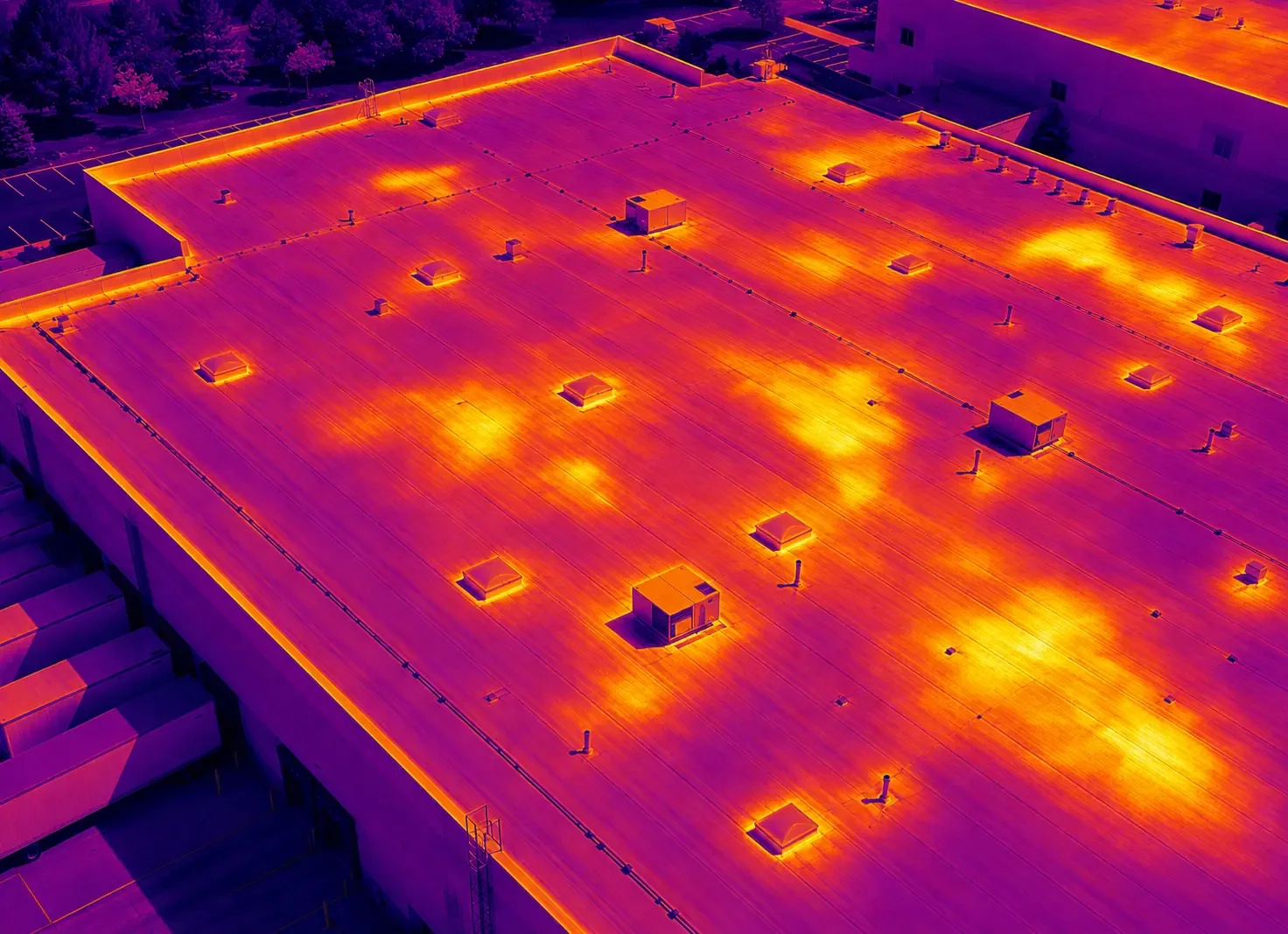
A storm can leave scattered membrane damage and displaced perimeter metal across separate roof levels, making the distribution of the injuries useful before close examination begins. Drone roof imaging in Irving, TX, provides that broader visual relationship when flight conditions and access permit. Commercial Roofing Irving uses the images to locate visible changes and plan the direct examination needed for a repair decision.
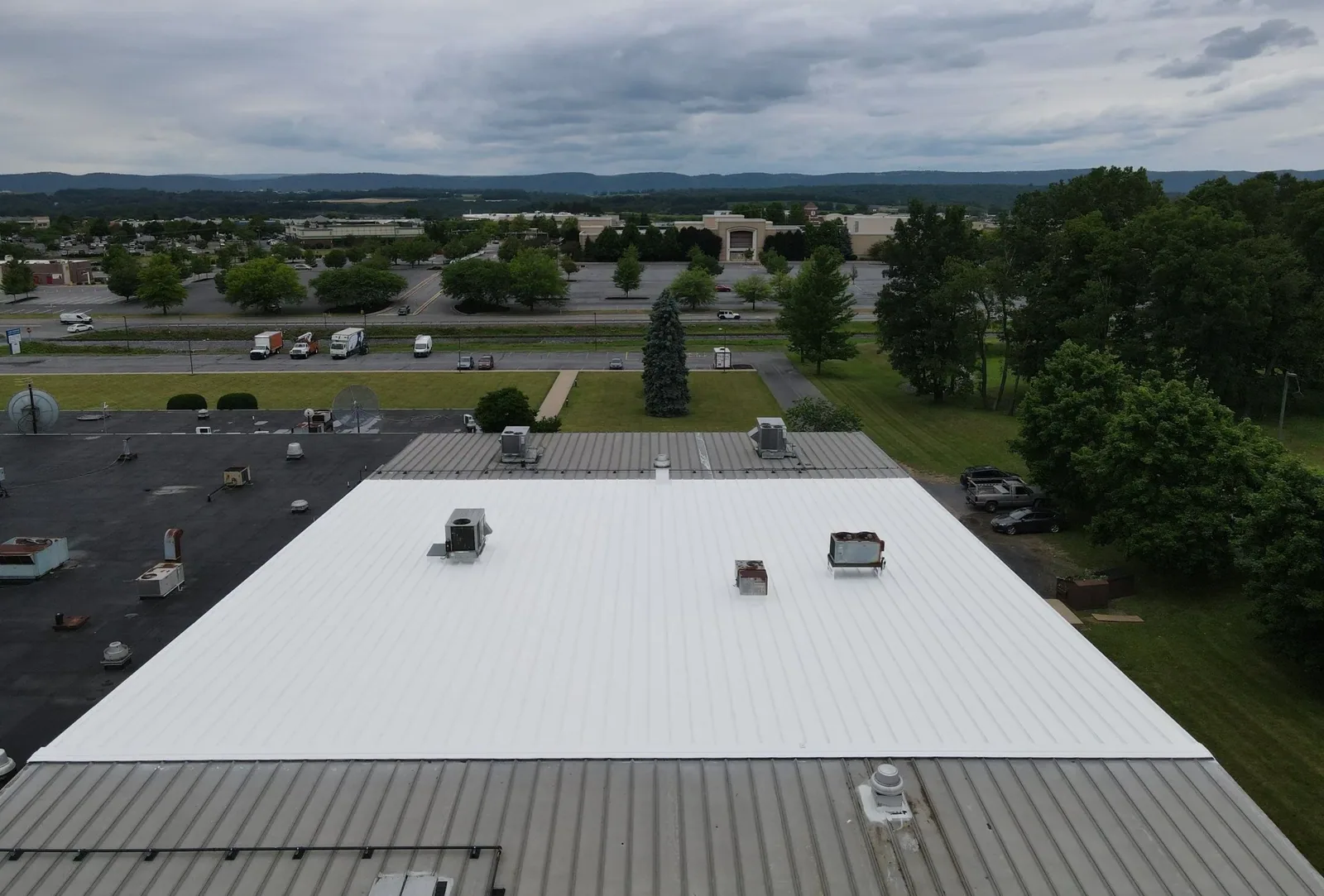
The Metroplex experiences damaging wind and hail, but the useful evidence is what can be observed on the particular property. Corporate office complexes are part of Irving's building stock, and Las Colinas Urban Center combines office space with other occupied uses. Aerial imaging can show how roof sections connect above those operations, helping us distinguish a widespread visual pattern from a localized detail that needs hands-on attention.
Which questions can an aerial view answer?
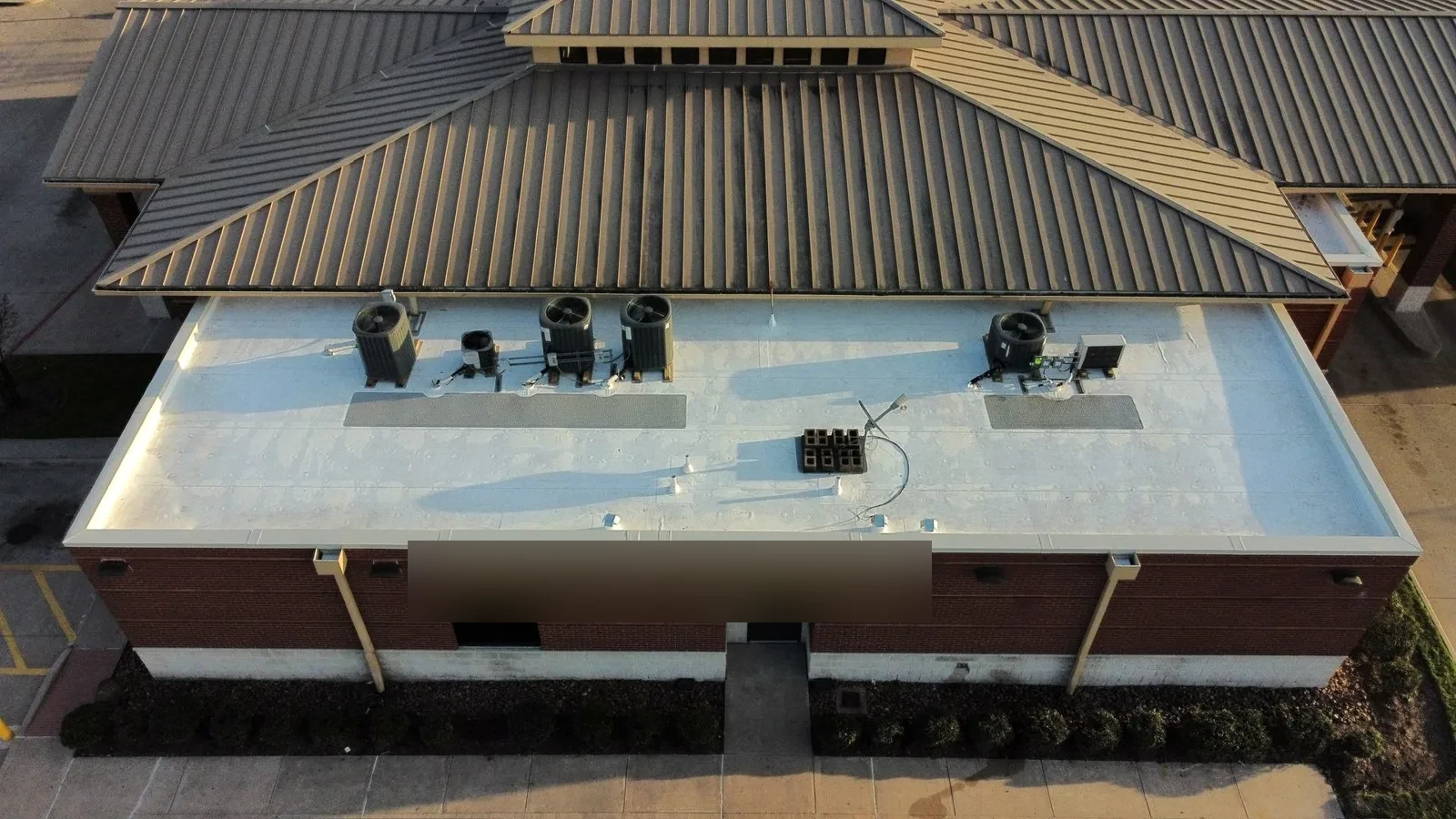
Images can show displaced components, debris concentrations, obvious openings and differences between roof sections. An overhead view also helps relate equipment, drains and perimeter details to the visible damage. We choose image positions for those questions rather than collecting the same distant view of every surface. A roof with several levels may need oblique views of transitions as well as field images to make the connections understandable.
For wind-related damage assessment, the distribution of lifted or displaced material helps identify areas requiring direct examination of attachment. The image cannot establish fastener pullout resistance or the strength of a concealed bond. We use those visual findings to plan hands-on roof checks, where suitable access allows the material and connection to be examined. The result is a clearer investigation sequence rather than an aerial verdict on every layer.
How close must the images be to support a repair choice?
A broad image can show that a roof section differs from its neighbors while leaving the defect itself unresolved. Smaller splits, seam openings and flashing corners may require closer views or direct access. We consider image resolution, camera angle and shadows when interpreting an apparent defect. A dark line may represent a joint, accumulated dirt or an opening, and its classification changes the next inspection step.
Perimeter and curb details are particularly sensitive to viewing angle. The top of a termination can appear intact while a concealed connection below it has separated. A flashing investigation therefore combines useful images with examination of the connection where access permits. We identify the location and the question to resolve rather than using visual enlargement to imply a material measurement that was not made. That distinction keeps the repair scope tied to observable and examinable conditions.
Glare from a reflective membrane can hide detail that becomes visible from another direction, while deep shadows can obscure the base of a curb. We plan overlapping views where those conditions matter and retain enough surrounding roof geometry to locate the defect. A tightly cropped image without a usable location can make follow-up slower, even when it shows the material clearly. The viewing sequence therefore needs both context and detail.
What can the water pattern reveal?
Water staining, debris lines and retained runoff can help show where drainage is interrupted. An overhead view relates those patterns to curbs, roof levels and outlet locations, which can be harder to interpret from one walking position. We compare the image timing with recent rainfall and surface conditions. A dry roof may still show a drainage history, while water present during imaging can reveal a current restriction requiring safe direct examination.
The Dallas/Fort Worth regional climate has wetter spring and fall periods, so images taken for drainage assessment should be interpreted with their actual weather context. We examine whether drain and scupper work needs debris clearing, connection repair or an elevation change. Images help locate the issue, but drain clamping and concealed plumbing require closer checks. A proposed correction should explain how the water will reach and leave the outlet after the work.
Does aerial imaging also find wet insulation?
Ordinary visible-light images show the surface, not concealed moisture. Thermal imaging is a separate method requiring suitable equipment, weather and interpretation for the roof assembly. An infrared moisture survey examines temperature patterns that may indicate areas for direct confirmation. It should not be substituted with a color difference in a normal photograph, nor should a thermal pattern be treated as a moisture measurement without investigation.
We select the method according to the decision. Visible imaging may help locate a displaced sheet or damaged metal, while thermal work can help map suspect areas in an assembly suitable for that approach. Selective openings or other direct checks establish the material condition where concealment remains. The combined findings can then support a repair footprint or replacement comparison without suggesting that one flight measured every concealed roof component.
What controls flight timing and useful coverage?
Wind, precipitation, lighting, nearby obstacles and applicable airspace requirements affect whether useful imaging can proceed. We assess those conditions before planning coverage and explain areas that may require another access method. A roof emergency can involve the same wind or rain that restricts a flight, so immediate protection is planned according to safe working options rather than waiting for an image that conditions do not support.
For Las Colinas Urban Center roof assessments, we coordinate with the property manager regarding people, entrances and operations around the planned imaging area. Equipment, roof levels and surrounding structures influence viewing positions. The assessment cost follows the coverage needed, flight constraints and the amount of direct follow-up required. We distinguish a visual roof overview from detailed condition evaluation so the owner knows which questions the chosen scope is intended to resolve.
The finished images are related to roof locations and findings that support action. We identify visible defects needing access, drainage patterns requiring examination and areas that remain unresolved. Keeping that relationship clear lets the manager coordinate repairs or further investigation without having to infer the work scope from a collection of photographs.
Commercial Roofing Questions
Can you fly immediately after wind damage is reported?
Safe flight conditions and applicable airspace requirements control the timing. Continuing gusts, rain or nearby hazards may require postponing imaging while other safe assessment or protection proceeds. We evaluate the conditions and explain the useful alternative. Once imaging is practical, it can help map damage that was inaccessible or only partly visible during the initial response.
Will drone images show whether a seam is securely welded?
A visible opening may appear in a suitable close view, but weld strength needs direct assessment. Shadows, dirt and viewing angle can also resemble a seam defect in a photograph. We use the image to identify a location for examination, then assess the material and connection where access permits. A repair recommendation should distinguish the visual indication from the finding made on the roof.
Can imaging help compare several roof sections for budgeting?
Separate roof sections can be mapped with their visible condition and access needs, which helps organize a larger assessment. Repair or replacement budgeting still requires examination of assembly condition, drainage and concealed materials where relevant. We relate the images to those findings so a visibly uniform field is not assumed to have uniform insulation or attachment below it.
What happens if part of the roof cannot be imaged clearly?
We identify the obscured area and the condition that prevented a useful view. Equipment, adjacent structures or an unsuitable camera angle may require walking access or another position under safe conditions. The remaining question is stated with the next examination needed. Unclear images should lead to targeted follow-up rather than an unsupported conclusion that the concealed detail is serviceable.
Ready to review the roof scope?
Request a Roof Assessment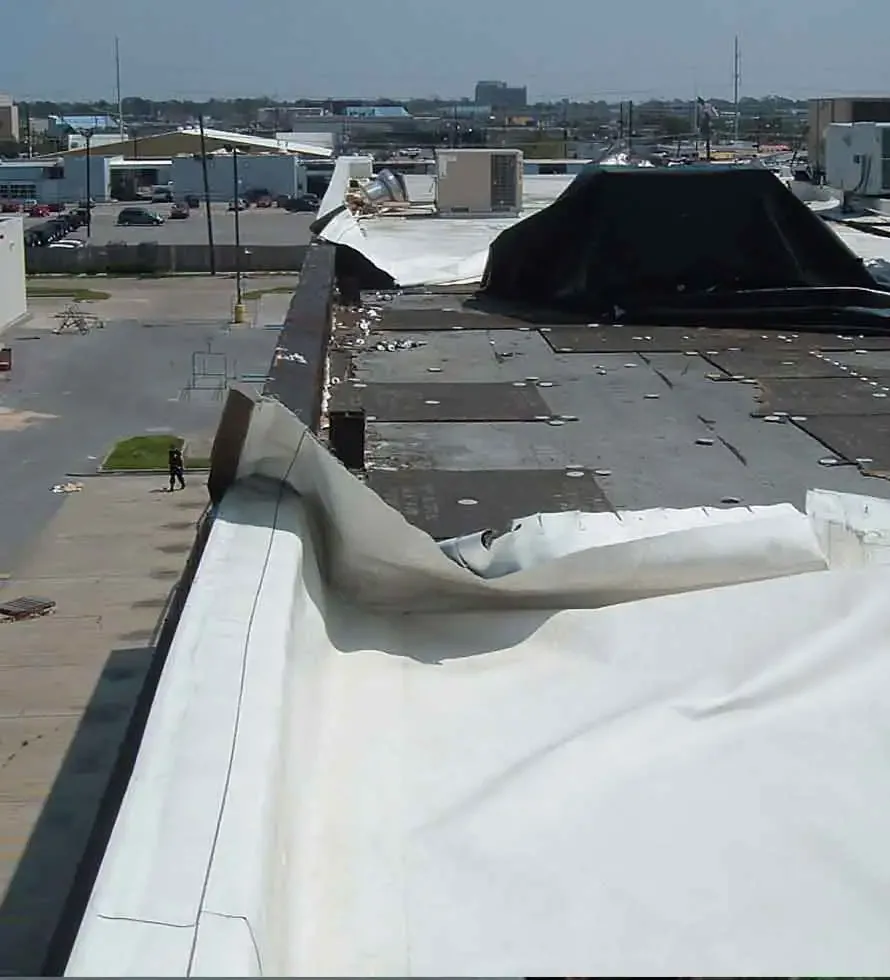
Commercial Roof Flashing Failure Repair
See scope, options and what to expect on the roof.