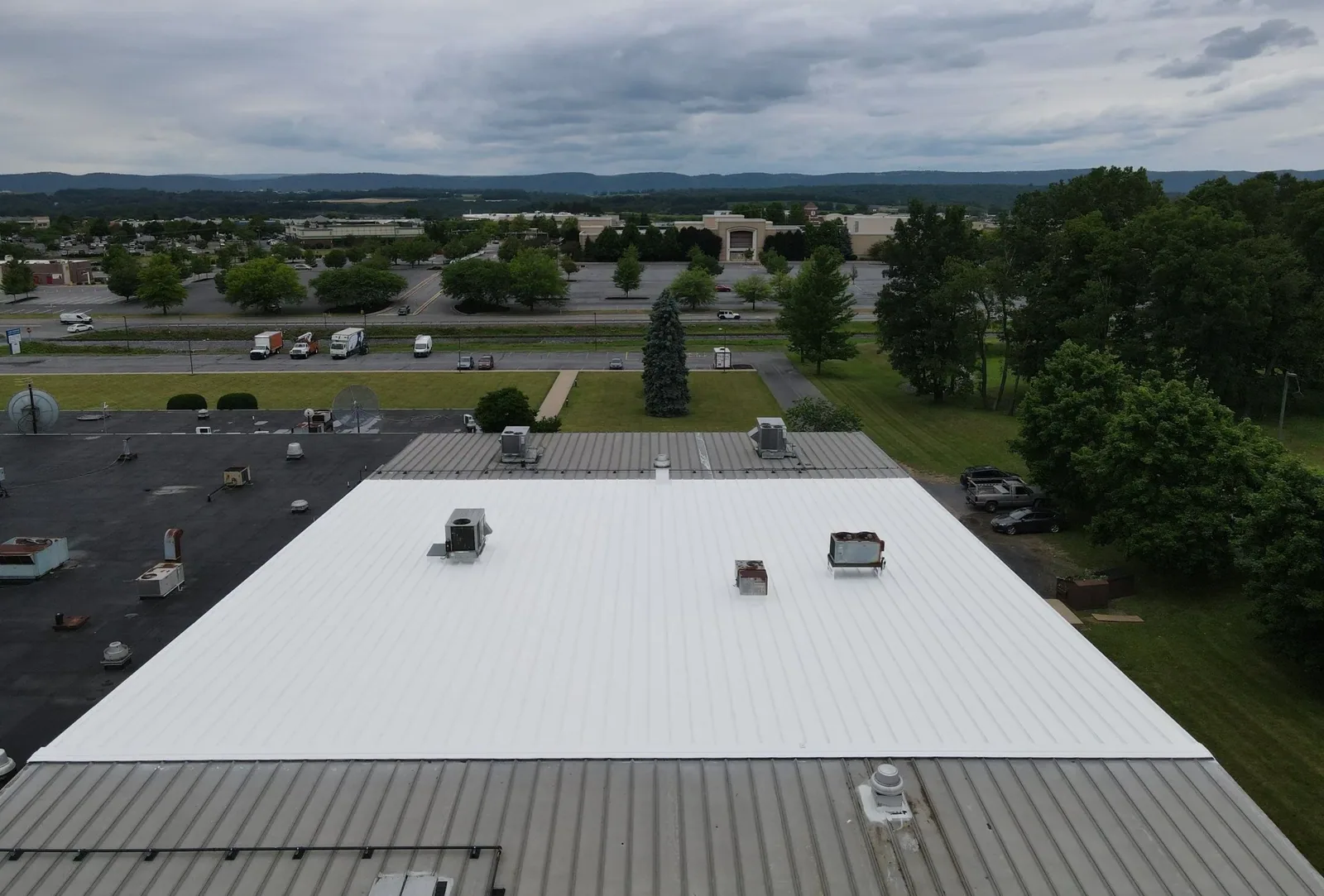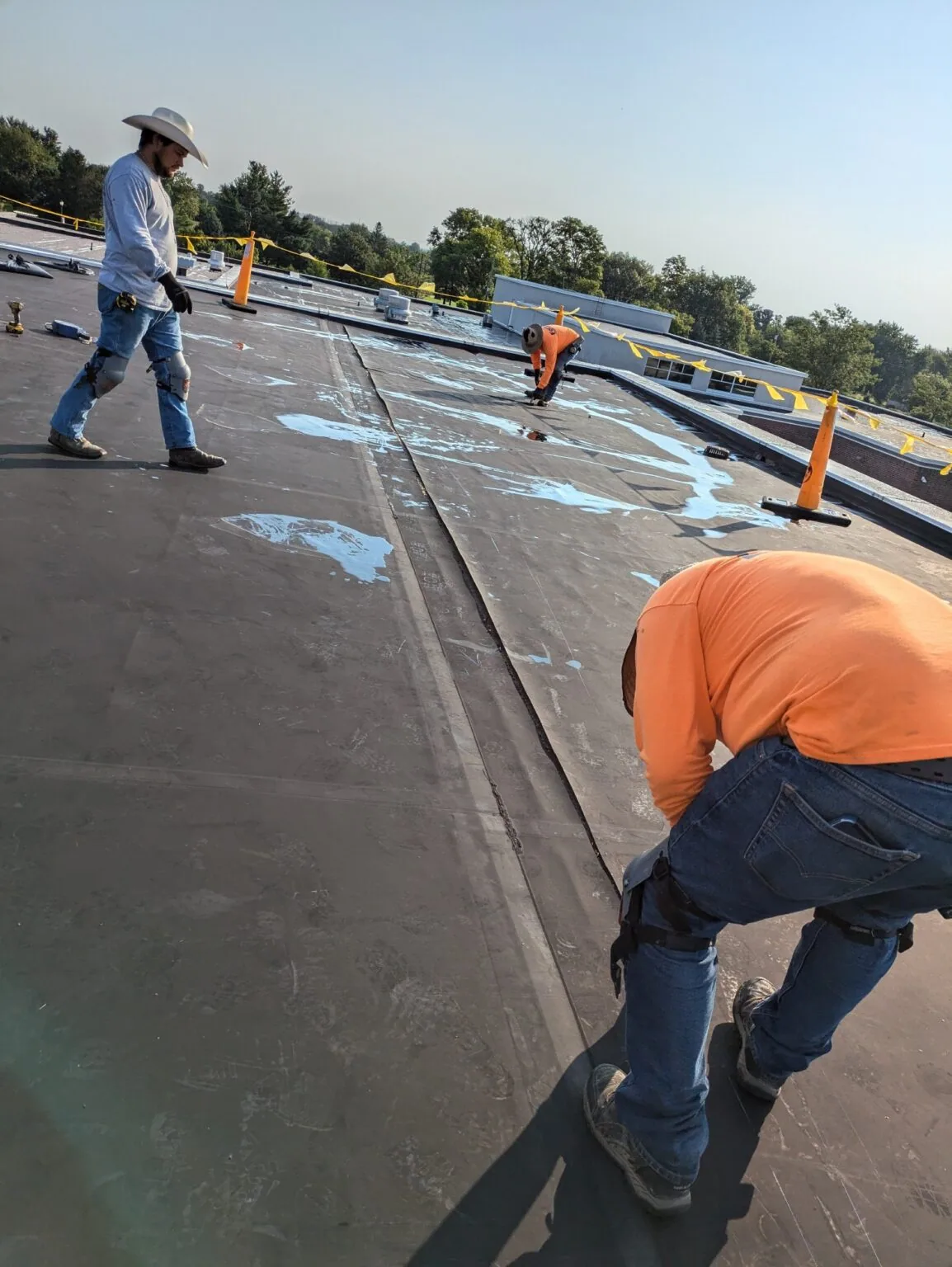
Wet spring and fall periods across Dallas-Fort Worth put drainage paths and seam transitions into practical focus; before an owner chooses replacement, the first decision is whether water reflects runoff or a failed connection. The Urban Center's offices, apartments, restaurants and retail uses can continue operating while a roof detail needs attention. Commercial Roofing Irving locates the condition, identifies what can be examined safely and separates confirmed repair from a broader concern that needs investigation.
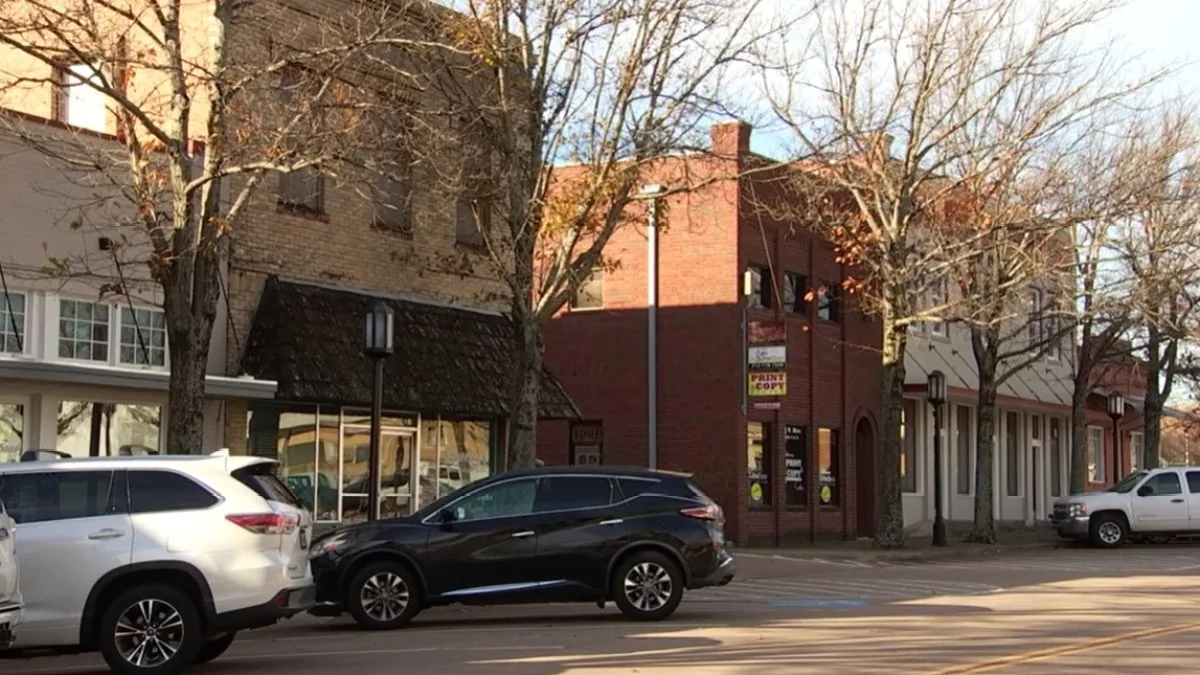
The Urban Center is a major Las Colinas office concentration, with apartments and townhomes near light rail stations and restaurants, retail and entertainment sharing the district. Those land uses describe the setting; they do not establish a particular property's construction. Our commercial roof inspection records the actual elevations, access limits and system transitions before the owner has to choose a scope.
How should access be coordinated before roof work?
A useful visit starts with the building's access plan. We confirm who can authorize roof entry, how crews reach the work area, what equipment or tenants restrict movement and whether interior observation is available. A reported leak might line up with a roof penetration, a wall transition or a route water follows after entering. The point of entry should be tested against the assembly rather than inferred from the room where a stain appears.
In an office concentration near transit, a property manager may need to coordinate timing with building operations and tenant schedules. That is a project-specific constraint, not a claim that every building in the Urban Center shares the same access pattern. We identify where work will affect entrances, equipment, deliveries or occupied areas, and who must approve any temporary interruption. A phased occupied-building reroof can then be evaluated against real operating windows.
Share prior repairs, plans, leak locations and access instructions. If records conflict with field conditions, we document the difference instead of relying on an inherited label.
Which connection is allowing water entry?
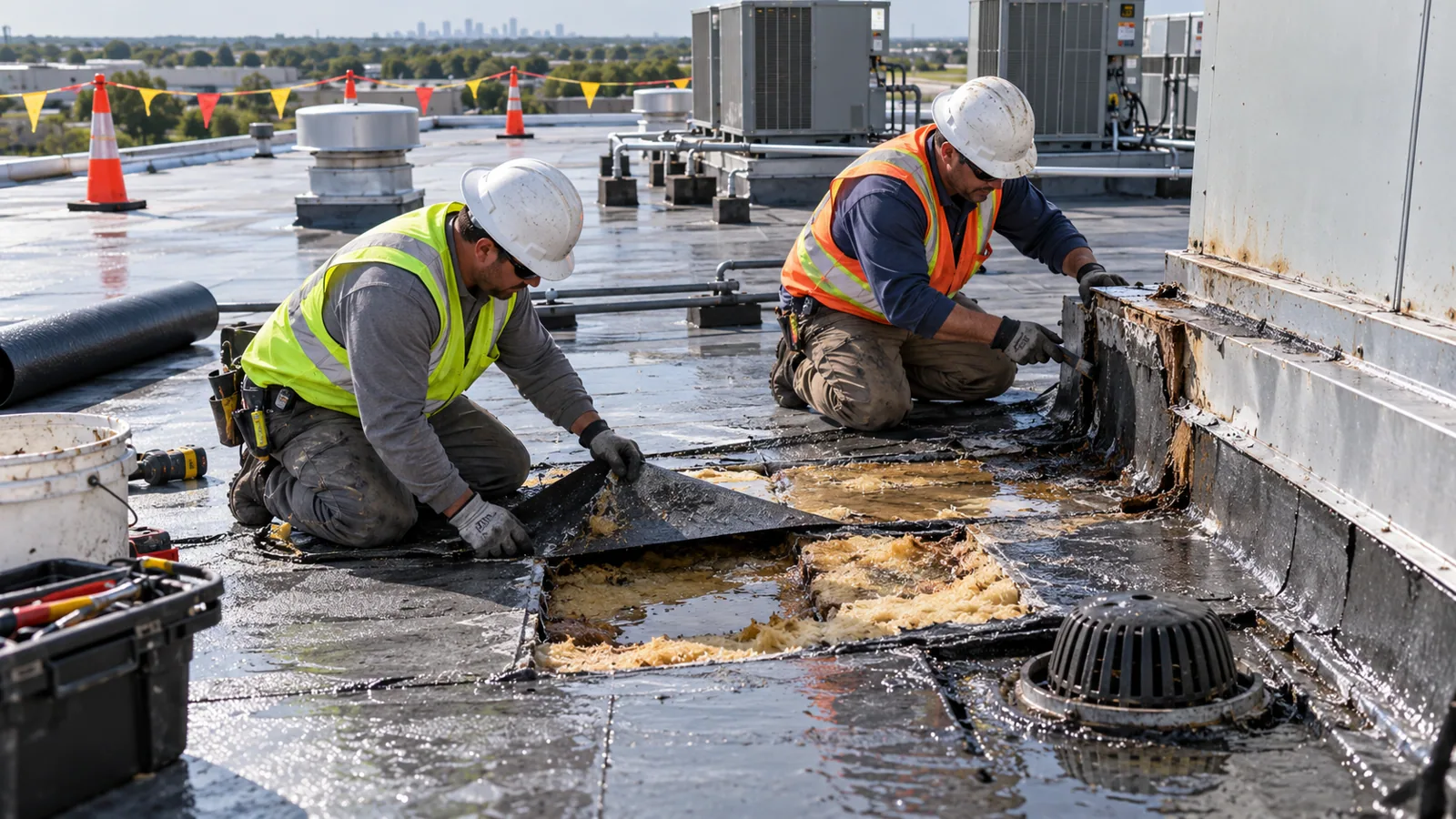
Water entry can originate far from its interior appearance. We inspect likely transitions, penetrations, seams and perimeter terminations, then compare the condition with the drainage path and reported timing. A split at a curb, a loose edge and a displaced seam each raise different questions. We also note adjacent material expected to remain; a repair boundary is only credible when that surrounding surface can accept the selected work.
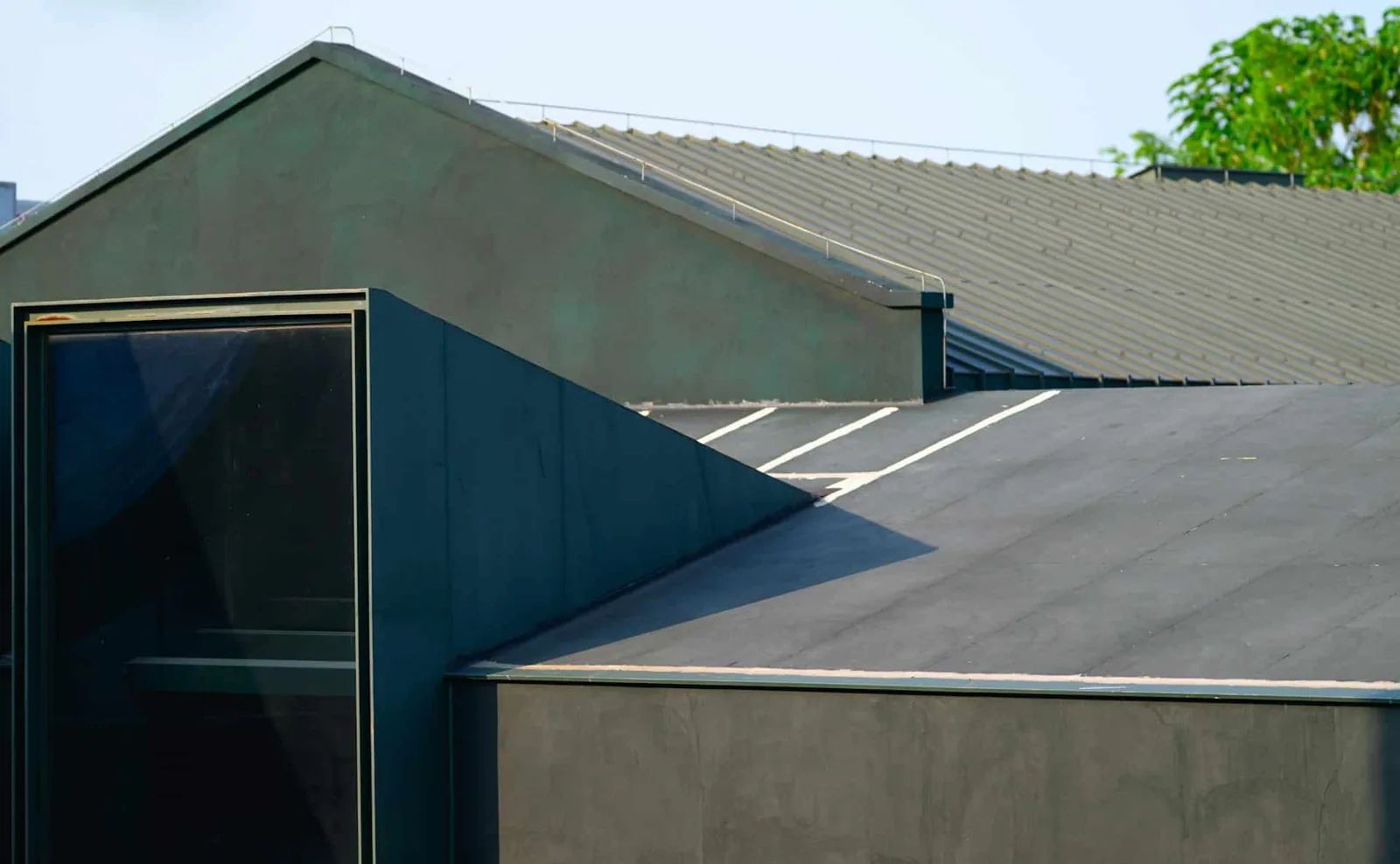
Where a modified bitumen roof is present, laps and flashing tie-ins need a compatible repair method. On a metal assembly, movement and attachment details deserve attention. For single-ply membranes, the seam and the termination may be more informative than general surface appearance. We identify the system only when it can be established, and distinguish direct observations from assumptions based on a drawing or maintenance file.
If a defect appears localized, a targeted repair may be compared with broader restoration. If field conditions show widespread deterioration or repeated failures at similar details, the scope may need to expand. The report explains what finding changes the recommendation, rather than hiding the decision inside a line item.
What does the drainage evidence establish?
Water visible after a storm can be temporary runoff, a blocked outlet or a sign that the roof plane is holding water longer than expected. We document when the observation was made, the condition of the outlet and the path toward it. A photograph without timing or location can make normal drainage look like persistent ponding. If the roof profile or discharge needs additional evaluation, that question is stated separately from what a walk can establish.
At a roof drain or scupper, the connection between membrane, flashing and opening matters. Debris removal may address an obstruction but cannot correct a low area or deficient slope. Likewise, a new sealant bead at a wall termination does not resolve movement if the underlying counterflashing or substrate is unsound. We define the cause that is supported and the additional check required if several mechanisms remain possible.
Dallas-Fort Worth hot summers expose roof assemblies to repeated thermal cycles. That regional condition is useful context, but it does not prove why one seam or penetration failed. We assess movement allowance, compatible materials and attachment at the location observed before proposing a repair sequence.
How can the scope fit operating priorities?
The right scope depends on the condition to correct and the disruption the property can accommodate. A localized repair may preserve a serviceable assembly. A restoration can be considered when the substrate, moisture condition and details support another layer. Replacement may be the more defensible alternative where deterioration is distributed or the retained assembly cannot provide a reliable boundary. Each option should state what it resolves and what remains outside its scope.
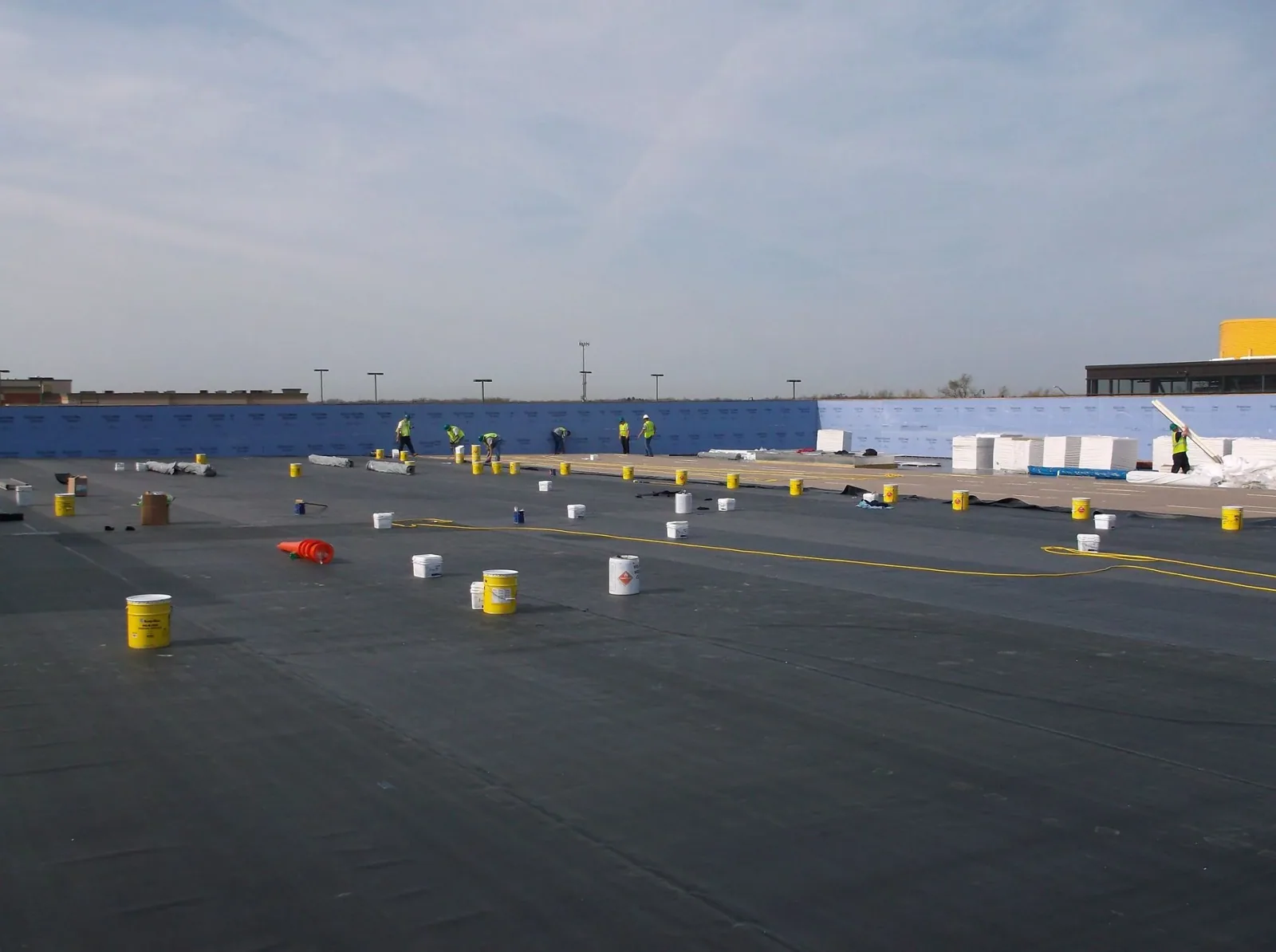
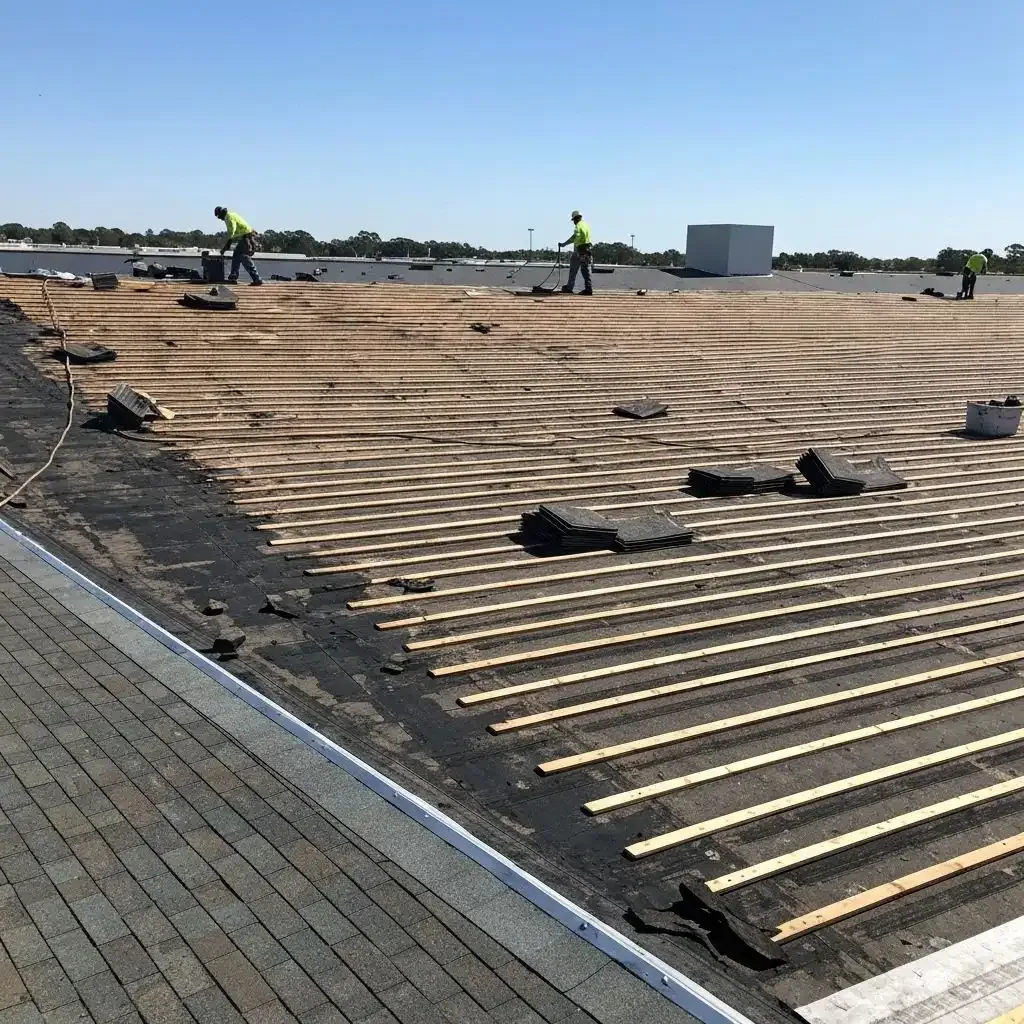
We discuss preparation, tie-ins, access, protection, sequencing and any conditions that could change the work. A roof coating assessment includes substrate suitability and detail repairs; the coating itself is not a substitute for correcting drainage or concealed damage. For a replacement comparison, existing layers, removal limits, deck observations and business continuity can affect both budget and schedule.
Preliminary pricing remains a planning range until quantities and concealed conditions are verified. We identify assumptions about moisture, deck work, staging and materials so an early estimate is not mistaken for a final scope.
How will occupied areas stay protected?
When a building remains open, roofing work needs a daily sequence that accounts for people as well as weather. We review noisy tasks, odors, material movement and the location of interior areas needing protection. Work zones should be clear to the manager, and changes to access should be communicated before they affect a tenant or delivery. The sequence is adjusted to the property's actual calendar.
If removal exposes a condition that differs from the assumed assembly, the team should document it and pause at the agreed decision point. The owner can review photographs, the opened area and the proposed change before authorizing additional work. At shift end, any temporary condition must be weather-secure and recorded for the next crew. These controls reduce the chance that an open detail or unreported change becomes the next leak.
A consistent location key tracks completed work, remaining tasks and inaccessible areas. That handoff helps managers coordinate different uses without losing the building-specific record.
What should the property record preserve?
Closeout ties the work to roof areas and details, not simply to a project address. We describe repairs, material transitions and the condition left for future maintenance, with photographs that can be found again. Unresolved observations and recommended monitoring remain visible. If the owner later evaluates another section, the record can help distinguish a new issue from the work already completed.
The broader Las Colinas community and nearby Valley Ranch each have different property conditions; neither district name substitutes for a roof inventory. A roof asset record can connect inspections, repairs and future budgets across a portfolio while preserving the individual building's evidence.
For an assessment, provide leak dates, prior repairs and scheduling restrictions. We agree on safe access, the immediate question and the confirmation needed before a larger scope.
Commercial Roofing Questions
Can roof work proceed while offices and residences stay open?
Often, subject to access, noise, odor, staging and weather protection. We map tasks to operating windows, identify affected entrances and agree on closeout. If removal reveals a different assembly, the owner reviews the evidence before scope changes. A property-specific plan avoids assumptions about district-wide operations.
What if the leak appears far from the roof defect?
Water may travel along a deck or assembly before reaching a ceiling. We compare the interior report with roof transitions and drainage. If concealed areas prevent a confident conclusion, we may propose selective investigation. The room where water appears does not establish the roof opening's exact location.
How do I decide between a repair and a reroof?
Compare confirmed deterioration, material expected to remain and the reliability of a repair boundary. A bounded defect may support repair; widespread failure or an unstable substrate may change the decision. We explain disruption, assumptions and open questions for each alternative so the owner can compare scope, not just initial price.
Does proximity to a light rail station affect roof inspection?
Transit may affect access or scheduling, but does not establish roof condition. We coordinate with the property manager about actual access and work hours. Findings stay specific to the building examined; the district's transit setting cannot replace system identification.
Ready to review the roof scope?
Request a Roof Assessment