Hail impact can open a membrane at the same time storm wind loosens the edge that supports it, leaving temporary protection dependent on damaged connections. An emergency roof response in Irving, TX, begins by examining what can safely support water-control measures and where additional movement could enlarge the opening. Commercial Roofing Irving responds day and night, including weekends and holidays, with permanent reconstruction considered after the immediate exposure is controlled.
Large hail and damaging winds recur across the Metroplex, although their effects differ from one property to another. The response follows the actual roof damage, access conditions and occupied space below. Office operations in Las Colinas and commercial uses in Valley Ranch can require different interior protection and communication, but both need a clear distinction between a temporary dry-in and the repair of the underlying assembly.
Is the damaged area safe to approach?
Displaced metal, loose membrane and standing water can make roof access unsafe while a storm is still affecting the building. We assess weather, access points and visible instability before putting personnel on the roof. A damaged deck or unsupported opening requires different protection from a small puncture in a stable assembly. Temporary measures must be selected for the conditions that actually exist, including whether their attachment would load a weakened component.
Inside the building, water near energized equipment or a sagging ceiling needs prompt isolation by the appropriate personnel. Keep occupants away from unstable finishes and affected electrical areas rather than moving containers into a hazardous space. We coordinate roof observations with the manager's interior response so a change above is understood below. Where roof access remains unsafe, we explain the constraints and establish what protection can be performed without exposing people to the same hazard that caused the damage.
What can temporary protection accomplish?
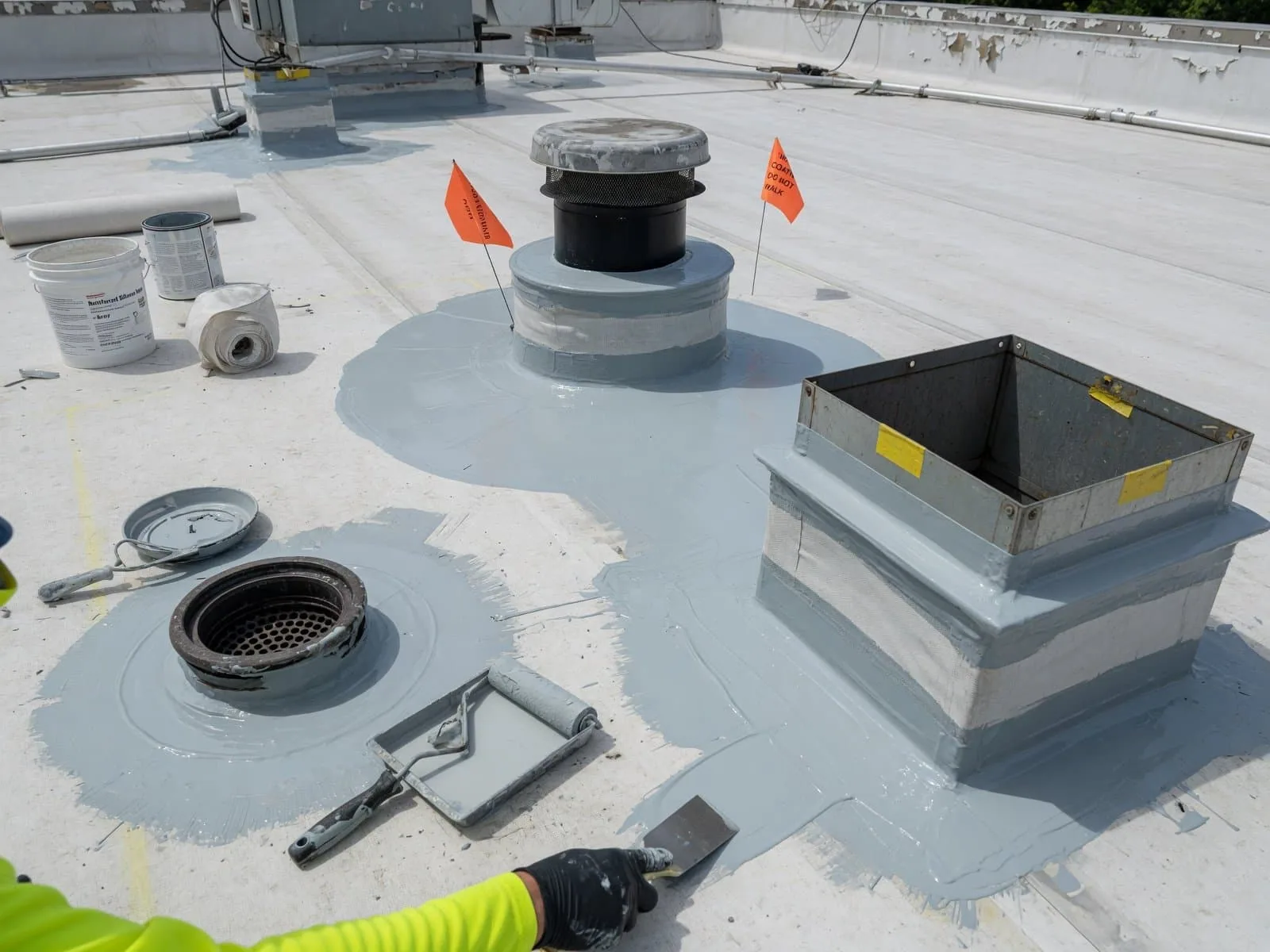
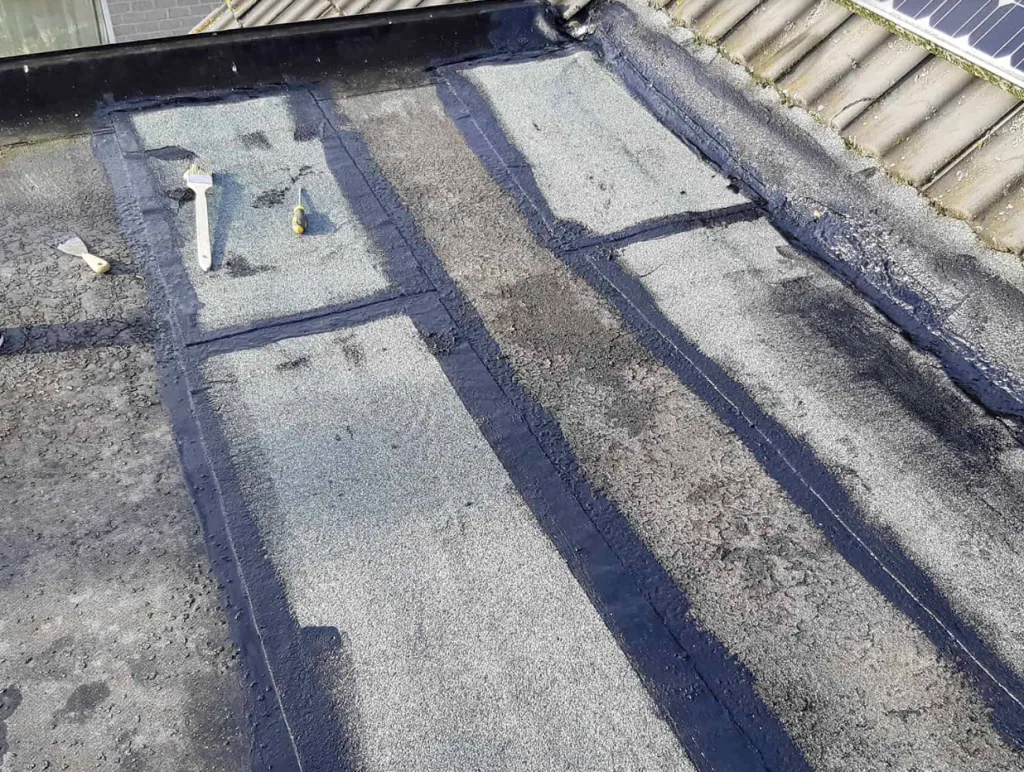
A dry-in creates a temporary water-shedding connection over the exposed area, using materials and attachment appropriate to the damage. It may involve a secured covering, compatible temporary membrane work or protection at a failed penetration. The fastening needs sound support, and the covering must direct water away from the opening. Simply laying material over the defect can leave runoff entering at its edges or place wind load on loose roof components.
We assess whether active leak tracing is needed alongside visible storm protection. A missing edge section may be obvious, while another entry at a curb remains concealed. Temporary work can reduce the immediate entry without defining the complete moisture boundary. Once conditions permit, we examine retained materials and plan the permanent correction so short-term sealing does not become the only treatment for damaged insulation, attachment or flashing.
Can trapped water enlarge the emergency?
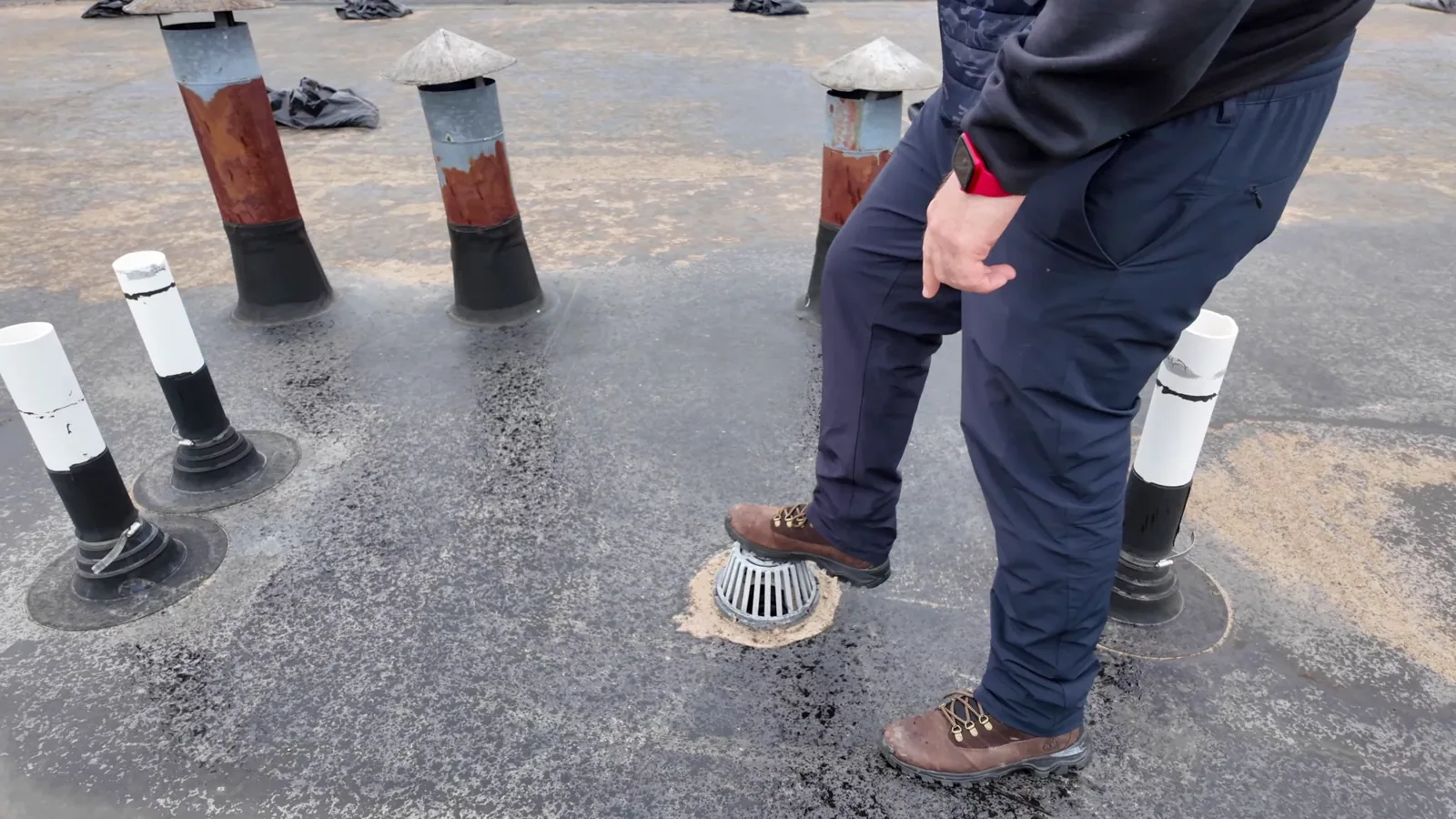
Storm debris can obstruct a drain or scupper and increase the water depth against damaged seams and flashing. We examine outlets when safe access allows, considering the stability of the surrounding roof and the discharge route. Clearing an obstruction can reduce retained water, but it does not repair a broken drain connection or resolve a depression in the assembly. Those distinctions affect both the immediate response and the follow-up scope.
Water removal also needs care where a damaged section may have lost support. We do not treat the surface as a normal working platform before its condition is assessed. A drainage connection repair may be needed after stabilization, particularly if movement displaced a bowl or outlet flashing. Interior dripping can persist from already wet layers even after new rainfall entry is reduced, so the building's drying response should account for retained moisture rather than relying only on the next weather change.
Which storm injuries require reconstruction?
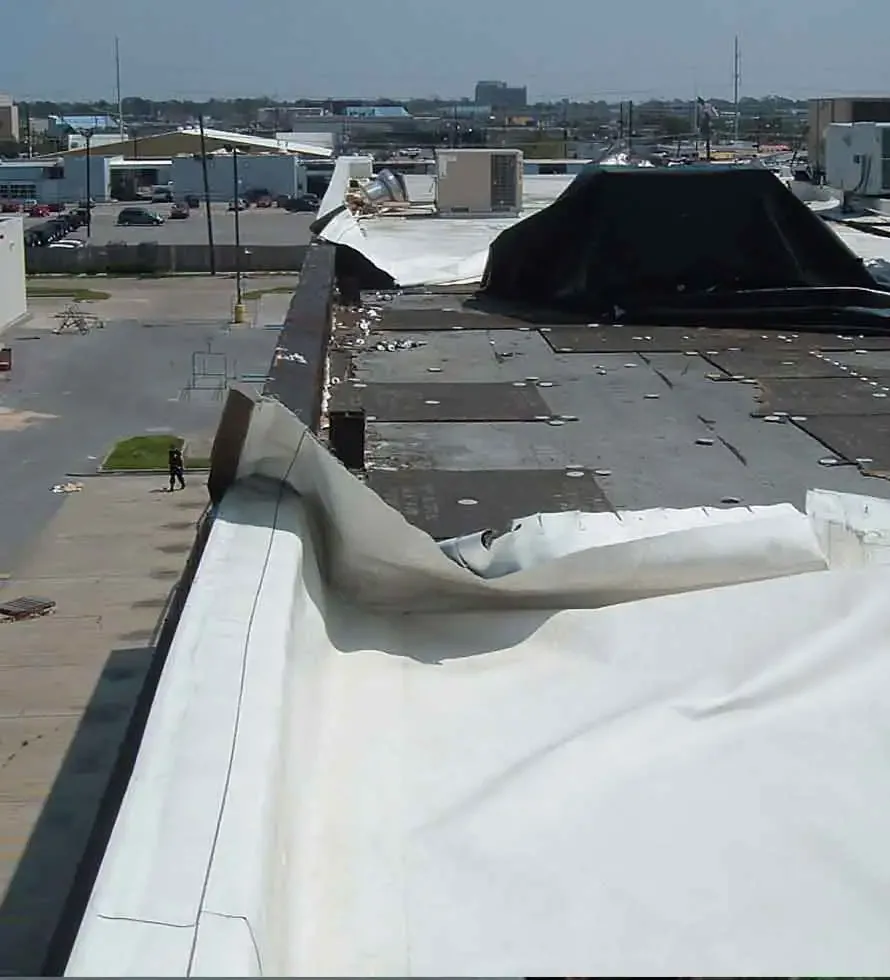
Hail can fracture a covering, while wind can disturb the attachment path between membrane, perimeter metal and deck. We examine those mechanisms separately because a surface patch cannot restore a loose structural or edge connection. With wind-related roof damage, permanent work may need reconstruction beyond the visibly lifted area to reach securely attached materials. The extent is established through examination once safe access is available.
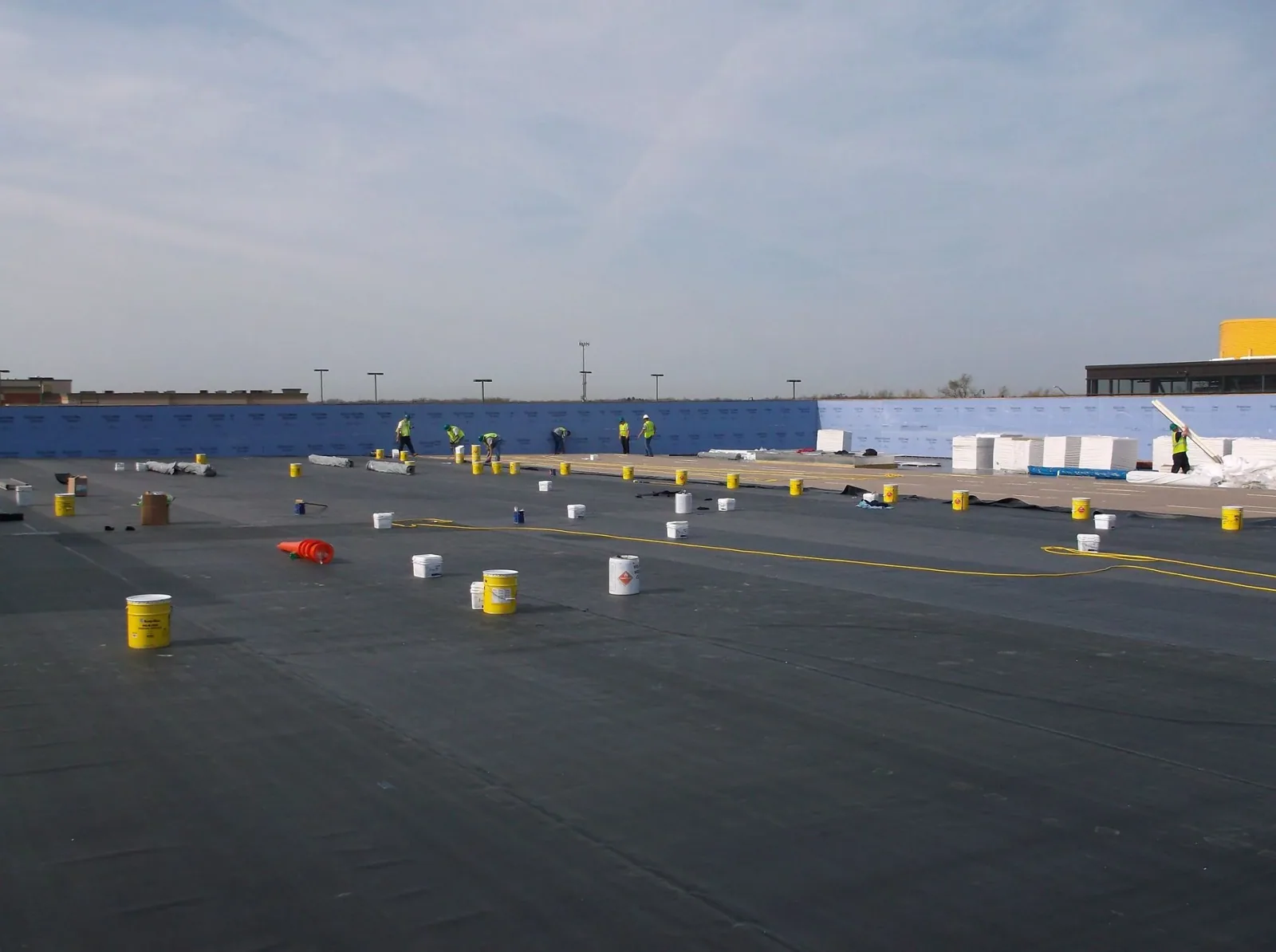
For hail-damaged roofing, the material response matters: impact marks, fractures and punctures need comparison with the membrane and supporting layers. We identify areas needing closer investigation rather than assuming every mark represents the same damage. Where wet insulation or deck deterioration accompanies the opening, removal and rebuilding become part of the permanent scope. We also consider whether the temporary covering will need removal or adjustment to prepare a suitable bonding surface.
How does the response become a lasting repair?
Emergency work cost is affected by safe access, the size and stability of the exposure, available support for protection and the conditions under which the work can proceed. Permanent reconstruction introduces separate drivers such as wet-material removal, attachment correction and equipment coordination. We distinguish those activities so the manager can understand what was stabilized and what remains to be rebuilt. Written findings and photos preserve the observed damage and work boundaries for subsequent decisions.
At Las Colinas occupied properties, follow-up work may need staged access to entrances, equipment and tenant areas affected during the emergency. We examine the repaired assembly with a post-response condition inspection and identify nearby details requiring separate attention. The permanent repair is selected for compatible materials and suitable working conditions, including the preparation needed after temporary sealing. That sequence helps avoid leaving concealed deterioration beneath an apparently closed surface.
Drying and interior restoration should proceed with knowledge of the roof findings. Water retained in insulation, ceilings or equipment spaces can require separate evaluation and removal. We communicate the observed roof moisture limits and remaining openings so restoration activities do not conceal a continuing entry or begin beneath an area that still needs reconstruction.
We identify those remaining tasks before the emergency response is closed.
Commercial Roofing Questions
What information helps you assess a storm opening before arrival?
Describe the visible damage, current water entry and any unsafe interior areas. Photos taken from a safe position can help distinguish a missing covering from displaced equipment or perimeter metal. Tell us about roof access and whether utilities or occupants have been affected. Do not climb onto a storm-damaged roof to collect more detail; we assess the exposure with safe access and working conditions in mind.
Can a temporary covering stay through the next storm?
Its attachment, water path and condition need examination before relying on it. Temporary protection is exposed to additional wind and rainfall, and damaged support can limit how it is secured. We explain any constraints and the need for follow-up inspection or adjustment. The permanent repair should be scheduled under suitable conditions rather than postponed on the assumption that a dry-in has become the finished roof.
Will you document the damage before covering it?
We photograph accessible damage and the protection performed where conditions permit. Those observations help distinguish visible storm injury, temporary measures and areas requiring later investigation. Concealed layers may need examination after stabilization, so the initial record can be expanded with removal findings. We provide repair information and claim documentation without deciding coverage on behalf of an insurer.
Why might water continue dripping after the opening is protected?
Previously wet layers can release retained water after fresh entry has been reduced. We compare the timing and location of continued dripping with the dry-in and inspect for other openings when safe. Wet insulation or interior materials may require removal or drying separately. Continued water is therefore investigated rather than dismissed, particularly when electrical equipment or unstable finishes remain exposed.
Ready to review the roof scope?
Request a Roof Assessment