Hail can leave a dent in metal, bruise a surface or puncture a membrane, and those marks do not describe the same roof condition. Large hail occurs in the Metroplex nearly every year, but the regional pattern does not prove that a particular Irving building was struck. Commercial Roofing Irving examines the affected material, seams and support, then connects each observed change to the repair decision it actually supports.
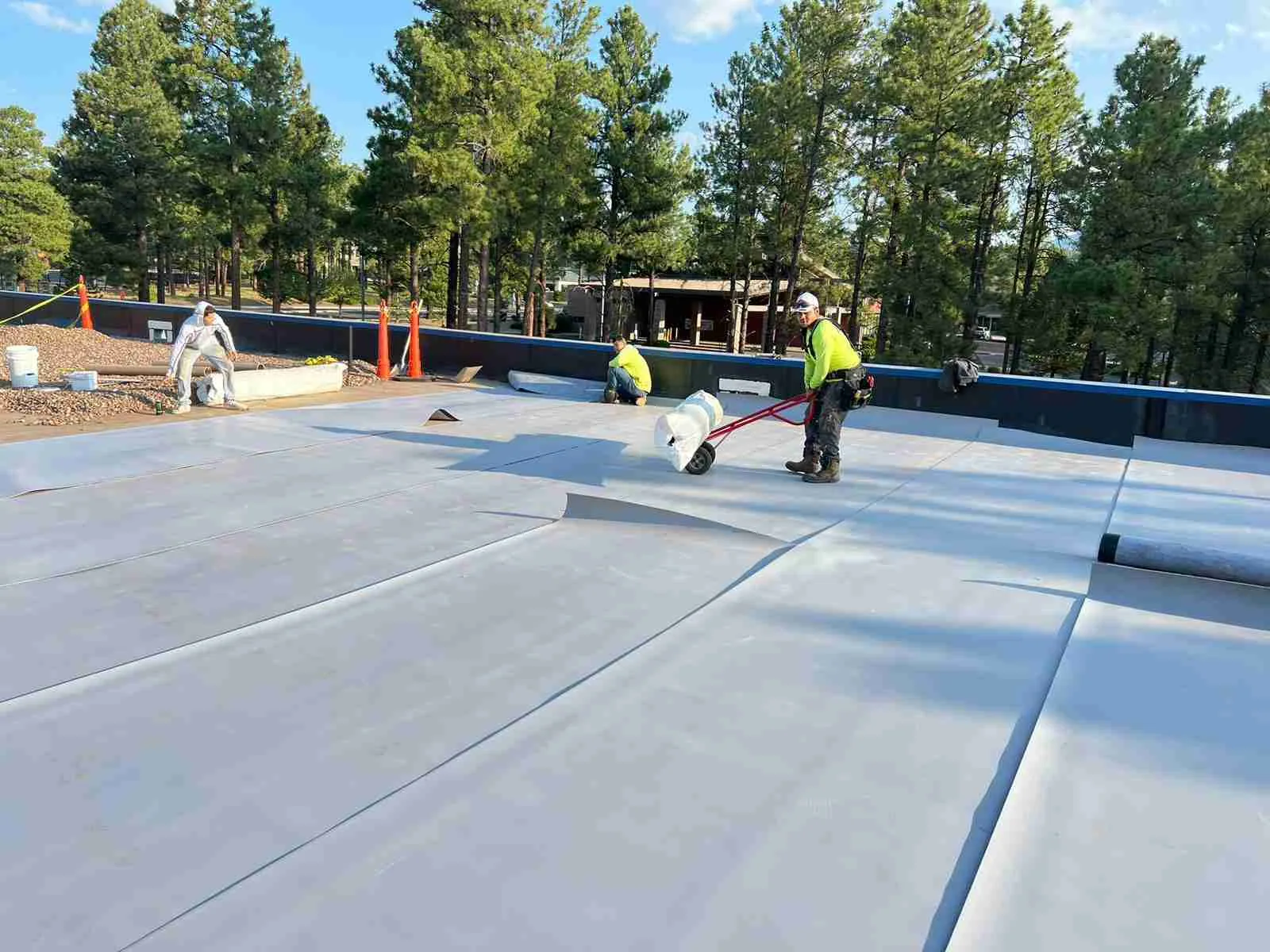
The North Irving Belt Line corridor meets SH 183 at an established retail setting. At operating properties there, access and staging can affect how an impact area is examined, but the intersection does not establish what covers a particular roof. We verify the assembly, its connections and the water path before setting repair limits.
Which marks changed the roof's function?
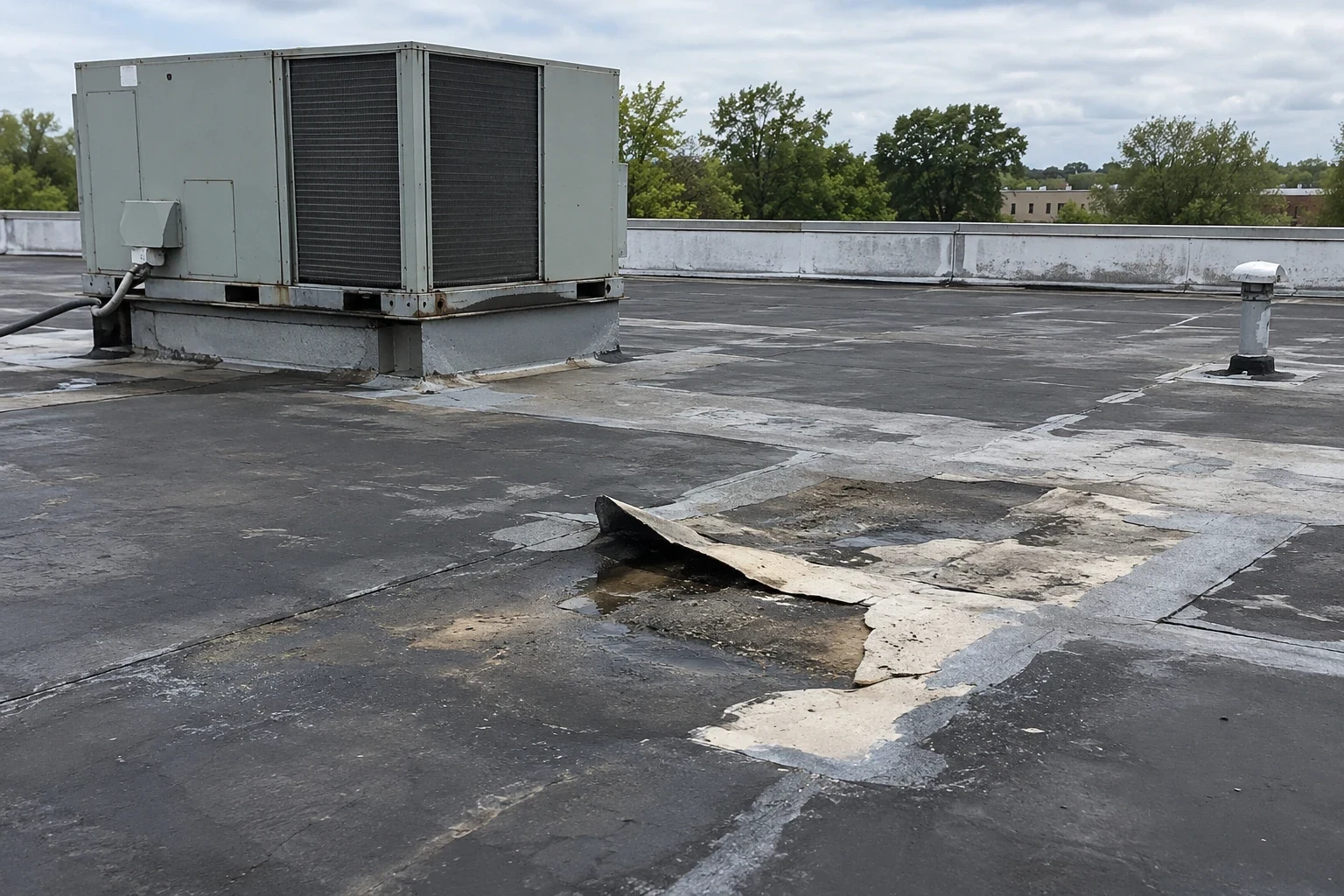
A metal panel may show a shallow dent while its seams and coating remain intact. A sharp impact can instead split a closure, damage a fastener or expose the underlayment. On a membrane, a surface impression can differ from a cut or puncture that creates a path for water. We compare each mark with its material, location and nearby connection. That examination keeps a cosmetic change separate from an injury that affects weather protection or attachment.
We also look at roof accessories, curbs and flashing where a small impact can interrupt a water-shedding transition. A damaged skylight or unsupported corner may require more than a field patch. After the immediate impact check, we document the observed pattern and any limitations in access. Membrane puncture repair addresses an opening where the sheet is cut, while metal or flashing work follows its own repair method.
Can a membrane accept a compatible repair?
A punctured sheet needs a patch attached to suitable material beyond the injury. We identify whether the membrane is TPO, PVC, EPDM or another system before choosing preparation and detail components. An aged surface, prior patch or contamination can affect a weld or bond. The repair footprint expands if impact has cracked a brittle sheet or if the supporting board has compressed. A surface mark is not enough to choose the method; the connection and substrate need examination.
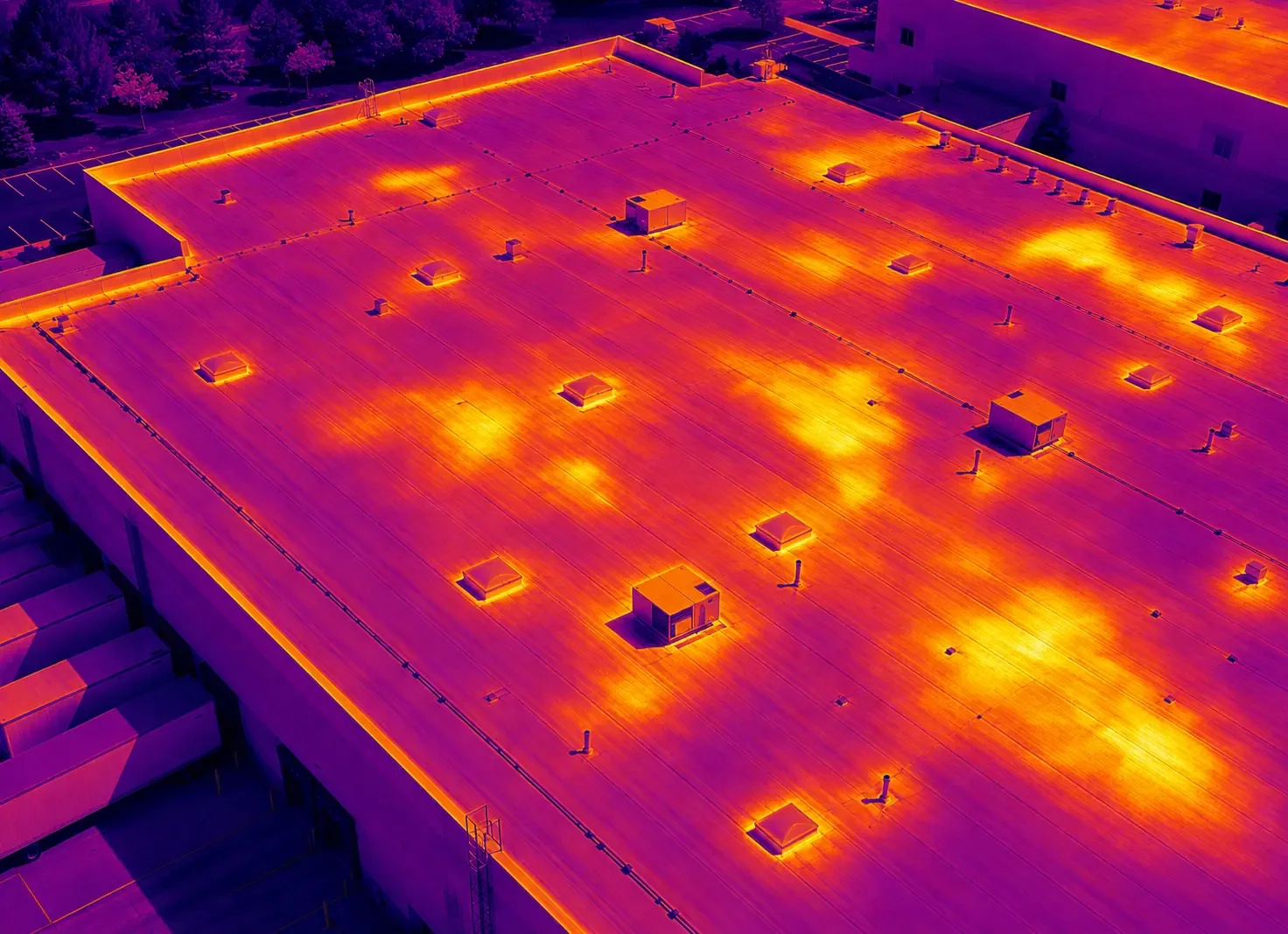
Water can spread beneath a covering after a small breach. We compare the impact with interior reports and insulation joints, then use selective openings where the assembly's condition remains uncertain. An infrared moisture survey can help target checks when weather and roof construction provide useful contrast, but direct confirmation establishes wet material. Any insulation that has lost support is removed to a boundary that can hold the replacement membrane.
Did metal damage interrupt a seam or coating?
Metal roofs need assessment of panel alignment, standing seams, clips and closures. Dents alone may not breach a panel, but a distorted seam can admit water or transfer movement to fasteners. We inspect the full affected panel run and determine whether a localized panel change can connect to stable neighboring material. Where coatings are damaged, compatibility and surface preparation guide restoration; applying a coating across an open seam does not restore its mechanical connection.
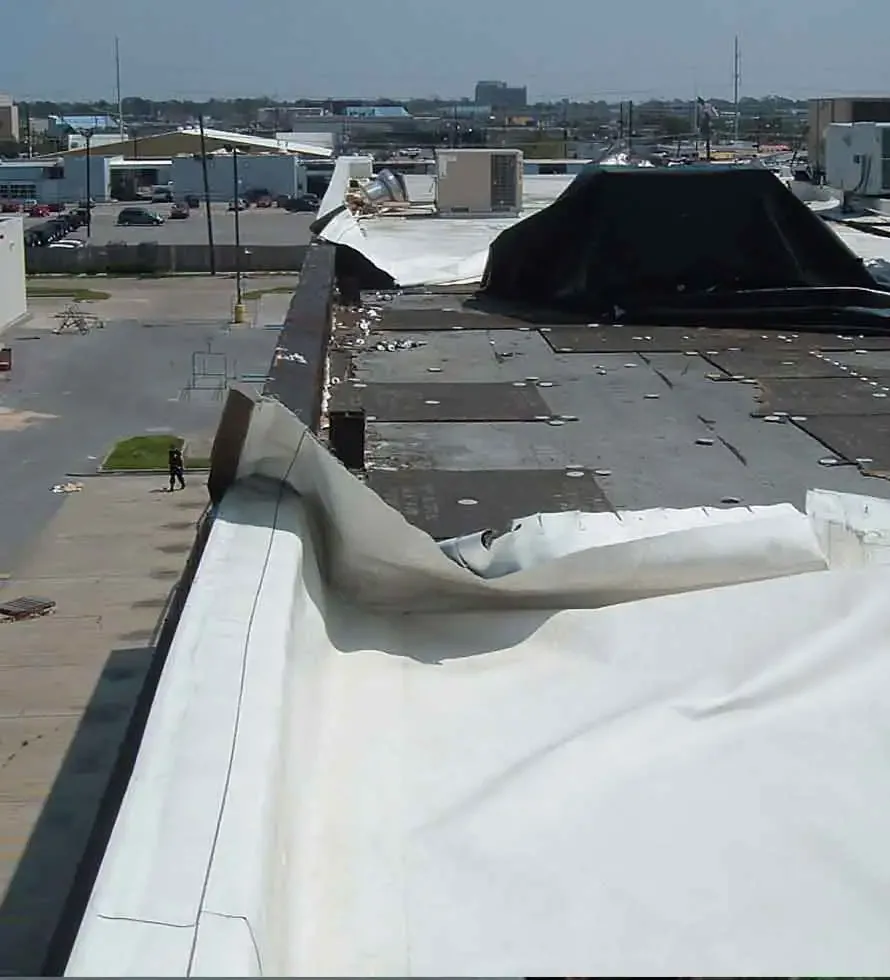
Hail can also strike rooftop equipment and surrounding curbs. We distinguish equipment damage from roof damage while coordinating access with the responsible trade. Loose fasteners or a displaced perimeter component can expose adjacent membrane to later wind. If the same storm included damaging wind, we check those connections separately; wind damage review addresses uplift and attachment changes rather than relying on the hail pattern alone.
How do we compare repair with replacement?
Contained impact injuries can be repaired where the surrounding sheet, metal and substrate remain suitable. Numerous punctures, widespread coating failure or wet insulation can shift the decision toward a larger area of removal. We compare the damaged roof with unaffected sections and describe what evidence changes the scope. An owner can then see whether repair restores function, whether sectional work is sufficient or whether broader replacement offers a clearer correction for the observed assembly.
Cost reflects repair count, access, metal fabrication, preparation, insulation removal and the transitions that need rebuilding. We do not convert a count of surface marks into a roof-wide conclusion. A direct roof inspection documents material and connection conditions. Where the event requires claim coordination, damage documentation can preserve photos and repair scope without deciding coverage or assigning an unsupported cause.
Can inspection and repair avoid disrupting tenants?
Repair planning includes roof access, noise, material movement and protection over occupied areas. In Las Colinas offices, equipment service and building schedules may influence how the affected section is reached. At Valley Ranch commercial and multifamily properties, we coordinate staging with business activity and resident routes. The work sequence keeps exposed layers protected and allows completed connections to be examined before the area returns to normal access.
If a storm opening allows active entry, emergency protection may be needed while a permanent scope is prepared. We distinguish temporary covering from the final membrane or metal correction and note any area that still needs examination. The record identifies impact observations, moisture checks and repair materials. This allows the owner to compare immediate protection, construction work and maintenance without suggesting that a regional hail report confirms damage at a specific property.
What makes a hail finding useful to the owner?
A useful assessment states what was marked, what was opened, which layer was confirmed wet or dry and why each item needs repair. We separate observed conditions from any cause or timing that cannot be established from roof inspection alone. Where access prevents a complete view, the report identifies the remaining question and the check needed to resolve it. That supports a more precise decision than counting dents or sealing the most visible spot.
After repair, we locate the new connection and note surrounding conditions that should be watched. The inspection also identifies equipment paths that could cause later impact unrelated to the storm. We explain whether the repair boundary follows punctures, seam damage, coating loss or broader substrate effects. Request an Irving hail assessment when the roof shows a new impact pattern; the material and its ability to shed water or hold attachment determine the work.
Commercial Roofing Questions
Do dents in a metal roof mean the panel must be replaced?
Not by themselves. We examine the panel surface, coating, seam engagement, clips and fasteners to determine whether function or attachment changed. A dented panel may remain closed, while a smaller distortion at a seam can interrupt the connection. The assessment records the actual condition and whether a panel repair or replacement is appropriate.
Can hail damage be checked without walking the entire roof?
Safe access and the roof system guide the examination. Drone views can document broad patterns, but close inspection is still needed at suspected punctures, seams and transitions. We choose a method that reaches the relevant details without placing unnecessary traffic on vulnerable material. Any area that cannot be inspected is identified rather than assumed sound.
Will a hail report prove when a roof defect began?
A roof inspection records current conditions and evidence, but it may not establish exact timing. Earlier repairs, wear and concealed deterioration can affect what is observed. We distinguish those findings and avoid assigning a date where the materials do not support one. The repair scope remains tied to the present condition and the correction required.
Should impact marks be repaired before the next rain?
Open punctures, failed seams or exposed layers need prompt attention. A superficial mark that leaves the covering intact may not require the same response. We assess water entry and safe access first, then protect an opening while permanent materials are prepared. The distinction depends on the injury, not the storm's size alone.
Ready to review the roof scope?
Request a Roof Assessment
Commercial Roof Membrane Puncture Repair
See scope, options and what to expect on the roof.
Commercial Roof Insurance Claim Assistance
See scope, options and what to expect on the roof.