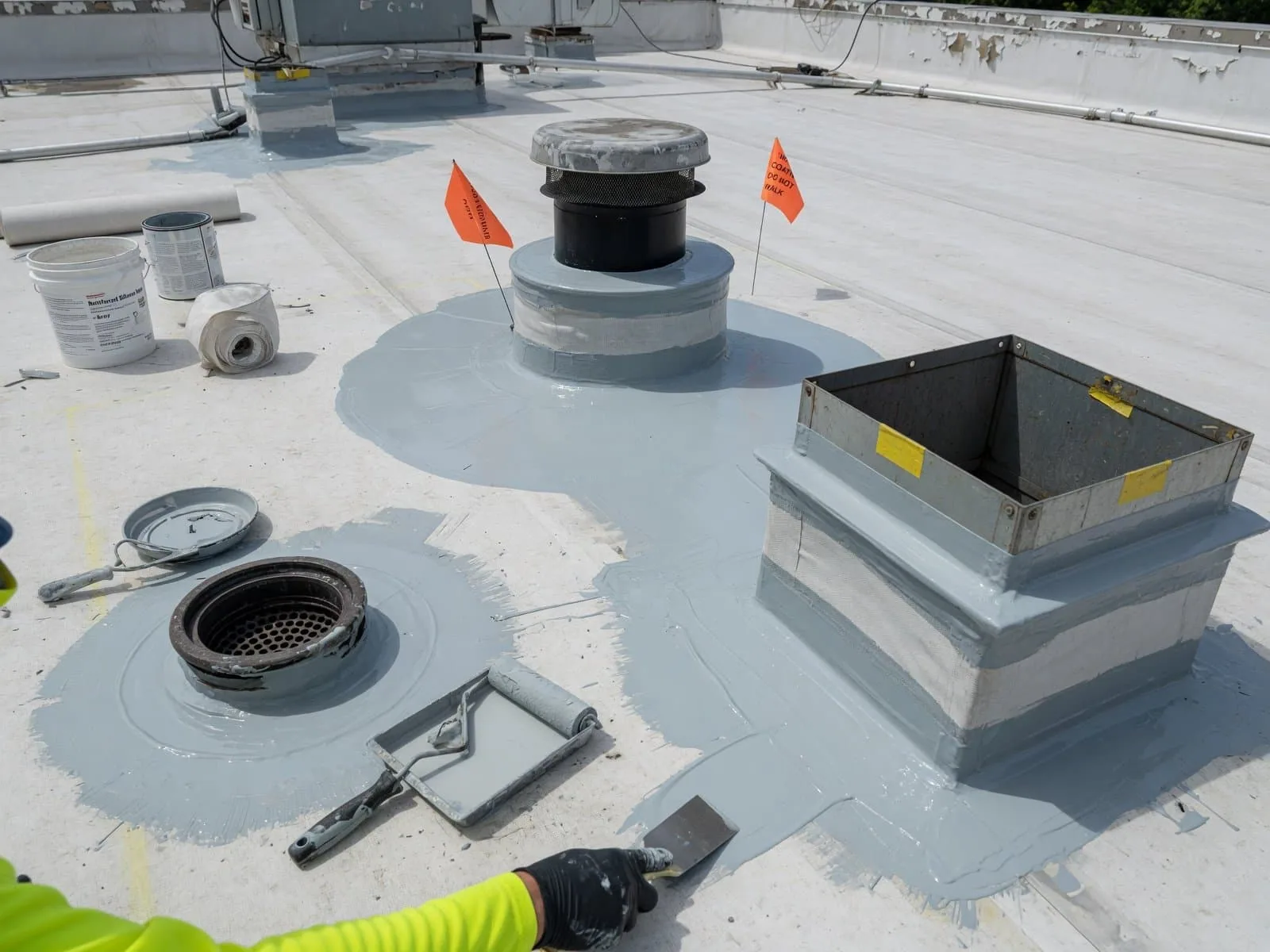
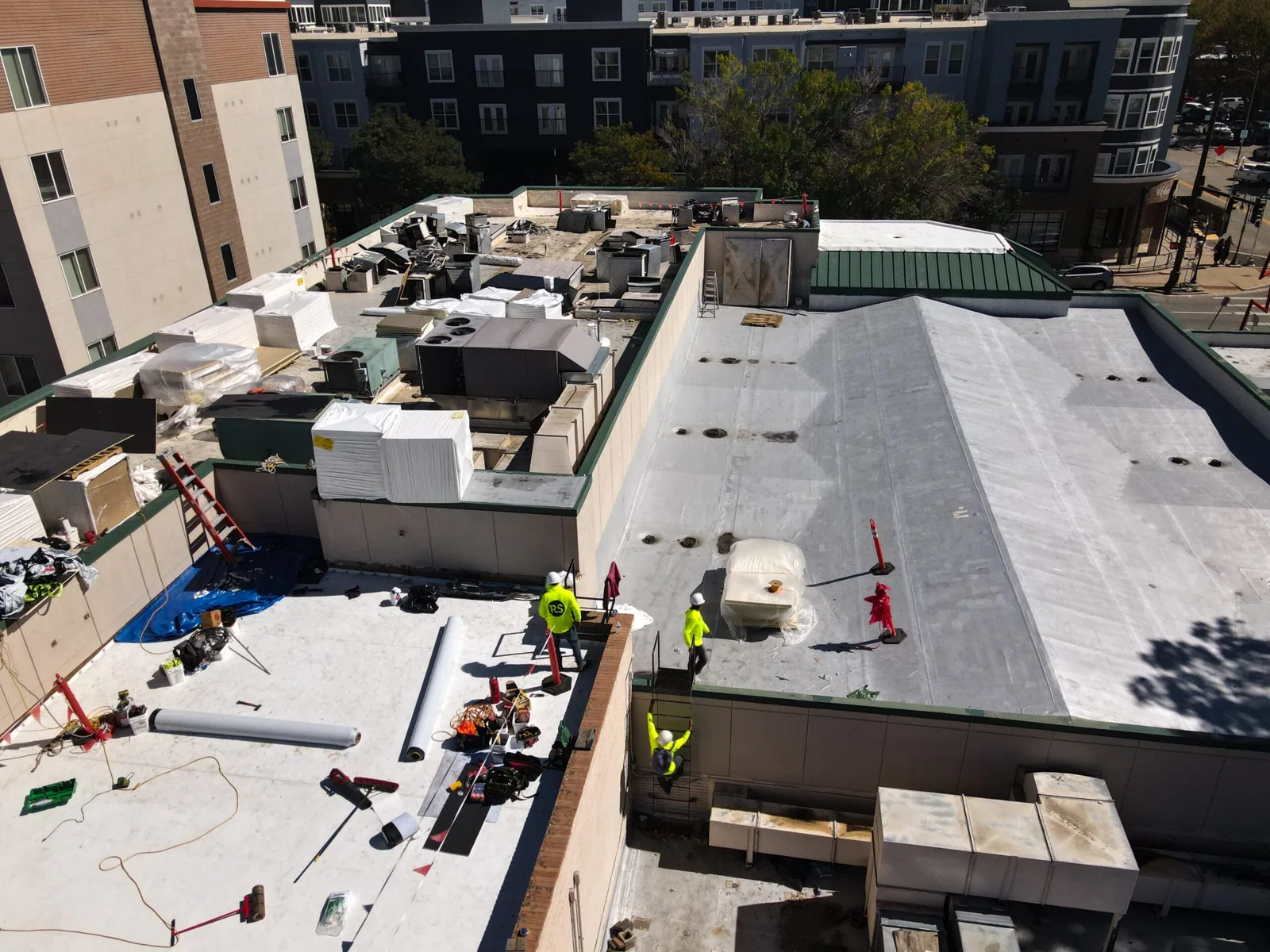
After solar heating, wet and dry roof materials can release stored heat at different rates, creating a temperature pattern that helps direct an investigation. An infrared roof moisture survey in Irving, TX, uses that surface response to identify areas needing confirmation beneath the covering. Commercial Roofing Irving relates the thermal pattern to the actual assembly and selective openings before defining wet-material removal or choosing a retained-roof option.

The Dallas/Fort Worth region has hot summers as well as wetter spring and fall periods, but useful survey conditions depend on the particular day's heating, wind and roof surface. Las Colinas offices and Valley Ranch commercial buildings may need different access arrangements for evening examination. We plan the investigation around a specific decision, such as establishing a repair boundary or comparing removal with recover, rather than treating a thermal image as a complete diagnosis.
Why can moisture change the cooling pattern?
Water changes the way an insulation layer stores and transfers heat. After suitable daytime heating, some wet areas can remain warmer during cooling than comparable dry materials. On an assembly using an EPDM membrane, as on other suitable coverings, the camera records surface temperature differences, which must be interpreted in relation to the layer sequence and roof construction. Different insulation, thickness or surface materials can produce their own contrast, so a temperature difference becomes a location for investigation rather than an immediate wetness label.
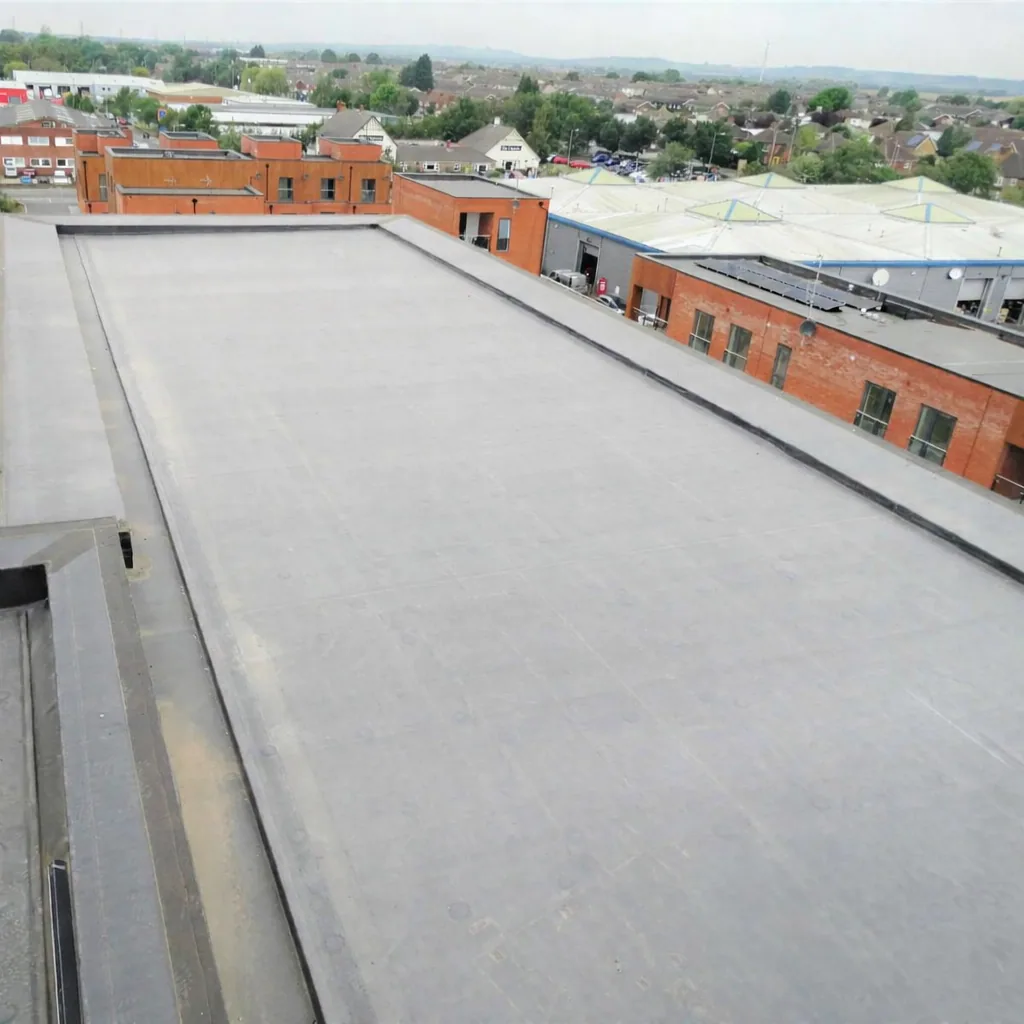
We examine whether the assembly is suitable for this method before selecting the survey scope. Reflective surfaces, ballast, multiple coverings and certain insulation combinations can complicate the readings. Mechanical exhaust, shaded areas and heat from the building below can also affect the pattern. A direct roof inspection supplies the visible condition and assembly context needed to distinguish a useful anomaly from a temperature difference caused by another feature.
What weather makes the survey useful?
Solar heating followed by a useful cooling period can provide contrast, while precipitation, surface water and changing wind can limit interpretation. Cloud cover and shading may keep part of the roof from receiving the same heating as another part. We evaluate the actual conditions rather than assuming a hot Irving afternoon automatically creates a useful survey. The examination window must suit both the roof assembly and the question being investigated.
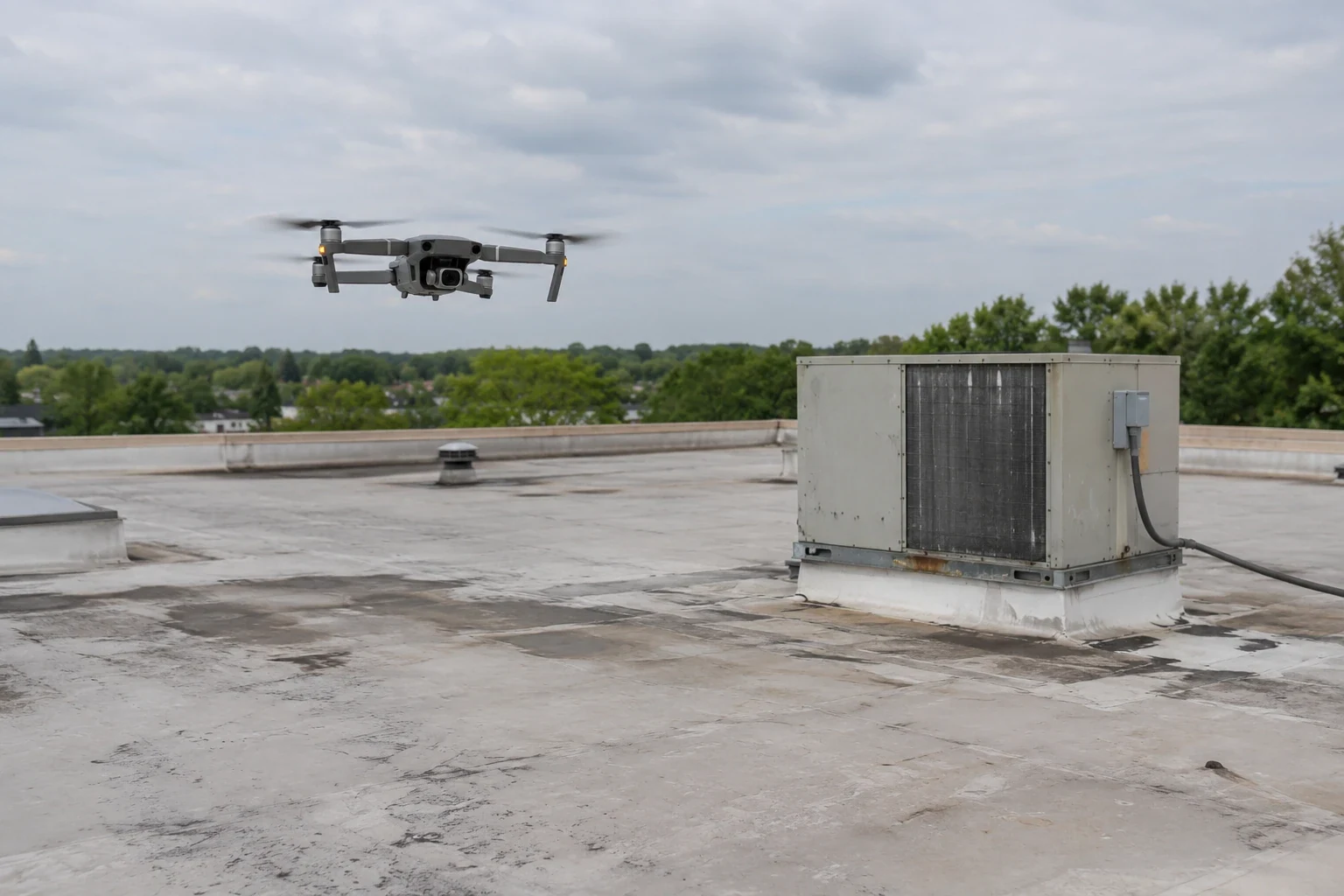
Where conditions do not support dependable interpretation, we adjust the timing or choose another investigation method. Direct openings and other suitable moisture checks may still answer a localized question. Aerial roof imaging can help relate thermal or visible findings to roof geometry, but ordinary photographs do not replace thermal measurements. We distinguish the methods in the scope so the owner understands which observations come from surface appearance and which come from temperature response.
How do we confirm a suspect area?
Selective openings expose the layer sequence and let us examine the material where the temperature pattern raised a question. We compare suspect locations with representative areas outside the pattern when that comparison is useful. The checks can identify wet insulation, damaged support or a different assembly that explains the contrast. Sampling locations are chosen to resolve the proposed repair or removal boundary, including changes near penetrations and roof section transitions.
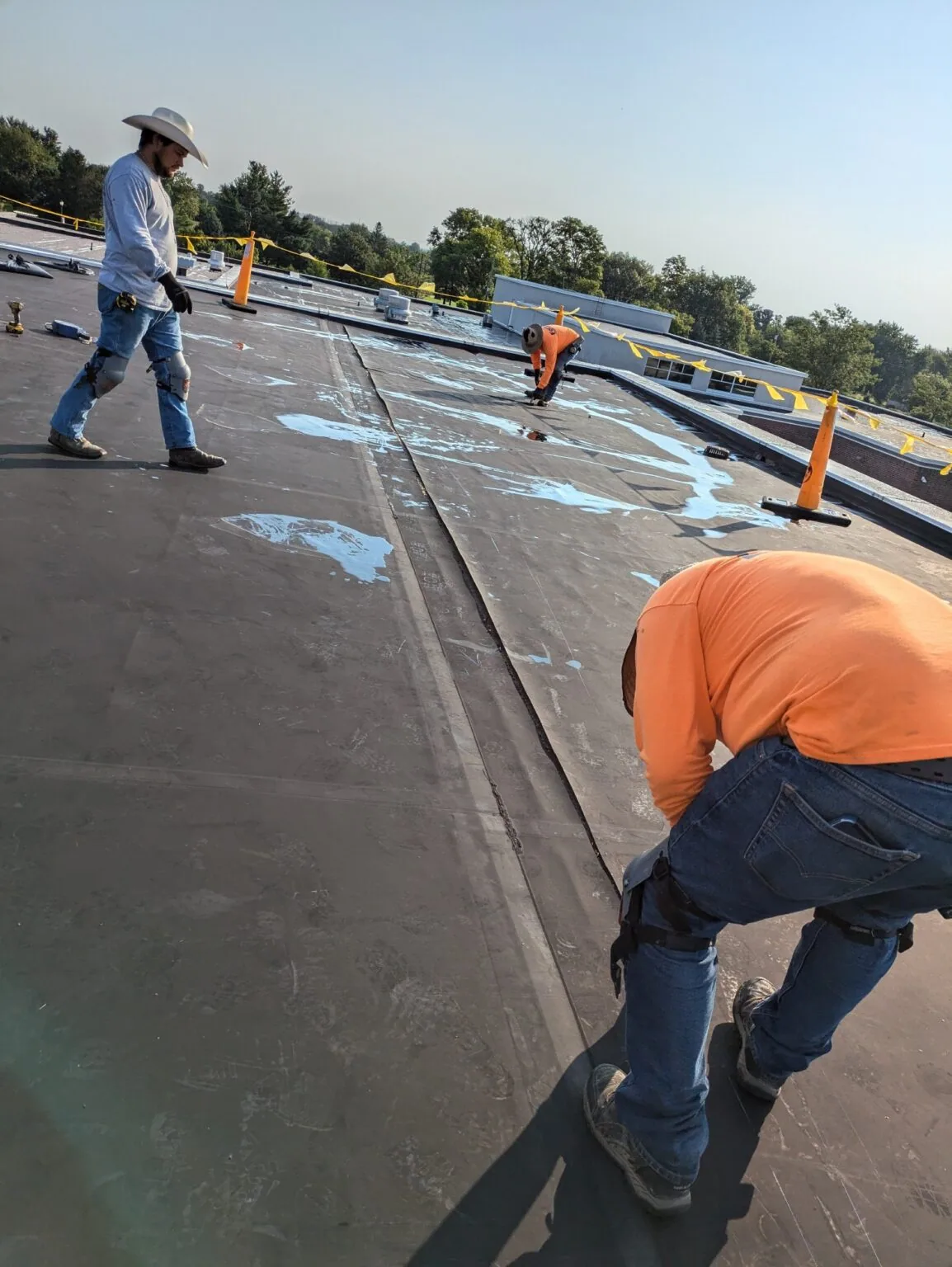
An opening must be closed with materials and methods compatible with the existing roof. We consider weather, access and the ability to restore the covering before cutting into it. The confirmation findings are related to their roof locations so the resulting moisture distribution can support replacement removal limits or a smaller correction. A few isolated checks may not settle a complex boundary; we explain where additional examination is needed instead of extending a confirmed finding across an unexamined section.
Does the pattern locate the leak itself?
Moisture can spread through board joints or along a layer beneath the membrane after entering at a separate connection. The thermal pattern may therefore show accumulated wet material rather than the precise opening admitting rain. We compare its shape with roof slope, penetrations and interior observations, then examine likely connections through leak tracing and repair. The entry mechanism and the wet-material boundary are related questions, but they can require different checks.
Condensation can also contribute moisture where humid interior air reaches colder layers. We examine the assembly and operating conditions where that mechanism is plausible, with further building-science or mechanical input as needed. Repairing a seam would not correct an unresolved indoor moisture path. The investigation should establish whether the proposed work needs to stop rain entry, change a detail, remove damaged insulation or address another wetting mechanism before the covering is rebuilt.
How should the findings change the roof scope?
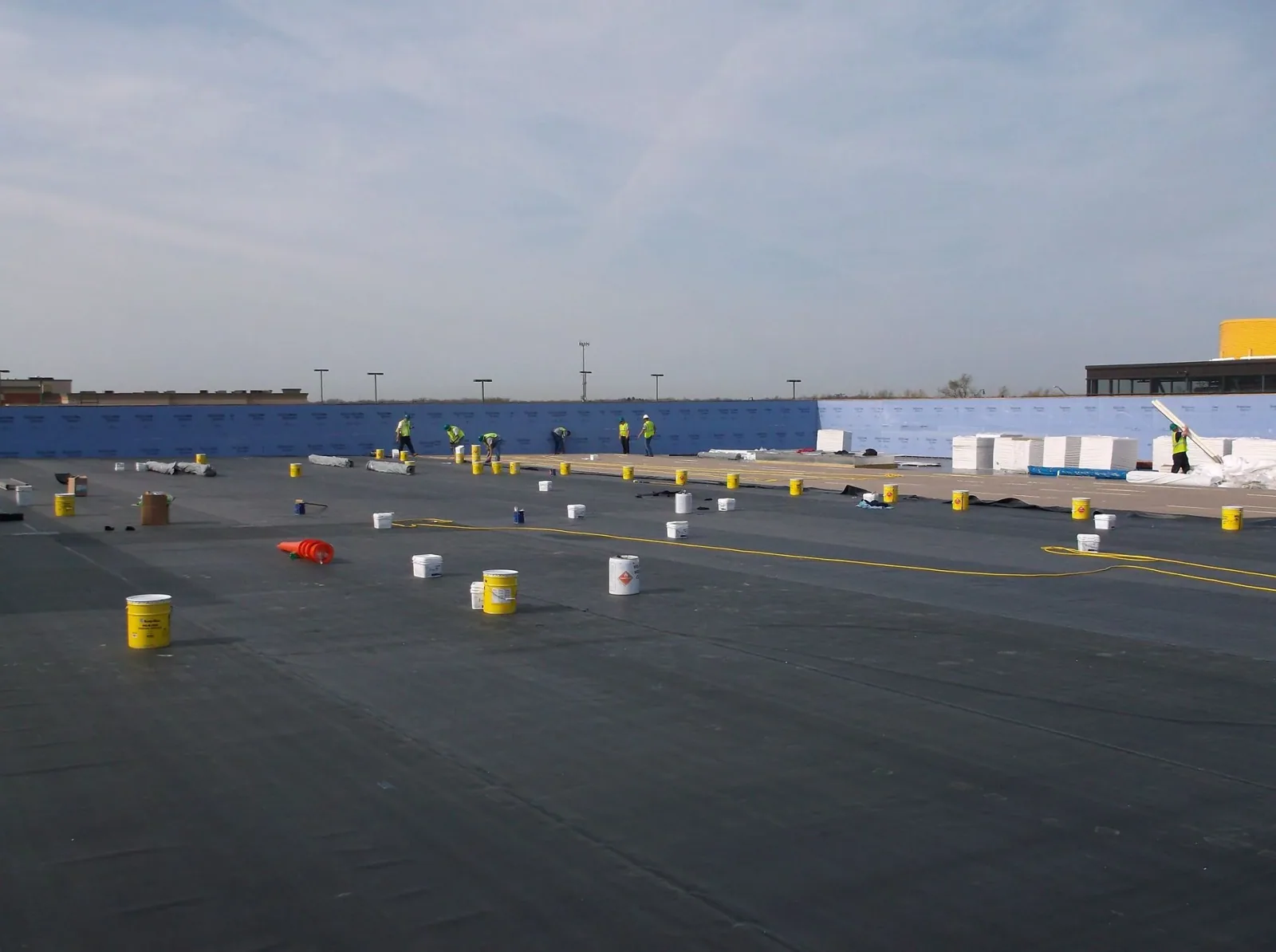
Contained wet areas can support selective removal and reconstruction when the surrounding assembly remains serviceable. A connected moisture pattern confirmed across several sections may change the comparison toward broader removal. For a roof recover decision, the findings identify retained layers that would otherwise be concealed beneath the new covering. We combine moisture results with attachment, deck condition and applicable assembly restrictions instead of deciding recover suitability from dryness alone.
The replacement insulation and cover-board reconstruction must restore support, thickness and drainage relationships in the opened area. We identify transitions to retained boards and details needing adjustment after removal. Cost depends on survey suitability, roof access, confirmation needs and the extent of removal shown by the findings. We separate the investigation from the resulting construction so the owner can evaluate the condition information before authorizing a larger repair or replacement.
For Valley Ranch commercial roof work, access for thermal examination and openings may need coordination with occupied areas and equipment service. We locate the confirmed findings in written roof condition findings with photographs and explain unresolved boundaries. Those details help the construction scope reach the affected material without assuming that every surface anomaly requires the same treatment or that every apparently uniform area can be retained.
Commercial Roofing Questions
Can you survey a roof immediately after rain?
Surface water can change the temperature pattern and restrict useful interpretation. We assess drying, recent heating and the roof composition before selecting the examination window. A localized direct check may still be appropriate where an urgent repair question needs an answer. The timing should support the method being used rather than forcing a thermal conclusion from unsuitable surface conditions.
Will core cuts tell you how far the insulation is wet?
Each cut provides a direct finding at its location. The moisture boundary comes from comparing those findings with the thermal pattern, assembly changes and additional checks where needed. A wet sample does not define every surrounding board, and a dry sample does not settle an entire roof section. We choose further locations where they can resolve the remaining removal or retention question.
Does a warm area necessarily need to be removed?
Other heat sources or construction differences may explain that area. We relate the pattern to roof features and confirm material condition before recommending removal. Where the insulation is wet or damaged, the scope follows the examined boundary and the support needed for reconstruction. Temperature contrast is useful because it guides investigation, not because it independently specifies the construction work.
Can the survey support budgeting without replacing the roof now?
Confirmed moisture findings can establish the likely scale of selective removal and identify sections needing a broader assembly comparison. We combine those results with visible condition and attachment questions to separate near-term repair from larger capital work. Remaining uncertainties are stated with the examination needed to resolve them, allowing the budget to reflect the known condition rather than an assumed uniform assembly.
Ready to review the roof scope?
Request a Roof Assessment