Hot summers and wet seasonal periods make membrane response and drainage worth reading together; a roof beside SH 183 still needs a property-specific diagnosis before the owner selects a scope. Irving and TxDOT coordinate improvements to SH 183 and nearby routes, so access planning can matter, but corridor context does not identify a building's roof type or condition. We connect each observation to a roof area and decision, from immediate water control to repair or replacement comparison.
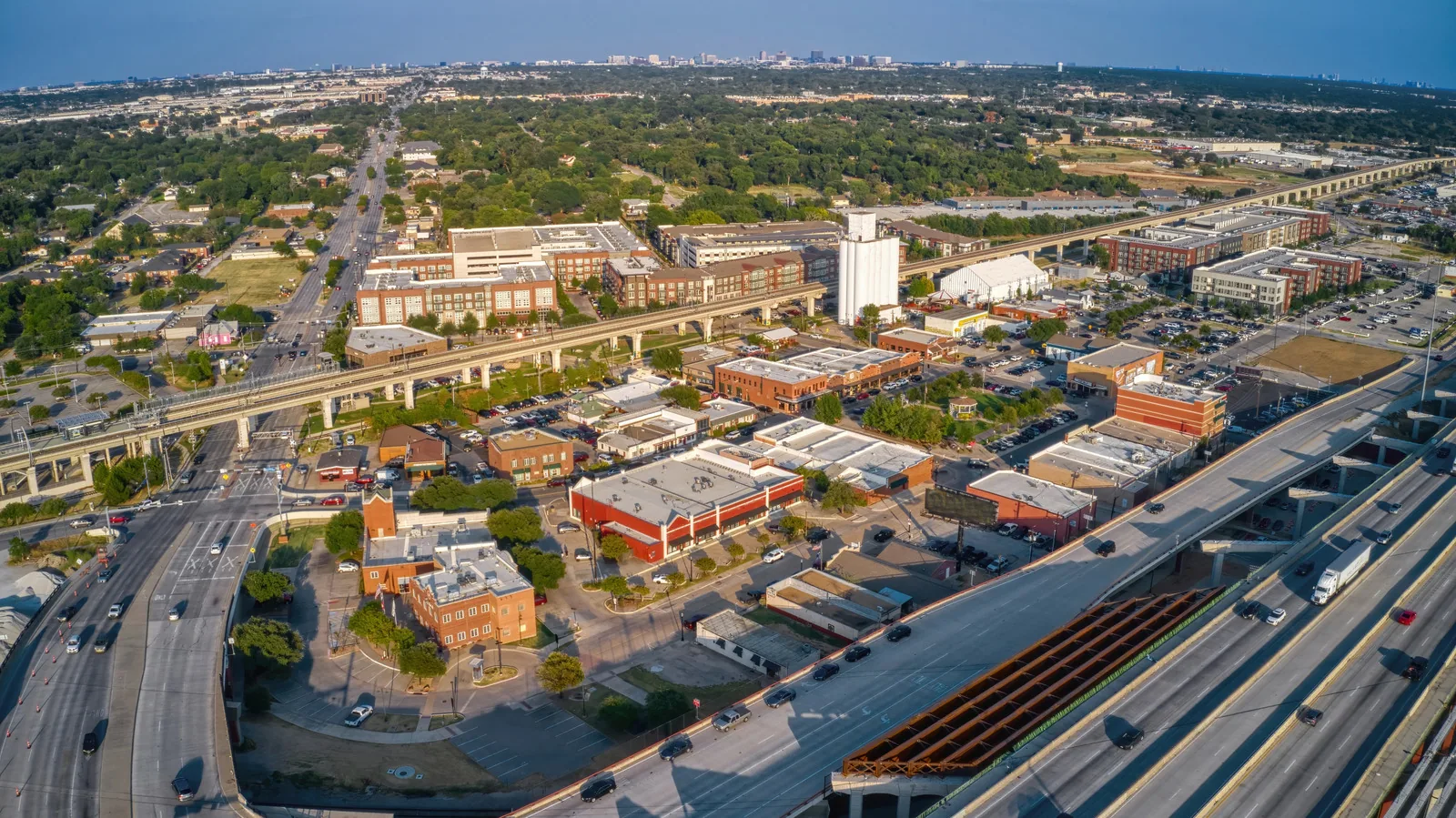
SH 183 is Central Irving's principal east-west freeway, connecting Irving with Dallas and Fort Worth. Irving and TxDOT coordinate improvements to SH 183 and nearby routes. This corridor context may matter to project logistics, but it does not establish a building's roof type or condition. A commercial roof inspection documents the individual property, its access and the assembly we can actually observe.
Does roadway context change site access?
A regional roadway connection is not a substitute for a building access plan. Before an inspection or repair, the property contact confirms crew entry, parking or staging, roof access, delivery hours and any restrictions on equipment movement. Work near traffic may require extra attention to material handling and perimeter protection, but the actual plan depends on the property and approved work zone.
We ask about operating schedules, occupied areas and the location where any leak has been reported. If a business must stay open, the sequence should identify noisy tasks, material movement, interior protection and the secure condition required at day's end. A phased reroof approach can be evaluated once those operating limits are known.
When multiple routes or site entrances are involved, the manager can point out the access arrangement that applies to this roof. We do not infer a preferred approach from the corridor label. A clear meeting point and an authorized contact keep the field visit focused on the building rather than on an assumed address or traffic pattern.
Which roof connection explains the failure?
Interior water reports can be displaced from the opening above. We compare the room location, timing and weather with roof transitions, seams, penetrations and drainage. A wet area near a curb may involve the curb flashing, the membrane bond or a separate path in the assembly. The inspection records which of those conditions is visible and which requires another method.
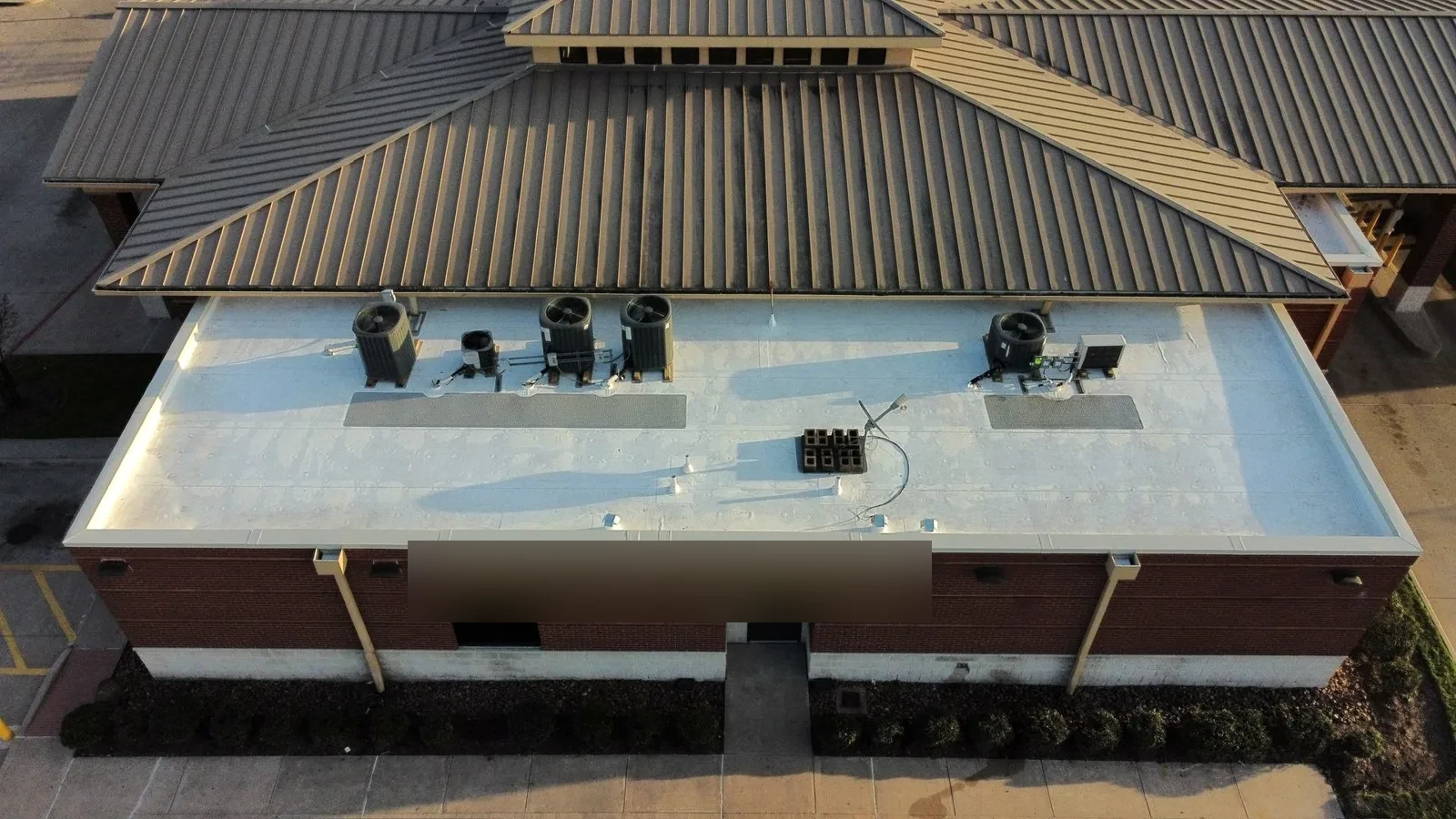
At a perimeter, we look at continuity from the field roof into the termination and check whether adjacent materials remain stable. A flashing correction has to restore the connection with compatible materials and support. If the surrounding surface has lost adhesion or movement has displaced a joint, covering the visible gap may leave the mechanism unchanged.
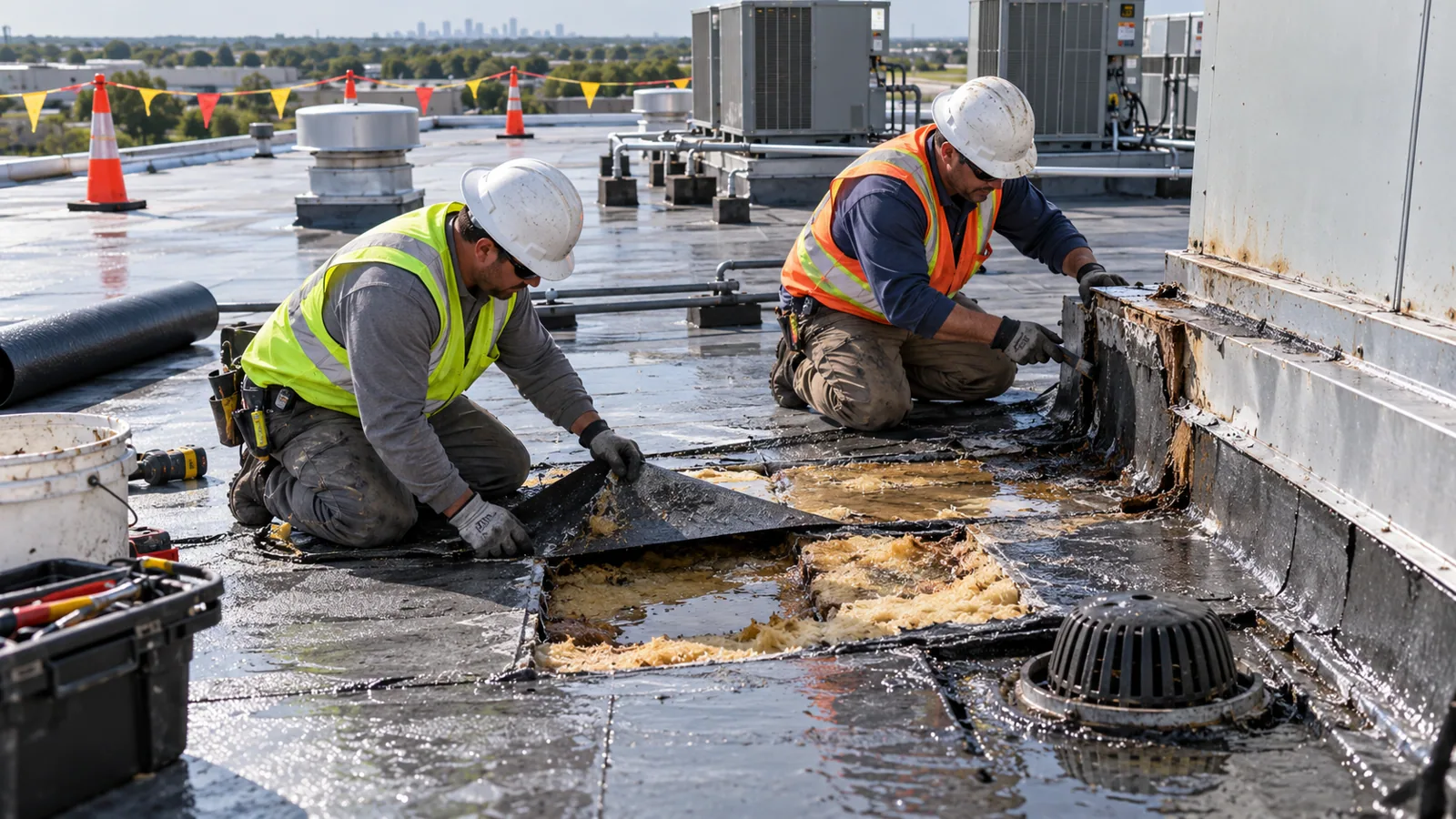
Our notes distinguish observed deterioration from a hypothesis about concealed moisture. Where that difference affects the scope, selective investigation may be proposed. The owner can review the reason, location and protection plan before deciding whether to open the assembly.
How should movement be distinguished from damage?
Metroplex hot summers subject roof materials to recurring temperature changes. That context makes movement allowance and compatible bond worth examining, but it does not prove that heat caused an individual split. We inspect the detail, attachment and adjacent materials at the reported location. The recommendation follows the connection's actual response, not a general climate statement.
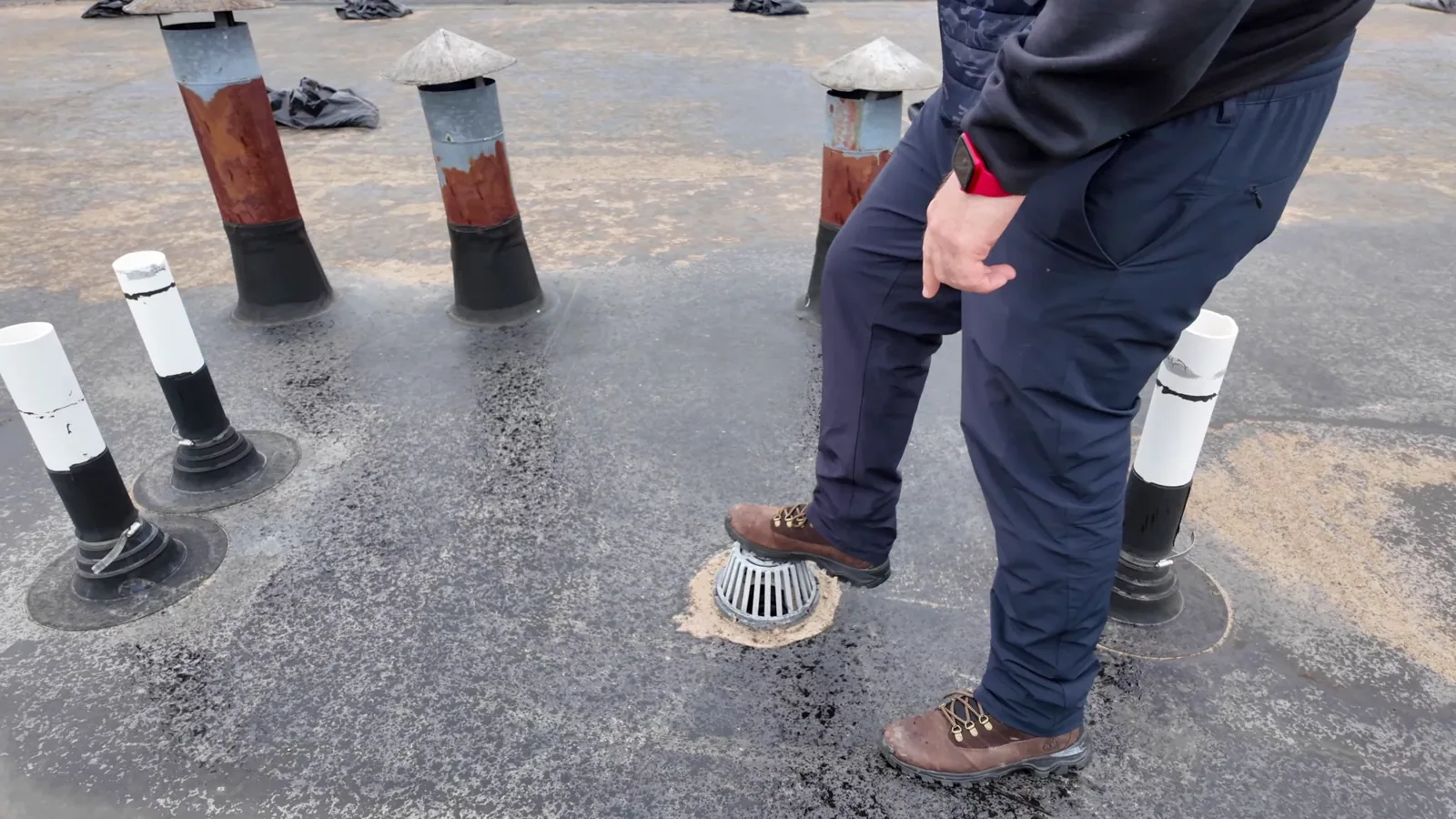
Drainage also needs a specific read. We record whether water was present during rainfall or remained afterward, whether the outlet was clear and what path runoff followed. A blockage, a low area and a problem at the discharge connection are different conditions. A drain and scupper review can show what is accessible and whether slope or discharge needs further evaluation.
At a roof edge, water management may depend on the relationship among slope, edge metal, scupper and downspout. We avoid prescribing a single detail before checking where water should travel and where it actually goes. A repair can then address the relevant path rather than only the most visible symptom.
Which work scope fits the evidence?
A bounded defect in an otherwise stable assembly may support a local repair. Repeated seam or flashing failures, widespread surface deterioration or confirmed wet insulation can make restoration or replacement more appropriate. We explain how the finding changes the scope and identify any quantity still dependent on investigation. That keeps the decision between alternatives tied to conditions the owner can verify.
A repair estimate should describe preparation, compatible material, tie-in and weather protection. A replacement comparison should state removal assumptions, access, disposal and any deck evaluation. If a coating is considered, a restoration assessment must establish substrate and moisture suitability first; coating does not correct every drainage or concealed assembly problem.
Costs can shift with access, roof height, layers, material selection, staging, protection and field quantity. We distinguish a planning range from a construction price and note what observation could change either. The owner can then compare near-term control with longer-term performance without treating uncertainty as a confirmed defect.
How can the property team track work?
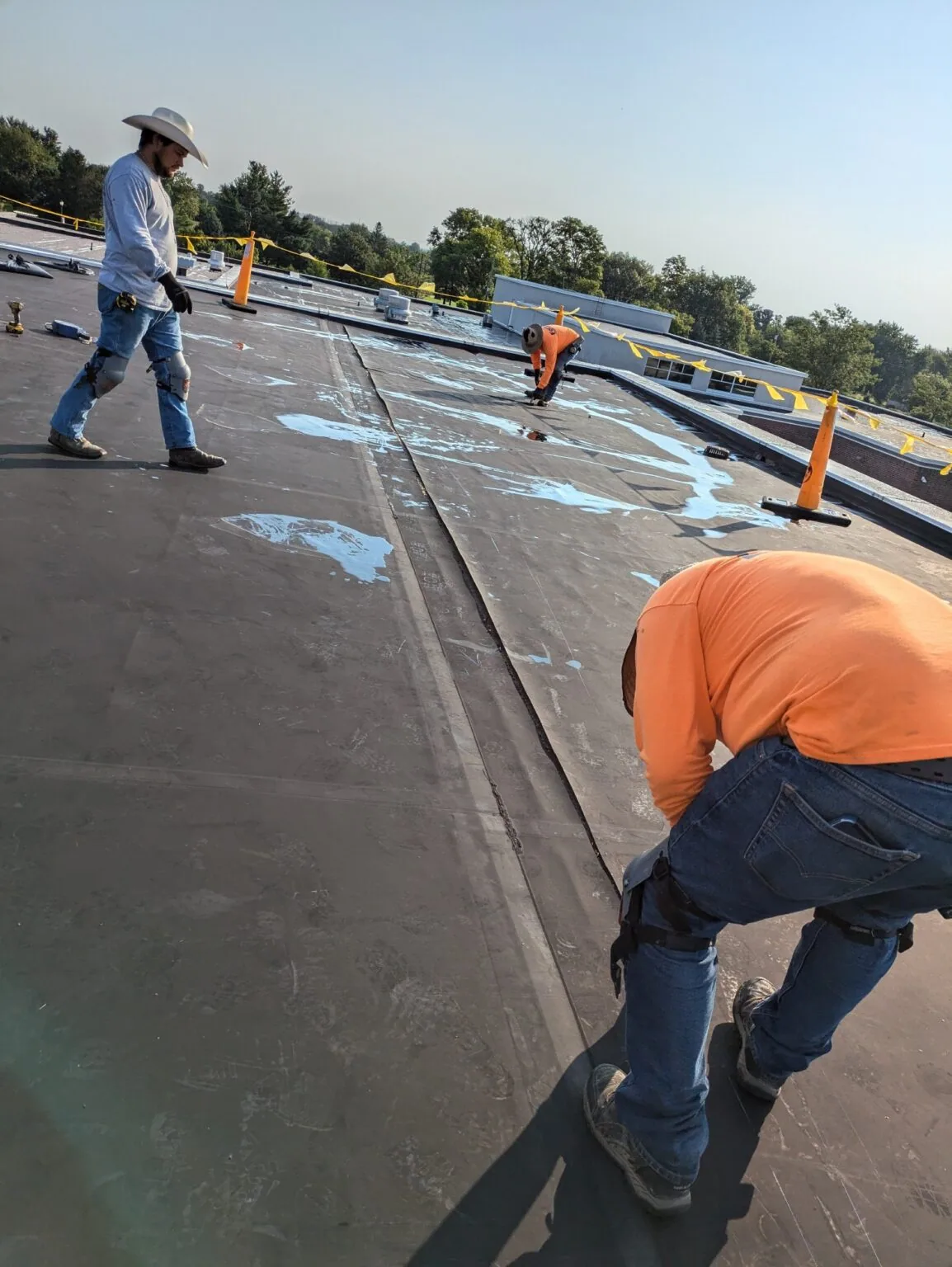
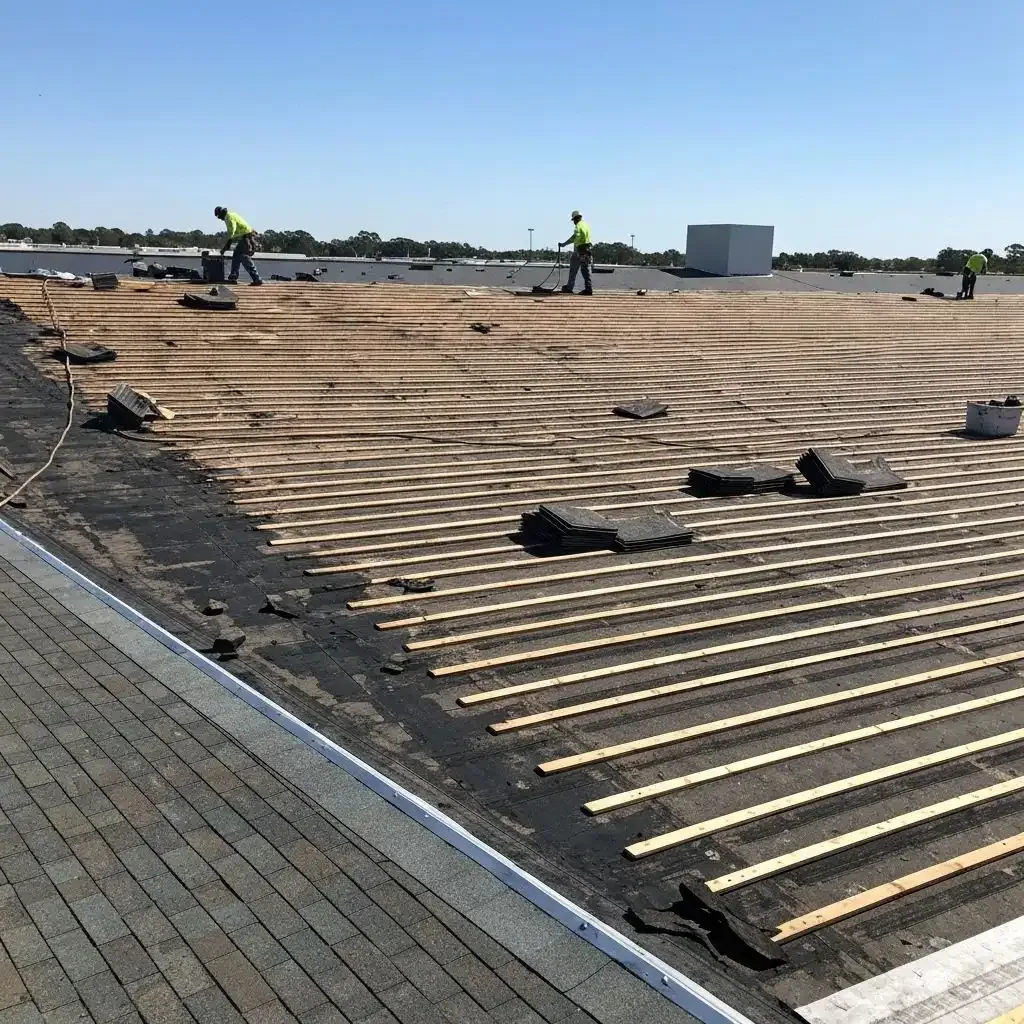
A corridor project can involve managers, tenants and contractors who each need a usable record. We identify work areas consistently and pair close photographs with views that locate the detail on the roof. Progress notes show what is complete, what remains protected and where access is still needed. A concealed condition discovered during removal is documented before a changed scope is authorized.
The same discipline applies across the wider Irving area. Work in Heritage Crossing or Las Colinas should still be described in property-specific terms. A written record can distinguish field observations, recommended actions and unresolved questions for the next budget review.
At closeout, we describe repairs made, materials where established and any follow-up condition. If a section was not accessed, that boundary remains explicit. A later inspection can use the record to compare the same location, rather than assuming that work on one roof resolved a similar issue elsewhere along SH 183.
What sequence protects the building?
Before mobilization, agree on who can approve changes, how the roof is made weather-secure between shifts and what evidence is needed before concealed work expands. A defined stop point protects the owner from automatic scope growth when removal reveals something different. Photographs, measurements and a concise explanation let the property team make that decision with the roof open and the alternatives clear.
Material lead times and weather windows affect scheduling, while access and operating restrictions shape the workday. We identify the assumptions that matter and revise them when field conditions change. If warranty documentation or manufacturer requirements apply, the actual project records need review rather than an assumption that a particular coverage exists.
Owners can help by sharing plans, prior repair notes, leak dates and site restrictions before the first visit. We then focus the examination on the question that matters most and define what must be confirmed before a permanent repair, restoration or reroof is authorized.
Commercial Roofing Questions
Does SH 183 access determine how a roofing project is scheduled?
It can affect travel and material planning, but the building's authorized entrance, staging and work hours control the site sequence. We confirm those conditions with the property contact. Road improvements or traffic patterns do not establish roof access or operating restrictions for an individual property.
Can you tell the leak source from an interior stain?
A stain identifies where water became visible, not necessarily the opening. We compare timing and interior location with roof transitions, drainage and the assembly's layers. If concealed construction prevents a reliable conclusion, we explain what selective investigation could confirm before defining a larger repair.
What happens if removal reveals a different roof assembly?
We stop at the agreed decision point, document the exposed condition and compare it with the assumed scope. The owner can review the evidence and authorize a change before the crew proceeds. This makes additional quantities and schedule effects visible rather than treating concealed work as automatic.
Will a roof coating fix drainage problems?
A coating can restore a suitable existing surface, but it does not correct every low area, outlet defect or concealed moisture condition. We first assess substrate, adhesion, drainage and details. If those conditions do not support restoration, the owner can compare repair, selective reconstruction or replacement instead.
Ready to review the roof scope?
Request a Roof Assessment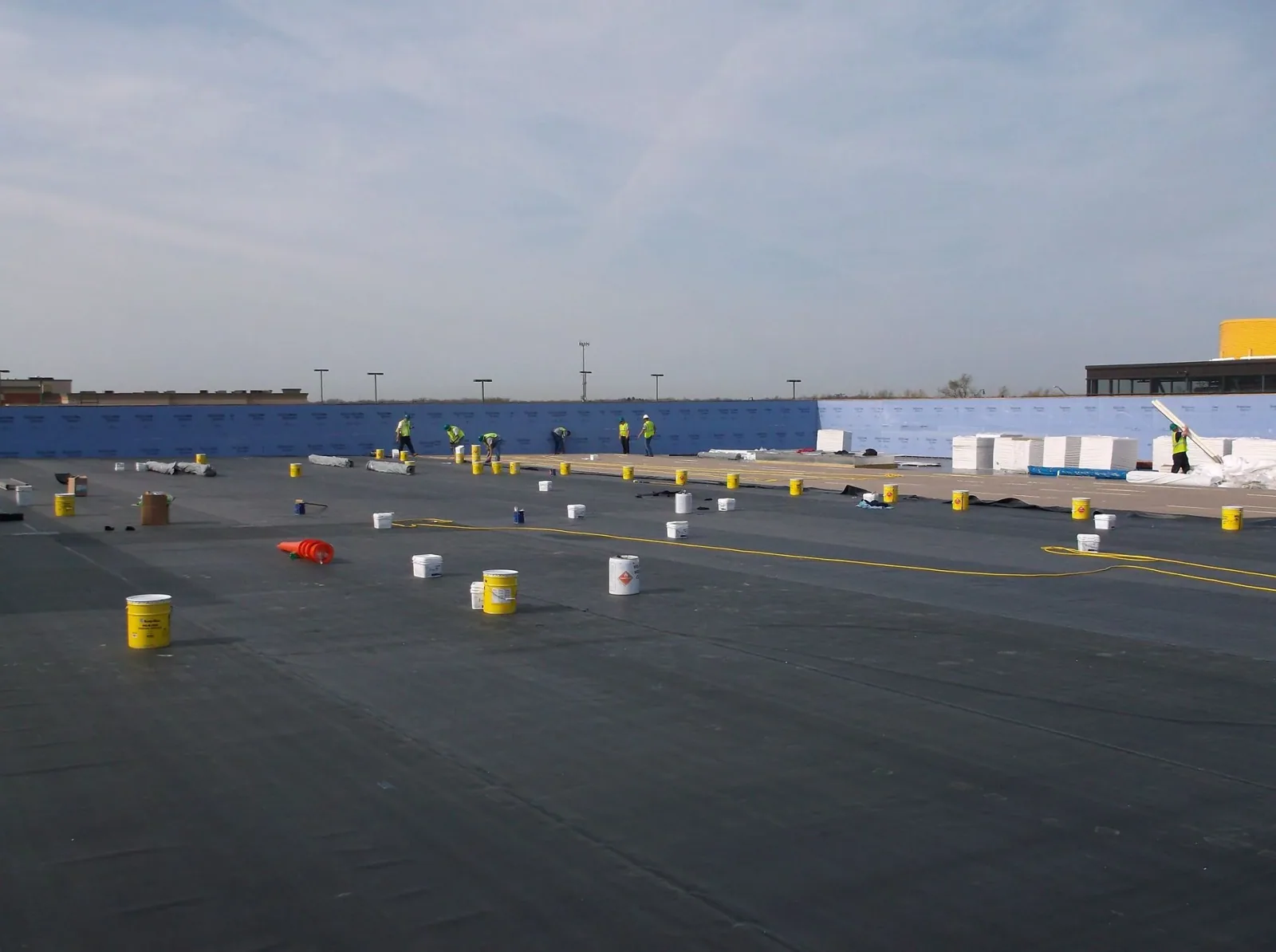
Commercial Roof Flashing Failure Repair
See scope, options and what to expect on the roof.