A roof flashing can look intact from above while water passes behind its upper termination or through a separated corner. In Irving, TX, hot summers in the Dallas/Fort Worth region create repeated temperature change between exposed materials and the structure below. That movement can matter where flexible membrane meets a rigid curb, wall or metal edge. Commercial Roofing Irving traces the connection and its water path before deciding whether to repair the flashing, support or adjacent covering.
Las Colinas includes office buildings, and Valley Ranch has commercial and multifamily properties with varied rooftop equipment. We account for the actual curb, penetration and operating access on each roof. The repair boundary follows the parts that can no longer shed water or hold attachment, not simply the visible bead of sealant around a joint.
Where did the water cross the flashing?
Water can enter at a split corner, an open lap, a failed upper termination or a flashing height that no longer protects the transition. We compare the interior report with the roof detail and examine nearby seams, fasteners and drainage paths. A wet ceiling directly under a curb does not prove the curb is the entry point, because water can travel along a deck or insulation layer. We mark the likely route and use a selective opening when concealed material prevents a useful conclusion.
Sealant can protect a compatible joint, but it cannot replace a loose membrane leg or restore a metal flange that has released. We remove material that prevents preparation and inspect the substrate before rebuilding the detail. The connection needs a secure upper edge and continuity with the field covering. If an adjacent seam is also separating, its cause may involve movement or tension; seam repair is coordinated so the flashing is not attached to a stressed boundary.
What changed at the curb or wall?
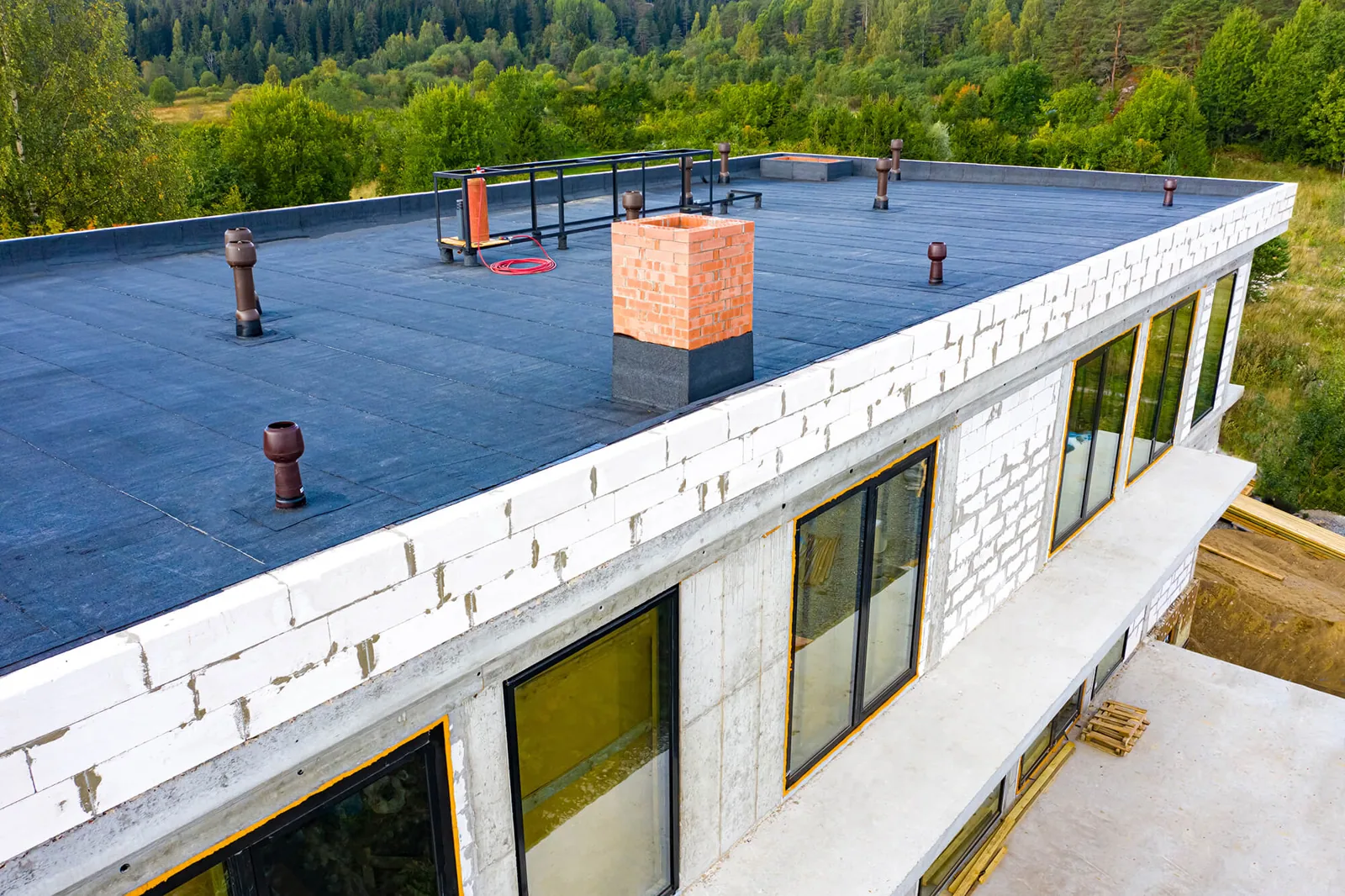
A curb corner has two changes of plane and often a rigid frame that moves differently from its membrane. We examine corner reinforcement, flashing height, terminations and support at the base. Equipment can hide the upper connection, so a proper correction may need service access or a lift plan with the mechanical contractor. We do not rely on a surface coating to bridge a detail that cannot be reached or prepared. The method depends on the existing material and whether that material remains suitable for a compatible bond or weld.
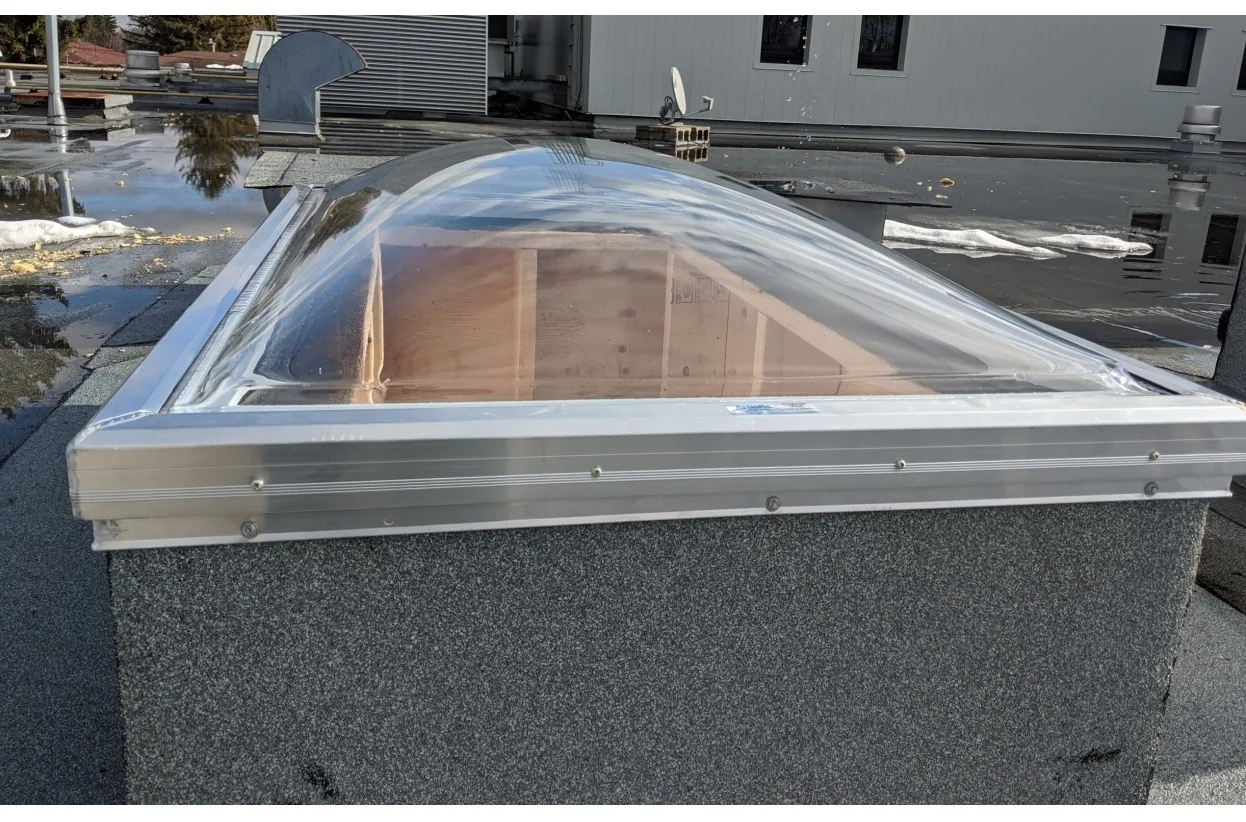
At a parapet or wall, counterflashing, reglet and roof membrane work together to direct water outward. A displaced counterflashing can expose the membrane termination, while a damaged wall joint may send water behind the roof layers. We separate those pathways and identify which trade needs access to each component. Penetration flashing work can address equipment and skylight transitions, with the final assembly examined at both the upper termination and roof-field connection.
Can the detail move without pulling apart?
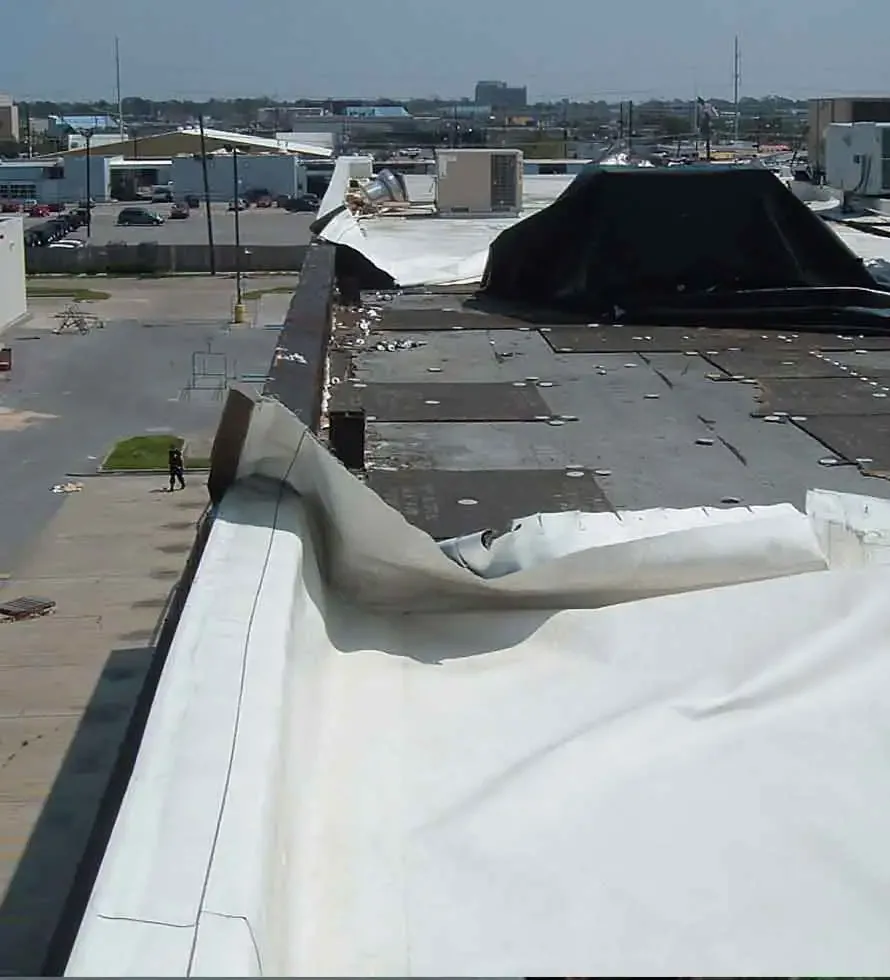
Repeated heating and cooling changes the relative position of membrane, metal and curb materials. A rigid bridge across a movement joint can split because it restrains movement that the joint must accommodate. We inspect the geometry and identify whether the failed flashing is isolated or tied to a larger transition. Where pressure from wind has also lifted an edge, wind-related connection repair may be needed to restore attachment beside the flashing.
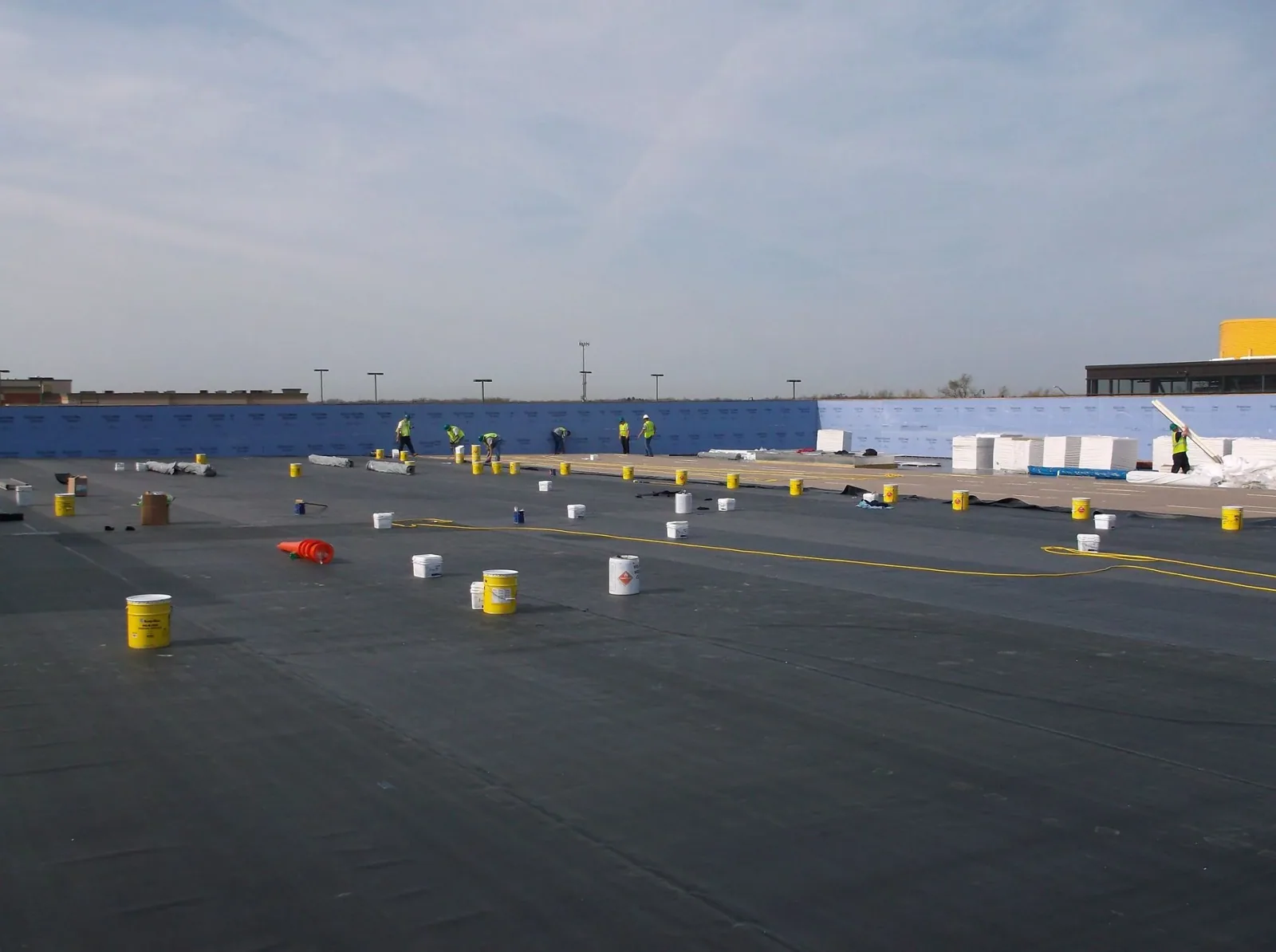
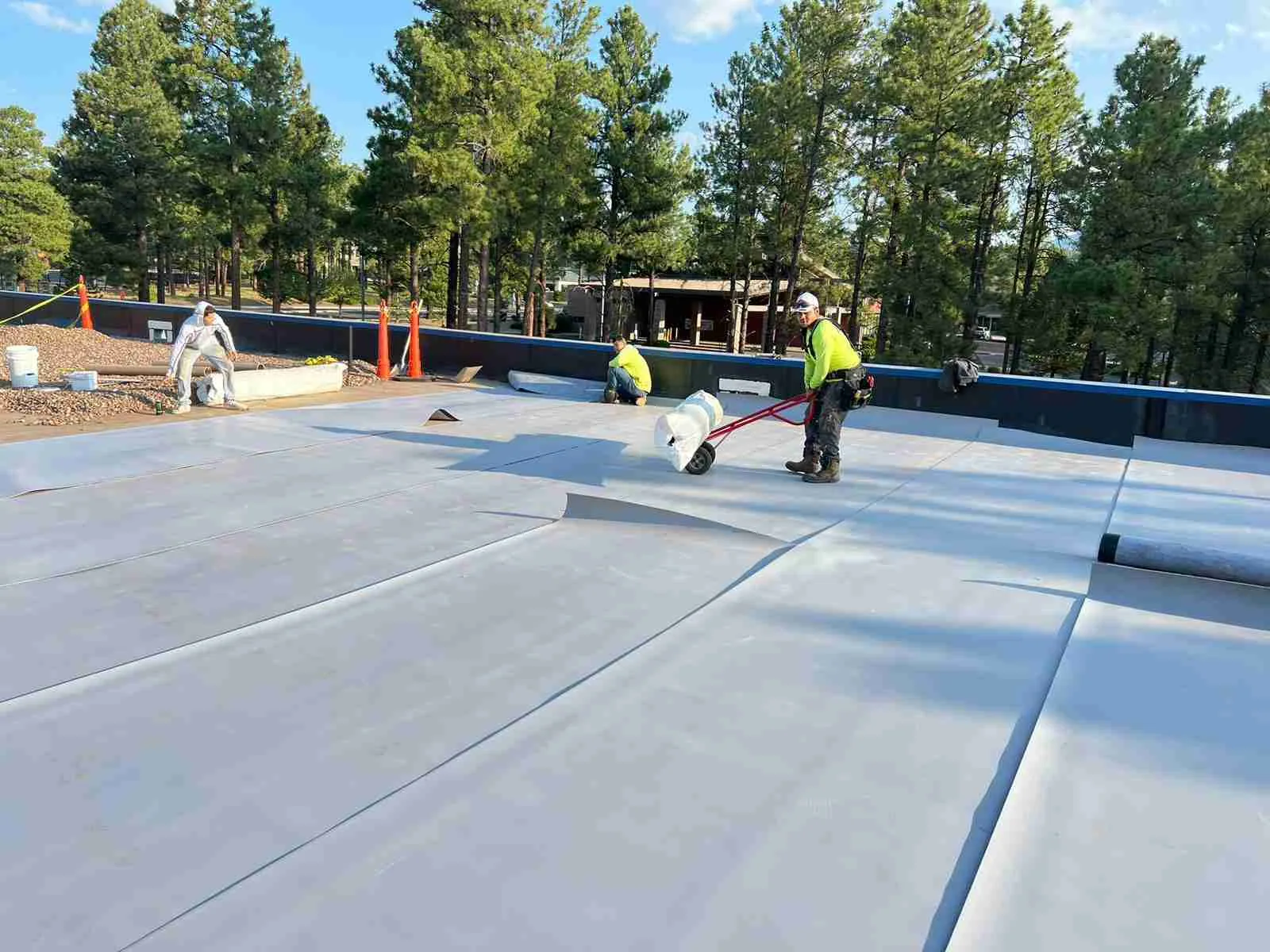
The repair must use materials compatible with the roof system and its surface condition. On a thermoplastic sheet, preparation and welding need to form a continuous transition; other membranes require suitable primers, adhesives or detail components. We check existing repairs before selecting the method, since incompatible material can make later bonding difficult. A roof inspection records the installed assembly and nearby changes so the owner can compare a contained detail repair with wider deterioration.
Does wet insulation extend beyond the detail?
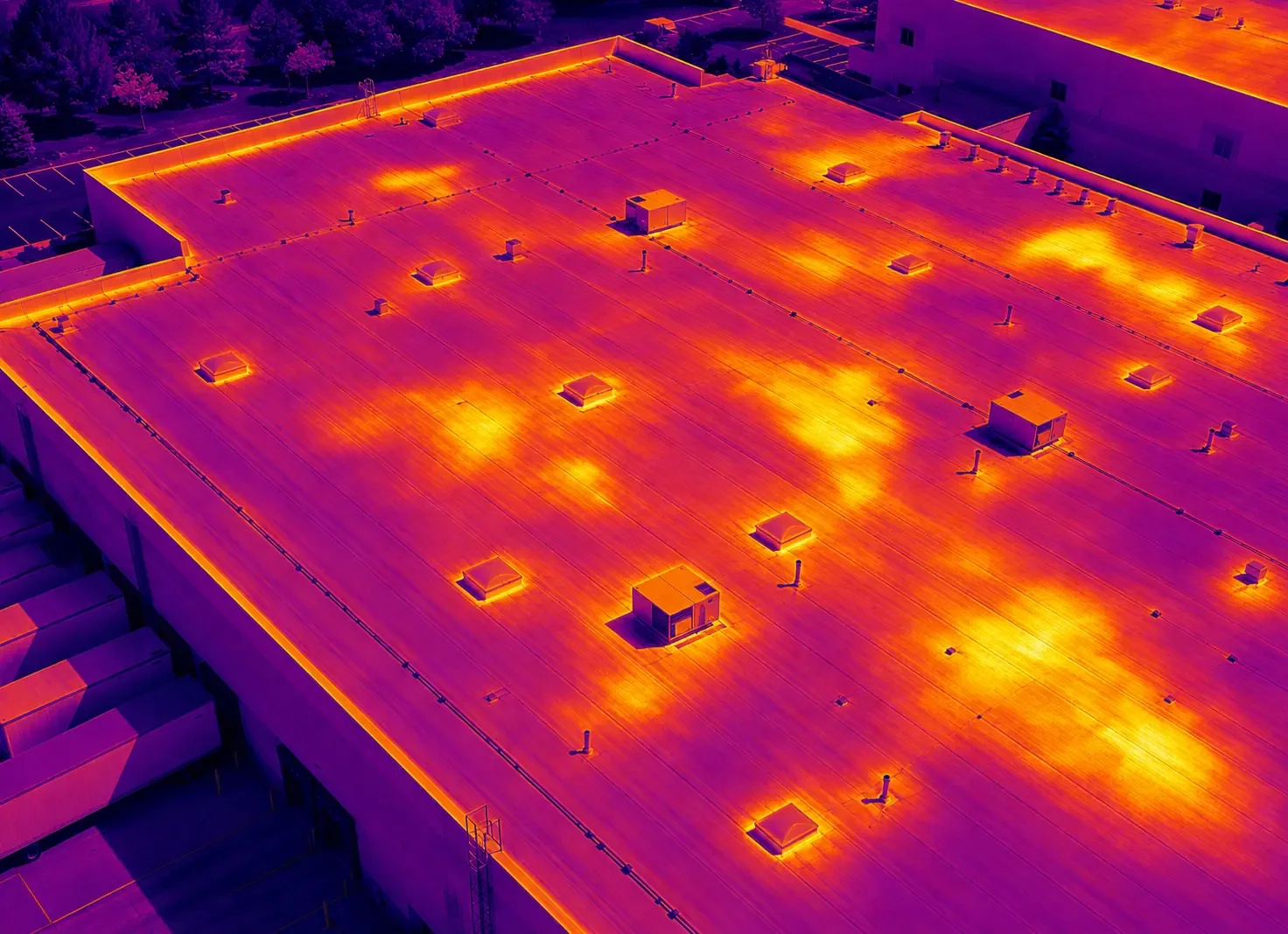
Water that passes a curb can travel under the membrane before it reaches the interior. We compare roof slope, board joints and the observed leak location, then decide whether a moisture survey or direct opening can clarify the boundary. An infrared survey may help target locations under suitable conditions, but its pattern needs confirmation against the assembly. Wet insulation or soft support changes the work because new flashing cannot correct a layer that no longer provides a stable base.
Where an opening exposes the substrate, we protect the area until suitable materials are ready for closure. Removal extends to dry, sound layers that can accept the replacement detail. We also check nearby drains and sheet transitions, since retained water can prolong contact with a weak flashing. A photo record distinguishes the failed connection from any unrelated membrane wear. The owner can see which material was rebuilt, what remained in place and what observation might prompt another examination.
How will the repair fit the building schedule?
Repair sequencing depends on equipment access, weather and whether the roof area sits over occupied space. In Las Colinas office properties, we discuss staging, noise and access around building operations. For Valley Ranch commercial and multifamily settings, service routes and resident circulation may affect when equipment can be moved. We coordinate the roof opening with the responsible trade, keep exposed layers protected and close the detail when the materials can be prepared correctly.
Emergency water entry can require a separate protective response while the permanent detail is planned. We provide emergency roof repair when an opening needs immediate attention, then document what temporary work does and does not address. Cost depends on the number of corners, access under equipment, metal reconstruction, wet-layer removal and any support that must be replaced. That breakdown gives the owner a clearer basis for approving the repair without conflating it with broader replacement.
When should flashing repair become a larger scope?
A single separated corner may be repairable if the surrounding membrane, curb and substrate are sound. Widespread loss of bond, repeated failures at multiple transitions or wet insulation can shift the comparison toward sectional work or replacement. We explain which finding changes the boundary and whether more examination is needed before removal is set. The scope separates flashing reconstruction from related work so a small visible joint does not conceal a broader assembly issue.
After repair, periodic examination should include the upper termination and the point where flashing joins the field. The records note access limits or materials left in place, giving future maintenance a useful starting point. If the same leak returns, we can compare the new observation with the documented repair instead of repeating surface sealing. Request an Irving assessment when water appears near a curb or wall; a sound correction starts with identifying where the connection stopped directing water outward.
Commercial Roofing Questions
Can a leaking curb be fixed without moving the rooftop unit?
Some details remain accessible with the unit in place; others conceal the upper flashing or limit safe preparation. We check the curb geometry, service clearances and connection before setting the scope. If lifting or disconnection is needed, we coordinate with the mechanical trade. Surface sealing from the exposed side is not a substitute for rebuilding a connection that cannot be reached.
Why does new sealant fail at the same wall joint?
The joint may be moving, poorly supported or carrying water behind the visible edge. We identify whether the failure belongs to the sealant, counterflashing, membrane termination or wall transition. Replacing a bead without correcting that mechanism leaves the underlying path unchanged. The repair method follows the materials and movement expected at that specific interface.
Will a flashing repair include insulation replacement?
It will when inspection confirms wet or damaged insulation within the repair boundary. We examine beneath the covering where the leak path or soft support makes that check useful. Dry, stable material can remain when the new connection can be made to it. Removal limits follow the exposed layers rather than the size of the ceiling stain.
How can I tell whether a flashing issue is urgent?
Active entry, loose metal or a connection that can admit more water calls for prompt evaluation. We assess safe roof access and protect the opening when conditions allow, then plan the permanent reconstruction. A dry surface does not rule out concealed wetting. The next decision depends on the detail's attachment and the layers immediately behind it.
Ready to review the roof scope?
Request a Roof Assessment