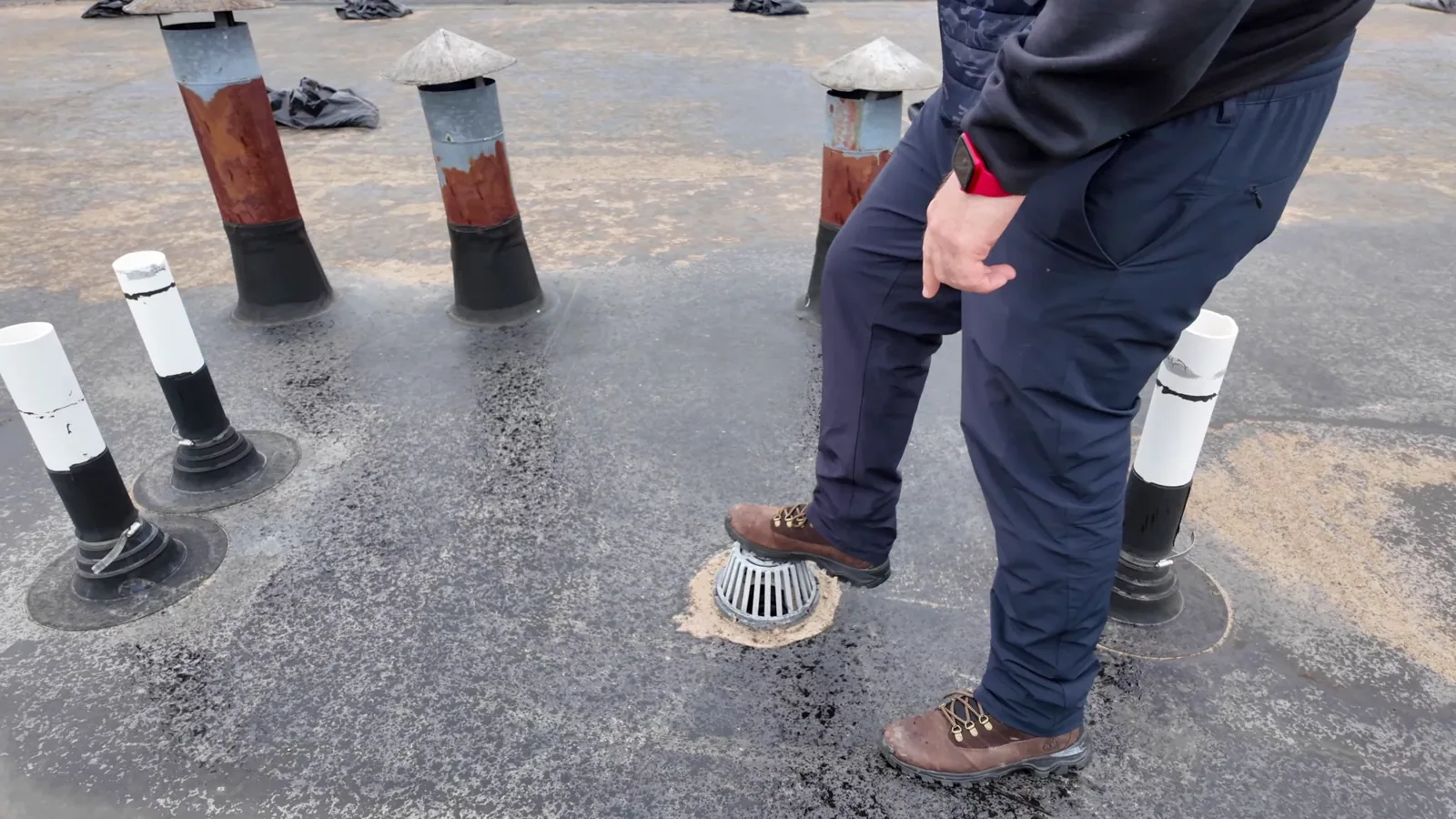
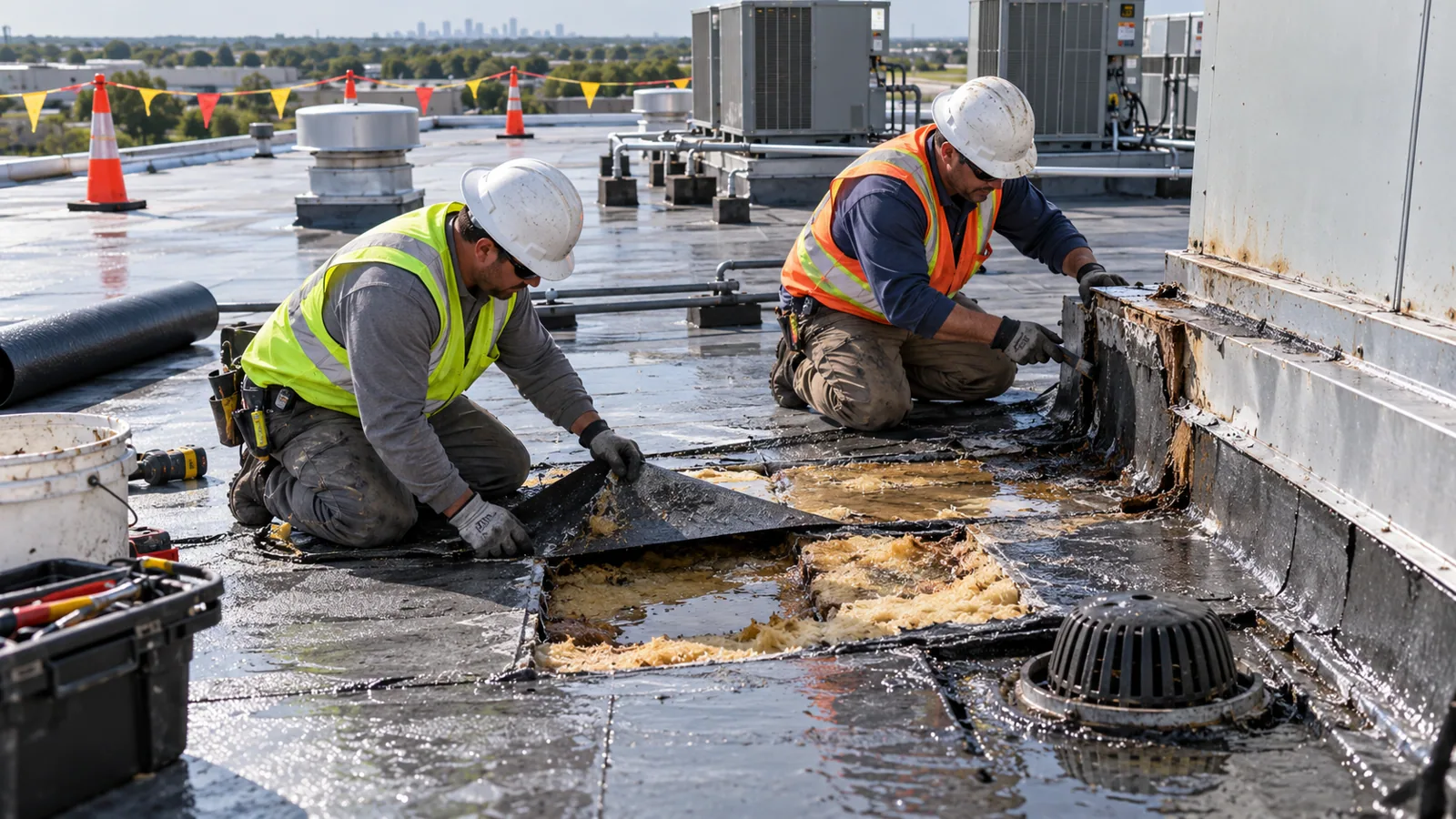
Metroplex storm winds can put edge terminations and fasteners under stress, but a mark near Belt Line Road does not establish wind damage; the owner needs to distinguish displacement from a repairable surface defect. Commercial Roofing Irving checks the reported area, nearby transitions and the path water could follow. The Irving Chamber identifies North Irving around the SH 183 and Belt Line Road intersection and describes a ten-mile commercial corridor with an established retail setting, not a uniform roof inventory.
The Irving Chamber identifies North Irving around the SH 183 and Belt Line Road intersection and describes a ten-mile commercial corridor with an established retail setting. Those facts help define the service area, not the roof condition at an individual business. Our roof inspection records the actual detail examined, the access available and the evidence behind the next step.
What access does this property allow?
Before dispatch, we confirm the approved entrance, roof access, site contact and any delivery or staging restrictions. A busy roadway nearby may be relevant to crew movement, but the building's own rules control where people and materials can go. We ask about operating hours, tenant coordination, equipment and areas that cannot be interrupted. The schedule reflects those facts rather than an assumption about every retail property along the corridor.
For an initial visit, share the reported leak location, timing, earlier repairs and any roof plans. If the visible interior condition is near a storefront or occupied area, access for a ceiling check may need coordination. We can then compare the interior report with roof details without confusing the point where water appears with the opening where it entered.
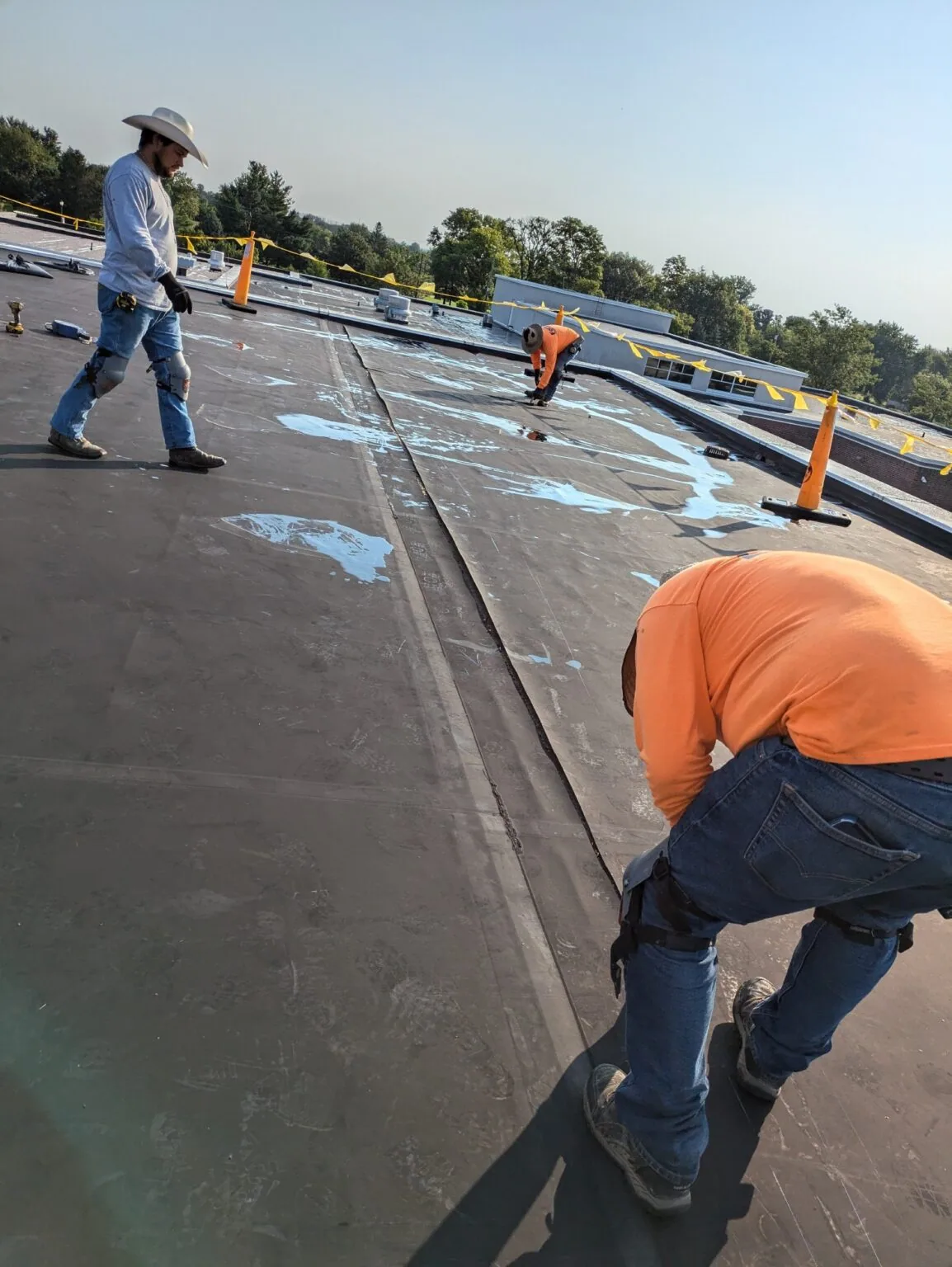
Where work must proceed while the property operates, a phased reroof plan can identify access, noise, protection and end-of-shift conditions. We agree on who will approve a change if removal reveals construction that differs from the assumed scope.
Which connection needs repair?
Water can travel before it reaches a ceiling, so we trace likely paths across the roof field, curbs, penetrations, seams, drains and perimeters. A membrane puncture may need one type of repair; a separated termination may require reconstruction of the edge connection. We identify the covering when visible and look at surrounding material that must remain sound for a repair to hold.
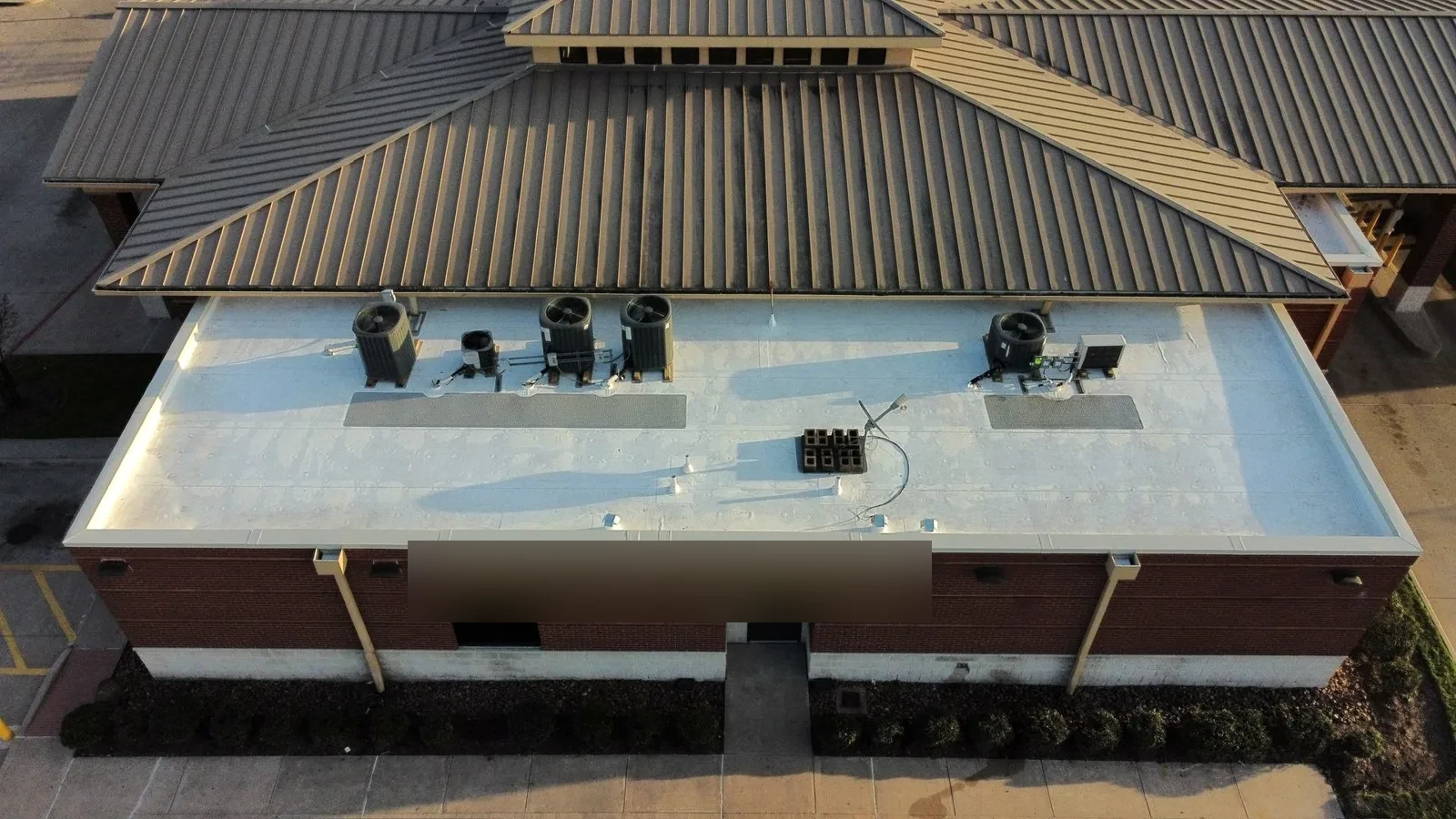
A flashing correction should restore continuity between the roof and the adjoining wall or curb. Applying sealant over a loose or unsupported detail can leave the original movement or water path unresolved. We document whether the substrate is stable, whether the termination is secure and whether concealed materials need examination.
If a defect is visible but the repair boundary is not, selective opening may be proposed. We explain why that location answers the question, how it will be protected and what finding would change the work. The owner receives a distinction between what is confirmed and what is still an inference.
How did water move across the roof?
At an established retail setting, roof drainage still needs to be evaluated at each property. We note outlet condition, visible obstruction and where runoff travels. Water observed during rainfall does not mean the roof is ponding; timing after the event matters. A blocked drain, low area and damaged outlet connection require different responses, so the inspection separates them where the evidence permits.
A drain and scupper assessment can document the accessible parts and identify whether additional slope review is needed. Clearing debris may restore an inlet but will not correct a depression in the roof plane. Similarly, a surface repair around the opening cannot resolve a failed pipe connection below it. The scope should identify which part has been confirmed.
Metroplex summer heat adds repeated thermal cycling to roofs, but it does not establish the cause of a loose seam or crack. We inspect movement allowance, attachment and material compatibility at the location involved. That detail-level check is more useful than applying a general climate explanation to every reported leak.
Which capital choice matches the condition?
A repair may be the right choice when the defect is localized and the adjacent assembly can accept the work. Distributed deterioration or repeated failure can justify considering restoration or replacement. We describe the quantity and condition that are known, plus the uncertainty that could change the boundary. That gives the property manager a basis to weigh service impact against expected performance.
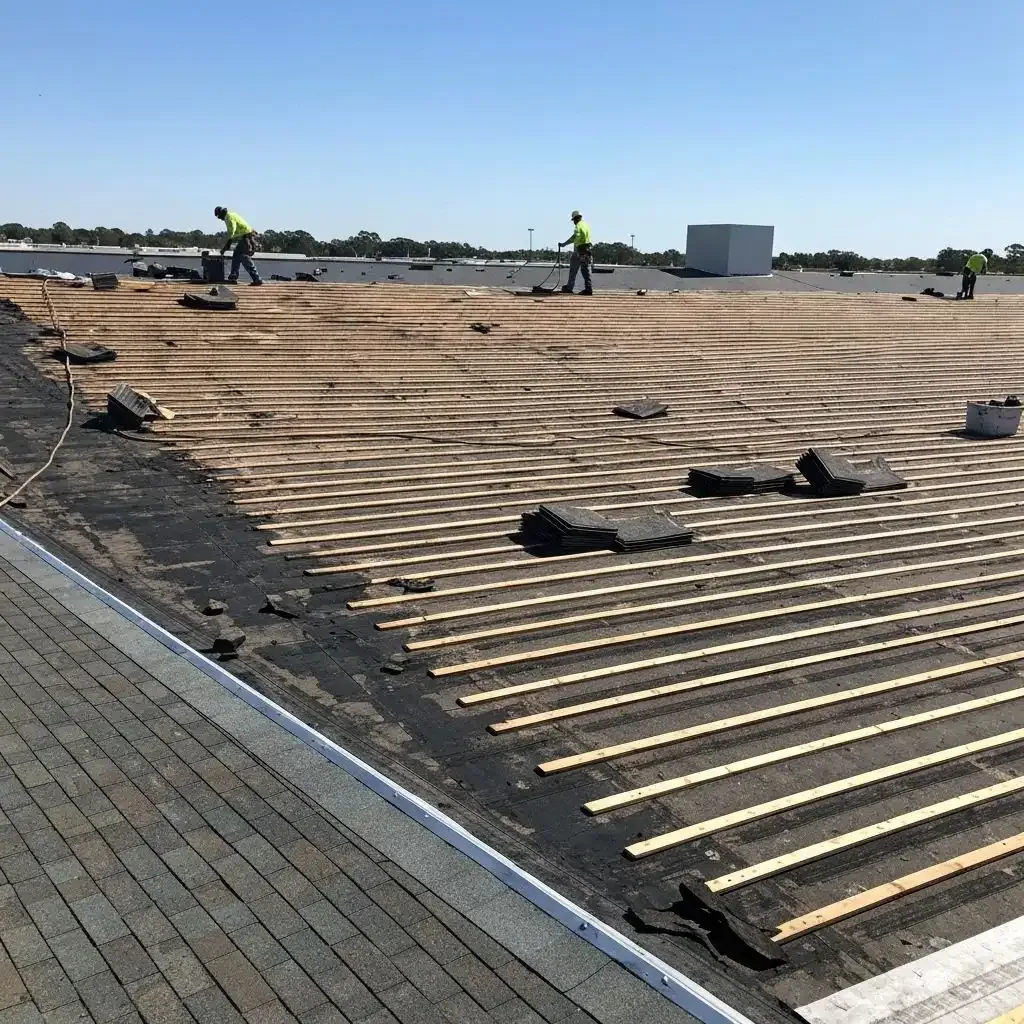
For a repair scope, we state preparation, compatible material, tie-ins, temporary protection and closeout. A replacement evaluation considers removal, access, staging, disposal and any deck condition requiring confirmation. A coating review must first address substrate, moisture, adhesion and details. A coating is not a cure for a drainage defect or unsound assembly beneath it.
Cost and schedule depend on actual area, roof height, access, layers, material, protection and concealed conditions. Any preliminary range should show those assumptions. The owner can compare the choices without mistaking an unverified moisture concern for a measured scope or an early budget for a final price.
How can people and inventory stay protected?
Retail operations can continue in some work sequences, but the building's own schedule determines what is feasible. We discuss customer access, loading, delivery timing, noise, odor and interior protection with the manager. Work zones and temporary closures should be communicated before crews arrive. Where a roof section must be opened, the crew needs a defined weather-secure closeout at the end of each shift.
If concealed construction changes the estimated scope, we stop at the agreed review point. Photographs and measurements should show the condition and the proposed response. The manager can authorize a change with its cost and schedule effect understood. That process protects the property from an unrecorded expansion and helps crews preserve a safe route through adjacent work.
When multiple roof areas are involved, a location key shows which sections are complete and which remain. A later team can distinguish a repair already completed from a nearby area that was not included. This is particularly useful if responsibility moves between a landlord, tenant and maintenance provider.
What evidence should closeout retain?
Closeout identifies where work occurred, which detail was corrected and what remains unresolved. Photos pair close views with context so the location can be found later. We note limitations on access and any conditions that call for follow-up. A dated record helps the next inspection locate the same area.
The broader Central Irving SH 183 corridor and nearby Valley Ranch are separate locations within the market. Portfolio decisions can use a common reporting format while preserving each roof's system, observations and repair history. A roof asset record keeps those property-level details available when budgets or managers change.
Share leak history, previous work and operating limits when arranging an assessment. We will clarify access, the question to answer and the method needed to answer it. The next recommendation should connect a repairable mechanism or broader deterioration to the evidence, not to an assumption drawn from the commercial corridor around the building.
Commercial Roofing Questions
Does a retail corridor mean nearby buildings have similar roofs?
No. The corridor identifies a broad service area, while age, system, slope and repairs differ by property. We inspect the specific building and record the assembly only where it can be established. A nearby roof or tenant mix cannot be used as evidence of another property's construction.
Can a patch solve a leak near a roof edge?
It can if the opening is bounded and the surrounding termination and substrate are sound. If movement, loose support or concealed moisture extends beyond the visible gap, the scope may need to include reconstruction or investigation. We check the detail and state what was confirmed before recommending a repair boundary.
How do you plan work around deliveries and customers?
We coordinate with the property manager on delivery periods, entrances, work zones, noise and material staging. The sequence follows the actual building's operation. If work opens the roof, the plan specifies protection and secure closeout before the crew leaves for the day.
What should be in a commercial roof repair record?
Record the location, observed condition, materials used, tie-in, photographs and any unresolved concern. Note inaccessible areas and follow-up recommendations. That information helps a later manager tell completed work from excluded areas and gives a future inspection a reliable starting point.
Ready to review the roof scope?
Request a Roof Assessment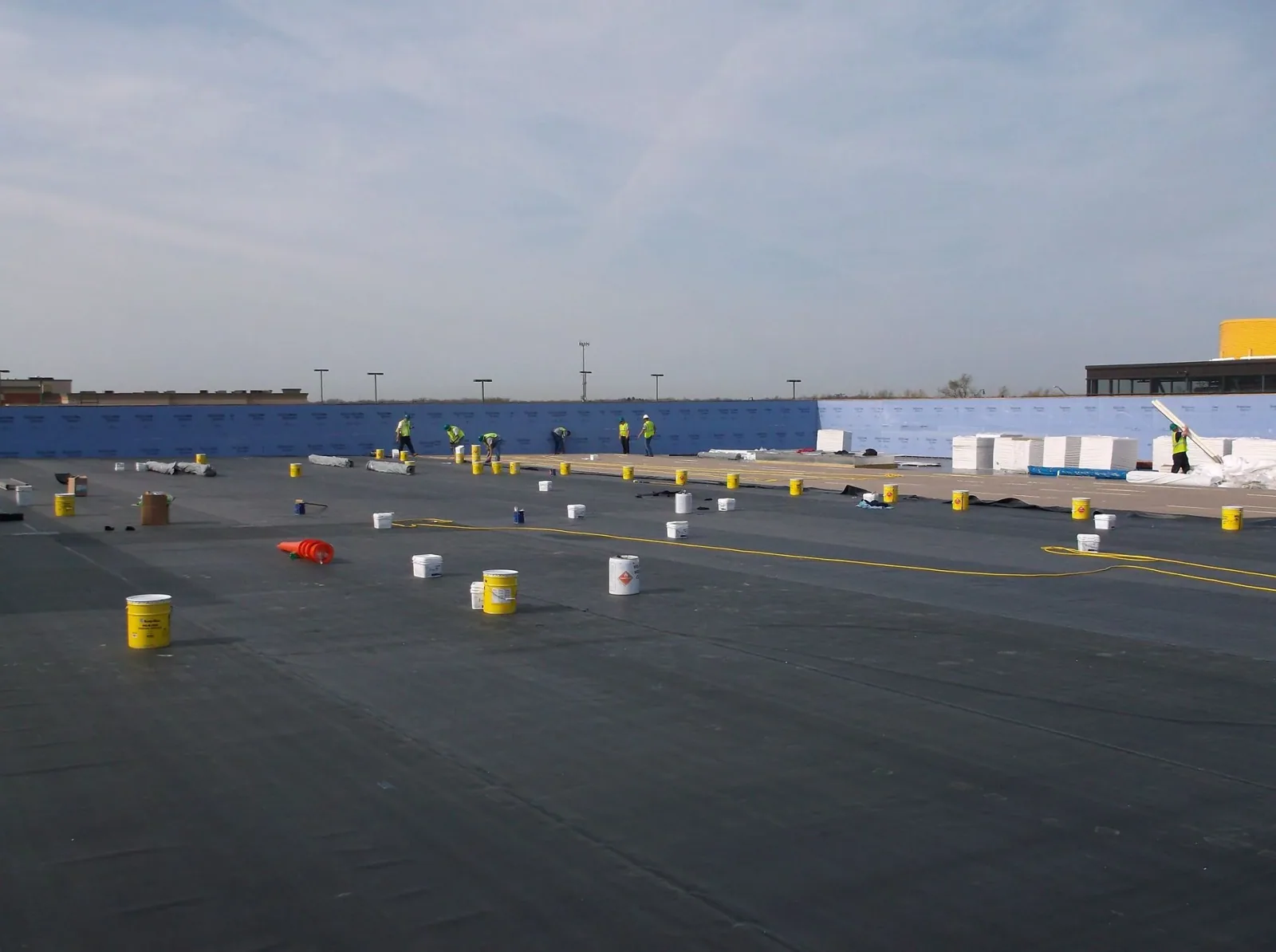
Commercial Roof Flashing Failure Repair
See scope, options and what to expect on the roof.