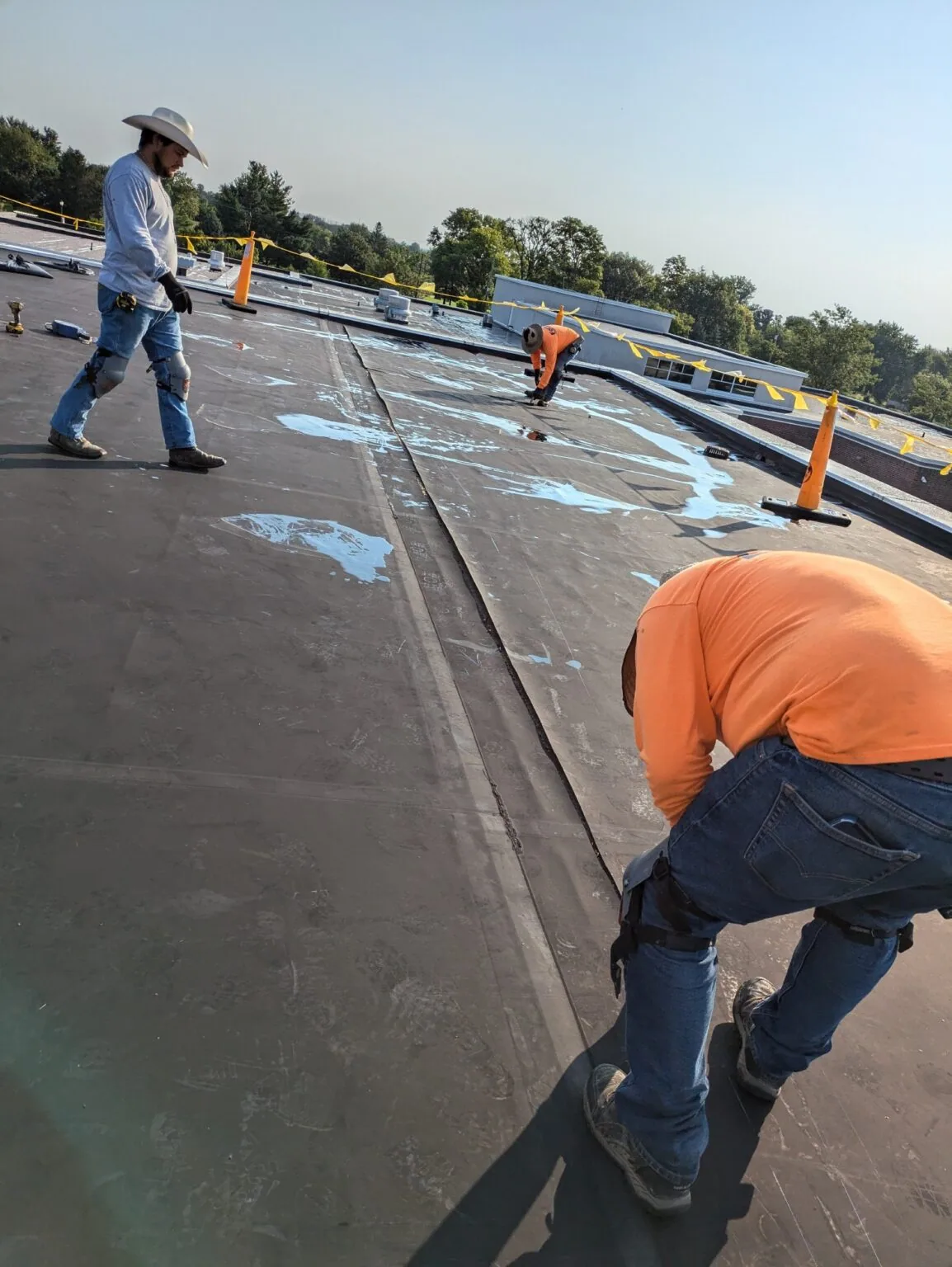
Removing a sun-heated covering exposes layers that need protection before rainfall or interior air conditions change their moisture state. Occupied-building reroofing in Irving, TX, therefore connects daily work limits with the assembly being rebuilt and the operations below it. Commercial Roofing Irving plans removal, equipment access and roof closure together so the sequence addresses both the material condition and the building's continued use.
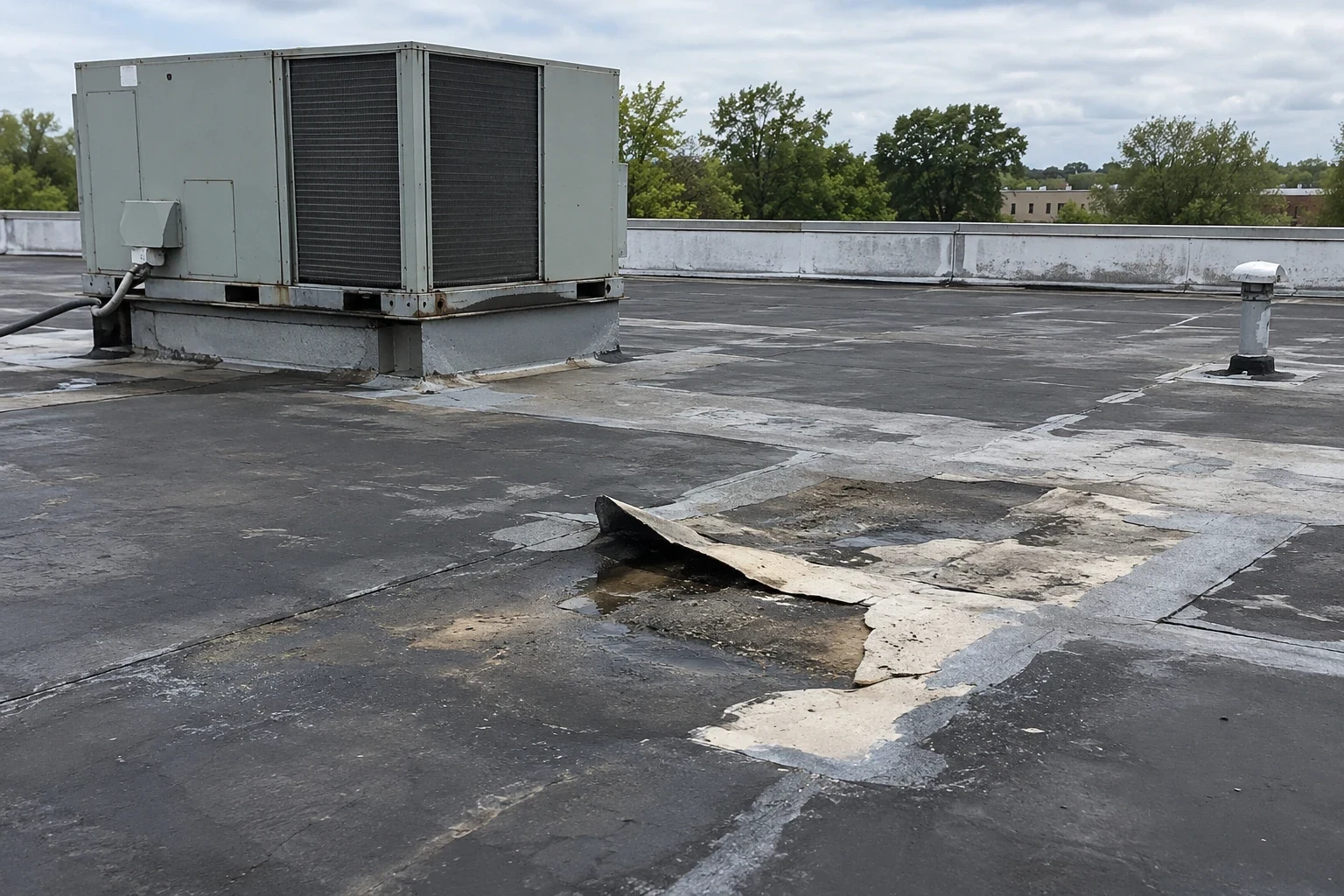
Las Colinas combines office, retail and multifamily buildings, while Valley Ranch also includes commercial and multifamily uses. Those settings require different access and interior coordination, particularly when equipment or entrances fall within the work area. The Dallas/Fort Worth region's hot summers and wetter spring and fall periods influence the available construction windows, but the daily opening follows the actual roof condition, protection needs and ability to close the exposed assembly.
How much roof can be opened within a workable day?
The opening limit depends on removal depth, substrate repair and the time needed to establish a suitable closure. A section with straightforward membrane removal differs from one with several layers, wet insulation or deck deterioration. We examine those conditions before sequencing the work and identify where concealed findings may require adjustment. The opening is not selected solely from a desired production area when reconstruction and weather protection need more time.
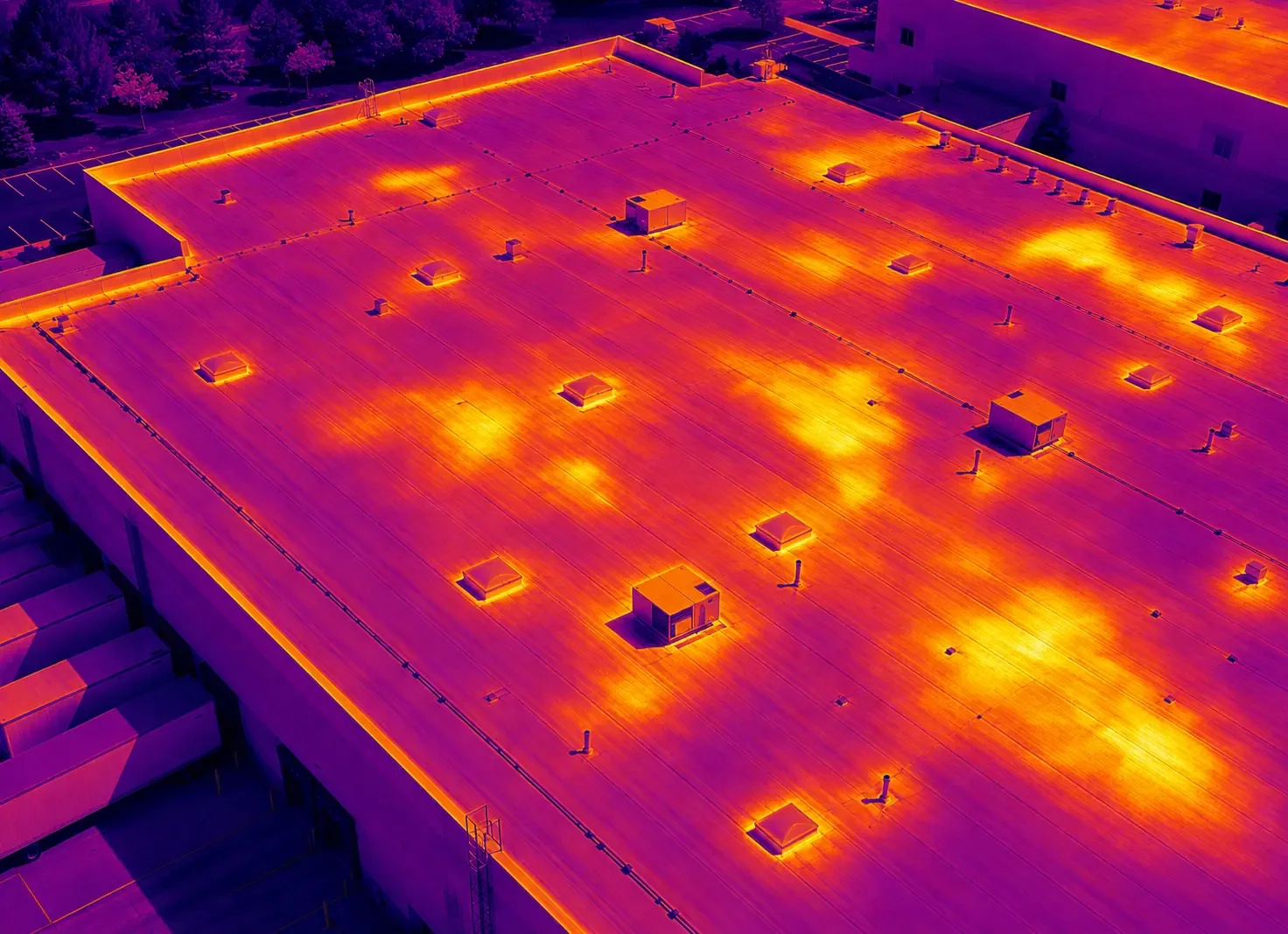
A moisture investigation before removal can help locate suspect layers and define further checks in a suitable assembly. We compare those findings with equipment, drainage and building divisions to establish practical work boundaries. A division convenient for tenant scheduling may not be a suitable roof transition. Temporary closures need sound connections to retained materials and a water path that does not direct runoff into the exposed edge.
What protects the interior while the assembly changes?
Dust, debris and water exposure depend on the deck and removal method, so interior protection is selected for the construction present. We identify sensitive spaces and equipment with the manager before work begins, including where a ceiling or service route needs examination. Protective measures should correspond to the anticipated activity rather than assume every deck provides the same separation from occupied space. Changes found during removal are communicated before they affect the next work area.
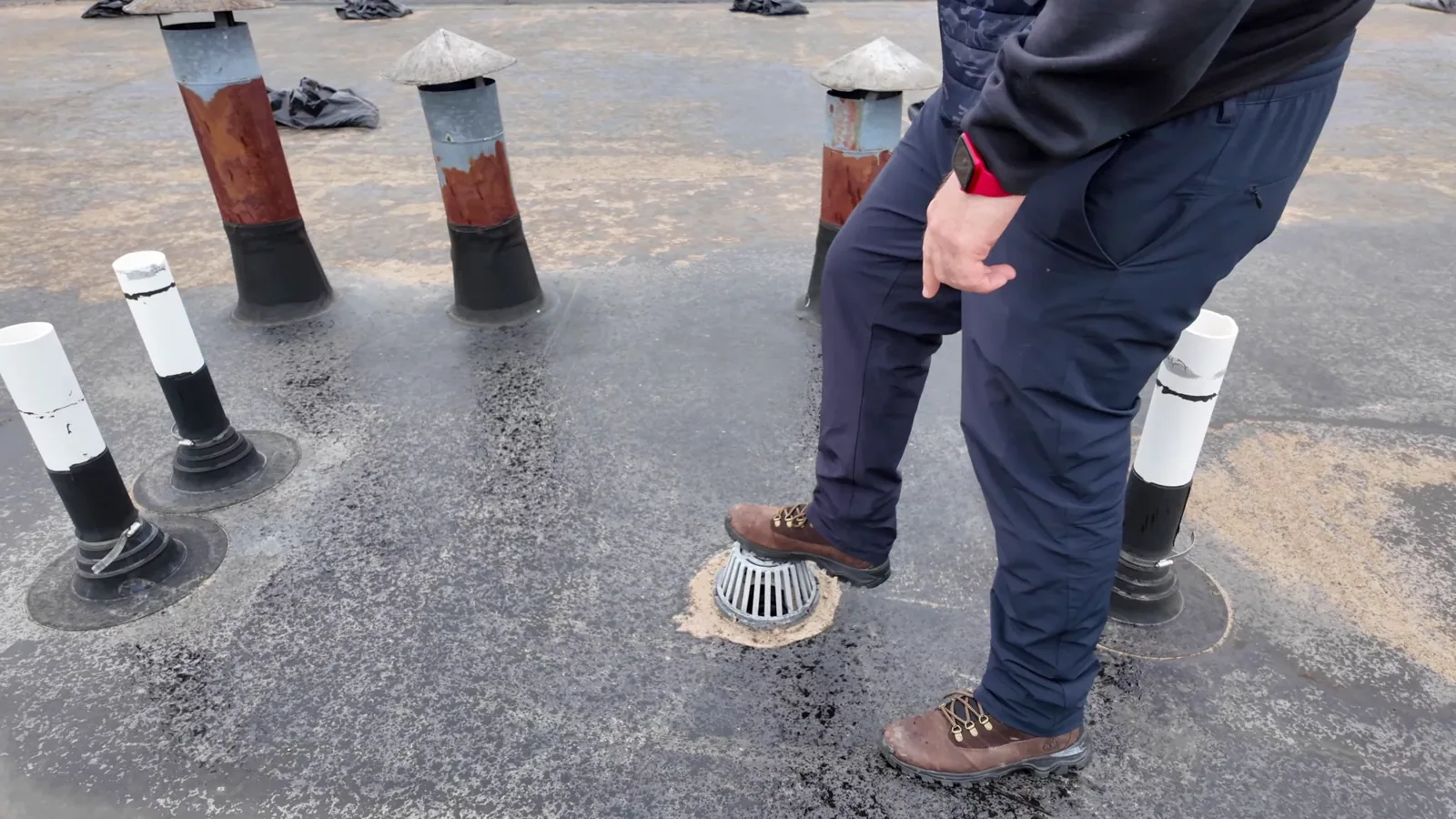
Weather protection also has to remain usable when work stops. We maintain suitable temporary closures and consider runoff from retained roof sections that drain toward the active area. Outlet and drainage coordination may be necessary while a drain connection is reconstructed. An exposed roof field can need more than a covering laid over the opening; the closure must connect securely and shed water under the conditions expected before permanent work resumes.
Which operations need a separate shutdown window?
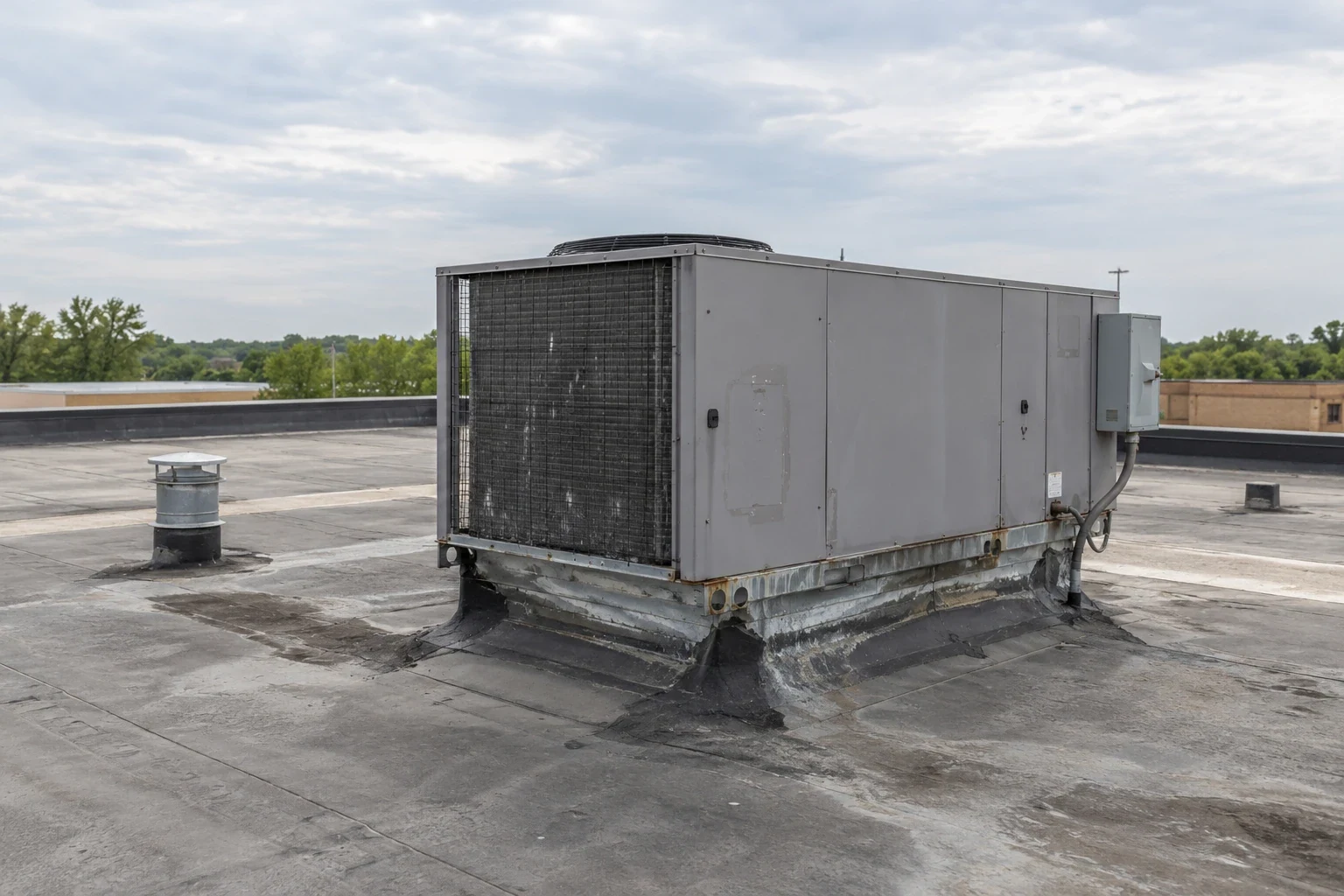
Equipment lifting, curb reconstruction and service disconnection can require a window different from ordinary roof installation. We examine access beneath the equipment and coordinate the sequence with the mechanical trade. Curb and support work should be resolved before the new covering is fitted around a connection that will later need to be opened again. Any shutdown plan includes the work necessary to return the equipment to service safely.
Adhesive use, preparation methods and noise can also affect occupied operations. We discuss those conditions with the manager and consider suitable ventilation or scheduling arrangements where relevant. The selected roof system's application requirements still govern the work; a quieter period does not make unsuitable temperature or moisture conditions acceptable for bonding. We compare the operating window with the material requirements so the construction sequence does not compromise the connection being installed.
How do entrances and material movement stay separated?
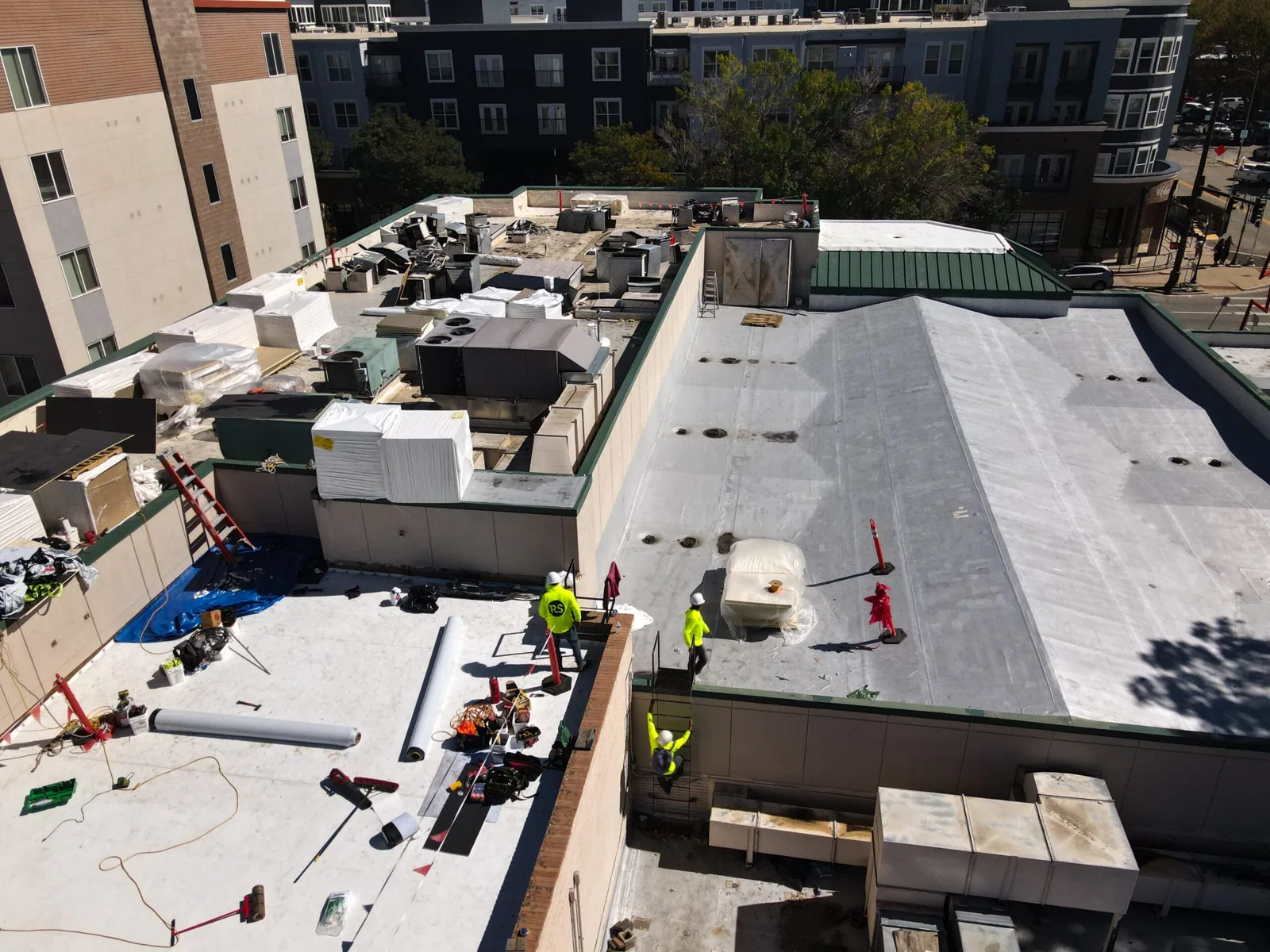
Material delivery, removal and lifting need a planned route with protection for people below and around the work. We identify entrances, loading activity and emergency access that must remain usable, then coordinate any temporary changes with the manager. Debris handling differs from bringing new material to the roof, and both can affect daily circulation. The staging plan accounts for those activities instead of assuming all roof work occurs outside the building's operating footprint.
For Las Colinas occupied properties, mixed office, retail and residential uses can require communication with more than one occupant group. We establish which roof sections and interior areas are affected during each phase, with the practical access changes described before the work reaches them. The roof assembly remains the basis for those phases, including how each new section connects to the retained covering and how outlets continue operating during the transition.
We also establish where new materials can be stored without placing unsuitable loads on a roof section or blocking an outlet. The delivery sequence should match the phase that can receive the material, with unused components protected from weather.
Does continued occupancy change the roof option?
Occupancy can influence logistics, but the retained materials determine whether a roof recover is suitable. Reduced demolition may help operations only where moisture, attachment and applicable restrictions support retention. Replacement with removal may be necessary where damaged layers need correction. We compare the assembly condition with the operational constraints rather than selecting an overlay solely because the building needs to stay open.
Cost follows removal, concealed repairs, staging, protection and equipment coordination, with the new covering and membrane installation considered as part of that complete scope. We identify activities that require specialized access or additional sequencing, so the manager can understand the difference between basic field installation and work beneath equipment or over sensitive space. The scope also describes how unfinished areas are protected if weather changes the available window.
As each phase closes, we examine connections, drainage and the transition to adjacent work. Findings exposed during removal are recorded with their effect on reconstruction, while completed areas remain protected from later material movement. The final roof needs usable service routes and accessible details for maintenance, so temporary staging arrangements are removed without leaving debris or damaged surfaces around the new assembly.
Commercial Roofing Questions
Can our building remain open during full roof removal?
The assembly, interior exposure and operating needs have to be assessed before establishing the sequence. Phased removal and protection can support continued use in suitable conditions, while some areas or activities may need temporary restrictions. We identify those limits with the manager before work begins. The plan follows safe access and roof closure requirements rather than promising every operation can continue unchanged.
What happens if a phase reveals damaged deck?
The finding is examined and the repair needs are established before closing the area. Structural input may be required where support has deteriorated. We adjust the work boundary and protection accordingly, then explain the effect on the next phase and occupied areas below. A daily opening plan must allow that response rather than assume removal will always expose a suitable substrate.
Will roof replacement interrupt cooling equipment?
Some detail work can be performed with equipment in place, while lifting or curb reconstruction may require a coordinated shutdown. We assess the concealed connection and service requirements before choosing that window. The work sequence includes preparation and closure as well as equipment movement. That distinction helps establish the actual operational interruption instead of treating all roof installation as an equipment shutdown.
Can tenants enter beneath an active work area?
The access arrangement needs assessment for falling material, lifting and other construction exposure. We coordinate protection or an alternate route where the activity cannot safely share the occupied entrance. Those changes are communicated before the phase begins. Roof work above a doorway may be brief, but its duration does not remove the need to separate people from the hazard.
Ready to review the roof scope?
Request a Roof Assessment