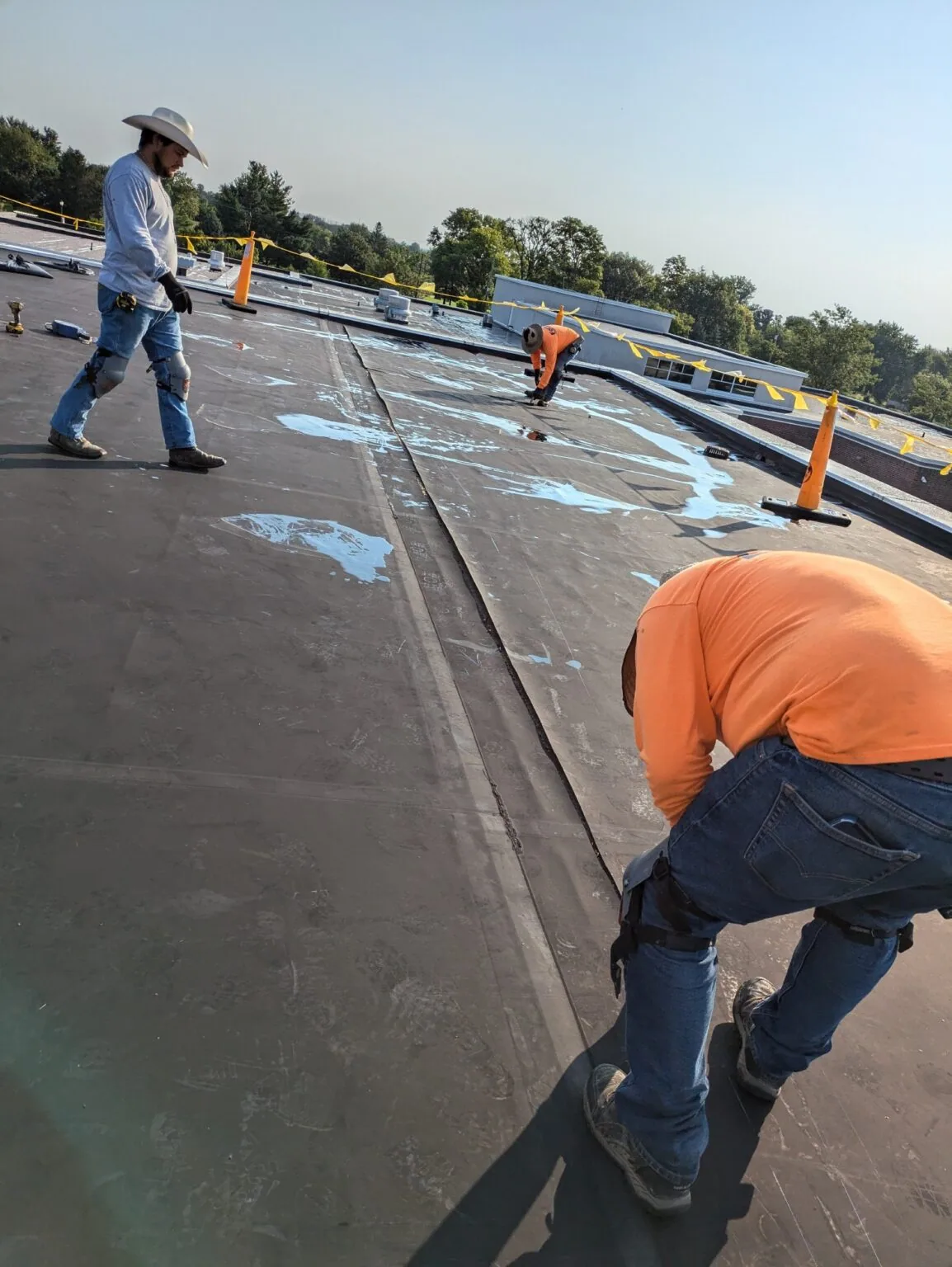
Hot afternoons around Coppell, TX, warm exposed membrane faster than the roof deck below. That temperature difference places stress at seams, curbs, and metal edges. We inspect those connections before recommending a patch or a larger repair. The town’s adopted vision calls for reinvestment in aging retail centers and identifies warehouses in its commercial building inventory. Those uses create different roof access needs. A warehouse may have clear delivery windows, while a retail center needs careful coordination with tenants. We map the roof condition, then set the repair footprint and work sequence. When the site needs comparison with a broader Irving portfolio, our Las Colinas commercial roofing service covers a different office and mixed-use setting. The assembly, not the property label, determines the correction.

How does Metroplex weather affect the roof?
The Dallas-Fort Worth region has a humid subtropical climate, with hot summers and wetter spring and fall periods. DFW airport climate normals show an average of 20.2 days a year at or above 100 degrees and 29.2 nights at or below freezing. Those are regional station measurements, not Coppell roof readings. They describe repeated temperature transitions that can challenge bonds and sealants. We look for the result at the actual seam, penetration, or termination rather than infer damage from weather alone.
When the membrane expands while a curb or deck responds differently, the connection carries the movement. A split at a curb can admit water even when the field sheet remains intact. We inspect the bond line and check whether substrate moisture extends beyond the visible defect. If it does, an infrared moisture survey can help define a selective opening. That survey informs the repair boundary; it does not replace a physical roof review.
What changes between a warehouse and retail roof?
Coppell’s local planning emphasizes warehouse stock and reinvestment in older retail centers. A warehouse project may need to preserve loading activity, rooftop service access, and clear travel paths. A retail repair may need phased work around customer entrances and tenant operating hours. We ask who controls access, which areas stay occupied, and when deliveries arrive. Those details affect staging and protection. They do not tell us whether insulation is dry or which membrane is installed.
The town also describes a high-tech workforce and planning for remote-work locations and meeting space. An office conversion or flexible workspace may have different interior sensitivity than a distribution building. We note ceiling finishes, equipment rooms, and areas where water intrusion would interrupt operations. The occupied-building work plan can identify tenant notices and daily dry-in limits. A route through Heritage Crossing in Irving may involve older downtown conditions, but each Coppell roof receives its own assembly review.
Which roof conditions should we map first?
We record active leaks, open laps, loose perimeter metal, blocked drainage, and soft areas as separate findings. A stain inside does not locate the entry point. We trace the likely path to a roof detail and photograph the condition before moving debris or lifting material. If a building has several leaks, the report gives each one a roof-zone reference. That lets the project manager compare priority without combining unrelated repairs.
At a warehouse, forklifts and service work can change roof traffic patterns. We check equipment routes, walk pads, rooftop units, and stored materials. A puncture beside an access path may need both membrane repair and a protection change. The inspection scope can document these observations, while puncture repair defines a localized correction. If the issue spans multiple seams, we compare the moisture pattern before recommending a broader opening.
When is repair enough?
A repair is reasonable when the damaged detail has a clear limit and surrounding materials remain suitable for bonding or attachment. We identify the membrane, prepare a test area when needed, and specify the compatible patch or weld. If moisture extends into insulation, removal should reach material that can remain in the assembly. The scope states the opening, replacement layers, and closeout check so the owner can review the work before mobilization.
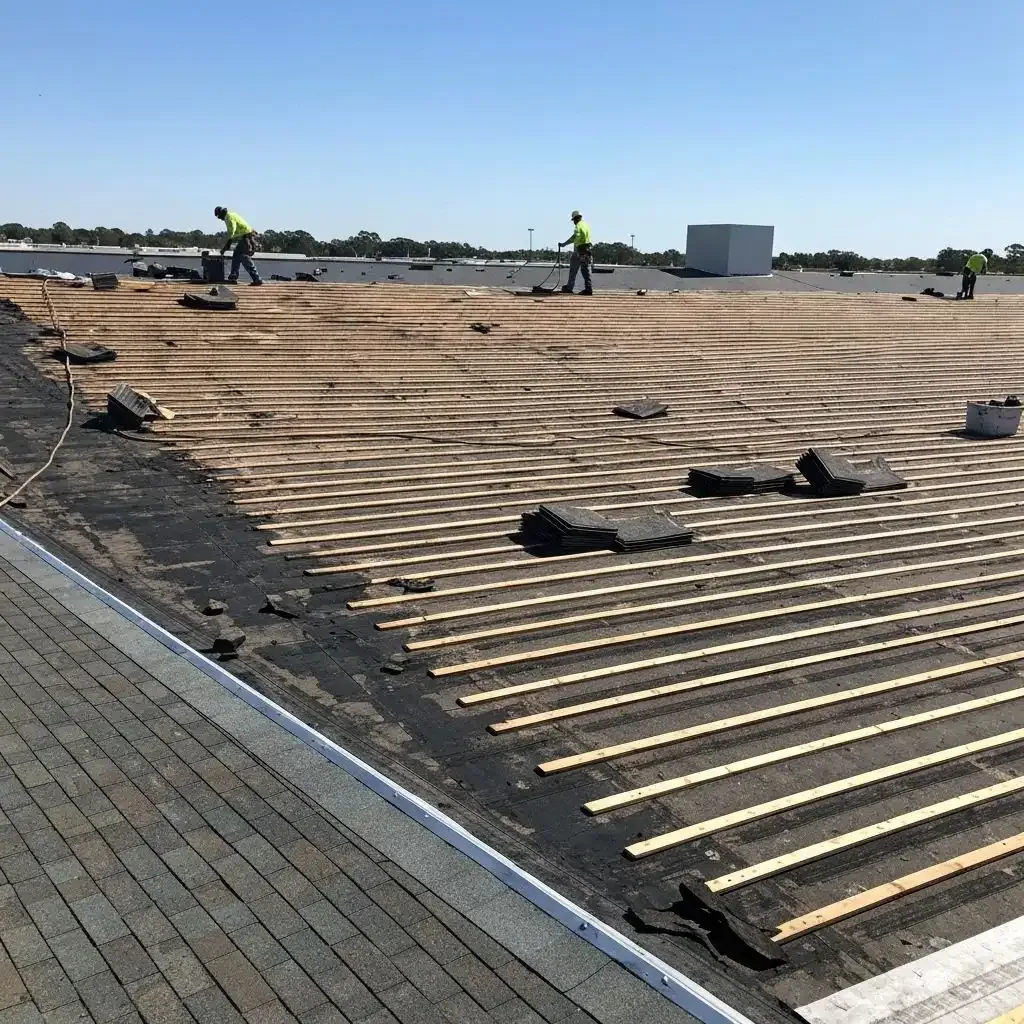
Replacement enters the comparison when the defect repeats across the field, attachment has weakened broadly, or moisture distribution exceeds a contained repair area. A roof recover may be considered only when the existing assembly and structural limits support it. We document that decision separately from a leak repair. The replacement assessment identifies what must be removed and how operations can continue. We also examine the Grand Prairie service area when a contractor coordinates work across multiple DFW properties.
How will work fit around deliveries?
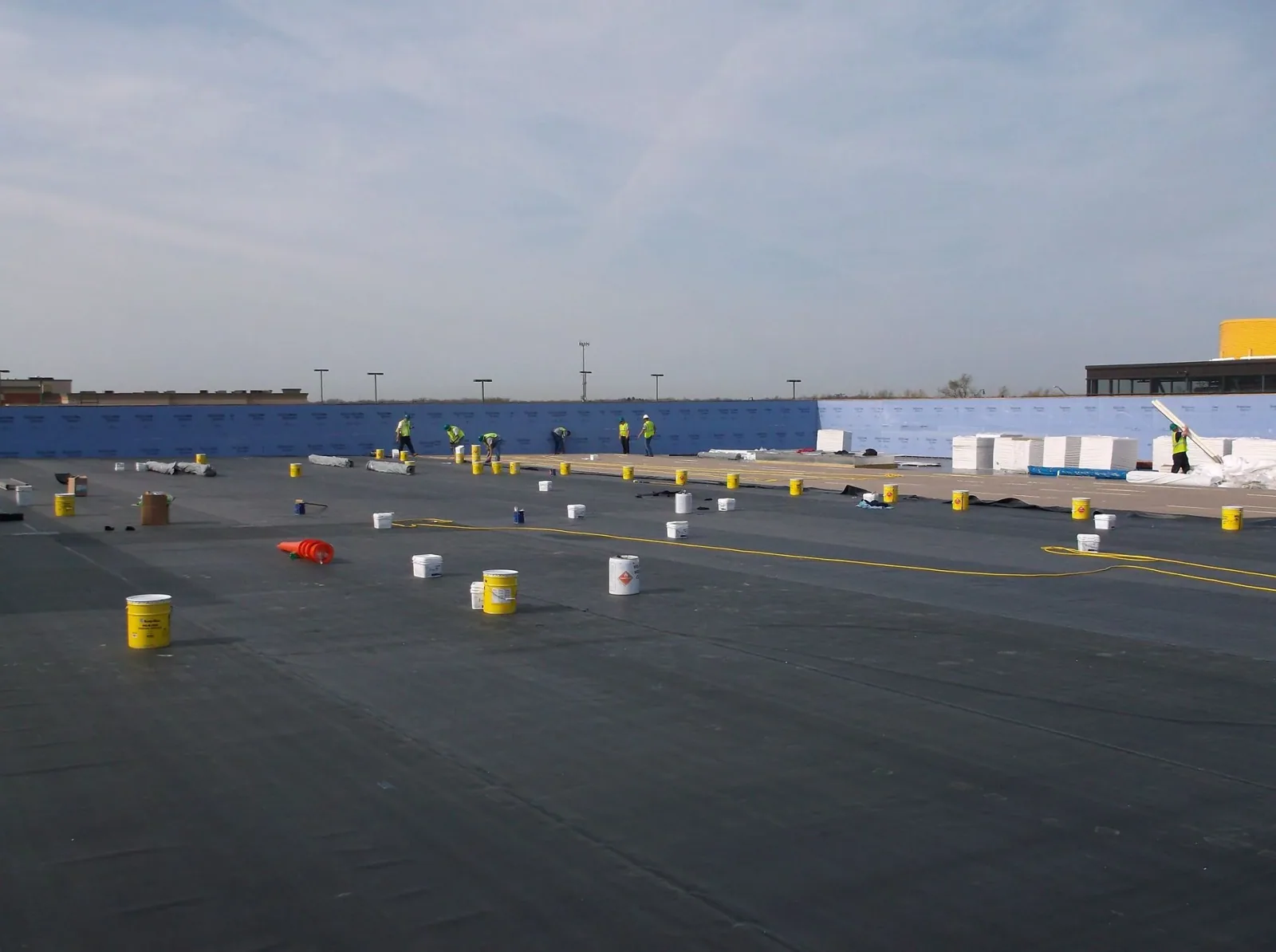
We confirm loading windows, roof hatch access, lift placement, security rules, and active equipment before setting a work date. A warehouse roof repair may be staged away from dock traffic. Retail work can use separate material delivery and customer access plans. The work sequence identifies where materials sit, which roof zones close each day, and how a temporary opening will be protected. That gives the building team a schedule it can share with tenants and other trades.
If a project near the Grapevine commercial area shares staff or vendors, we can coordinate a separate site walk and keep each roof record distinct. The DFW region sees large hail and damaging winds nearly every year, although one place may not experience every event. We inspect after a reported event and document the specific roof evidence. Storm history alone does not establish damage at a Coppell property.
What will the owner receive?
The closeout includes dated photographs, marked locations, materials used, and the result of the final seam or detail check. It lists any condition left outside the approved scope. If temporary protection remains, the record states who will inspect it and what permanent work is pending. A facility manager can then compare the completed repair with the original report. That evidence also helps set the next inspection interval based on observed condition.
For multi-property work, we keep a separate scope and photo set for each building. The roof condition report can preserve repair history for later budget review. It should distinguish an observed defect from a regional climate statistic or a past storm notice. Send the roof plan, membrane records, leak locations, and access rules. Commercial Roofing Irving can arrange an assessment in Coppell and separate a repairable mechanism from wider assembly deterioration.
Commercial Roofing Questions
Can a warehouse roof be repaired while shipments continue?
Often, the work can be divided into zones with a defined delivery and roof-access window. We confirm dock activity, lift placement, and daily dry-in before setting the sequence. The building team approves any area that must close temporarily.
Do DFW heat readings prove a Coppell roof is damaged?
No. Airport normals describe regional climate, not a particular roof condition. We use them to understand exposure and then inspect seams, bonds, and terminations at the property. The recommendation follows what those details show.
What if an older retail roof has several leaking tenants?
We map each symptom, inspect likely entry details, and compare the moisture boundary before combining work. Separate roof zones may require different repairs. The report gives the owner a prioritized scope and access plan.
When should we consider replacement instead of patching?
Replacement becomes relevant when deterioration or moisture extends beyond a contained repair footprint. We document field seams, attachment, and insulation findings first. A replacement comparison should show removal limits and operating impacts.
What should we send before the Coppell inspection?
Share roof plans, membrane records, leak locations, dock or tenant schedules, and site access rules. We will use them to set a focused assessment and work sequence. Call Commercial Roofing Irving to arrange a roof review.
Ready to review the roof scope?
Request a Roof Assessment

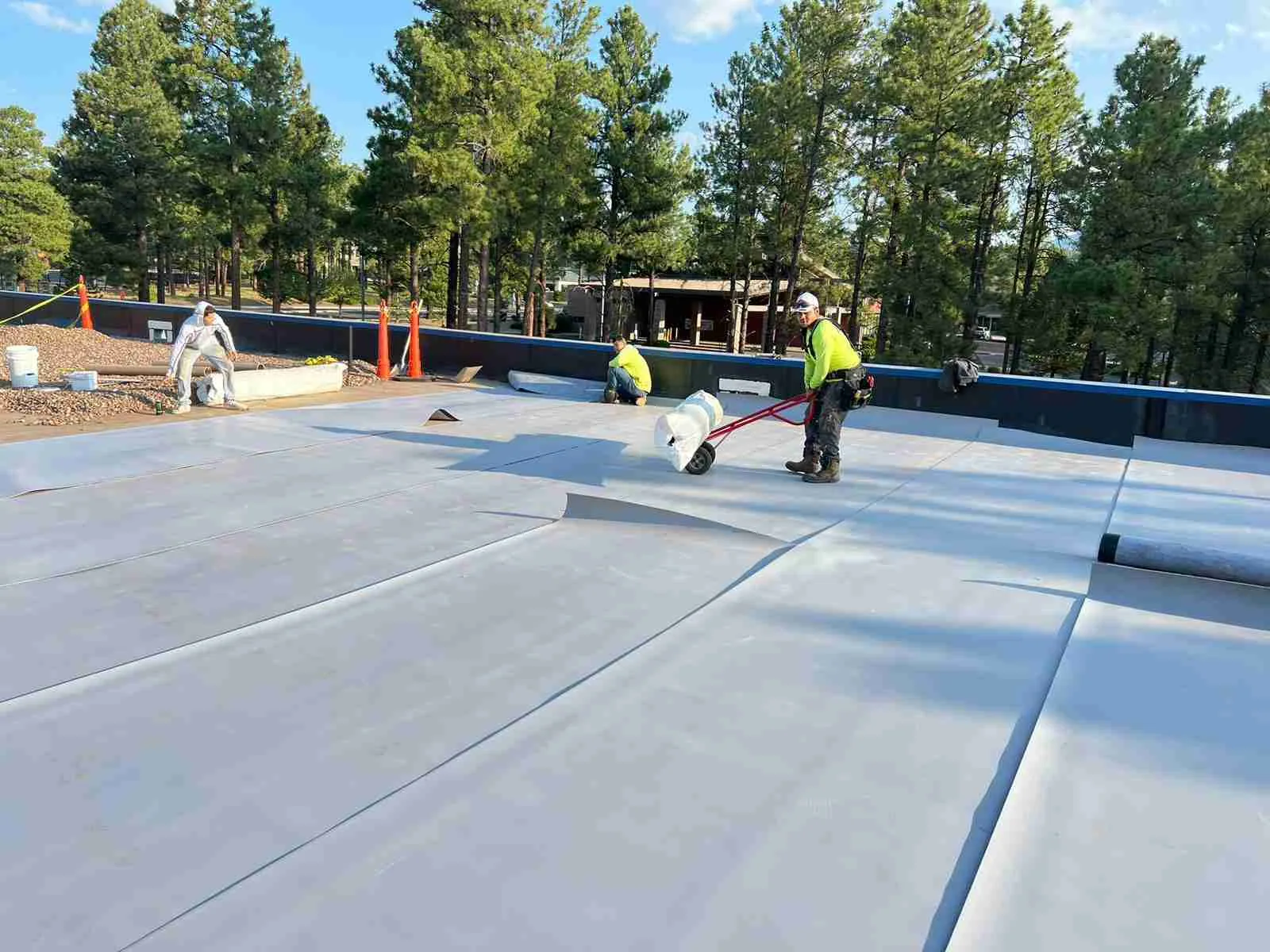
Commercial Roof Membrane Puncture Repair
See scope, options and what to expect on the roof.