Grapevine’s commercial activity spans visitor lodging, shops, restaurants, offices, and industrial uses, so a roof project begins with the building’s operating calendar. A hotel may need quiet periods and protected guest routes; a restaurant may depend on exhaust equipment; a warehouse may need its loading lanes open. Those are planning questions, not assumptions about any one roof. The city’s highway connections and convention business contribute to a substantial hotel inventory, while Historic Downtown has its own retail and dining pattern. We verify the property’s actual assembly, access points, and leak history before recommending work. A nearby Euless service area can share regional weather, but Grapevine receives an independent roof assessment and schedule.

What weather conditions should the inspection consider?
North Texas weather can shift from hot, sunlit afternoons to heavy rain, wind, or a hard freeze. The regional climate is humid subtropical, with wetter spring and fall periods. That context helps set inspection timing, but it does not identify a defect on a Grapevine roof. We check the reported leak path, nearby drains, seams, perimeter details, and rooftop equipment. A commercial roof inspection records which observations are direct and which require testing. Regional airport climate normals are not a substitute for site measurements. If a storm is approaching, the owner may first need temporary protection and a clear report of what remains exposed.
A roof review is more useful when the owner can connect each observation to an operating impact. We record whether a drain is obstructed, whether water remains after surrounding areas clear, and whether nearby rooftop units limit a safe repair path. A maintenance employee may know when the symptom first appeared, while a tenant can identify a room or time pattern. Those accounts are logged separately and checked against the roof surface. If the sources do not align, we state the uncertainty instead of treating the first visible stain as proof of one entry point.
How do hotel and visitor schedules affect roof work?
A hotel or conference property may have guest arrivals, event turnover, kitchen service, and loading activity on the same day. Before mobilization, we ask which entries remain open, when deliveries occur, and whether any equipment needs uninterrupted operation. The roof plan marks staging zones and the daily work boundary. No public-facing description can establish occupancy at a specific address, so the property contact confirms these constraints. Work near Historic Downtown shops and restaurants may call for different pedestrian controls than a larger lodging property. For a campus or multi-building owner, the Las Colinas location comparison helps separate mixed-use access planning from Grapevine’s visitor-oriented rhythm.
What evidence separates a leak symptom from its source?
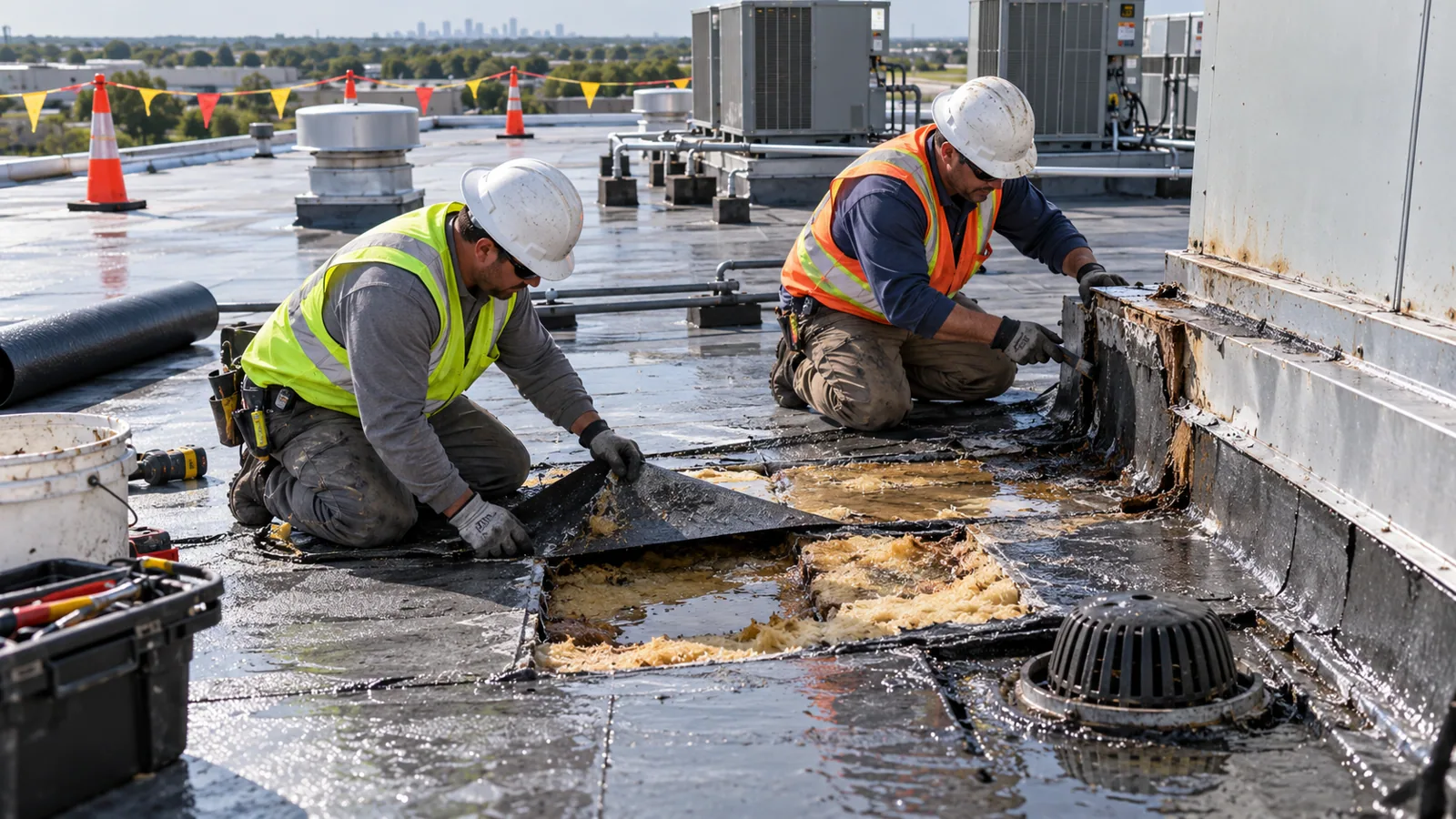
A ceiling mark gives a starting point, not a roof diagnosis. Water can travel along a deck, insulation joint, or framing before appearing indoors. We map the reported location, photograph the related roof details, and compare the path with drains, curbs, seams, and wall terminations. Where needed, a controlled opening or moisture survey can test whether the affected material extends beyond the visible stain. Each measurement states its method and limit. If a connection has lifted or split, a flashing review focuses on how the membrane transitions at the curb or wall. A separate drainage review checks whether standing water contributes to recurring exposure.
Repairs around busy lodging or dining operations also depend on how material reaches the roof. A crane, ladder, or freight lift can affect a guest entrance or delivery area. The site contact should approve the route and identify a place for removed material before work begins. We note the condition of nearby membrane when moving equipment so that a repair does not create a second issue. These steps can be scheduled around convention setup, check-in cycles, or kitchen deliveries when the property confirms those times. The written scope then names the access assumptions that the price and schedule rely.
When is a limited repair more suitable?
A targeted repair can make sense when the defect has a defined edge, the surrounding material is sound, and a compatible repair detail can bond to the existing roof. The scope names surface preparation, material, tie-in dimensions, and any test needed to confirm dry substrate. A repair should not conceal wet insulation or an unresolved drainage issue. If multiple leaks recur across different zones, we compare the inspection record and prior work before expanding the scope. The commercial repair service can document localized corrections; a replacement review evaluates broader deterioration and sequencing. Roof age alone does not decide between the two.
How can work protect visitors and building operations?
The project lead confirms roof access, lift placement, debris handling, fire-safety rules, and interior protection with the owner. For lodging and event facilities, the schedule should identify noisy tasks, loading restrictions, and any entrance that needs a temporary route. A daily closeout records whether the work zone is watertight and what must be revisited. If another trade crosses the roof, both crews agree on penetrations and temporary dry-in responsibility before starting. Downtown retail can require a compact staging plan; a hotel roof may require coordination with mechanical and kitchen teams. An occupied-building work sequence gives the manager a way to review these handoffs before the crew arrives.
What should the final roof record include?
The owner should receive photographs tied to plan locations, a description of preparation and finished tie-ins, and a list of observations left outside the approved scope. Any moisture test or follow-up visit should show its method, date, and limits. For a multi-building portfolio, separate records keep a hotel repair distinct from a restaurant, office, or warehouse project. The report can support maintenance budgeting without claiming that an unseen area was inspected. Provide the roof plan, leak dates, repair history, access hours, and event constraints before the site visit. Commercial Roofing Irving can then define an inspection path for Grapevine and recommend the next step based on roof evidence rather than a citywide assumption.
After closeout, a short review with the facilities contact can verify that drains are clear, temporary barriers are removed, and the repaired detail matches the approved scope. If a follow-up inspection is recommended, its trigger should be concrete, such as a later rain event or completion of adjacent mechanical work. The record should identify who will request that check and which location to revisit. This avoids an open-ended note that can be lost among event and maintenance tasks. Clear documentation helps a property team compare future conditions without claiming that the repair eliminates all roof risk.
Commercial Roofing Questions
Can roof work continue while a Grapevine hotel is occupied?
Potentially, if roof access, noise, guest routes, fire controls, and interior protection are agreed in advance. The work plan should specify which sections can proceed and how the crew will secure each area at day’s end.
Does Grapevine’s hotel inventory mean a roof has a particular system?
No. Citywide lodging activity does not identify the assembly at an individual property. We confirm the membrane, attachment, insulation, drainage, and prior repairs during the assessment.
What records help diagnose a recurring leak?
Share dated leak reports, ceiling locations, previous repair scopes, and any roof drawings. We compare them with the roof conditions and note where further testing is needed.
Can a patch address ponding water?
Only if the leak point and drainage condition are both understood. A patch may stop an opening, while a separate correction may be needed if water remains at a low area.
How is an event schedule incorporated?
The property contact identifies restricted periods, deliveries, and access routes. The crew can sequence sections and document any temporary closure or weather-related change.
Ready to review the roof scope?
Request a Roof Assessment
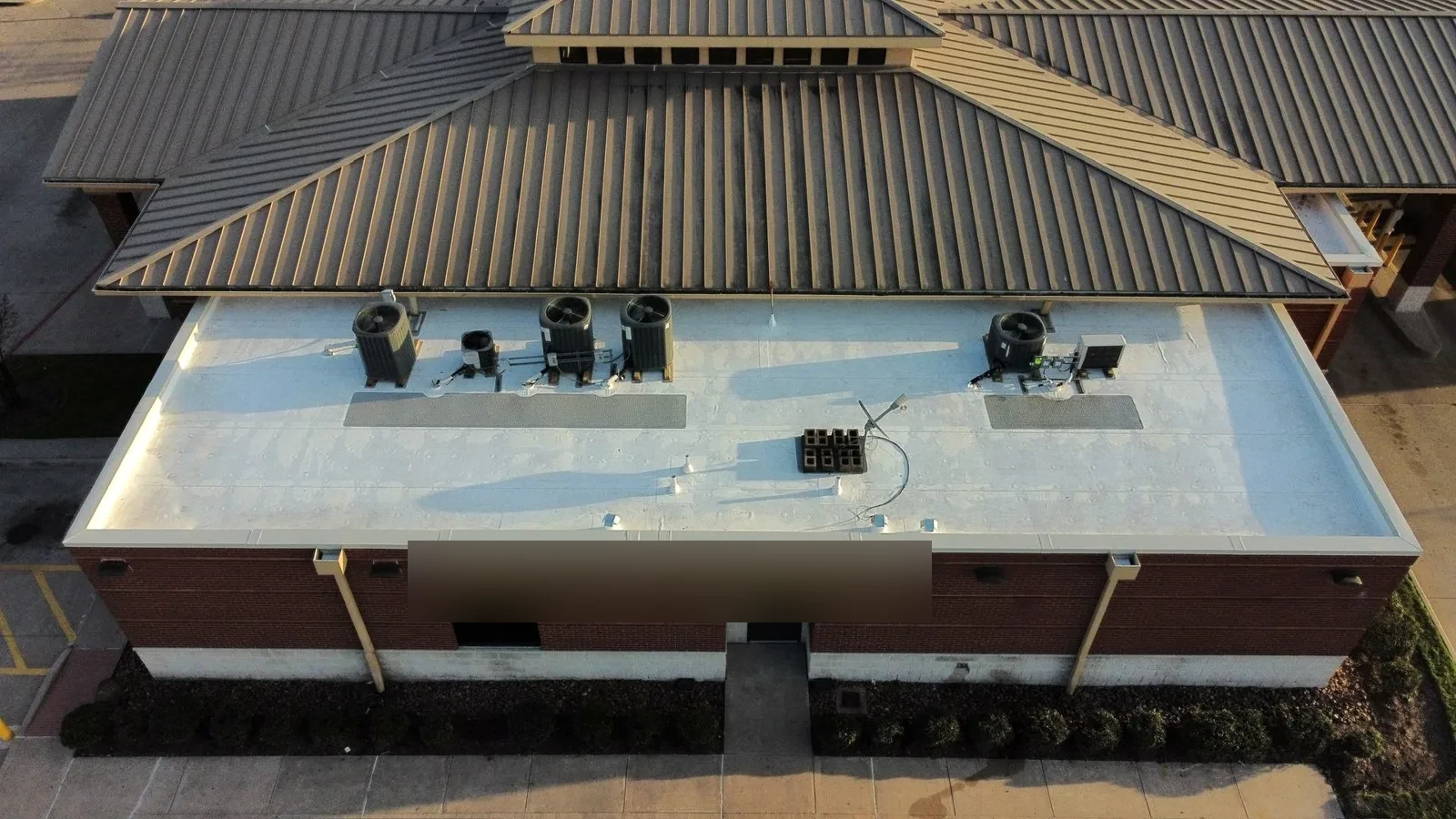
Commercial Roof Flashing Failure Repair
See scope, options and what to expect on the roof.