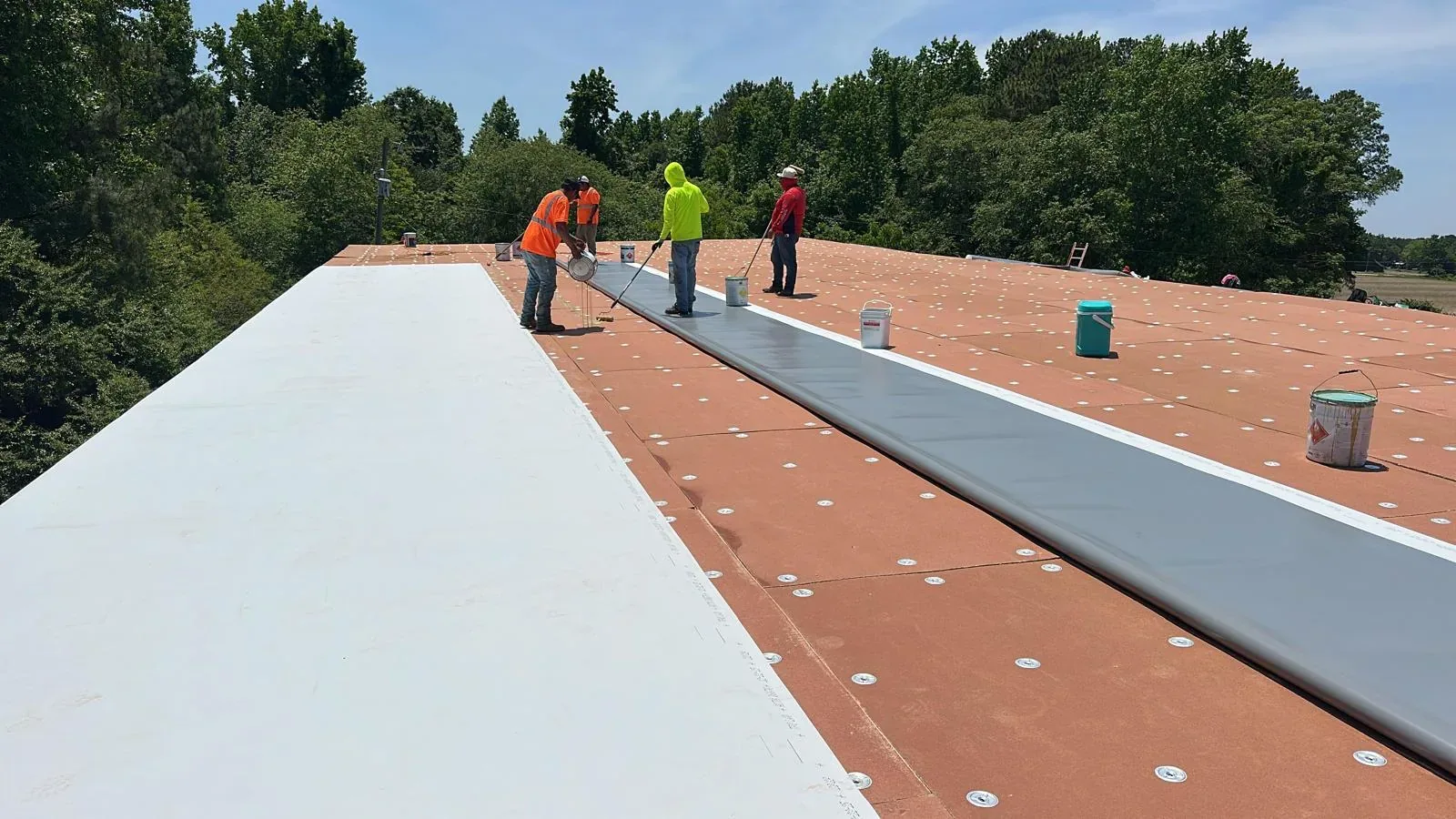
Water retained at a roof low point changes the exposure of seams, flashings and insulation long after a rain has ended. In Irving, TX, the Dallas/Fort Worth region has wet spring and fall periods, making drainage and the condition of low areas important parts of a commercial roof assessment. Commercial Roofing Irving examines the outlet path and the roof layers around retained water before deciding whether cleaning, drainage correction or assembly repair is needed.
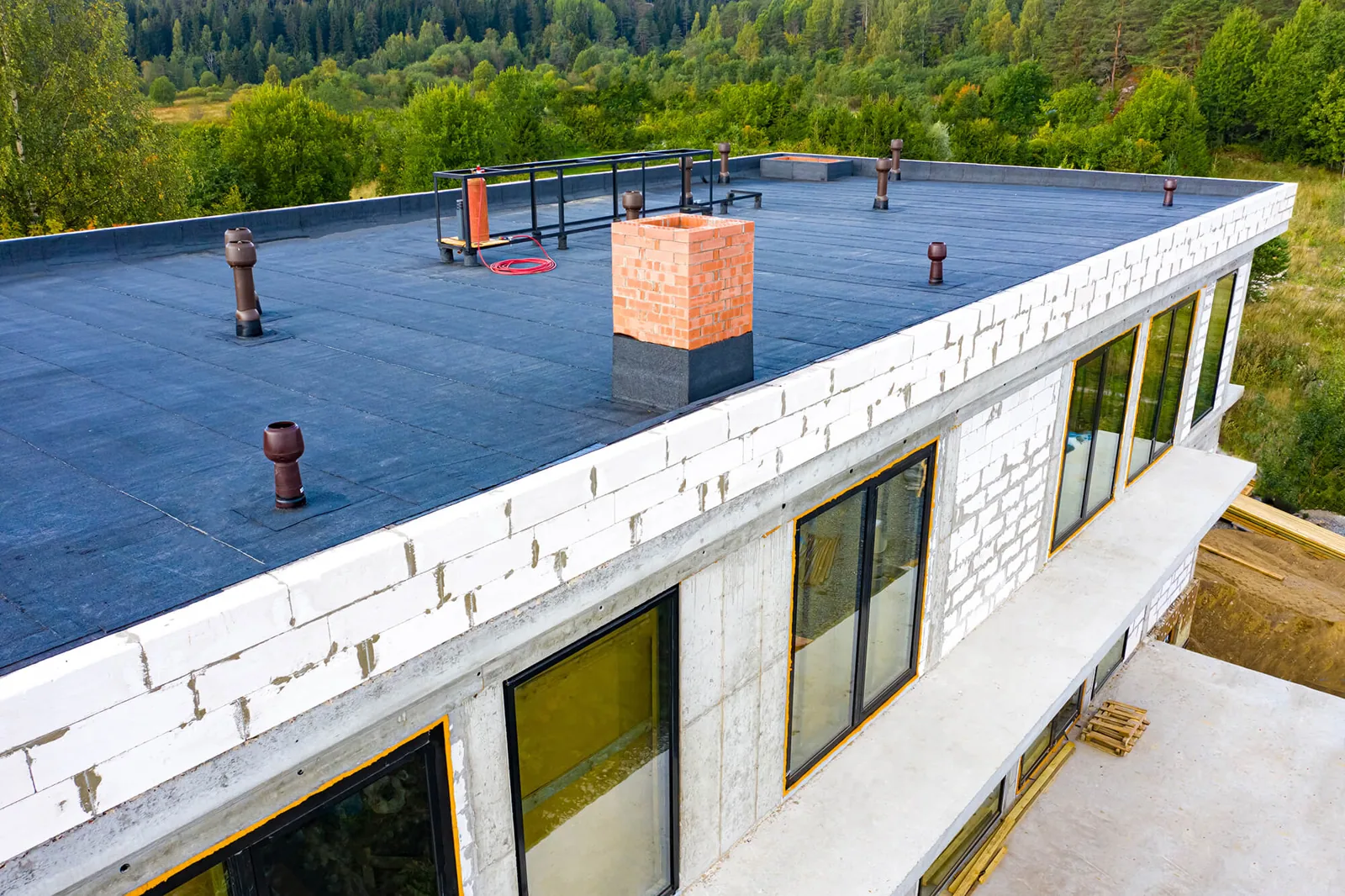
Las Colinas includes office, retail and multifamily buildings, while Valley Ranch combines commercial uses with multifamily properties. Their different roof layouts still need the same distinction between a blocked outlet and a depression caused by settlement, compression or poor slope. We map the water, identify what supports the surface and determine whether the retained depth is a symptom of a larger condition.
Is the water held by an outlet or by roof shape?
A drain basket filled with debris can slow discharge without changing the underlying slope. A low area that remains after outlets are clear points to a different investigation. We check drains, scuppers, leaders and nearby roof elevations, noting where water collects and how far it extends. Drain and scupper repair may be appropriate when a connection, flange or outlet body has failed. Clearing a blockage does not correct a depression, and adding a drain without checking elevations can move the collection point without solving its cause.
Roof plans and field measurements help compare the observed surface with the intended water path. We check whether a cricket, tapered layer or curb transition directs runoff toward the outlet or traps it behind an obstruction. If a drain is lower than the surrounding membrane but water remains on the field, the support beneath the covering may have compressed or shifted. That finding affects both the repair boundary and the option for rebuilding slope.
What can retained water change below the surface?
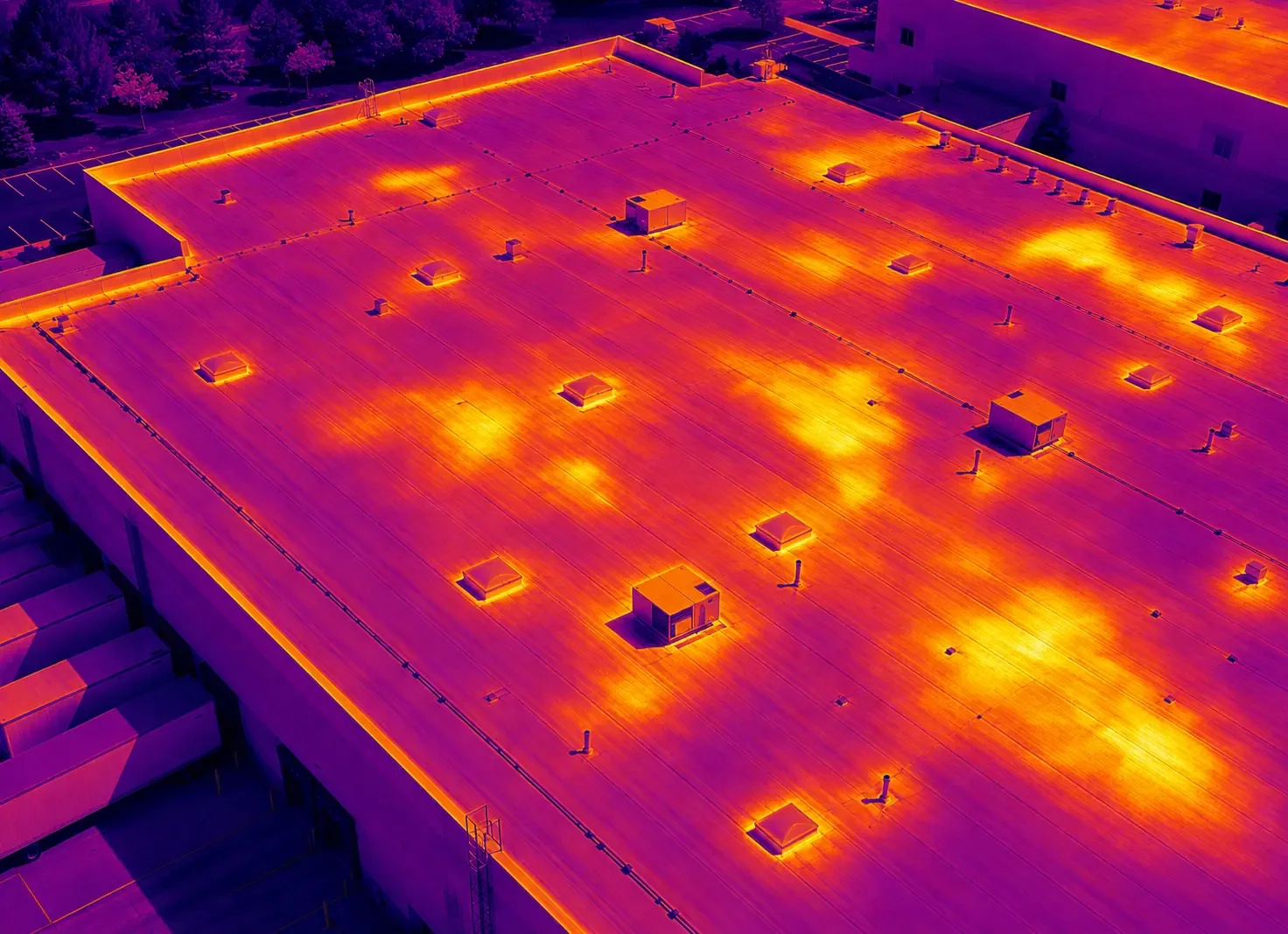
Prolonged wetting can expose seams and flashings to repeated contact with water, while moisture already inside the assembly can affect insulation and bond. We compare the ponding location with interior reports, deck configuration and visible surface changes. When thermal conditions are suitable, an infrared moisture survey can help identify areas for direct confirmation. The scan does not establish moisture by itself; selective openings or other suitable checks determine whether a layer is wet and whether it should remain.
Compressed insulation can create a low area that retains more water, increasing the time the covering stays exposed. We examine support and board joints where the surface has changed, then identify any wet or weakened material that needs removal. Replacement insulation must restore a stable substrate and compatible elevations around drains and curbs. Installing a new sheet over a soft layer can preserve the depression and leave the same water path beneath a fresh surface.
How does standing water affect the covering?
Different roof materials respond differently to prolonged water contact, but a sound assembly still needs compatible seams, terminations and drainage. We inspect open laps, blisters, surface erosion and prior patches near the collection point. After impact damage, hail punctures can also let water reach insulation. On a thermoplastic membrane, we examine weld continuity; on EPDM or modified bitumen, we assess the appropriate lap, adhesive and repair interface. Direct inspection identifies the installed system before a repair material is selected.
Water movement can also carry grit toward an outlet or expose a flashing corner. We distinguish surface deposits from damage and check whether the membrane remains bonded to its support. The repair should extend to workable, dry material and preserve the outlet connection. If retained water reaches a curb or wall, flashing correction may be needed alongside drainage work so that the rebuilt detail does not discharge into an unresolved low area.
Can slope be corrected without replacing the whole roof?
A localized depression may be rebuilt with tapered insulation or a limited replacement where the retained assembly is dry, stable and suitable for attachment. Broader compression, wet layers or poor drainage across several roof sections can make a larger scope more practical. We compare the depth and footprint of the collection area with surrounding elevations, outlets and the roof's remaining serviceable materials. The choice between repair, recover and removal depends on what is found beneath the covering, not solely on how long water appears to remain.
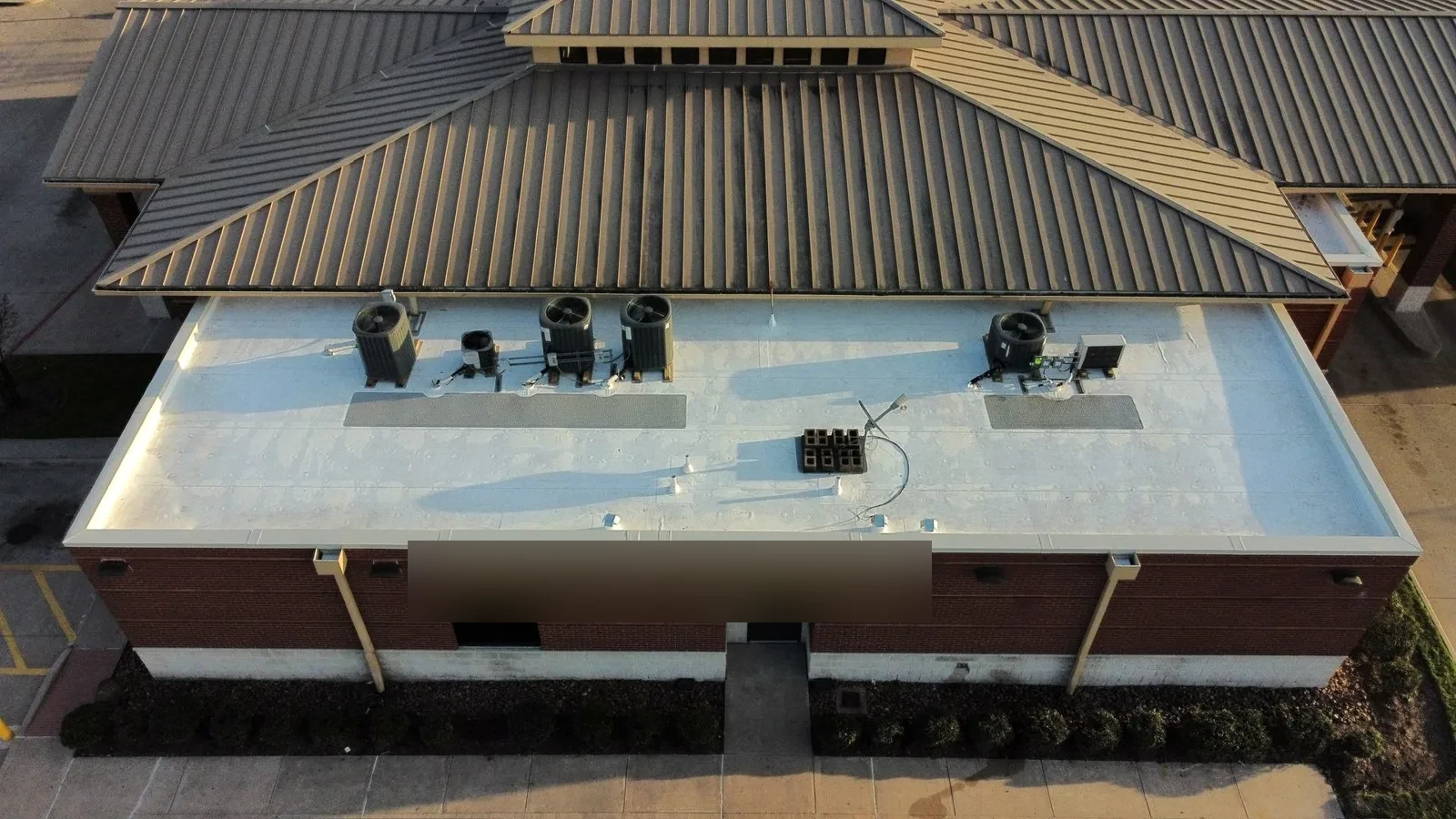
Where a new assembly is appropriate, TPO roofing is considered as one option among systems suited to the project's substrate, details and requirements. A membrane change does not by itself correct slope. We show how the proposed insulation, tapered areas and outlet transitions will establish a usable water path. Cost reflects the size of the rebuilt area, removal of wet material, drain alterations, access and the number of perimeter or curb details that must be raised or reconstructed.
How do occupied buildings affect drainage work?
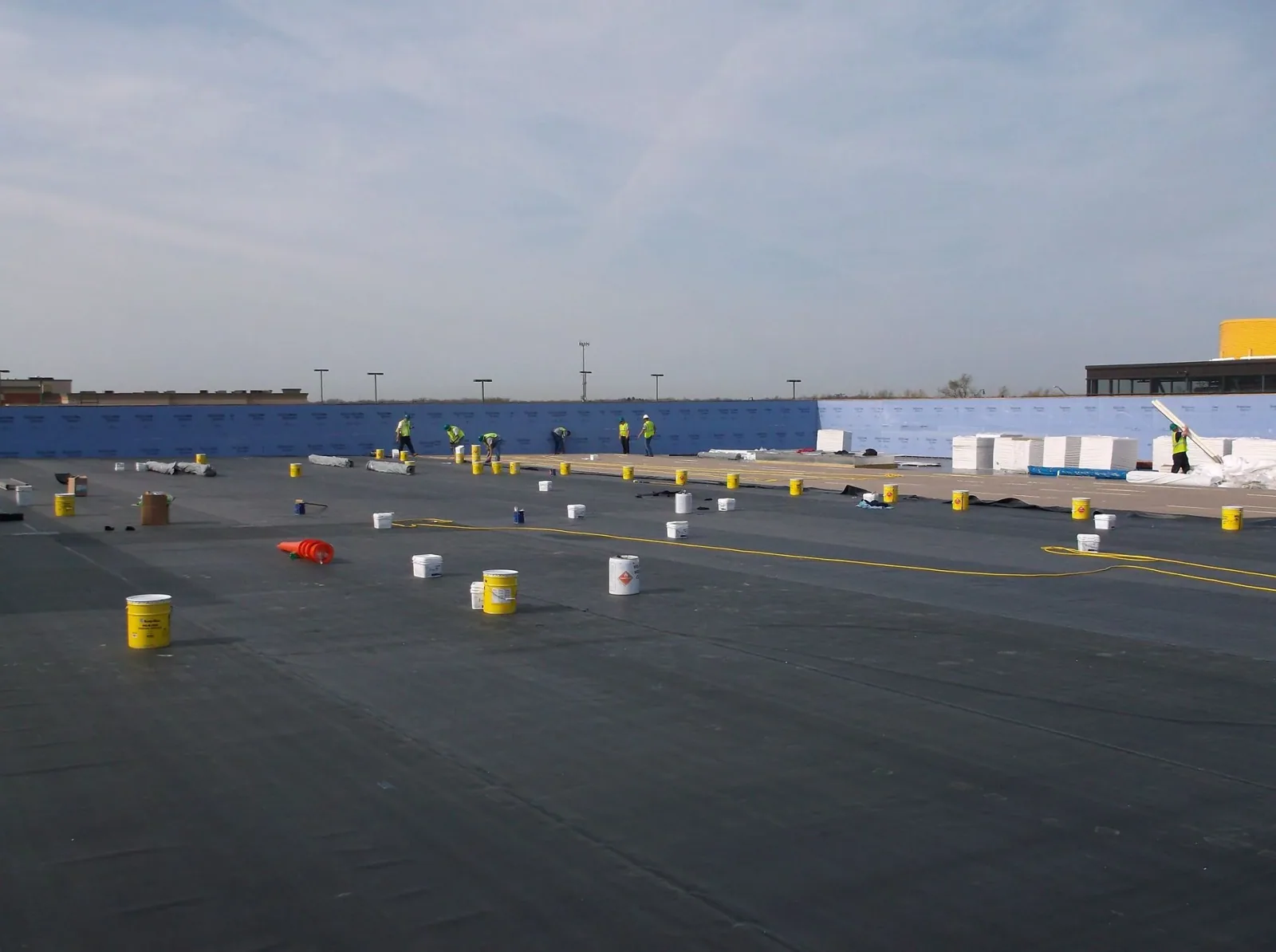
Repair near an occupied building needs sequencing for water control, access and roof operations. In Las Colinas office and residential settings, we plan material movement and any temporary protection around active entrances and equipment service. At Valley Ranch commercial properties, multifamily use can add resident circulation and scheduled maintenance to the work window. Those logistics influence where materials are staged and which drainage sections can be opened at one time.
We keep an open roof area protected while layers are exposed and coordinate drain shutdown or temporary water routing where the scope requires it. Photographs and condition findings show the ponding boundary, outlet changes and concealed layers confirmed during work. That record helps the owner distinguish routine cleaning from a corrected elevation or reconstructed assembly. Maintenance after repair includes clear drains and accessible roof paths, but cleaning alone is not presented as a fix where the surface or insulation has settled.
What evidence supports the repair boundary?
We identify the extent of retained water, outlet performance, surface elevation changes and any confirmed wet layers. A small, dry depression with serviceable surroundings can support a contained correction. Wet insulation, deteriorated attachment or a low area spanning multiple roof sections may justify a broader comparison. We explain which finding changes the scope, along with open questions that need a selective opening before a final removal boundary is set.
Cost and timing follow more than the visible pool: drain condition, insulation depth, transition heights, occupied-space access and weather during installation all matter. A written recommendation describes the water path and the work needed to restore it. If the roof remains open to wet weather, response begins with protection while permanent correction is planned. Request an assessment when the same low area returns after drain cleaning; the source may be an elevation or support condition that needs reconstruction.
Commercial Roofing Questions
How long can water remain before it becomes a repair issue?
The observation needs to be considered with roof slope, system requirements and the condition of the surrounding assembly. We document the location and depth after drainage has had time to work, then investigate whether an outlet is restricted or a low area persists. The next step is a targeted field check, not a conclusion based on a brief glimpse after rain.
Can drain cleaning resolve a recurring pond?
It can when a blockage is restricting discharge and the roof surface still slopes toward the outlet. If a clear drain leaves the same pool, we check the elevation and support beneath it. A cleaned basket does not rebuild compressed insulation or a settled deck. Our scope separates routine maintenance from correction and identifies the source of recurring collection.
Will infrared testing show exactly which insulation must be removed?
Thermal patterns can direct examination under suitable conditions, but they are not a substitute for confirming the assembly. We use the survey with roof observations and selective openings where needed. Removal limits follow the material exposed and its moisture condition. That sequence keeps the repair tied to verified layers instead of treating every temperature difference as wet insulation.
Does a new roof covering fix ponding by itself?
No. The supporting elevations and outlet layout need review before the covering is replaced. Where a depression comes from compressed insulation or a low transition, a new membrane can follow the same shape. We plan slope correction and drain connections with the assembly so the rebuilt roof gives water a route toward discharge.
Ready to review the roof scope?
Request a Roof Assessment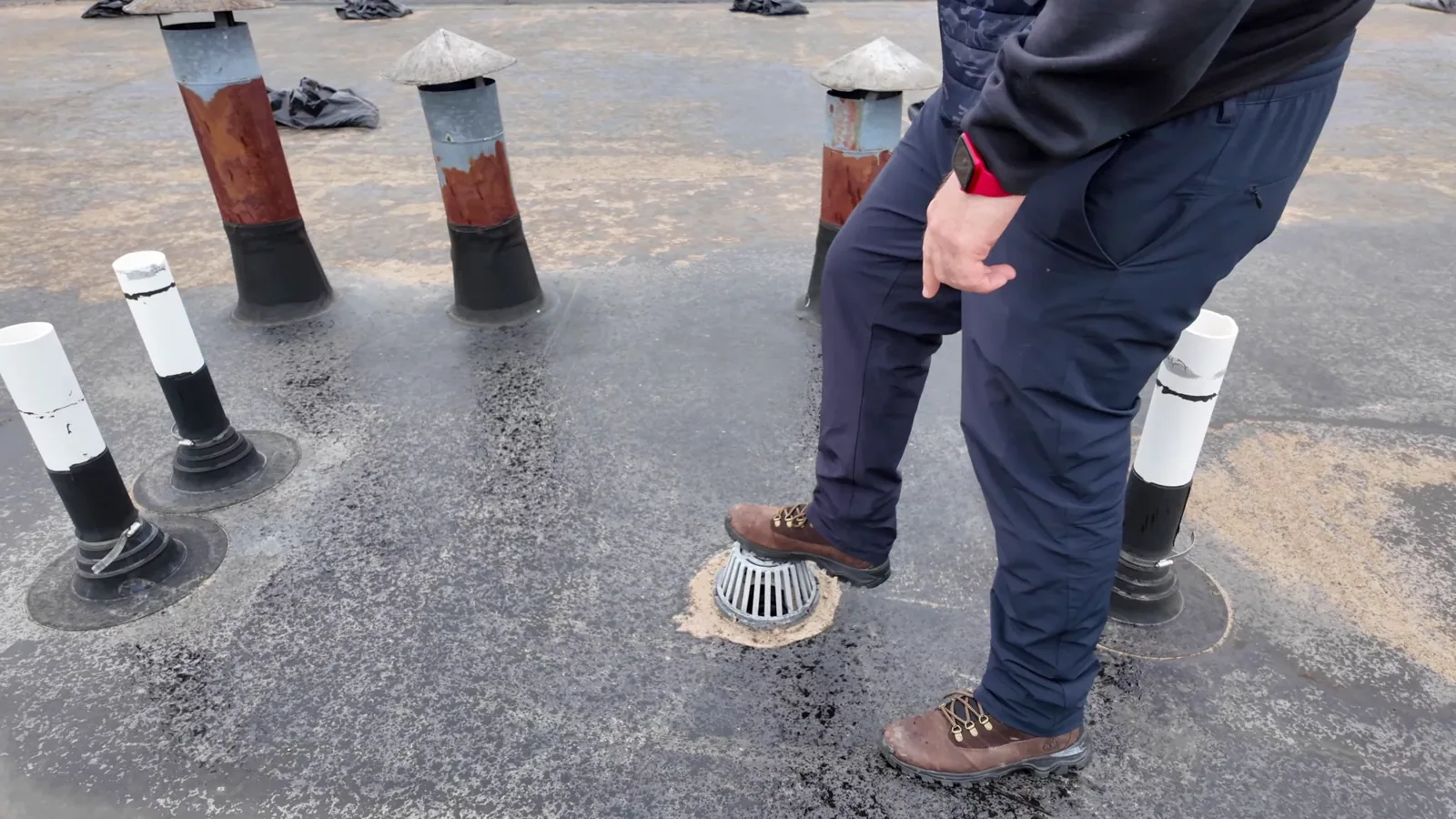
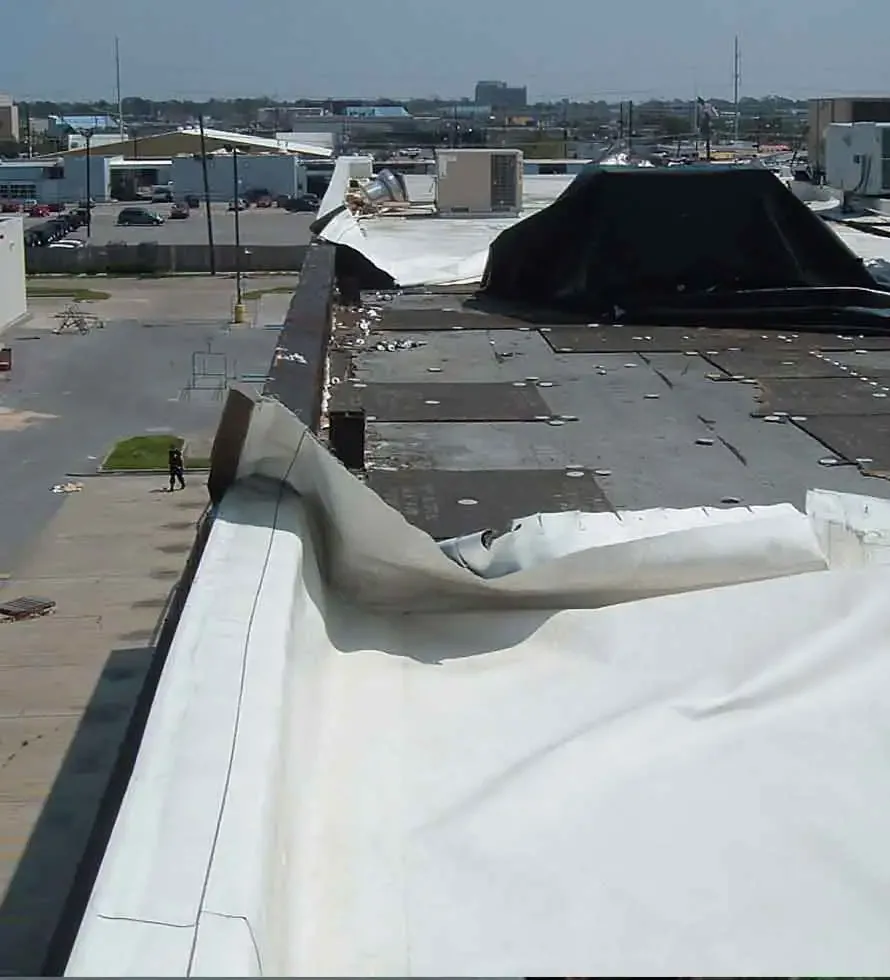
Commercial Roof Flashing Failure Repair
See scope, options and what to expect on the roof.