Short cold spells follow changing Metroplex weather; a moving roof-to-wall transition needs a material and attachment check before an owner authorizes a patch. Heritage Crossing's downtown corridor and redevelopment setting do not determine how a particular roof was built. We examine the available evidence, identify the detail that needs attention and state where confirmation is still required. Commercial Roofing Irving can then compare a targeted repair with broader work on a defensible basis.
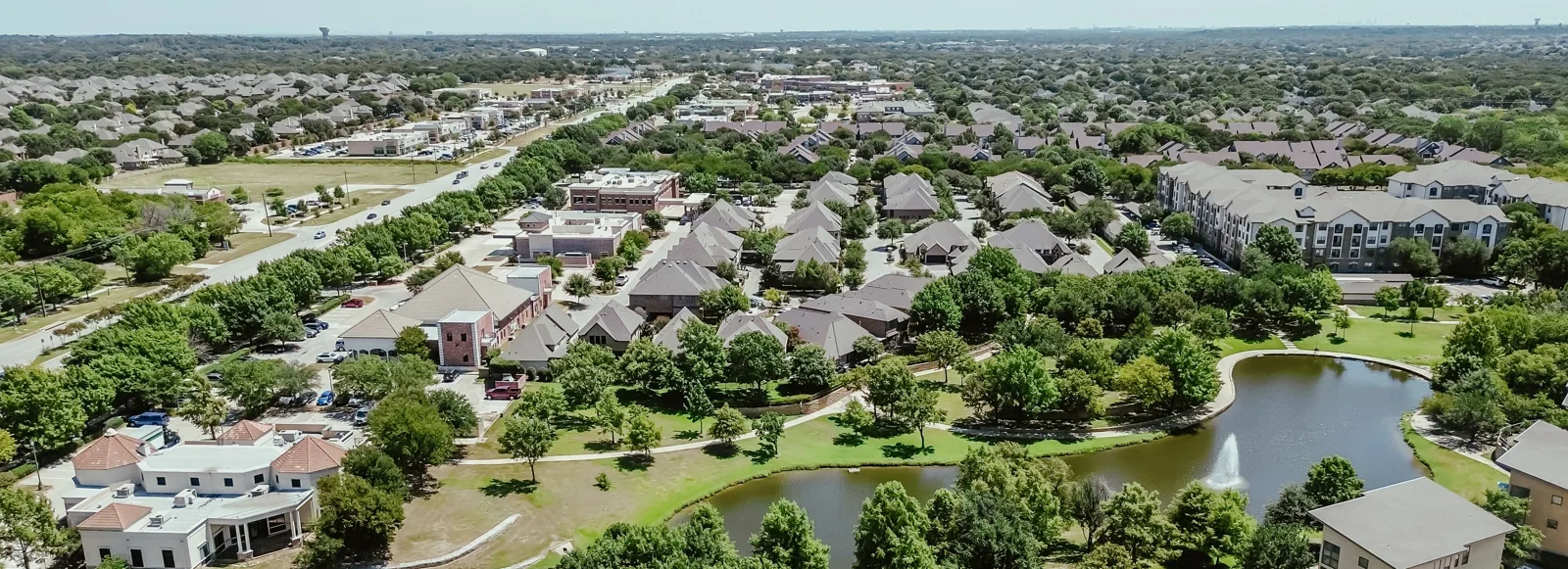
Heritage Crossing includes Irving's downtown corridor, a TRE transit connection and redevelopment extending into South Irving. Those facts describe a changing district and its connections; they do not say how any particular roof was built. Our commercial roof inspection records the property, assembly and access conditions we can actually verify.
Where is the roof condition actually located?
Before proposing work, we ask where water appeared, when it occurred and what changed after prior repairs. We compare the interior report with roof transitions, penetrations and drainage. Water can move along a deck or insulation interface, so a stain should be treated as a starting point rather than a precise map. If the entry point remains uncertain, we identify the method that can narrow the question without opening more roof than necessary.
Each observation needs a roof-area reference. We distinguish a seam opening from a termination problem and a surface defect from a suspected concealed condition. A flashing repair is appropriate only when its support and adjacent materials can accept the work. If those conditions have not been established, selective investigation may be the better first step.
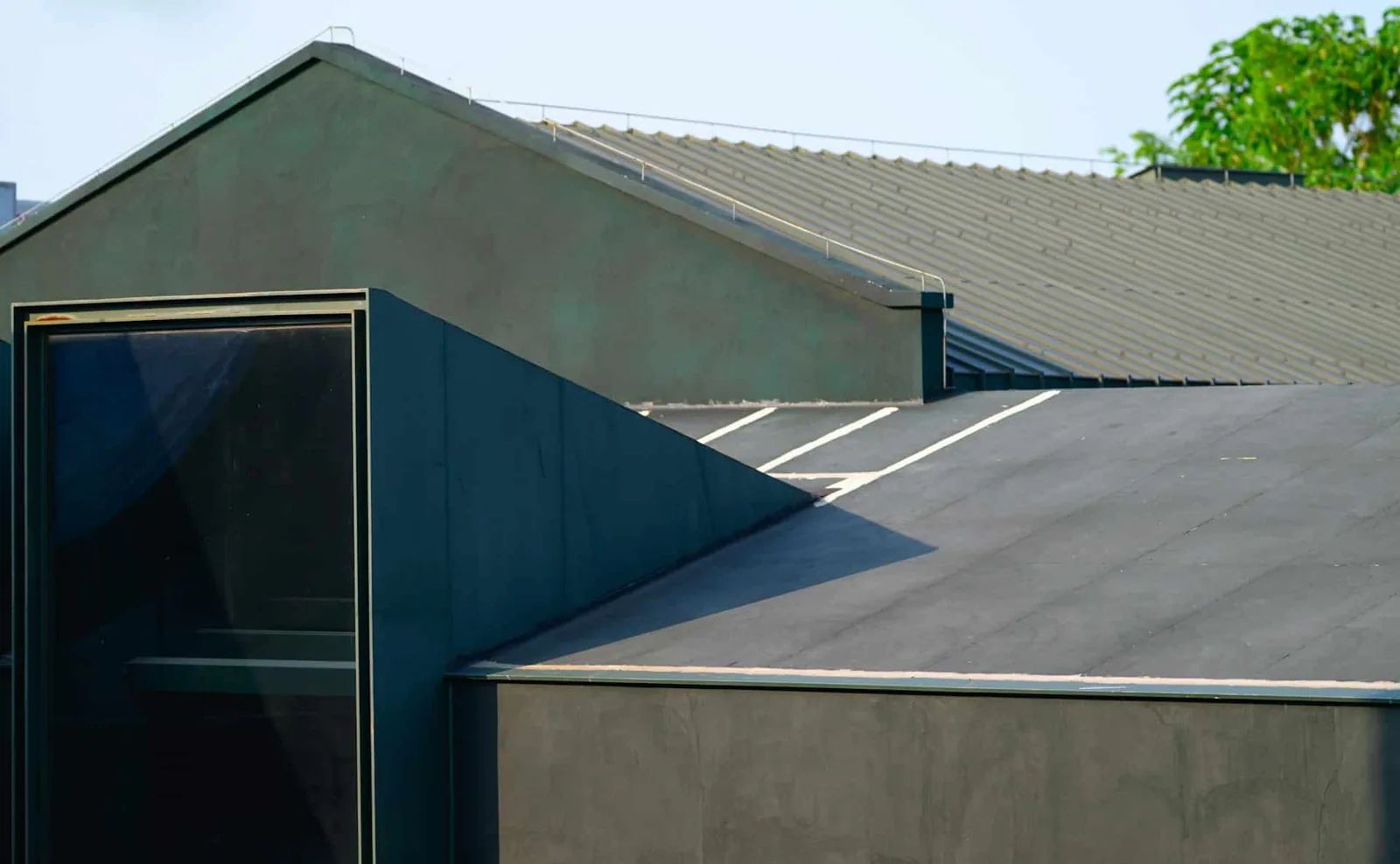
Heritage Crossing and Las Colinas Urban Center are both parts of Irving, yet a district name cannot establish a shared roof system. We identify the membrane or metal assembly when visible, record changes in slope and note prior patches. Findings from one building should not be carried to another without examination.
How can local access shape the work?
The district's TRE connection is a relevant part of its setting. For a roofing project, the property manager still needs to confirm the actual route crews will use, where materials can be staged and whether access or delivery timing is constrained. Transit proximity alone does not determine a building's work hours or permissions. We coordinate with the owner and site contact before setting a sequence.
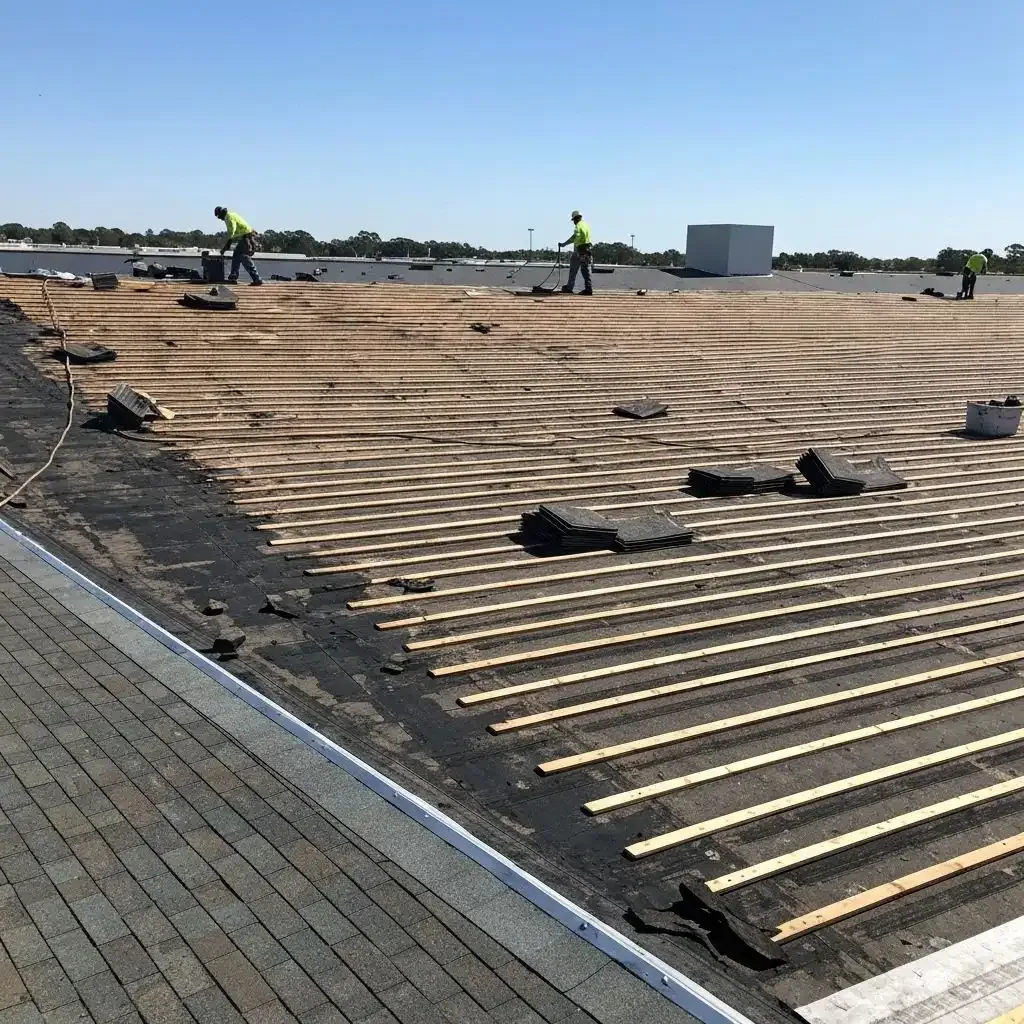
Where a property remains occupied, plan noisy removal, equipment movement and interior protection against the operation of that building. Temporary openings need an agreed secure condition at the end of the shift. If field removal exposes a different assembly, the contractor should document it and obtain direction before expanding the work. This keeps the new condition separate from the original assumption and gives the owner a clear choice about cost and timing.
A phased reroof plan can help divide work by safe, manageable areas. We record which zones are complete, which remain and what access was unavailable. In a redevelopment area, project teams may change over time; a clear handoff helps the next manager understand the roof work without relying on verbal history.
What do drainage and perimeter details show?
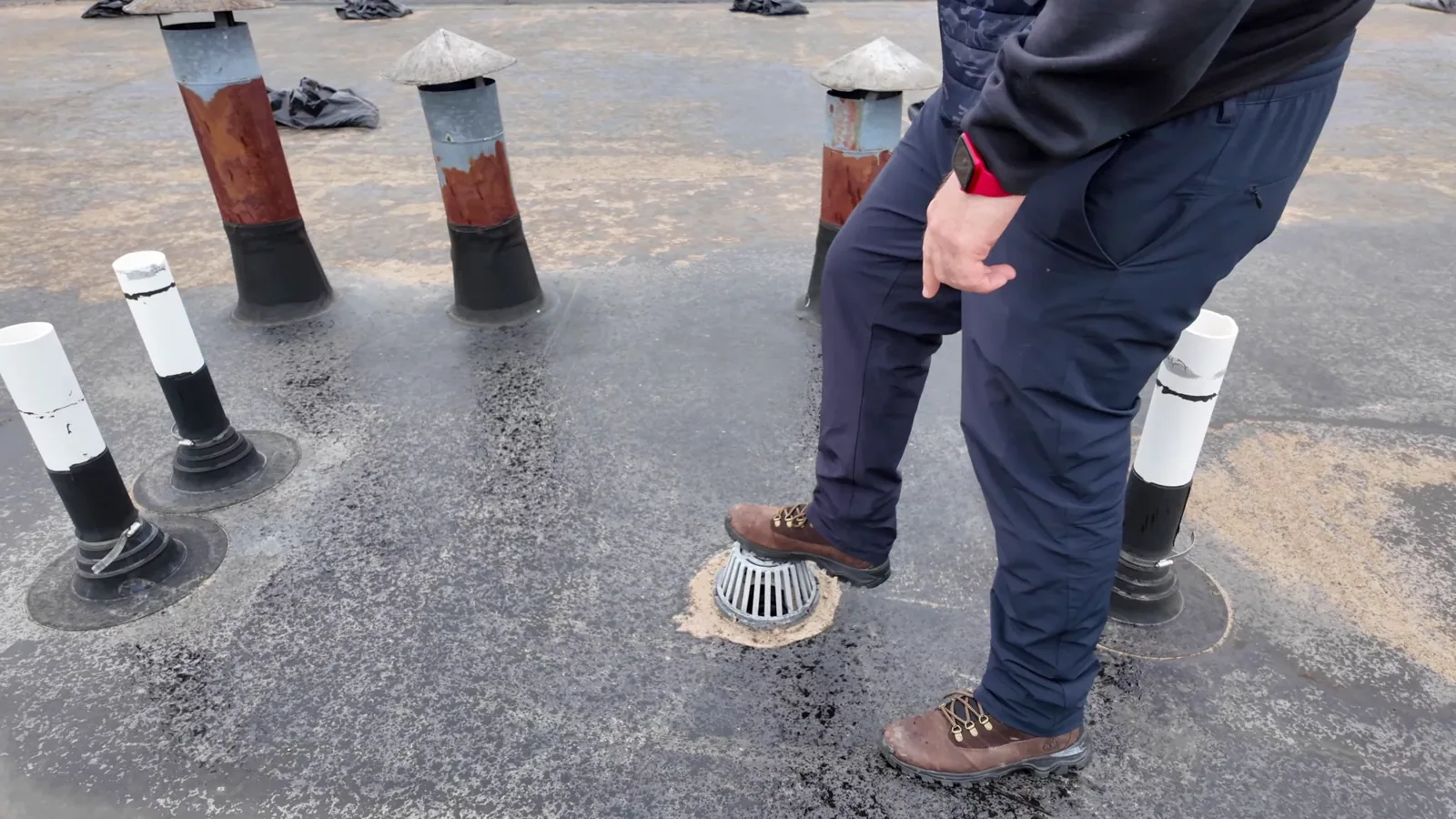
Drainage observations make sense only with timing and location. Water during rainfall is different from a pool that remains after expected runoff. We note outlet condition, visible obstruction and the path across the roof. A blocked drain may need cleaning, while a changed plane or deficient discharge requires a different response. A drain and scupper review can establish what is visible and where further slope evaluation is warranted.
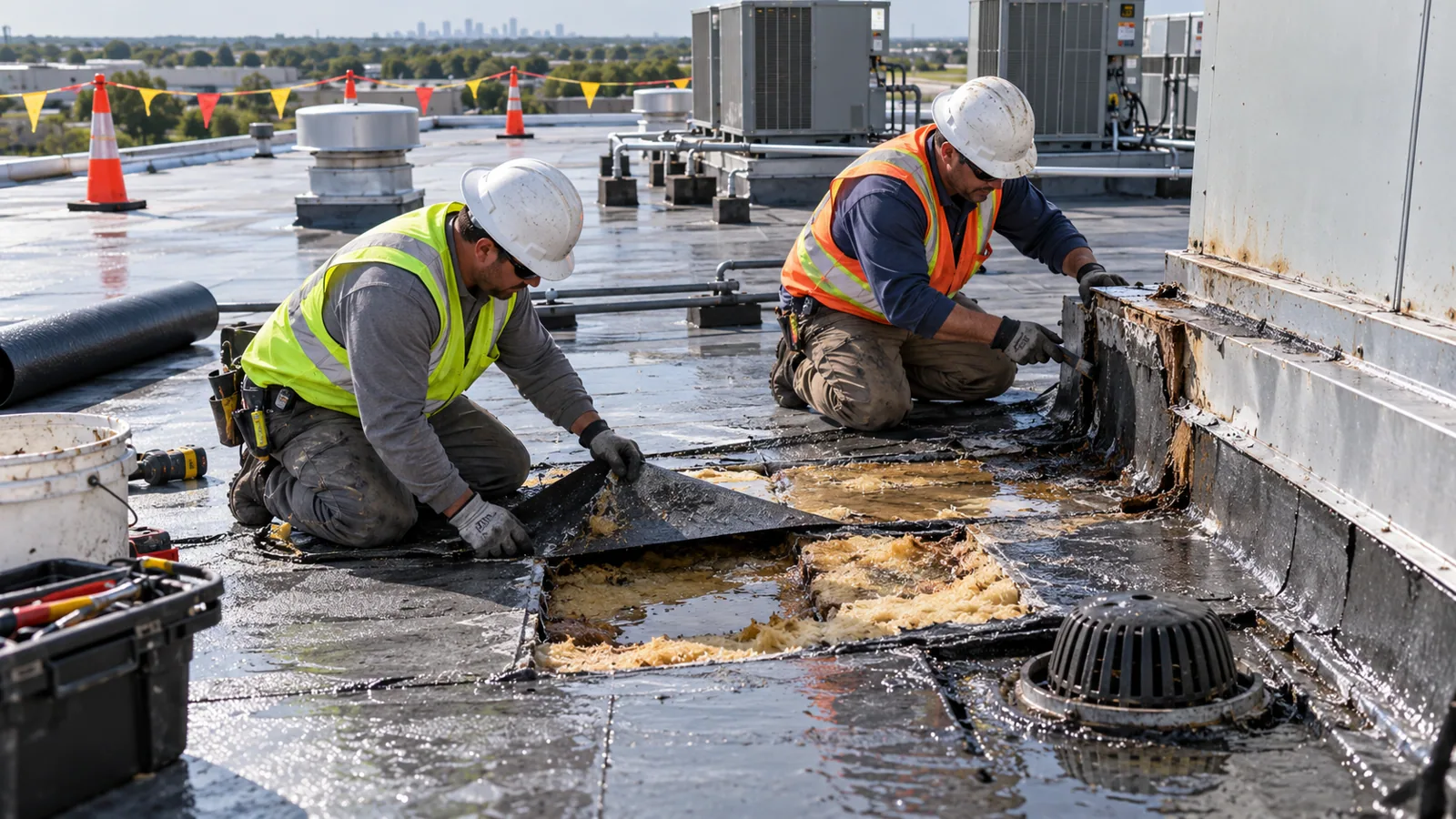
At a wall, parapet or edge, we check whether the roof covering and flashing form a continuous connection. A new bead of sealant may hide a gap without restoring the underlying termination. Metal movement, attachment and counterflashing can influence the repair. We specify which components need correction and what material must remain sound for the detail to perform.
Regional hot summers in the Metroplex contribute repeated thermal cycling, but climate is context rather than a diagnosis. The actual assembly determines how movement is accommodated. We evaluate the material interface, fasteners or bond, and the location of the observed change before describing a repair path.
Which boundary is supported by evidence?
A useful repair scope names the defect, preparation, adjoining material and tie-in. If the affected area is limited and the assembly around it is stable, local work may be practical. Repeated failures, wet materials or a weak substrate can broaden the repair footprint. We state the evidence that supports each boundary and avoid presenting an unconfirmed condition as a measured quantity.
For a commercial roof repair, we discuss compatible materials, weather protection and the access needed to complete the detail. If a seam or flashing must be opened, the scope describes how the roof will be secured before crews leave. Repairs should address the failure mechanism and restore a working connection, not merely cover the visible symptom.
When the assembly is broadly deteriorated, compare repair with restoration or replacement. A modified bitumen assembly, for example, requires attention to the condition of its laps and layers; another roof system has different constraints. We identify the actual covering rather than assign a system based on the district or building use.
What assumptions remain in the estimate?
Price depends on the area and detail to be addressed, access, removal layers, moisture extent, drainage correction, staging and interior protection. Unknown deck conditions can change both labor and materials. A preliminary range should therefore show what was measured, what was assumed and what remains to be investigated. It is useful for planning, but should not be treated as a final construction commitment when concealed conditions have not been confirmed.
We can compare immediate leak control with a larger repair or replacement alternative. The options should make clear how much material remains, what disruption each sequence creates and which conditions could change the result. A capital planning review can organize current needs with later priorities while keeping the evidence and assumptions visible.
Existing warranties or manufacturer requirements depend on the actual roof and contract documents. We identify those questions for review rather than promise that a proposed repair preserves a particular coverage. Written confirmation may be needed before work begins.
What will help the next decision-maker?
Closeout should identify the completed roof area, the materials and details addressed, and any remaining condition that needs monitoring. Photographs show the repair in context as well as close up. If a portion was inaccessible, the record keeps that limitation explicit. A later manager can then see what was confirmed, what was corrected and where another inspection might be useful.
The Las Colinas and Valley Ranch pages describe other Irving service areas, but a portfolio still needs property-level records. A written condition record can preserve located findings and separate observation from recommendation. That distinction helps when redevelopment plans or management responsibilities change.
For an assessment, provide the leak history, earlier repair notes, available roof plans and operating constraints. We can agree on the access plan and the first decision to resolve. The result should explain whether the mechanism is repairable, whether broader assembly deterioration is indicated and what additional evidence would change the recommendation.
Commercial Roofing Questions
Does Heritage Crossing's redevelopment mean nearby roofs need replacement?
No. Redevelopment describes district activity, not a roof's condition. We examine the assembly, drainage, transitions and repair history. Replacement depends on confirmed deterioration and the condition of retained materials, not redevelopment status.
Can roof work be planned around the TRE connection?
Transit is district context; actual crew access and delivery rules depend on the property. We confirm routes, staging and timing with the site contact. No restriction is assumed without confirmation.
How do you decide whether to open a roof area?
An opening helps when concealed construction affects the repair boundary or choice of alternatives. We explain its location, protection and purpose. If surface evidence supports a bounded repair, opening may add little. The owner reviews the reason and limits before authorizing it.
What will the owner receive after repair work?
Closeout identifies the roof area, completed work, photographs, remaining concerns and access limits. We note material changes and follow-up needs so a future manager understands what the repair did and did not confirm.
Ready to review the roof scope?
Request a Roof Assessment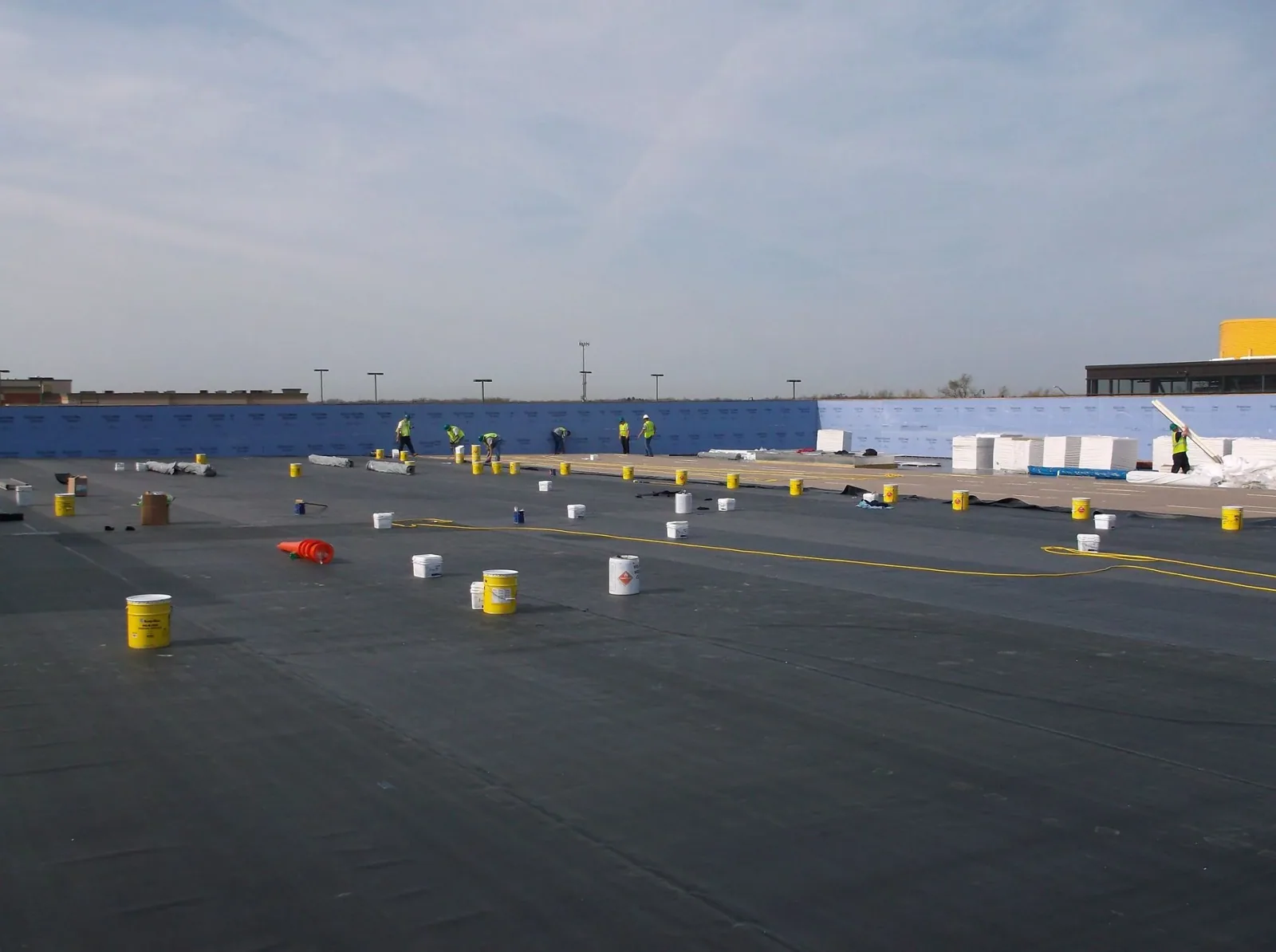
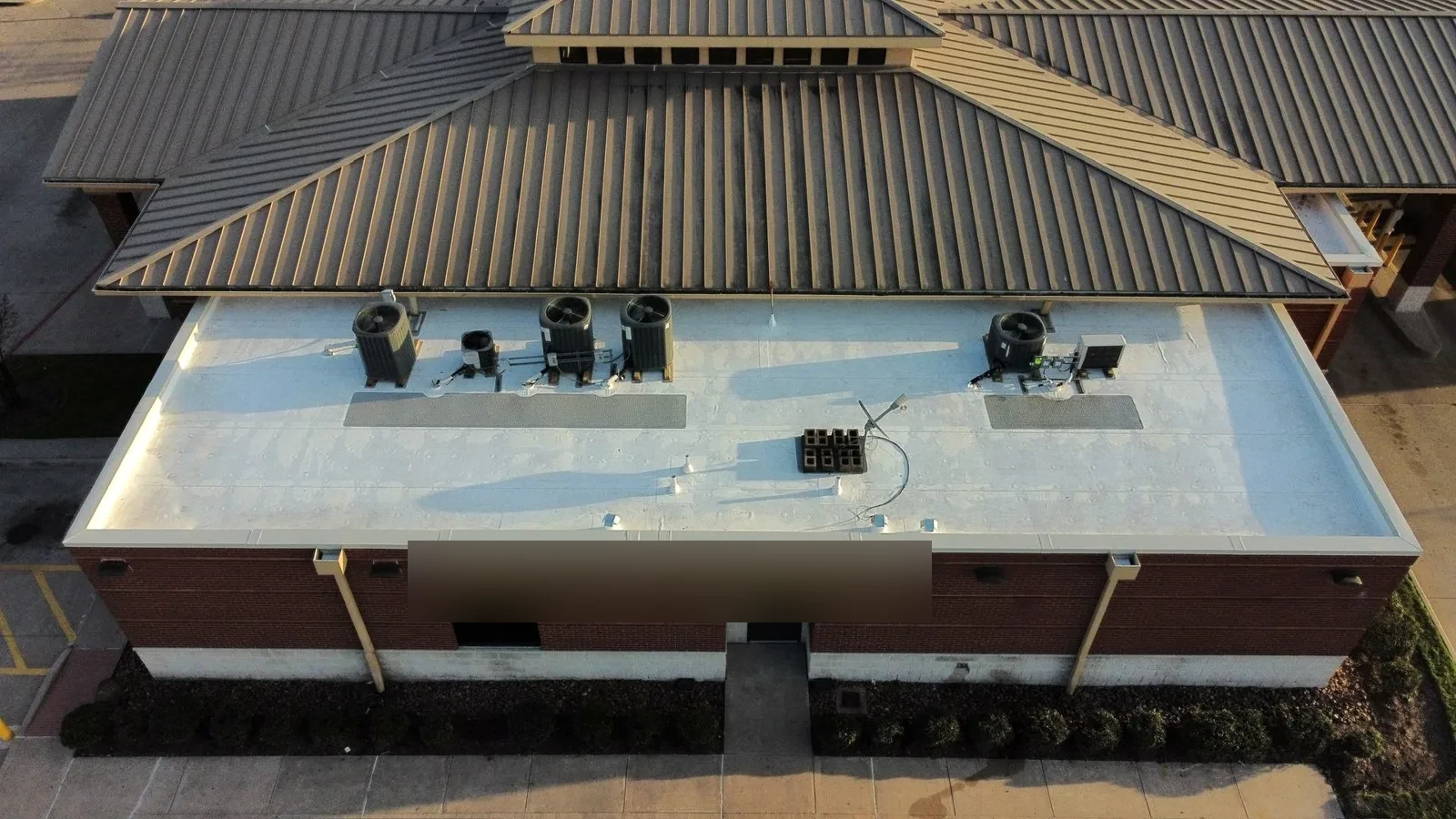
Commercial Roof Flashing Failure Repair
See scope, options and what to expect on the roof.