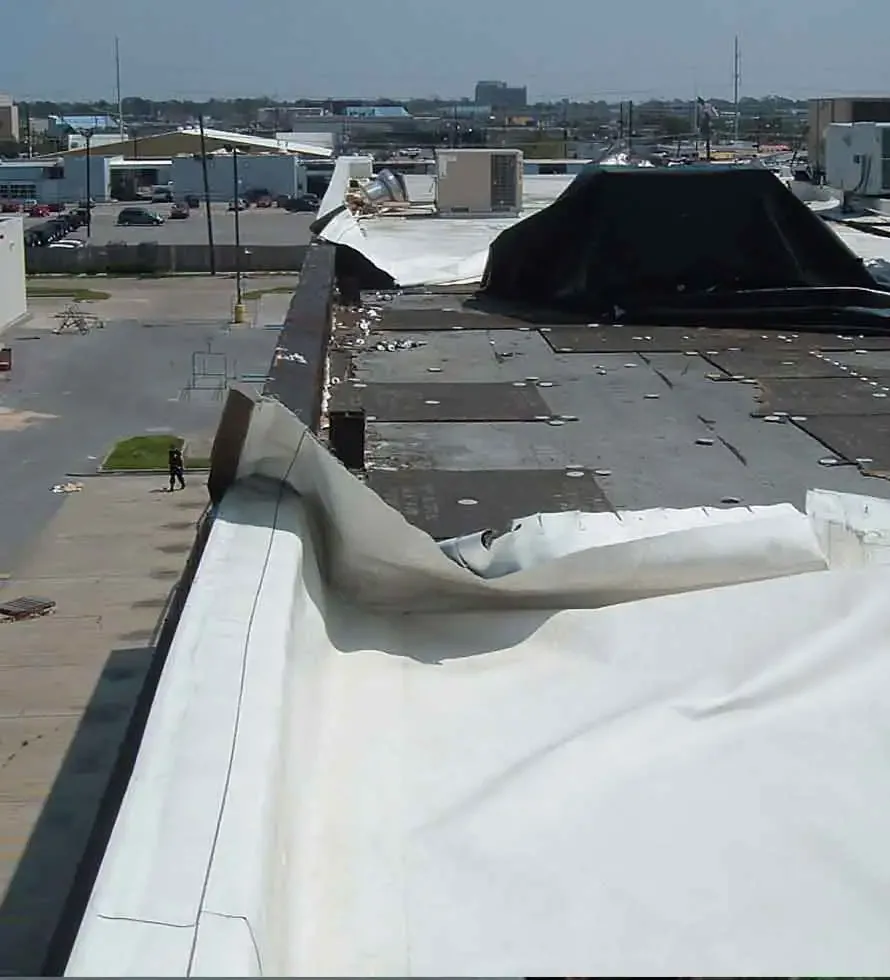
Hail can leave isolated damage while a worn connection elsewhere remains the more consequential reason to schedule replacement. A capital plan needs to distinguish those mechanisms before treating every marked roof as the same investment. In Irving, TX, we examine the assembly, identify the damage that can be repaired and establish which retained layers would still limit another repair cycle. The budget follows those findings rather than a single surface photograph.
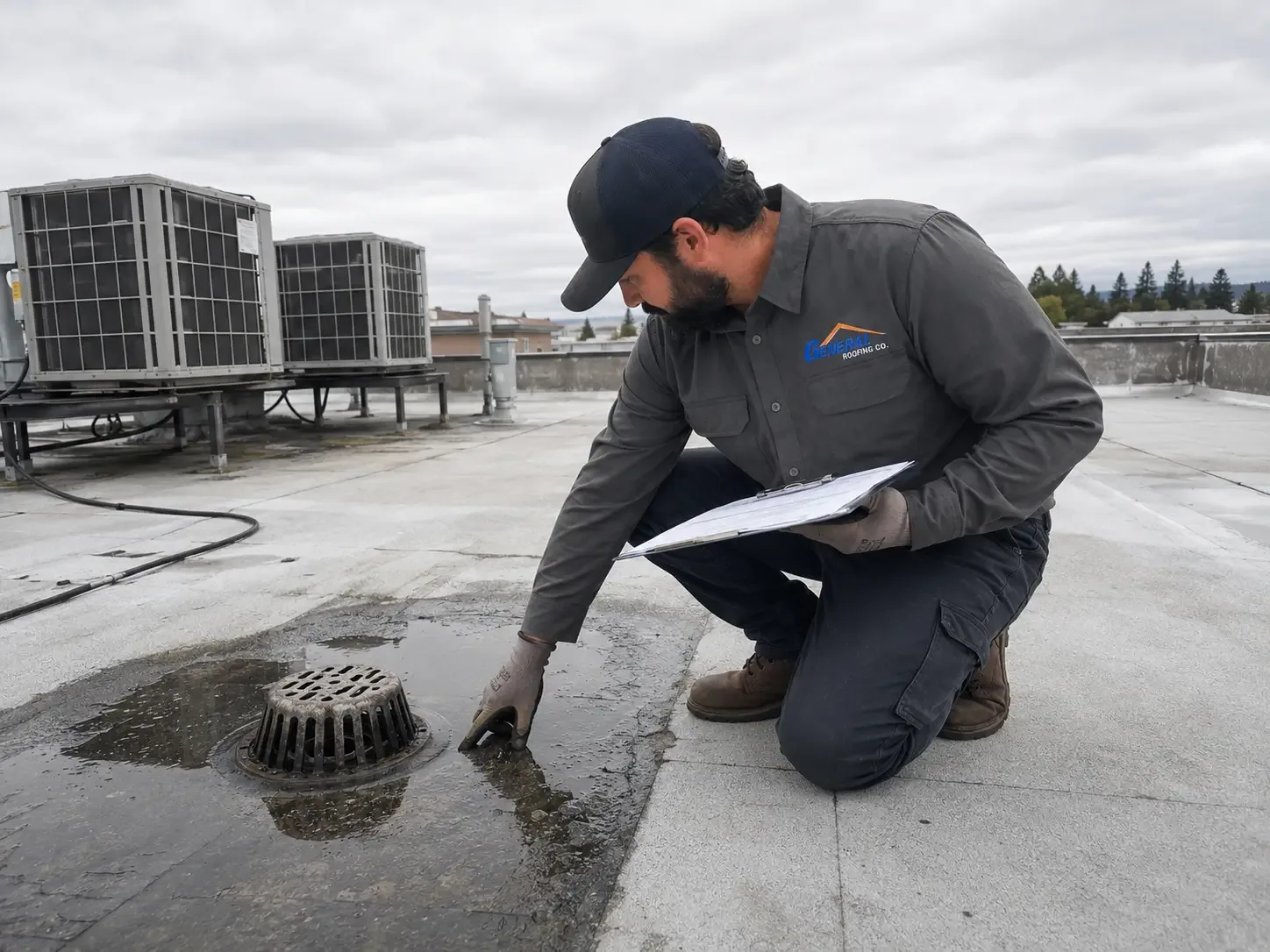
Severe storms are part of the Dallas/Fort Worth regional climate, but a forecast or regional event does not establish damage to a particular property. Commercial Roofing Irving connects the actual roof findings with operating requirements in places such as Las Colinas and Valley Ranch. We compare immediate repair, phased construction and wider replacement on a consistent basis, then identify the uncertainty that could change the scope or its timing.
What evidence supports a capital commitment?
Visible deterioration needs to be related to the supporting assembly. An open flashing termination can admit water into otherwise suitable insulation, while a serviceable-looking field can conceal a wider moisture problem. We review available roof records, examine accessible details and identify any opening needed to understand the construction. A proposal based only on age can miss the condition that makes replacement necessary or overlook a retained section that remains usable.
A condition report with located findings gives the planning discussion a defined starting point. It separates observed damage, confirmed concealed conditions and areas not yet examined. Where hail-related roof damage is present, we distinguish its repair boundary from earlier deterioration and the work needed elsewhere. That separation keeps a storm response from becoming an unexplained allowance for the whole building. It also identifies repairs that should proceed before the broader construction decision is ready.
Which options preserve a suitable assembly?
The alternatives should explain what remains beneath the finished surface. Repair can be a useful investment where the failed connection can be reconstructed against suitable surrounding material. A recover needs dry, stable retained layers, a dependable attachment approach and details that can accommodate the added height. Replacement provides access to concealed construction but creates a larger removal and protection scope. We compare those consequences rather than placing different membrane names beside unrelated demolition assumptions.
An evaluated recover option may reduce disposal while still requiring wet-area removal, edge reconstruction or equipment changes. Those items belong in its budget. A replacement alternative needs the same clarity about insulation, deck repair and drainage. We identify the assumptions that make each option feasible and the findings that would invalidate them. The owner can then see whether a lower initial commitment preserves a serviceable roof or merely postpones work that the retained assembly already requires.
Where can construction be divided without weakening the roof?
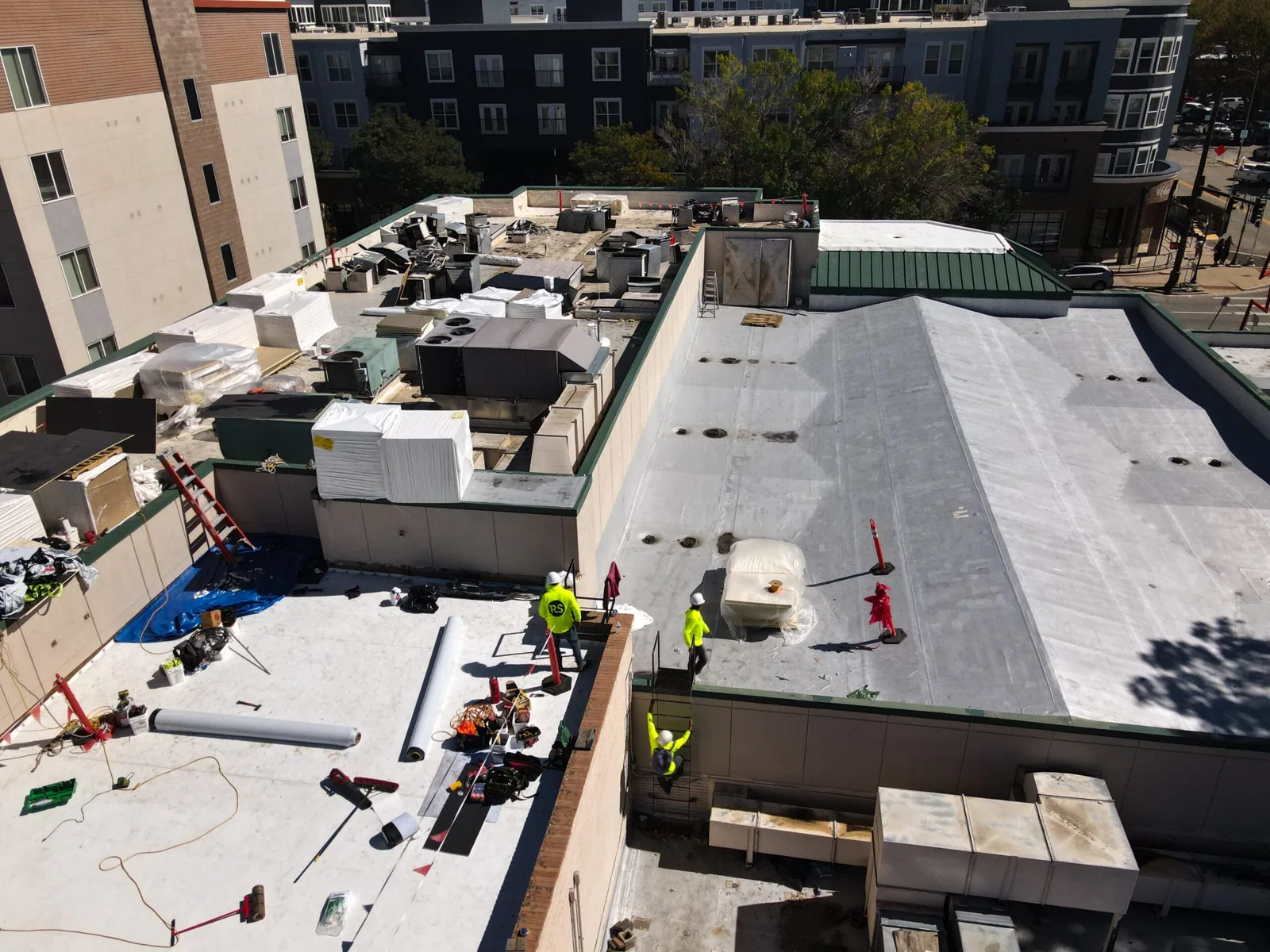
Roof elevations, drainage zones and assembly changes can provide useful phase boundaries. A budget percentage by itself does not. We examine the proposed junction between new work and retained roofing, including how water reaches an outlet and how the waterproofing will terminate. The first phase must remain serviceable while later areas await work. A line through deteriorated continuous material can create a difficult temporary detail even when it appears convenient on a drawing.
For occupied office buildings, each phase also needs an access and equipment sequence. Office and retail uses in Las Colinas can constrain deliveries, debris movement and shutdown windows. We describe the actual activities affected by the proposed phase and the protection required below it. Repeating staging or rebuilding a temporary junction in a later phase can change the total cost, so those consequences should remain visible when the owner compares phased work with one construction period.
How should concealed work enter the budget?
Known quantities and concealed uncertainties need different treatment. Measured roof areas, accessible edges and identified equipment transitions can support a defined scope. Deck deterioration beneath unopened layers may require further investigation or an allowance with an agreed decision process. We explain what the allowance covers, what finding triggers its use and how the exposed condition will be recorded before the roof closes. It should not obscure known work that belongs in the base comparison.
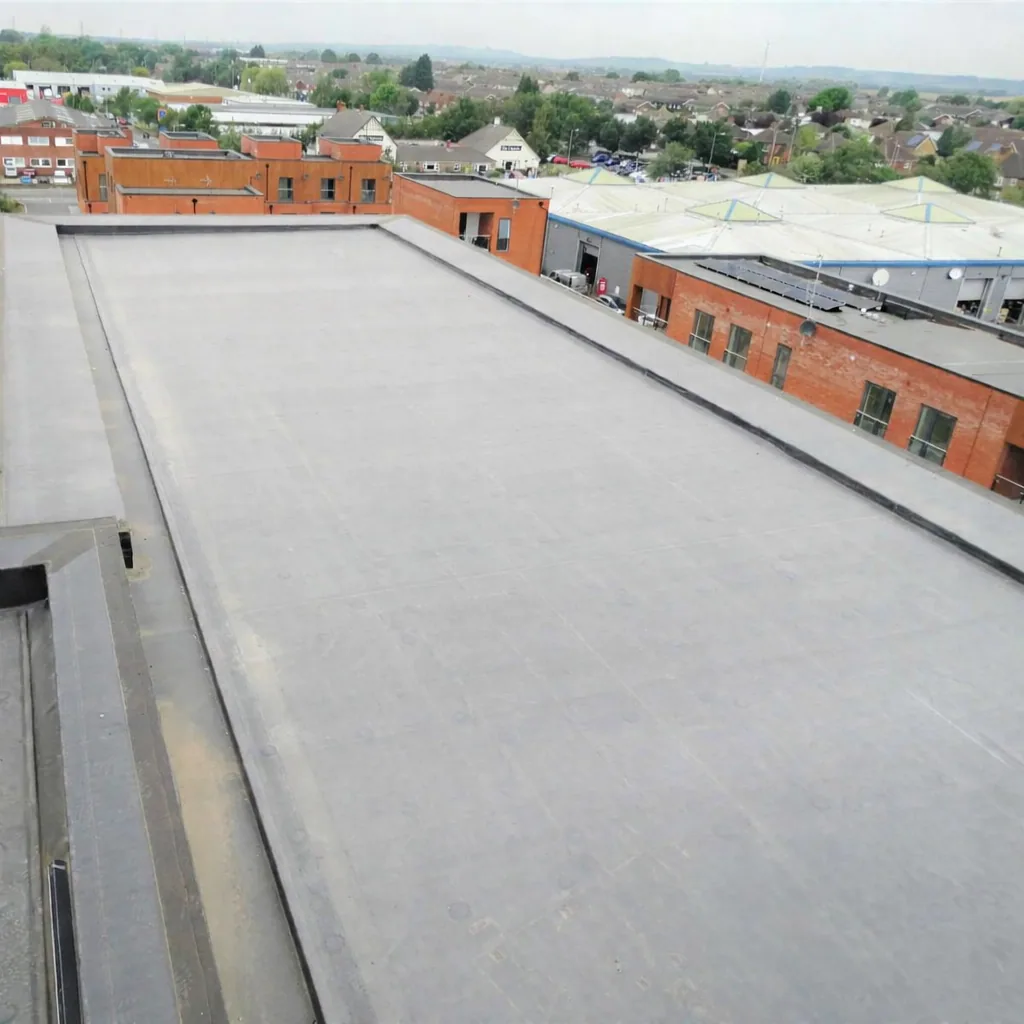
Removal depth, insulation design, access, disposal and detail reconstruction can change a budget materially. A rubber membrane assembly, for example, still needs compatible supporting layers and connections; its sheet price does not describe the completed roof. We compare the installed assemblies and the preparation needed for each. Where precise costs depend on an unresolved condition, the planning estimate identifies that dependency and the next examination needed to narrow it, rather than presenting an uncertain amount as a settled construction commitment.
What finding should move the construction date?
A planning date needs review when condition changes. New water entry, expanding moisture findings or deterioration at several connected details can reduce the usefulness of the earlier repair strategy. An isolated repaired defect may leave the wider assembly suitable for continued observation. We identify the condition that would bring work forward and the examination needed to recognize it. A calendar should support that response without being mistaken for a prediction that the roof will fail on a particular date.
Valley Ranch commercial and multifamily properties introduce occupied-space considerations alongside the roof findings. We coordinate the investigation and proposed work window with the manager, then retain the assumptions in the roof asset record. An updated capital plan shows completed repairs, remaining uncertainty and the reason for each construction phase. The owner can authorize the next step with a clearer distinction between maintaining the current assembly and funding the work that replaces it.
Product changes, equipment relocation and revised access arrangements can also affect an earlier estimate. We revisit those conditions before treating a planning figure as a construction price. That review connects the current building requirements with the assembly actually being proposed, including any additional transition or staging work.
Commercial Roofing Questions
Can a capital plan give an exact remaining roof life?
Condition findings support a planning range and the assumptions behind it, rather than an exact failure date. We identify deterioration, concealed uncertainty and the repairs needed to sustain the roof. The next inspection then tests those assumptions. A roof can remain usable after a contained repair, while an expanding moisture problem can change the replacement discussion much sooner than its installation date suggests.
Should every alternative use the same deck allowance?
Use comparable assumptions where the alternatives expose the same construction. A different removal scope can leave a different amount of deck accessible and create different uncertainty. We explain that distinction and identify the supporting investigation. The comparison should show the work included in each option, rather than make a concealed repair allowance appear interchangeable when one option leaves that material covered.
Is a sectional replacement always less expensive overall?
Repeated staging, temporary transitions and later connection work can increase the combined construction effort. We compare those items with the access and capital benefits of phasing. A separate elevation or drainage zone may provide a practical division; an arbitrary split through a continuous assembly may not. The useful phase boundary follows the roof geometry and a reliable closing detail.
What should happen before an old estimate is reused?
Recheck the roof condition, proposed assembly, quantities and operating restrictions. Repairs or equipment changes since the estimate can alter its assumptions, and newly accessible construction can reveal work not previously known. We identify those changes before the owner commits the budget. A planning estimate remains useful when its scope and uncertainties can still be connected to the current building.
Ready to review the roof scope?
Request a Roof Assessment