A seam that opens during a hot afternoon can be responding to tension from a rigid termination several feet away. In Irving, TX, planned roof repair needs to address that connection between thermal movement and material condition, rather than sealing the visible opening alone. Commercial Roofing Irving examines the damaged component, the surrounding assembly and the forces acting on the detail before selecting a repair method.
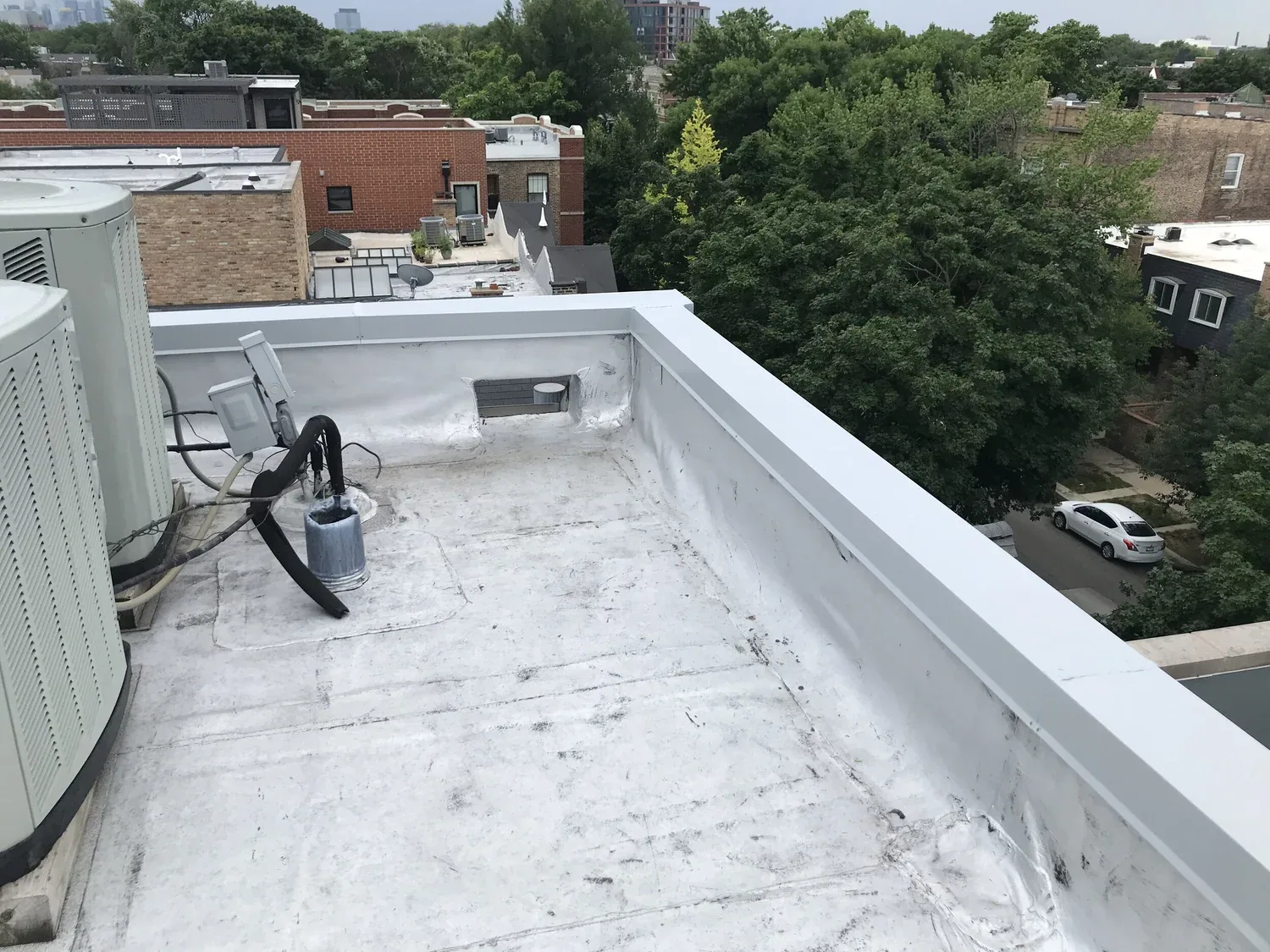
The Metroplex's summer heat and seasonal rainfall place different demands on a roof: temperature changes move components, while water tests continuity at their joints. Las Colinas office buildings and Valley Ranch commercial properties also require repair work that respects occupied space. We define a repair footprint that reaches suitable material, then plan preparation, reconstruction and access so the corrected detail can be examined and maintained afterward.
Is the defect a surface injury or a connection failure?
A puncture through otherwise serviceable membrane calls for a different repair from a lap that repeatedly separates. With a puncture, we determine the damage boundary and whether water reached underlying insulation. At a failed seam, we examine weld quality, contamination, membrane tension and any movement imposed by adjacent details. Repeating the same patch over a seam under unresolved tension can leave the original cause active beneath a thicker repair.
We compare deterioration in the repair area with the surrounding field through hands-on examination. A brittle surface may resist preparation or crack when worked, while loose insulation can leave a patch without stable support. Those findings affect whether a contained repair is practical or the scope needs to expand. We distinguish a damaged detail with serviceable surroundings from deterioration that prevents dependable bonding or attachment across a wider area.
What does the membrane need before it can accept a patch?
Cleaning and preparation depend on the material, its age and the selected repair system. A weldable thermoplastic needs a surface that can form a continuous weld; an aged sheet may require additional preparation or a compatible method suited to its condition. For EPDM roof repairs, compatible cleaners, primers and repair materials are selected for the rubber assembly. Mixing methods without considering the existing sheet can create a patch that appears secure but lacks a durable bond.
Patch dimensions must allow connection to sound material beyond the defect, with rounded or properly detailed corners where the system requires them. We remove loose prior repairs when they prevent a suitable interface, then rebuild layers damaged below the covering. Surface preparation, dry conditions and application temperature all affect the result. During hot weather, the membrane temperature may differ substantially from the air temperature, so we evaluate actual working conditions rather than choosing materials from the forecast alone.
Why does a curb leak after repeated sealing?
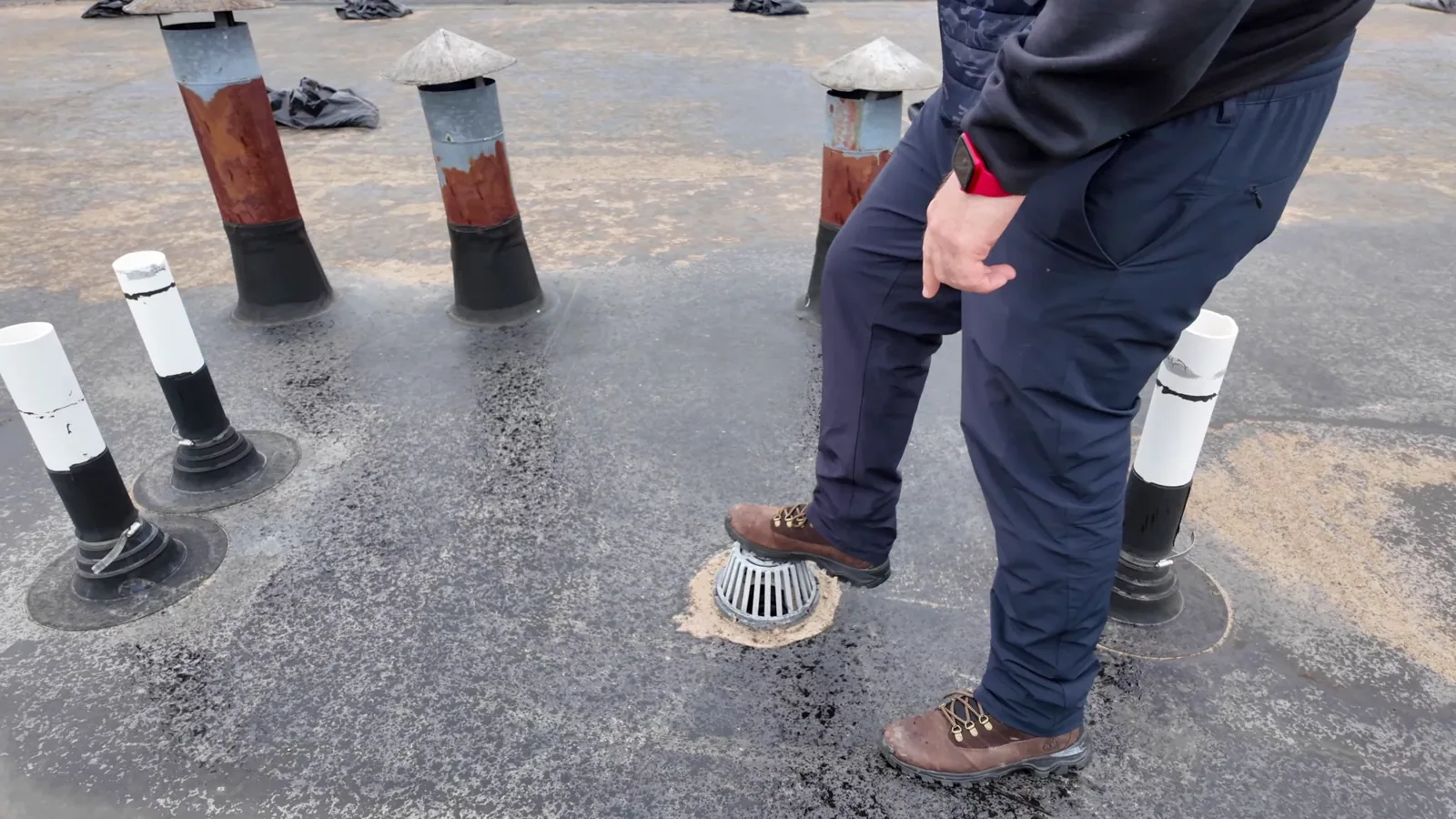
Water can enter a curb connection through a failed corner, loose termination or an interruption in the flashing height. A bead of sealant over the top edge does not reconstruct a displaced membrane or a split caused by movement. We examine where the roof field rises onto the curb, how it is secured and how the upper termination sheds water. A reconstructed flashing connection should address the failed component and its connection to adjacent materials.
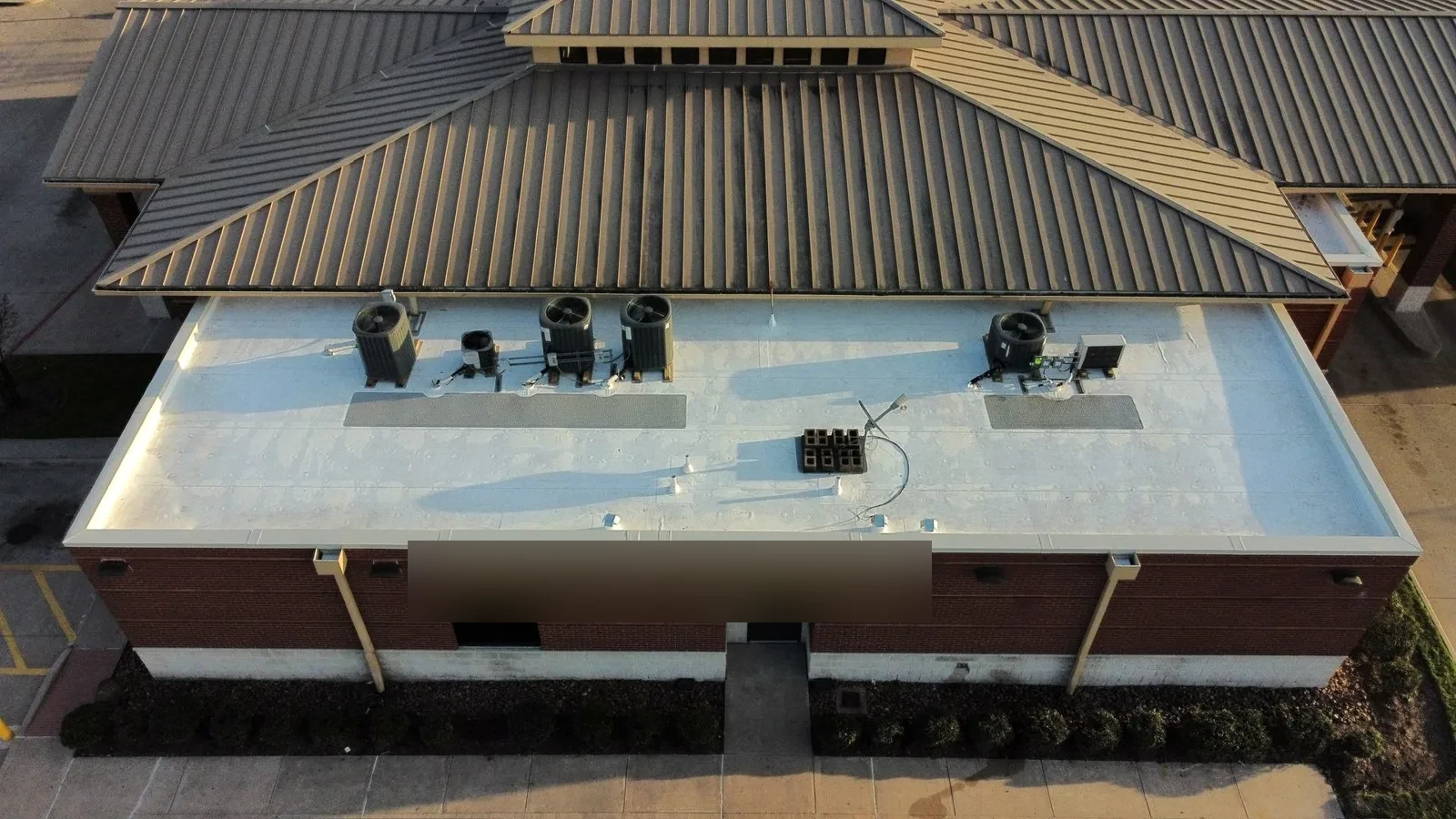
Equipment vibration, rigid metal and flexible membrane can concentrate stress at corners or unsupported changes of plane. We consider whether the repair needs additional support, a different transition or mechanical coordination to gain access beneath equipment. Expansion joints require enough freedom to accommodate the movement they were intended to handle. Where an old repair bridges that movement, removing the obstruction and rebuilding the joint can be more useful than adding another layer over the split.
Does the repair need to include wet insulation?
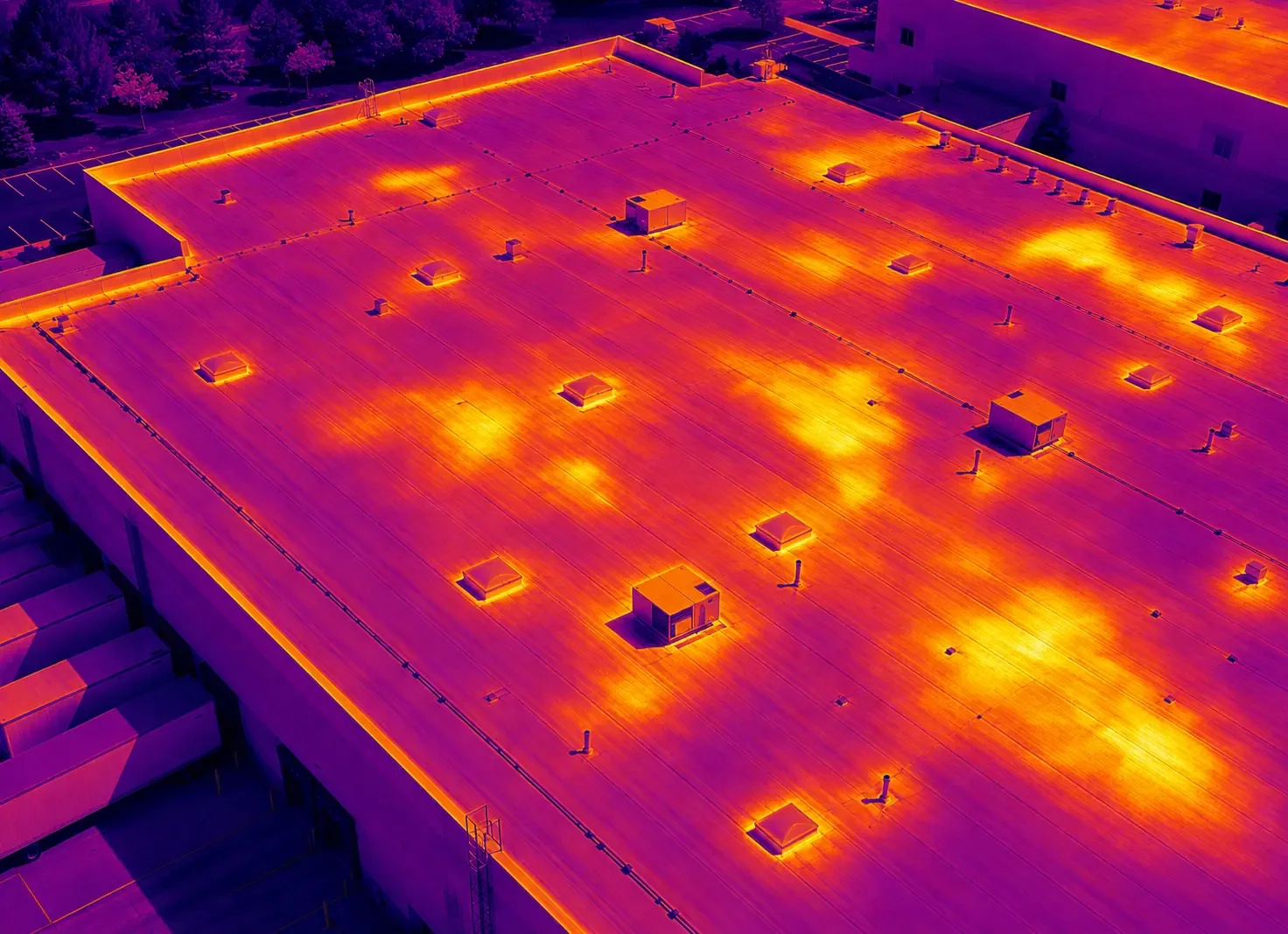
Water beneath a damaged detail can travel beyond the opening, especially along board joints or a layer that limits downward movement. We examine the underlying assembly where the defect or interior evidence suggests concealed wetting. A targeted moisture investigation can help direct openings when roof composition and weather provide useful thermal contrast. Direct checks then establish whether insulation or supporting materials need removal within the repair area.
Drainage also changes the exposure of a repair. A seam sitting in retained water faces a different condition from a seam on a freely draining field. We check whether blocked outlets, drain elevations or a local depression are keeping water against the damaged detail. Correcting outlet connections may belong in the same scope. Repairing the seam while leaving runoff trapped can preserve a repeated wetting condition that complicates future maintenance and inspection.
How do we set a practical repair boundary?
The boundary follows sound, workable materials rather than the smallest visible crack. We identify removal, preparation and reconstruction separately, including any connection to edge metal or equipment that affects the repair. Cost is driven by access, the number and complexity of details, concealed wet material and the difficulty of achieving a compatible bond. A large open-field patch can involve less detail work than a small repair beneath equipment or at an inaccessible perimeter.
For occupied Las Colinas properties, we discuss noise, odors and equipment access before selecting the work sequence. Repair areas that expose underlying layers need protection until they are closed, even when the overall project is small. We coordinate any equipment shutdown needed to reconstruct a curb and keep access routes available for building operations. The finished repair is examined at its connections, with photos showing the corrected detail and any nearby conditions that need separate attention.
After the repair, maintenance should preserve the corrected water path and connection. We explain which drains need clearing and which equipment activities could damage the new material. A repair remains easier to assess when its boundary is accessible instead of concealed beneath stored objects or service debris.
That access also lets us inspect the patch perimeter during later visits without disturbing equipment or cutting through additional materials.
Commercial Roofing Questions
Can you repair a seam that has several old patches?
Old patch material has to be assessed together with the membrane beneath it. We examine whether removing loose or incompatible patches exposes a surface suitable for a new connection. Where repeated patching has damaged the sheet or concealed wet layers, the repair footprint may need to expand. The objective is a continuous repair attached to usable material, rather than another small layer joined only to earlier repairs.
Should an active leak wait for planned repair scheduling?
Active water affecting occupied space needs immediate evaluation and protection. We provide emergency response at any hour, then separate temporary water control from the permanent repair needed under suitable conditions. Electrical hazards, unstable ceilings or unsafe roof access can change the response. Once the area is safe, we determine how much of the planned reconstruction can proceed and which parts require drying or additional examination.
Will replacing damaged flashing require moving equipment?
Reconstructing a concealed connection may require lifting the unit. Some connections can be rebuilt with the unit in place; others need lifting or coordinated disconnection to reach the concealed flashing correctly. We evaluate the curb, service connections and available working space before scheduling that work. Sealing only the visible edge can leave the inaccessible portion of the failed detail untouched.
What finding would make a small repair unsuitable?
Widespread loss of bond, wet insulation or an unstable substrate can prevent a dependable contained repair. We establish how far those conditions extend and compare a larger repair with recover or replacement where appropriate. A localized defect is repairable when the surrounding assembly can support the correction. The decision follows the materials exposed during investigation, not simply the size of the interior stain.
Ready to review the roof scope?
Request a Roof Assessment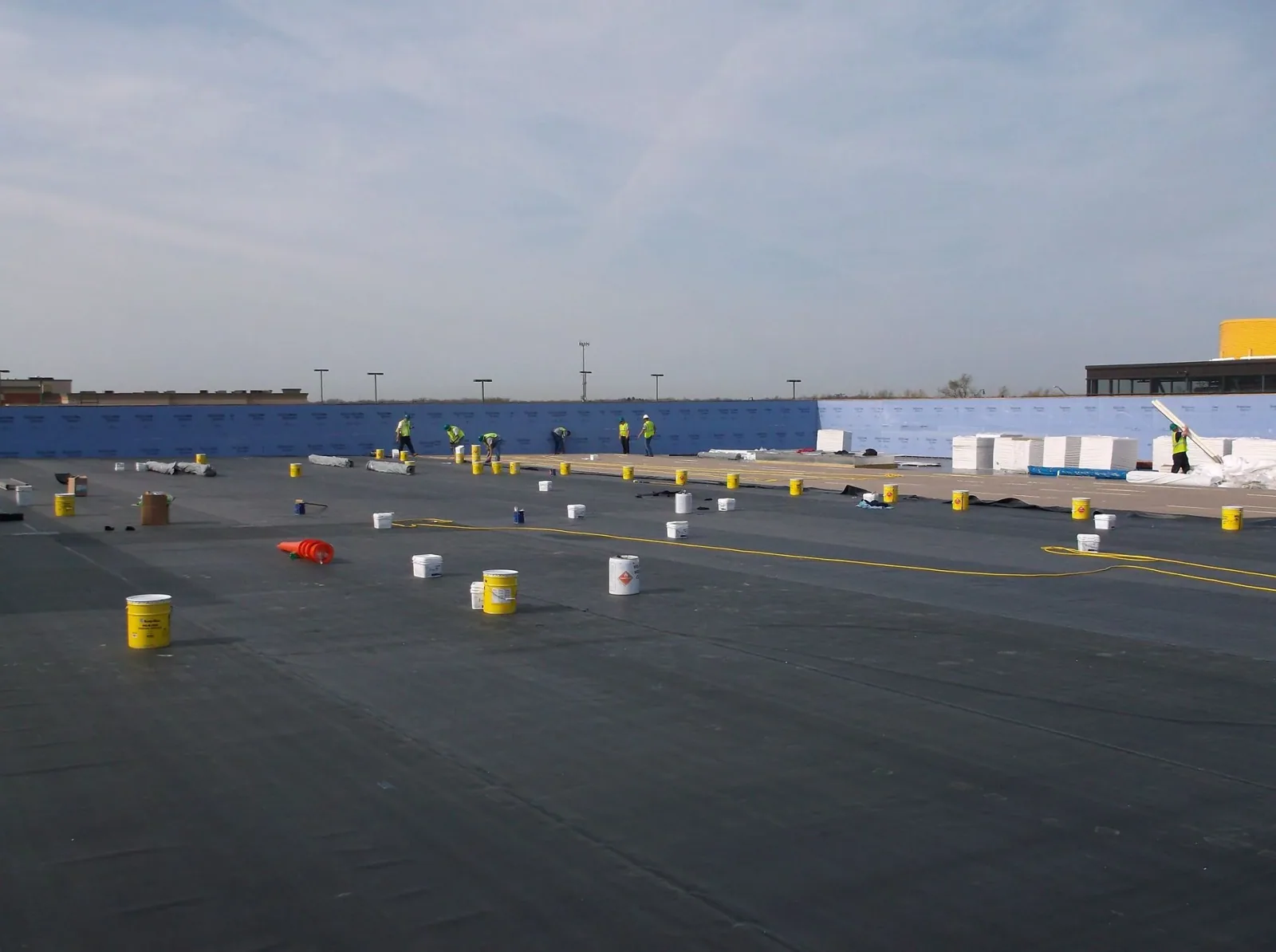
Commercial Roof Flashing Failure Repair
See scope, options and what to expect on the roof.