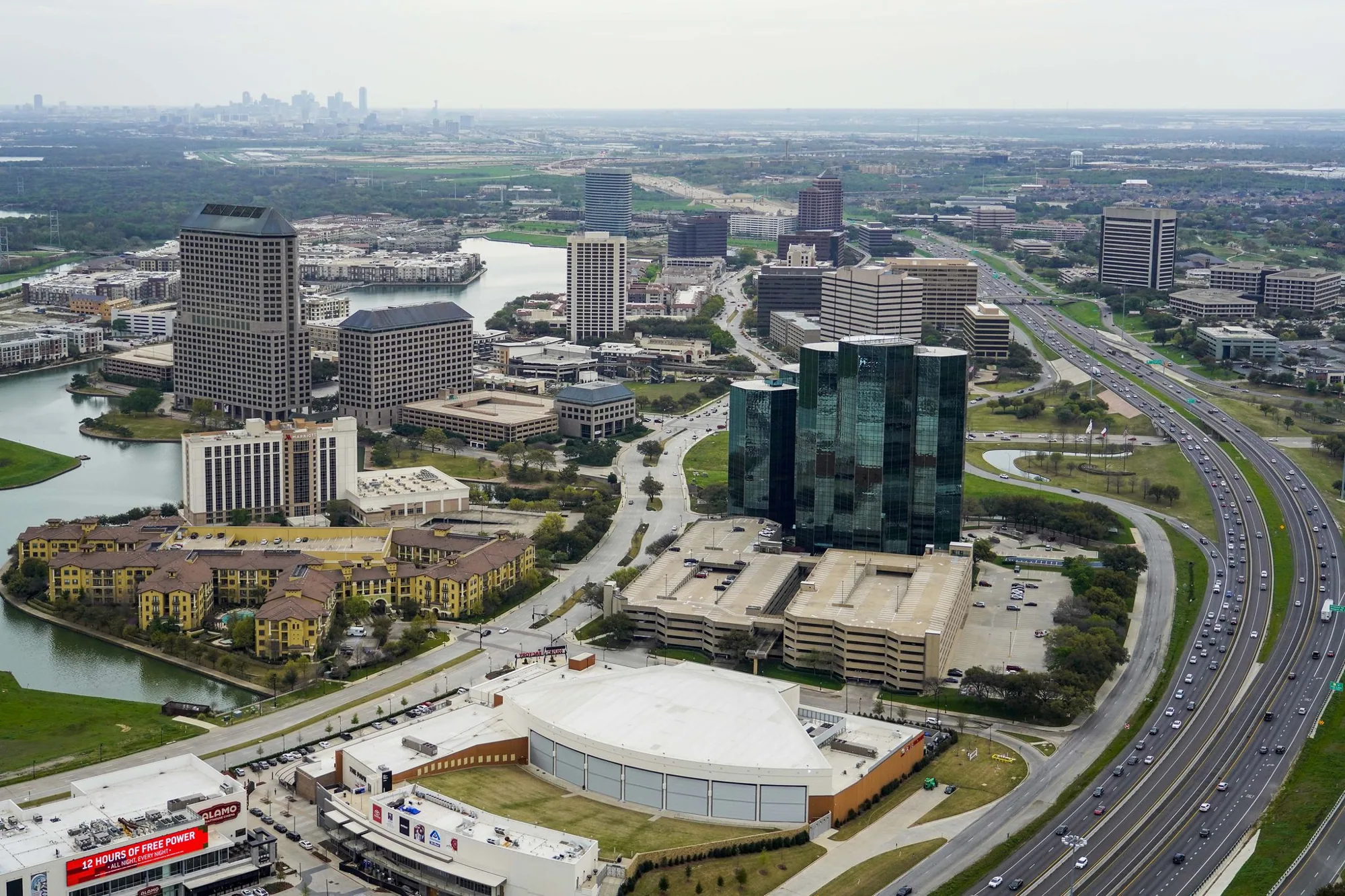
Summer heat can amplify movement in an existing roof even when the surface still appears suitable for another covering. A recover in Irving, TX, has to connect a new assembly to retained materials that can carry it through those thermal changes and subsequent rainfall. Commercial Roofing Irving examines the condition below the surface before comparing an overlay with removal, because keeping an unsuitable layer can move the cost of correction into the next roof project.
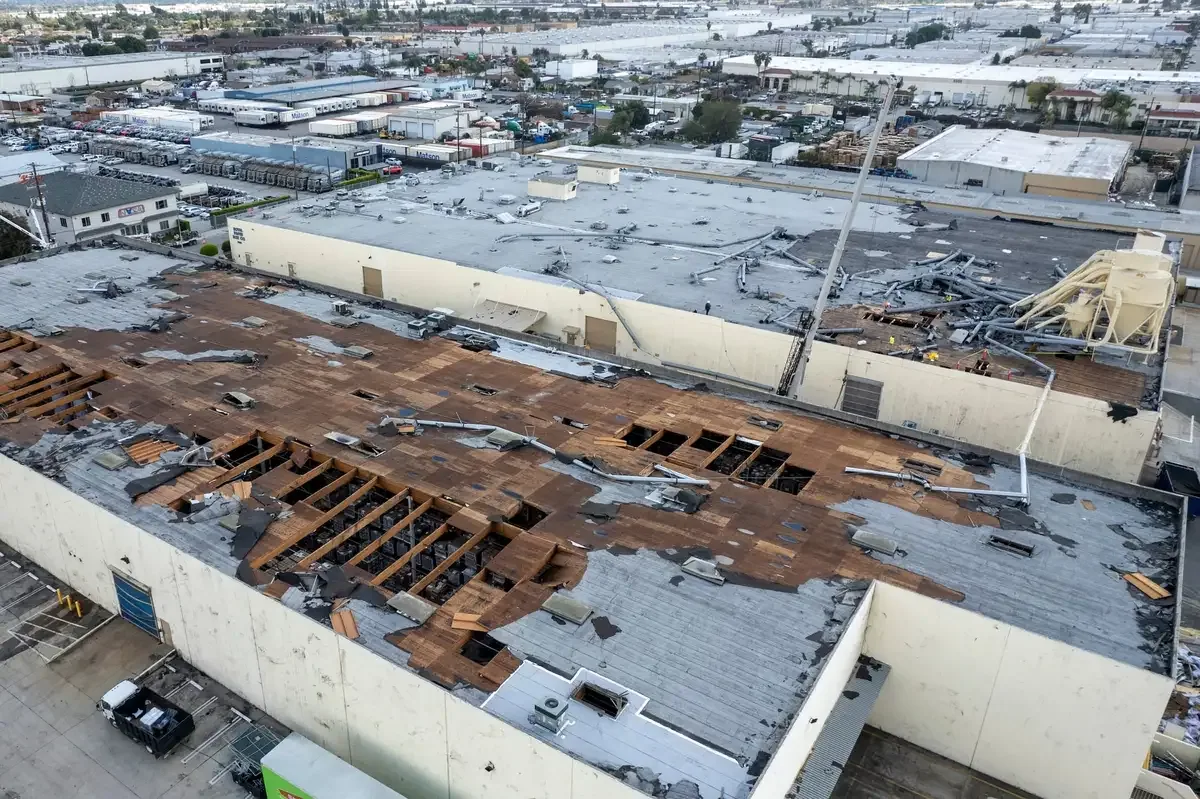
Las Colinas combines commercial buildings with residential uses, while the North Irving Belt Line corridor has an established retail setting. Reducing removal can help manage disruption at those occupied properties, but convenience cannot determine suitability. We assess moisture distribution, attachment resistance and detail heights together, then explain which retained components would continue serving a useful purpose beneath the proposed covering.
What makes the existing roof a useful substrate?
A firm, dry roof with dependable attachment offers a different starting point from an assembly with loose layers or persistent wet insulation. We identify the membrane, insulation, deck and earlier roof layers, using openings where concealment prevents a reliable comparison. Localized deterioration may be removable before recover; widespread weakness can require replacement with removal. The investigation sets the boundary between material worth retaining and material that would compromise the new work.
Code limits, structural capacity and the proposed attachment method also affect eligibility. Additional roofing increases dead load, and a new fastener layout must reach a substrate capable of providing the needed resistance. We review the particular project under Irving's adopted 2024 IBC, IECC and IEBC with local amendments. That review includes applicable restrictions on retained assemblies and energy provisions, rather than treating an overlay as permission to avoid examination of the roof construction.
How much wet material would remain hidden?
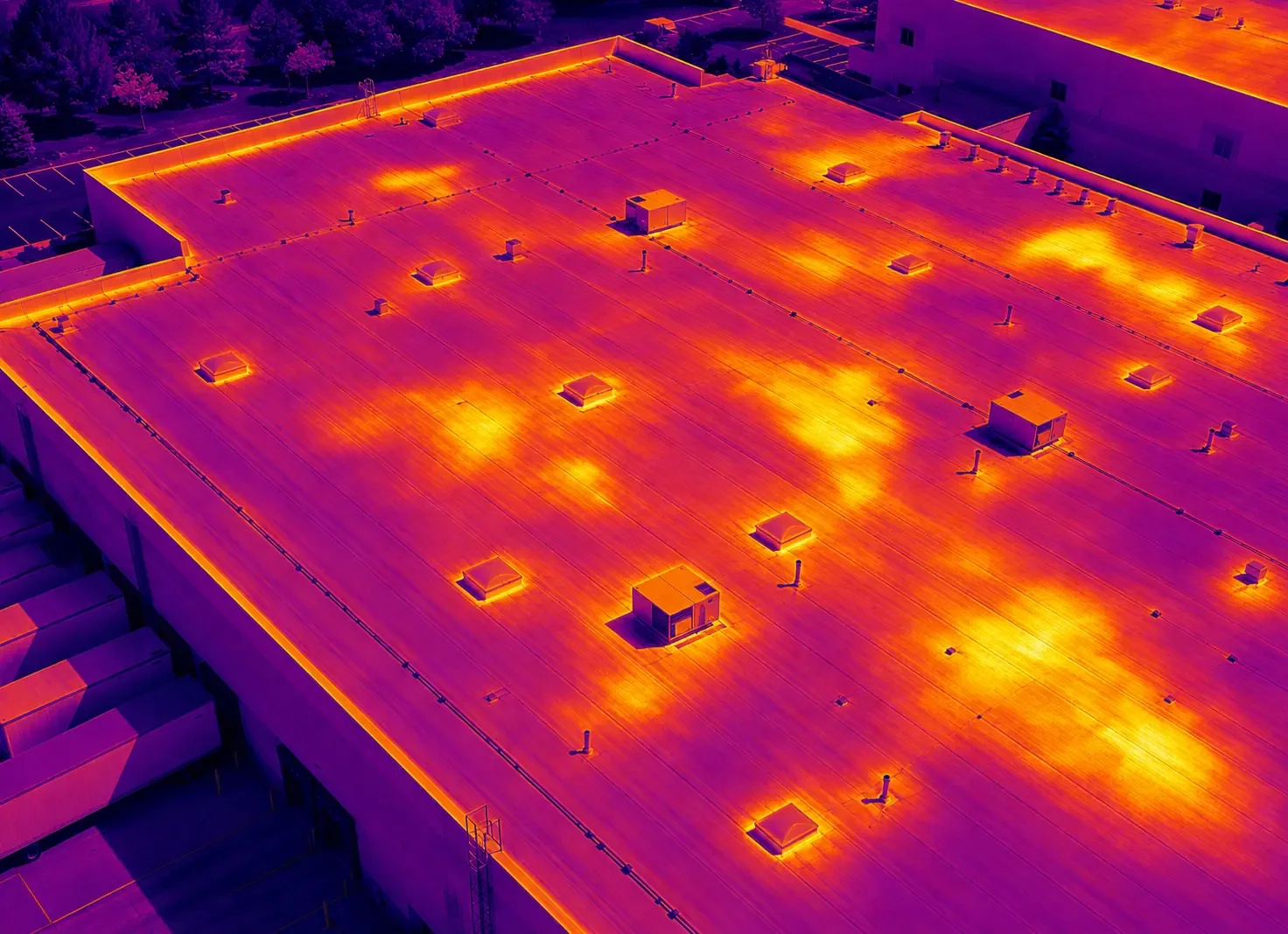
Moisture can extend beyond a leak opening through joints between insulation boards or across a vapor-resistant layer. An assembly moisture survey helps establish where direct examination should occur when weather and roof composition support useful readings. We compare those findings with core cuts and other direct checks before deciding how much insulation must be removed. A dry-looking top sheet is not the deciding measurement for an overlay.
Retaining wet boards can reduce insulation performance and place moisture beneath the new covering, where drying may become more difficult. We define removal patches with enough access to rebuild a stable surface, including replacement insulation of compatible thickness. Where moisture boundaries are uncertain, further investigation precedes material selection. The proposed recover should have a clear explanation of how the retained layers were judged suitable, which areas require removal and how those rebuilt areas will connect to the remaining roof.
Will the new covering bond and attach correctly?
Surface contamination, loose granules and incompatible materials can prevent a dependable bond. A separation layer or cover board may be necessary to create a suitable interface, depending on the chosen assembly. We compare preparation requirements with the existing surface rather than applying an adhesive over whatever remains. With a PVC roof covering, the separation and attachment design must account for the substrate and materials below it as well as the welded membrane connections above.
Fastening through retained roofing introduces its own checks. Fastener length must suit the assembly thickness, deck engagement and installation method, while pullout testing may be needed to establish usable resistance. Repeated heating and cooling can work on weak connections, so fastening density and perimeter details need an assembly-level design. An overlay cannot correct a deteriorated deck connection simply by increasing the thickness above it; deck repairs and structural review belong in the comparison where those weaknesses are found.
What happens where the roof becomes thicker?
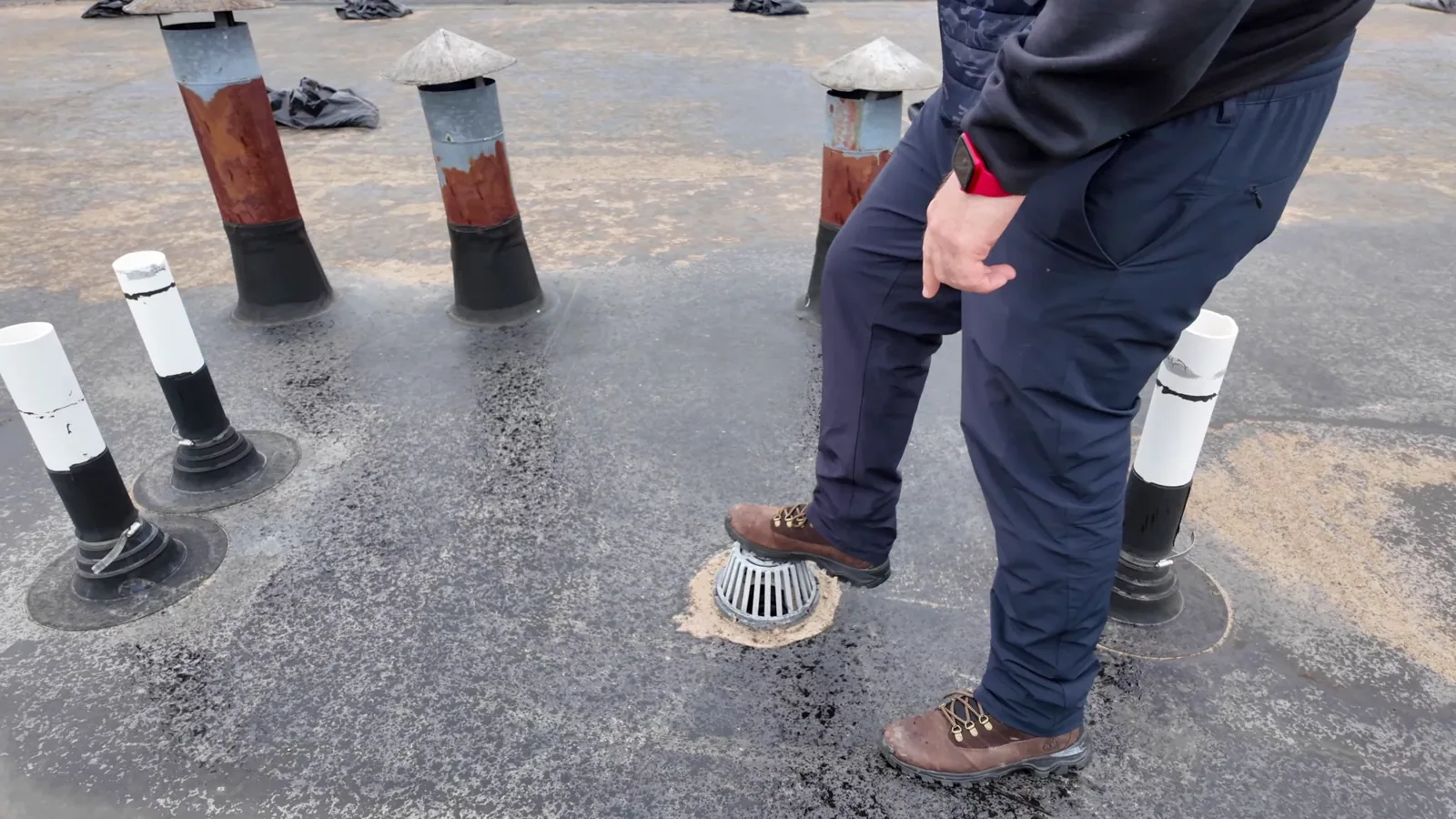
Each added layer raises the roof surface relative to drains, curbs and perimeter terminations. That can leave a previously adequate flashing height too short or deepen the transition into an existing drain sump. We measure these relationships and design the sump, clamping connection and approach slope before choosing a recover thickness. Drain and scupper reconstruction may be necessary where the revised assembly cannot connect securely while preserving positive flow into the outlet.
A failing flashing connection should be reconstructed against suitable materials rather than buried under the overlay edge. Corners, movement joints and equipment curbs often require more work than the open field because they connect surfaces with different stiffness. We also assess roof access thresholds and pipe penetrations. Preserving the old roof is useful only when the new covering can terminate securely around these obstacles and still direct water toward outlets without creating short or inaccessible details.
Does reduced demolition outweigh the detail work?
A recover can reduce disposal and exposure of the interior, but the cost comparison must include selective removal, surface preparation, fastening and detail modifications. A roof with many short curbs or unsuitable outlets may require substantial reconstruction despite retaining the field. We separate those items in the scope so an owner can compare recover with removal on the same basis, including the drainage and insulation performance expected from each option.
Occupied retail properties along the North Irving Belt Line corridor still need controlled material handling and clear entrance routes during installation. Adhesive use, equipment lifting and outlet work can affect operations even without a full tear-off. We sequence those activities by the roof area and the building's operating needs. During the Metroplex's wetter spring and fall periods, installation planning also needs suitable drying and bonding conditions, with exposed repair areas protected before weather interrupts the work.
Maintenance access matters after installation. A recover should leave drains, equipment connections and movement details accessible for examination and repair. We identify walkway needs and fragile areas before the covering is selected, particularly where routine equipment service creates repeated traffic across the roof surface.
We also establish how future repair crews will distinguish retained layers from the new assembly at an opening.
Commercial Roofing Questions
Can an old repair patch stay beneath an overlay?
The patch's attachment and moisture condition determine whether it can remain. A raised, loose or incompatible patch may need removal to prevent an irregular interface beneath the new roof. We examine the surrounding layers too, since the patch may conceal deterioration that extends beyond its visible edge. Retention is reasonable only when the rebuilt surface supports the proposed assembly.
Will a recover solve condensation inside the assembly?
Condensation requires attention to indoor moisture, air leakage and the temperature profile through the roof. Adding a covering alone may leave the same wetting mechanism in place. We examine the assembly and operating conditions before selecting insulation or vapor-control changes, with further design input where needed. The recover decision follows that moisture assessment instead of assuming all wet material came from rain.
Is recover practical where drains already sit high?
Drain elevation can make that option more involved. We compare the proposed surface height with the bowl and connecting plumbing, then determine whether lowering, replacement or a revised insulation layout can provide usable flow. Covering the field while leaving a raised outlet unchanged can increase retained water. Drain reconstruction should therefore be included in the comparison before accepting an overlay scope.
What would make you recommend removal after investigating?
Connected wet insulation, unstable attachment or unsuitable retained layers can shift the decision toward tear-off. Restrictions on existing roofing and the need for structural or drainage correction may do the same. We explain the specific finding that changes the recommendation, including whether it affects one section or the whole proposed area, so the owner can compare the actual assemblies rather than their labels.
Ready to review the roof scope?
Request a Roof Assessment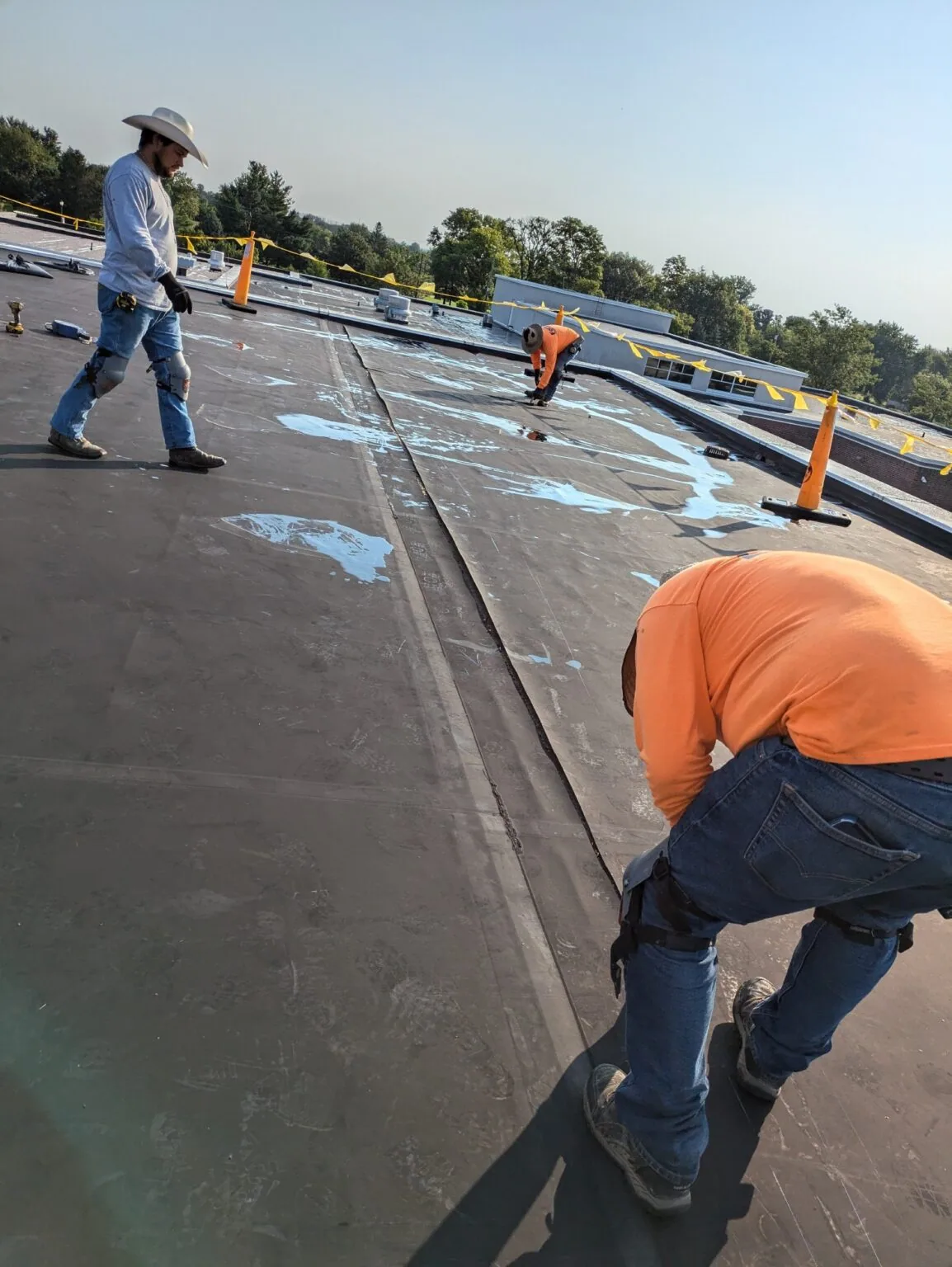
Commercial Roof Flashing Failure Repair
See scope, options and what to expect on the roof.