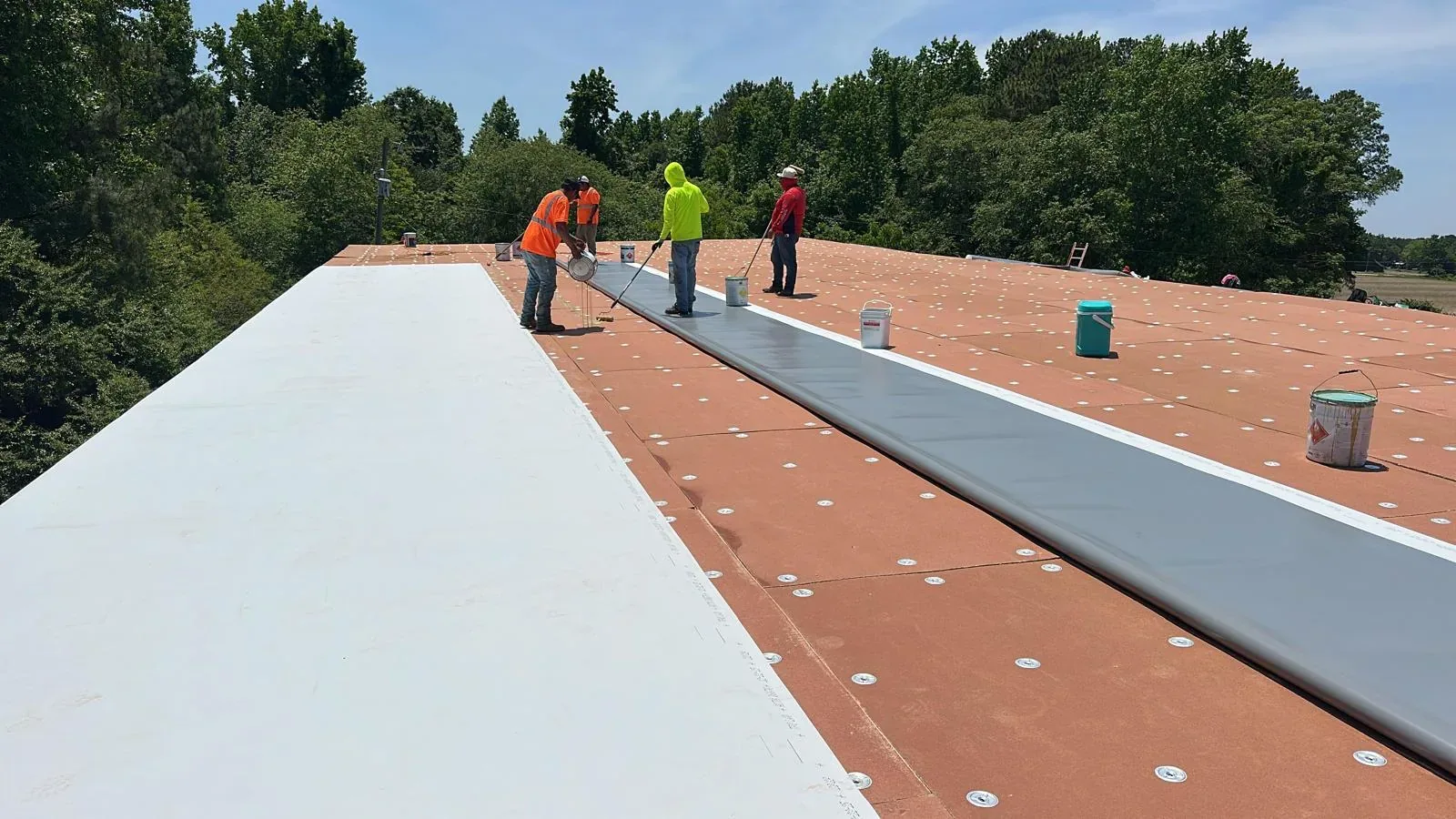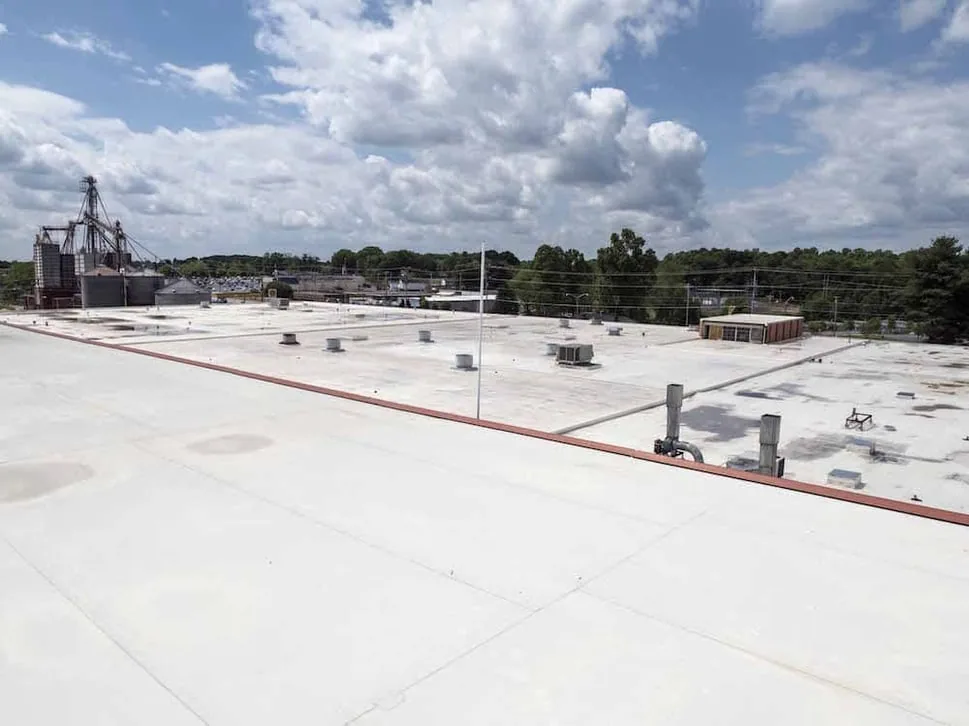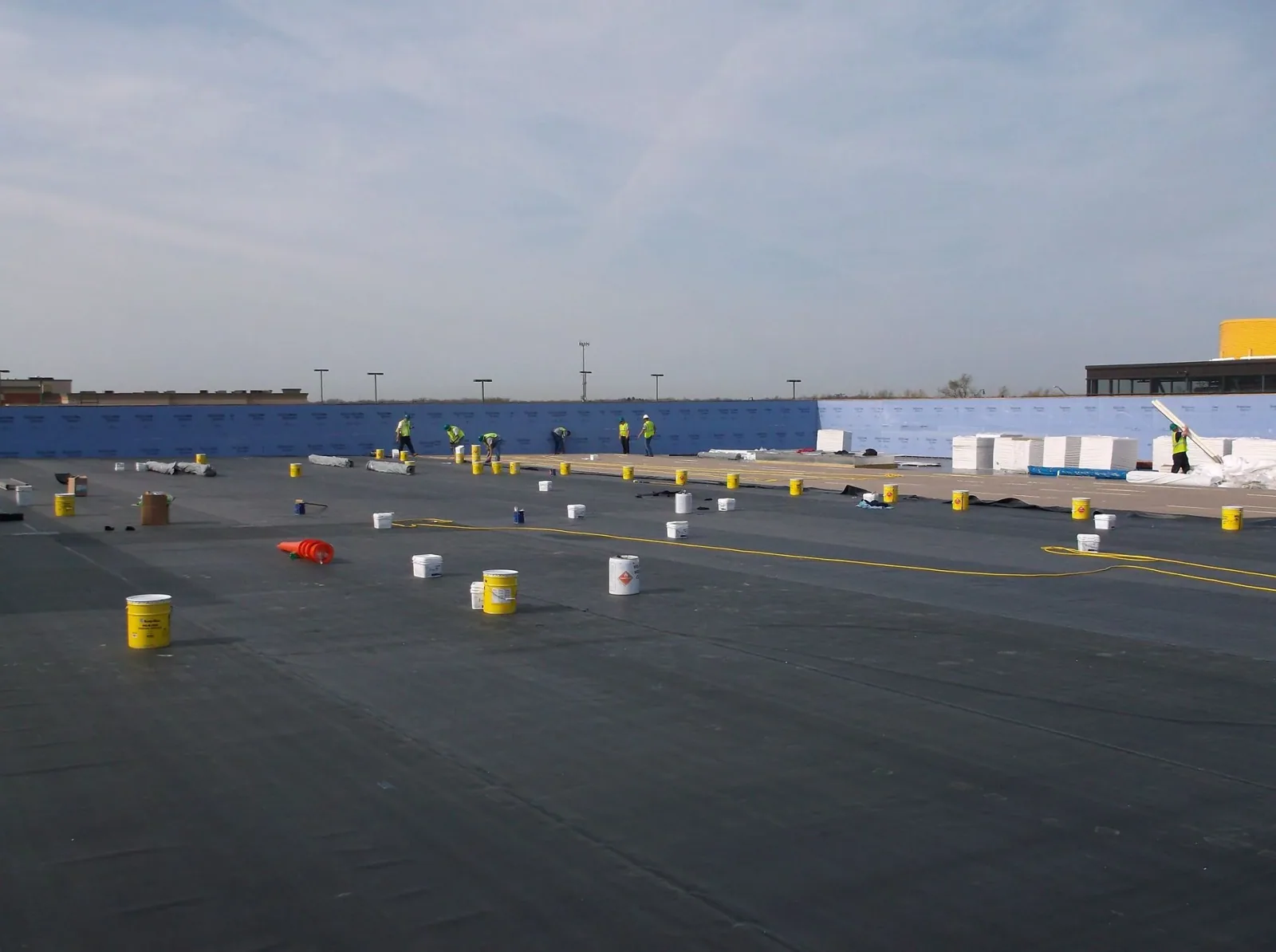
Summer temperature changes can pull a flexible PVC sheet against a fixed termination, making the interface as important as the field membrane's surface condition. Commercial PVC roofing in Irving, TX, needs a compatible substrate and connection details that accommodate those changes without opening the water barrier. Commercial Roofing Irving examines welded laps, support and attachment before selecting a repair or new assembly.
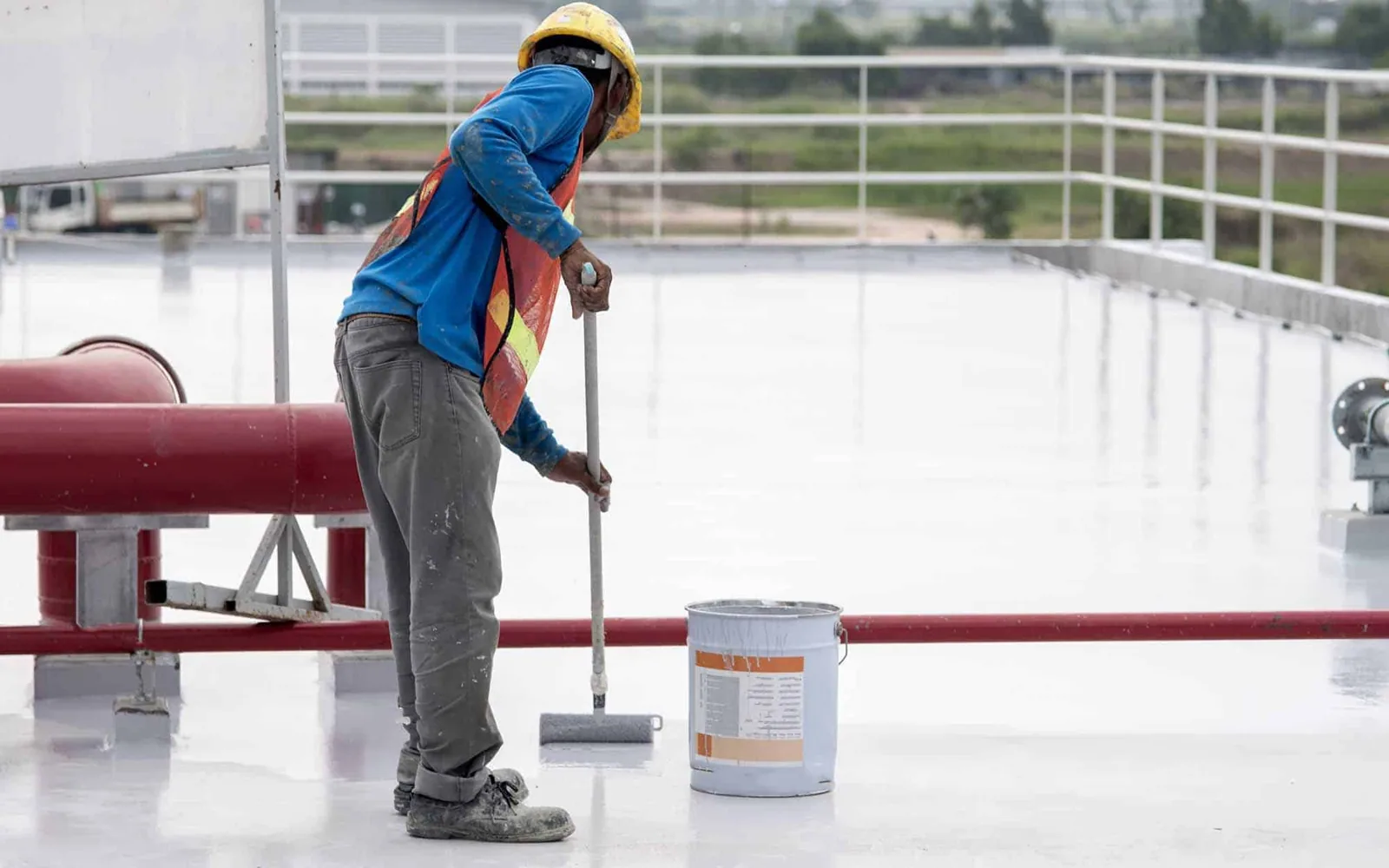
The Las Colinas Urban Center combines offices with restaurants and entertainment, while North Irving's Belt Line corridor includes established retail uses. Those buildings can have equipment access and material exposures worth considering during roof selection, but their use does not determine an existing membrane. We assess the actual covering and conditions, with hot Dallas/Fort Worth summers and seasonal rainfall considered as part of the assembly's operating exposure.
What must remain compatible below the PVC sheet?
PVC roofing needs substrate and separation details appropriate to the selected system and materials beneath it. Direct contact with an unsuitable material can affect the membrane, so we identify the retained layer sequence before designing a recover or repair. Cover board or a separation layer may be required as part of the assembly. The surface appearance of an old roof does not establish that a new PVC sheet can be placed directly over it.
We compare the proposed layout with insulation and cover-board requirements, including attachment and support at changes in thickness. Wet or deteriorated boards are assessed for removal rather than concealed beneath a compatible upper interface. Where the old assembly cannot provide suitable support or retention is otherwise restricted, replacement becomes part of the comparison. The PVC covering is selected after those retained-layer decisions are resolved, not used as a reason to avoid them.
How do welded connections change through service?
PVC sheets are joined with heat welding under conditions suited to the material and equipment. Preparation, access and welding settings affect continuity, particularly at corners, patches and changes in plane. We examine completed connections rather than relying on the overlap's appearance. On an existing roof, contamination or material deterioration can make repair preparation more involved, requiring examination of whether a suitable welded interface can still be formed.
Repairing a separated seam also involves its movement and support conditions. A lap can open because of an unsuitable weld, but tension from an adjacent rigid detail may contribute. We assess the surrounding assembly and identify whether reconstruction needs to relieve that strain or reach further into workable membrane. A new patch should connect to suitable material instead of depending on loose earlier repairs as its only bonding surface.
How should rooftop discharge and traffic influence the choice?
Restaurant and equipment exhaust can introduce local exposures that need comparison with the selected product's suitability. We identify the actual discharge and review the applicable system requirements rather than assuming any PVC material is suitable for every substance. Surface cleaning and repair methods must also be compatible. The assessment distinguishes a material-selection question from equipment or housekeeping work needed to prevent repeated contamination at the same location.
Service traffic can abrade or puncture the covering near equipment and access points. Suitable walkways and routes are planned without blocking runoff or concealing details that need examination. Puncture reconstruction includes checking the layers below where water or impact affected support. Moving the damaging contact or improving the route may belong in the same scope, so a compatible repair does not remain exposed to the activity that caused the injury.
What matters at the curb and perimeter?
Flashing height, upper termination and corner geometry need to work with the flexible sheet and rigid substrate. We examine how the membrane changes direction and whether the support or fastening has moved. Equipment can conceal the connection that needs repair, which may require coordinated lifting to reconstruct correctly. A visible bead of sealant does not replace examination of that concealed interface or the preparation needed for a suitable membrane connection.
At the perimeter, metal and membrane attachment are considered together with the load path into the building. We assess retained support before reconnecting the new covering. A TPO assembly comparison or KEE-containing membrane option may be appropriate for a new project, but each system requires its own compatibility and detail selection. The comparison is based on the assembly and exposure rather than treating similar-looking sheets as interchangeable repair materials.
We also assess pipe boots and grouped penetrations for the shape and movement of the service lines. A detail intended for one round pipe may not suit several crowded conduits or a moving connection. Those differences can require another flashing arrangement, with access preserved for inspection rather than relying on sealant packed into a space that cannot be prepared correctly.
How should repair and installation be sequenced?
Hands-on PVC assessment establishes surface condition and accessible detail findings, with moisture investigation where concealed layers remain uncertain. We then distinguish contained repair from recover or removal. Cost follows preparation, retained-layer correction, insulation, attachment and detail access, including equipment coordination where necessary. That scope lets the owner compare the work required beneath the covering as well as the membrane installation itself.
For Las Colinas Urban Center commercial roofs, installation may need coordination with occupied offices and restaurant operations. We plan removal and closure for suitable weather and application conditions, keeping exposed layers protected if rainfall interrupts the work. Outlet connections are examined before the covering is closed, with drainage elevations coordinated when insulation thickness changes. The finished assembly should remain accessible for equipment service and compatible future repairs.
Maintenance keeps runoff paths clear and examines seams, terminations and traffic areas for change. Cleaning methods are selected for the installed system rather than improvised from another covering's requirements. We identify compatible care and repair needs so later equipment work or surface treatment does not interfere with the PVC membrane or obscure a developing connection defect beneath unrelated material.
Commercial Roofing Questions
Can PVC be installed directly over an old bituminous roof?
The selected assembly's compatibility and separation requirements need review. We identify the existing layers and their condition before choosing the interface, with removal where moisture or deterioration makes retention unsuitable. A cover board or separation layer may be necessary, but its presence does not settle the whole recover decision. Attachment, support and applicable restrictions remain part of that evaluation.
Will restaurant exhaust automatically make PVC the right choice?
The actual exposure and selected product requirements must be compared. Different discharge conditions and roof materials need their own suitability review, along with equipment or housekeeping measures where contamination is recurring. We assess those conditions before recommending the system. A restaurant use alone does not establish the substance reaching the covering or the performance of every PVC product under that exposure.
Can an old PVC repair be welded again?
Membrane condition and the earlier repair materials need examination. Suitable preparation may allow a compatible connection, while deterioration or unrelated patches can require removal to reach workable sheet. We assess support and moisture below the area too. The repair boundary follows those findings rather than assuming the visible patch edge is an adequate surface for another weld.
What changes when insulation thickness increases below PVC?
The higher roof surface changes drain approaches, curb flashing heights and perimeter relationships. We measure those details before settling the insulation package and reconstruct transitions as required. The covering also needs suitable support through any changed slope. Added thermal resistance should be coordinated with the membrane details so it does not leave a short curb or an unsuitable connection at an outlet.
Ready to review the roof scope?
Request a Roof Assessment
Commercial Roof Insulation and Cover Board
See scope, options and what to expect on the roof.
Commercial Roof Membrane Puncture Repair
See scope, options and what to expect on the roof.