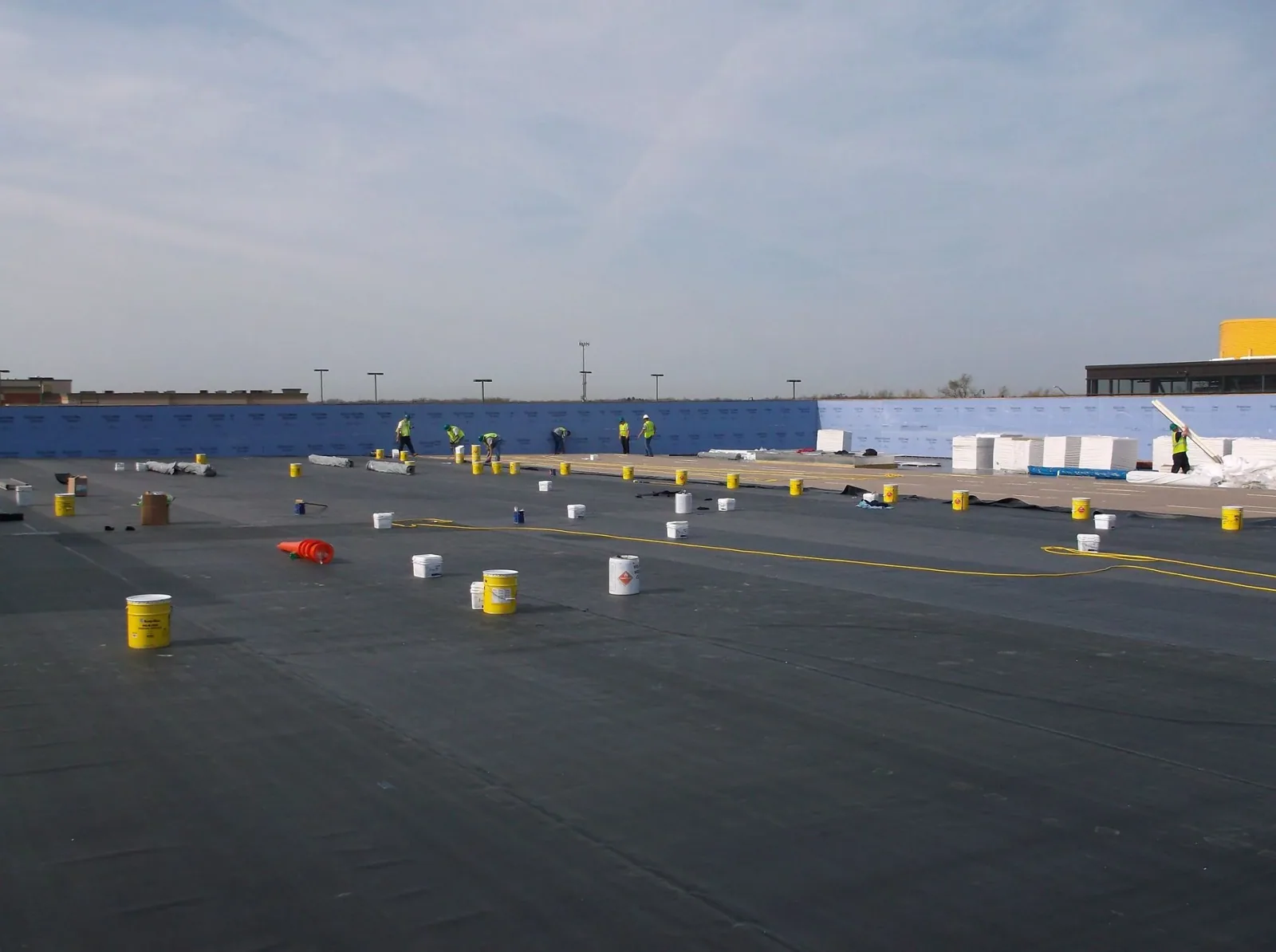
A small puncture can admit water through a much larger area of insulation than the opening suggests. Hot summers and wet periods in the Dallas/Fort Worth region make the material around a puncture important: a sun-warmed sheet can move while wet insulation loses support beneath it. Commercial Roofing Irving examines the membrane injury, its location and the layer below before setting a repair footprint in Irving, TX.
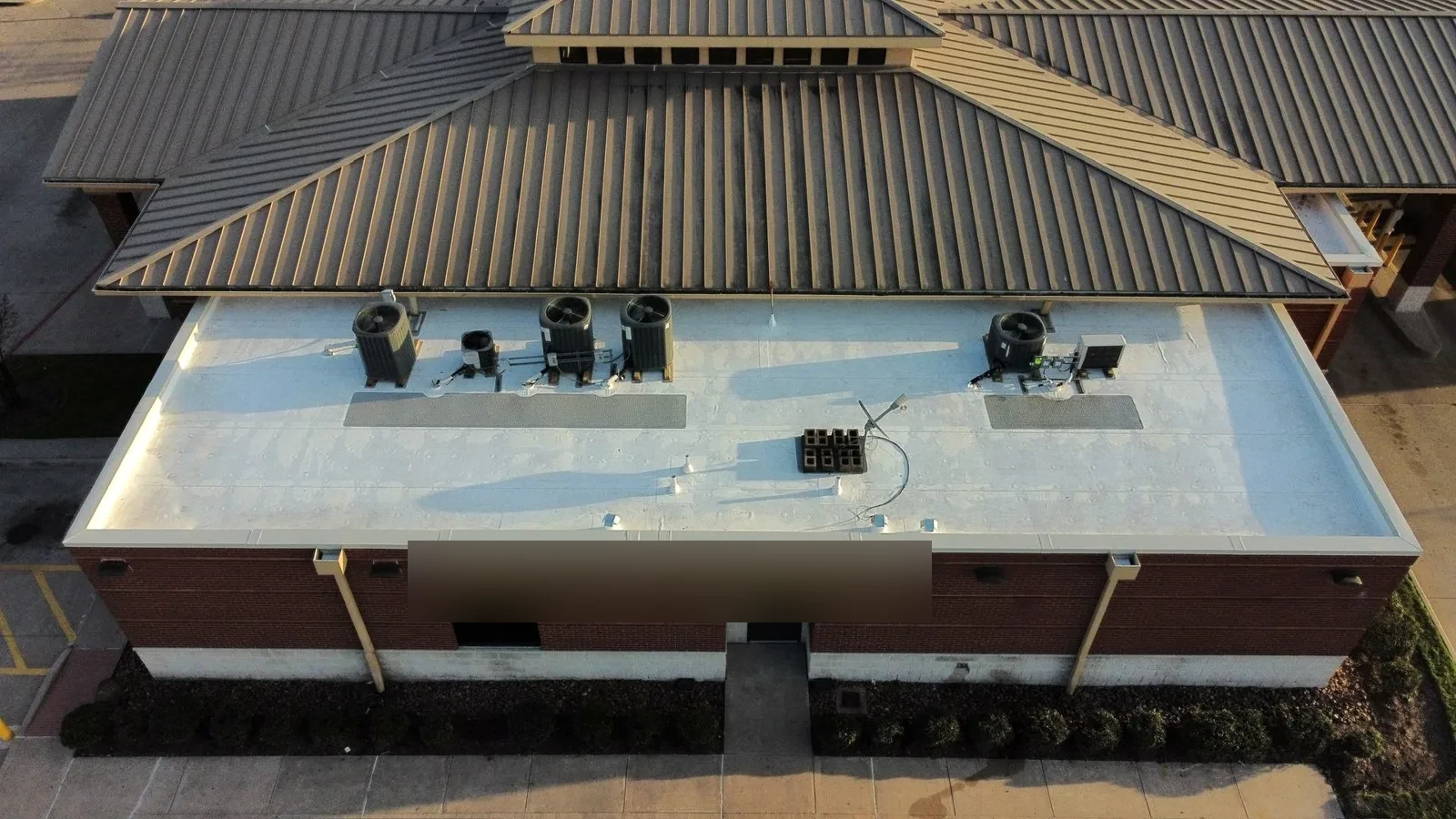
Las Colinas combines commercial, residential and retail uses, and Heritage Crossing includes older downtown commercial settings and redevelopment. Both can involve roof access by service trades, but we do not assume how a particular roof is used. We look for tool marks, concentrated traffic, damaged walk pads or impact evidence, then determine whether the puncture is isolated or connected to a seam, curb or moisture condition.
What pierced or abraded the membrane?
A sharp fastener, dropped tool, loose hardware or repeated foot traffic can cut, puncture or wear through a sheet. The edge may be clean, torn or compressed, and each shape suggests a different repair approach without establishing the source on its own. We photograph the injury and examine nearby scuffs, seams and protective walkway material. If the roof has a designated service route, we compare the damage with that path and with equipment access points before deciding whether protection should be added.
A puncture next to a lap can behave differently from one in an open field. A nearby weld may have been strained during the same activity, or the hole may have started at a fastener that backed out. We check the connection around the opening so a patch does not bridge a second defect. Where the cut reaches a seam, seam correction may be part of the work; after hail, impact damage review can separate punctures from superficial marks.
Has water reached the insulation or deck?
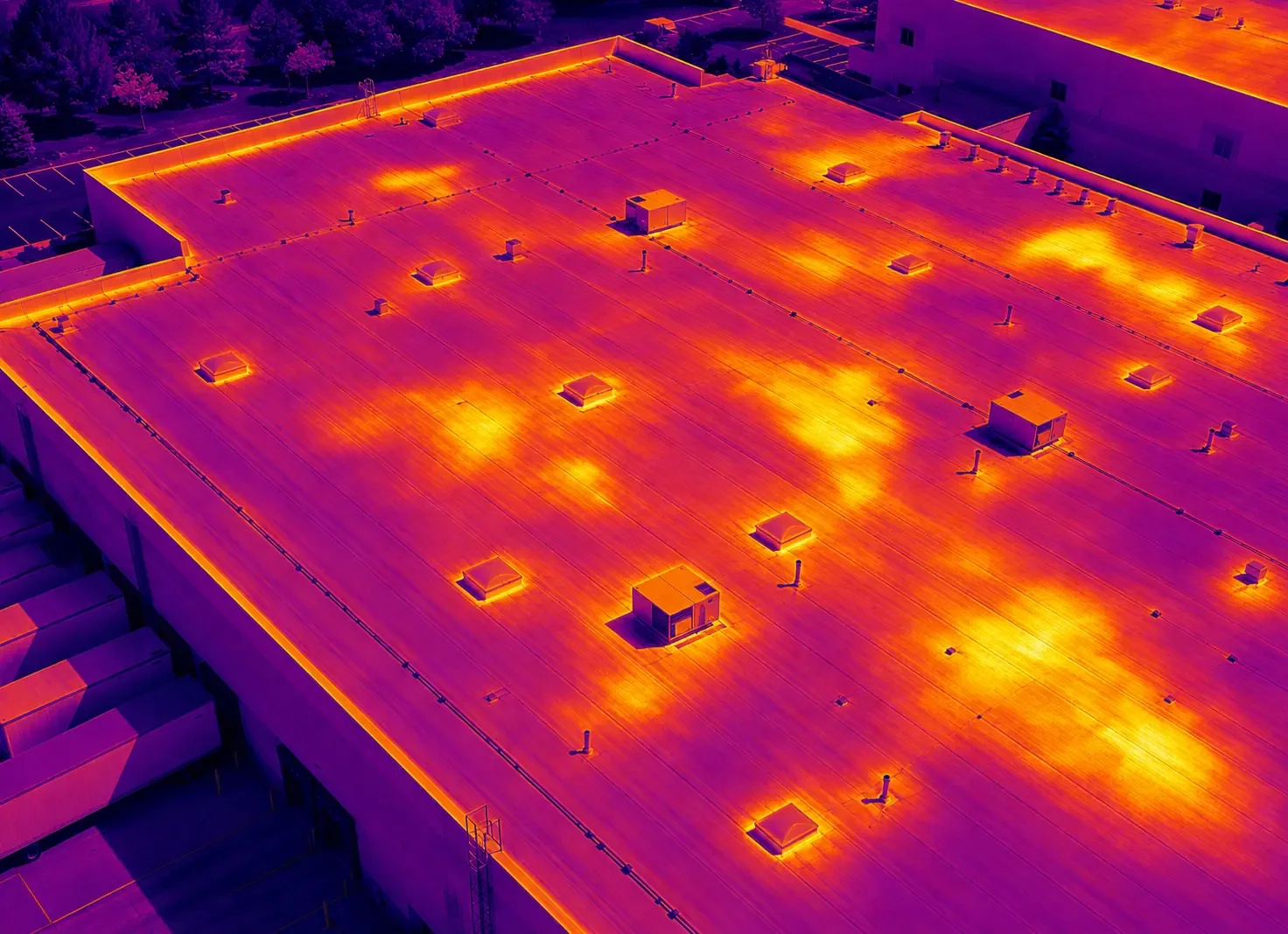
We inspect the membrane and support around the hole, then compare the roof surface with interior reports and nearby board joints. Water may travel laterally before appearing below, so the visible stain does not set the removal limit. When suitable thermal conditions exist, an infrared moisture survey can identify locations for confirmation. Selective openings show whether the insulation is dry, compressed or otherwise unsuitable to remain under the patch.
A wet or soft layer is removed to sound material, and the underlying support is rebuilt before a replacement sheet is installed. The patch needs a stable plane and a compatible connection to the existing membrane. A repair over unsupported insulation can flex under later service traffic and reopen. If drainage keeps water against the area, we check the outlet path and include correction where needed. Drainage work supports the repair when a blocked or damaged outlet is part of the repeated wetting condition.
Which repair materials match the roof?
Thermoplastic membrane can often receive a welded patch after suitable cleaning and surface preparation. EPDM uses different compatible products and bonding steps, while modified bitumen requires its own materials and detail method. We identify the installed system before work begins, then prepare an area large enough to connect beyond the injury. A patch should have appropriate geometry and secure edges, without leaving a narrow strip that is difficult to weld or bond consistently.
Prior repairs can complicate preparation if they use incompatible materials or cover loose membrane. We remove what prevents a sound interface and inspect the exposed sheet before continuing. The selected patch also needs to account for movement at the location. Near a curb, drainage body or roof edge, the connection may need a detail component rather than a flat piece of membrane. A roof inspection can identify system type and surrounding conditions before a permanent method is selected.
Will service access damage the same area again?
Roof maintenance may bring technicians across the same membrane several times. We check whether the puncture aligns with an equipment route, panel access, stored material or an unprotected turn. Where the roof design allows it, a walkway can distribute loads and make the route visible. We coordinate placement with equipment clearances and drainage so a pad does not block water or cover a detail that should remain accessible.
For Las Colinas properties, office and retail operations can make roof access timing part of service coordination. In Heritage Crossing commercial settings, redevelopment and older downtown use can involve different staging constraints. We plan based on the actual building and owner direction, then document walk-path recommendations with the repaired area. Preventive roof maintenance can include checking that protection remains in place and that later work has not displaced the patch.
How large should the repair area be?
The repair footprint follows the puncture, membrane condition and support below it. A single clean hole in a stable, dry field can take a contained patch. Multiple cuts, a brittle surface, widespread traffic abrasion or wet insulation may require broader removal. We identify which material drives the expanded scope and separate confirmed findings from areas that have not been opened. The resulting recommendation explains whether replacement is limited to one layer or needs to include additional assembly components. Where the hole lies near a drain, curb or edge, we also inspect the transition because foot traffic can press a tool into a change of plane without cutting the field sheet. We note if the surrounding membrane has scuffing or a loosened lap, and whether the damaged point needs a walkway or a revised access route after reconstruction.
Cost and timing depend on access, material compatibility, preparation, moisture removal and the roof's conditions on the work day. A temporary measure may protect an active opening while permanent materials are staged. The final record locates the repair and notes nearby conditions that deserve observation. Request an Irving assessment when a new ceiling leak or visible cut appears; the useful next step is establishing whether the surface injury is the only failure or the entry point to a wider wet area.
Commercial Roofing Questions
Can a puncture be repaired with sealant alone?
A through-cut usually needs a compatible patch or detail component that restores the membrane plane and its connection. Sealant may belong at a joint designed for it, but it does not replace missing sheet or stabilize wet insulation. We identify the membrane and support first, then choose a method appropriate to the opening and surrounding material.
Does foot traffic always require new walkway pads?
The roof layout and service route determine whether added protection is useful. We look at the location, repeated access and existing pads, then check clearances and drainage before recommending changes. A walkway that traps water or covers a vulnerable detail can create another issue. Protection should support the actual maintenance path.
How do you know how far the puncture leaked?
The opening is traced against roof slope, insulation joints and interior reports. Thermal survey may help select a test location under suitable conditions, while selective openings confirm the layer condition. Water can move away from its entry point, so the removal boundary follows verified wet or damaged material instead of the ceiling stain.
Can repairs be made after rooftop equipment work?
Yes, after we identify any damage and coordinate the equipment trade if access remains restricted. We inspect the route and area around the unit for cuts, displaced material and disturbed seams. Permanent repair needs clean, suitable surfaces and protection from further traffic. We can also document a clearer service path for later visits.
Ready to review the roof scope?
Request a Roof Assessment