Large hail, damaging wind and tornadoes recur across the Metroplex, but any one roof may not experience every event; an owner needs condition evidence before labeling a leak storm damage. Commercial Roofing Irving traces how water moved through the assembly, which detail allowed entry and whether surrounding material can support a repair. That gives the property team a defined decision rather than a broad label attached to an unexplained leak.

Valley Ranch lies north of I-635 in northern Irving, with commercial and retail land, multifamily properties and local businesses. We inspect the actual property, identify access and operating limits, and record what the field evidence can establish. An initial commercial roof inspection can separate immediate water control from further assembly investigation.
Where does the water path lead?
A ceiling stain tells us where water became visible, not necessarily where it entered. We ask when it appeared, what weather preceded it and whether it changed after earlier work. On the roof, the examination follows the likely path across seams, penetrations, edge conditions and drainage. The goal is to connect an observed opening with the interior report while recognizing that water can travel beneath the surface before it reaches a room.
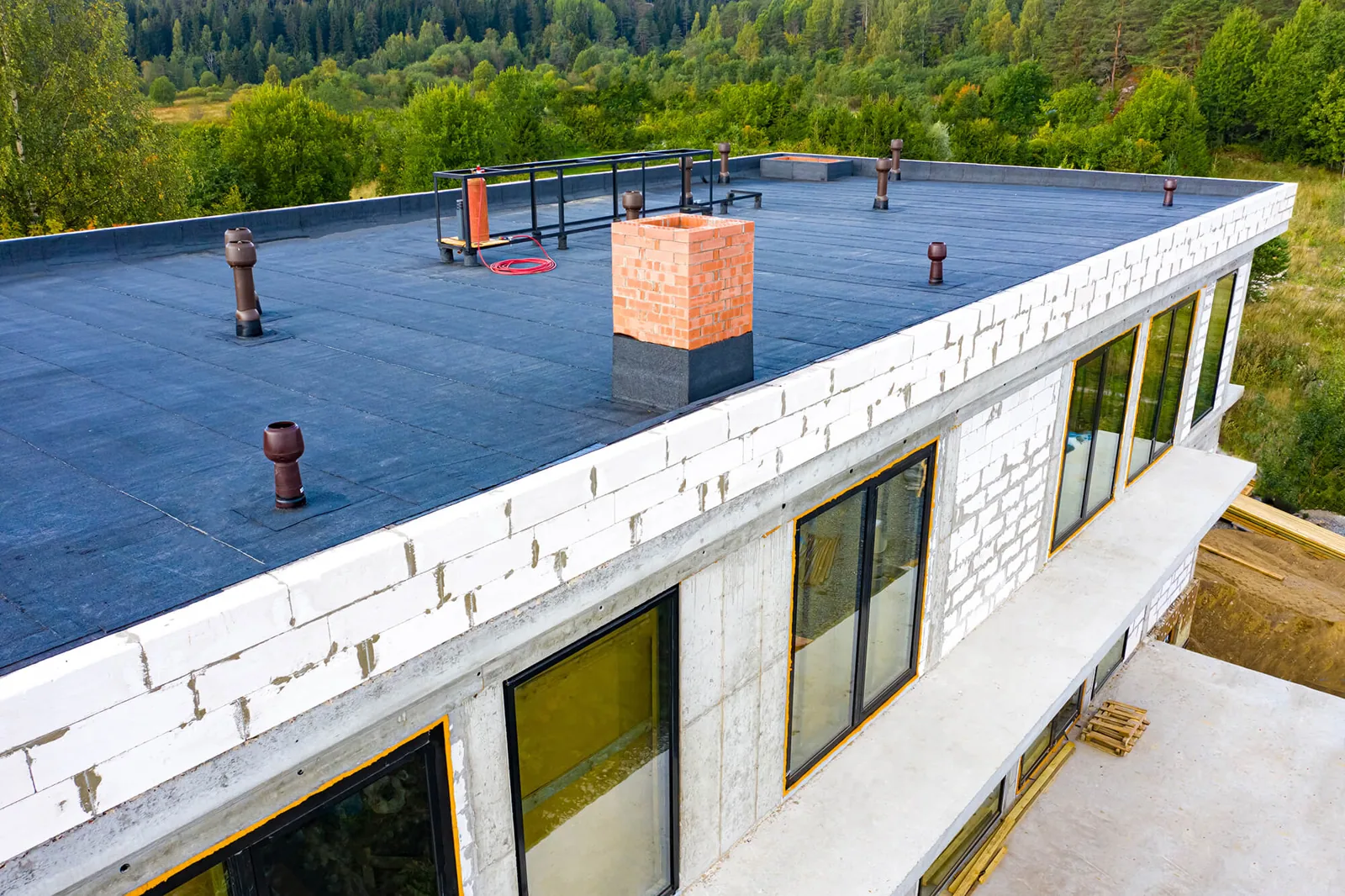
We note whether the assembly is single-ply, modified bitumen, metal or another system only when the material can be identified. The repair method depends on that identification and the condition of the adjoining surface. A seam-failure repair should address the seam and its support, not merely cover the visible gap. If the membrane or substrate is unstable, the scope needs to reflect that fact.
The district's location cannot establish a building's age, slope or material. We tie findings to the examined detail and record any access limit that leaves a question open.
Is retained water a drainage failure?
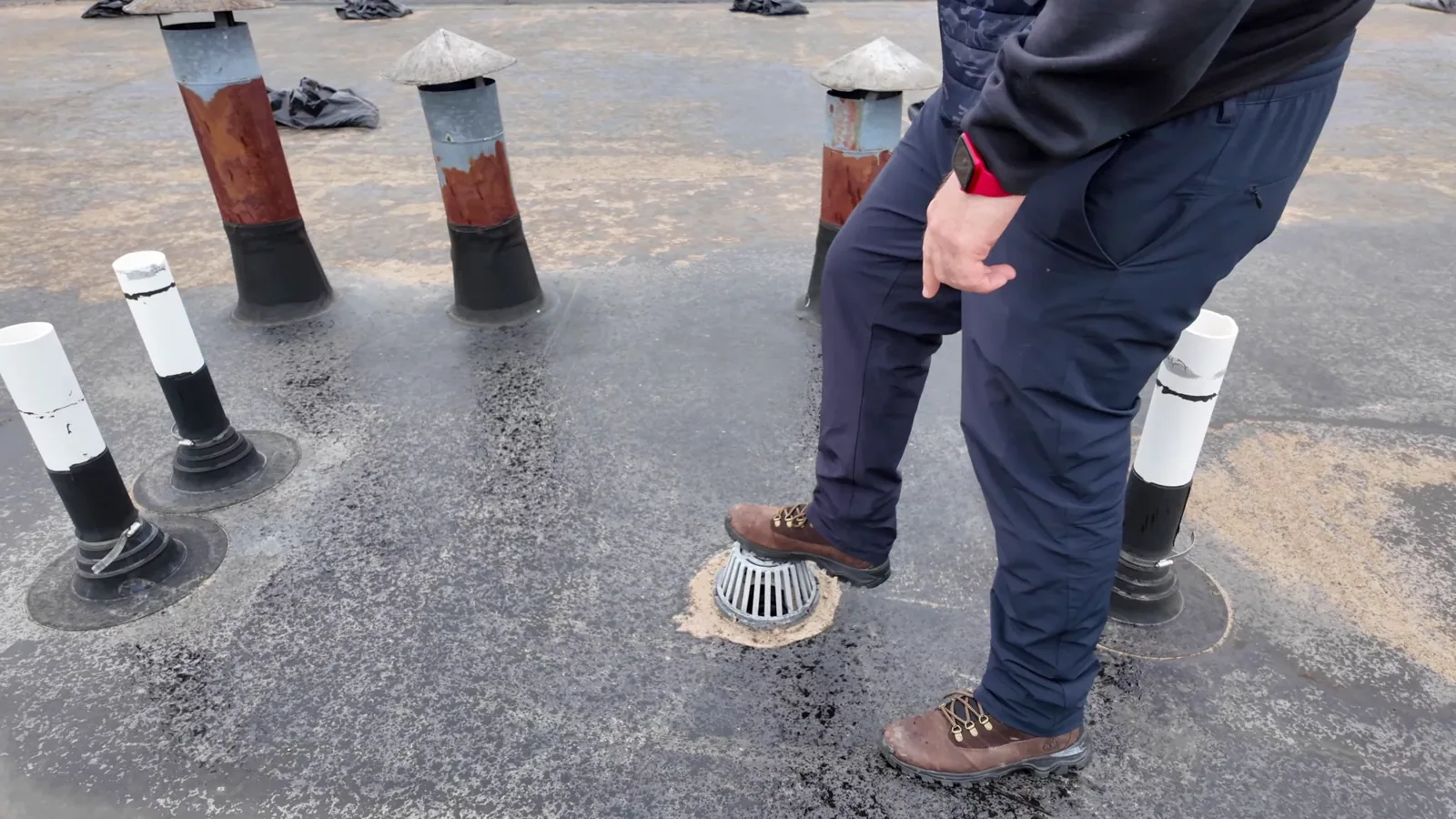
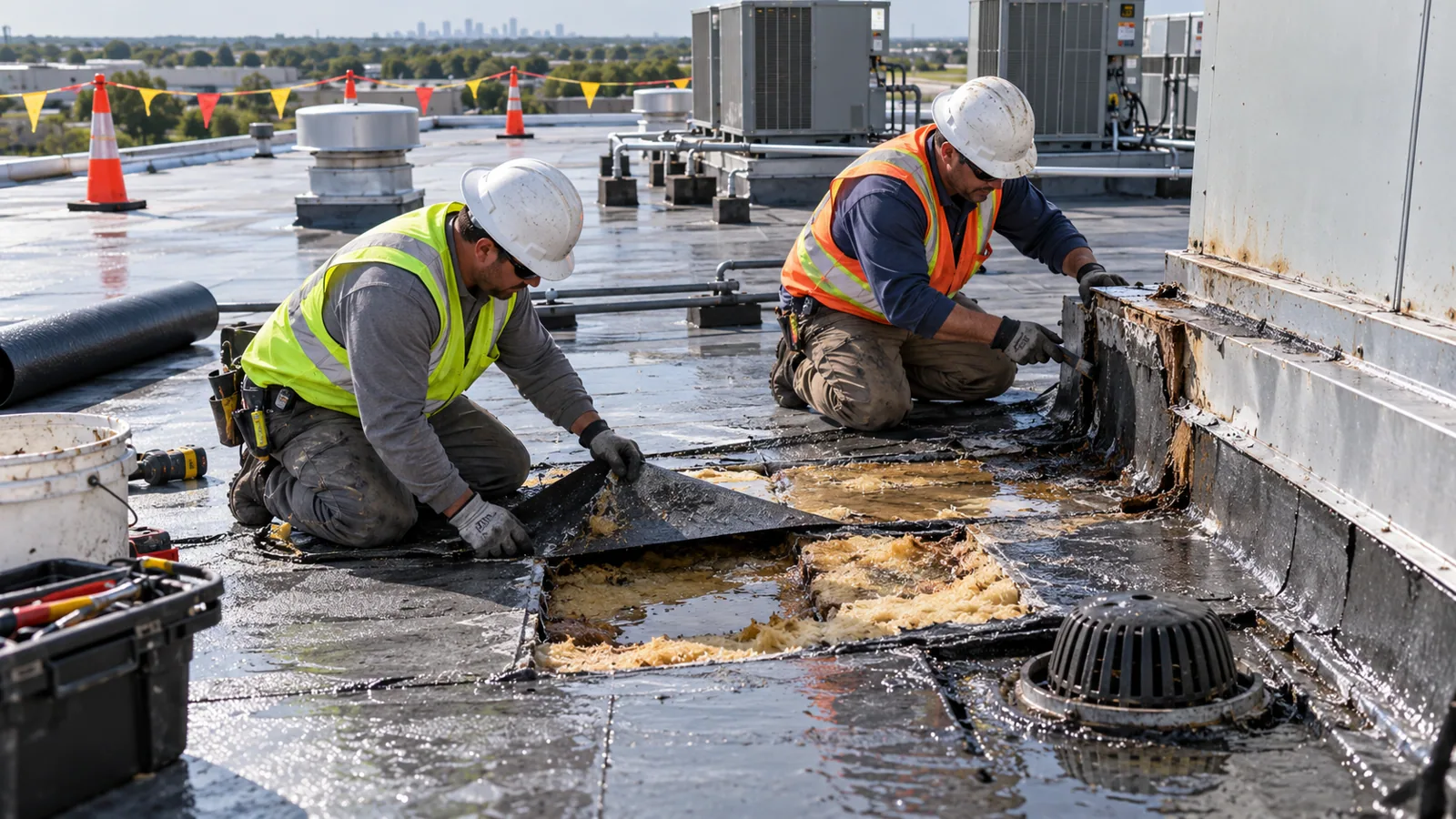
Standing water after rainfall deserves context. We record when it was observed, whether the outlet was clear and how runoff approached it. Water temporarily moving toward a drain differs from water that remains after the surrounding roof has drained. The inspection also looks for a change in roof plane, a blocked inlet or a damaged connection that could affect discharge.
Clearing debris may restore a restricted opening, but it will not correct a low area or a slope problem. Adding a sealant bead around an outlet will not address a failed drain bowl or a disconnected leader. We document the part that is visible and recommend further examination when the cause cannot be distinguished safely from the surface. That avoids turning one photograph into a conclusion about the whole roof.
At the perimeter, water behavior can also reveal a termination concern. A drain and scupper review can be paired with an examination of nearby flashing and edge metal. We define any temporary water-control measure separately from the permanent correction, so the property manager knows what the first action accomplishes and what it does not.
Which repair fits the existing system?
The condition of the material that will remain is central to repair planning. A localized puncture in a stable field may permit a bounded repair. Repeated seam separation, widespread surface loss or wet materials beneath a membrane can change the decision. We describe the extent confirmed and the points that remain uncertain instead of implying that one defect stands for every roof area.
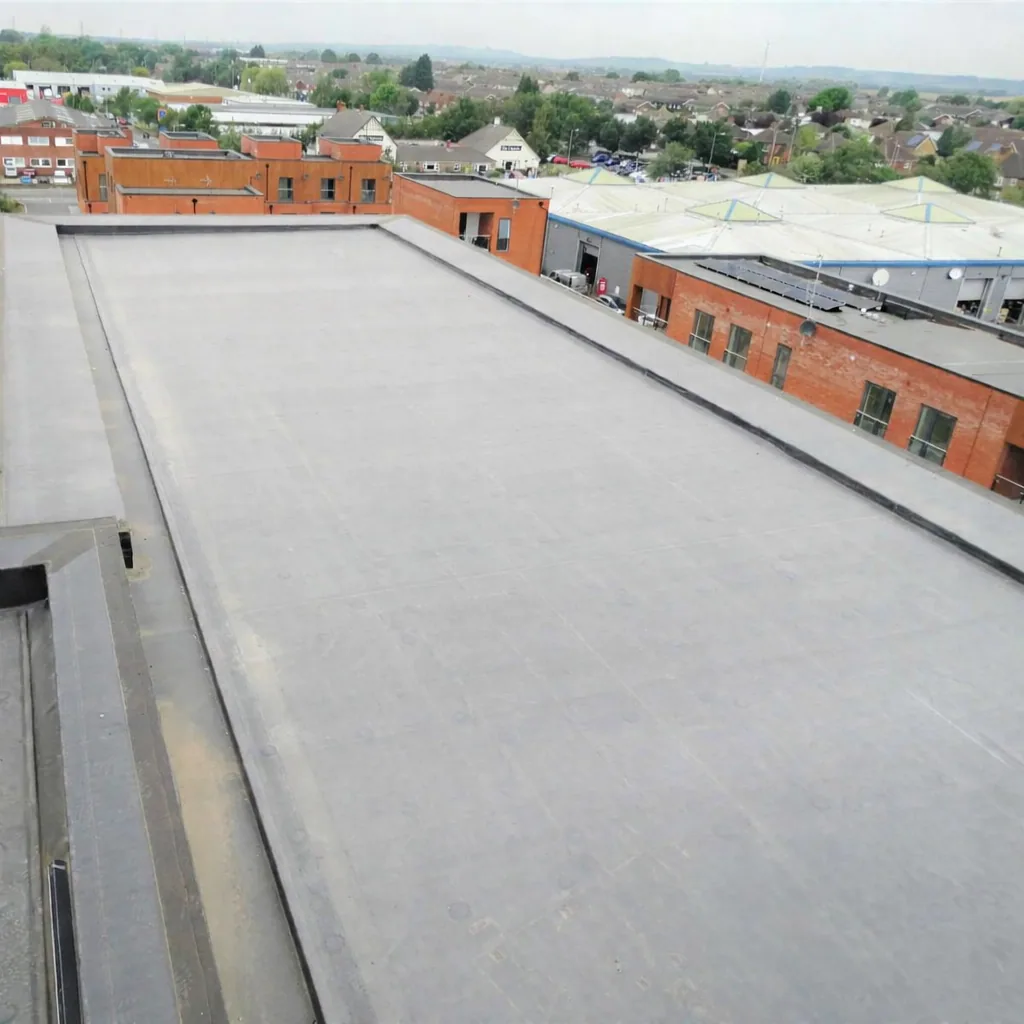
For EPDM roofing, seams, terminations and flashing transitions need a compatible approach. Other systems bring different material and attachment requirements. When an owner considers a commercial roof repair, we explain preparation, tie-in and the condition of the substrate near the work. If the perimeter or support cannot accept a repair, selective removal may be required to establish a sound boundary.
Coatings are not a universal shortcut. Before comparing restoration, we check the existing surface, adhesion potential, moisture concerns and details that need reconstruction. A roof that cannot support a compatible bond or cannot shed water adequately may need a different solution. The recommendation follows those observations rather than the convenience of a single product category.
How will access work for this property?
Valley Ranch includes multifamily property and local businesses as well as commercial and retail land, so operations vary by building. We do not infer a tenant schedule from the district. We ask the property team about loading, access routes, equipment, noise-sensitive hours and areas where falling debris or interior work could disrupt use. The work plan then describes who must be notified and which activities can proceed at each time.
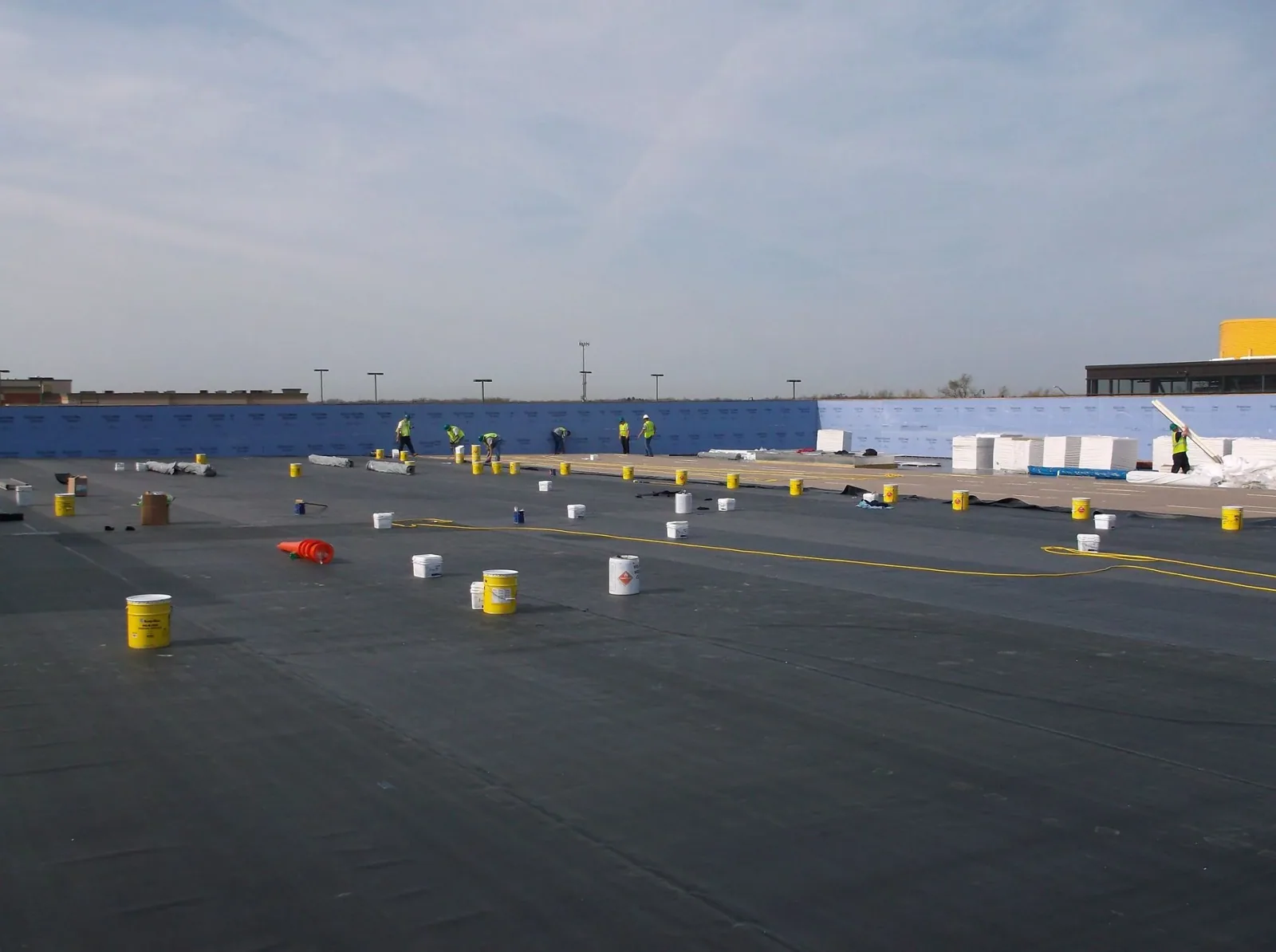
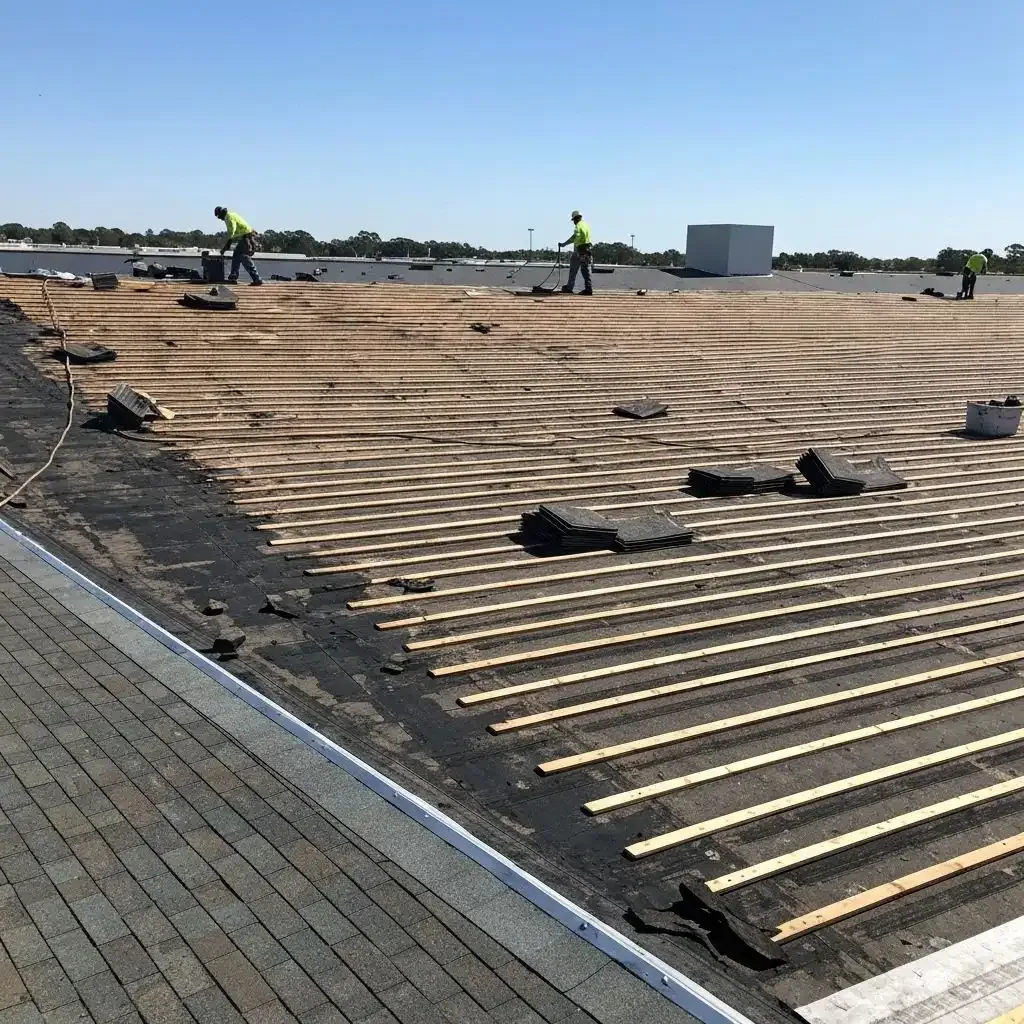
For larger removal, crews need a weather-secure sequence and a clear end-of-shift condition. The plan may phase work so the team does not open more area than it can protect. If a concealed condition appears, photographs and measurements are reviewed with the owner before a scope change. This keeps the next day's work connected to an approved decision, rather than allowing a newly discovered condition to become an unexamined extra.
A phased occupied-building reroof also needs a record of completed zones, remaining access limits and temporary protection. We coordinate the details with the person responsible for the building and revise the sequence when actual operations require it.
What assumptions affect timing and cost?
Budget depends on more than roof area. Assembly layers, access, staging, tear-off limits, moisture extent, deck condition, drainage work and occupied-space protection all affect the scope. Material selection and procurement timing can also matter. A preliminary range is useful for planning, but it is not a final construction price until field quantities and the relevant conditions are verified.
We identify what the number includes, what remains excluded and what observation could change it. If wet insulation is suspected but not confirmed, that is an allowance or investigation question rather than a fact. If the owner wants to compare repair with replacement, both alternatives should state the same boundary and assumptions where possible. A capital planning review can then place the immediate work beside expected future needs without hiding uncertainty.
Warranty terms depend on the actual roof and project. We identify documents needing review and request written confirmation rather than assume a repair preserves coverage.
What changed and what remains open?
A closeout record should let a future manager find the completed work. We identify roof areas, describe the repair and include photographs that show both the detail and its wider location. Any remaining concern, monitoring recommendation or inaccessible area stays visible. This record can help distinguish a new leak from a condition that was previously examined.
The roof record is specific to its property, whether the next review is in Valley Ranch, Las Colinas or Las Colinas Urban Center. Nearby buildings may have different assemblies and drainage, so we preserve each location's findings.
Share leak locations, repair notes, plans and operating restrictions before an assessment. We can agree on safe access, the first question and the next action the evidence supports.
Commercial Roofing Questions
Does a leak location identify the roof defect?
Not always. Water can travel before becoming visible indoors. We compare the reported room and timing with roof details and drainage. If the cause remains concealed, we explain whether selective investigation is needed. The stain alone does not establish the roof opening's location.
Can a drain cleaning solve recurring ponding?
Cleaning helps if debris restricts the outlet. It will not correct a low area, damaged drain connection or slope problem. We document the outlet and runoff path, then identify what the inspection can confirm and what needs further evaluation.
What makes a repair boundary reliable?
The surrounding material must support the repair, and inspection must define the affected area. We consider assembly, attachment, transitions and concealed moisture. If evidence is insufficient, investigation is more useful than enlarging a patch by guesswork.
What should be included in an early roof budget?
State area, access, removal assumptions, material, protection and known drainage or substrate work. Identify unresolved conditions that could change quantity or sequence. We label unconfirmed moisture or deck concerns as questions, then update the scope after field verification.
Ready to review the roof scope?
Request a Roof Assessment