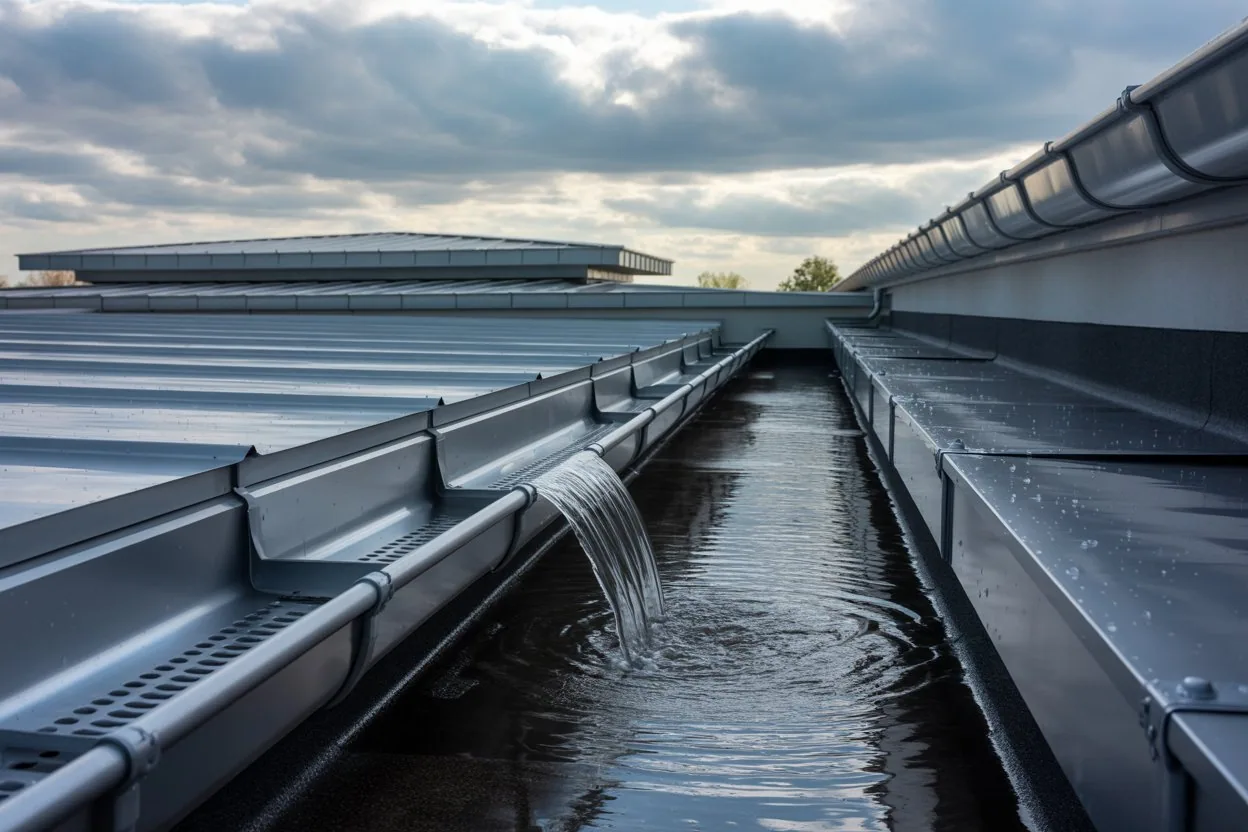
Wet spring fronts in Euless, TX, can leave drainage paths working through several days of rain. We check outlets, low areas, seams, and curb details before deciding whether water entered the assembly. Euless lies near State Highways 10 and 183 and southwest of DFW Airport, according to the local history record. Those transportation connections can affect deliveries and roof access, but they do not identify a property’s membrane or condition. We document the actual assembly and agree on a work boundary with the owner. A nearby Central Irving SH 183 corridor project may share a vendor or schedule. Its roof inspection remains separate from the Euless property review.
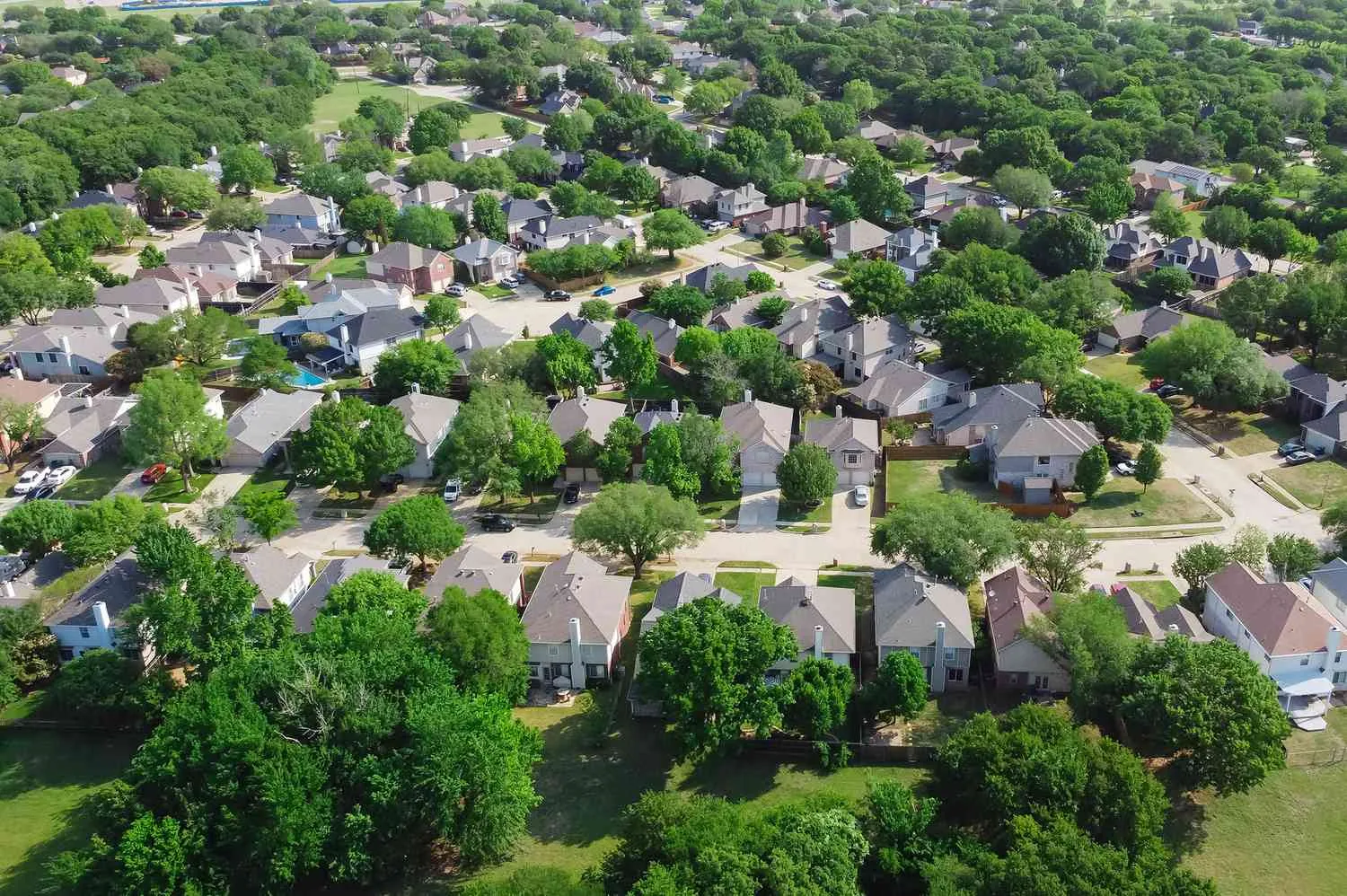
What does regional rain change?
The Dallas-Fort Worth region has wet spring and fall periods within a humid subtropical climate. Rain can expose a restricted drain, a low membrane area, or a failed wall transition. The visible puddle does not say which condition is responsible. We note the time since rainfall, check the outlet and overflow path, and map any water boundary. If the roof surface is soft or an interior leak persists, moisture testing can help determine whether the insulation needs a controlled opening.
Regional weather information also records damaging wind and large hail across the Metroplex nearly every year, although a single location may not receive each event. After a reported storm, we inspect perimeter metal and penetrations independently of drainage. A loose edge can admit water even where the drain is clear. The drainage scope addresses outlet components, while a wind repair review covers observed movement at exposed details.
How do access and use shape a roof visit?
Euless developed around Airport Freeway and airport activity, according to its historical account. That background explains the city’s commercial growth; it does not establish a current tenant or building use. We ask the site contact about business hours, security, delivery windows, and any restricted roof areas. A roof hatch may be shared with mechanical service. A secured yard may limit where ladders and materials can be placed. Those facts belong in the access plan.
The wider Irving market includes corporate office complexes that support financial and healthcare organizations. A project that coordinates with Las Colinas may need to distinguish office access from a Euless commercial site. We confirm each property’s operating requirements directly. The inspection plan identifies who opens the roof, what equipment stays active, and which interior areas need protection. That makes the assessment useful to both the owner and general contractor.
Which connection should be checked first?
We follow the reported leak toward nearby roof transitions. A curb, pipe, wall, drain, or field seam may be a candidate, but the interior stain alone does not confirm the entry point. We photograph each detail and record its distance from the roof plan reference. If sealant has split, we check whether the flashing remains secured beneath it. If a seam has separated, we inspect beyond the visible opening to find material that can accept a repair.
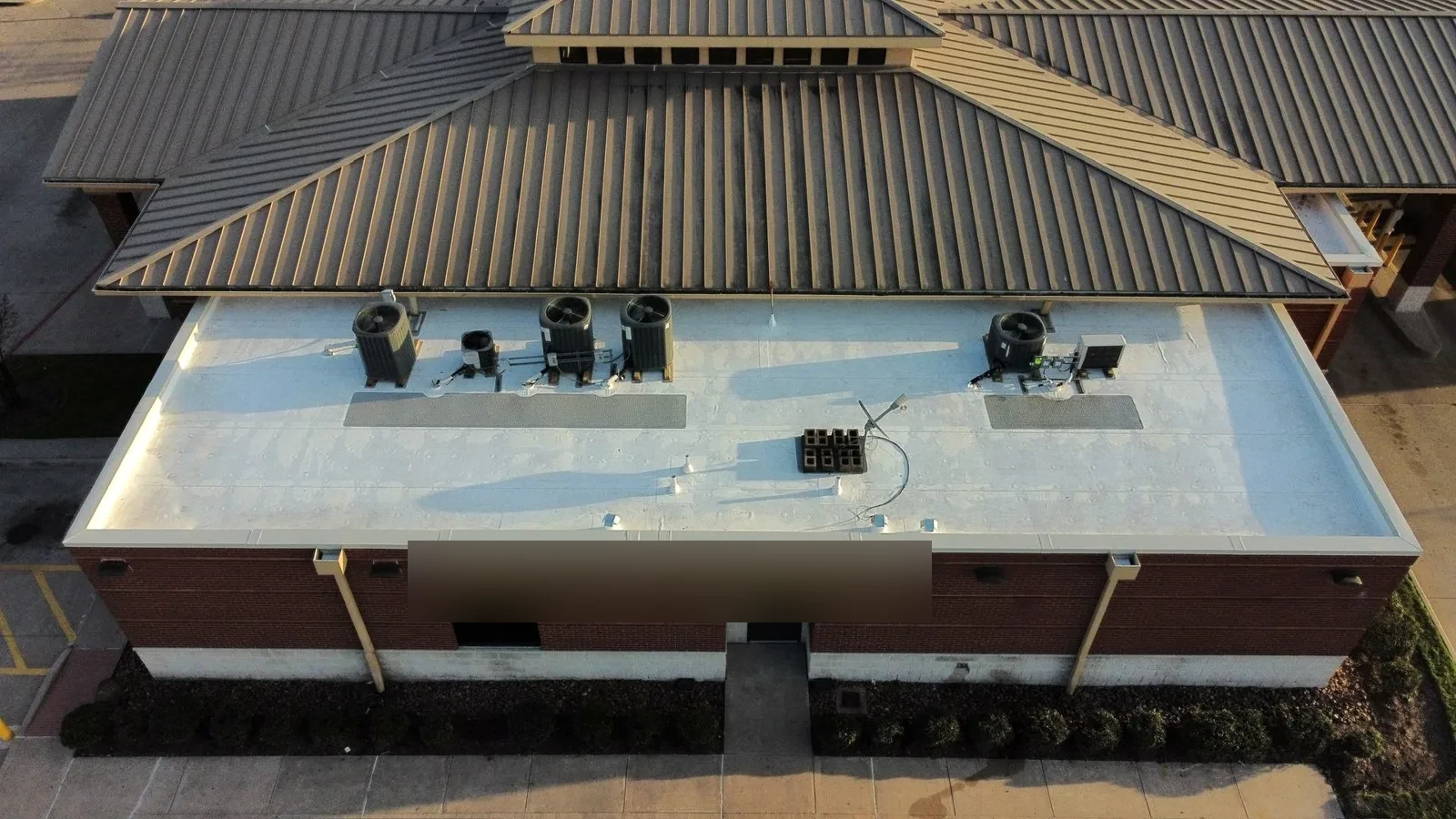
High summer temperatures and cooler nights place movement across adjoining materials. DFW airport normals show summer highs in the mid-nineties and freezing nights each year, but those are regional values. At the building, we inspect adhesion, fasteners, and substrate response. A flashing repair review defines a wall or curb detail. The ponding-water assessment maps a low area when water remains after drainage should have occurred.
Can we keep the repair local?
A contained defect can support a local repair when surrounding materials remain sound. We identify the membrane and specify a compatible patch, weld, or flashing replacement. The repair extends to a prepared surface that can hold the new material. If moisture reaches insulation, the scope names the test or selective opening that will confirm its boundary. That protects the owner from pricing a patch before the assembly is understood.
Replacement enters consideration when repeated leaks or widespread deterioration make local corrections unreliable. A roof recover may be possible only when the existing layers and structural limits support it. We record the evidence and compare options by removal, access, disruption, and schedule. The repair service can address the immediate defect. A replacement evaluation should remain a separate capital decision rather than an extension of one leak call.
How should work be staged?
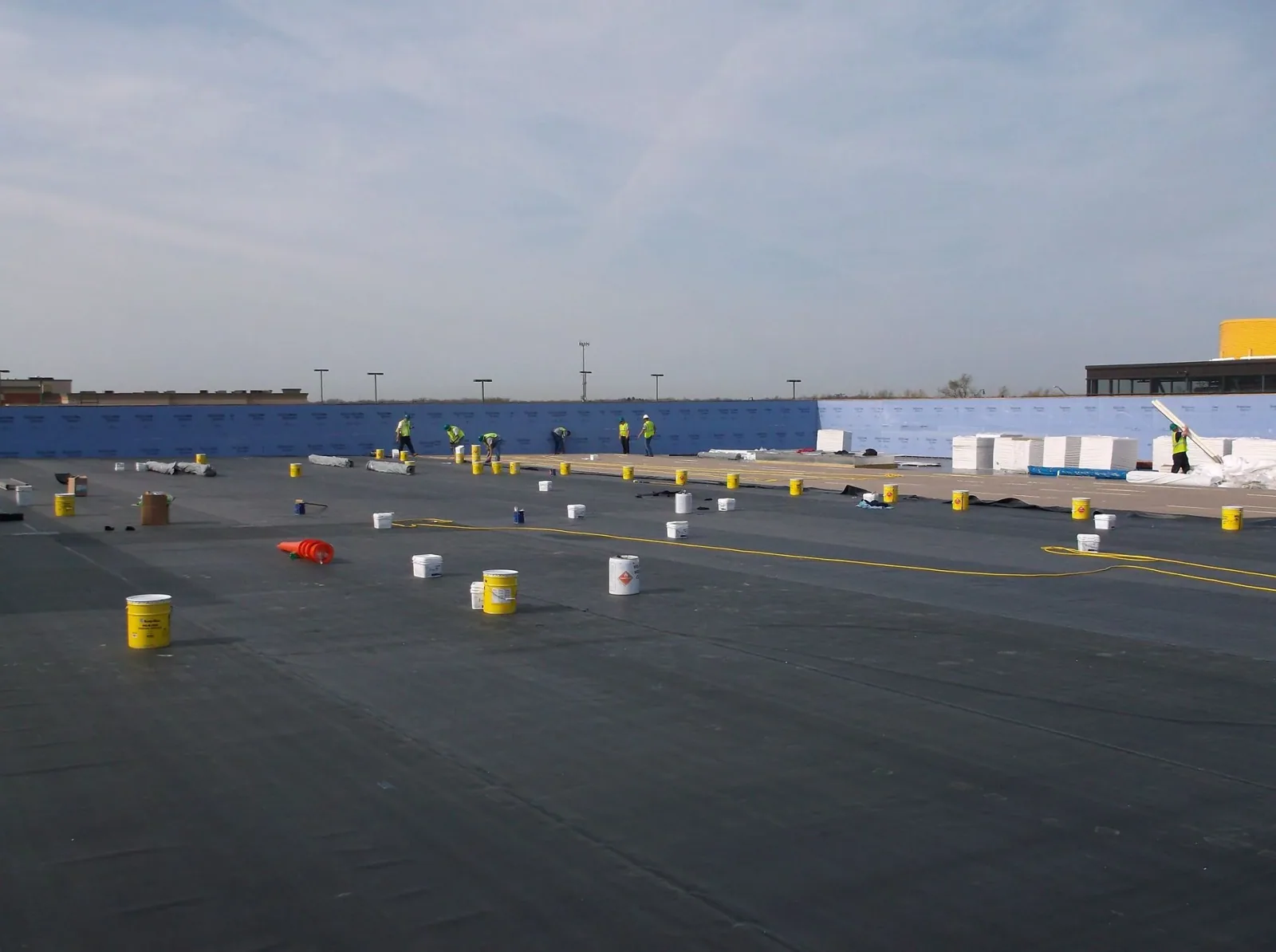
We confirm roof access, lift route, material storage, and work hours before mobilization. For an occupied site, the daily work zone needs a clear boundary and temporary dry-in plan. If another trade must use the roof, we agree on a handoff before opening membrane. The schedule includes surface preparation and any cure period, not only crew arrival. That gives the general contractor a realistic interval to coordinate building operations.
Before removing material, the crew confirms the approved cut line and where debris will be contained. The site lead can identify nearby intakes, sensitive equipment, and areas where foot traffic must stop. If an opening cannot be closed before the shift ends, the temporary protection becomes a tracked task with a responsible contact and return time. That sequence protects the building while keeping the repair quantity tied to an approved boundary.
If a facility has equipment that cannot be shut down, we sequence around service clearances and identify any temporary protection. A crew should not place materials over a drainage path or block access to a unit. The occupied-building sequence can coordinate these constraints. For the closeout, we record who accepted each repaired section and which area remains under observation.
What records support the next decision?
The report includes photographs, marked roof locations, material details, and the final check. It distinguishes repair completed from follow-up investigation. If a moisture test or structural review remains open, the owner sees that hold point before the project is closed. A dated record also helps compare new symptoms with conditions documented during the visit. The marked areas give future technicians a repeatable reference point for later repeated checks.
Our closeout record can carry repair history into maintenance or a later capital review. It should not assign a regional climate reading to one building. Bring the roof plan, prior work notes, event date, and site access rules. Commercial Roofing Irving can arrange a Euless inspection and separate a repairable mechanism from broader assembly deterioration.
Commercial Roofing Questions
Does a leak after spring rain mean the roof drain failed?
Not automatically. We inspect the outlet, overflow path, membrane low area, and nearby transitions. The report states what was clear, restricted, damaged, or still uncertain before repair is priced.
Can weather records establish damage at my Euless building?
Regional records explain exposure across the Metroplex, not a building-specific condition. We use the reported event to plan inspection and then document evidence on the actual roof.
How do you coordinate roof access near active operations?
We confirm security, work hours, delivery activity, equipment clearances, and interior protection with the site contact. The resulting schedule identifies staging and daily dry-in boundaries before the crew mobilizes.
When should a leak repair become a replacement review?
We compare repair history, moisture distribution, attachment, and the condition of surrounding materials. Repeated or widespread deterioration may justify a separate replacement assessment. The recommendation states which findings support it.
What should our contractor provide before the site visit?
Send roof plans, prior repair records, leak locations, access rules, and the date of the reported weather event. We can then set a focused inspection and prepare a defined work sequence. Call Commercial Roofing Irving to schedule.
Ready to review the roof scope?
Request a Roof Assessment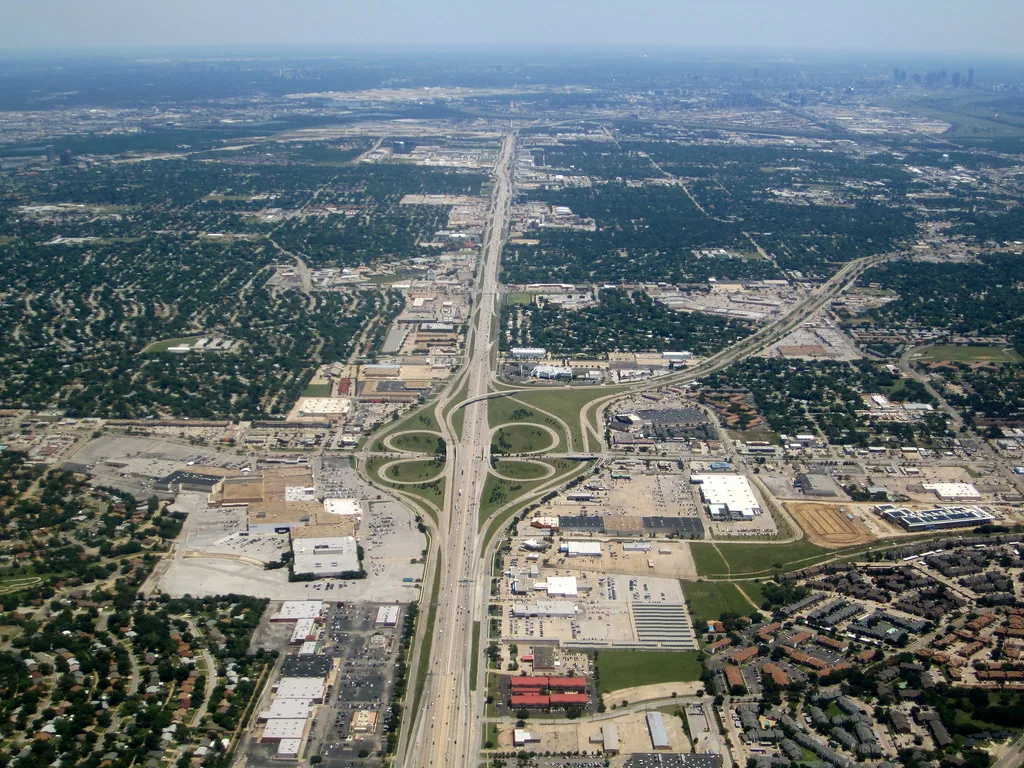
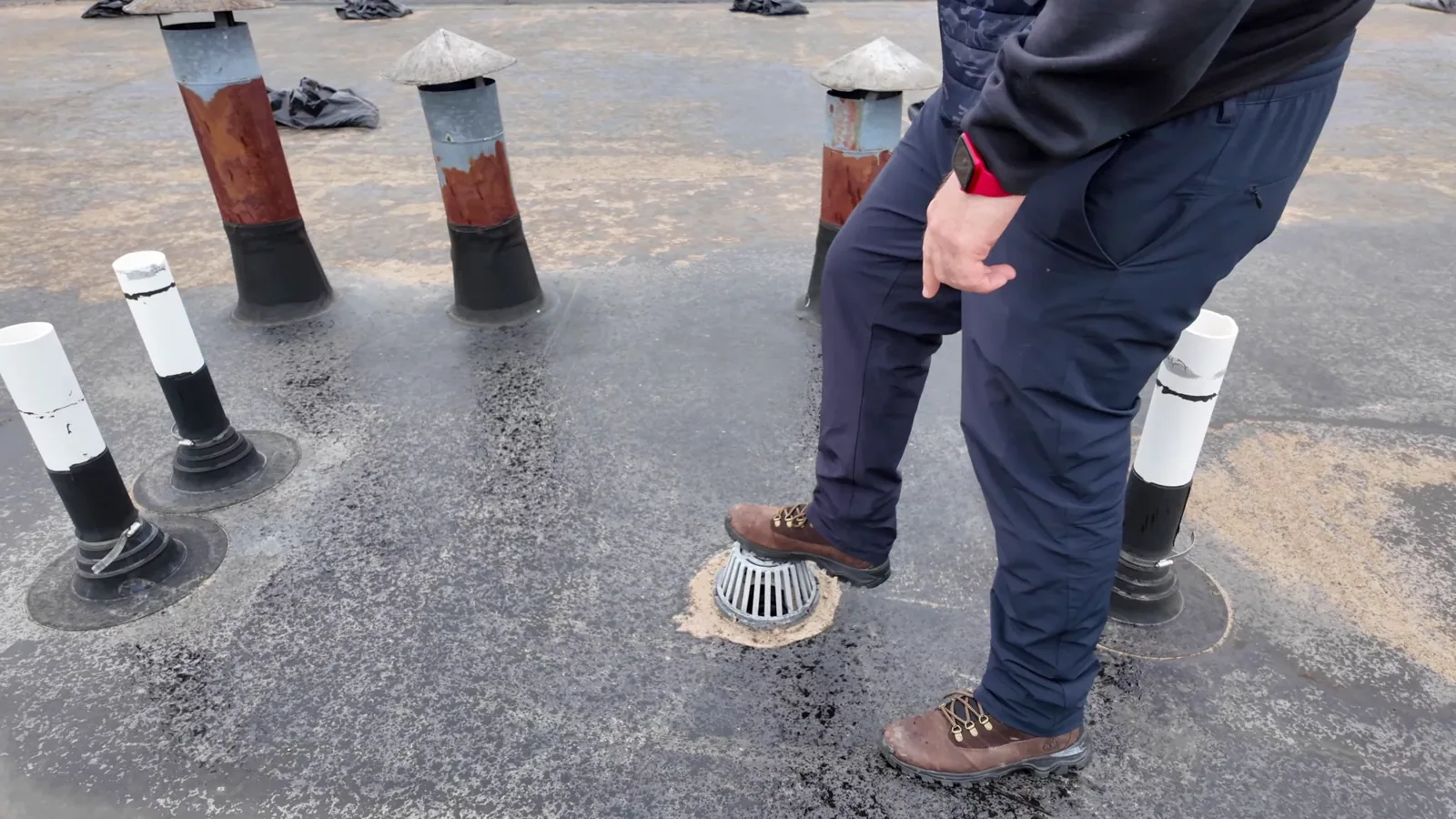

Commercial Roof Flashing Failure Repair
See scope, options and what to expect on the roof.