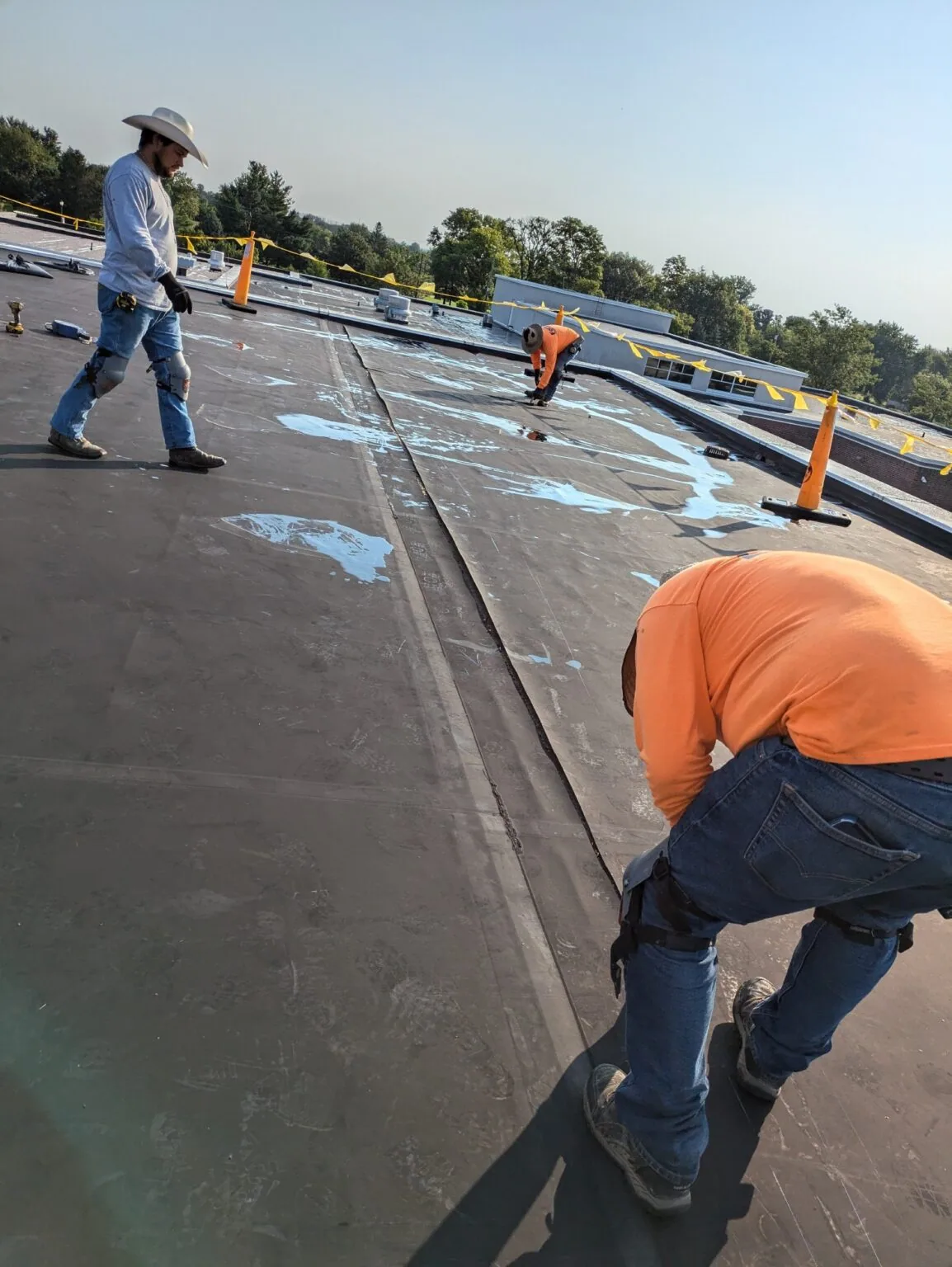
Storm wind can load a roof edge while hail strikes the membrane field, so the two conditions need separate inspection. Grand Prairie, TX, sits in a Metroplex climate where large hail, damaging winds, and tornadoes occur nearly every year across the region. A regional event is not proof of damage at a particular warehouse. We inspect edge attachment, seams, penetrations, and roof drains, then map any observed displacement or impact marks. The city is an established distribution center, and much of the Great Southwest Industrial District lies within its limits. Those logistics uses make loading windows and clear roof access part of the repair plan. Our Coppell roofing service can support a separate nearby property review, but each building receives its own condition record and repair boundary.

How can wind and hail affect different roof zones?
Wind pressure concentrates at corners, perimeters, and transitions. Hail impact is evaluated across the roof field, edge metal, rooftop equipment, and brittle accessories. We document each pattern independently. A dent in a unit cover does not establish a membrane puncture. A lifted edge does not show how the field insulation is performing. Photographs and a marked plan let the owner compare immediate repair needs with conditions that can be monitored.
Across Grand Prairie, alternating spring rain and prolonged summer heat create temperature and moisture cycles at roof details. The DFW airport normals include summer highs near 96 degrees and nights below freezing. Those regional observations help explain movement across a roof assembly, but they are not Grand Prairie site readings. We check the actual bond, fastener line, and sealant response. If a seam has opened, the seam assessment identifies whether the separation is local or repeated along a run.
When impact marks vary in size or appear beside rooftop equipment, we inspect the nearby sheet and accessory instead of drawing a single large boundary. A close photograph shows the surface response, while a roof plan records its location. If the membrane has fractured or lost bond, that observation may justify a test area. The owner can approve the opening before a larger quantity enters the repair scope.
What does distribution work change?
Grand Prairie’s rail and interstate connections support warehouse, distribution, and manufacturing buildings. A roofing crew may need to work around dock schedules, trailer circulation, rooftop equipment, and security procedures. We confirm these constraints before mobilizing. The site plan identifies lift locations, material staging, exclusion zones, and the daily dry-in boundary. That sequence matters when inventory or production cannot be moved easily beneath a repair area.
The general contractor should identify which operations can pause and which must remain active. We can divide the roof into work zones, coordinate access by shift, and document when each area returns to service. If a leak affects stored goods, the interior protection plan belongs with the roofing scope. The occupied-building sequence can define those protections. A similar office and mixed-use setting appears in Las Colinas, though its access constraints differ.
Which findings belong in the first repair scope?
We sort active openings from impact marks and aging. A puncture or open lap that permits water entry may need immediate correction. A distorted edge component may need a metal repair and attachment check. A broad field of hail marks calls for closer material evaluation before anyone concludes that the membrane has failed. We identify where testing is appropriate and who authorizes a selective opening.
Drainage and interior signs are reviewed as their own evidence. A stopped outlet can keep water on the roof after the storm has passed. The drain and scupper service checks outlet components, while a puncture repair review defines damaged membrane boundaries. Our field report includes the roof zone, detail type, observed condition, and photo reference. The project manager can then create separate line items for protection, repair, and additional investigation.
How should the owner compare repair and replacement?
A local repair may suit a contained defect where adjacent membrane, attachment, and insulation remain sound. We specify material compatibility and the tie-in beyond the visible opening. If moisture extends beyond a repairable boundary, the scope may include selective tear-out and replacement of affected layers. Those are measured from the inspection. We do not convert regional storm frequency into a roof-wide replacement recommendation.
Replacement becomes a separate choice when widespread deterioration, repeated leaks, or compromised attachment limits reliable local work. The report lists the evidence that supports that comparison and the operating impact of each approach. A replacement assessment should define removal limits, staging, and dry-in. For an existing thermoplastic roof, TPO seam repair follows membrane condition and weld testing. Another planned business setting is Valley Ranch, where multifamily and commercial activity affects site logistics differently.
When can the crew work?
We confirm safe roof access, weather conditions, loading windows, lift routes, and the location of any active equipment before selecting a work date. A repair that requires welding or coating needs suitable surface conditions and protected cure time. If a storm sequence continues, a temporary measure may precede permanent correction. The work order states who approves that interim step and how the roof will be checked afterward.
On a distribution property, delivery gates and truck movements can define the available staging window. We coordinate with operations rather than assume a clear yard. If a crane or lift is needed, the site contact confirms ground bearing, overhead clearances, and any utility restrictions. The inspection service can document those details with the roof condition so the contractor can schedule labor and materials against a defined plan.
What makes the repair verifiable?
Closeout photographs show the original condition, repair boundary, and finished detail. We record material, preparation, and the final check. If an impact mark or area of attachment remains outside scope, the document identifies it for future review. A contractor can use the location map to coordinate restoration work and provide the owner with a dated result.
We keep each property’s record separate when a portfolio includes several facilities. The documented findings can retain repair history and identify later inspection needs. They should distinguish regional climate data from observed roof damage. Send the roof plan, storm date, site access rules, dock schedule, and known leak locations. Commercial Roofing Irving can inspect a Grand Prairie property and compare a contained correction with wider assembly deterioration.
Commercial Roofing Questions
Does a Metroplex hail event mean a Grand Prairie roof needs replacement?
No. Regional storm history identifies a reason to inspect, not the condition of a particular assembly. We document impact evidence, membrane response, seams, and attachment, then define repair or replacement options from those findings.
Can you inspect a roof while distribution continues?
We coordinate safe access and work zones with the operations lead. The inspection or repair can be staged around dock windows, inventory, and active equipment when conditions permit. We record any area that must remain closed.
What if wind damage and hail marks appear together?
We separate edge movement from field impact and photograph both patterns. A repair at the perimeter may differ from a membrane correction in the roof field. The report keeps each condition and recommendation distinct.
How do you protect inventory during roof repair?
The project team identifies the space below, stored goods, and any sensitive equipment. We define the repair boundary, temporary dry-in, and interior protection with the building contact before opening the assembly.
What should we provide before a Grand Prairie assessment?
Share the roof plan, reported storm date, leak locations, dock schedule, and roof access rules. We will map the condition and prepare a work sequence. Call Commercial Roofing Irving to set an inspection.
Ready to review the roof scope?
Request a Roof Assessment
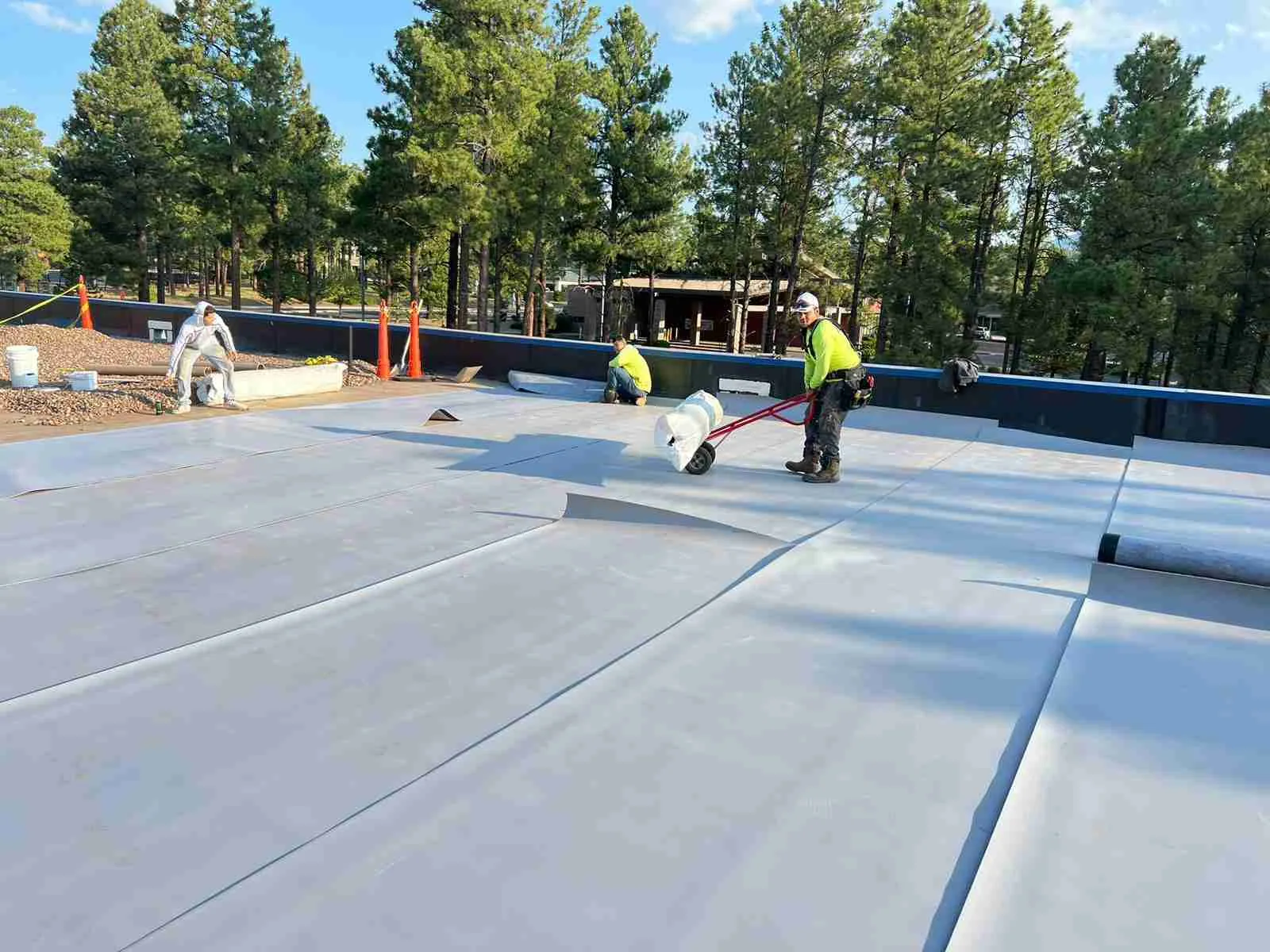
Commercial Roof Membrane Puncture Repair
See scope, options and what to expect on the roof.