Warm humid air reaching a cold roof layer can deposit moisture even when the exterior covering has no open rain entry. Cold-storage roofing in Irving, TX, therefore needs the temperature and air path through the assembly examined alongside seams and flashing. Commercial Roofing Irving assesses the roof and coordinates further building-system input where that moisture mechanism could affect repair or replacement.
Dallas/Fort Worth has a humid subtropical climate with hot summers, creating a useful reason to examine the exterior-to-interior temperature difference at refrigerated operations. Coppell has warehouse properties and Grand Prairie has distribution uses. Where a property includes refrigerated operations, its roof work needs the operating zones and enclosure connections assessed before construction phases are set. We establish the actual temperature zones and assembly construction before defining the roofing work above them.
Where can warm air reach a colder layer?
Air leakage through a penetration, roof-to-wall connection or interrupted control layer can move moisture into the assembly. The vapor-control arrangement must be considered with the direction of the temperature gradient and the building's operating conditions. We examine the existing construction and coordinate design evaluation where changes are proposed, rather than assigning a generic layer position without assessing the cold-storage enclosure. Rain entry and condensation can require different corrections.
Water-path examination compares timing, rainfall and operating observations before a seam is treated as the cause. Frost, moisture or wet insulation can prompt further investigation of enclosure continuity and air movement. We identify the interfaces needing examination, with specialist input where the condition extends beyond roofing. A surface patch cannot close a concealed air path at an unrelated wall or equipment connection.
Dock openings and circulation between refrigerated and non-refrigerated areas can also influence the moisture conditions that need evaluation. A building operating as a distribution center may have changing air exchange associated with goods movement, but the actual enclosure arrangement and operating pattern must be established on the project. We relate those observations to the roof and wall connections before selecting correction, with mechanical input where required. The useful scope identifies the specific path or layer being rebuilt rather than treating the refrigerated use as a complete diagnosis.
Which insulation layers still provide useful thermal resistance?
Wet or damaged insulation can reduce thermal usefulness and leave unstable support beneath the covering. We identify the layer sequence and material condition through suitable direct checks, considering how an opening affects the enclosure and operating space. Insulation reconstruction must coordinate thickness, attachment and control-layer connections, not simply replace a board with a similar-looking material. The transition to retained insulation also needs suitable support and continuity.
Multiple temperature zones can create different conditions within one facility. An area used for ordinary warehouse storage should not automatically receive the same moisture conclusion as a freezer area. We relate findings to the actual zones and the construction separating them. The roof scope explains which layers need removal and where further enclosure evaluation could change that boundary before the covering is rebuilt.
Can thermal imaging distinguish wetting from temperature zones?
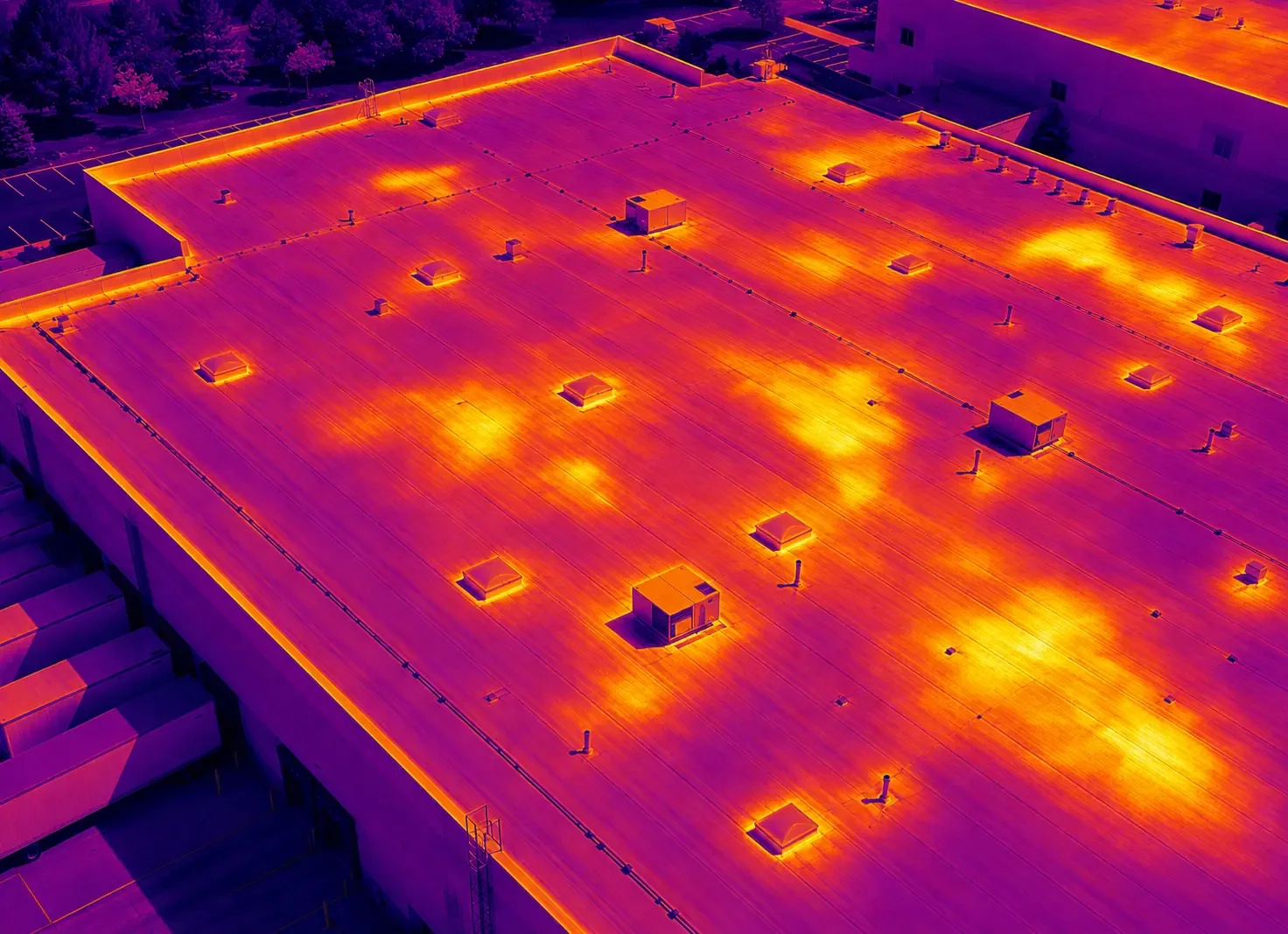
The thermal pattern at a cold-storage roof can reflect indoor conditions and assembly differences as well as concealed moisture. An infrared survey assessment therefore considers whether the roof and weather provide a useful method for the specific question. Direct confirmation remains necessary before setting removal limits. Temperature contrast should not be converted into a wet-material map without examining how the operating zones affect the surface response.
Sampling and selective openings are planned with protection and closure requirements for the enclosure. We choose locations that can resolve the material or moisture boundary while minimizing unnecessary exposure. The findings identify the observed condition at each location and the remaining question between areas. Additional examination may be needed where different roof sections or control-layer arrangements make one finding unsuitable to extend across the entire facility.
How do penetrations preserve the enclosure and roof continuity?
Pipes, equipment curbs and roof-wall transitions can interrupt both the exterior water barrier and the layers controlling air or vapor movement. We examine those functions separately before selecting reconstruction. A repair may need access beneath equipment or within a concealed transition to restore the relevant connection. Compatible membrane work alone is not the whole scope where another enclosure layer remains open.
With a PVC exterior roof assembly, welded details and substrate compatibility are coordinated with the insulation and other layers. Other coverings require their own methods. The selected TPO alternative or another system is compared on that complete arrangement, not assigned solely by its surface color. Curbs and outlets need suitable height and support after thickness changes, with drainage preserved around equipment and penetrations.
What limits the opening and shutdown sequence?
Removal exposes the enclosure and can affect temperature-sensitive operations, making daily work limits dependent on protection and closure as well as roofing production. We coordinate the operating requirements with the manager and appropriate refrigeration personnel before choosing the phase. Any equipment lifting, disconnection or enclosure interruption needs its own sequence. Controlled reroofing phases should leave sufficient time to rebuild the assembly under suitable conditions.
For Coppell commercial warehouse properties, the actual refrigerated use and schedule are established for the project rather than assumed from the city's warehouse inventory. Cost follows investigation, damaged-layer removal, enclosure reconstruction and operational coordination. We distinguish those items from the new covering so the owner can compare contained repair with wider work. The scope also identifies temporary protection if an opening reveals additional deterioration before closure is practical.
Completed connections are examined for the functions they were rebuilt to perform, including exterior water continuity and the coordinated enclosure interfaces. Maintenance preserves access to penetrations and identifies changes associated with equipment service. Later modifications should include review of their effect on air paths, support and drainage, because a small new service opening can alter moisture behavior without replacing the field covering.
Commercial Roofing Questions
Can condensation be mistaken for a roof leak in a freezer building?
Moisture can originate from warm air reaching colder layers as well as from rainfall entry. We compare operating and weather timing, then examine the relevant enclosure and roof connections. Specialist evaluation may be needed where the mechanism involves indoor conditions or concealed control layers. The repair is selected for the established path rather than assuming every wet roof layer resulted from an open membrane seam.
Will a thicker insulation package solve an air-leakage problem?
Thickness affects heat flow, but an open air path needs correction at the relevant interface. We assess the construction and coordinate the control-layer design with the operating conditions. Added insulation should not conceal a discontinuity that continues admitting moist air. The proposed assembly identifies both thermal and enclosure needs before the covering and detail heights are settled.
Can a roof opening be completed while refrigeration continues?
The enclosure exposure and operating limits need agreement before scheduling. Suitable protection and contained phases may support continued operation in some areas, while other activities require a restriction or shutdown. We coordinate those conditions with the facility and service personnel. The opening must allow dependable reconstruction and closure, not merely fit the shortest available production window.
How are different temperature zones reflected in the repair scope?
Findings are related to each operating zone and its roof construction. A wet sample or thermal pattern in one area is not automatically transferred to another zone with different conditions. We identify the boundaries and additional examination needed before selecting removal. The reconstruction then restores suitable materials and connections for the actual assembly rather than applying one generic cold-storage detail across the building.
Ready to review the roof scope?
Request a Roof Assessment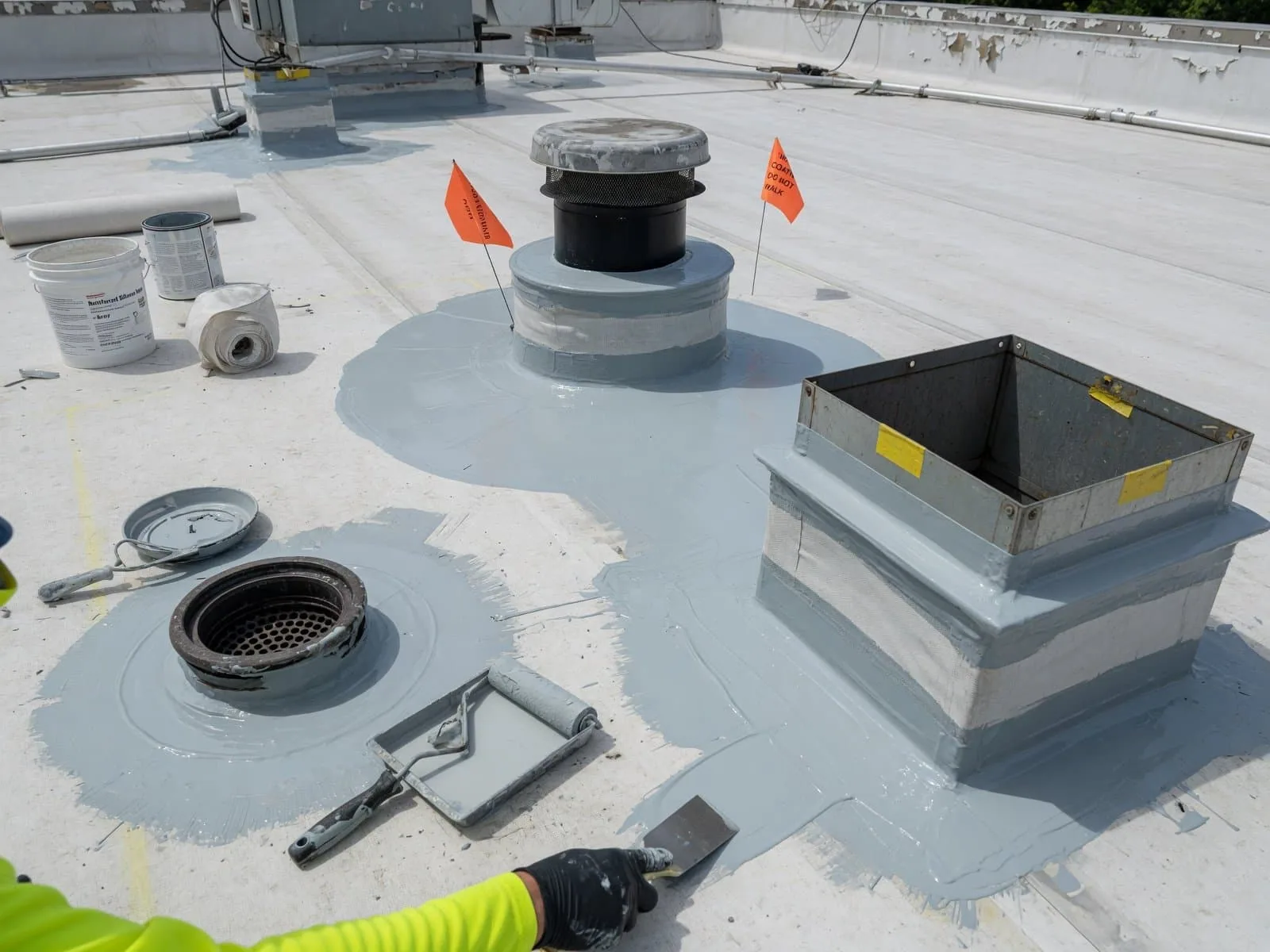
Commercial Roof Insulation and Cover Board
See scope, options and what to expect on the roof.