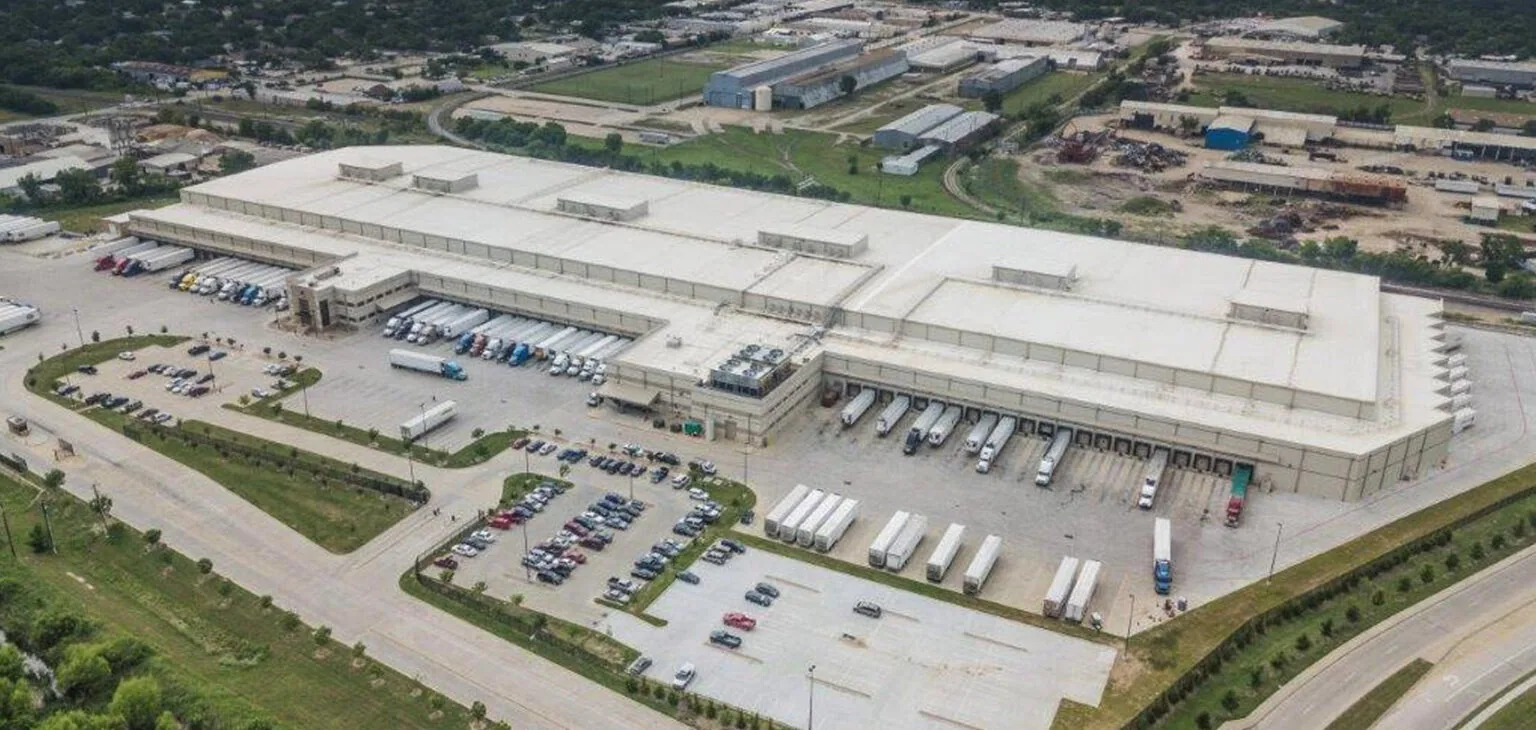
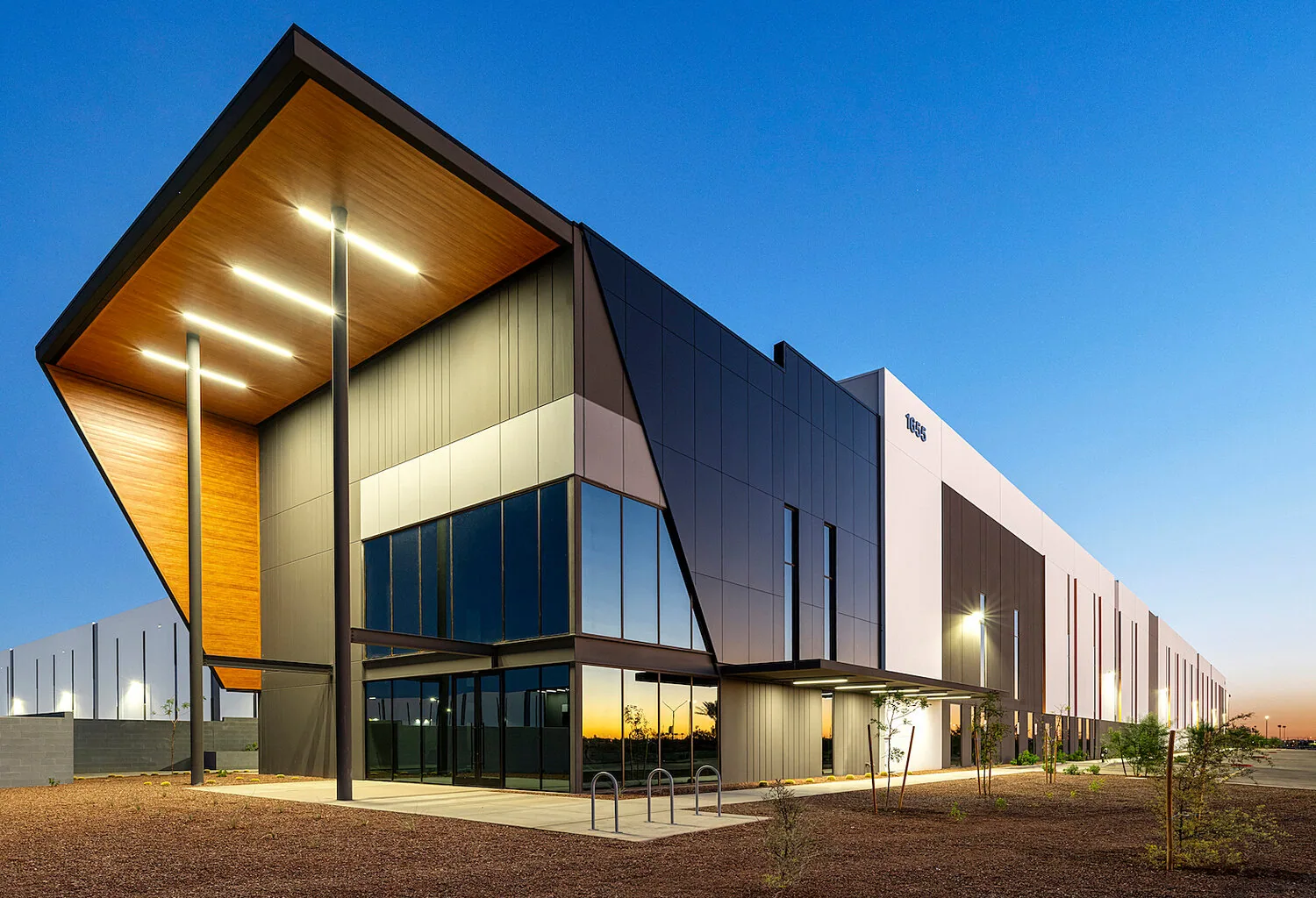
Process exhaust can change a roof membrane's local exposure while the surrounding field responds mainly to summer heating and rainfall. Manufacturing roofing in Irving, TX, begins by distinguishing those conditions before a material or repair is selected. Commercial Roofing Irving assesses the covering, equipment transitions and supporting layers, then coordinates the construction with the operating areas below.
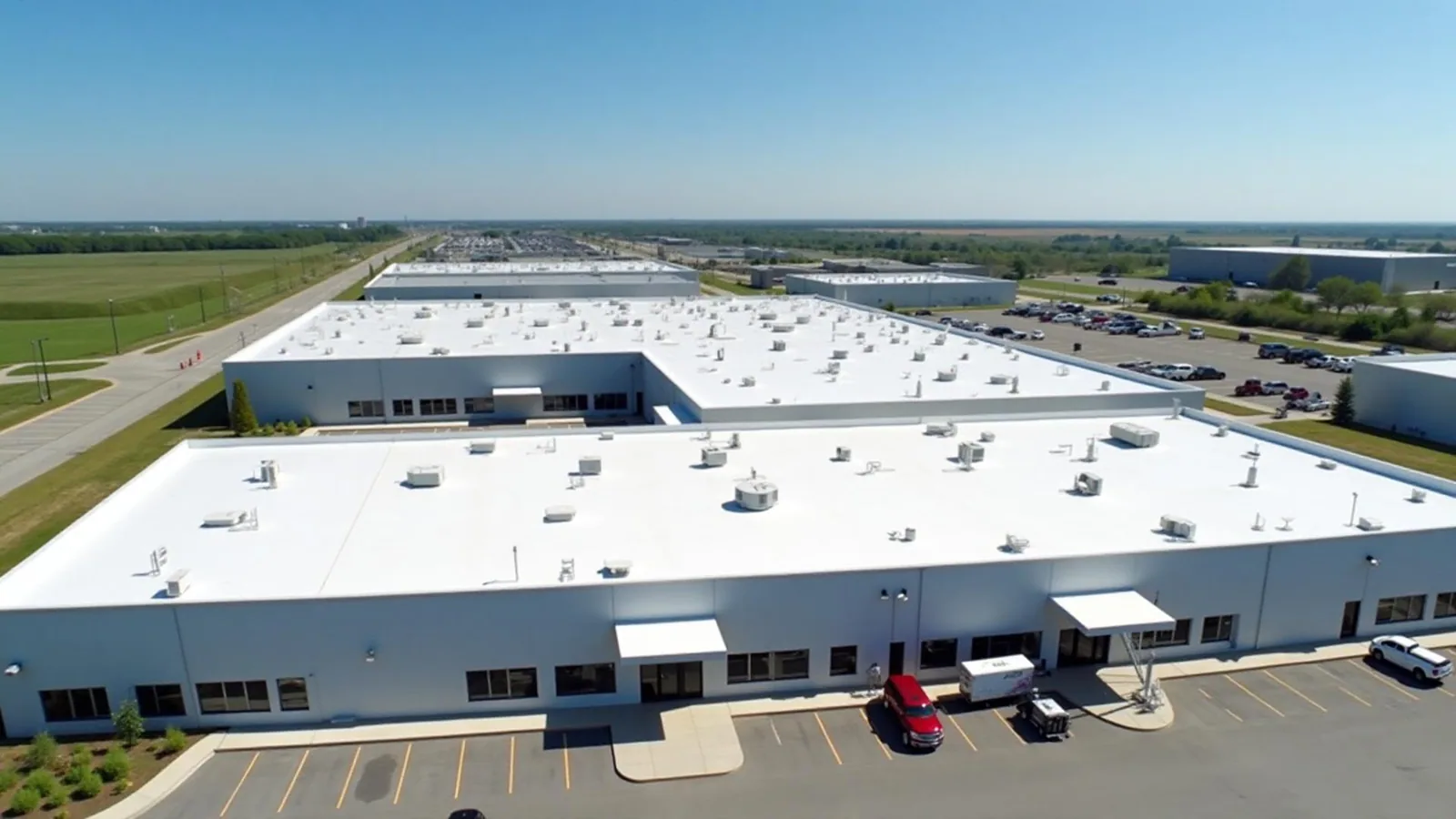
Nearby Grand Prairie includes manufacturing buildings supported by rail and interstate access, and Plano's economy includes several manufacturing sectors. For a plant in either area, the operator identifies process exposures and the equipment that must remain available while the roof connection is examined. We examine the actual exposure, including hot Dallas/Fort Worth summer conditions, so the roofing scope responds to the building's materials and operations rather than a broad industrial label.
What is reaching the roof from the production equipment?
Discharge, heat and service activity can affect particular roof areas differently from ordinary weather exposure. We identify the equipment and actual materials reaching the surface, then compare them with the installed covering and selected repair requirements. A process name alone does not establish chemical compatibility. Where discharge control or equipment service is needed, that work is coordinated with the roofing correction instead of leaving repeated contamination above a repaired surface.
PVC roof assembly choices may enter a material comparison where the exposure and product requirements support them, but no membrane is selected as a universal answer to every process. The assessment identifies the substrate, preparation and connection requirements too. Surface deterioration near exhaust can require contained removal or a wider boundary if the material no longer accepts a suitable repair. The proposed work explains what happens to that damaged covering before another system is installed.
We also examine service access around the exhaust point, where repeated cleaning or equipment work can abrade the covering. Contact protection and suitable walkway placement may be part of the correction, with drainage kept open around those additions. A surface that is compatible with the discharge still needs support against traffic and a maintainable connection at the equipment. Those local requirements are evaluated separately from the condition of the broader plant roof field.
How are service penetrations moving against the covering?
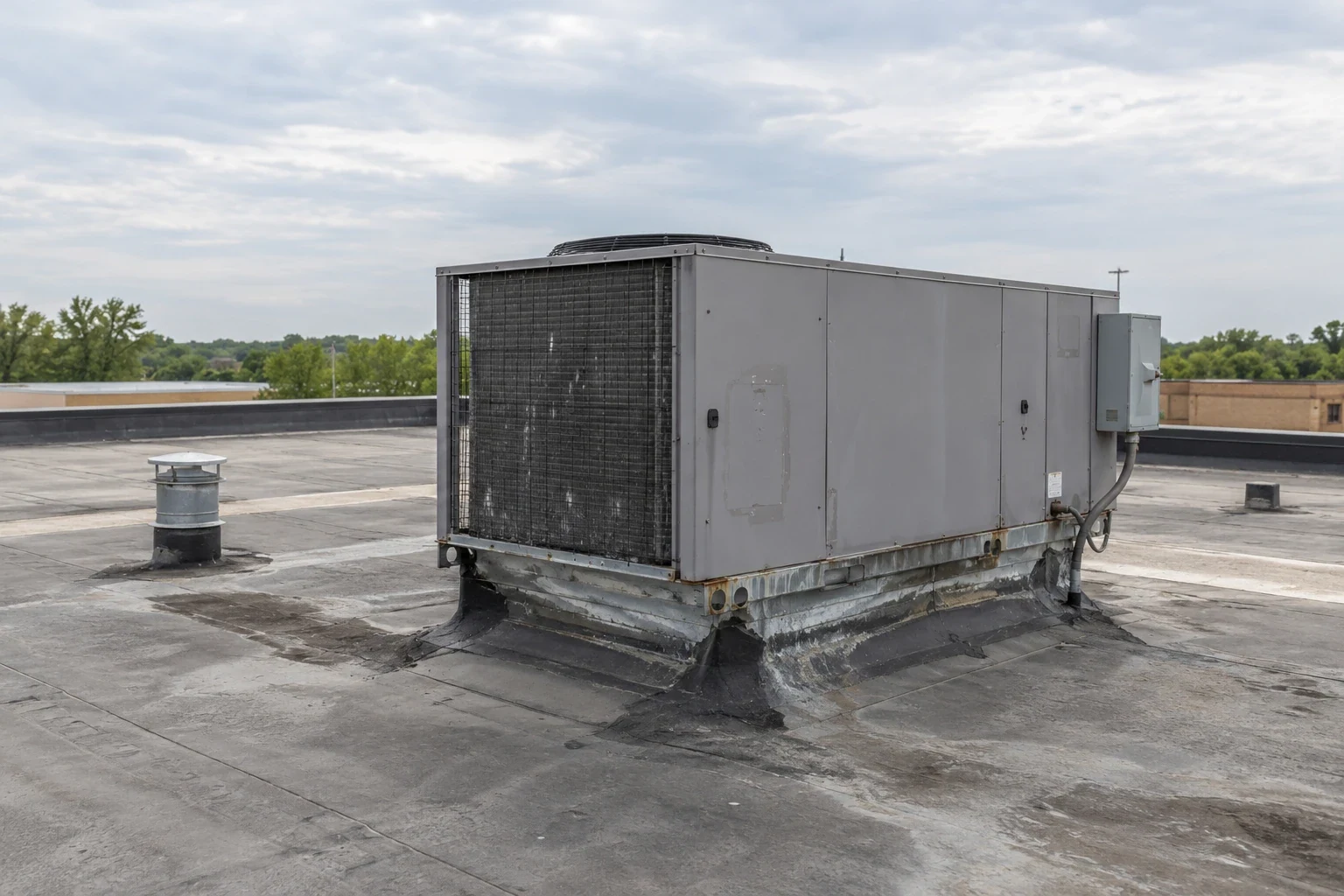
Pipes, ducts and curbs can transmit vibration or thermal movement into flashing connections. We examine the support, upper termination and change of plane where flexible roofing meets rigid equipment. A split at a pipe boot may require correction of the service line's movement or support as well as membrane reconstruction. The roofing scope identifies that interface before a new detail is selected from the visible opening alone.
Plant equipment support coordination may require mechanical or structural input where the work affects load transfer or service operation. Equipment can conceal the connection needing repair, making a planned lift or shutdown necessary for access. We establish that sequence before reconstruction begins. A visible seal at the curb base should not be treated as the whole repair if the failed upper connection remains inaccessible below the equipment.
Which production areas need protection during removal?
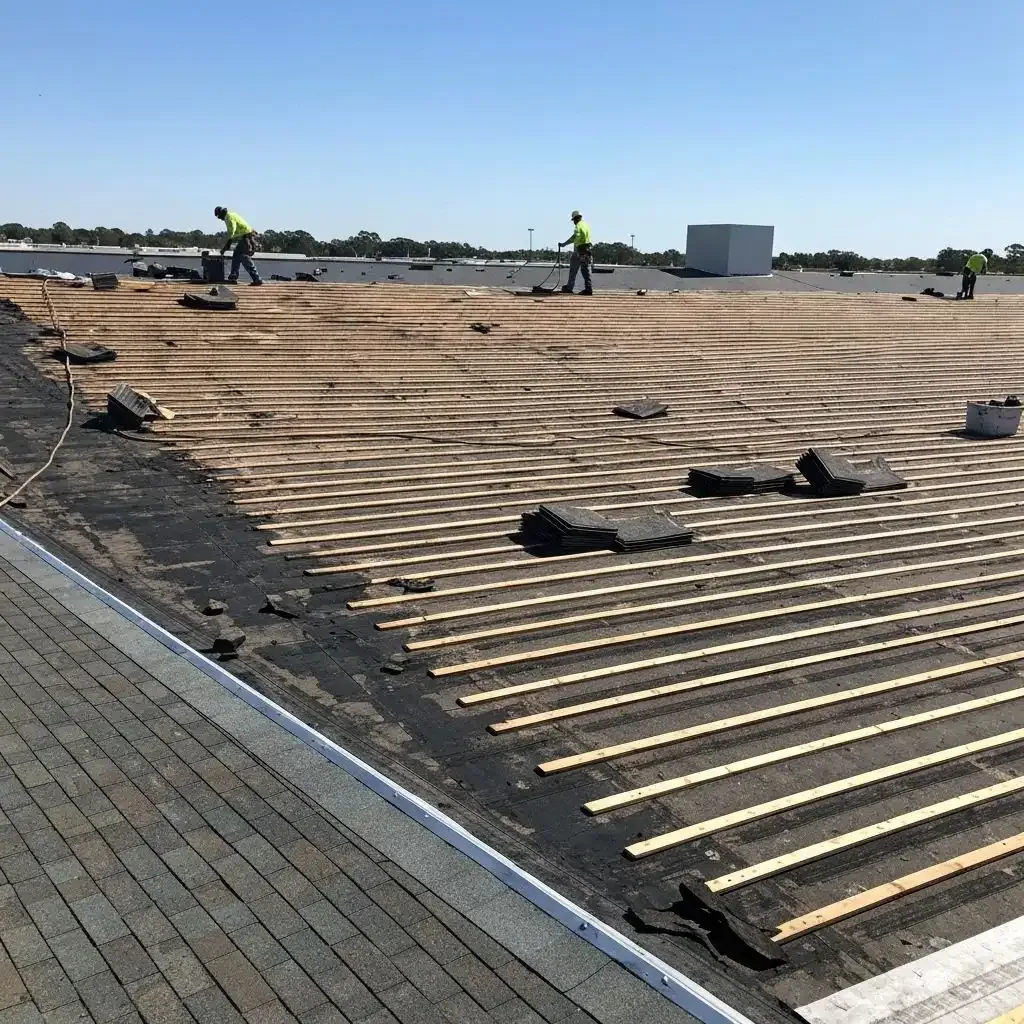
Dust, water and falling debris risks depend on the deck, removal method and equipment below the work. We relate the proposed roof opening to the production layout and identify the protection or operational restriction needed with the manager. Sensitive materials and exposed machinery can require a different arrangement from ordinary storage. The work boundary follows the ability to prepare, reconstruct and close the assembly safely within the available window.
Phased plant reroofing accounts for those needs alongside drainage and concealed substrate repair. A shutdown window has to accommodate the actual construction task, not only the initial removal. If opening reveals deteriorated deck or another condition requiring review, we communicate the effect on the phase before proceeding beyond the agreed boundary. Suitable temporary protection remains necessary where the permanent assembly cannot be completed immediately.
Is wetting coming from rain or the building operation?
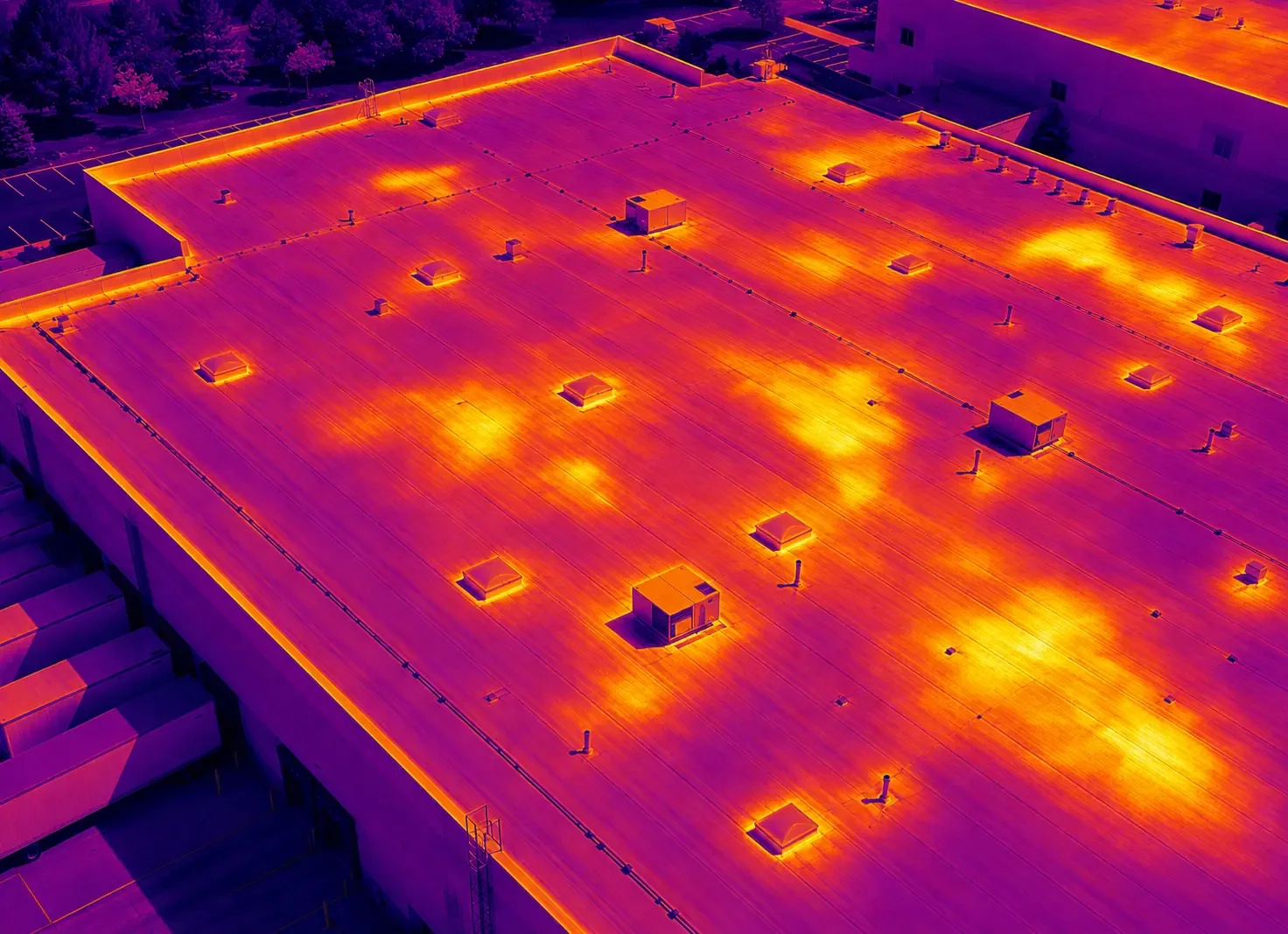
Interior humidity, air leakage and temperature differences can contribute moisture within an assembly independently of rainfall entry. We compare leak timing and operating conditions where the evidence suggests that mechanism. Moisture-pattern investigation can guide confirmation under suitable conditions, but direct checks and further building-system evaluation may be needed to explain how the water reaches the layers. Repairing a seam alone would not resolve an unrelated condensation path.
Where rain is entering, we identify the failed connection and the concealed-material boundary separately. Wet insulation or unstable support is assessed for removal and reconstruction before the covering is closed. A facility with temperature-controlled storage can require a different assembly comparison from its ordinary warehouse areas. We establish those uses and conditions directly rather than transferring one area's moisture findings across the entire plant.
What distinguishes a contained repair from a larger project?
A repair needs suitable retained covering and support, compatible materials and access to the failed detail. Where deterioration is widespread or attachment is unstable, the comparison may shift toward sectional or broader replacement. We describe the affected layers and connection needs so the owner can see which option addresses the actual mechanism. Cost follows process exposure, investigation, removal, substrate correction and the operational coordination required for reconstruction.
For Grand Prairie manufacturing properties, staging for removal and new materials needs coordination with delivery routes and the production windows established with the manager. We plan material handling and debris movement separately from occupied routes. The selected modified bitumen option or another suitable assembly has its own preparation and application requirements, including exposure precautions where the process introduces fire, odor or other operating concerns.
Completed work is examined at field connections, penetrations and outlets before the area returns to ordinary service. Maintenance preserves access and identifies developing wear around process equipment or traffic routes. Later service changes should include roofing coordination where support, discharge or penetrations change, so a new operating arrangement does not damage the reconstructed covering or obstruct the roof's drainage paths.
Commercial Roofing Questions
Can production continue beneath a contained roof repair?
The exposure from the repair and the sensitivity of the operation need assessment together. Some work can be separated with suitable protection, while an opening or equipment activity may require a restriction or shutdown. We establish those limits with the manager before construction. The plan follows the deck, removal method and process needs rather than assuming every small repair has a small operational effect.
Will a chemically resistant membrane resolve damage near exhaust?
The actual discharge and selected product's suitability must be compared, with equipment correction where repeated contamination is avoidable. Material choice alone does not settle preparation, support or detail condition. We assess the damaged area and the exposure mechanism before recommending the covering. A repaired surface should not remain beneath an unresolved discharge arrangement that continues to affect it.
Why does a pipe flashing split after equipment changes?
The change may alter vibration, thermal movement or support at the connection. We examine those relationships with the relevant equipment personnel and assess the roofing detail. Rebuilding the flashing can require a different arrangement or corrected support rather than another narrow patch. The scope identifies what needs to move and how the covering remains continuous around that movement.
Can the budget separate process-related repairs from general roof work?
Located findings can distinguish the affected details and material exposures where evidence supports that separation. We describe the removal, preparation and reconstruction needed for each area, including equipment coordination. Shared drainage or concealed moisture may connect the scopes, which is also explained. The comparison helps the owner understand the work without assigning causes or boundaries unsupported by the examination.
Ready to review the roof scope?
Request a Roof Assessment