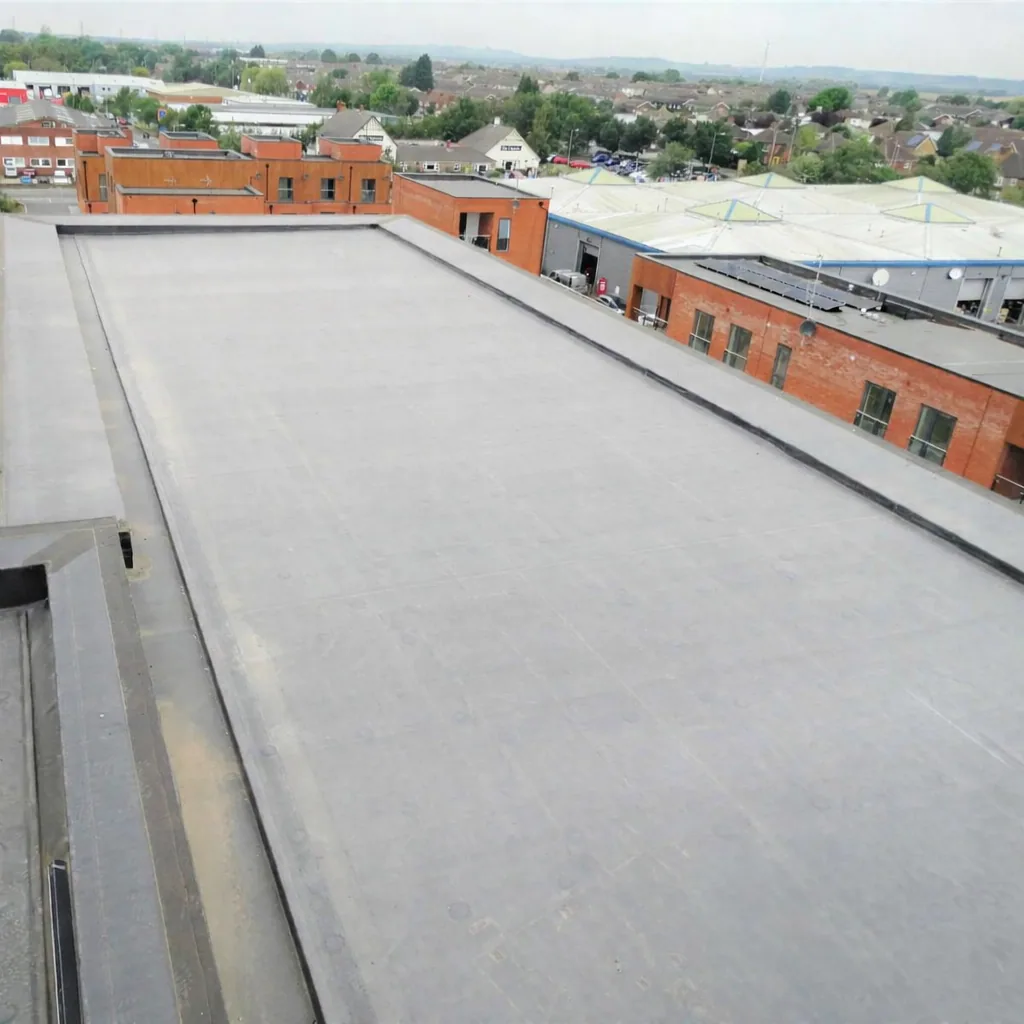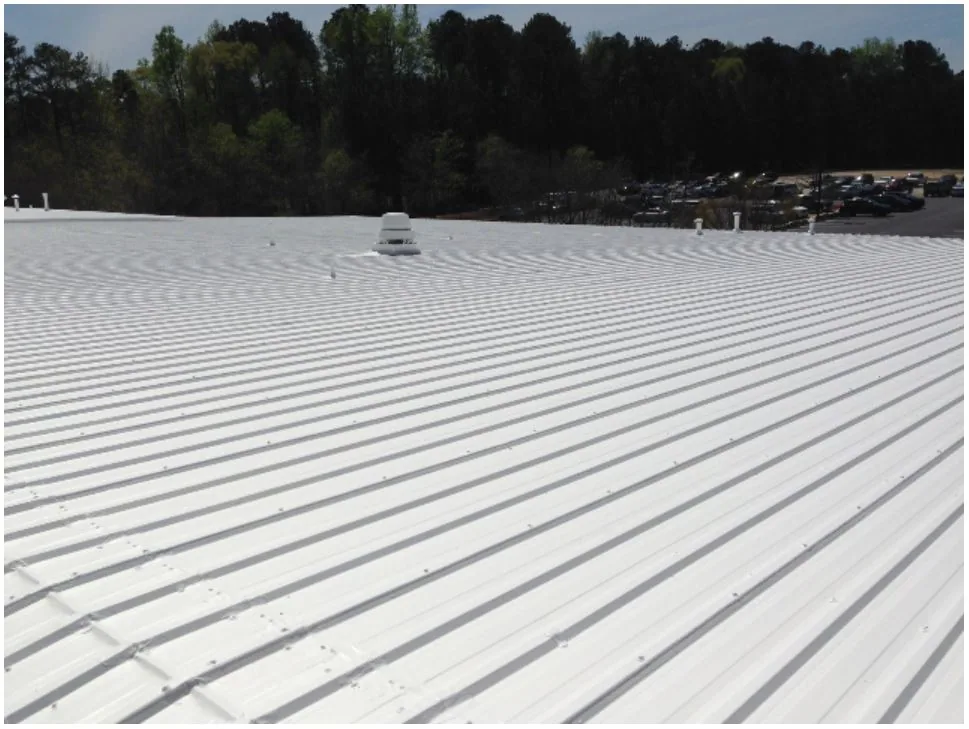
Iron Horse Boulevard was the focus of industrial access improvements backed by federal funding announced in 2021. That history gives North Richland Hills a commercial reference point, while the roof itself still has to supply condition evidence. We start at the building: identify the system, inspect its seams and edges, and trace the reported water path. The city’s documented employment base includes medical and protective-equipment manufacturing, aerospace manufacturing and food processing. Those uses make continuity important, while each property still sets its own access and interruption limits.
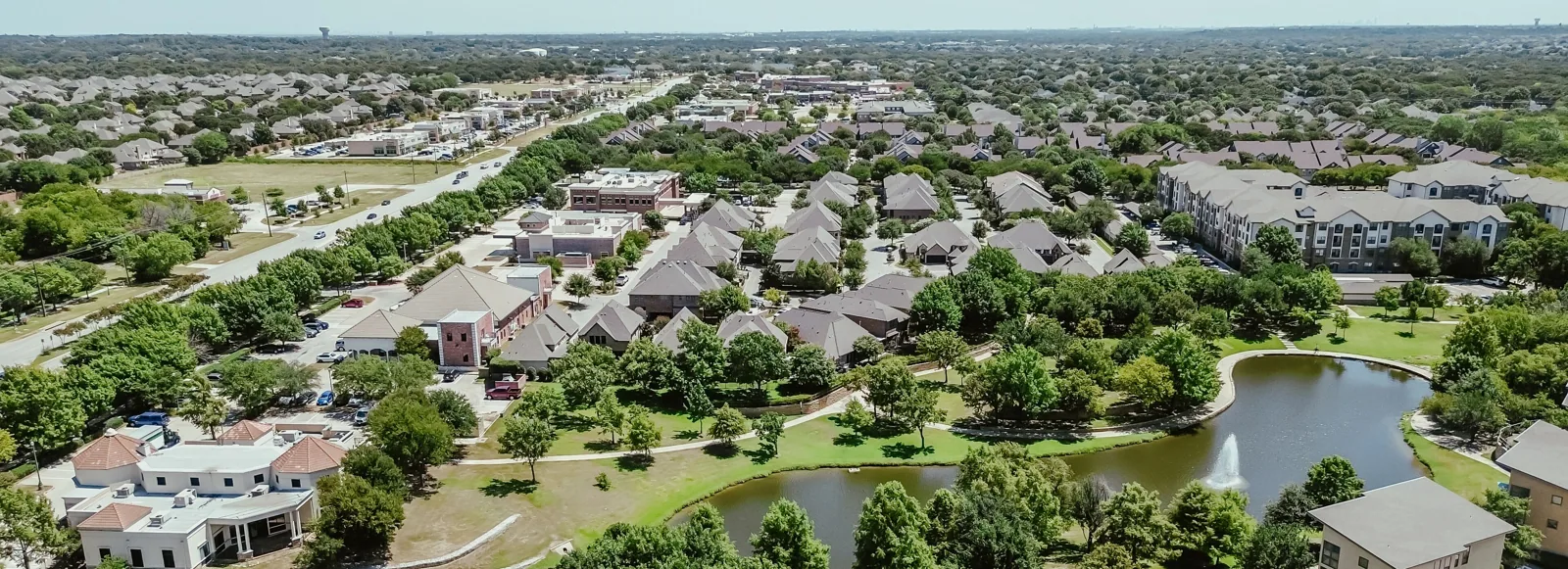
A roof visit records observable details rather than assigning a cause from a ceiling stain. We note penetrations, drains, perimeter transitions and previous patches, then compare the surface with the interior report. Our commercial inspection gives facilities staff a location-specific record before a repair or broader assembly comparison is selected.
What does access planning need to cover?
Road access and roof access are separate plans. A visit requires a confirmed route for ladders, lifts, material staging and any exclusion zone around active operations. We confirm the actual route with the property contact instead of assuming that a nearby road reaches a roof or loading court. At a medical or protective-equipment operation, any work window that touches production, storage or service areas needs to be identified before materials are opened overhead.
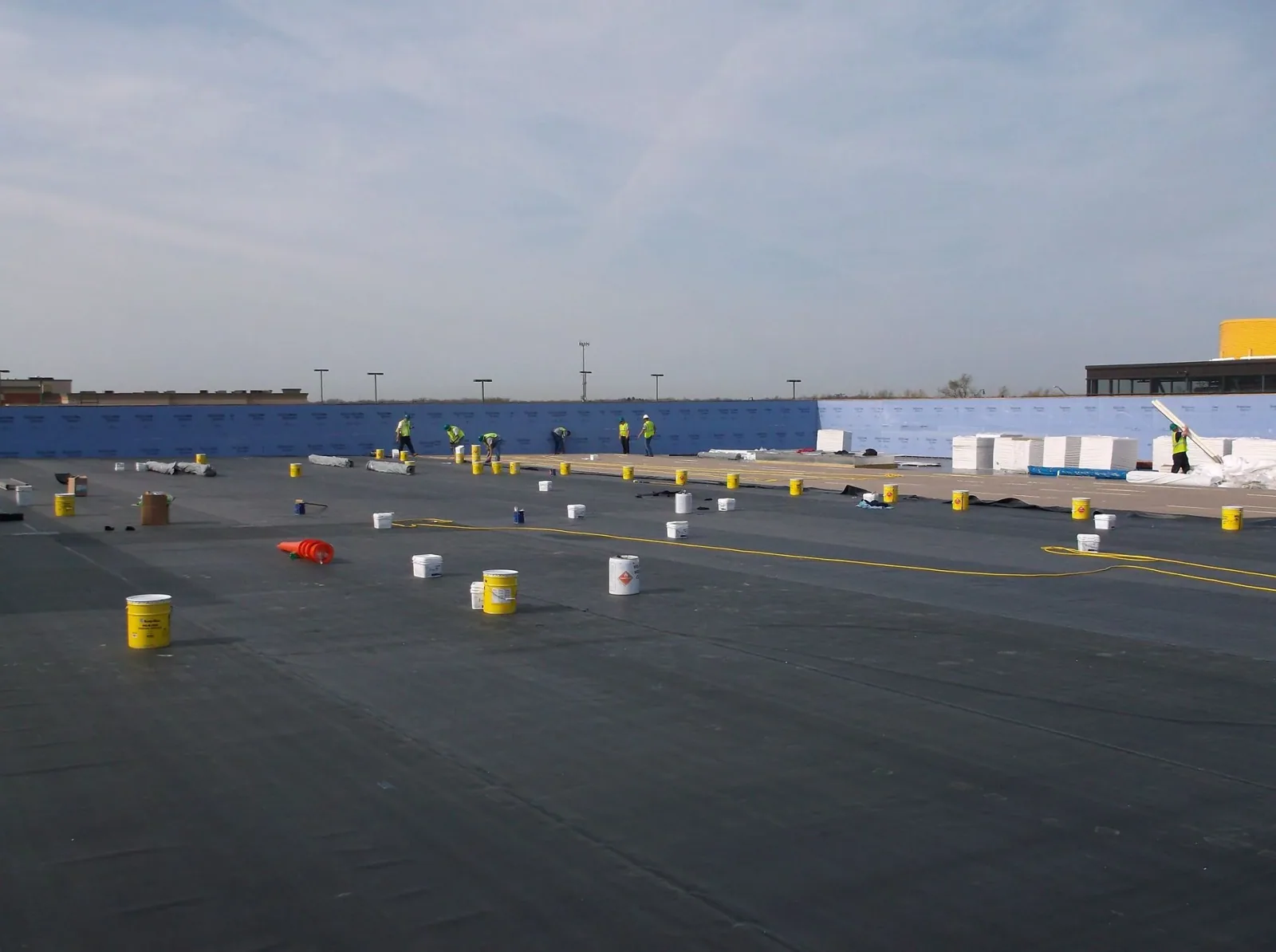
The first walk marks roof sections and active building uses together. We record where equipment sits, whether a hatch or interior ladder is available, and which doors or circulation paths need protection. If the assembly must remain weather-tight during a longer project, the work area is divided into manageable sections. A phased reroof plan can be compared when removal or recover work cannot fit a single uninterrupted shift.
How should regional storm reports change the inspection?
Hail, strong wind and tornadoes recur across the Metroplex, yet no event label can assign damage to one North Richland Hills roof. We inspect the membrane, flashing, seams and perimeter, then map each observed condition to its location. If a surface clue does not establish the underlying layer, a selective opening or additional survey can answer that question.
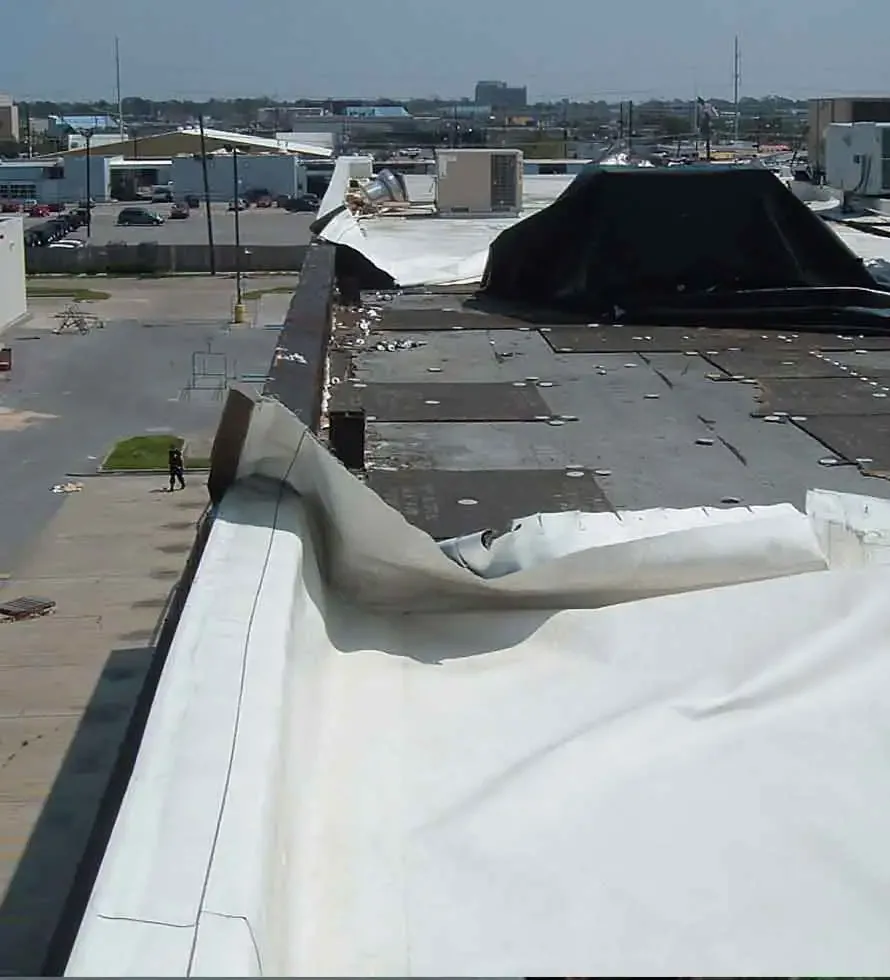
The DFW regional climate is humid subtropical, with hot summers and wetter spring and fall periods. The annual cycle moves an exposed membrane against the deck beneath it, making rigid curbs and metal edges points to inspect for bond loss and movement allowance. Repeated movement can stress a membrane where it meets a rigid curb or metal edge. A wind-damage assessment checks those connections while separating a repairable detail from wider attachment concerns.
Which roof conditions matter over production?
A manufacturing roof has to be evaluated as an assembly, not as a single sheet. We check membrane or panel condition, lap integrity, fasteners, insulation, cover board, drains and penetrations, then note whether the substrate appears dry and stable. Medical and protective-equipment production is part of the documented local employment mix, but that does not establish what a particular building stores or how its roof is designed. Access and interior protection are confirmed with its operator.
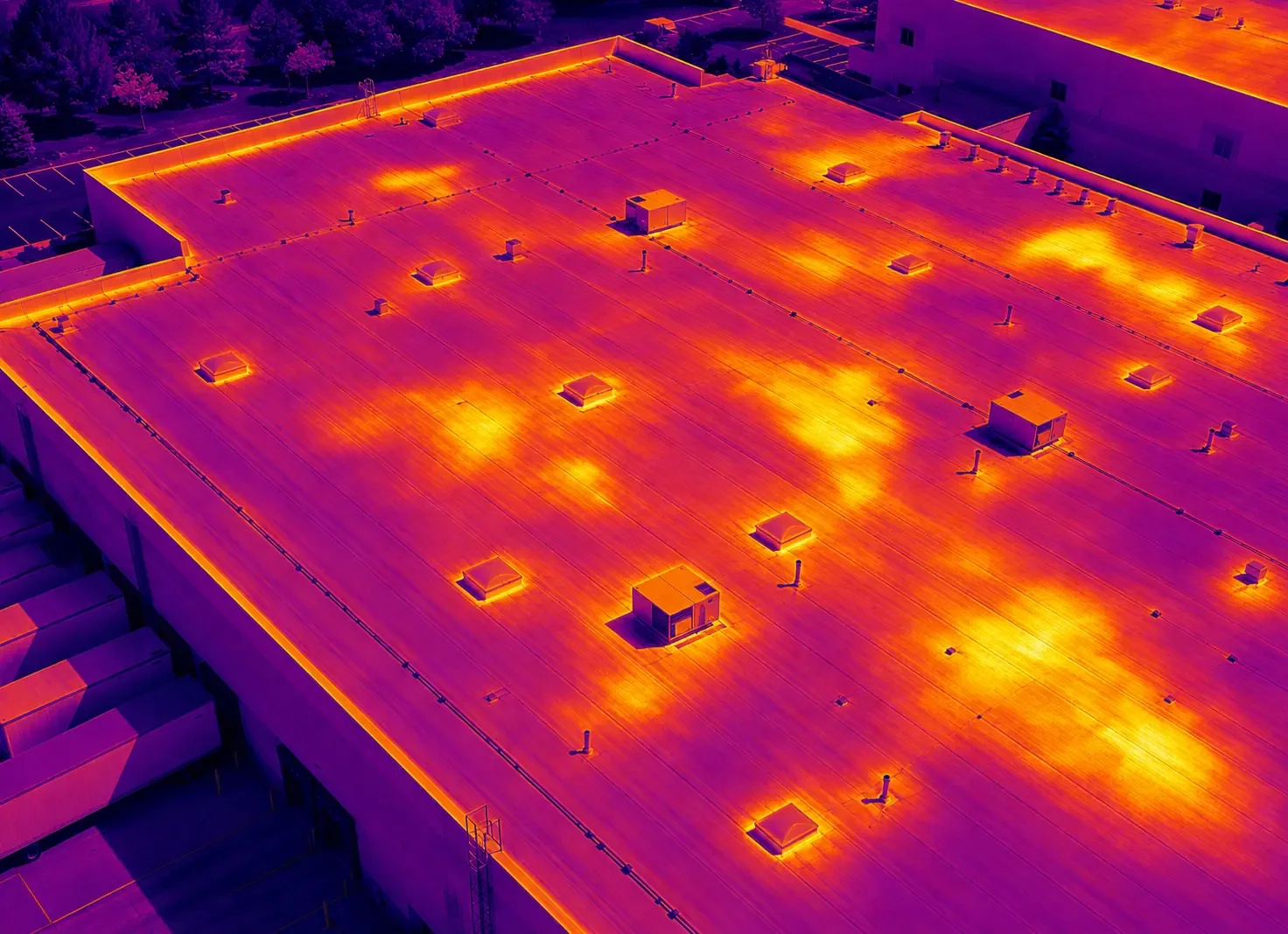
Where roof-mounted units create concentrated loads or repeated service visits, curbs and nearby seams deserve close attention. Water can travel beneath a surface before it becomes visible indoors, so we compare the reported leak with the field slope, drain locations and penetrations. A moisture survey may help map a pattern, while a limited opening can confirm the layers when readings alone leave uncertainty. Our repair scope names the material transition and its footprint. It also shows how the observation connects to the reported interior condition, so facilities staff can explain why one section received immediate attention while another remains under review. Where work runs over sensitive inventory or active production, temporary protection may need to extend beyond the marked repair itself. We plan that protection from the building use, confirm it with the operator and record what must be restored before the area returns to service.
When can a contained repair make sense?
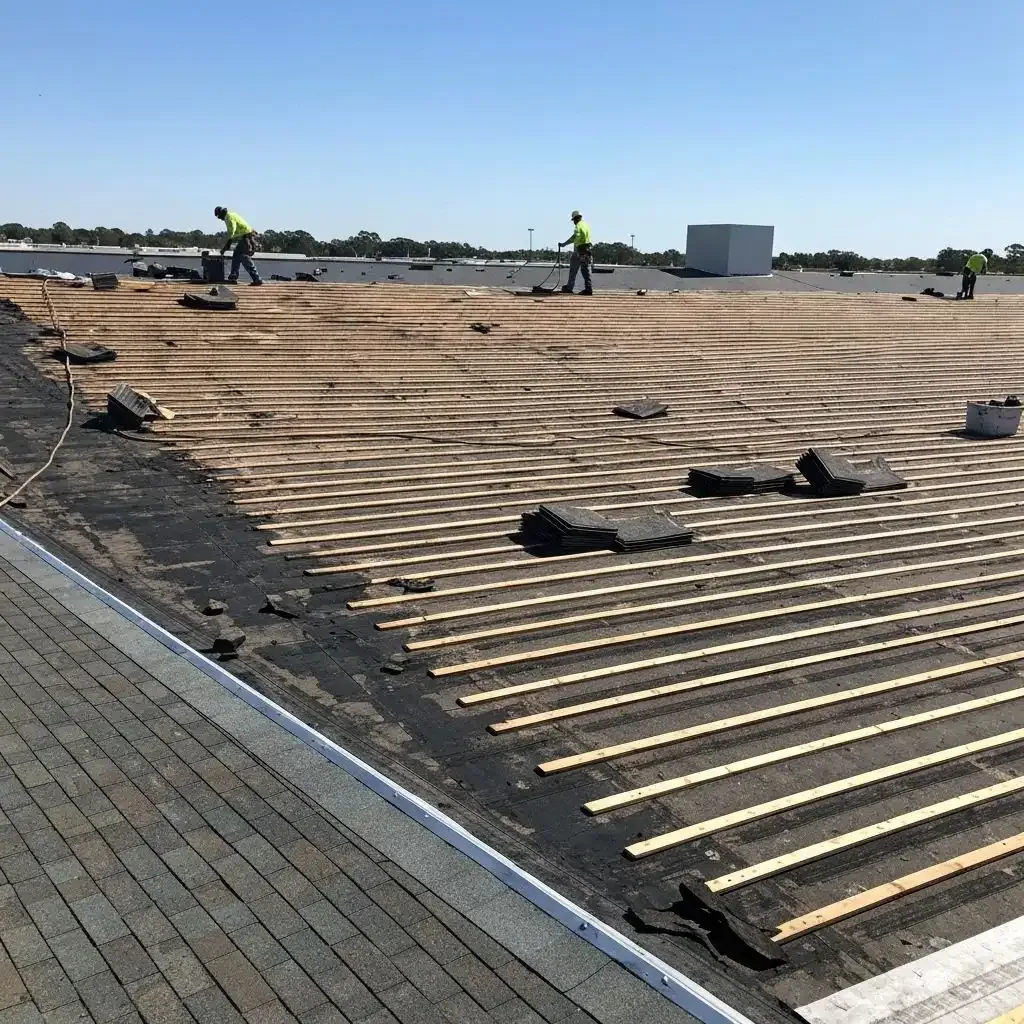
A localized repair is reasonable when the failure has a clear perimeter, the substrate is stable and compatible material remains around the damaged area. We prepare the surface according to its system and rebuild the seam, flashing or penetration detail that allowed entry. The repair footprint is not set by the size of a ceiling stain; it follows the roof evidence and any moisture found below the surface. If attachment loss or wet insulation crosses that footprint, a broader repair or replacement comparison is safer.
A restoration coating is a candidate only after inspection confirms a dry, secure surface, compatible materials and a drainage path that works. Applying a new film over loose attachment or trapped moisture leaves the underlying cause in place. We also review edge securement and how water leaves the roof, since an otherwise sound field membrane can keep failing at a perimeter or drain. The EPDM system is one assembly we can evaluate where it is actually installed, not an assumption about the city’s buildings.
How can owners compare immediate and planned work?
For water entering after closing, our crews can respond at any hour, including weekends and holidays, then move from temporary control to a roof inspection when access is safe. The visit records the entry point reported by staff, marks interior areas that need protection and identifies a safe route to the affected section. For non-emergency deterioration, a written scope can separate immediate repairs from work that belongs in a later capital cycle. Timing depends on roof layers, affected area, access, edge details, equipment conflicts and the building schedule, not just the visible opening. The owner can then see which work protects operations now and which decision can wait for confirmed assembly findings, with the reason for each item kept in the record.
We present what is confirmed, what needs a selective opening and which alternatives fit the findings. Repair may contain one defect; recover may retain a sound, dry assembly; removal becomes more likely when deterioration extends through insulation or attachment. A capital planning assessment can preserve those choices for budget review. For a separate property in DeSoto or Cedar Hill, we ground the scope in that building's own facts rather than transferring North Richland Hills observations.
Commercial Roofing Questions
Does Iron Horse Boulevard work mean a roof is easier to reach?
Not necessarily. The city’s access improvements do not establish the route onto an individual property. We confirm roof entry, lift placement, loading activity and any restricted areas with the site contact before setting the work sequence.
Can a regional hail report prove roof damage here?
No. A regional weather report describes conditions across a broad area, not the condition of one roof. Our inspection record identifies any impact, puncture, displaced edge metal or opened seam actually observed at the property and ties the proposed work to that evidence.
What should a production manager share before inspection?
Tell us which hours, rooms, storage areas and vehicle routes must remain available. We can then plan access and interior protection around the operation while still inspecting the roof sections that relate to the reported issue.
When does moisture below the membrane change the scope?
A broader moisture pattern or unstable substrate can make a small patch unreliable. We map the readings, compare them with the roof details and use a selective opening when needed to confirm whether insulation or attachment extends the repair boundary.
What belongs in a roof condition record?
It should identify the assembly, location and extent of observed conditions, photos, completed repairs and questions that remain open. That record helps the owner compare immediate water control with recover or removal work without turning a regional climate fact into a building-specific finding.
Ready to review the roof scope?
Request a Roof Assessment