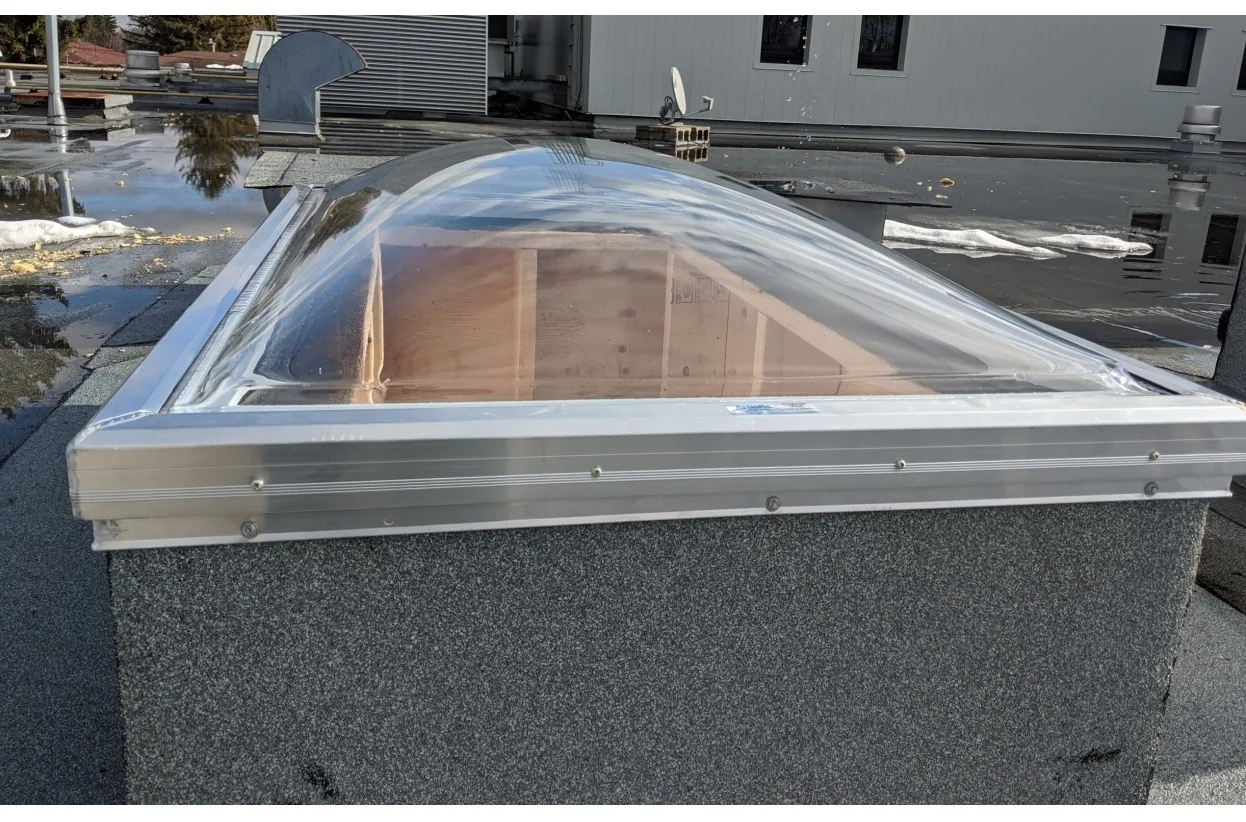
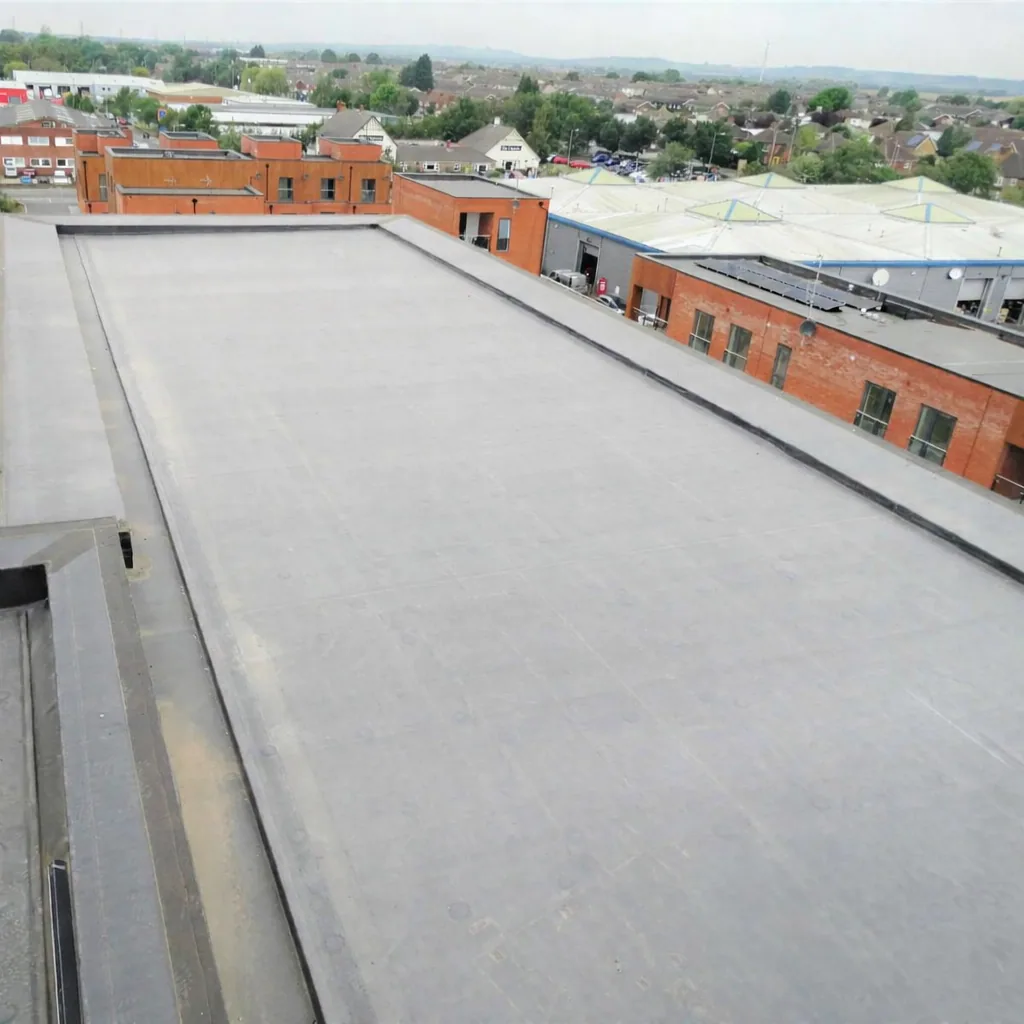
Thermal movement at a Flower Mound roof can pull a curb connection differently than the surrounding field membrane even while the interior remains dry. That difference makes the detail worth checking before a manager chooses a patch or opens a wider section. Hospital and rehabilitation providers, distribution and service-center operations, and retail and grocery businesses appear among the town’s listed major employers. Those categories help frame access and continuity questions, but they do not establish the construction or roof condition at an individual property. Commercial Roofing Irving inspects the assembly before setting the work boundary.
In the Dallas/Fort Worth region, hot periods drive expansion and contraction at seams, curbs and metal edges. Storm wind and hail may also prompt an inspection, though regional weather does not establish a roof-level failure. We compare the observed surface and connections with interior leak records, drainage and prior repairs. That evidence helps the owner choose between localized repair, a verified sectional replacement or a wider project based on the assembly condition.
Which operating areas need protection during roof work?
A medical provider may have rooms where noise, dust, temperature control or uninterrupted access affect operations. A distribution site may need deliveries and service routes kept open. Retail work can require clear entrances and a protected customer path. The property manager identifies the real constraints; we translate them into a roof sequence, work hours, staging locations and interior protection. No employer listing tells us which conditions apply inside a particular building.
Before removing material, we identify the roof section, establish how it will be dried in and agree on the temporary condition if weather interrupts the work. A phased occupied-building plan can separate noisy or exposed work from areas that need continuity. If a leak has reached a sensitive room, we first coordinate safe temporary control and then inspect the roof transition that could be admitting water. A prompt repair response is available around the clock, throughout the week and on holidays.
How does a ceiling symptom connect to the roof?
Water at a ceiling may have traveled along a deck, insulation joint or structural member before appearing indoors. We use the timing, location and weather reported by staff as clues, then inspect above the affected area and along likely water paths. Drains, curbs, wall transitions and membrane seams can direct water differently. We note the source that is visible and the area that remains uncertain, rather than treating a stained tile as a map of the roof opening.
At a service center or grocery property, rooftop equipment and refrigeration lines may create penetrations that need a close look if present. We inspect flashing bond, support movement and seal conditions, and coordinate with the equipment trade where access is limited. The penetration flashing scope follows the detail actually found. If insulation condition could expand the repair, infrared investigation or a selective opening may help define the boundary.
When does a localized repair remain sound?
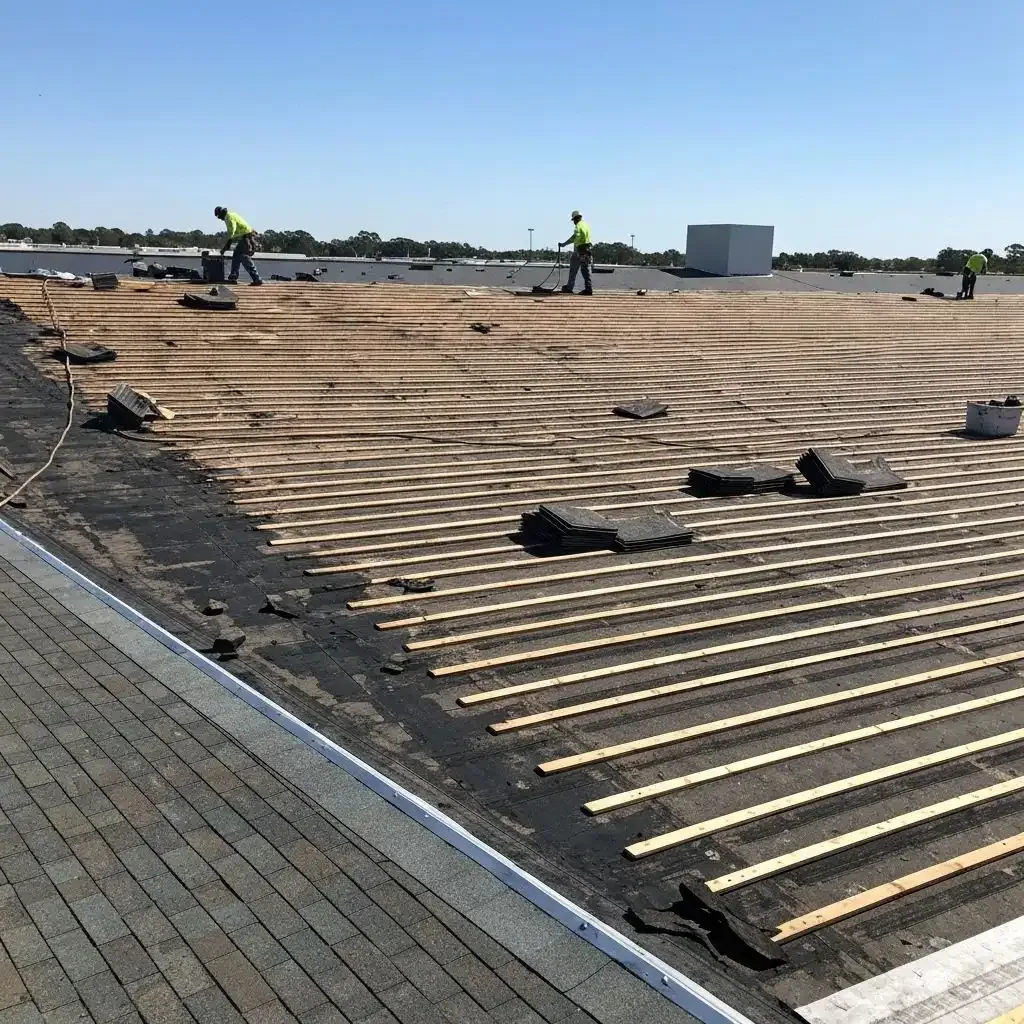
A repair remains reasonable when the defect can be isolated and the surrounding membrane, insulation and attachment are serviceable. We remove incompatible patching where needed, prepare the substrate and rebuild the flashing or seam with a material that can bond to it. If a roof opening reveals wet insulation beyond the initial area or a weak deck connection, the scope should expand to a condition that is verified. Extending removal to a guessed distance can waste sound material; stopping too early can leave the source in place.
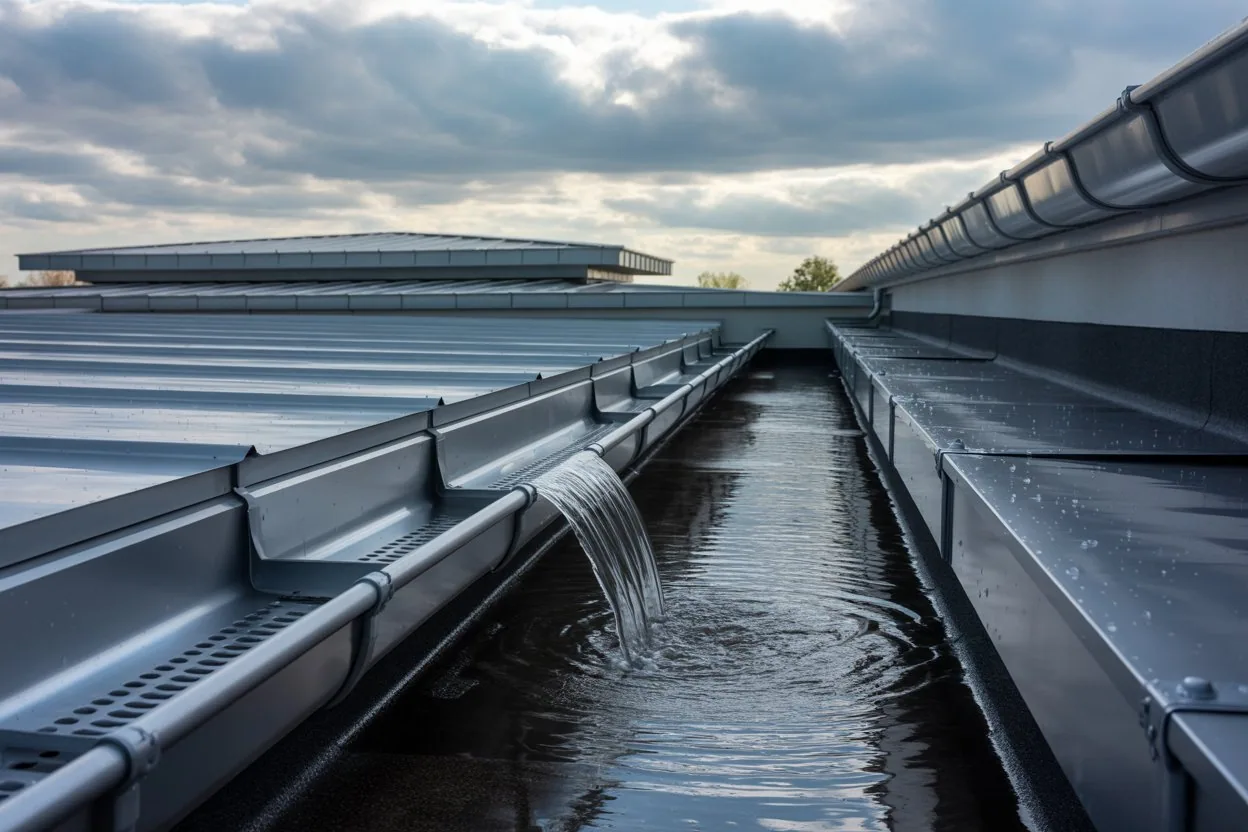
For a medical office roof, the temporary cover and work window may deserve a separate line in the scope. Warehouse and distribution roofing can add staging and handling considerations, but neither building type dictates whether repair or replacement is right. A drainage assessment can address a low area that keeps water at a seam, while isolated flashing damage may need no wider field work.
What changes a repair into a replacement decision?
Widespread moisture, deteriorated attachment, repeated failures across separate details or a substrate that cannot support a reliable bond may make a larger scope more practical. We document the evidence and compare repair, sectional work and full replacement with the same assumptions. A recover can remain an option only when existing materials are suitable to stay, added load is acceptable and edge heights can be resolved. Drainage and equipment transitions need attention in any assembly, not after the new field membrane is installed.
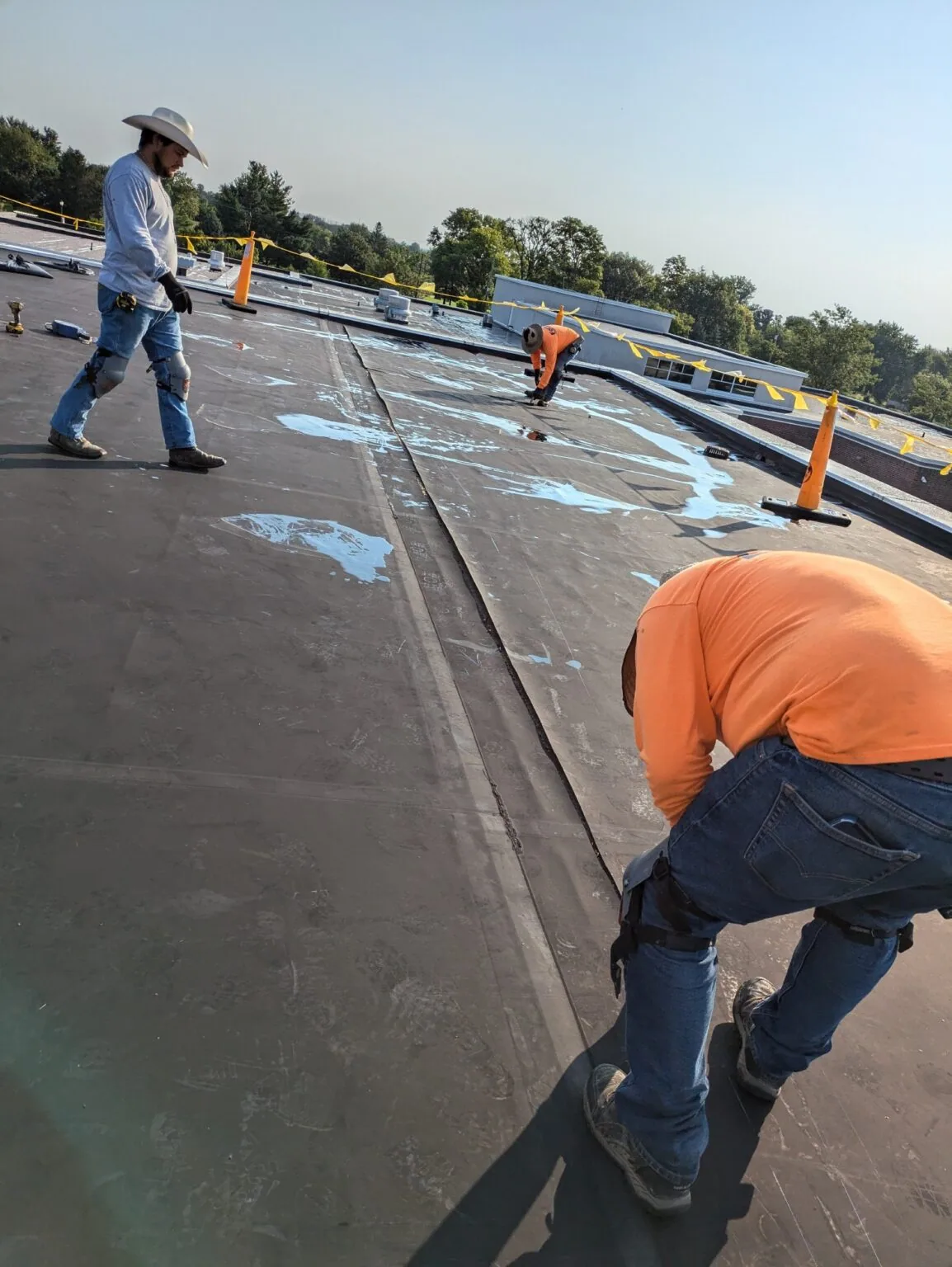
A replacement proposal states removal, insulation, attachment, membrane, perimeter metal, drains and temporary protection. The EPDM system or another membrane is compared against the roof and operating needs, rather than selected from an employer category. In Las Colinas Urban Center, office and residential uses create their own access and staging conditions. A portfolio owner can compare that work with Flower Mound only after each inspection preserves its own findings.
Permits and code review must be confirmed for Flower Mound by the responsible jurisdiction. Requirements applying to an Irving project do not automatically apply in this town. The work schedule should include the review and any owner approval before materials are ordered or roof areas are opened.
How should a facility team track roof condition afterward?
Photographs and a written condition record can connect each observed seam, curb, drain and repair with an action and follow-up date. The record should distinguish completed work from a recommendation that awaits approval or further investigation. That is useful when a facilities manager changes or a later leak occurs in an area previously repaired. We identify what the earlier visit established and what the new symptom adds to the roof history.
A maintenance visit can keep drains, debris, edge metal and penetrations under observation. For properties in Flower Mound and nearby Grapevine or Coppell, roof records can support a portfolio view without assuming the buildings share an assembly. The owner can use capital planning to distinguish immediate water control from construction that needs design, procurement or a longer work window. We can also provide claim documentation when the inspected conditions support it, while leaving coverage decisions to the insurer.
Commercial Roofing Questions
Can roofing crews work above a medical or rehabilitation area?
The plan depends on the room below, roof access, noise, protection and the period the work area must remain open. We coordinate with the facility contact, define interior protection and identify which roof sections can be closed each day. If a shutdown or separate trade is necessary, the scope should state that before scheduling. The building team confirms the clinical or operational limits that affect the sequence.
Does a major-employer listing show what roof a property has?
No. It describes an economic or employment category, not the assembly at a particular address. We identify the roof surface and layers through available records and direct examination. A hospital, service center or retail use may affect access and protection, while roof material and concealed condition remain questions for inspection.
What should happen if a leak returns after patching?
We compare the new entry with the earlier repair location, weather report and current roof condition. A recurring symptom can involve the original detail, a nearby transition or water traveling from another point. We inspect the patch boundary and surrounding assembly, then determine whether moisture or attachment needs confirmation before setting a wider repair.
Can a coating be used to avoid roof removal?
A coating is considered only when the existing surface, bond and substrate are suitable and the underlying moisture and drainage issues have been resolved. We inspect preparation requirements and the details that must remain watertight. If the roof contains wet insulation, unstable attachment or incompatible material, coating can conceal the condition instead of addressing it.
Ready to review the roof scope?
Request a Roof Assessment