Manufacturing and aerospace buildings place different demands on a roof than a professional office, even when both need the same type of membrane repair. Arlington, TX, identifies advanced manufacturing and aerospace as investment priorities, alongside healthcare, biotechnology and professional services. Commercial Roofing Irving uses that industry context to ask better access and continuity questions, then inspects the building itself before recommending a scope. The target is the roof assembly, not an assumption based on the tenant’s line of work.
In the Dallas/Fort Worth region, summer heat cycles the field membrane and metal details, while severe storms can test seams, edge attachment and penetrations. A regional climate pattern does not show whether a particular Arlington roof has damage. We document the observed surface response, trace water paths and inspect the connection involved. That evidence supports a repair, a defined replacement area or broader removal only when the condition warrants it.
What should the inspection establish before production is affected?
Where a building supports specialized production, a roof opening can have consequences beyond the wet ceiling below it. We identify the affected bay, the equipment or process beneath it and the temporary protection the operation requires. A leak report helps locate an area; it does not establish how much insulation is wet or whether the deck remains secure. We inspect seams, curbs, drains and edge conditions, then agree on the next test if concealed material would change the repair boundary.
Arlington also lists healthcare and biotechnology among its priority sectors. A facility manager may need to preserve controlled rooms, equipment access or scheduled deliveries while roof work proceeds. Those requirements have to be confirmed with the actual property team. Our occupied-building sequence identifies work zones, interior protection, material routes and closure points before removal begins. A documented roof inspection can keep observations separate from reported conditions so the owner knows what remains to be confirmed.
How do movement and water entry point to different repairs?
Membrane movement can show at a curb or perimeter even when the field remains intact. We inspect the bond or mechanical attachment, the metal termination and the adjoining surface rather than adding sealant to the most visible line. If the connection has separated, a repair must rebuild the transition using materials that can bond to the existing assembly. If the substrate is wet or unstable, a larger opening may be needed to define what can remain.
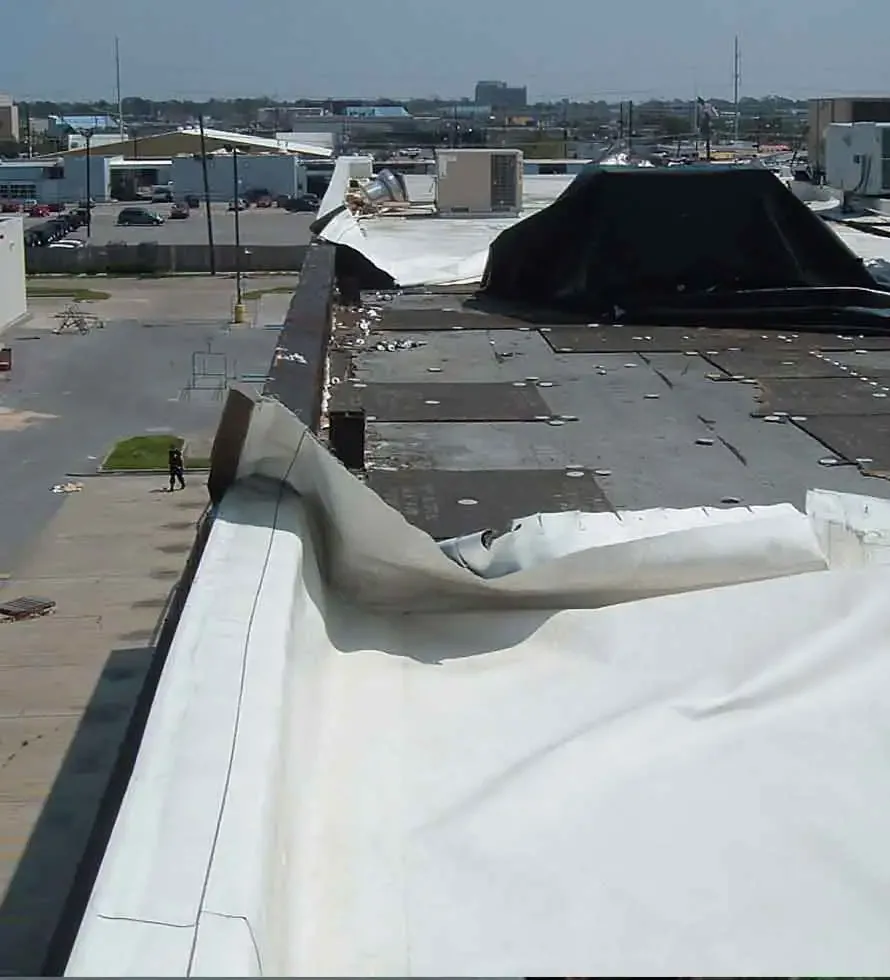
Storm reports also require a roof-level check. Regional hail and wind conditions can occur across the Metroplex, but the event record for a broad area does not establish damage at an individual property. We look for impact marks, displaced edge components, opened seams and punctures, then distinguish fresh damage from earlier wear where the evidence supports it. A wind-damage assessment considers the attachment path from the membrane into the deck. Water entry that follows a penetration may call for flashing reconstruction instead of field-sheet replacement.
For a warehouse or distribution roof, roof drains and equipment curbs need to be examined in relation to access and stored operations. We record their actual condition rather than infer roof type from the city’s logistics access.
Which assembly should carry the repair into future work?
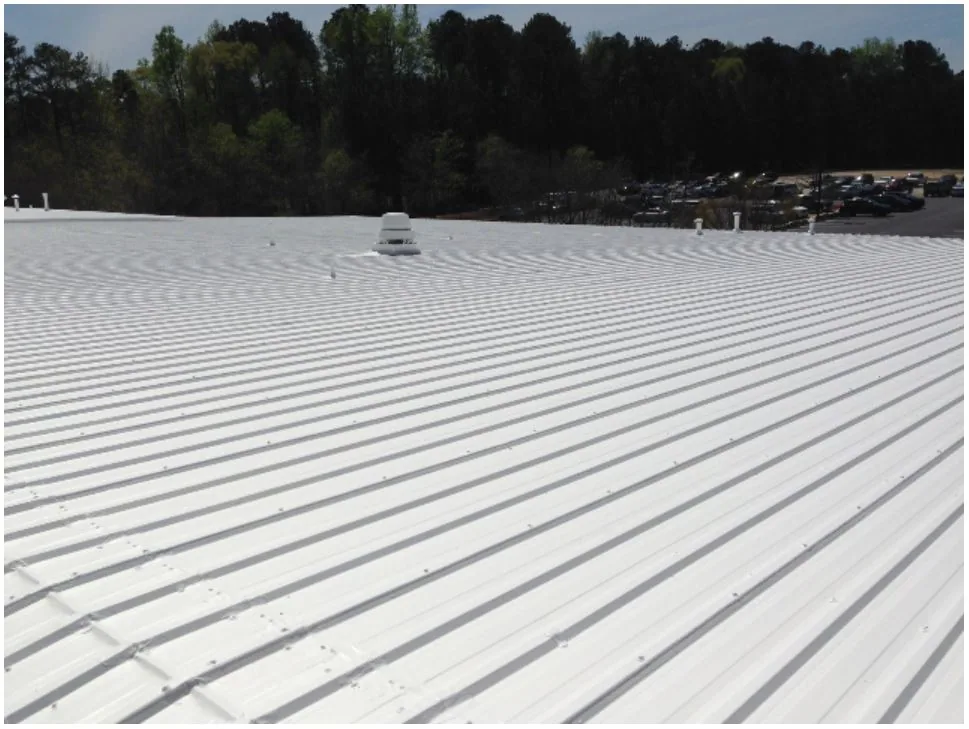
Compatibility governs the repair material. A new patch has to adhere to a clean, sound surface and accommodate the movement at that detail. Before recommending a recover, we determine whether existing layers are dry enough to remain, whether the deck and attachment can accept the additional assembly and whether edges can be raised with sound flashing geometry. A coating may be suitable where the membrane is compatible and the substrate remains serviceable. It cannot substitute for removing trapped moisture or correcting a failed drain.
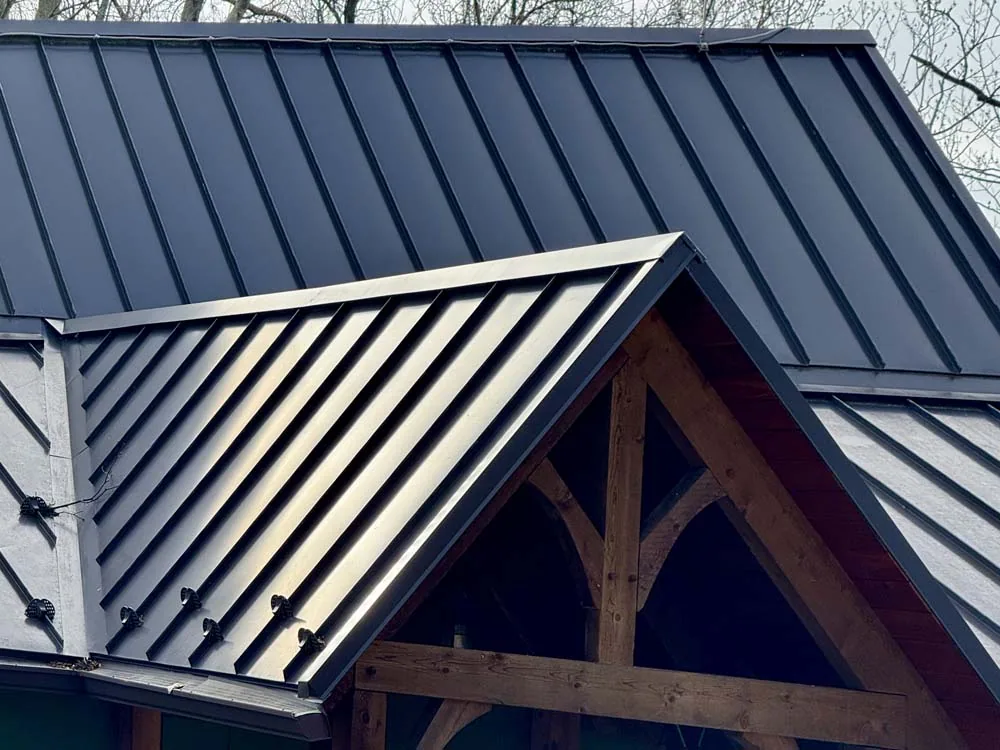
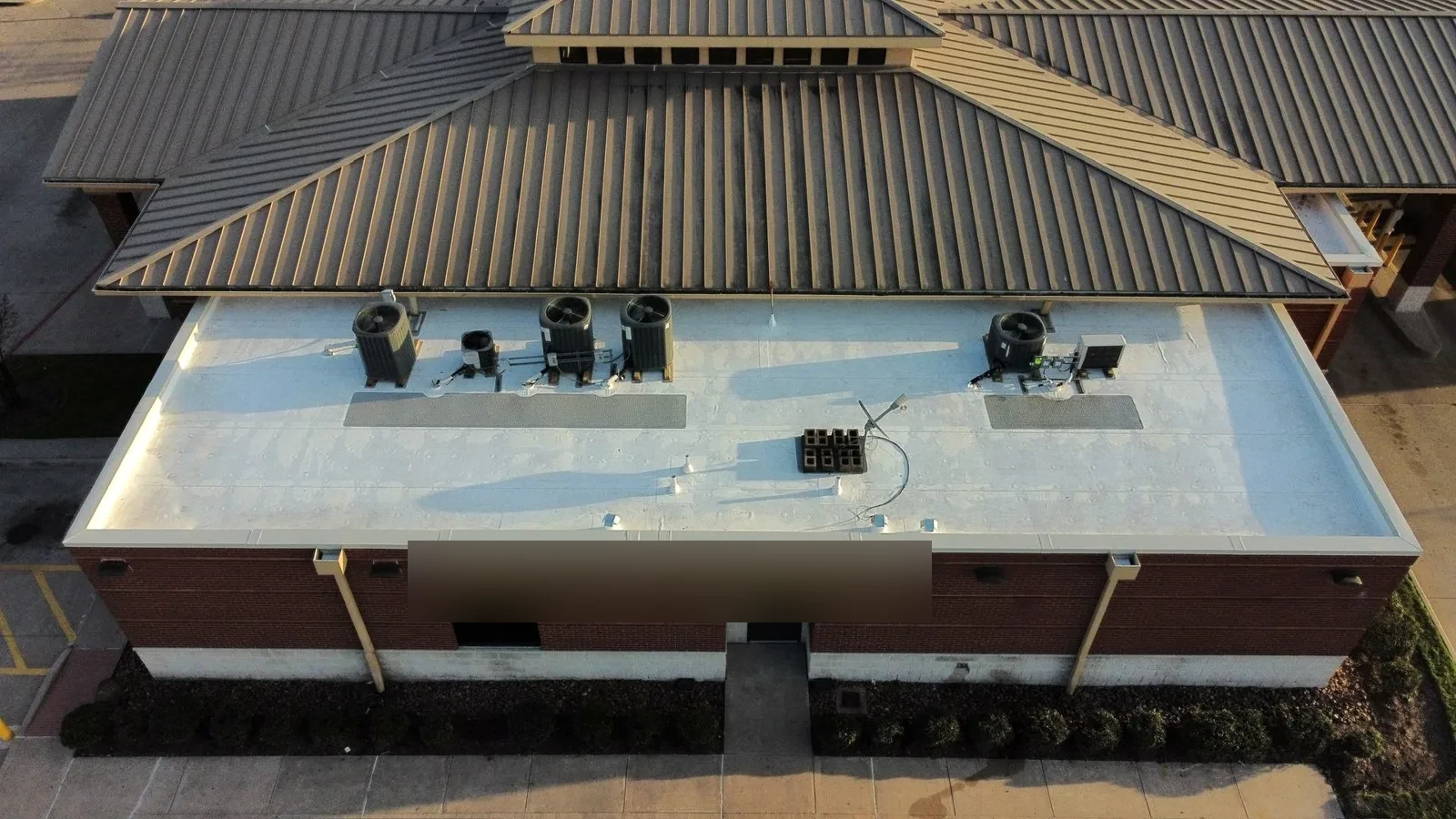
For a broader project, standing-seam metal and TPO membrane systems solve different design and connection needs. We compare attachment, slope, perimeter details, penetrations and future access against the building’s use. The result should explain why one option suits the roof examined, rather than turn Arlington’s investment priorities into a claim that every building needs the same system.
What belongs in a replacement or recovery proposal?
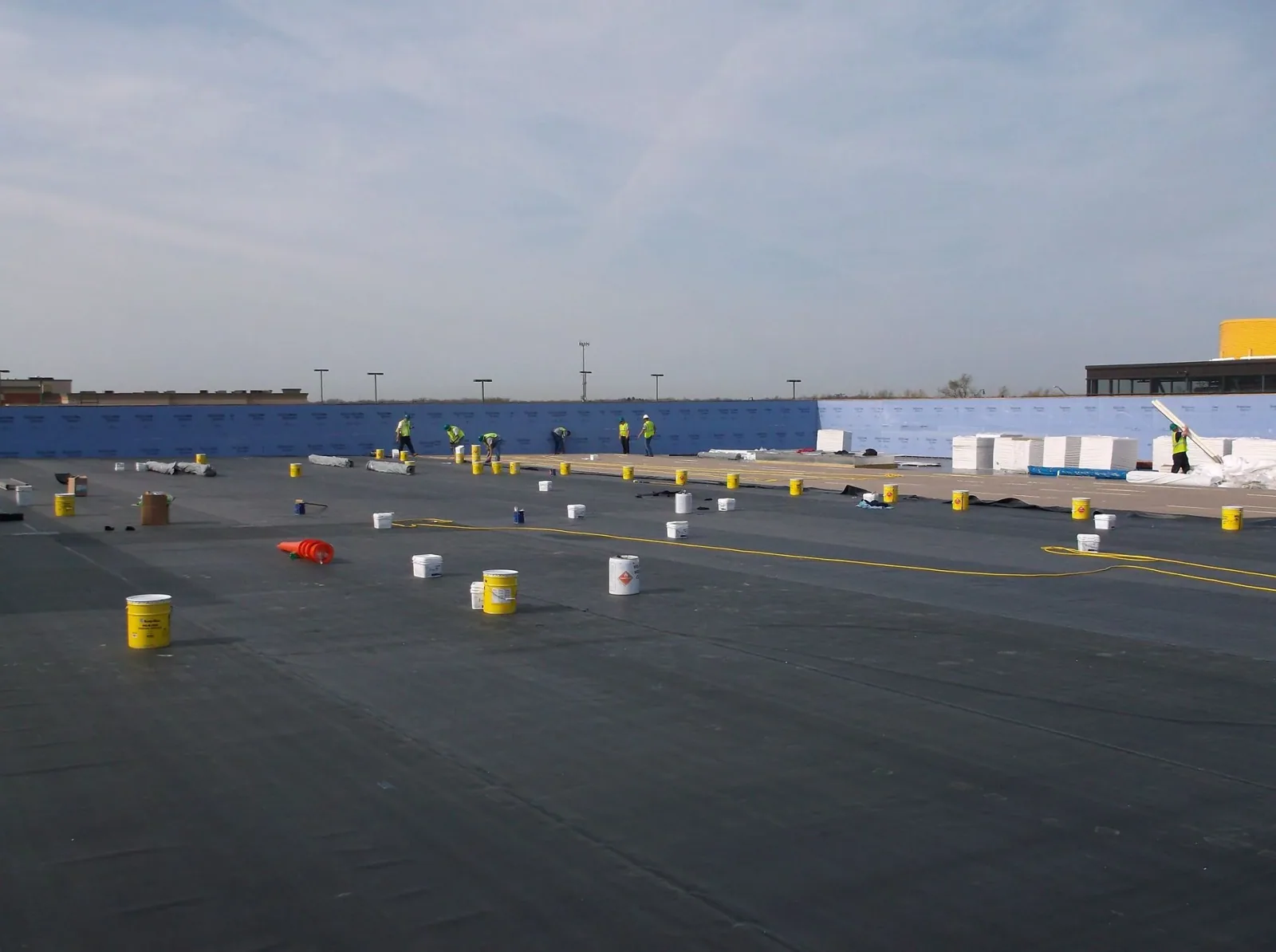
The scope should identify the roof areas, removal limits, insulation approach, attachment and flashing details. If quantities may change after opening, we explain the condition that would trigger added work. The owner can then compare repair, sectional replacement and full removal on a consistent basis. Drainage corrections, equipment transitions and safe temporary tie-ins should be described separately from the new field membrane, because each affects timing and the amount of roof left exposed.
Arlington notes highway, rail and air access as support for logistics and distribution operations. That is regional transportation context, not proof that a particular property can receive material through a particular gate or roadway. We confirm actual loading, staging and roof access with the manager. For capital planning, a roof investment comparison can show the maintenance burden and construction constraints tied to each option. A photographic condition record keeps recommendations connected to the roof areas that support them.
Permits and adopted requirements must be confirmed with Arlington for work there. Irving’s code provisions do not automatically govern a property across the Metroplex. We keep submittals and approvals with the correct jurisdiction and identify any owner or property-management review that applies to the project.
How should urgent work be handled around an operating site?
Active water entry needs a safe first response, an interior protection plan and a roof examination as conditions permit. Around-the-clock emergency response is available every day, including holidays. We separate temporary control from the permanent repair in the written scope, then document the materials and details affected. This helps the property team coordinate production, tenants and any insurance documentation without treating a temporary cover as a completed repair.
After the immediate issue is contained, maintenance can track drains, seams, edge metal and rooftop penetrations before their condition creates another interruption. The maintenance visit records findings against locations and prior work, making it easier to see whether a repair remains stable. Owners managing buildings in Arlington and Valley Ranch can compare the records while keeping each roof’s attachment, use and concealed condition distinct. For an additional nearby location, the Grand Prairie service area has its own municipal setting and property requirements.
Commercial Roofing Questions
Can production continue during roof replacement?
The work may be phased around operating areas if the building layout, weather exposure and daily process allow a safe sequence. We identify which bays can be opened, how they will be protected and when temporary closures are required. Equipment and interior sensitivity can change the order. The site team should confirm the operational limits before the scope fixes a schedule.
How do hail or wind reports affect the roof scope?
A regional report directs attention but does not establish the damage at a specific roof. We inspect the field, edges, seams and penetrations, then document conditions that are consistent with the reported event. The repair area follows the observed failure and suitable material boundary. If the connection or concealed layer is uncertain, we explain what confirmation is needed before expanding the work.
When can an existing roof be recovered instead of removed?
A recover can be considered after we confirm the existing layers are suitable to remain, the deck and attachment can support the assembly and the transitions can be rebuilt. Moisture, deterioration, excessive movement or unresolved drainage can change that choice. We document the examination and state what concealed condition could alter the removal limit.
What information helps define a roofing inspection?
Provide leak locations and timing, prior repair records, roof access rules, equipment or process restrictions and any drawings available. We use those details to focus the visit and agree on the access required. Records assist the examination but do not replace checking the current roof surface and connections. The report will identify the observations and any further test that matters to the decision.
Ready to review the roof scope?
Request a Roof Assessment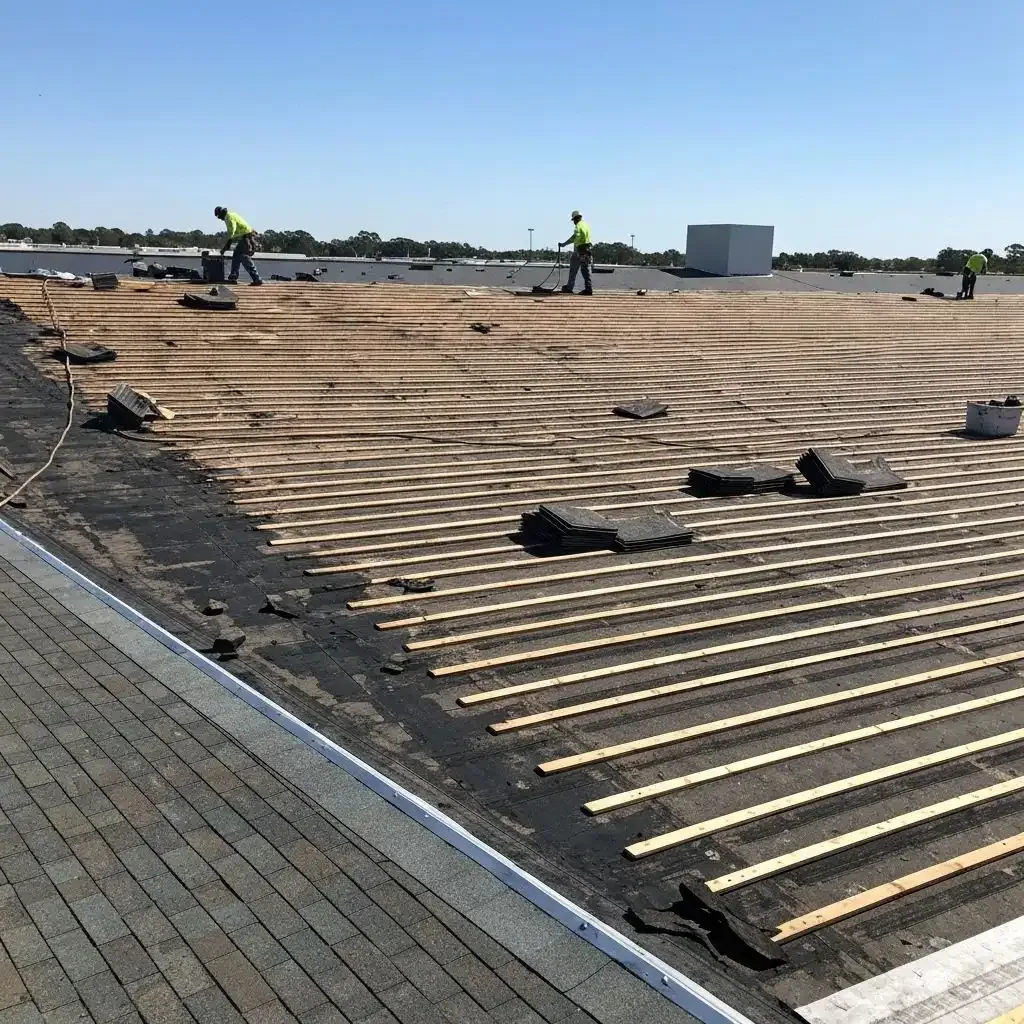
Commercial Roof Flashing Failure Repair
See scope, options and what to expect on the roof.