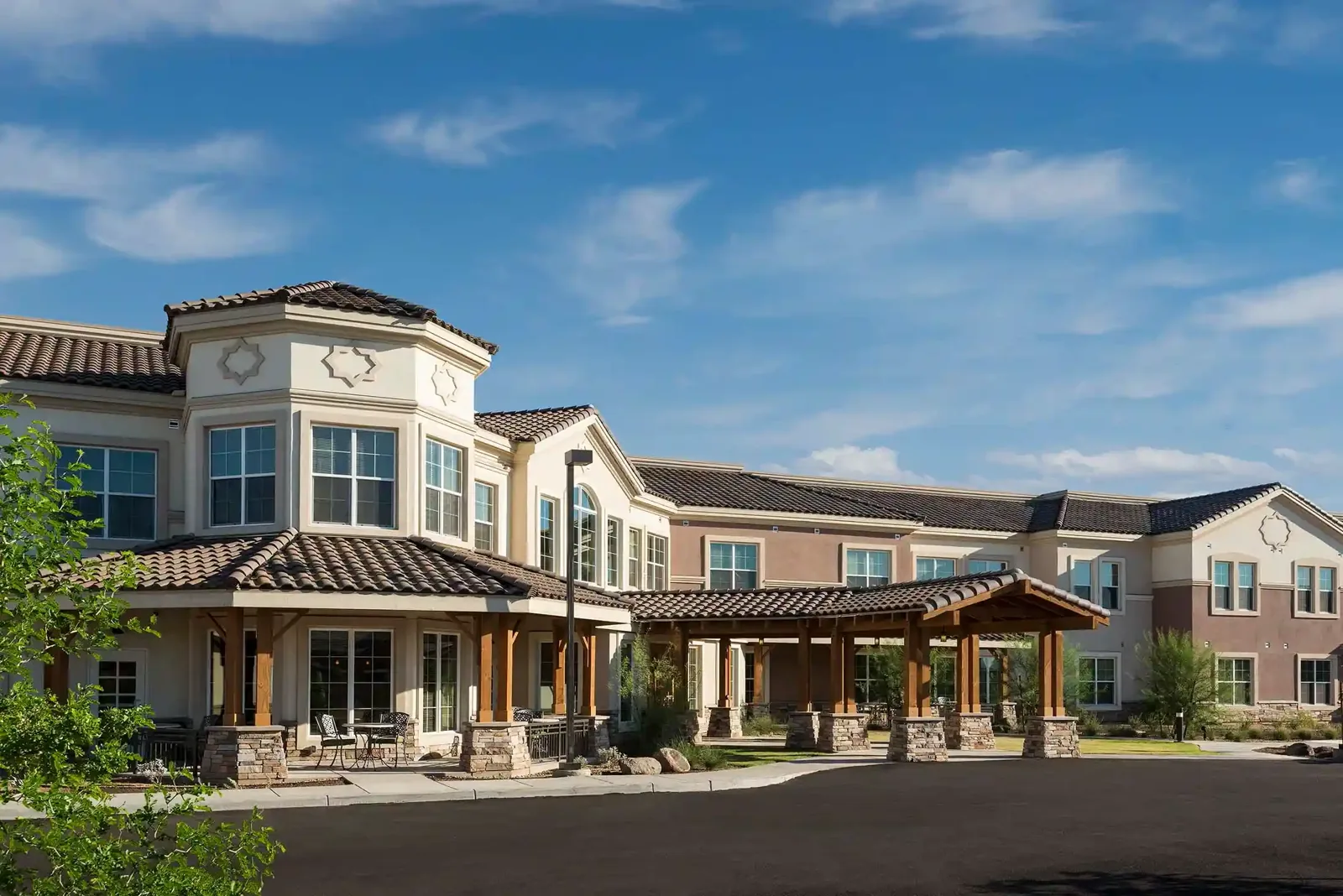
Equipment curbs and roof penetrations can concentrate thermal movement above clinical areas that need protection from even a contained water entry. Hospital roofing in Irving, TX, begins with that relationship between the material connection and the operation below. Commercial Roofing Irving examines the assembly and defines reconstruction with the facility's protection, access and equipment requirements considered.
Healthcare is part of Irving's employer economy, and nearby Flower Mound's major-employer inventory includes hospital and rehabilitation uses. Bedford also has medical providers in its business base. Roof work supporting those healthcare operations needs equipment access and protection coordinated with the facility before a removal phase is selected. We investigate the actual building, with hot Dallas/Fort Worth summers and rainfall exposure considered through their effects on attachment, moisture and drainage rather than as a general condition rating.
Which clinical areas require specific construction controls?
The facility identifies clinical sensitivity and operating procedures for areas below the proposed work, while the roof investigation establishes removal depth and exposure. Dust, water and noise concerns depend on deck construction and the work method. We coordinate the appropriate protection and access requirements with facility personnel before selecting phases. A hospital use does not create one universal roofing sequence across patient rooms, service areas and equipment spaces.
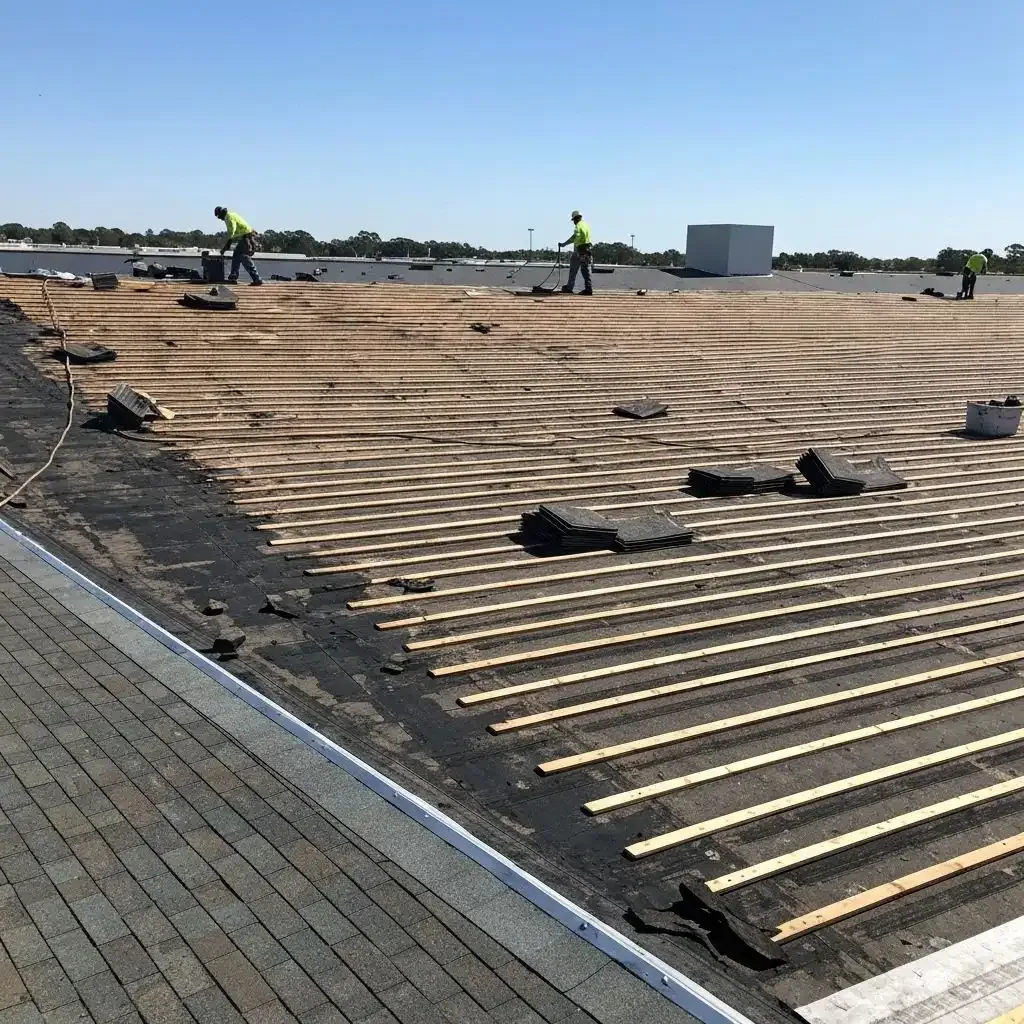
Phased healthcare reroofing relates those interior requirements to practical roof closure. The opening must allow time for preparation, concealed substrate correction and a suitable completed connection. Where removal exposes a condition that changes the scope, the effect on protection and access is communicated before expanding the area. Temporary closure also accounts for runoff from adjoining sections, so a phased project does not direct water into the active roof opening.
How are ventilation and cooling connections reached?
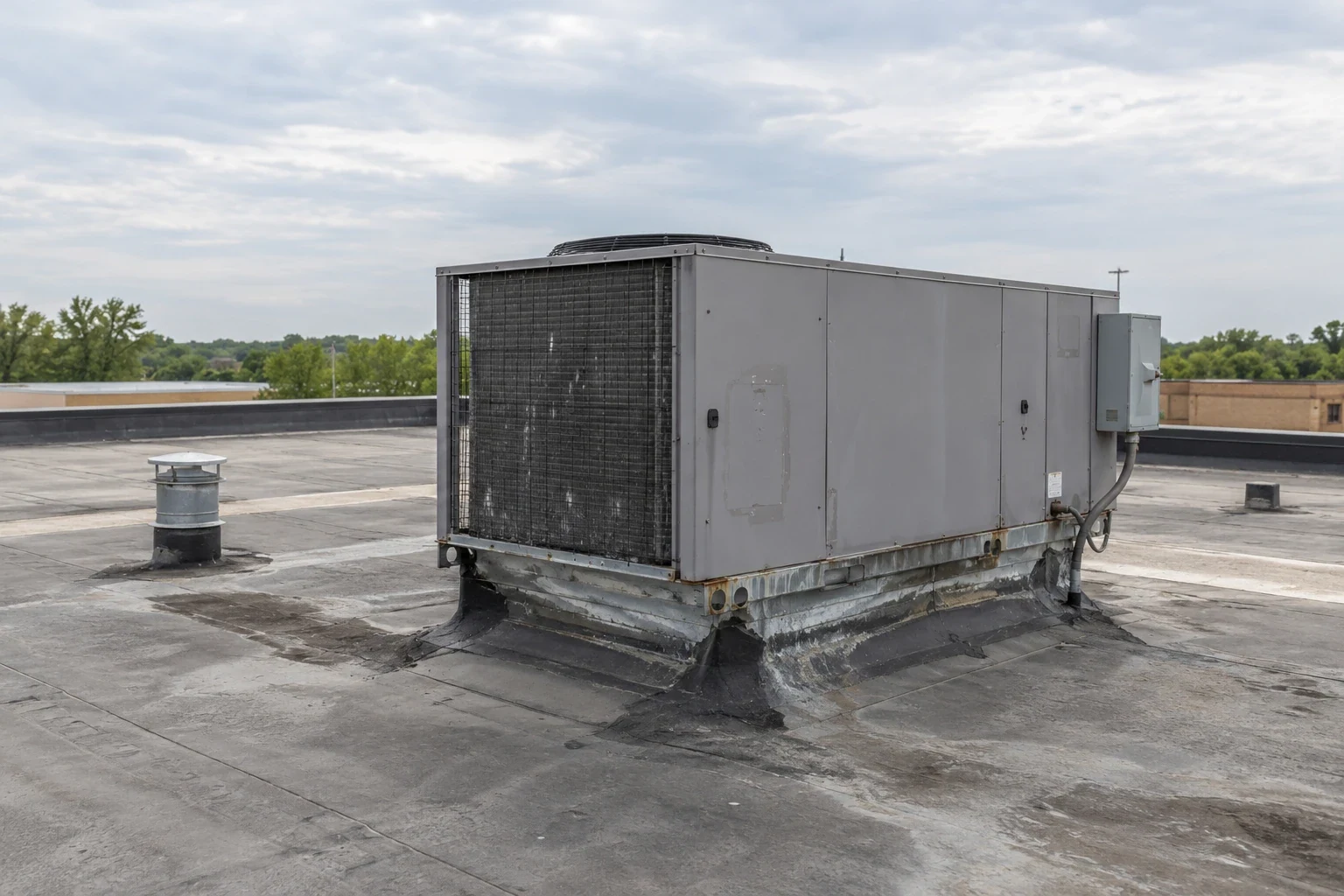
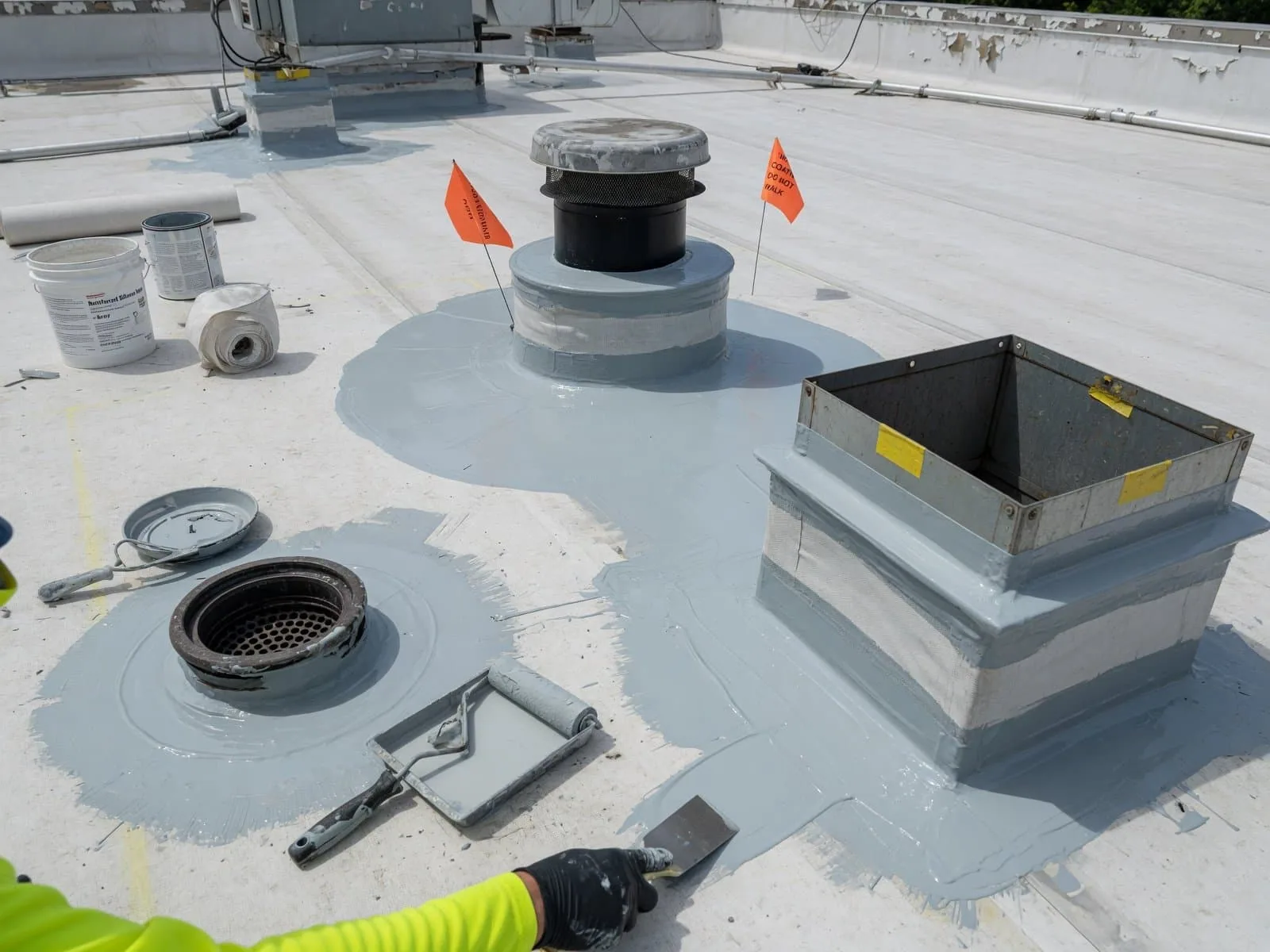
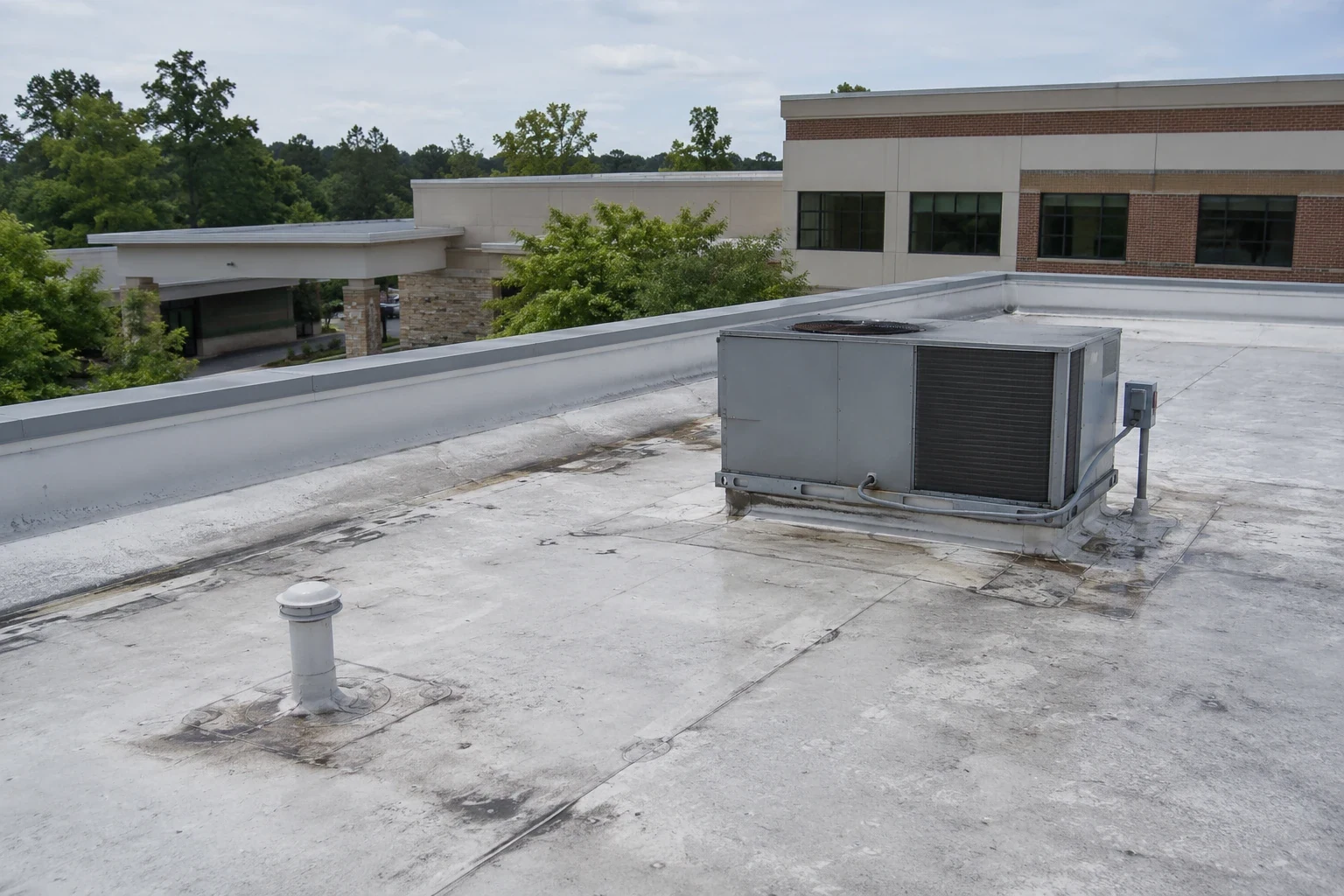
Roof-mounted equipment can conceal curb terminations or restrict corner access, requiring coordination beyond an ordinary surface patch. We examine the interface and determine whether lifting, disconnection or a planned operating window is needed with the appropriate service personnel. Healthcare equipment curb assessment identifies the roofing preparation and closure work separately from mechanical activity. The permanent repair reaches the connection that failed, including concealed parts that cannot be reconstructed from the visible base alone.
Vibration, pipe movement and rigid supports can contribute strain at flashing, while later service additions can interrupt drainage. We examine those relationships before selecting compatible repair materials. Structural or mechanical review is coordinated where the correction affects support or equipment function. The scope explains the access and interfaces needed so the available window covers reconstruction rather than only the temporary movement of equipment above an unfinished detail.
Does the leak have a clear entry mechanism?
Clinical operations can involve several building systems capable of producing water, so rainfall timing and equipment observations are compared before assigning a roof source. Healthcare leak-path investigation relates interior evidence to seams, curbs and runoff routes. Access to affected areas is coordinated through the facility's procedures, with electrical or unstable-finish hazards addressed by the appropriate personnel. The examination distinguishes an actual roof opening from another water mechanism requiring a different correction.
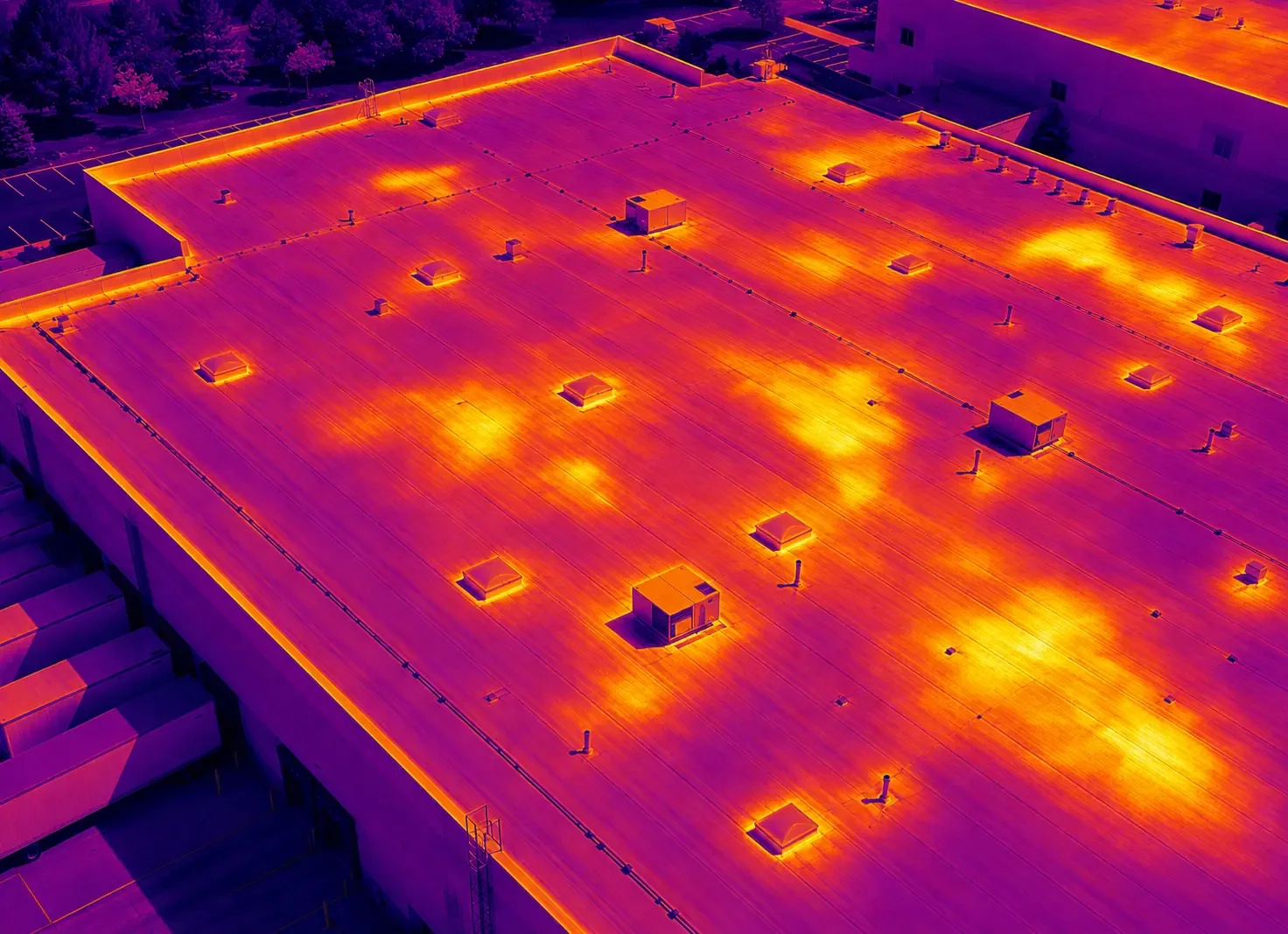
Wet insulation can extend beyond the entry and needs its own boundary assessment. An infrared moisture survey and direct checks can help locate suspect areas where conditions support useful interpretation. Thermal patterns are confirmed before removal is proposed. Operating temperature differences or assembly changes can also affect the image, so the investigation considers those features instead of translating every contrast into the same construction scope.
Can one roof section be treated independently?
Drainage, layer continuity and roof transitions determine whether sectional reconstruction has a suitable boundary. The building's clinical divisions may not match independent roof assemblies. We examine whether runoff or concealed wet layers cross the proposed division, then identify how the new work will connect to retained material. A contained repair needs sound surrounding layers and access to rebuild its edges without leaving an unsupported or strained transition.
Related uses such as medical offices and senior living properties can have different occupancy and equipment requirements even when some roof mechanisms are similar. We establish the actual operation before planning protection or assigning work priorities. The roof findings remain specific to the examined assembly, including deck, insulation, covering and details that may require different treatment within one facility.
Which reconstruction option addresses the damaged layers?
A suitable retained assembly may support contained repair or restoration, while connected wetting or unstable attachment can shift the comparison toward replacement. We describe which finding changes that recommendation and separate covering work from insulation, substrate and equipment-detail correction. A PVC roof assembly option requires its own compatible layers and welded transitions. Another system is compared by the same construction needs rather than selected solely because the property provides healthcare.
For Flower Mound healthcare properties, hospital and rehabilitation operations make protected patient access and coordinated service windows important questions for the manager. Cost follows investigation, protection, access, removal and the number of complex details. The construction window must suit material preparation and closure as well as clinical coordination. Completed areas are examined at seams, penetrations and outlets before ordinary equipment service resumes above them.
Maintenance preserves drainage and access to repaired connections, with later equipment work coordinated where it changes support or penetrations. The facility receives located findings describing completed work and remaining assembly questions. Those details support future care without implying that every roof section has the same remaining condition or that a surface correction eliminated concealed moisture outside the examined boundary.
Discharge from gutters or scuppers is also considered where it affects entrances, lower roofs or service routes. A repaired upper connection should direct water into a suitable receiving path. We identify downstream obstructions and access needs where they affect the construction scope, keeping runoff control connected to the protection of occupied areas below.
That downstream check is particularly useful where several roof levels connect and one repaired section drains toward retained roofing.
Commercial Roofing Questions
Can patient areas stay in use during roof removal?
The facility's operating and protection requirements must be compared with the proposed opening and removal method. Some areas may remain usable with suitable controls, while other activities require restriction or another window. We establish those arrangements before work begins and communicate changes from concealed findings. The sequence preserves roof closure and safety requirements rather than promising uninterrupted use everywhere.
Will a small flashing repair need clinical coordination?
Its location and access can make coordination necessary even when the material area is small. Equipment lifting, noise, odors or exposure through the deck may affect occupied areas. We examine those conditions with facility personnel before scheduling. The repair scope includes the actual interface and protection needed rather than using the visible patch size as the only measure of disruption.
Can the roof assessment distinguish water from mechanical systems?
Weather and operating timing help guide that investigation, with interior and roof observations compared where access permits. Further service-system examination may be needed for condensation or equipment discharge. We identify the roof findings and unresolved mechanism before selecting permanent reconstruction. That avoids applying a roofing patch to an unexplained water source that needs another correction.
What makes a roof phase unsuitable for independent replacement?
Shared drainage, connected wet layers or an unsuitable transition can require a revised boundary. We examine those relationships before defining removal. A department or room division may be useful for operations but not create a dependable roof connection. The phase is selected where retained and new materials can meet continuously, with suitable protection and a workable runoff path throughout the transition.
Ready to review the roof scope?
Request a Roof Assessment