Shade from a taller academic building can leave one roof section cooler while an adjoining field expands under summer sun, placing strain at their shared transition. College and university roofing in Irving, TX, examines those connections before separate roof areas are assigned the same repair. Commercial Roofing Irving relates material condition, equipment exposure and concealed moisture to the actual building functions below.
Las Colinas includes educational uses within a mixed commercial and residential setting, and Valley Ranch has multifamily and commercial development. Roof work in a mixed-use educational setting needs material staging and circulation reviewed alongside the protection of the particular occupied building. We establish the actual academic, housing or service operation on the project, considering regional summer heating and the wetter seasons across Dallas/Fort Worth through the assembly's material response.
Which buildings need a separate assembly comparison?
Teaching rooms, laboratories, offices and housing can create different equipment and indoor conditions. Their roofs may also have different layers or repair histories even when the visible covering looks similar. We identify those differences before grouping work under one material recommendation. A moisture finding or attachment issue in one section is related to its actual construction rather than transferred across every building in the program.
School-type teaching spaces can need another access arrangement from multifamily housing, particularly where residents remain present outside ordinary teaching hours. We establish those operating requirements with the manager and compare them with the roofing activity. The work scope preserves the distinction between condition findings and scheduling needs, allowing each area to receive suitable materials without assuming one occupancy plan fits every building.
What reaches the covering near service and laboratory equipment?
Exhaust, heat and traffic around equipment can create localized exposure that differs from the open field. We identify the actual discharge and compare it with the selected roof material's requirements, coordinating equipment correction where recurring contamination is affecting the covering. A laboratory use alone does not establish the substance or concentration reaching the roof. The assessment follows what is present and the condition of the material beneath it.
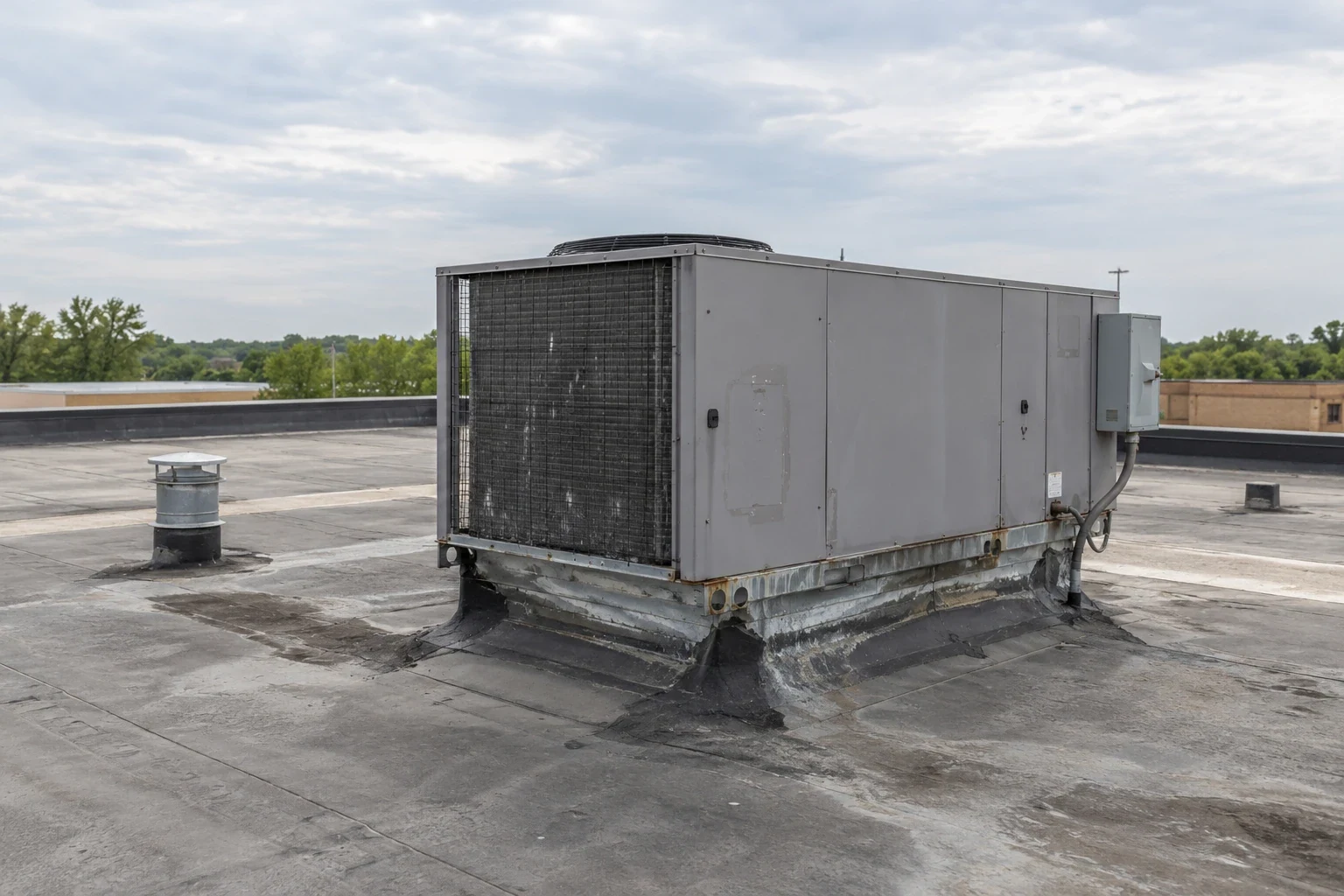
Academic equipment curb coordination examines support, vibration and access to concealed flashing. A unit may need lifting or service disconnection to rebuild the upper termination correctly. We identify that work before the schedule is settled, including the preparation and closure needed after equipment access is gained. Repairing only the visible lower edge would leave an inaccessible defect unchanged if the failure is beneath the unit.
How do different roof heights meet without concentrating strain?
Transitions between heights, structural divisions and rigid parapets need details appropriate to their intended movement. We examine support and fastening where a split or displaced connection appears, then determine whether the repair needs to reconstruct the transition. A patch that bridges a joint designed to move can shift the strain into adjacent sheet material. The correction preserves the function of the joint while restoring continuous water shedding.
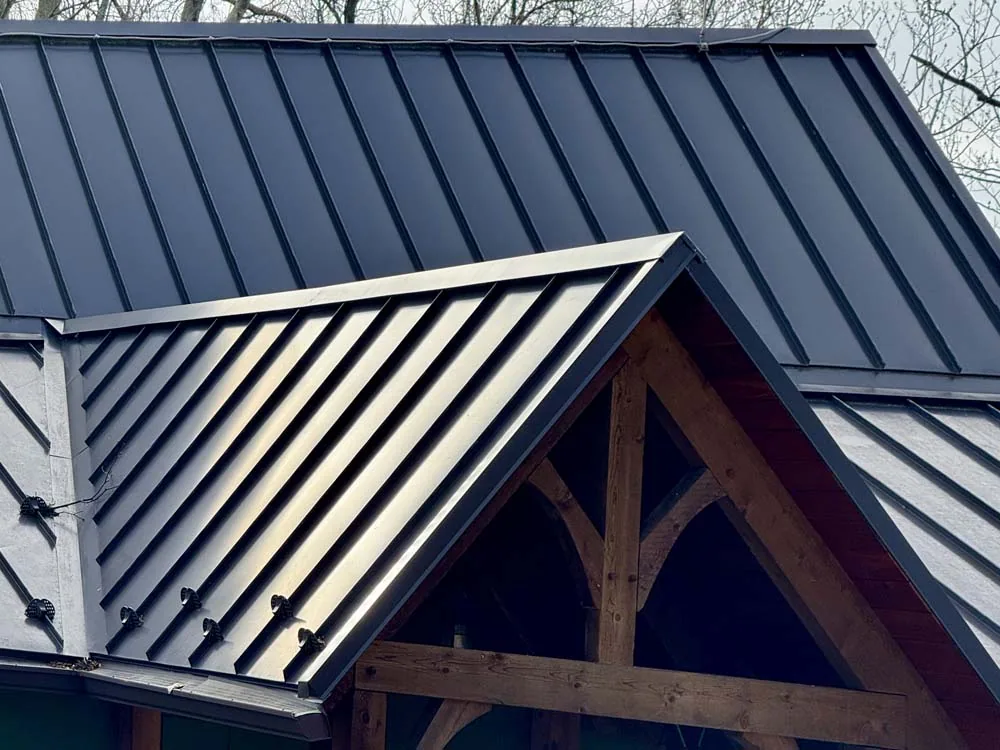
With standing seam roof sections, panel movement and clip arrangements require a different assessment from TPO membrane fields. We identify the installed system before selecting compatible details. Joined roof areas may need a designed transition between materials, including suitable separation and support. The appearance of a shared edge is not enough to establish how the layers and structural connections meet beneath it.
Where should concealed-layer checks be concentrated?
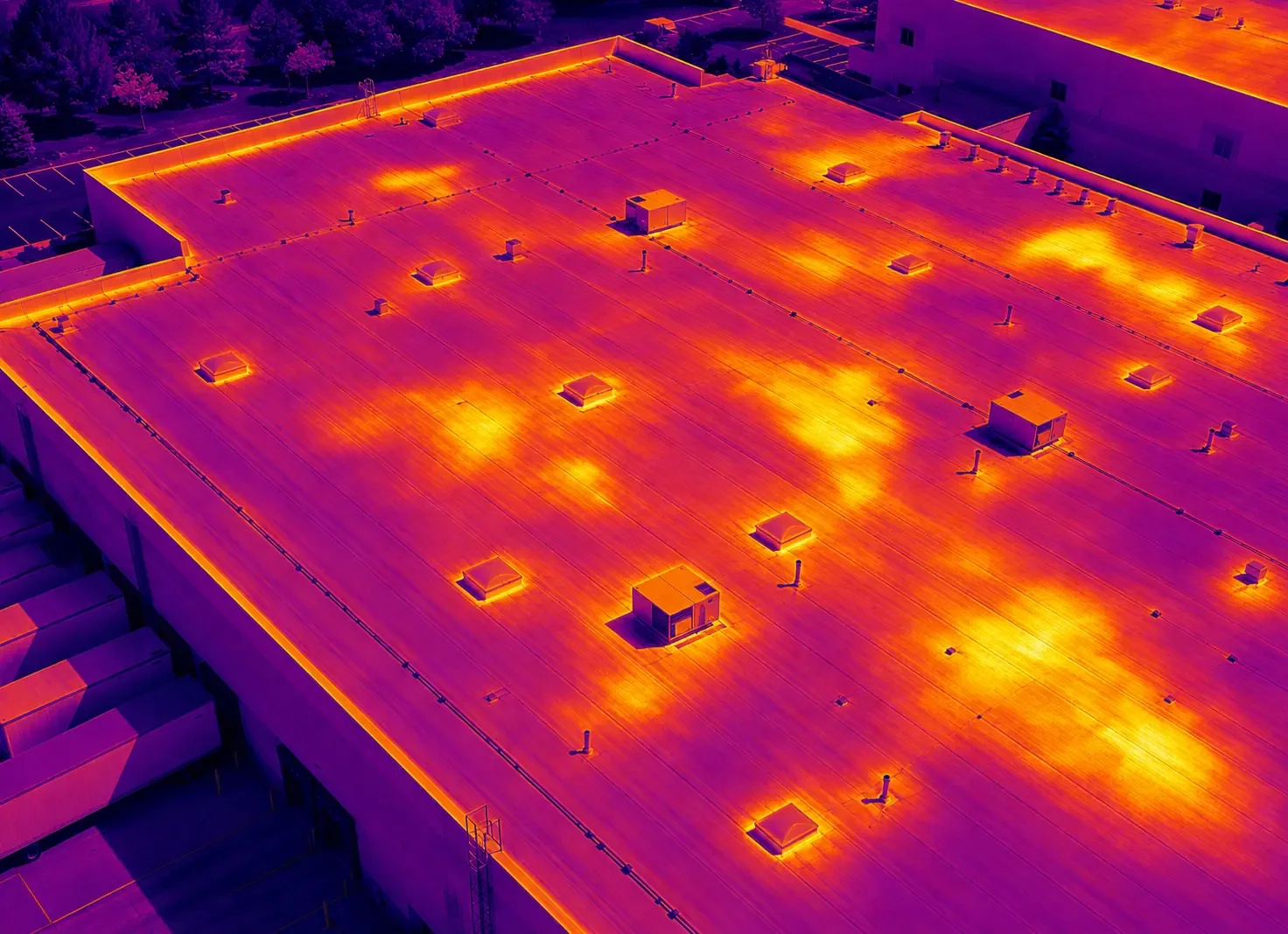
Leak history, roof slope and assembly changes help select examination locations. An infrared investigation with material confirmation may help locate suspect areas under suitable conditions, while direct openings establish the actual layer condition. Interior temperature differences and equipment heat can affect the thermal pattern, so readings are interpreted with those features in mind. Removal limits follow confirmed findings rather than an assumption that every anomalous area is wet.
Rain entry is considered alongside condensation and air leakage where indoor operations could contribute another wetting mechanism. We coordinate further building-system evaluation when needed and separate that question from the visible membrane repair. Wet insulation or unstable support is removed and rebuilt where it cannot remain useful. The boundary connects to suitable retained material, with the thickness and drainage relationship restored before the covering is closed.
What needs to fit within the chosen academic work window?
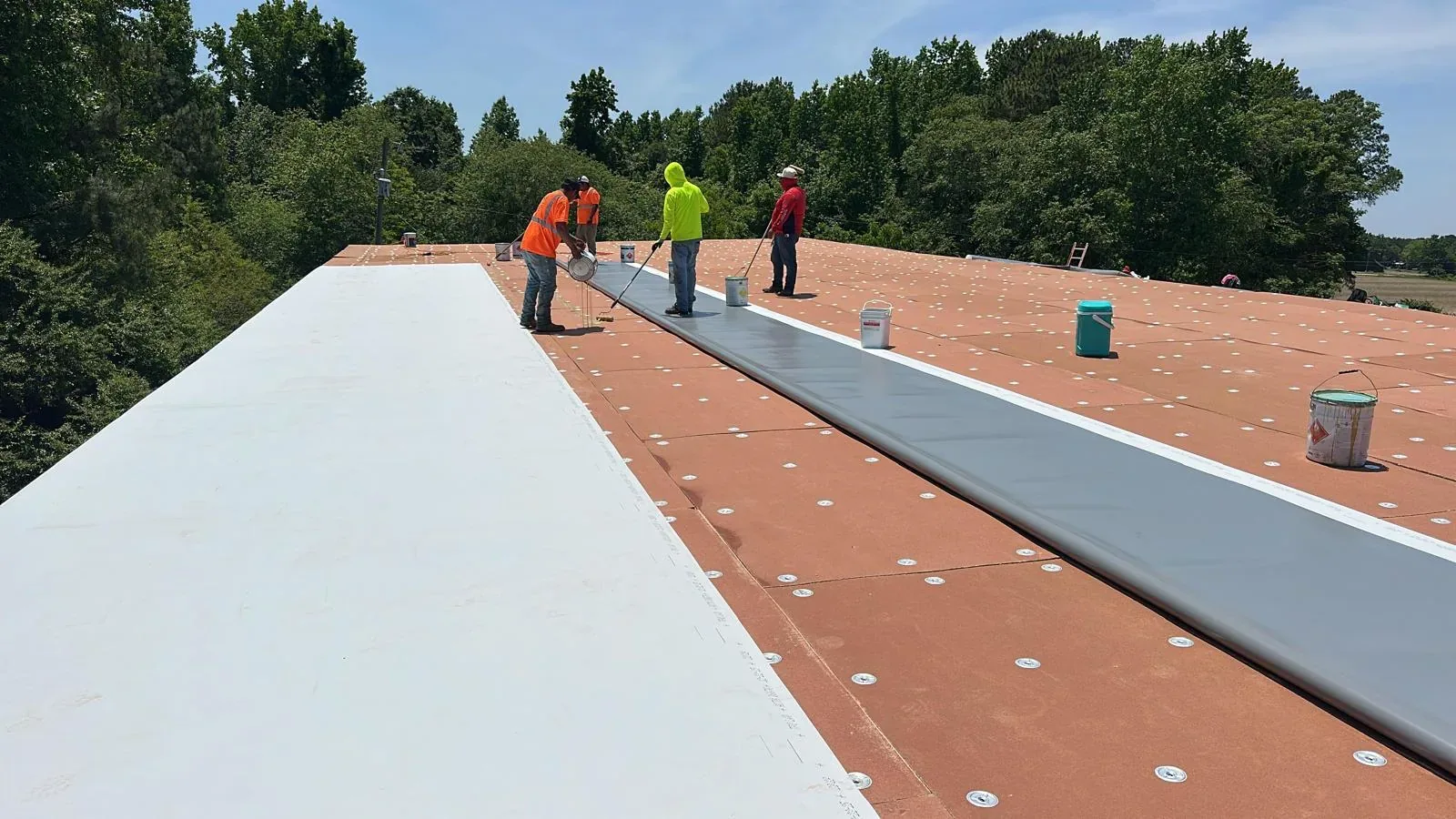
A break in teaching activity can help coordination, but removal depth, concealed repairs and application conditions determine the construction time needed. We establish practical opening limits and temporary protection before choosing phases. Academic reroofing sequencing also considers equipment windows and occupied circulation that may continue when classrooms are quiet. The schedule includes preparation and suitable closure rather than only a target date for removing the old sheet.
For Las Colinas educational properties, the mixed-use district provides local context while the project's access and operating arrangements are established directly. Cost follows investigation, removal, substrate work, insulation and the complexity of material transitions. We explain which findings call for contained repair and which support sectional or broader replacement. The owner can then compare the assembly options with the actual window and protection needs.
Completed areas are examined at their connections and runoff paths before ordinary equipment service resumes. Maintenance preserves outlet access and the locations of reconstructed transitions. Later equipment additions or building alterations should include roofing coordination where they change support, penetrations or drainage. Located findings help a multi-building program keep those different assemblies identifiable rather than apply an unrelated repair method to a roof that only looks similar.
We also review service routes between roof levels where technicians could step across fragile flashing to reach equipment. Suitable access protection should preserve the transition and keep water paths clear. Those changes can be coordinated while an affected section is open, avoiding a reconstructed detail that remains exposed to the same repeated traffic that injured the previous assembly.
The access plan is reviewed again if a later service installation changes how that equipment can be reached.
Commercial Roofing Questions
Can several academic buildings share one roof repair specification?
The installed assemblies and exposures need comparison before a common method is selected. Different membrane types, layers or equipment conditions may require separate details even when some work can be coordinated. We identify those differences and the suitable repair interfaces. A program-wide scope should preserve the construction needs of each building rather than assume the visible surface establishes an identical roof.
Will a semester break remove the need for occupied-building protection?
Some teaching activity may pause while housing, equipment and other operations continue. We establish the actual use and access requirements with the manager before scheduling. Roof openings still need protection and suitable closure under the available weather conditions. The calendar window is useful coordination information, but it does not replace the assessment of the building and construction exposure.
Can equipment discharge change the membrane recommendation?
The actual substance and exposure need comparison with the selected product requirements. We examine local deterioration and coordinate service correction where repeated contamination is avoidable. Material choice also needs suitable substrate, attachment and details. A general laboratory or service label does not establish which covering is appropriate for every roof area or remove the need to investigate the discharge.
How do you prioritize work across different roof conditions?
We identify the mechanism and consequence behind each finding, separating active entries, unstable components and planned reconstruction needs. Shared drainage or concealed wet layers can affect those boundaries and are examined where relevant. The comparison describes what each repair or replacement phase would correct. That allows capital decisions to follow material condition and operational exposure rather than a single rating assigned across unlike buildings.
Ready to review the roof scope?
Request a Roof Assessment
Commercial Apartment and Multifamily Roofing
See scope, options and what to expect on the roof.