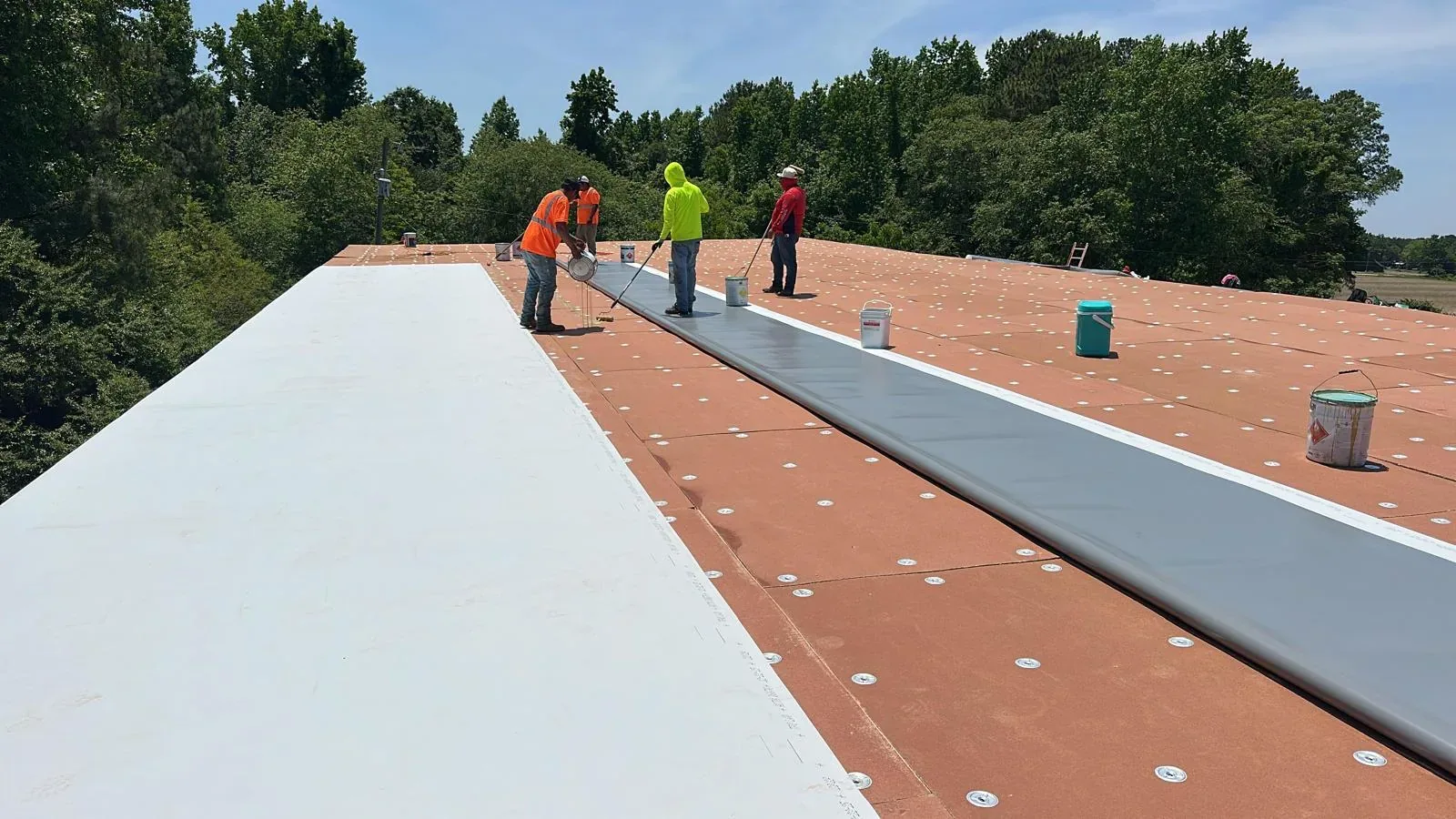
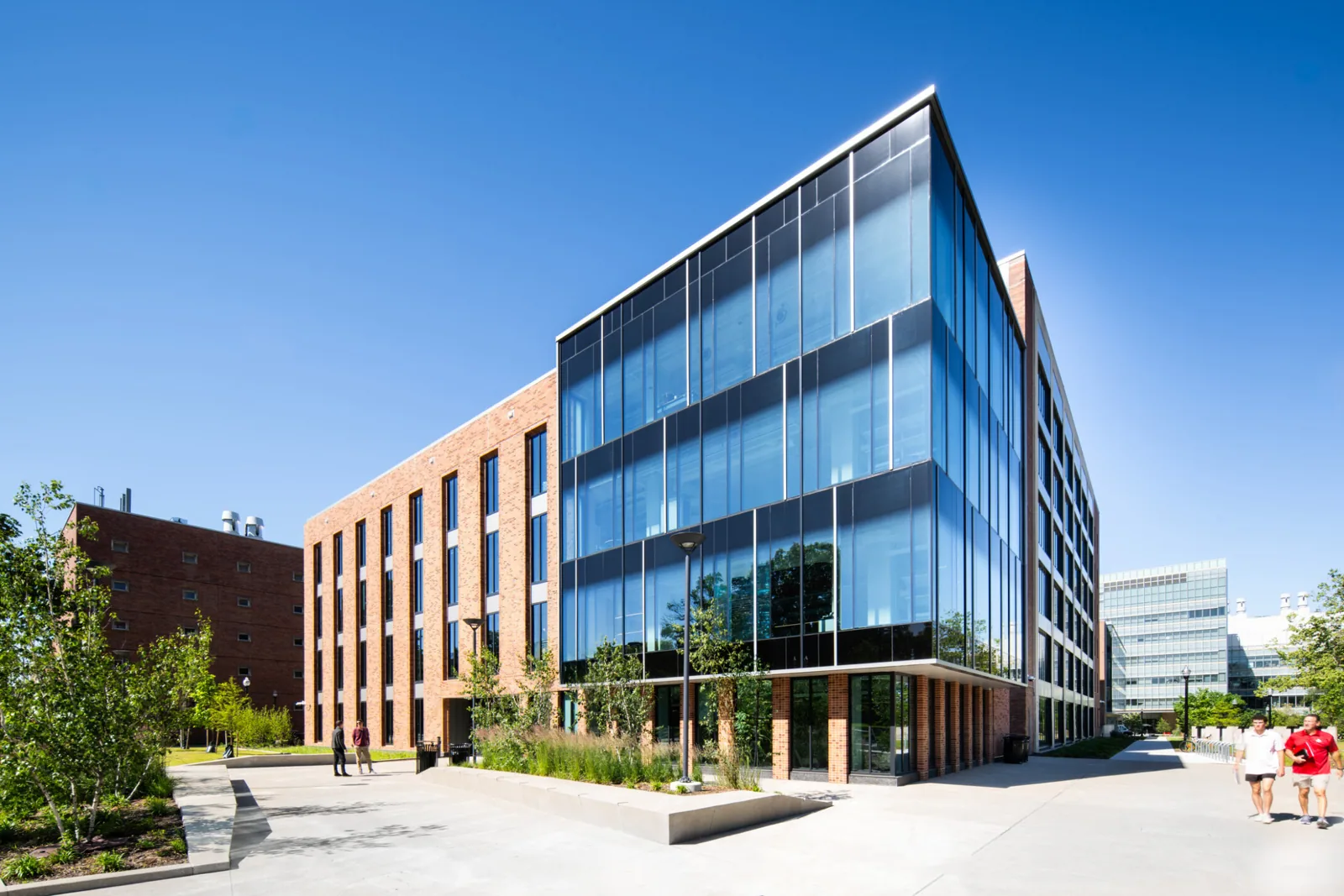
A roof transition between a classroom wing and a taller shared space can respond differently to summer heating on each side of the junction. School roofing in Irving, TX, examines that connection and its supporting layers before a recurring split receives another patch. Commercial Roofing Irving relates material condition to drainage and the occupied rooms below, then defines the repair or replacement sequence.
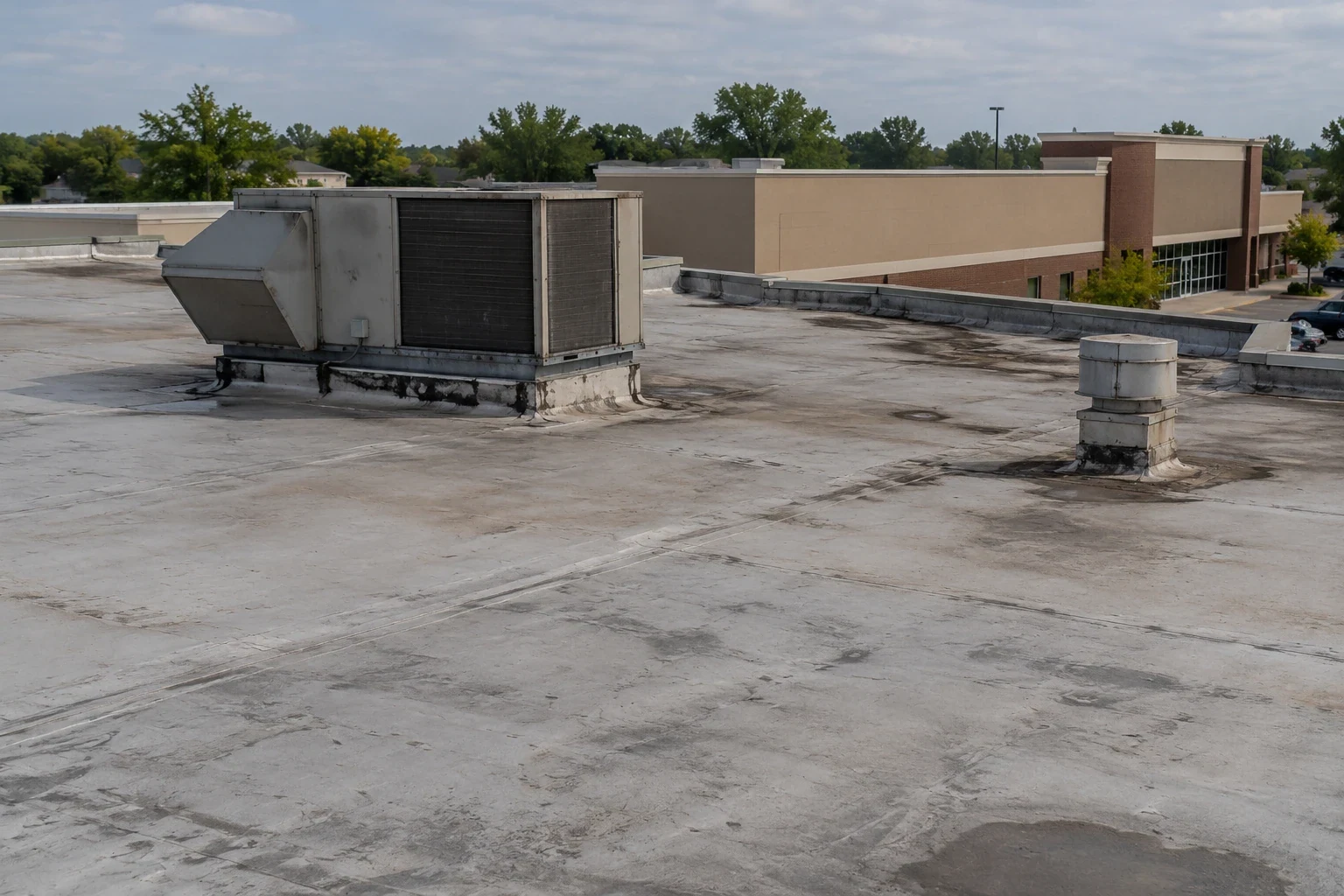
Las Colinas includes educational uses within its broader mix of commercial and residential development, while Valley Ranch has commercial and multifamily activity nearby. Planning roof work in that mixed-use setting includes material access and the student routes that must remain protected during each phase. Hot summers and wetter spring and fall periods across Dallas/Fort Worth make movement and runoff practical assessment questions, with the actual school layout and operating schedule established for the project.
How do adjoining roof sections connect?
Different roof heights and structural divisions can create transitions that need more attention than the open field. We examine movement joints, changes in plane and the fastening or support that connects each area. A repair should preserve intended movement while restoring water continuity. Joining two sections with a rigid patch can transfer strain into adjacent material if the original connection was meant to accommodate displacement.
School roof condition examination identifies those interfaces and any earlier alterations that changed the layer arrangement. A uniform surface color can conceal different insulation or deck construction between wings. We use suitable direct checks where that difference affects repair or retention. The proposed scope explains how reconstructed areas will meet usable retained material rather than treating each administrative room division as an independent roofing boundary.
Which occupied spaces change the protection needs?
Classrooms, kitchens, offices and activity spaces can require different access and interior protection during roof work. The school manager identifies room use and circulation requirements, while we assess the deck and removal method above them. Dust, noise and water exposure are considered for the actual activity. A small roof opening can still need careful coordination where the space beneath remains occupied or contains sensitive equipment.
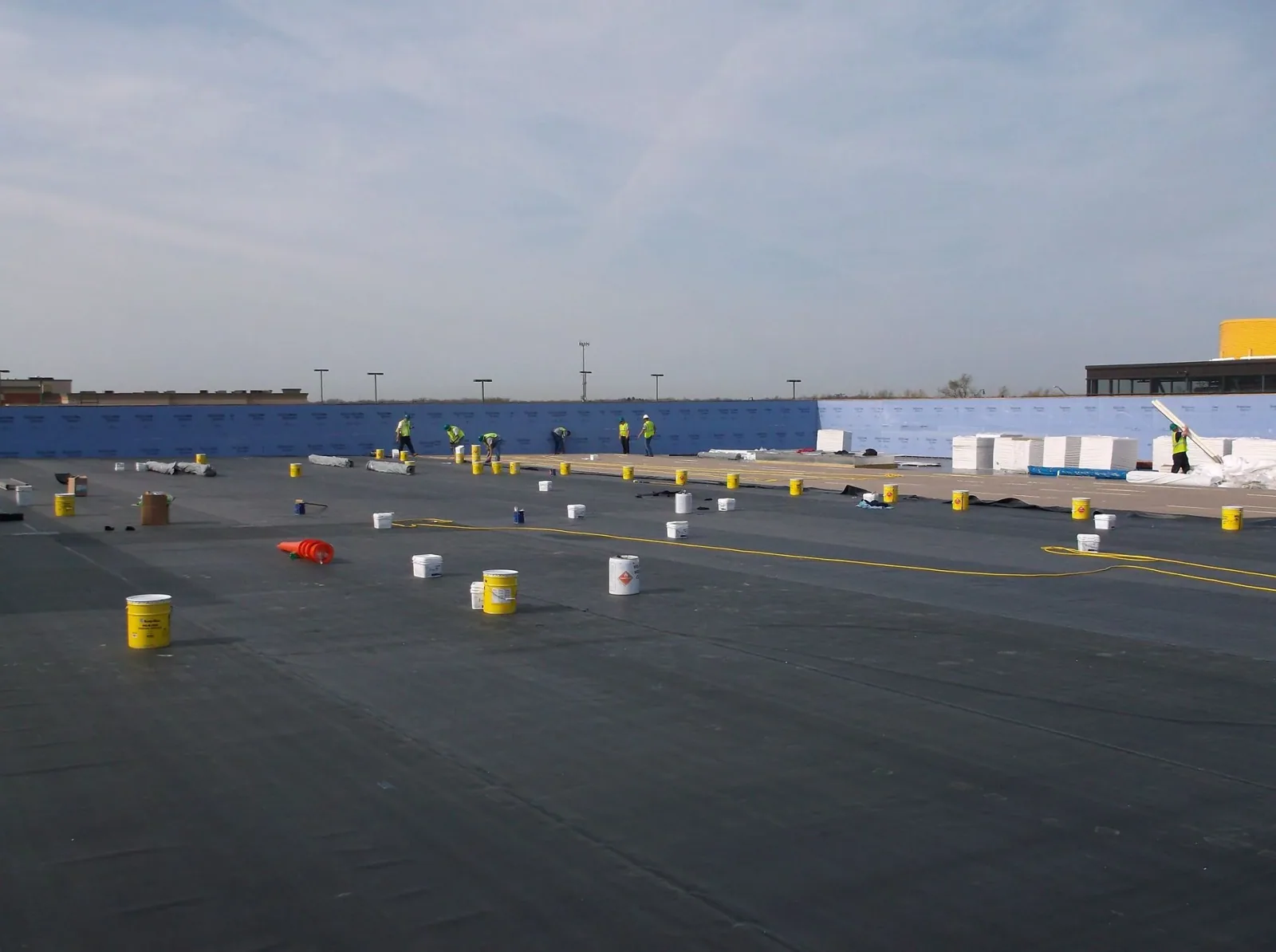
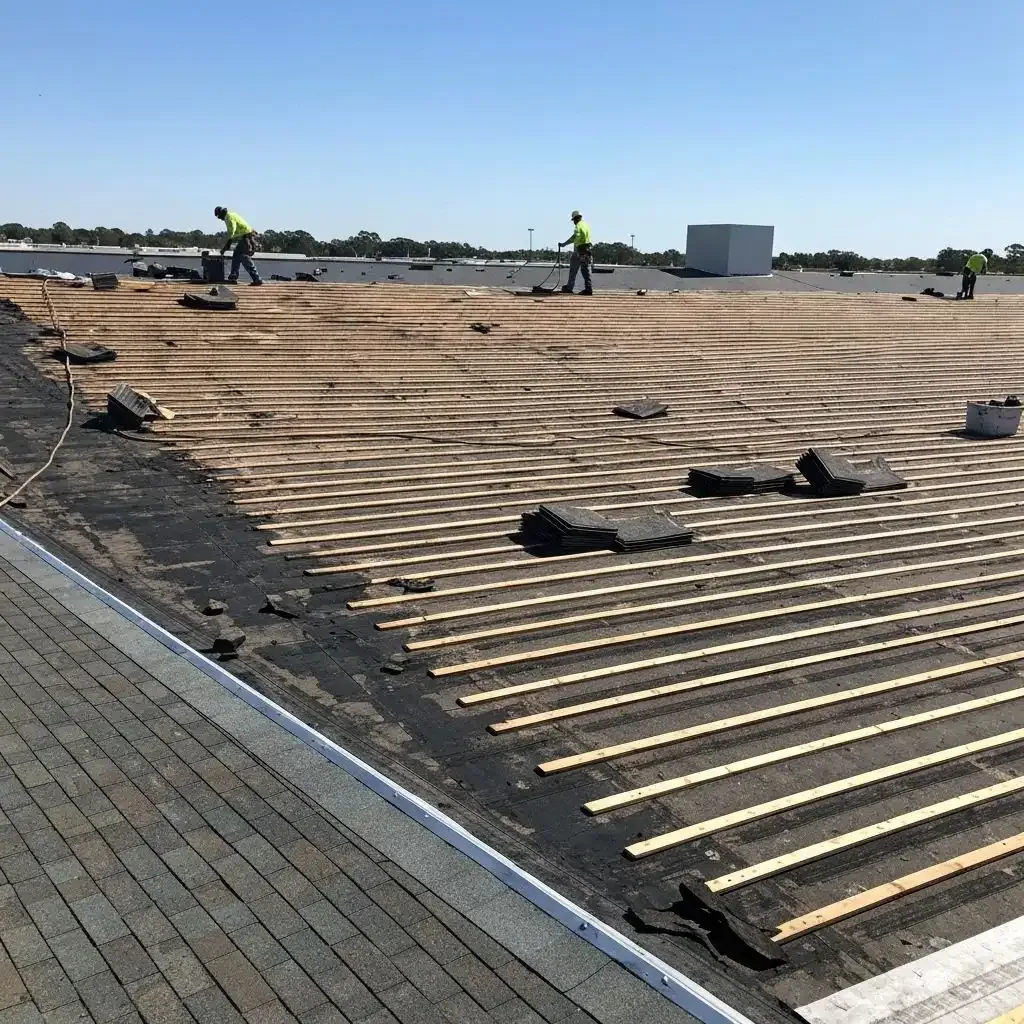
School reroofing phases account for those needs together with preparation and daily closure. A holiday or quiet period can offer a useful window, but it must accommodate hidden substrate repair and the material's application requirements. We establish which areas can be opened and protected before work begins. Changes found during removal are communicated with their effect on the next phase and the occupied routes below.
What does a classroom leak reveal about the assembly?
Interior water timing and location are compared with roof slope, penetrations and equipment before an entry point is selected. Classroom-area leak tracing distinguishes rainfall entry from another source where condensation or plumbing is plausible. Water may travel along concealed layers before appearing in a room, so the nearest visible seam is not automatically the repair location. We examine the connection and moisture distribution as related but distinct questions.
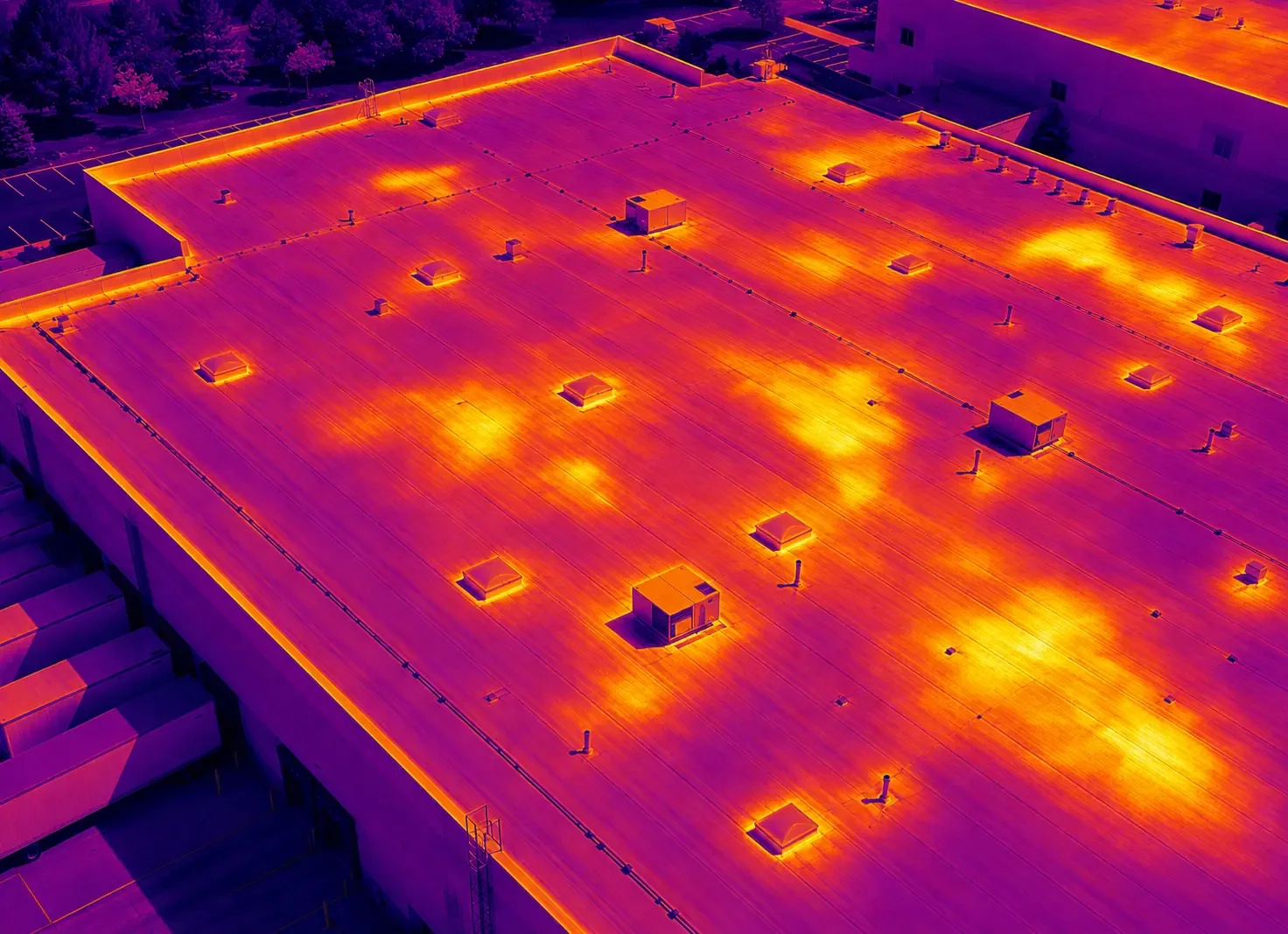
An infrared investigation with direct confirmation can help define suspect insulation when assembly suitability and the examination window provide useful contrast. Material confirmed as wet may need removal beyond the surface opening. The findings identify suitable support for the permanent correction and any remaining question at the boundary. We coordinate access and closure for those checks so investigation does not leave an avoidable exposure above rooms awaiting continued use.
Can water leave the field around curbs and raised sections?
Equipment curbs, service walkways and changes in roof height can interrupt runoff toward an outlet. We examine drainage marks and local elevations before recommending a cricket, tapered insulation or outlet repair. Debris at a drain requires clearing, while a depression caused by wet insulation needs assembly reconstruction. The correction follows the actual mechanism, with the transition to retained material supported and compatible with the covering.
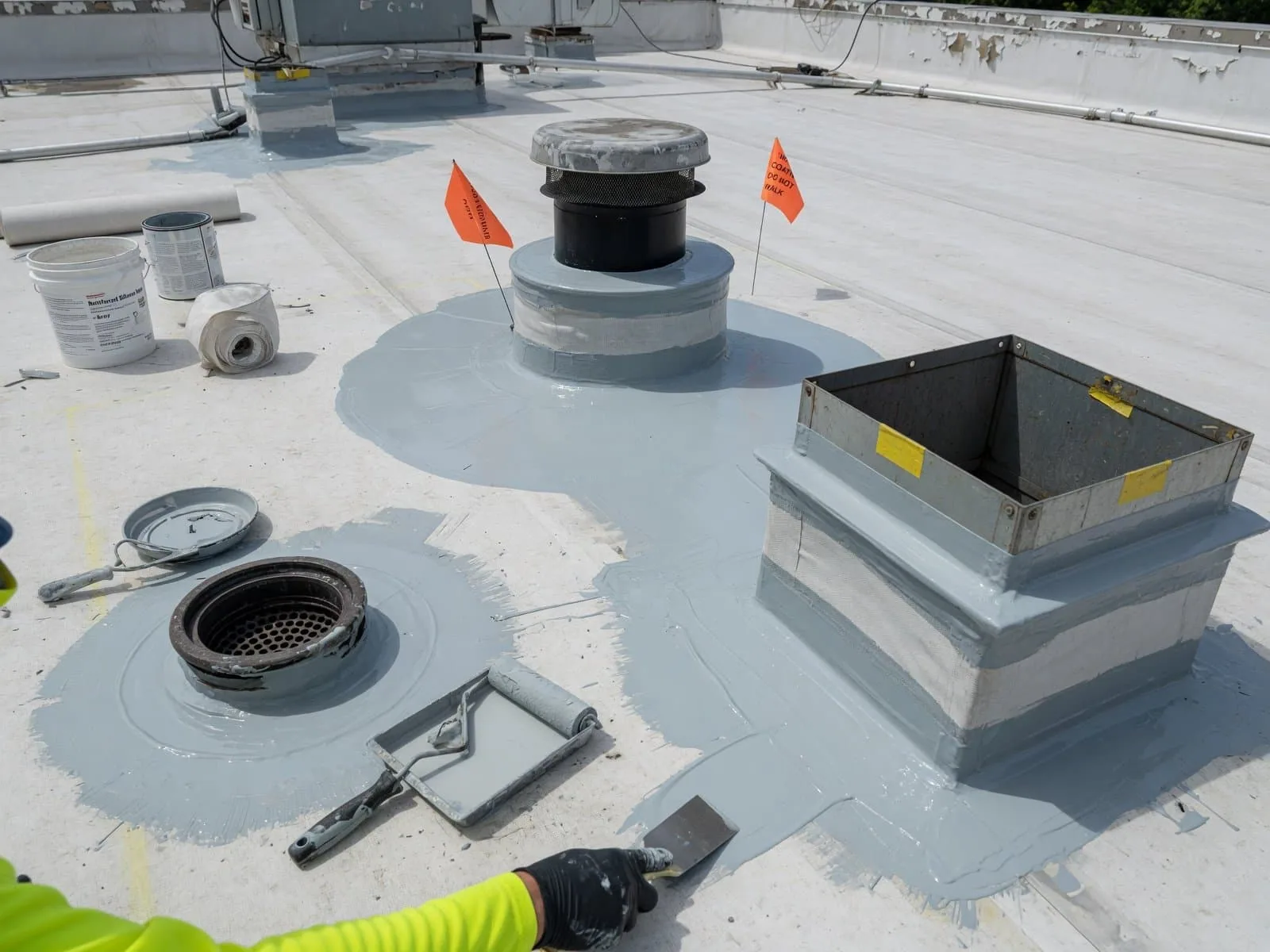
The selected TPO school roof assembly or another covering needs suitable details at outlets, corners and terminations. New insulation thickness can reduce flashing height at existing curbs, so those dimensions are measured before selecting the package. A roof serving college buildings or another educational use may share some material mechanisms, but its equipment and access requirements are established separately rather than transferred from the school plan.
How can repairs and capital work be prioritized?
An active entry or loose component may need prompt attention, while a serviceable section can remain under maintenance as another area is reconstructed. We identify the defect and consequence behind each priority, distinguishing contained repair from wet-layer removal or broader attachment correction. The capital comparison follows the assembly findings rather than roof age alone. Cost is affected by investigation, demolition, substrate repairs, insulation and the operational coordination required for each phase.
For Las Colinas educational properties, the broad district's mixed uses can affect staging around occupied access, with the actual school schedule established directly. We coordinate material delivery and debris removal separately from student and staff circulation. Roof work above an entrance may require protection or another route for a specific activity. The work sequence describes those changes before the phase reaches the occupied area.
Administrative office roofing may have different equipment access and interior sensitivity from other school spaces. We relate the findings to those real uses and preserve maintenance access after the work. Completed areas are examined at their boundaries, and later service modifications are coordinated where they affect support, penetration details or runoff. Located findings help the manager track the repaired areas without assuming every section has the same remaining condition.
Equipment service routes are also reviewed for repeated abrasion or puncture risk. Suitable walkway protection should avoid low areas and leave outlets reachable for clearing. We identify those contact points during the assessment, keeping routine care connected to the new assembly rather than allowing future service work to cross fragile corners or leave loose materials beside drains.
Those access corrections can be included while the affected section is already being rebuilt.
Commercial Roofing Questions
Can summer break accommodate the entire roof project?
The available period must be compared with removal depth, substrate findings and suitable installation conditions. A quieter building can simplify coordination, but weather and concealed repairs can still affect the sequence. We establish practical phases and protection before scheduling. The plan should allow each area to be reconstructed and closed properly rather than treat the calendar window as proof that every assembly task will fit.
Will a repair above one classroom require access elsewhere?
The concealed water path and roof layout may connect the observation with another room or section. We compare timing and geometry, then coordinate the examination locations needed to identify the entry and moisture boundary. Interior access is targeted to that question. The repair scope follows the roof findings rather than assuming the stain's room defines the whole affected area.
How are student entrances protected during roof-edge work?
Lifting, debris handling and loose-component exposure are assessed for the specific activity. We coordinate protected access or an alternate route with the school before the phase begins. The arrangement must safely separate circulation from the work above. Once the hazard is controlled and the area is ready, access can be restored under the agreed sequence.
Can one wing be replaced while another remains under maintenance?
A suitable roof transition and clear condition boundary can support sectional work. We examine whether drainage, wet layers or structural movement cross the proposed division before choosing it. A wing boundary is not automatically a suitable membrane termination. The replacement scope identifies how new and retained materials will meet and which care needs remain in the section kept in service.
Ready to review the roof scope?
Request a Roof Assessment