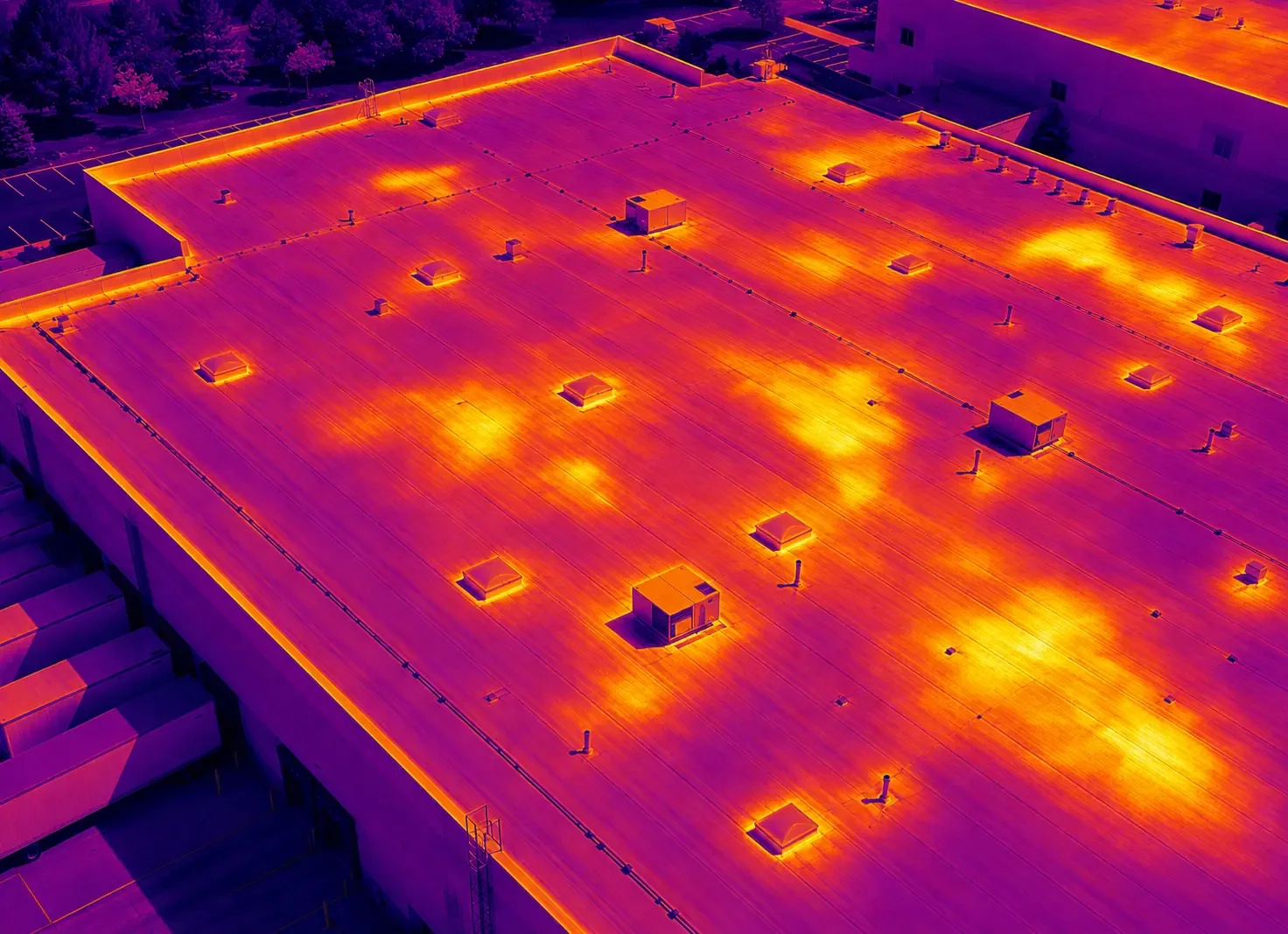
Heat cycling can strain a membrane beside a rigid equipment support, while wind exposure tests the connection from the covering into the deck. Air Force building roofing near Irving, TX, assesses both responses before a correction is selected. Commercial Roofing Irving evaluates the actual assembly and discusses the project's access and operating requirements before accepting or scheduling the work.
The Fort Worth area includes regional Air Force functions within a joint-service setting. Grand Prairie also has military reserve and maintenance activity, with different service roles and operating arrangements. Dallas/Fort Worth summer heat and severe-storm exposure make attachment and transition conditions useful inspection questions. These regional functions do not establish the construction, access permissions or roofing requirements of an individual building; those are reviewed for the particular project.
How does the roof connection carry wind exposure?
A roof covering's securement depends on more than its visible surface. We examine attachment through insulation or another layer into suitable supporting construction. An open perimeter may indicate inadequate fastening, deteriorated substrate or a damaged connection that requires reconstruction. The assessment relates the visible separation to the supporting path rather than treating new sealant as restoration of mechanical resistance.
Military-building perimeter assessment includes edge geometry and the fastening surface beneath it. Structural concerns are coordinated with appropriate professionals before the proposed covering is installed over uncertain support. Where testing or selective opening is needed, its purpose and location are established through the project process. The finding identifies the condition examined and avoids implying that one accessible test verifies every roof zone.
Which project restrictions change the examination window?
Access authorization, escorted areas or limits on documentation can affect how an assessment is performed. The responsible project personnel establish those requirements before the visit. We discuss the examination needed to support a recommendation and identify where restricted access leaves uncertainty. A scope based only on a limited visible area should not be presented as complete confirmation of concealed materials throughout the building.
Military roof project coordination distinguishes technical evaluation from contract eligibility and authorization. Applicable procurement, security and safety obligations need review for the actual work. The roofing plan also identifies preparation and closure needs within the available operating period. A restricted window may change the practical phase size, with reliable protection required if conditions prevent the planned reconstruction from finishing.
Can equipment flashing accommodate movement and service?
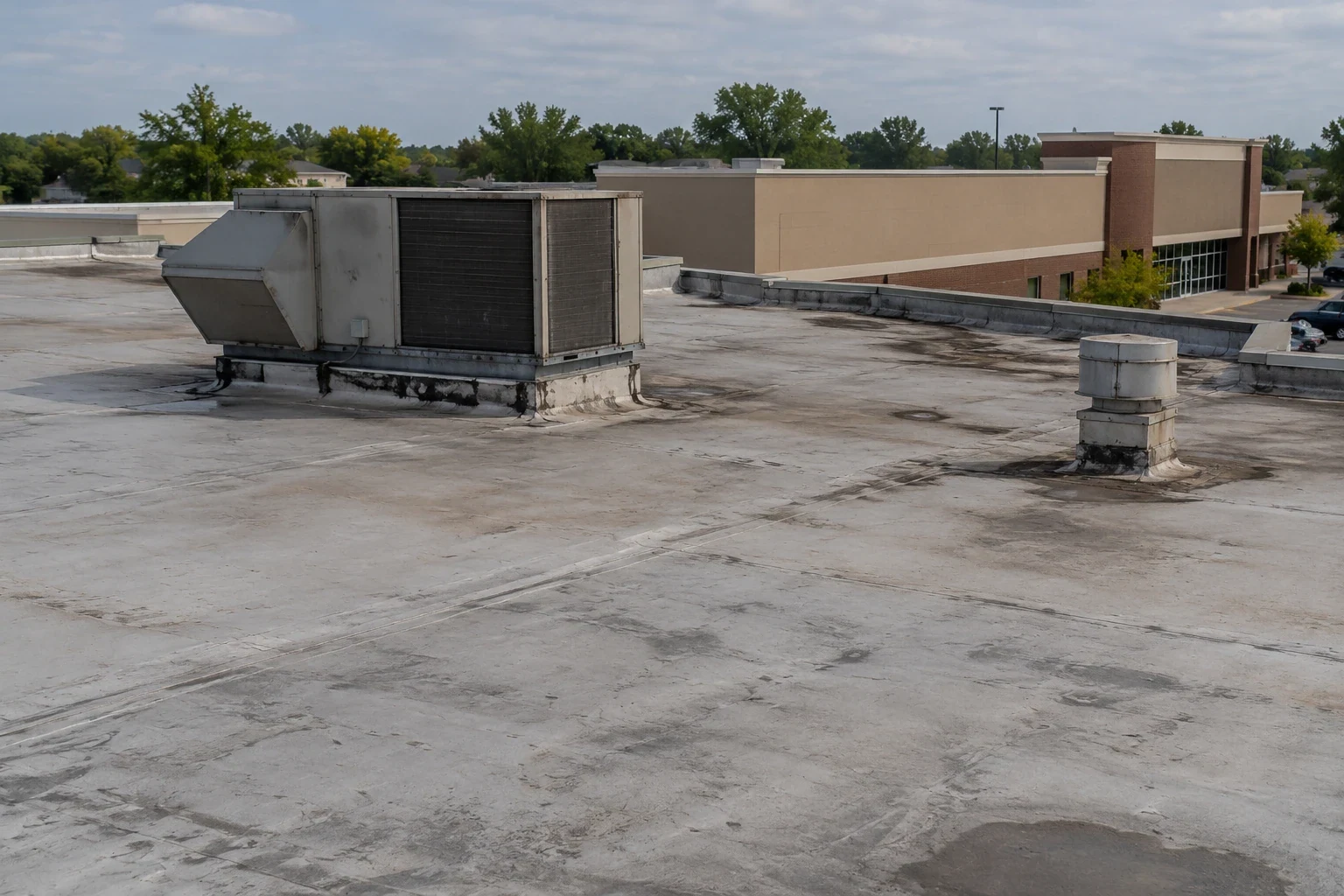
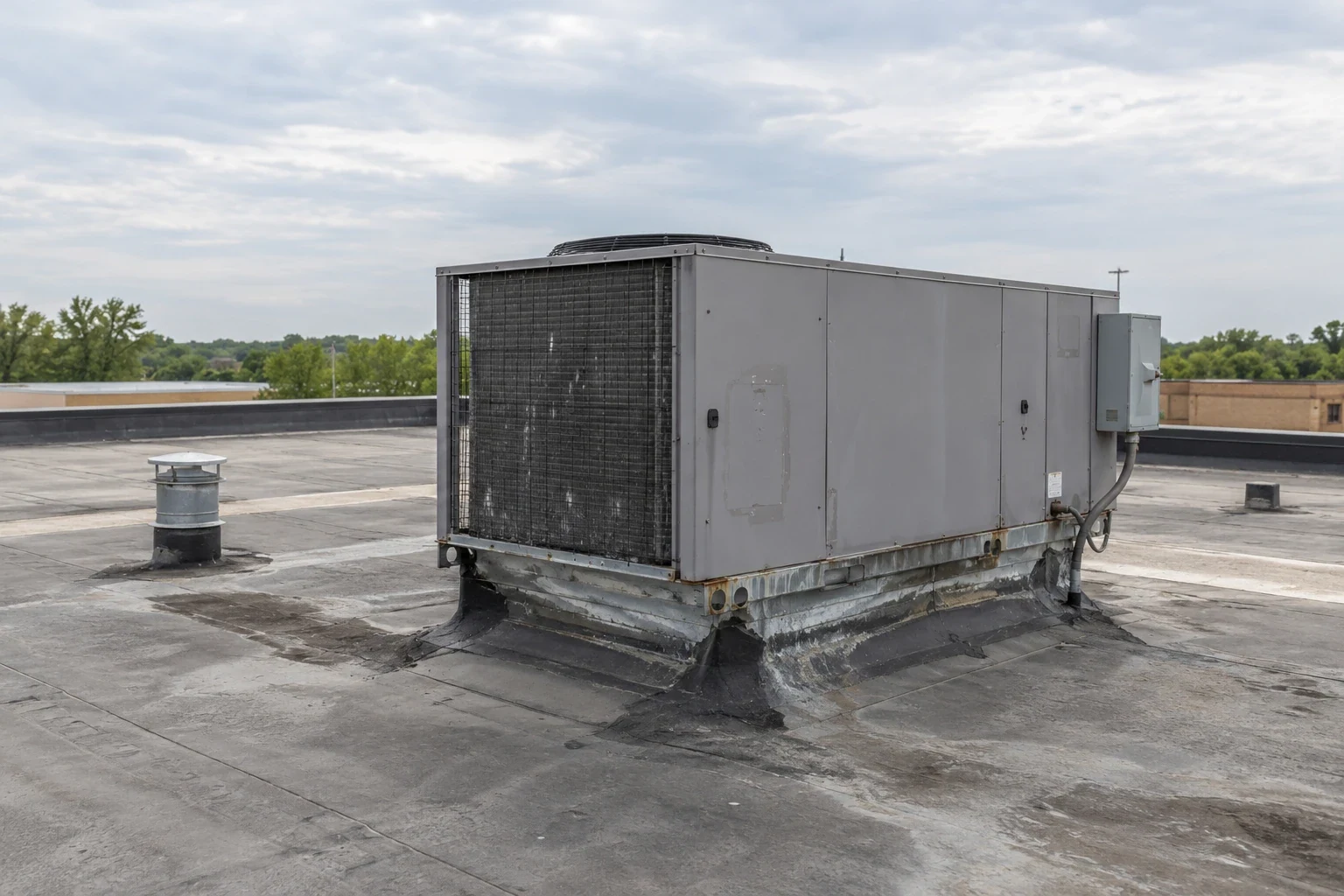
Equipment penetrations need compatible materials and a secure upper termination. A split at the field-to-curb corner can involve strain from movement or unstable support. We assess those conditions before choosing another patch. Where the upper connection is concealed by a unit, the scope identifies service coordination needed to reach it; repairing only the exposed lower edge may leave the entry mechanism intact.
Operational equipment curb work is coordinated with personnel responsible for the unit. Mechanical or structural alterations remain separately evaluated. The completed detail preserves maintenance access without directing routine service traffic over a vulnerable connection. Comparable support questions arise on military maintenance buildings and military residential buildings, with each use setting its own protection arrangement.
What evidence establishes the concealed removal boundary?
Interior wetting and roof observations help identify where further examination is useful. A surface signal alone does not establish the complete extent of damaged insulation. We compare plausible entry paths with direct material checks where authorized and necessary. The proposal distinguishes confirmed wet layers from areas that remain unexamined, with selective access used to answer the specific retention question before installation is selected.
An authorized roof moisture survey can support that investigation when construction and weather make the method informative. Findings are interpreted alongside the assembly rather than treated as a universal pass-or-fail map. Suitable retained material needs stable support and compatible preparation. Where moisture extends beyond a local connection, the scope shows why the removal boundary changes and how the opening will be protected.
Investigation locations are recorded through the authorized documentation process so the project team can relate each confirmed layer to the proposed boundary. The same record identifies where retention rests on accessible evidence and where additional examination is recommended before proceeding.
Which requirements apply to this assembly project?
The owner or project authority identifies applicable specifications, design criteria and review requirements. Federal or military criteria may apply to some projects and require qualified interpretation through the appropriate process. We establish the actual requirements before treating a standard commercial detail as acceptable. A covering option is compared with its support, attachment, insulation and transition needs rather than chosen only by material name.
An existing TPO military-building assembly needs suitable welding surfaces and compatible detail materials. A replacement may involve additional layers or revised securement, changing field height and perimeter geometry. Drain approaches and overflow routes are reviewed with the proposed construction. The retained structure's capacity and any altered loads receive appropriate evaluation where the scope requires it.
Regional work in Grand Prairie requires its own project and jurisdiction review, with Irving's municipal code requirements kept specific to Irving projects. Cost follows authorized investigation, reconstruction, access controls, equipment coordination and protection of the operations beneath the roof. We separate those requirements from field installation so the responsible owner can understand which scope components respond to assembly deterioration and which respond to project logistics.
Completed work is reviewed at seams, penetrations and runoff connections through the agreed project process. The record identifies reconstructed and retained areas and any remaining assessment limitations. Subsequent equipment alterations need roofing coordination before installation. Maintenance can then target drains and service routes without treating a later change as evidence that the entire original assembly assessment was interchangeable across buildings.
Temporary material staging also needs review for support and access. Concentrated loads are not placed on an unverified roof area merely because space appears available. The lifting and storage arrangement is established before delivery, with loose material managed so the project does not damage a retained section or obstruct the drainage route while another phase is underway.
Commercial Roofing Questions
Does this service page establish approval to work on an Air Force project?
The actual procurement, access and qualification requirements are reviewed before project acceptance. Technical roof assessment does not by itself establish every authorization or credential. We review the scope and required documentation with responsible personnel before work proceeds. Applicable restrictions and specialist responsibilities remain part of that project-specific review rather than assumptions based on the building's general use.
Can the roof be assessed when some areas are restricted?
Accessible examination can provide useful findings within its stated scope. Where the necessary connection or material cannot be reached, that uncertainty remains explicit. We discuss further authorized access or another appropriate investigation method with the project team. A limited inspection should not be used as evidence that concealed layers in unexamined areas are suitable for retention.
Will a membrane repair restore a loose perimeter attachment?
A patch can correct weather shedding only where the underlying support and securement are suitable. A loose connection requires assessment of fastening, substrate and load transfer. Reconstruction may therefore include material below the visible covering. We explain those needs before selecting the correction so a new surface is not mistaken for restoration of a deficient attachment path.
Can replacement proceed in small operational windows?
A practical phase allows the necessary preparation, closure and protection for the selected material. Some assemblies permit suitable independent sections, while shared drainage or concealed deterioration can connect a wider area. We examine those boundaries with the project team. Operating windows must allow dependable reconstruction or an agreed protection response rather than require installation under unsuitable conditions.
Ready to review the roof scope?
Request a Roof Assessment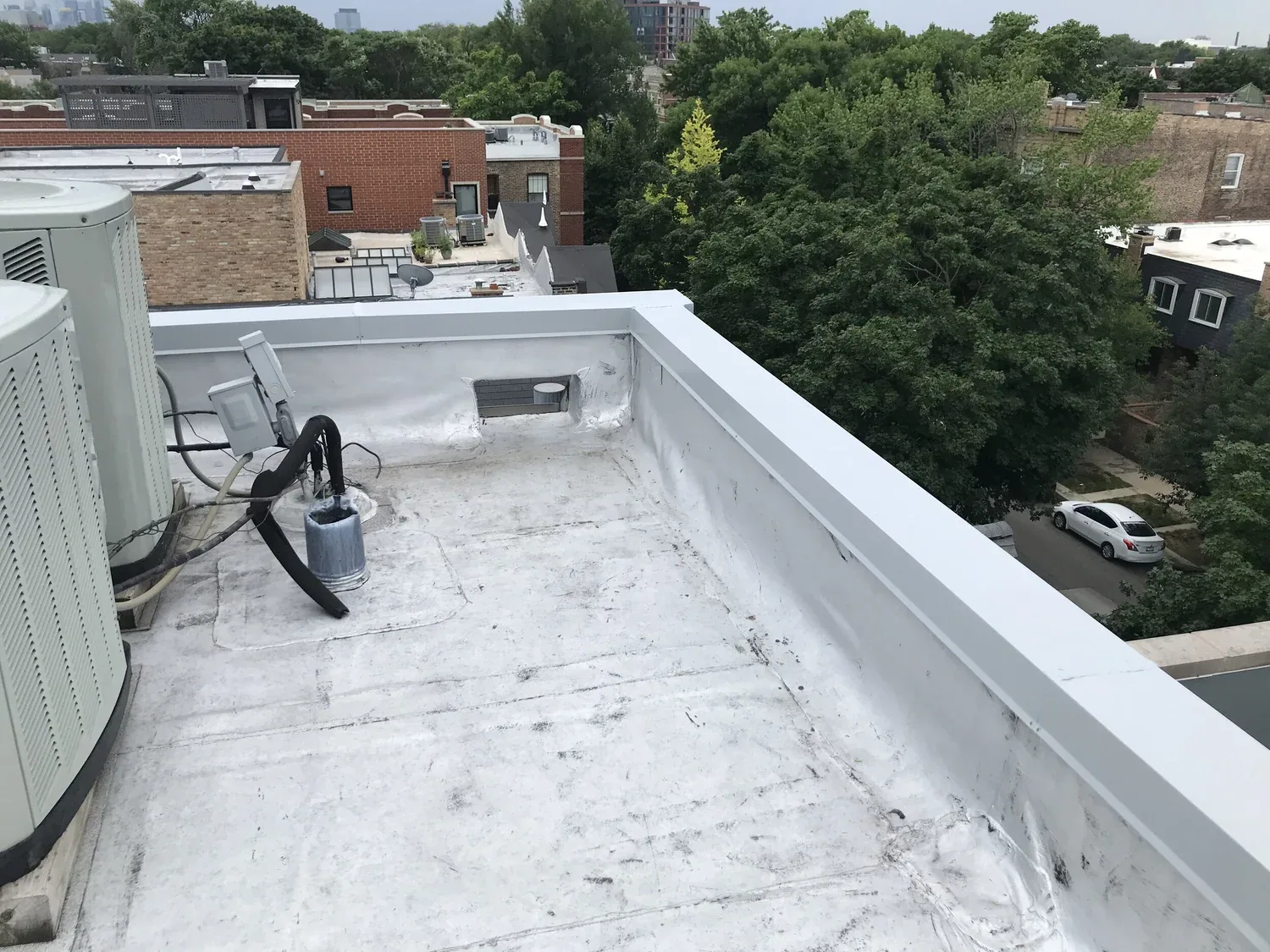
Commercial Roof Edge Metal, Coping and Gutters
See scope, options and what to expect on the roof.
Military Installation Roofing Near Irving, TX
See scope, options and what to expect on the roof.

Military Hangar and Maintenance Facility Roofing
See scope, options and what to expect on the roof.