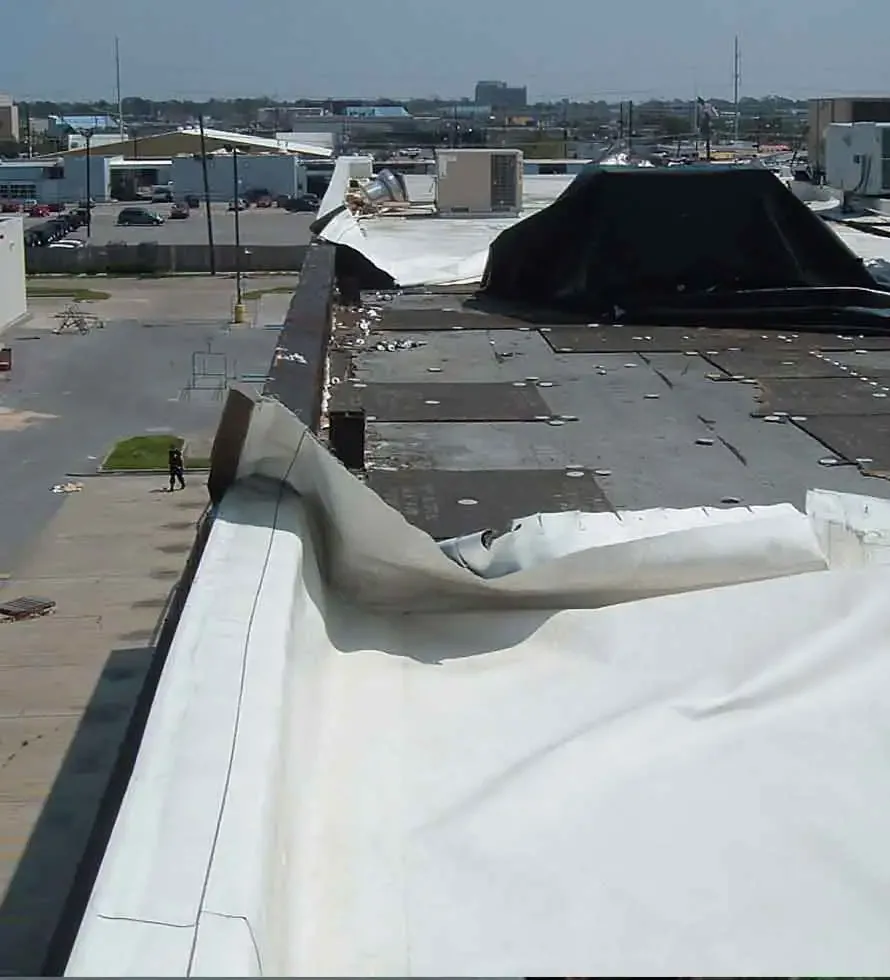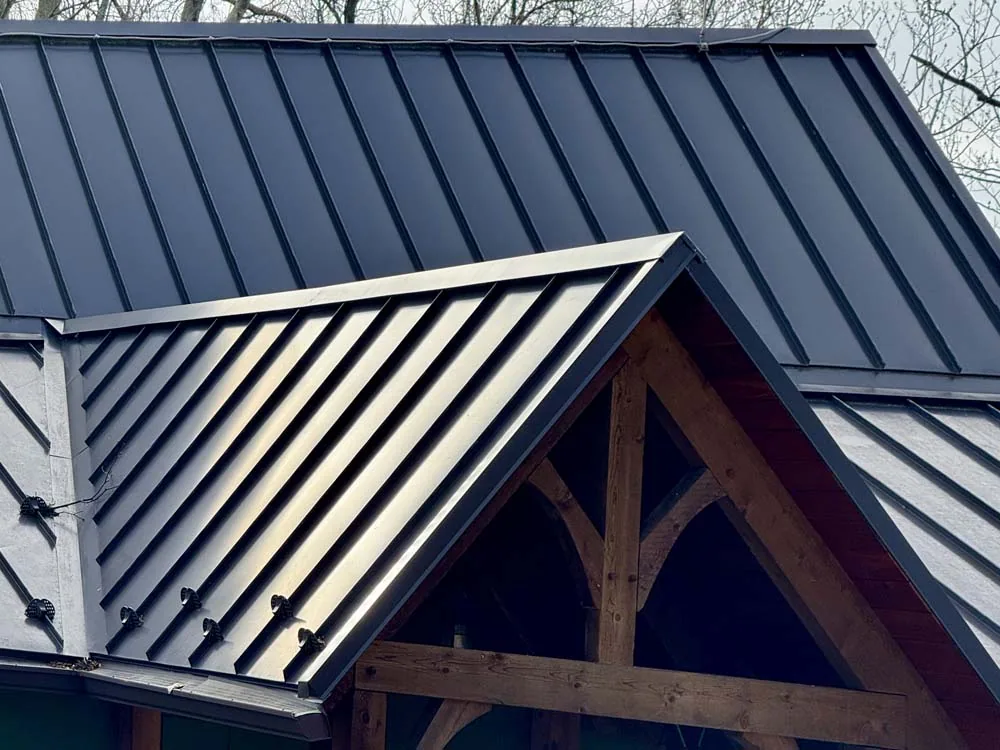
Thermal movement at a large maintenance building can stress the roof connections independently of the operations beneath it, while a storm opening can interrupt both water protection and mission activity. Military roofing near Irving, TX, therefore requires an assembly assessment joined to the facility's access and operating requirements. Commercial Roofing Irving examines moisture, attachment and detail condition before defining repair or replacement work.
The regional military building context includes aviation support and housing in Fort Worth, reserve and Guard uses in Grand Prairie, and medical operations in Dallas. Those building functions call for different work coordination, without determining the roofing material on any individual structure. Hot Metroplex summers and regional storm wind make movement and attachment relevant throughout the assessment, with the proposed scope established from the actual roof rather than the building's mission label.
Which requirements govern the proposed assembly?
The project criteria, specifications and applicable authority establish the roofing requirements for military work. Unified Facilities Criteria for roofing may apply, together with the facility's design and procurement requirements. We review those requirements for the particular repair or replacement rather than treating a generic commercial detail as sufficient for every installation. Where engineering design is needed, the assembly and connection requirements are coordinated with the appropriate project professionals.
Direct condition examination establishes the existing construction and defects that the scope must address. Layer sequence, deck condition and connection geometry are assessed where accessible, with selective openings when concealment leaves a material question unresolved. The proposed work then identifies suitable retained materials and reconstruction needs. Project compliance is considered alongside those findings, not assumed from a product choice or the apparent age of the covering.
How do controlled access and escorts affect the work?
Access procedures can involve badging, approved routes, escorts and delivery restrictions, depending on the facility and project. We coordinate the requirements before scheduling examination or construction so personnel, materials and equipment can reach the work area under the applicable arrangements. Roof access is also assessed for safe routes and the hazards around equipment or openings. A planned visit needs enough usable time to perform the investigation after those access steps are completed.
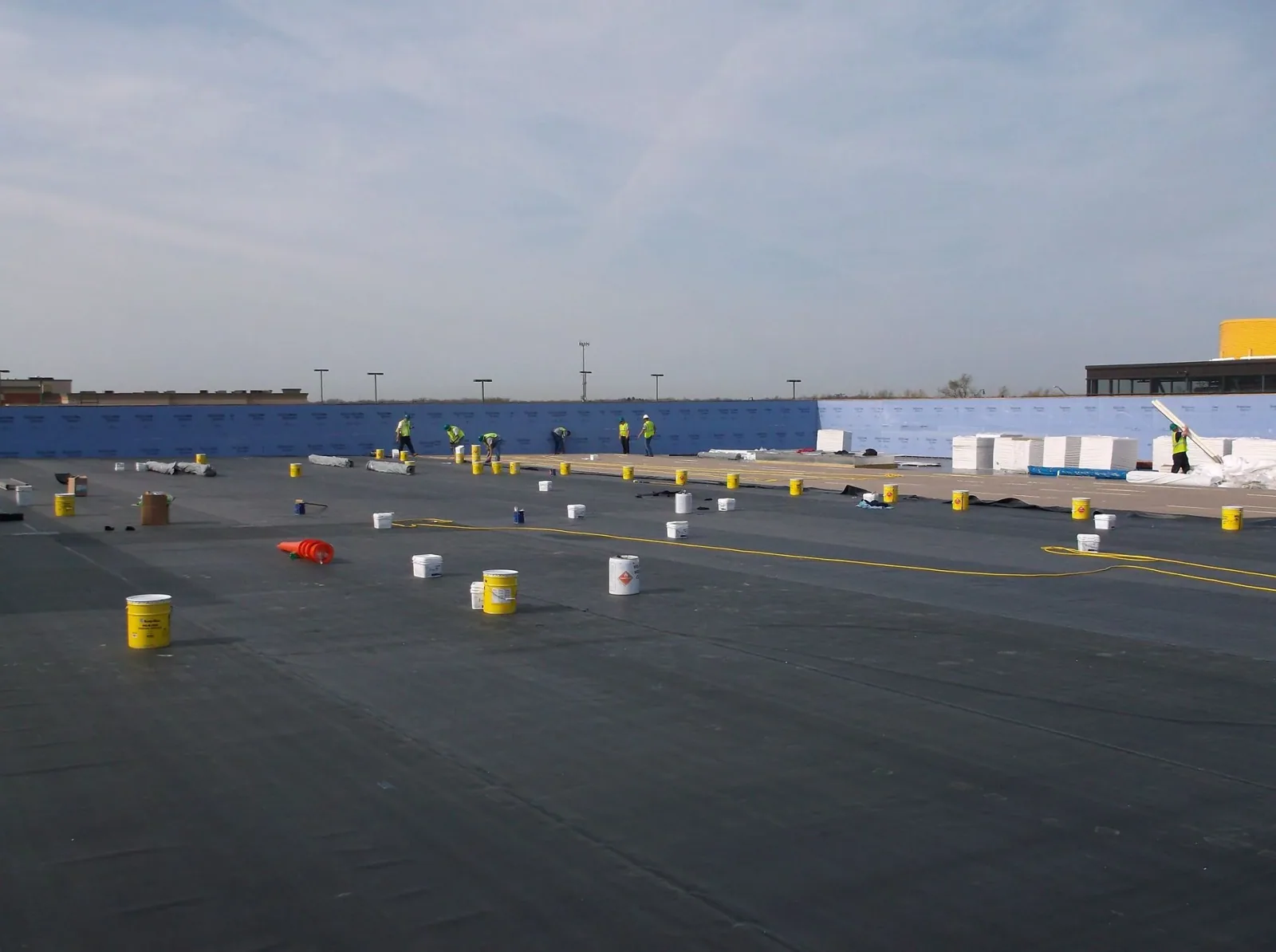
Material removal and delivery may need separate coordination from ordinary personnel access. We establish where staging is permitted and how debris will leave the area without obstructing operations or drainage. The work boundary also considers what can be opened and closed within the available window. Phased reroofing can help coordinate occupied space, but the roof assembly and protection needs determine whether the proposed phase is practical.
How do the building functions change the roof sequence?
Aviation and maintenance operations can require access to doors, equipment and service routes throughout the project. We identify the activities that the roof work could affect, including lifting above entrances or reconstructing details near operating equipment. Housing and medical uses can introduce different interior protection, odor and shutdown concerns. Those functions shape coordination while the actual material condition establishes the repair method.
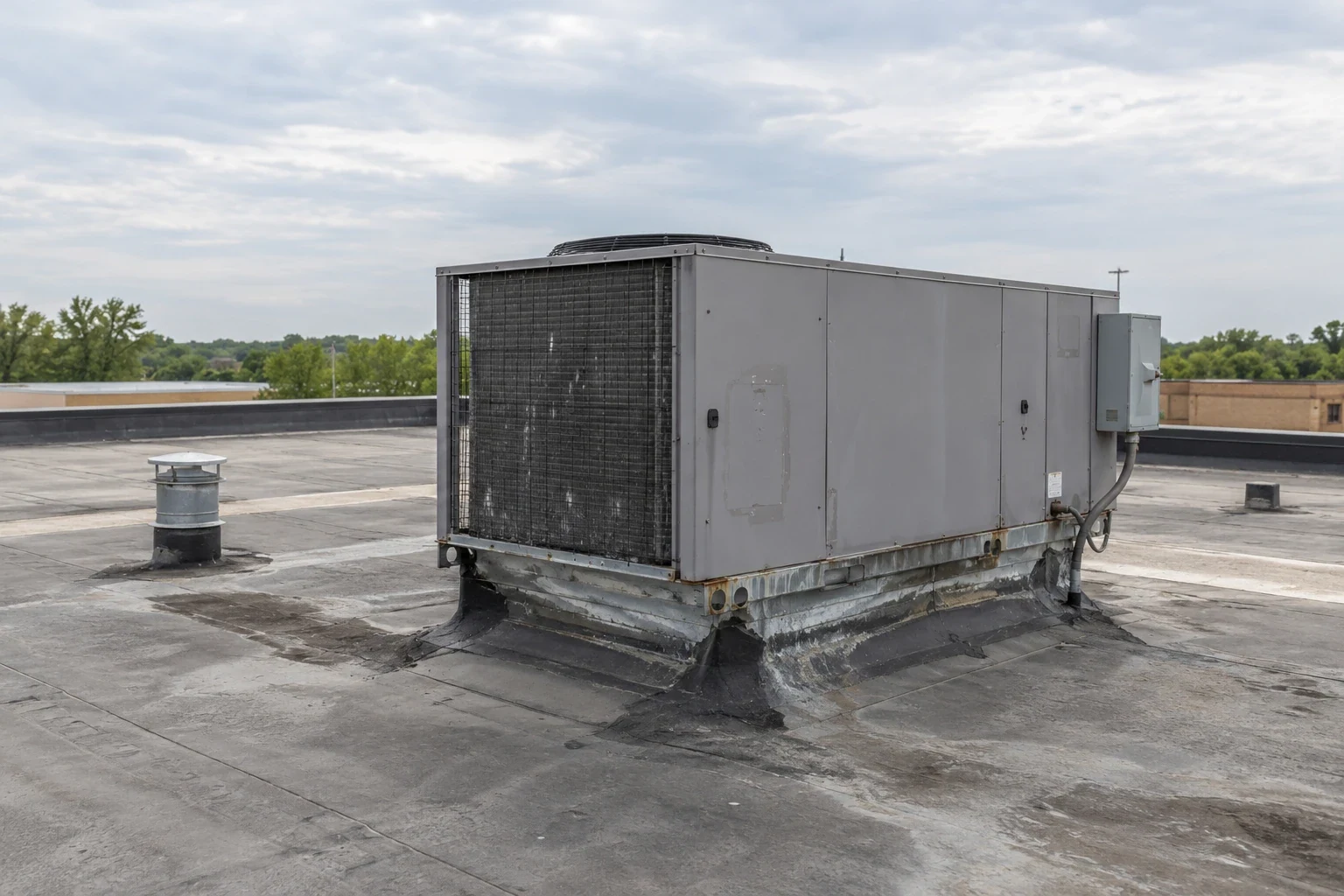
Equipment curb and support reconstruction may require mechanical input and a defined shutdown window. We examine the concealed flashing before deciding whether equipment must be lifted or disconnected. Sensitive interior areas may also require protection suited to the deck and removal method. The sequence separates roof exposure, equipment work and restoration of service so a short access window does not leave an unfinished connection above an active operation.
What needs confirmation beneath the covering?
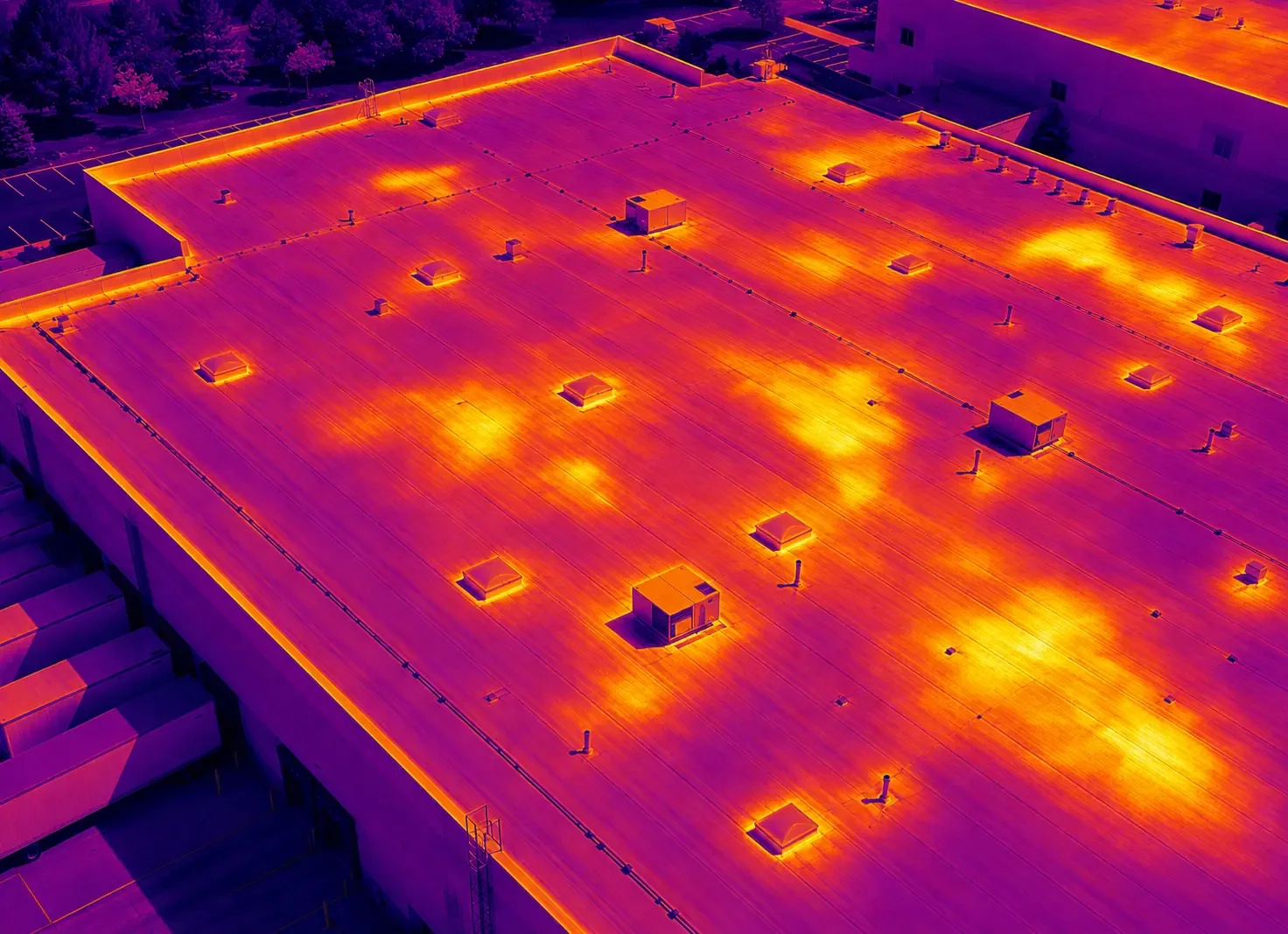
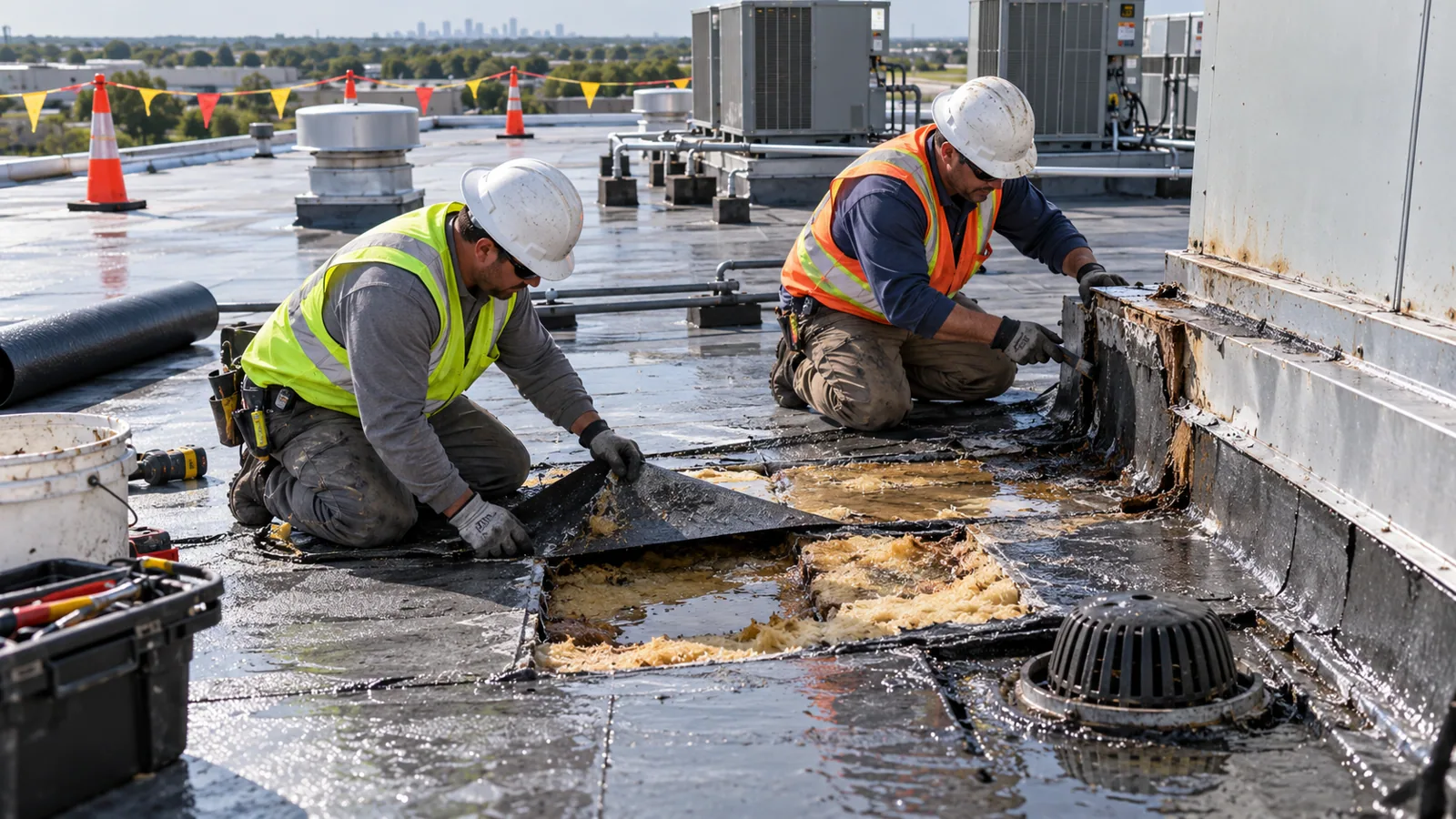
Wet insulation and damaged support can extend beyond an open seam or flashing connection. An infrared survey with direct confirmation can help establish suspect areas under suitable conditions, with findings related to the layer sequence and roof geometry. Direct checks identify the materials requiring removal. The moisture boundary is compared with mission-related access constraints before the construction phases are selected.
Indoor conditions also matter where the building's operation could contribute moisture through air leakage or condensation. We assess the assembly and coordinate additional building-system investigation where needed. Closing a rain entry may leave another wetting mechanism active if it is not considered. Replacement insulation and cover board are selected with support, thermal performance and drainage relationships in mind, so the reconstructed field does not conceal unstable material or an unresolved moisture path.
How should the roof connection respond to wind and movement?
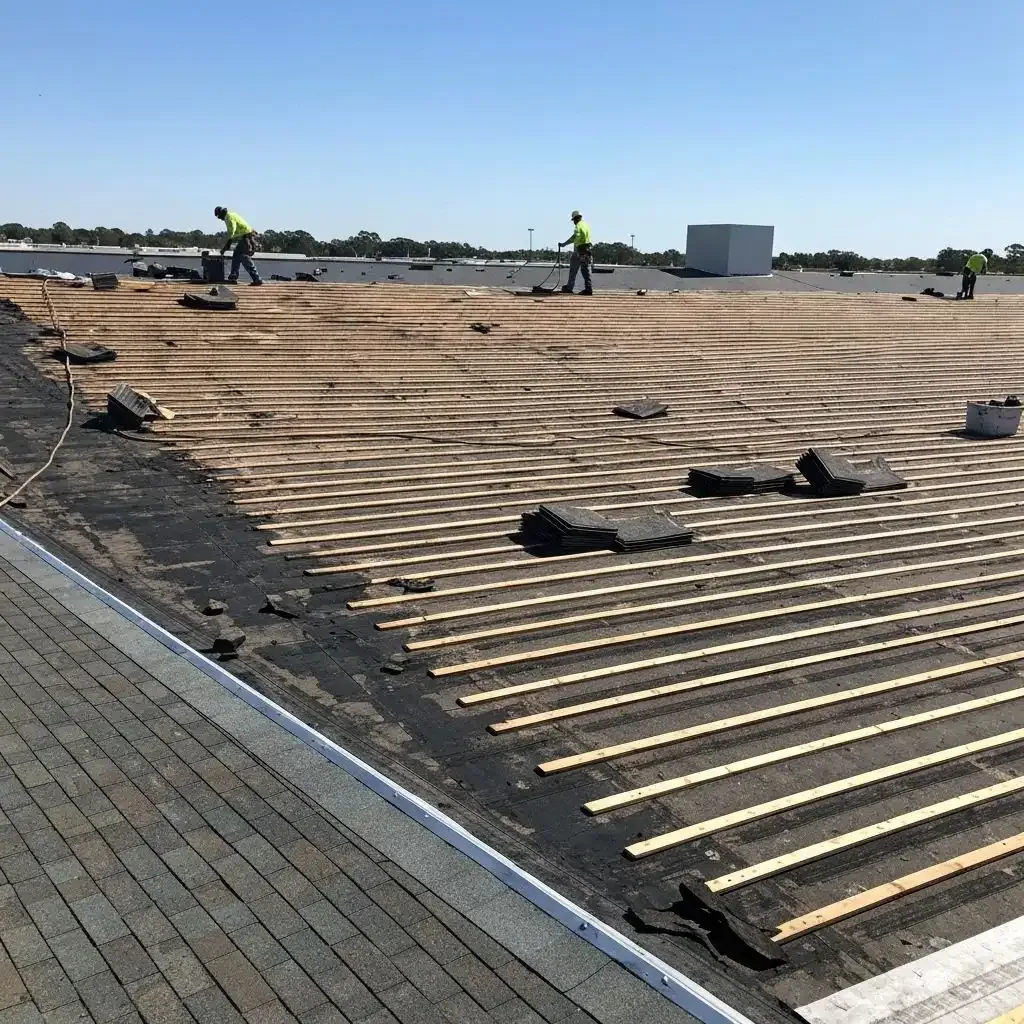
Attachment must provide a suitable path from the covering through its fastening or adhesive interface to the deck. We assess substrate condition and resistance, with testing or design input where needed for the selected assembly. Wind-related connection repair can require work beyond the visibly displaced material to reach suitable retained support. A surface patch cannot restore a loose structural or perimeter connection by itself.
With standing seam metal roofing, panel movement, clips and penetration details must work together. Membrane systems have different connection methods but the same need for suitable support and movement allowance at transitions. We examine joints, edges and curbs separately from the open field. The construction scope identifies how those components will be rebuilt under the applicable project requirements and how outlets will remain usable through the work.
For roof projects in Grand Prairie and the surrounding region, cost follows the assembly condition, controlled access, equipment coordination and extent of reconstruction. We describe those drivers without assuming a military project needs the same repair footprint as another building. Completed areas are examined at their connections and drainage paths, with located findings supporting future care and any remaining capital decisions.
Movement joints are examined for the freedom they need between roof sections or structural divisions. A repair that bridges a joint with rigid material can transfer strain into the adjacent covering. We identify that function before selecting the transition, including how it will remain accessible for inspection after equipment or protection is installed nearby.
Commercial Roofing Questions
Can roofing work proceed while maintenance operations continue?
The operation and roof exposure have to be compared before establishing the phase. Access routes, equipment use and protection below the work can require temporary restrictions or a separate window. We coordinate those requirements with the facility and explain the construction boundaries that can be closed safely. Continued use is considered within the actual assembly and mission constraints rather than promised as a universal condition.
Will an inspection require the same access arrangements as construction?
Facility procedures establish the requirements for each activity. Examination may involve different personnel, equipment or routes from removal and installation, but access still needs coordination in advance. We identify the roof locations and investigative methods needed so the visit can be scheduled appropriately. Where a concealed detail requires opening or equipment access, that additional work is arranged rather than assumed to fit an ordinary visual visit.
How do you apply roofing criteria to a contained repair?
The project requirements are reviewed with the existing assembly and proposed connection. A contained repair needs compatible materials and suitable retained support, while design or specification requirements may affect the detail and examination needed. We establish those requirements before reconstruction. The result is a repair scope tied to the actual defect and applicable criteria, not a generic patch selected only by the top-sheet material.
What makes a moisture survey useful for mission scheduling?
Confirmed moisture locations can help identify where removal is likely to require deeper reconstruction and where additional examination is needed. That information supports practical phase boundaries and access planning. Thermal patterns still need interpretation and direct confirmation in the assembly. We relate the findings to the work sequence so the schedule reflects known wet-material needs rather than assuming every section will expose the same condition.
Ready to review the roof scope?
Request a Roof Assessment