Metal exposed to summer sun can expand along the roof edge while its fastening and membrane connections restrain that movement at intervals. Edge metal work in Irving, TX, needs to preserve the water-shedding detail without forcing those components to move as one rigid strip. Commercial Roofing Irving examines joints, support and attachment before replacing coping, fascia or gutter sections.
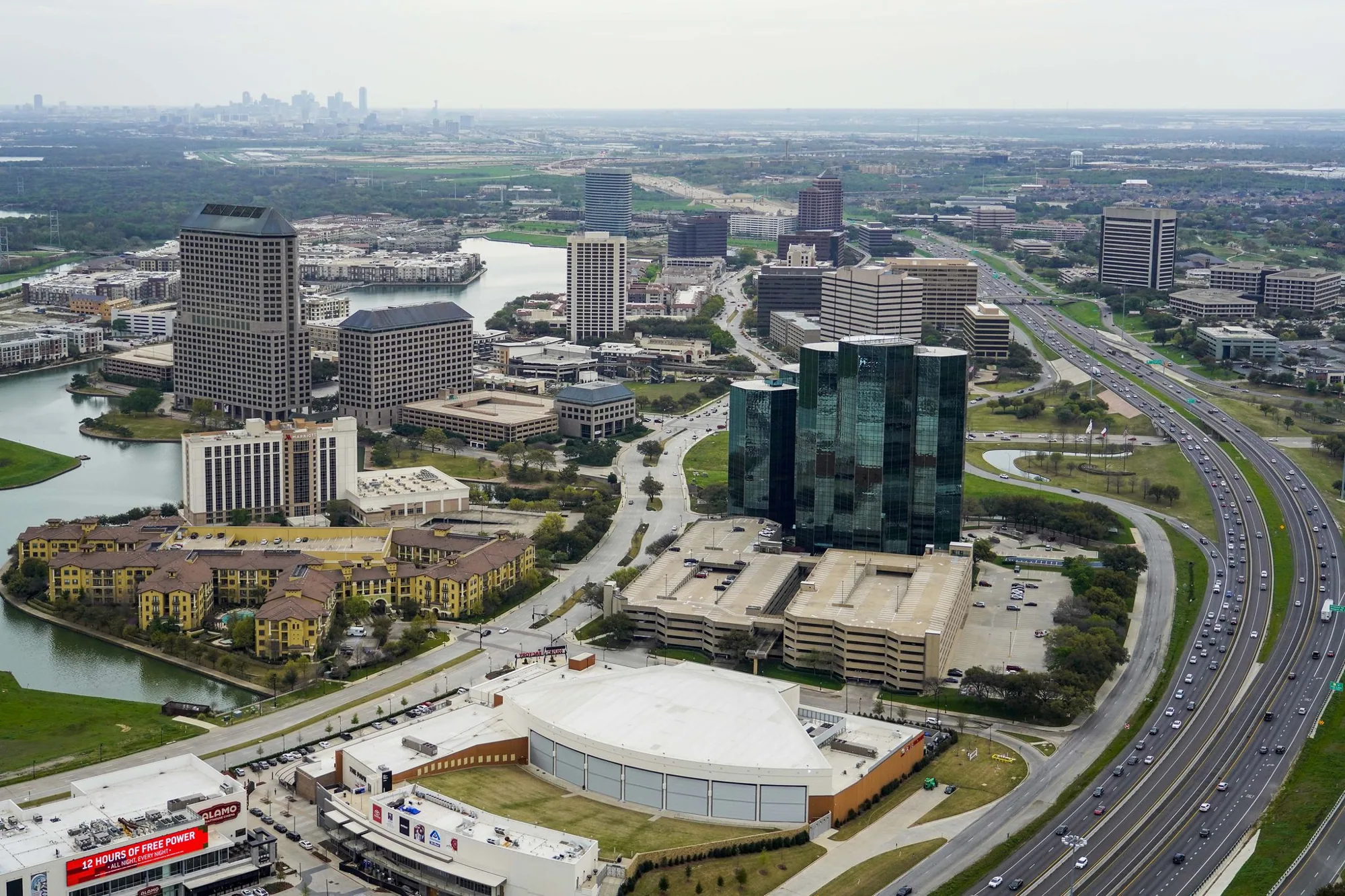
The Metroplex's heat and damaging storm winds act on the same perimeter in different ways: temperature changes move metal, while wind loads test its fastening and connection to the building. Las Colinas office properties and retail uses along the North Irving Belt Line corridor also place entrances and occupied circulation beneath roof edges. We assess loose components and discharge routes with those areas in mind, then define repair or reconstruction for the actual detail.
What is supporting the perimeter connection?
Edge metal depends on suitable support, fastening and engagement with the components designed to hold it. A loose section can result from missing fasteners, deteriorated blocking or an unsuitable connection between metal parts. We examine the support beneath the visible metal where needed, because replacing the exposed piece over damaged backing can leave the attachment weakness unchanged. The reconstruction boundary follows material capable of carrying the intended connection.
Where wind has displaced the detail, perimeter wind damage assessment includes the membrane and deck relationship as well as the metal. Disturbed attachment can extend past the visibly loose section. We examine adjoining components and determine how the replacement will transfer load into suitable support. Structural review may be needed where the damage reaches beyond roofing materials or the existing support cannot be treated as a dependable fastening surface.
How should metal joints accommodate heating and cooling?
Long metal sections need joints and attachment arrangements appropriate to the selected system and expected movement. Restrained expansion can distort sections, open joints or place stress on fastening. We examine the existing geometry and whether earlier repairs have locked a movement connection that was intended to remain flexible. A new screw or sealant bead can change that behavior if it bridges components without regard to the detail design.
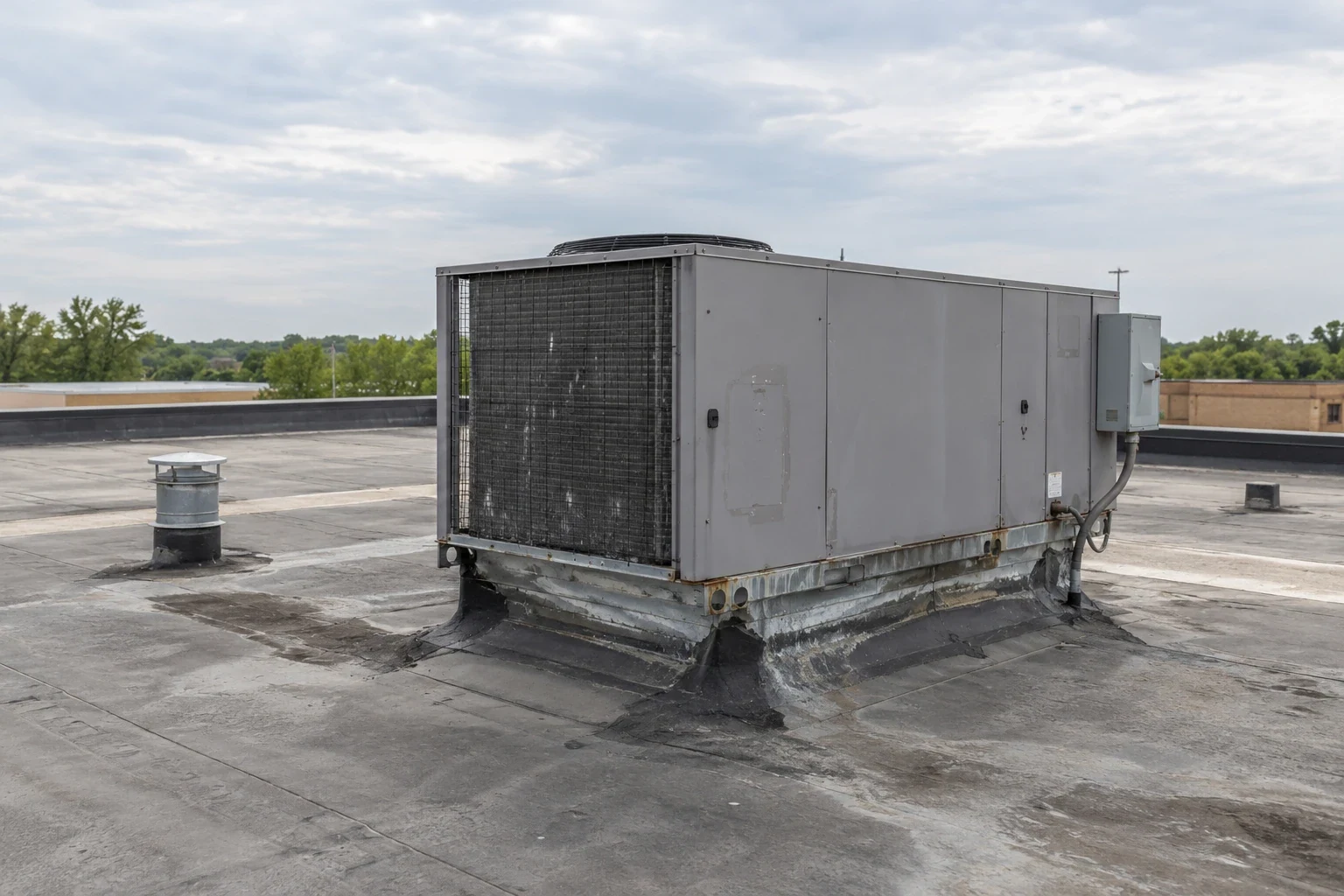
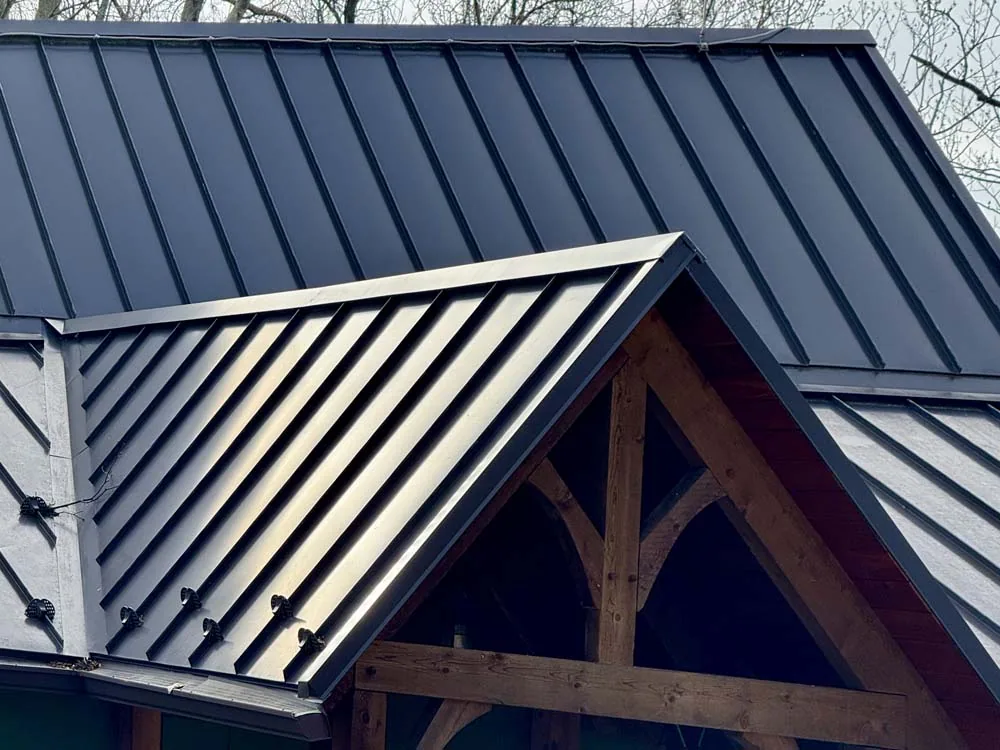
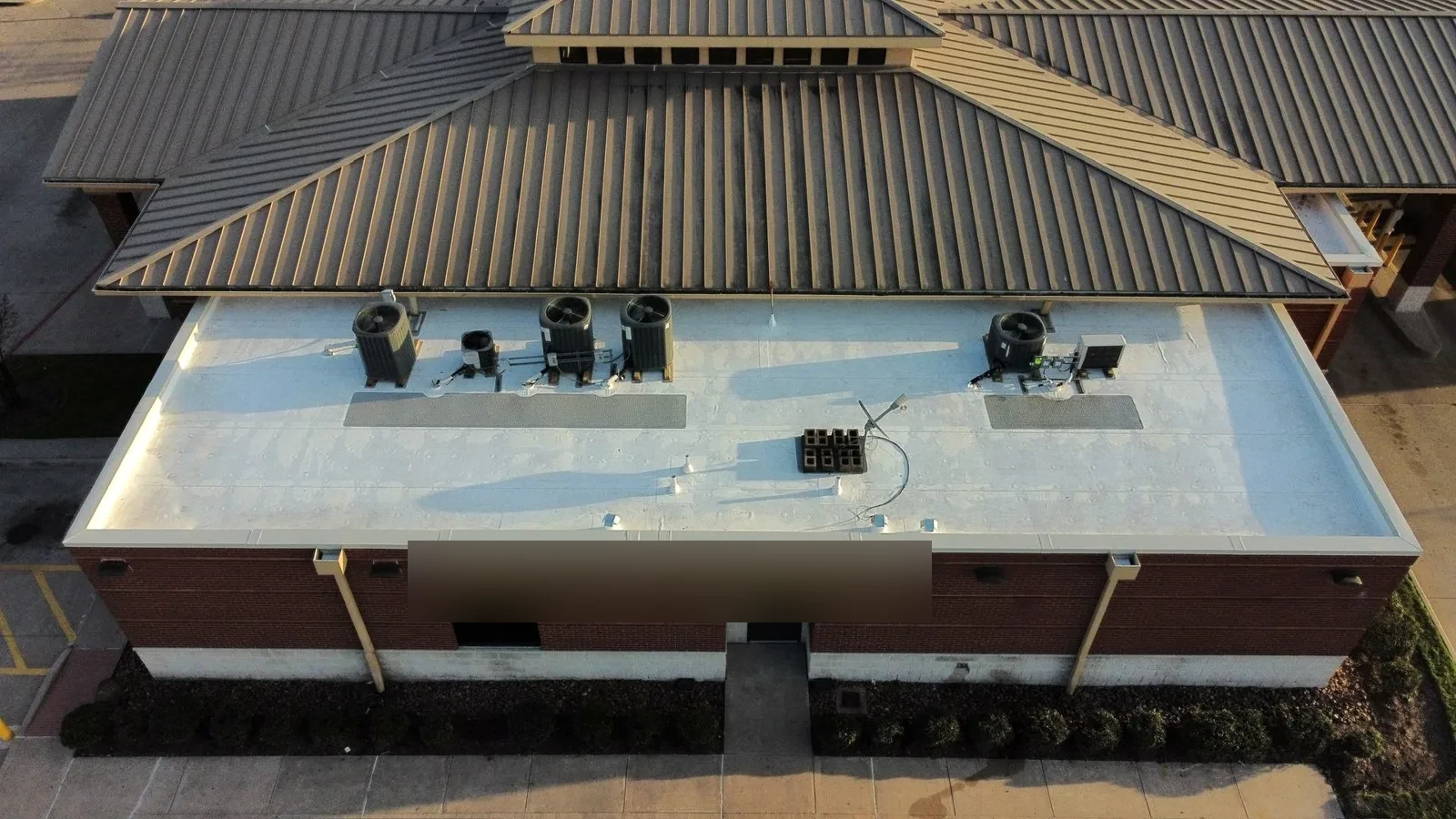
Replacement metal is selected and installed with compatible joints, fastening and surface treatments. Contact between unsuitable materials can also contribute corrosion, which requires attention to separation or compatible selection. We compare those connections with the roof covering below, including standing seam metal assemblies where panel movement reaches the perimeter. The detail should let each component perform its intended function without an added repair creating a rigid restraint at the transition.
Metal lengths and corner pieces also need a workable installation sequence. We check how each new section engages the adjoining detail and whether the joint can shed water as it moves. A tightly fitted corner that leaves no movement allowance can concentrate distortion nearby, while an unsupported splice can separate under load. The selected connection is examined as part of the full perimeter rather than as an isolated metal piece.
What keeps water from entering beneath coping?
Coping covers the top of a parapet, but the joints, slope and underlying water-shedding connection determine how moisture is handled. Water can reach below loose or poorly connected sections and enter the wall or roof transition. We examine the top surface, corners and connection to the membrane, then identify whether the work needs metal replacement, support correction or reconstruction of the concealed flashing below it.
A parapet flashing repair may be necessary even when the coping itself can remain. Conversely, an intact membrane transition can still be vulnerable to moving metal with inadequate support. We assess those layers separately and reconstruct their relationship where needed. Corners and changes in parapet height deserve close attention because they combine several metal directions and membrane transitions, which can concentrate both movement and water-entry risk.
Does the gutter receive and discharge runoff correctly?
A gutter needs suitable support, pitch and an unobstructed route to its outlets. Sagging sections can retain water, while loose brackets can allow movement that damages adjacent roofing or fascia. We examine the connection where roof runoff enters the gutter, including whether the drip edge directs water into the collection path. A replacement gutter should not be selected without considering the roof edge and receiving downspouts.
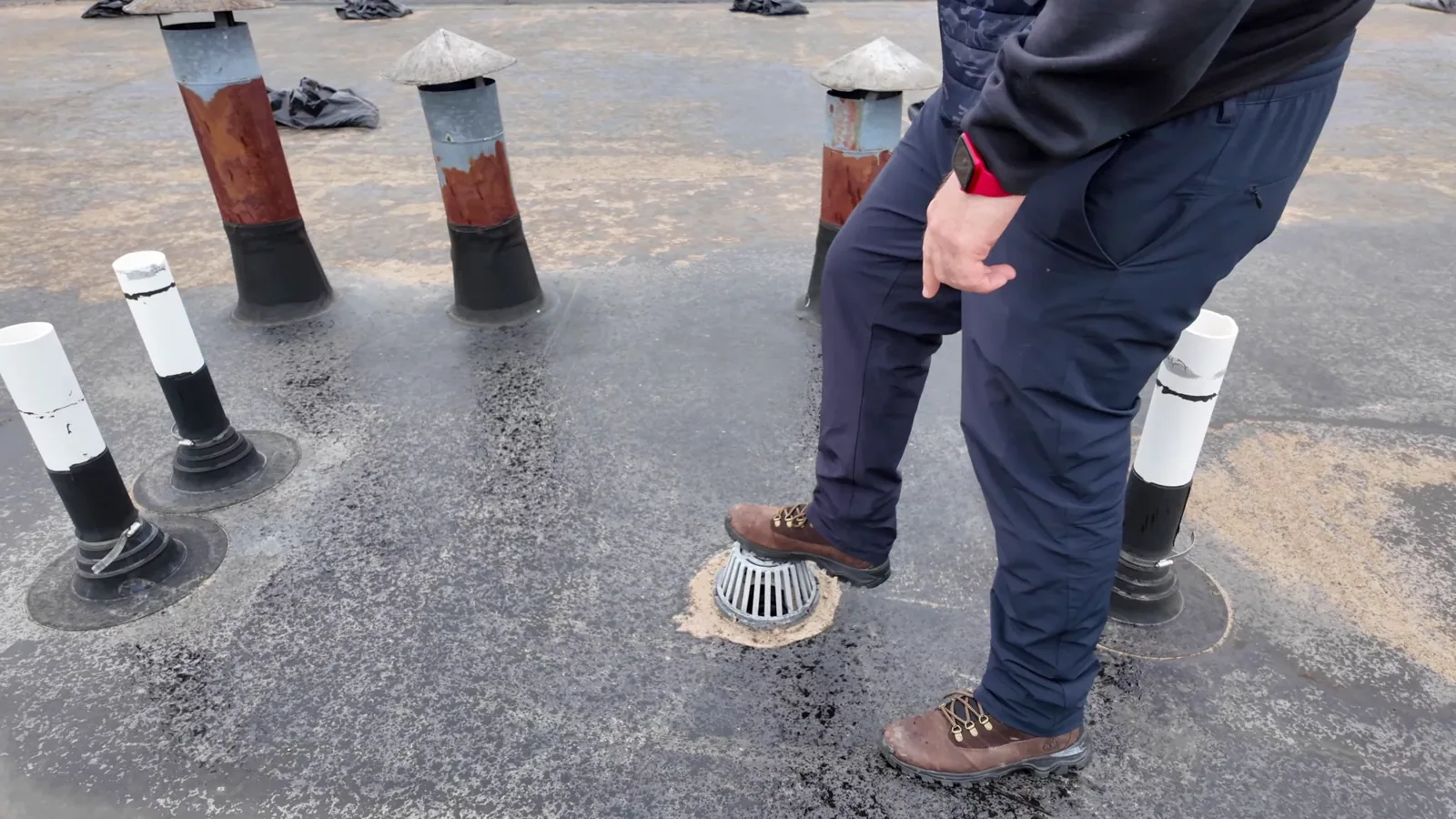
Scuppers and drainage outlets may feed a gutter or collector, making their relationship part of the repair. We check for blocked outlets, displaced joints and discharge locations that affect entrances or lower roof sections. Plumbing or drainage design input may be needed where the arrangement requires a capacity or routing change. Clearing debris addresses an obstruction, while inadequate support or geometry needs reconstruction rather than recurring cleaning alone.
What affects safe access and the reconstruction scope?
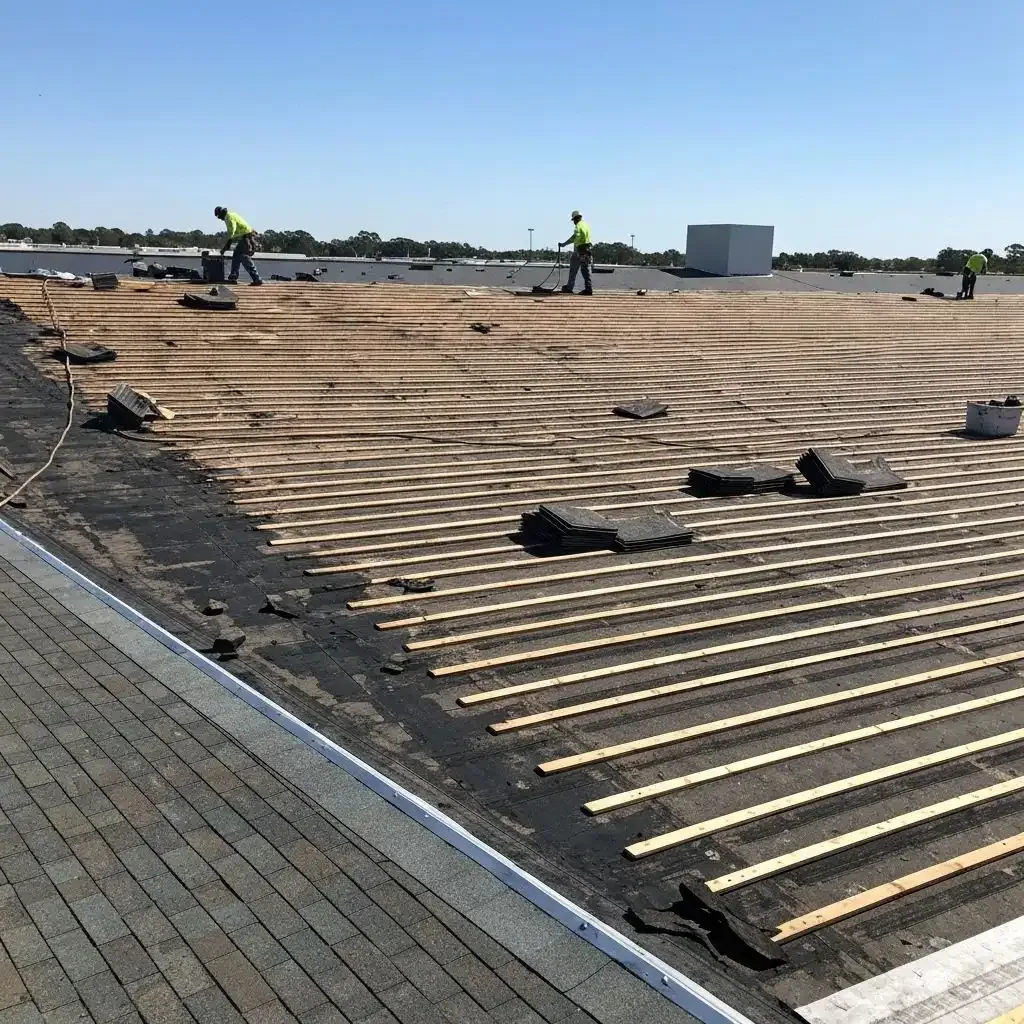
Roof-edge work can require access beyond an ordinary walking route, with protection for people below and equipment appropriate to the building. We establish how damaged sections will be removed and replacement components installed without leaving loose material above occupied circulation. Occupied-building roof work also requires coordination where a gutter or coping section is above an entrance that cannot be closed for the entire project.
At North Irving Belt Line retail properties, staging and temporary access arrangements need to account for daily visitors and deliveries. Cost follows access height, support repairs, metal fabrication, connection complexity and the extent of adjoining membrane work. We identify those items before treating the project as a simple exchange of visible metal. Temporary weather protection is planned for any exposed parapet or roof edge while reconstruction is underway.
After installation, examination includes joints, fastening and the runoff route, with maintenance needs identified for the completed detail. Later equipment additions or service activity can disturb metal and its supports, while debris can obstruct gutters. We explain which connections should remain accessible and which signs of movement or retained water should prompt another assessment.
Commercial Roofing Questions
Can loose coping be secured without replacing it?
The metal, engagement and support condition need examination before choosing that approach. A suitable section may be reusable with corrected attachment, while distortion, corrosion or damaged backing can require replacement and support repair. We also inspect the roof transition below it. Securing the visible metal alone would leave an underlying water-entry or attachment defect unresolved if that layer is damaged.
Why does a gutter joint reopen after sealing?
Movement, support or joint geometry may be working against the seal. We examine pitch, bracket condition and how adjoining sections are connected before selecting a repair. A joint that is repeatedly displaced needs correction of that mechanism as well as suitable sealing. The work also checks whether retained water is extending exposure at the joint because the gutter no longer drains toward its outlet.
Will new edge metal require membrane removal?
Access to the fastening and water-shedding connection can require opening adjacent roofing. We identify the retained materials and the suitable boundary for reconstruction before removal. Some details allow contained membrane work, while others need broader rebuilding to restore the complete perimeter connection. The scope should explain that interface rather than assuming metal replacement and membrane repair are independent activities.
What should we do if metal is hanging above an entrance?
Keep people away from the affected area and arrange prompt assessment. Loose components can move or fall, particularly during continuing wind. We evaluate safe access and the support needed for stabilization before permanent reconstruction. The occupied route may require temporary closure or another entrance until the hazard is controlled, with the building manager coordinating circulation below the work.
Ready to review the roof scope?
Request a Roof Assessment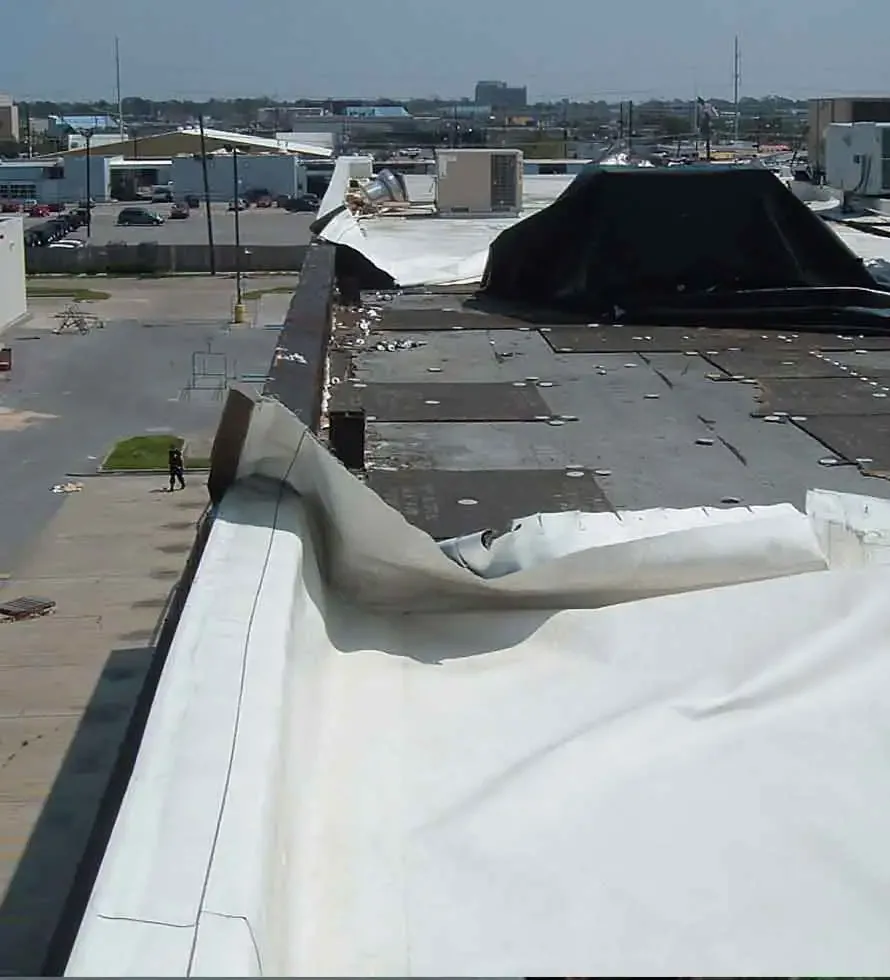
Commercial Roof Flashing Failure Repair
See scope, options and what to expect on the roof.