
A roof repair at a logistics property can affect loading, inventory, material flow and equipment access in one sequence. Irving’s hot summers expose roof surfaces to repeated heat, and seasonal rain tests drainage and penetrations. The larger Metroplex also sees hail and damaging wind, though regional weather does not establish damage at an individual facility. We inspect the actual roof, identify observed failure points and plan the work boundary with the operator’s shipping and safety contacts so the response protects the building without assuming operations can pause.
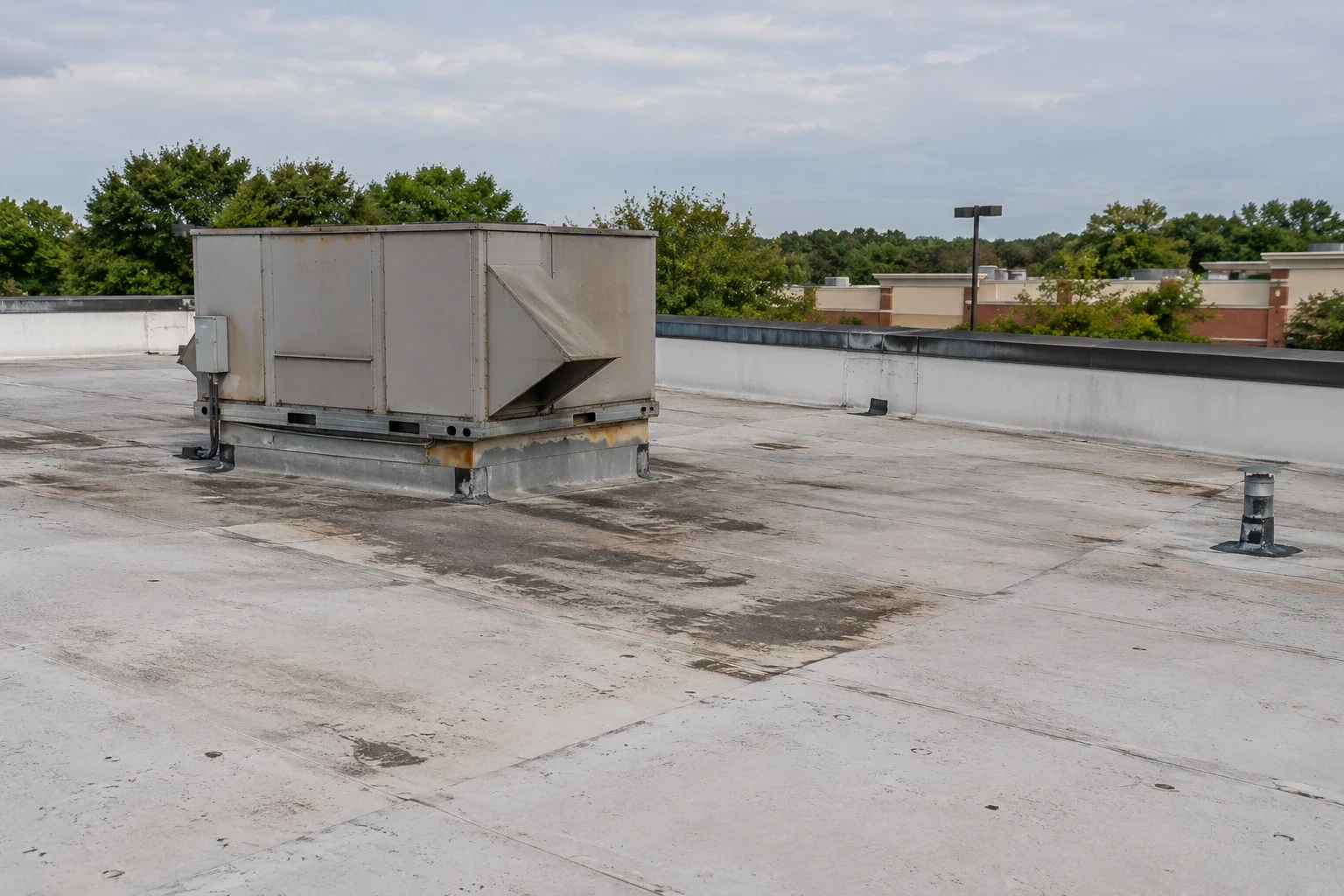
Grand Prairie is an established distribution center, and much of its Great Southwest Industrial District lies within the city. Rail and interstate access support warehouse, distribution and manufacturing buildings there. Manufacturing property work has related assembly questions, while Coppell’s commercial inventory includes warehouses. These facts describe nearby market activity and make delivery routes and staging sensible planning topics; they do not tell us what roof system or loading pattern a particular facility has.
How can a roof repair fit around receiving and dispatch?
The site contact identifies dock schedules, trailer circulation, emergency routes, occupied offices and any inventory that needs protection below the work. We map roof access and material staging to those rules before setting a date. A repair above a live loading bay may need a different work window from one above an unoccupied storage area, even when the roof detail is similar. The operator controls traffic and dock closures; we explain where the roofing crew, crane or delivery needs a controlled zone.
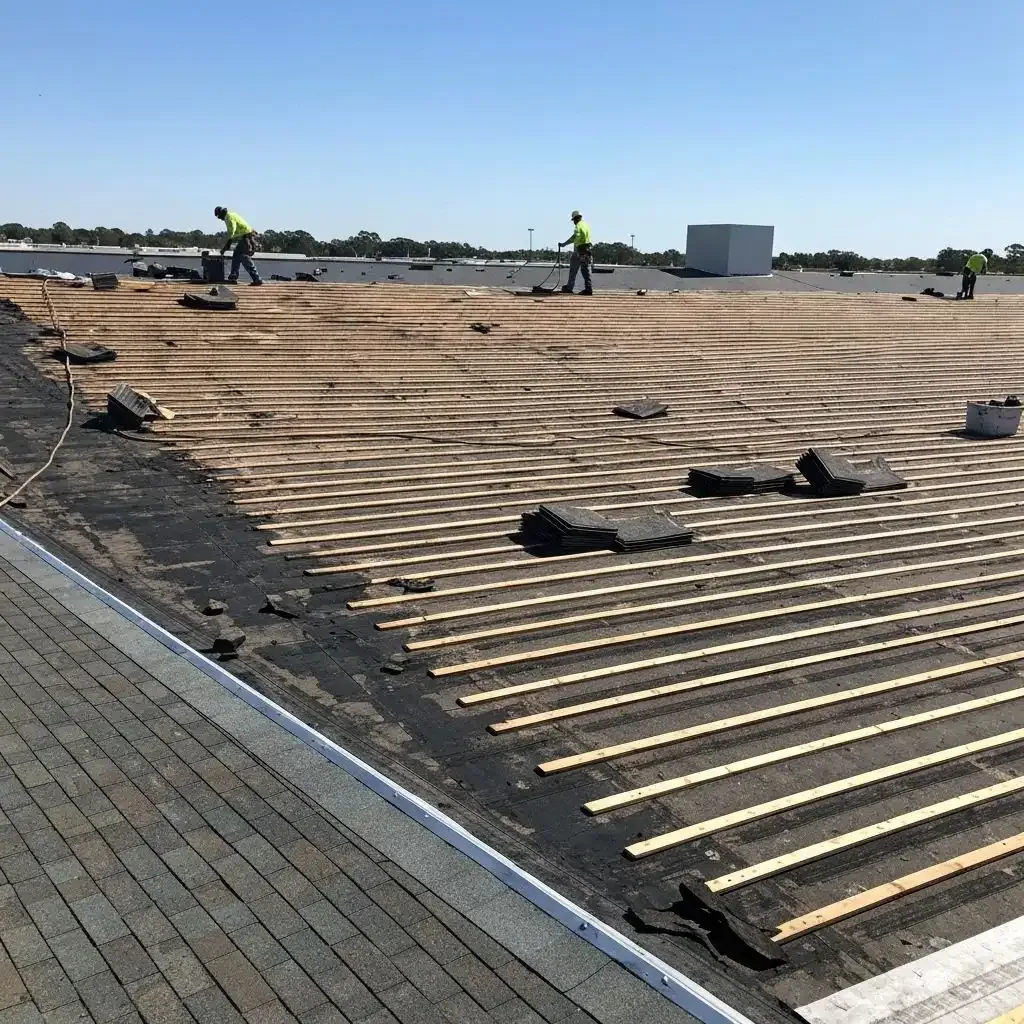
The crew also needs a weather plan for each open section. We phase removal and replacement so exposed materials can be protected at the end of the shift or sooner when conditions warrant. A live opening over a dock lane or transfer area calls for immediate water control. We stabilize the exposure first, then set the permanent repair boundary from the membrane, insulation and attachment findings after safe access is restored. Our occupied-facility roofing plan identifies boundaries, protection and release points that let warehouse staff coordinate their own operation.
Where does water collect on a distribution roof?
Long roof fields and rooftop equipment can make drainage behavior difficult to judge from the ground. We inspect accessible drains, scuppers, overflow paths, seams and low areas, and compare visible ponding with the roof’s slope and drainage details. Standing water may point to a blocked drain, deflected deck, insulation contour or another condition. The observation alone does not identify which one. A useful scope names the examined area and calls for further review when structural movement or concealed assembly conditions require qualified input.
A drainage correction should preserve the designed route and avoid closing an overflow path while work is underway. Debris removal, drain repair, insulation changes and full-slope modifications are different tasks with different receiving conditions. We identify which work is included, where a drain or flashing is damaged and what remains outside the inspection. Drain and scupper repair can be scoped alongside membrane work where the roof findings support it.
How do equipment and controls affect the roof?
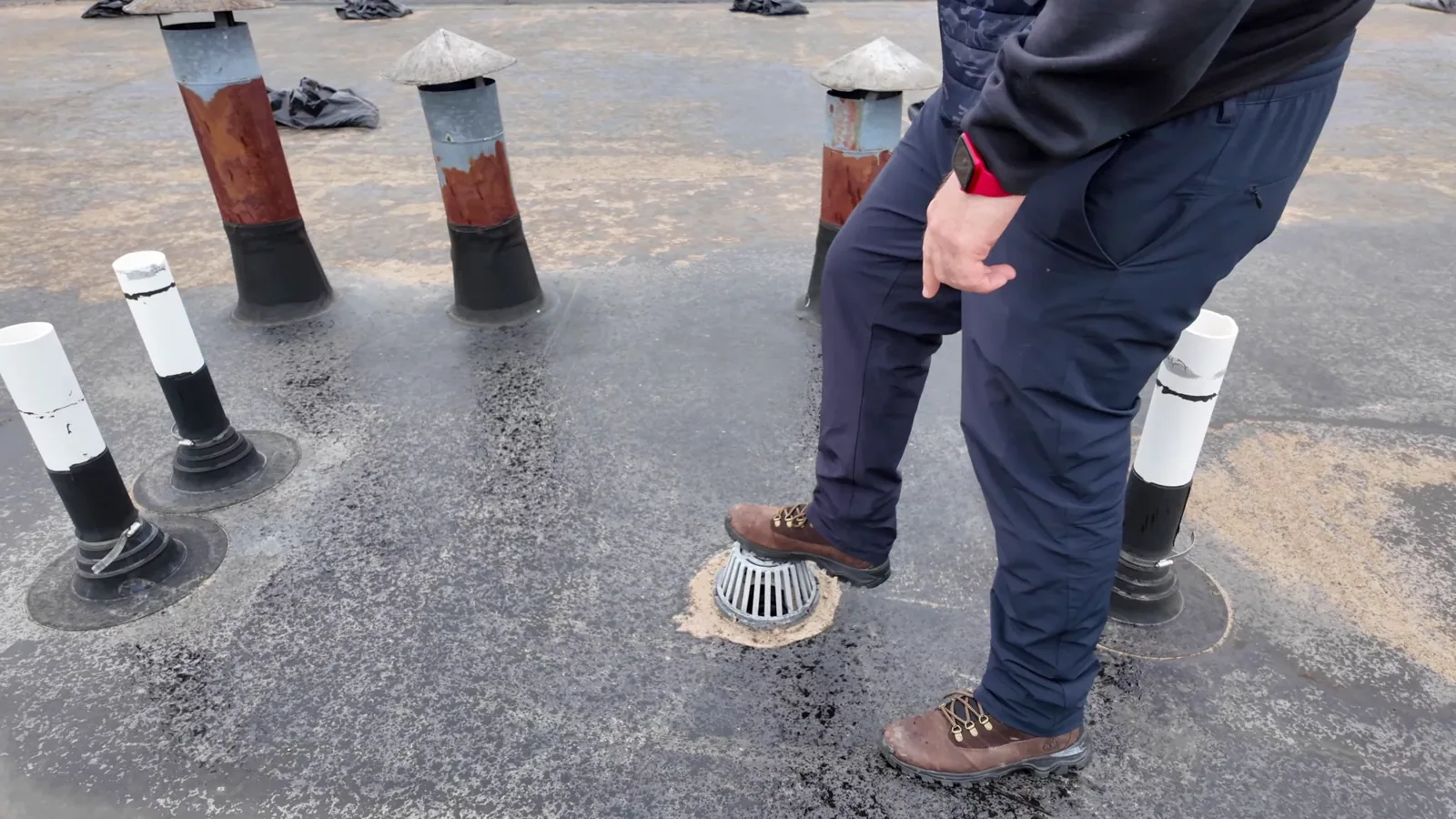
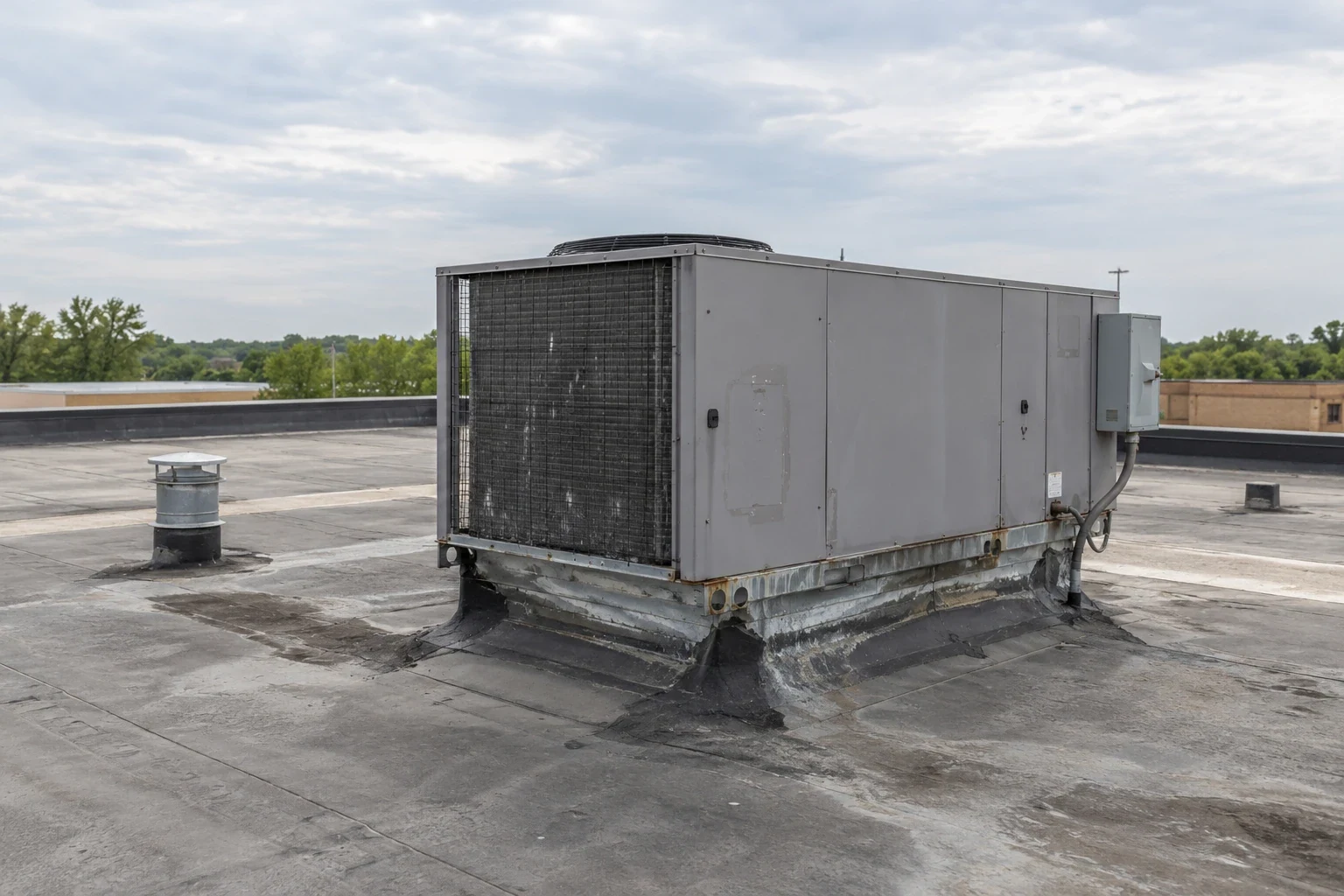
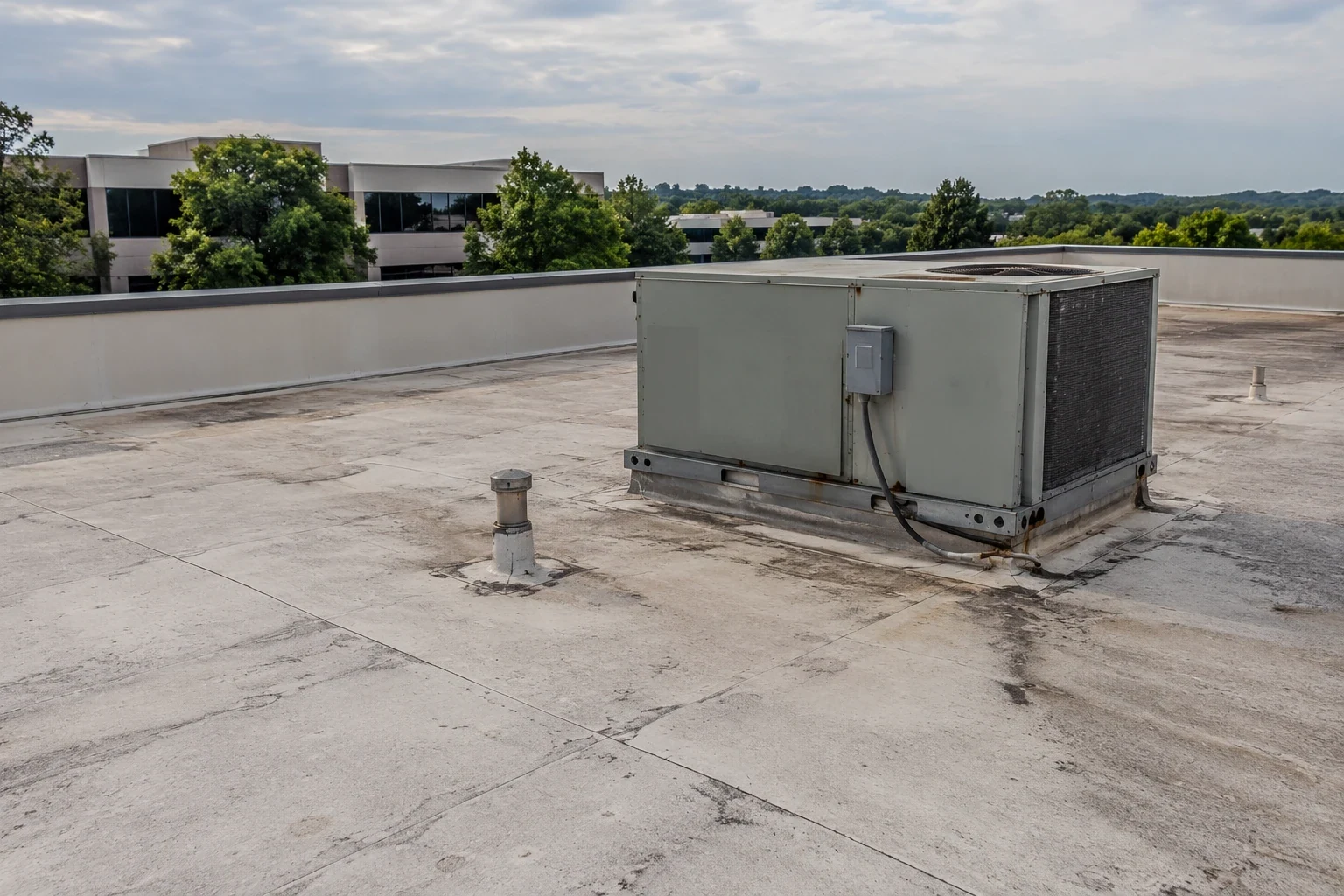
Logistics buildings may have fans, vents, communication equipment and other roof penetrations, but the specific facility’s inventory must come from its records and inspection. We examine each included curb or penetration, compare flashing with the nearby membrane and look for movement, open seams or incompatible prior repairs. The operation contact identifies live equipment and required shutdown approvals. A roofer can address the waterproofing transition but should not move a unit or change an operating system without the responsible provider.
A newly installed unit requires a coordinated curb, support and flashing detail before placement. The mechanical contractor supplies the equipment requirements; design participants resolve structural questions; the owner approves any operational change; and the roofing crew completes the accepted waterproofing work. Our equipment curb roofing identifies the roof-side handoff. When a connection is abandoned, we inspect the opening and specify permanent closure rather than relying on a cap that may leave the surrounding assembly unresolved.
What does a storm inspection establish?
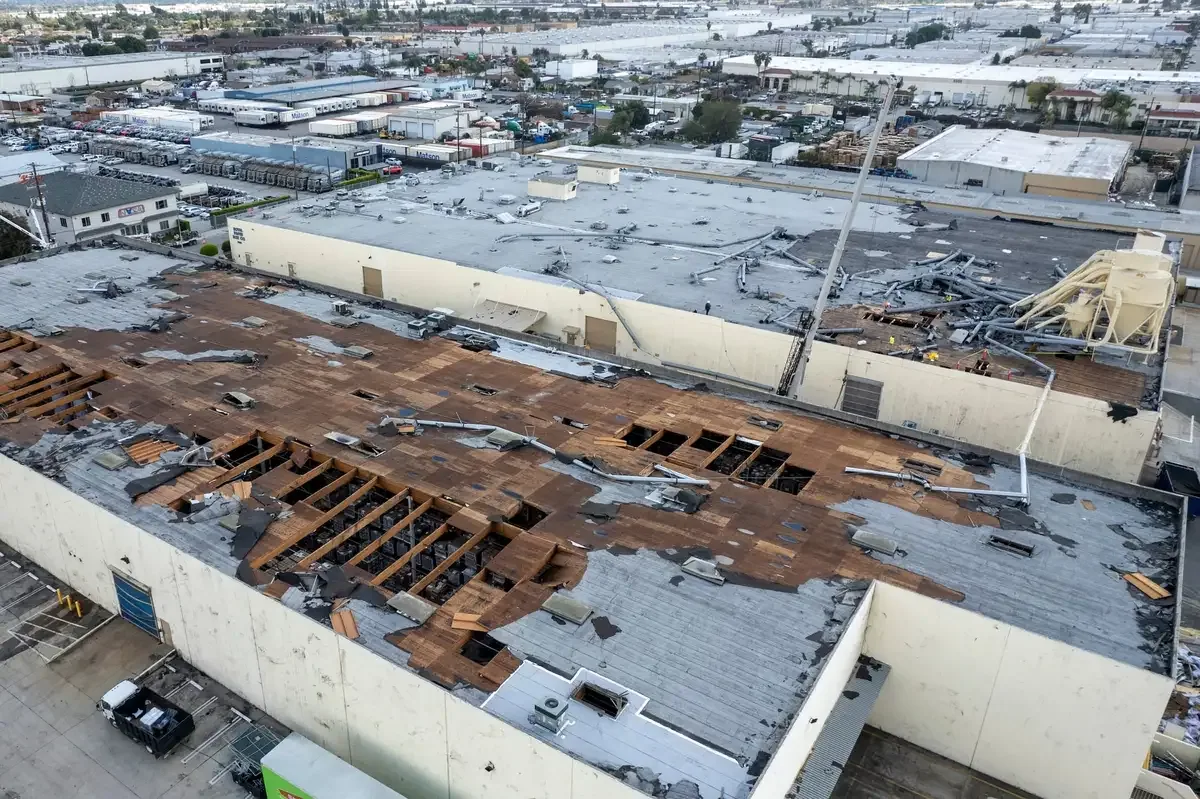
A report of hail or wind focuses an inspection; it does not substitute for one. We examine the roof field, edges, metal terminations and exposed equipment details for conditions consistent with the reported event, and note areas where safe access was not possible. A puncture, displaced edge or loosened flashing should be located and photographed. Existing wear, prior repairs and unrelated leaks remain separate findings unless evidence connects them. That distinction helps a 3PL team decide which sections need urgent protection and which require routine maintenance.
The regional climate includes frequent spring and fall wet periods and recurring Metroplex hail and wind. After an active opening is identified, our storm damage roof repair can address stabilization and permanent work in distinct steps. If concealed moisture or attachment condition will change the repair, we describe the inspection or opening needed to confirm it. A storm claim file should identify what the roof showed at this property, not infer a loss merely from a regional weather report.
What records help the next facility manager?
A durable closeout record identifies the building area, observed condition, repair materials, photographs, work date, access limitations and any remaining question. If material was removed, document what the opening showed and how the assembly was restored. The logistics team can connect that entry to a dock incident, inventory protection plan or equipment service record. It can also assign the next maintenance task without confusing a temporary water-control measure with a completed permanent repair.
Grand Prairie and Irving connect through regional industrial and commercial activity, while SH 183 provides an east-west connection between Irving, Dallas and Fort Worth. Those facts help orient service planning; the site contact still defines truck access and delivery windows for a specific address. For a property manager overseeing multiple sites, portfolio roof records can link findings to owner approvals. A Grand Prairie assessment remains based on the individual roof and the work area examined.
Commercial Roofing Questions
Can a roof repair be scheduled around live loading docks?
Often the work can be phased, but the facility’s safety rules, roof access and repair method control the sequence. We confirm dock movements and staging with the site contact, then define any restricted work zone and release point. The operator authorizes traffic changes; the roofing scope addresses the crew and materials needed for the repair.
Does ponding water prove that the roof deck is failing?
It shows where water remains, not why. We inspect drains, overflow routes, slope, seams and visible deflection, then identify whether further structural or assembly review is needed. A drain obstruction and a deck concern are different findings and should not be combined without evidence.
What should a logistics operator prepare before a roofing project?
Identify the facility contact, roof-access rules, dock schedule, staging area, emergency routes, equipment shutdown approvals and inventory-sensitive zones. We confirm roofing-specific protection and material handling with that contact. The plan also states where work opens the assembly and how the section will be protected if weather changes.
Can regional hail reports document damage at our warehouse?
They provide weather context, not property-specific damage proof. We inspect the roof and record visible conditions, access limits and any additional testing needed. The claim or repair file should connect each scope item to the observed facility condition rather than assume all regional roofs were affected.
How are equipment penetrations handled during a roof replacement?
We identify each included unit and opening, confirm who supplies dimensions and shutdown requirements, and coordinate the accepted curb and flashing detail before placement. The facility and its service provider control equipment operation. Structural or mechanical design questions go to the responsible professionals.
Ready to review the roof scope?
Request a Roof Assessment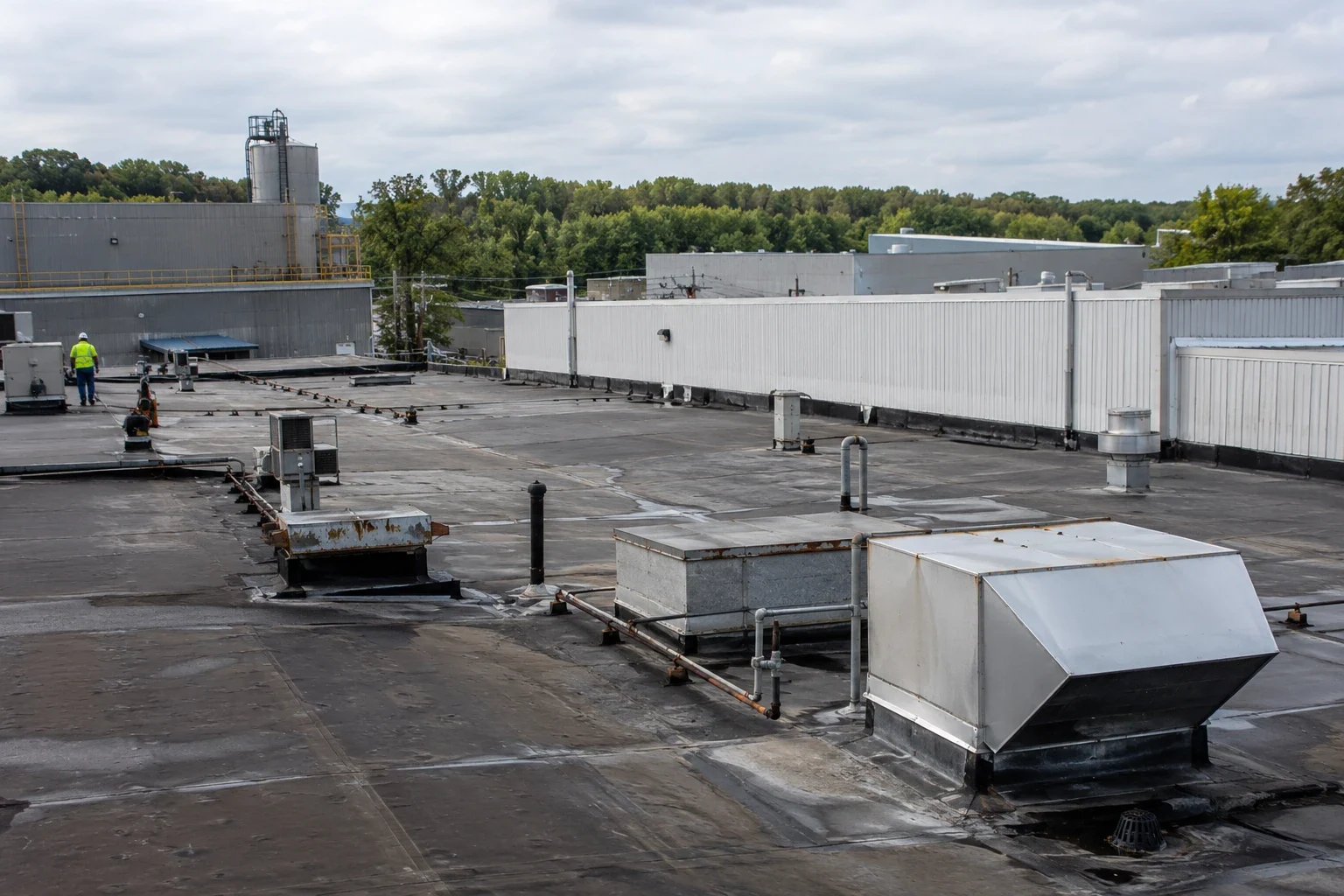
Commercial Roofing for Property Managers
See scope, options and what to expect on the roof.