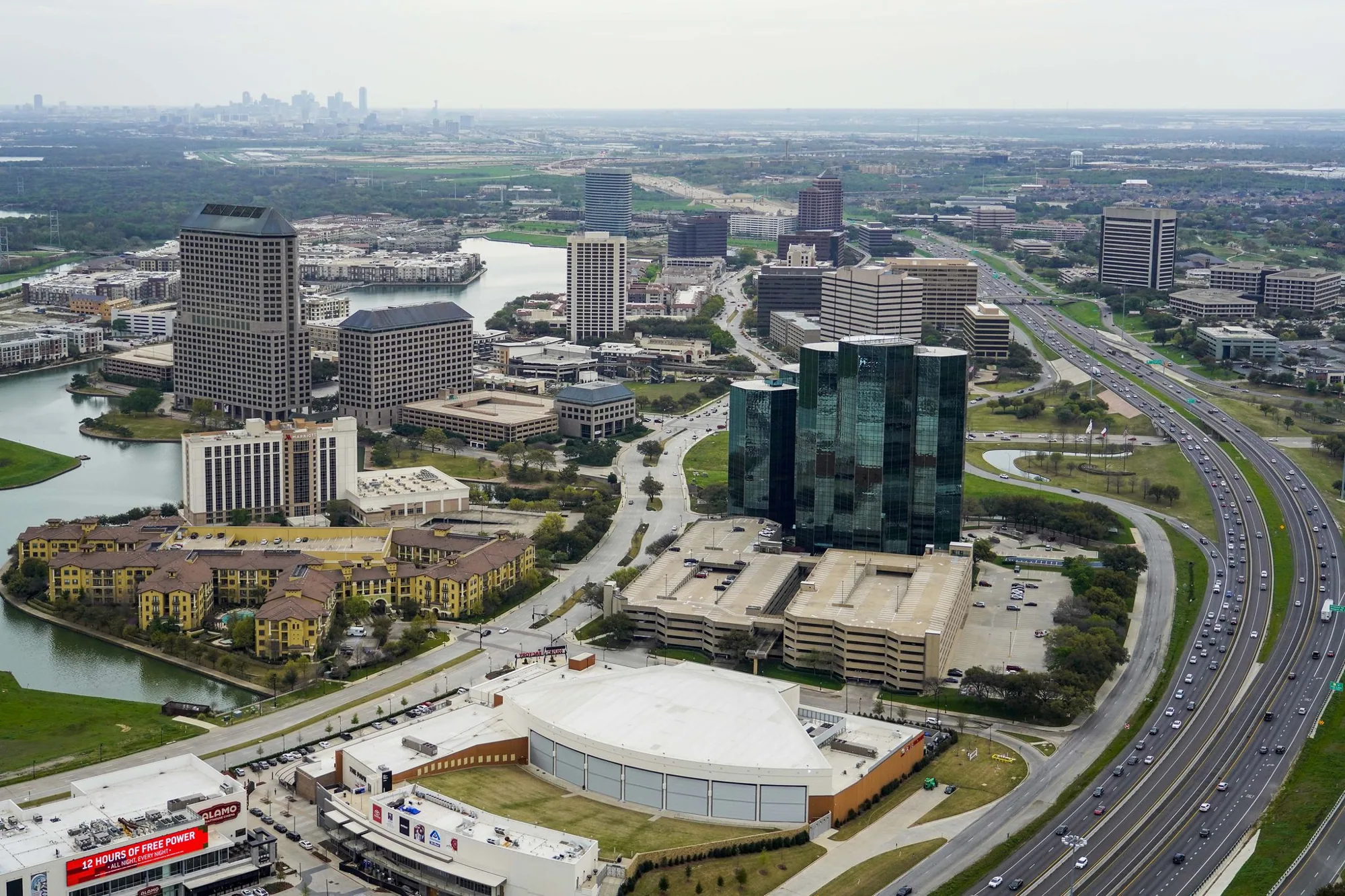
Roof work above production has to account for both the exposed assembly and the activity below it. In Irving, hot summer roof surfaces and seasonal storms put stress on seams, flashings, perimeter metal and drainage; regional hail or wind calls for inspection of the property itself before damage is assigned. We document the observed condition and connect each repair to its material, boundary and access plan. That gives plant leadership and facilities staff a practical basis to schedule work while keeping production, shipping and building services in view.
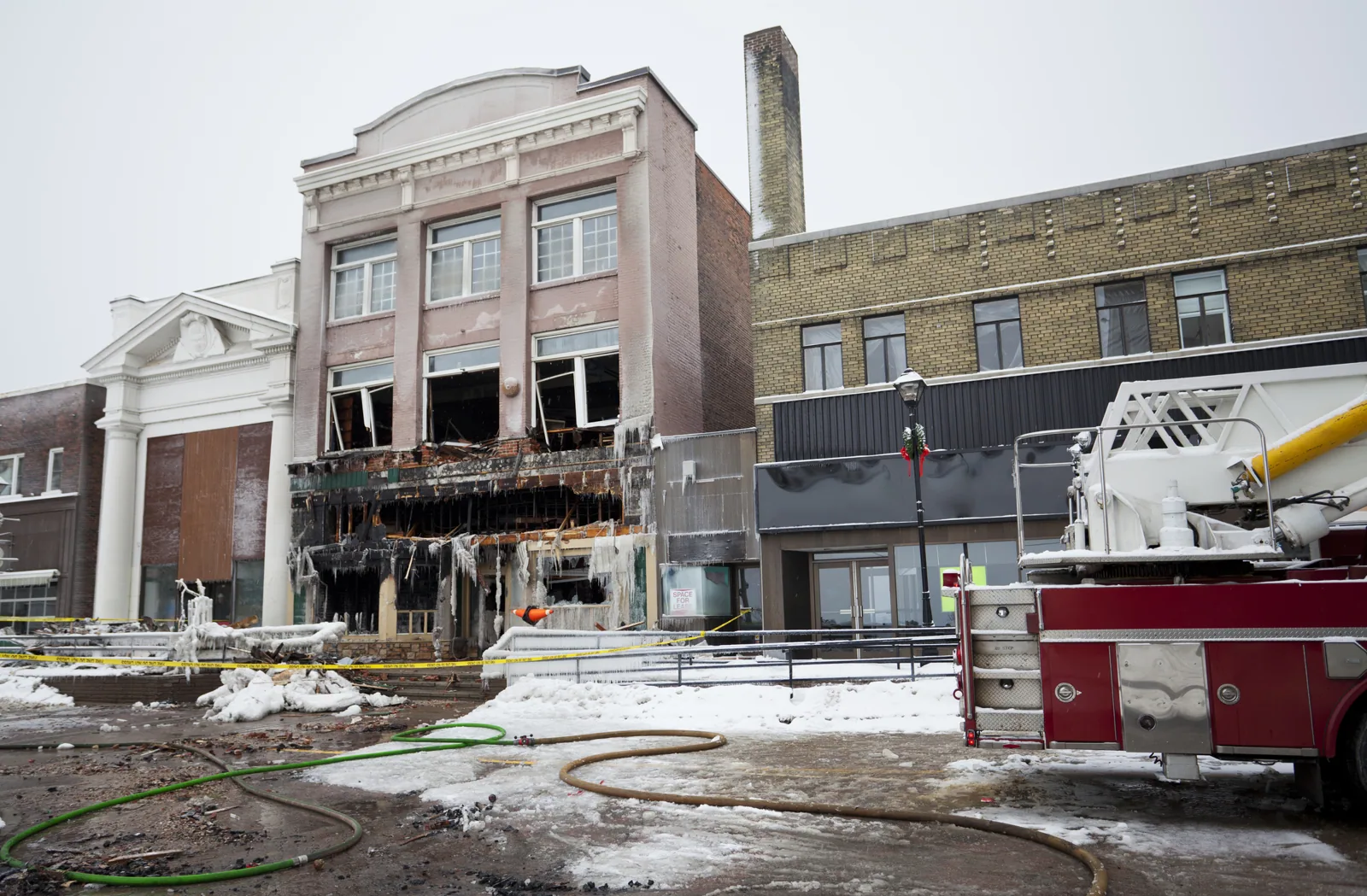
Irving’s listed employers span energy, technology, aviation, telecommunications, healthcare, insurance and financial services. That mix speaks to the market’s varied commercial operations, not the equipment or roof assembly at a particular plant. Nearby Grand Prairie has distribution and manufacturing activity, while Coppell’s commercial inventory includes warehouses. Those settings make logistics and production continuity useful planning considerations. The roof choice itself comes from the building’s records and examination.
What changes when production remains active?
Before recommending a sequence, we ask which areas below the work must stay available and which operations have a controlled shutdown window. The facility identifies ventilation intakes, process exhaust, overhead equipment, loading routes and restricted zones. We then map the roof work to those constraints, including where materials will be staged and how an open section will be protected if weather changes. A planned shutdown or room restriction belongs to the plant’s authorized operations contact; roofing staff do not make that decision on behalf of production.
A roof may cover multiple production areas with different access and ventilation needs. We mark the work boundary, explain noise and odor considerations associated with the selected materials, and coordinate any requested protection below. If a repair can be completed without changing plant operations, that conclusion still depends on the actual location, method and facility rules. Our occupied-building roofing sequence lays out work phases and the handoffs needed before each area is released.
How does the existing assembly affect the repair?
Manufacturing activity does not identify what membrane or insulation sits above it. We inspect accessible construction, review available drawings and prior work records, and note where attachments, seams, curbs or roof penetrations show visible changes. A repair requires a compatible receiving surface and a sound enough boundary for preparation. If prior coatings, repairs or contamination affect bonding, we include the necessary preparation or investigate another approach rather than extending a patch across materials that cannot reliably receive it.
Where an assembly may contain concealed moisture, the next step should answer a defined question. A survey can help direct attention, and a selective opening can confirm construction at a specific location. We document what was inspected and keep the limits clear. If wet insulation or deteriorated attachment extends beyond a contained repair, the scope can compare replacement or other suitable work. Our roof inspection records field observations separately from any engineering or process-equipment review the manufacturer needs.
Which equipment interfaces need a separate handoff?
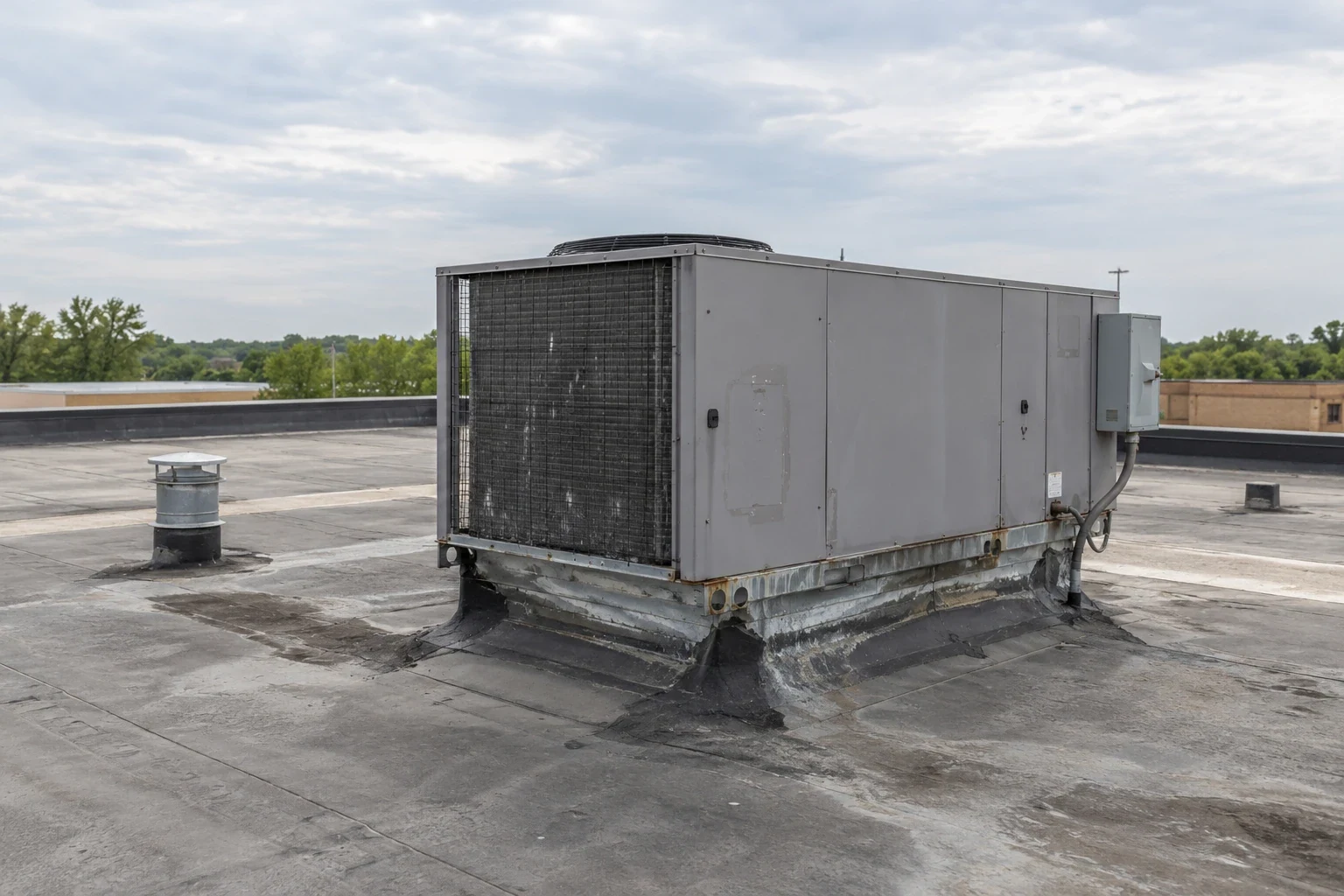
Exhaust fans, vents, pipe supports, conduit runs and rooftop units interrupt the membrane and create details that need continued maintenance. For each affected component, we record its condition, mounting, flashing and nearby drainage. A loose seal at one penetration does not establish a systemic defect. If the component moves, the equipment contractor provides dimensions and connection requirements; the responsible design professional addresses structural or mechanical questions; and the owner confirms any shutdown. The roofing scope addresses the waterproofing detail included in the approved work.
Replacing a unit can change curb height, clearances and the existing opening. The permanent roof detail must be coordinated before the equipment is set so the membrane can terminate and drain correctly. Our curb and support work includes the roof interface and adjacent material preparation. Irving requires permits for commercial additions and remodeling, with most applications reviewed by relevant departments. The project team confirms the permit path for the actual equipment and roofing scope before ordering or opening the assembly.
What does Metroplex weather change in the plan?
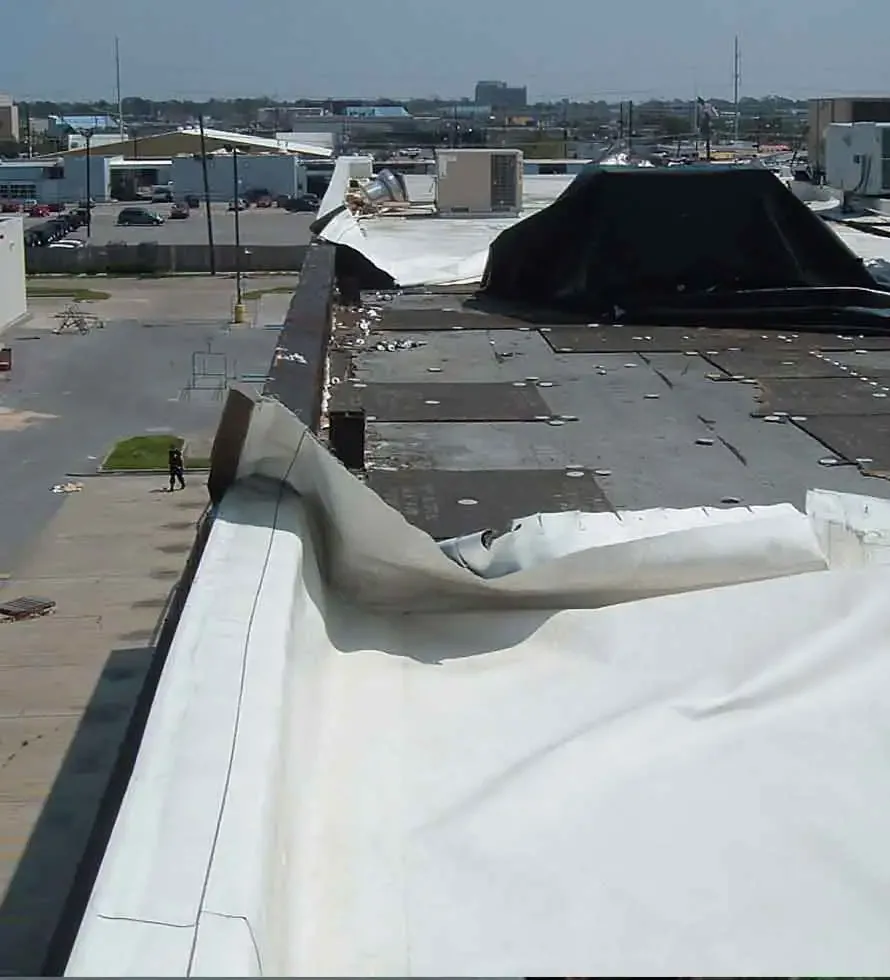
The regional climate includes hot summers and wet spring and fall periods, with large hail, damaging wind and tornadoes occurring in the Metroplex nearly every year. Those regional facts do not prove a specific event reached a specific manufacturing roof. They do explain why the inspection should look at the roof field, perimeter connections, drains and flashings after a reported storm. If an active leak follows, we can respond at any hour to stabilize an opening, then return to establish the permanent repair when conditions and access allow.
A production schedule and weather window both affect phasing. The crew should not leave a section exposed beyond the planned protection period, and the plant should know where deliveries or equipment movement could intersect with the work. We identify the daily roof boundary and the condition that must be met before a section is closed. A wind-damage assessment focuses on observed displacement, failed edges and openings rather than attributing every leak to a storm.
What belongs in the closeout record?
Trade handoffs begin with a closeout record that shows the repaired area, materials, preparation, photographs, any opened assembly and the condition left for follow-up. Plant facilities can connect that record with equipment service, roof drawings and production shutdown logs. If the repair encountered a different substrate or concealed moisture, the report should state the change and the authorized scope adjustment. A future maintenance visit can then check the same detail without treating the work ticket alone as proof that every nearby component was addressed.
Irving’s North Belt Line commercial corridor meets SH 183, while the central SH 183 route connects the city with Dallas and Fort Worth. For facilities receiving equipment or supplies, those regional connections make delivery timing and staging worth resolving with the site contact. A North Irving service-area assessment still begins at the individual building, where the roof material and operating constraints determine the method. For a larger facility program, logistics property roofing addresses related roof decisions at distribution sites.
Commercial Roofing Questions
Can production continue during roof repairs?
The facility’s operating rules, roof location, repair method and need for equipment shutdown determine what can remain active. We coordinate the roofing boundary, material handling and temporary protection with the plant contact. Operations management approves process changes and restricted areas. The schedule should state each handoff before the crew reaches a production zone.
Does a manufacturer’s building use identify the roof system?
No. Production activity can help identify access and equipment concerns, but it does not establish membrane, insulation or attachment. We inspect accessible materials and review available records before selecting compatible preparation and repair. Where assembly details remain hidden, we state what needs confirmation.
What happens if a repair opening exposes wet insulation?
We document the actual opened area and the condition found, then compare it with the authorized quantity. Additional removal should follow an agreed approval limit and a clear restoration detail. A small opening does not establish moisture extent elsewhere, so broader work needs evidence tied to its scope.
Who coordinates roof work around exhaust and production equipment?
For each affected system, the facility identifies active status and the contact authorized to approve interruption. The equipment service provider advises on its unit, while qualified design participants address structural or mechanical requirements. We coordinate the roof waterproofing detail and the working sequence included in our proposal.
How should storm damage be evaluated at a plant?
We inspect the subject roof for displacement, punctures, failed seams, edge conditions and drainage, then document what is visible and where. Regional storm occurrence is context, not property-level proof. If a temporary response is needed, we record it separately from permanent repairs or further assembly investigation.
Ready to review the roof scope?
Request a Roof Assessment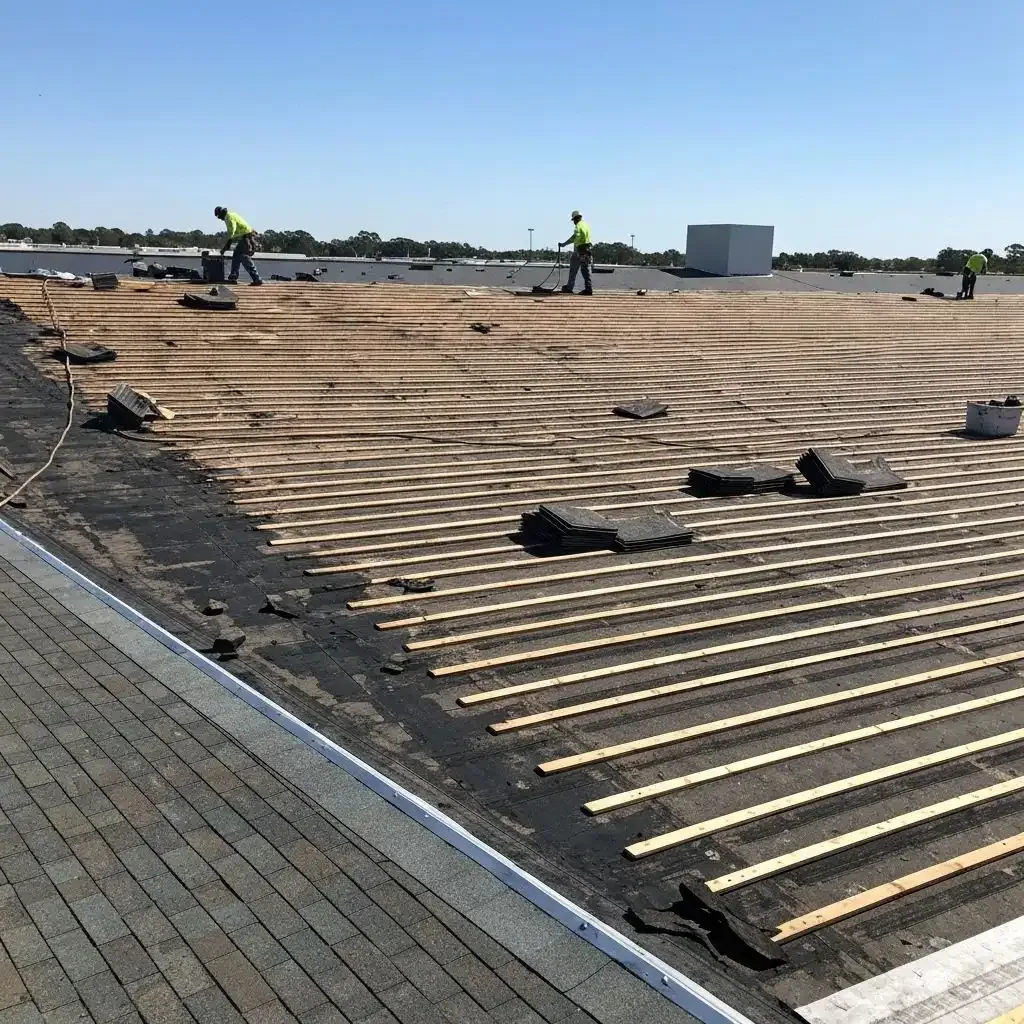
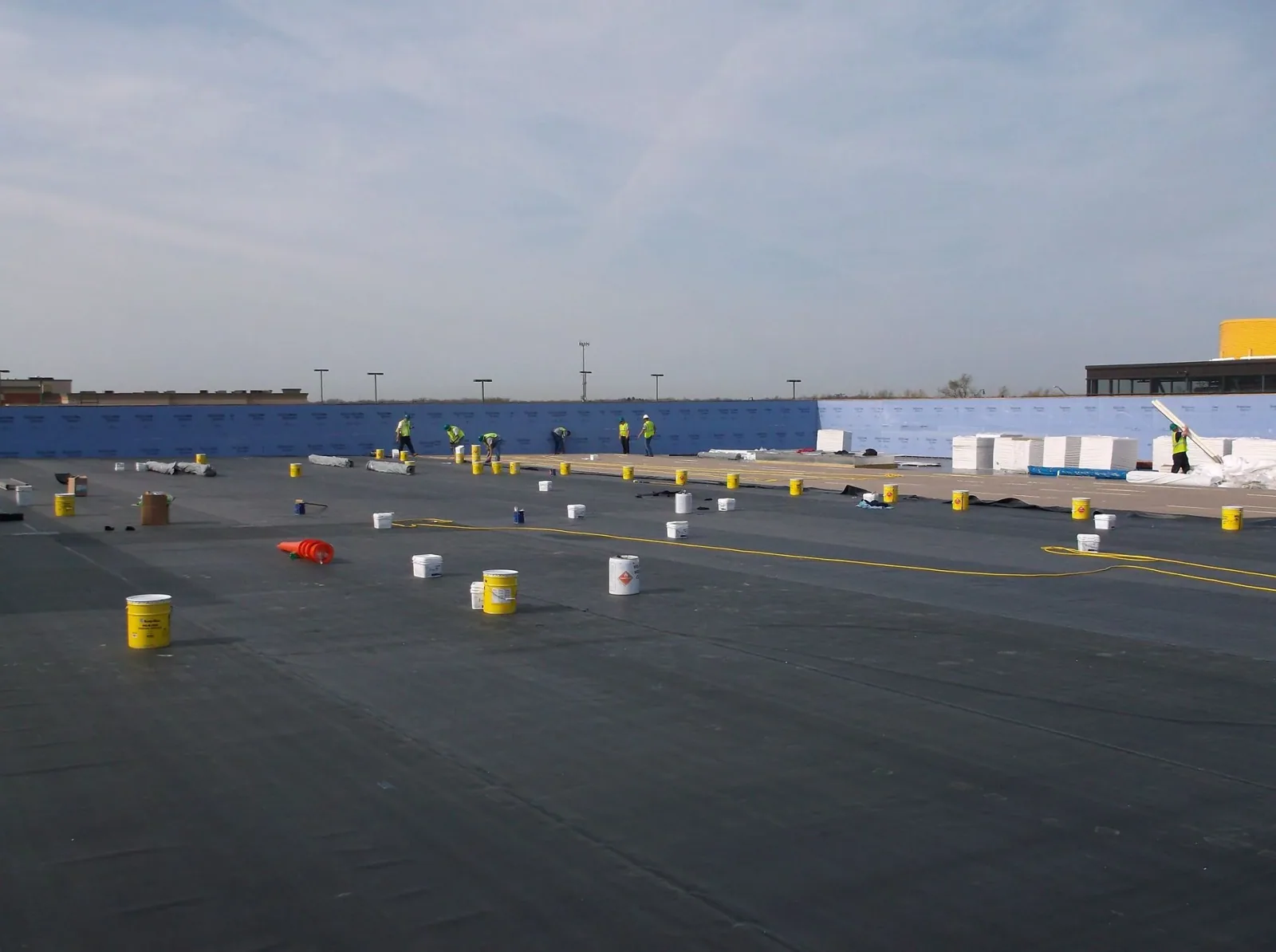
Commercial Roofing Coordination for General Contractors
See scope, options and what to expect on the roof.