Cold-weather application limits can differ across a portfolio even when every property shares the same regional forecast. A shaded substrate, a different membrane and a different attachment method can change the usable installation window. A multi-site roof program in Irving, TX, therefore needs consistent decisions without imposing one construction sequence on every assembly. Commercial Roofing Irving coordinates the findings, scopes and operating requirements that make those distinctions useful.
Wintry weather occurs in the Dallas/Fort Worth region, alongside hot summers and severe storms. We review the actual conditions and material requirements at each property. Las Colinas Urban Center office uses and Valley Ranch multifamily space can also create different access and protection needs. The program connects those building-specific requirements with a portfolio priority, so a common reporting process does not become an assumption that all roofs have the same material problem.
What should remain consistent between buildings?
Use consistent identifiers for the property, roof area, assembly and finding. A report that calls one defect a flashing problem and another a leak without identifying its connection makes comparison difficult. We describe the accessible material, condition and recommended action in terms the manager can relate across the portfolio. Separate elevations and assemblies remain distinct even where they belong to the same building.
The portfolio roof record retains those identifiers along with completed repairs and outstanding questions. Consistency applies to how the findings are described, not to the conclusion assigned to them. A local opening can reveal wet insulation at one property while another roof needs further investigation before its concealed condition is established. We preserve that evidence boundary so a summary does not turn an unexamined roof into a roof assumed to be dry or serviceable.
How do material findings and occupancy set the order?
Immediate water entry needs an appropriate response before a routine work queue is considered. Beyond that response, the priority depends on the defect's extent, the retained assembly and the operating consequence below it. We describe condition separately from consequence, then explain the combined reason for the proposed sequence. A vulnerable room can make a contained defect urgent, while widespread concealed deterioration can make another property's construction planning consequential even before a new interior leak appears.
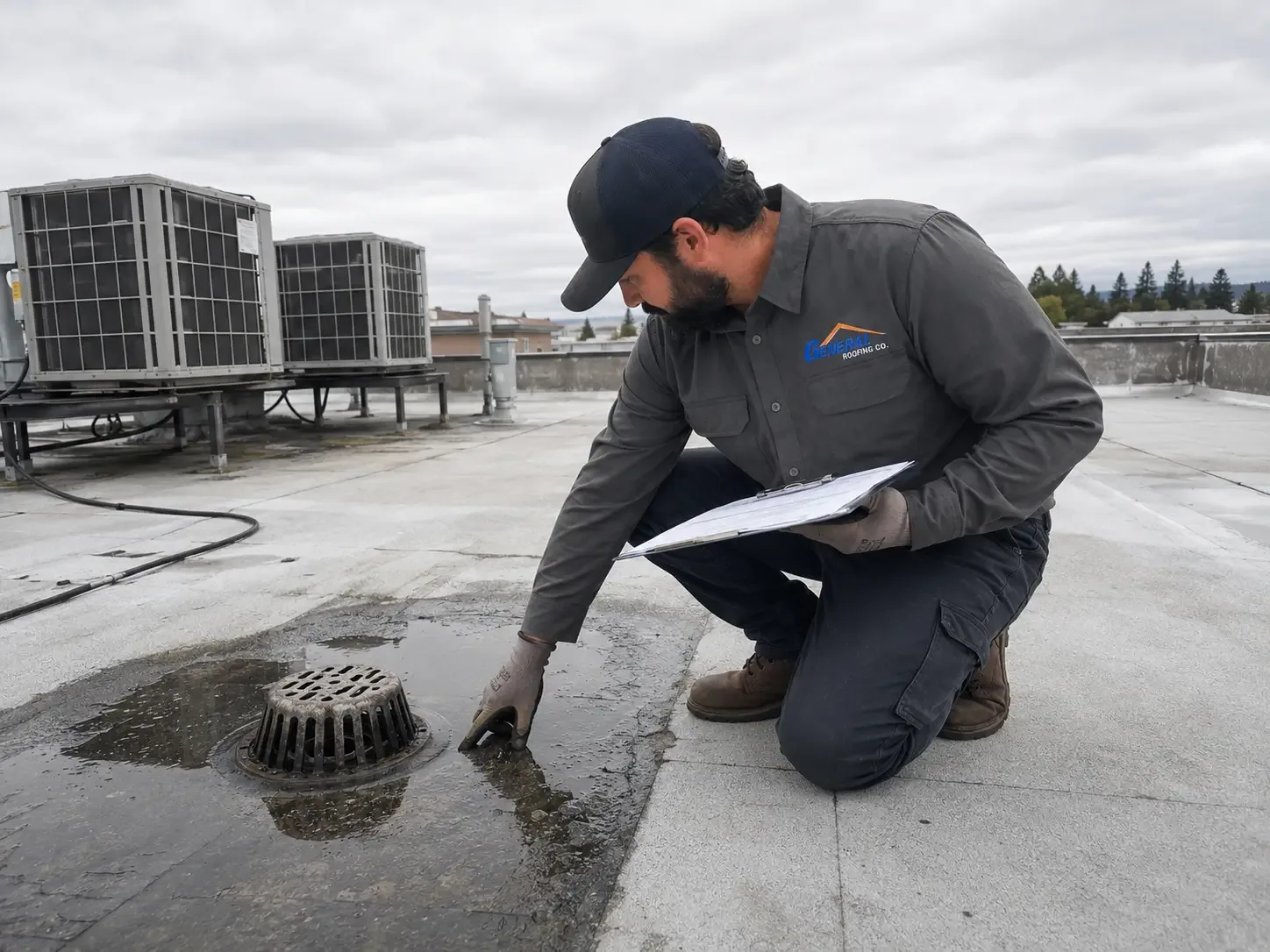
Persistent water in a low area deserves a drainage and roof-profile assessment, not the same repair instruction used for a puncture. We identify the investigation or corrective work specific to that mechanism. The portfolio schedule can then distinguish an outlet obstruction, a low roof area and a larger drainage change. That distinction gives the manager a clearer priority than grouping every water-related observation under one generic repair allowance.
How can proposals be compared without copying the assembly?
Each construction scope needs its own removal, preparation and detail requirements. A common estimate format can make those items easier to compare, but it should not conceal differences in substrate, attachment or drainage. We identify known work and unresolved quantities at each property. The manager can see which proposals include insulation removal, equipment adjustments or temporary protection, instead of comparing totals for materially different jobs.
A coordinated capital plan distinguishes those construction packages from routine maintenance. We describe the condition supporting each package and the findings that could expand it. Phases need workable boundaries within the actual roof, with their temporary junctions and repeated staging included in the comparison. The portfolio budget remains connected to the assemblies being retained or removed, rather than assigning the same square-foot assumption to properties with different concealed conditions.
Which access decisions stay with the individual property?
Tenant hours, deliveries, sensitive rooms and equipment service determine a property's work window. A program can coordinate notice and reporting, but the building manager still needs a sequence that fits those activities. We discuss material staging, occupied entrances and the protection required below each opening. Roof height, loading access and equipment location can change handling requirements even where the proposed membrane is the same.
An occupied-building roofing sequence should identify temporary closure and any agreed equipment interruption. For properties in Coppell as well as Irving, the permit and code review belongs to the property's jurisdiction. Irving's adoption of the 2024 IBC and IECC does not establish another city's requirements. We keep that review with the building-specific scope, so portfolio coordination does not substitute a neighboring municipality's rules for the ones applicable to the work.
Material delivery also needs a property-specific check. Bundles require suitable storage and a handling route that does not overload the roof or obstruct daily circulation. Delivering every property's material on the same date can create unnecessary exposure where installation windows differ. We coordinate delivery with substrate readiness, weather protection and the amount of work that can be closed safely. The portfolio can retain a common purchasing plan while staging installation around the actual roof. This separates administrative efficiency from a construction sequence that must still suit the building and its supporting structure.
What makes the work queue reliable as conditions change?
A queue needs a defined response when new findings arrive. Water entry, equipment alterations or additional investigation can change the priority established earlier. We connect the change with the affected roof area and explain which action needs revision. Completed work is recorded against its scope, while an unresolved concealed condition remains open until the agreed examination establishes it. A status label is useful only when it represents a recognizable roofing action.
Planned maintenance visits can sustain suitable assemblies while capital work is developed, with observations retained in the common record. A property-specific condition report explains the findings behind any revised recommendation. For warehouse roof work, delivery activity and stored goods can influence the construction sequence; office and multifamily properties introduce other restrictions. We preserve those distinctions when consolidating the program's outstanding work.
The manager also needs a clear contact and approval path for each action. Investigation, temporary protection and permanent repair can involve different permissions or responsibilities. We identify that sequence within the program so a condition requiring attention is not left unresolved because the portfolio summary concealed who needed to authorize its next step.
Commercial Roofing Questions
Should all buildings use one membrane specification?
Assembly choice needs to fit each deck, retained construction, drainage arrangement and operating use. A portfolio can compare material options consistently while using different solutions where conditions require them. We explain the reasons for those differences. Standardizing a product without examining its supporting layers and details can transfer an unsuitable assumption from one property to another.
Can routine visits share a common calendar?
A coordinated calendar can assist access and reporting, with changes for actual condition and work requirements. A roof with an active leak or a new equipment alteration may need attention outside that interval. We identify the event or finding that triggers a separate response, so the shared schedule remains a working tool rather than a reason to defer a necessary examination.
What should happen when one property needs unexpected removal?
Document the exposed condition and relate it to the agreed scope and decision process. We explain the additional repair or investigation before concealing the area, with suitable protection maintained meanwhile. The portfolio record should show that property's changed work without implying the same concealed condition exists at every other building.
How can a new property enter an existing program?
Establish its roof areas, accessible assembly, condition and operating constraints before applying the common reporting process. Available records can assist that baseline, with unconfirmed details kept separate. We identify urgent action and unresolved questions first, then connect the property with the portfolio's maintenance and capital decisions. The existing program provides a method for comparison, not a substitute for examining the new roof.
Ready to review the roof scope?
Request a Roof Assessment