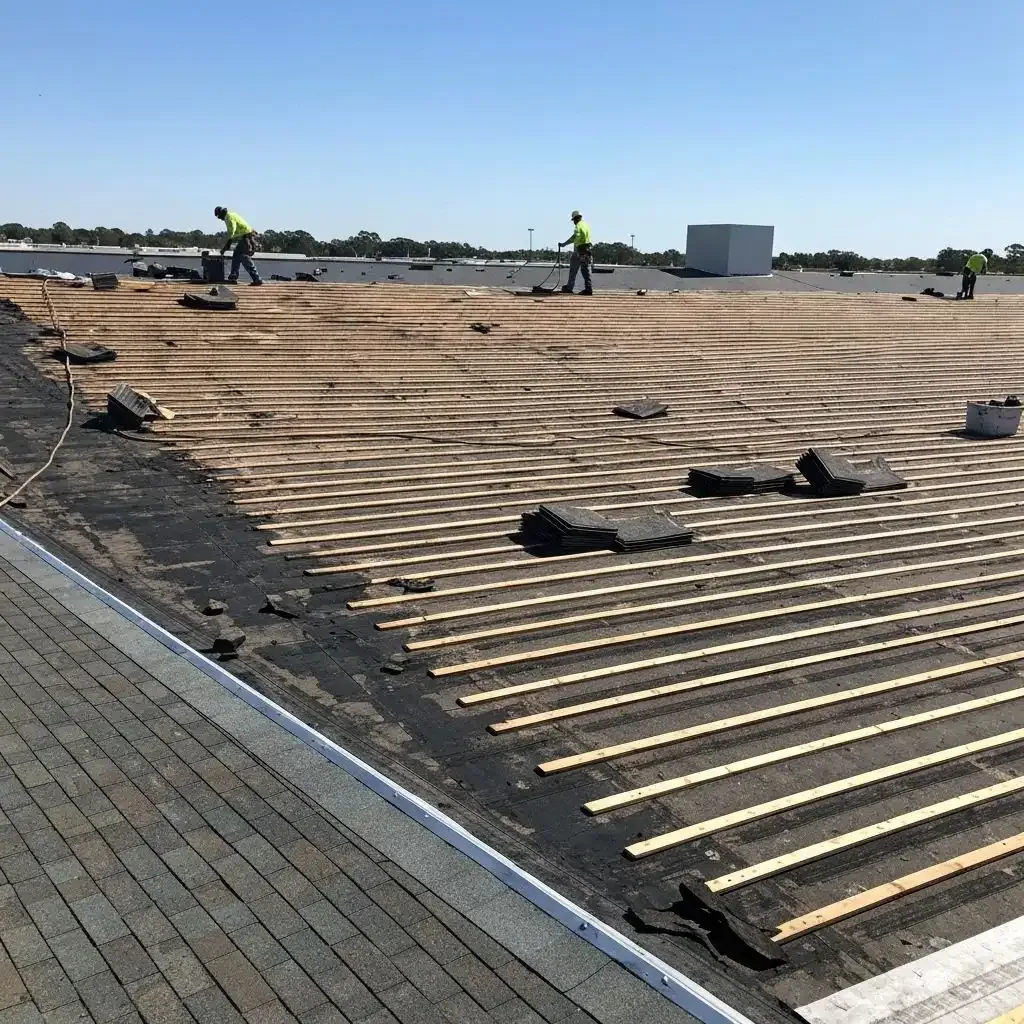
Corporate offices, healthcare facilities and manufacturing operations each bring a different roof decision to Plano, TX. The city’s economic profile includes regional offices, life-sciences activity and manufacturing that ranges from electronics to food processing. Those are useful planning contexts, not proof of a particular building’s construction. Commercial Roofing Irving examines the roof layers, penetrations and drainage present before setting a repair or replacement scope.
Heat across the Dallas/Fort Worth region creates repeated expansion and contraction at membranes, equipment curbs and metal edges. Regional wind and hail conditions also merit inspection after a reported storm, but a weather pattern is not a condition report for a single property. We document the actual assembly and compare the observed failure with the owner’s operating needs. That distinction matters when one roof must protect office space and another supports a production schedule.
Which roof areas deserve close attention first?
We start with the reported leak, prior repairs and the roof plan if one is available, then inspect the surrounding transitions. A water mark inside an office or production area may be remote from the roof opening because water can travel along a deck, insulation joint or structural member. We follow likely routes toward drains, curbs, wall interfaces and seams, and note any evidence that narrows the search. The inspection does not assume that separate tenants or roof elevations share the same leak path.
For a healthcare or life-sciences operation, the affected room may have equipment or environmental requirements that change how interior protection is arranged. The manager identifies those constraints; we define the roof work zone and temporary cover accordingly. A commercial inspection records the accessible condition and any test needed to resolve a concealed layer. Where a thermal pattern is useful, an infrared survey can direct confirmation instead of treating an image as proof by itself.
How can drainage keep a repair from recurring?
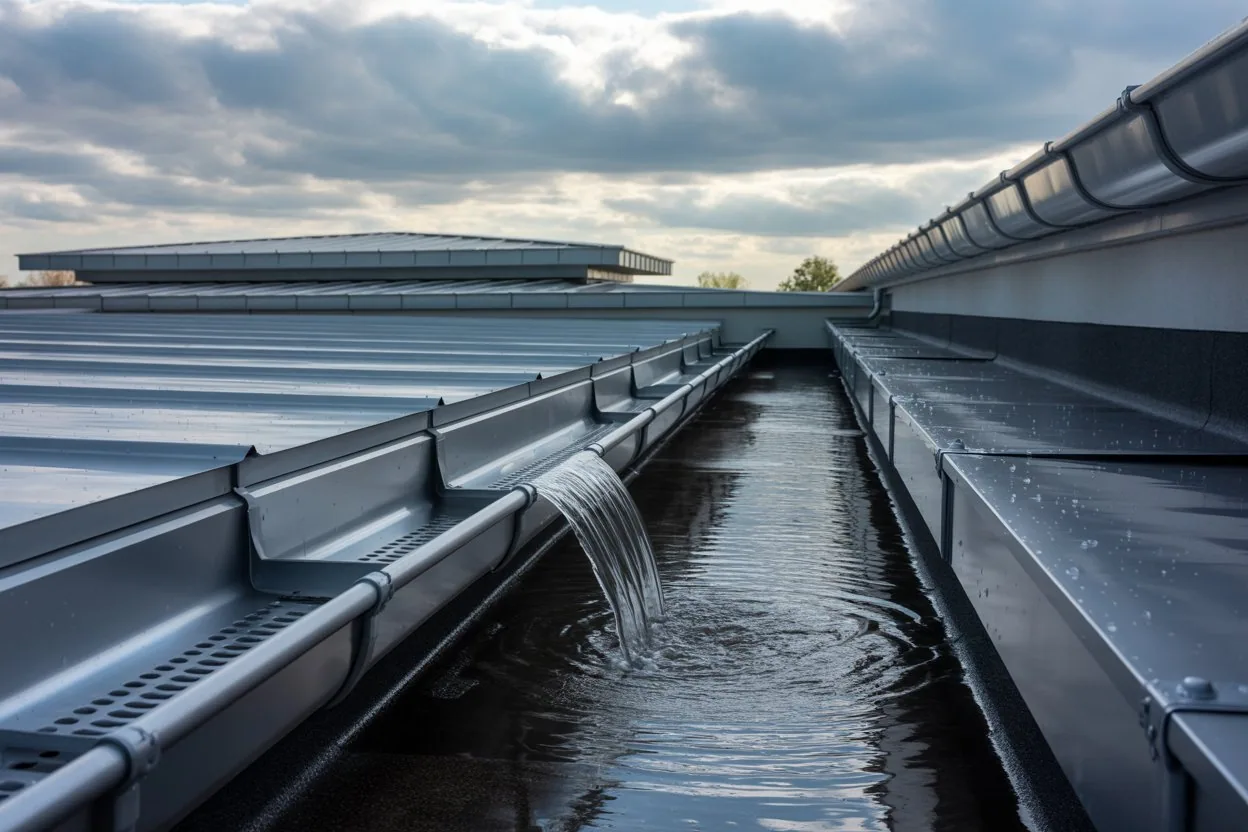
A drain body, strainer and surrounding membrane all need to work together. We check whether debris blocks the opening, whether the drain is set below the adjacent field and whether the flashing remains bonded. A low area may persist because of a profile or support issue rather than a clogged outlet. The repair should address the mechanism that keeps water in place; adding a coating over a recurring low spot does not correct an unsuitable drainage path.
On a production building, roof drains can be close to service routes or equipment that require coordinated access. We identify the actual roof layout and maintain safe handling around those areas. The drain and scupper scope can distinguish cleaning, detail repair and a designed drainage change. A ponding-water assessment also considers the membrane condition around the low point and whether retained water has affected insulation or attachment.
What does a recover leave in place?
A recover leaves existing layers beneath the new assembly, so we establish which layers are present, whether they are dry and whether the deck and attachment can support added material. Existing curb heights and roof edges must allow the new system to terminate without burying critical flashing. If moisture or deterioration is found, the removal limits should follow the verified condition. An overlay that conceals unresolved water or weak attachment can make later diagnosis and repair more difficult.
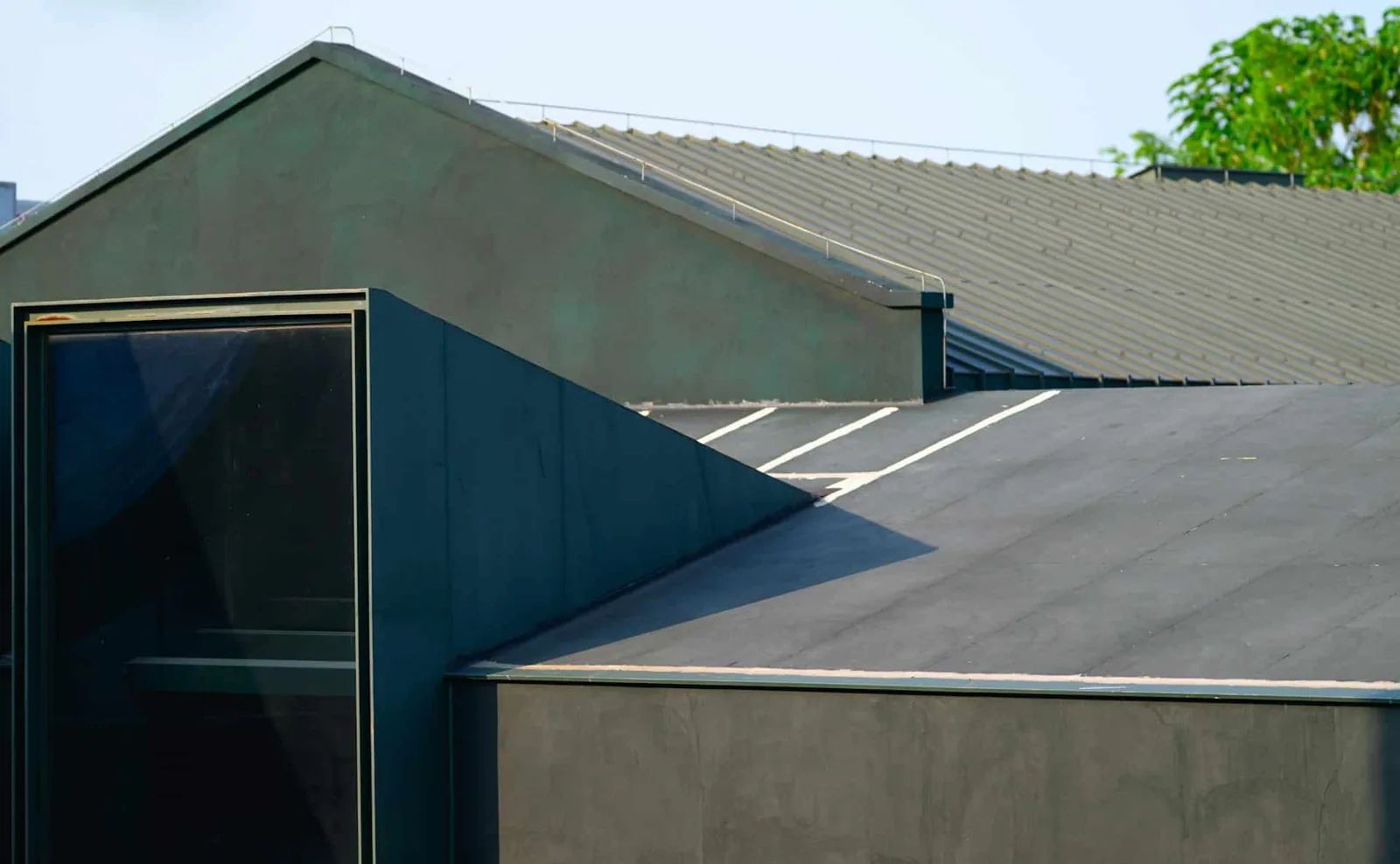
For a suitable substrate, a roof recover can reduce removal while retaining a serviceable assembly. A replacement scope may be better when the roof contains widespread moisture or the deck needs broader correction. We compare modified bitumen with single-ply alternatives based on attachment, drainage, penetrations and future service. The system choice follows the building and design requirements rather than the industry label of the tenant.
How do office and production schedules affect roof work?
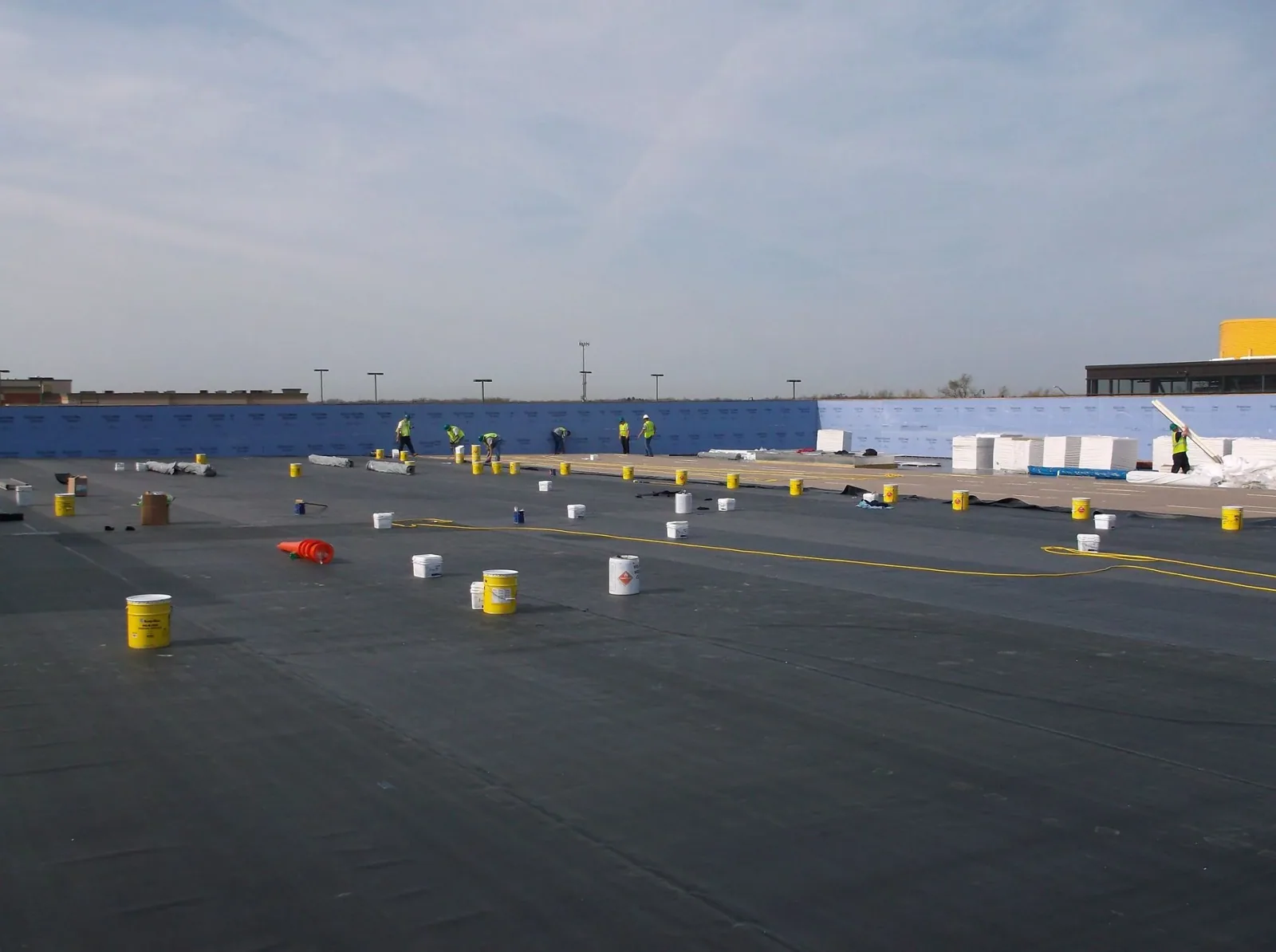
A roof project requires a sequence for delivery, staging, removal, dry-in and detail completion. An office manager may prioritize entrances and tenant notices; manufacturing may require work to avoid a sensitive room or service window. We confirm the real conditions before setting phases. Each section needs a defined tie-in and an end-of-day closure that limits exposure if weather interrupts installation.
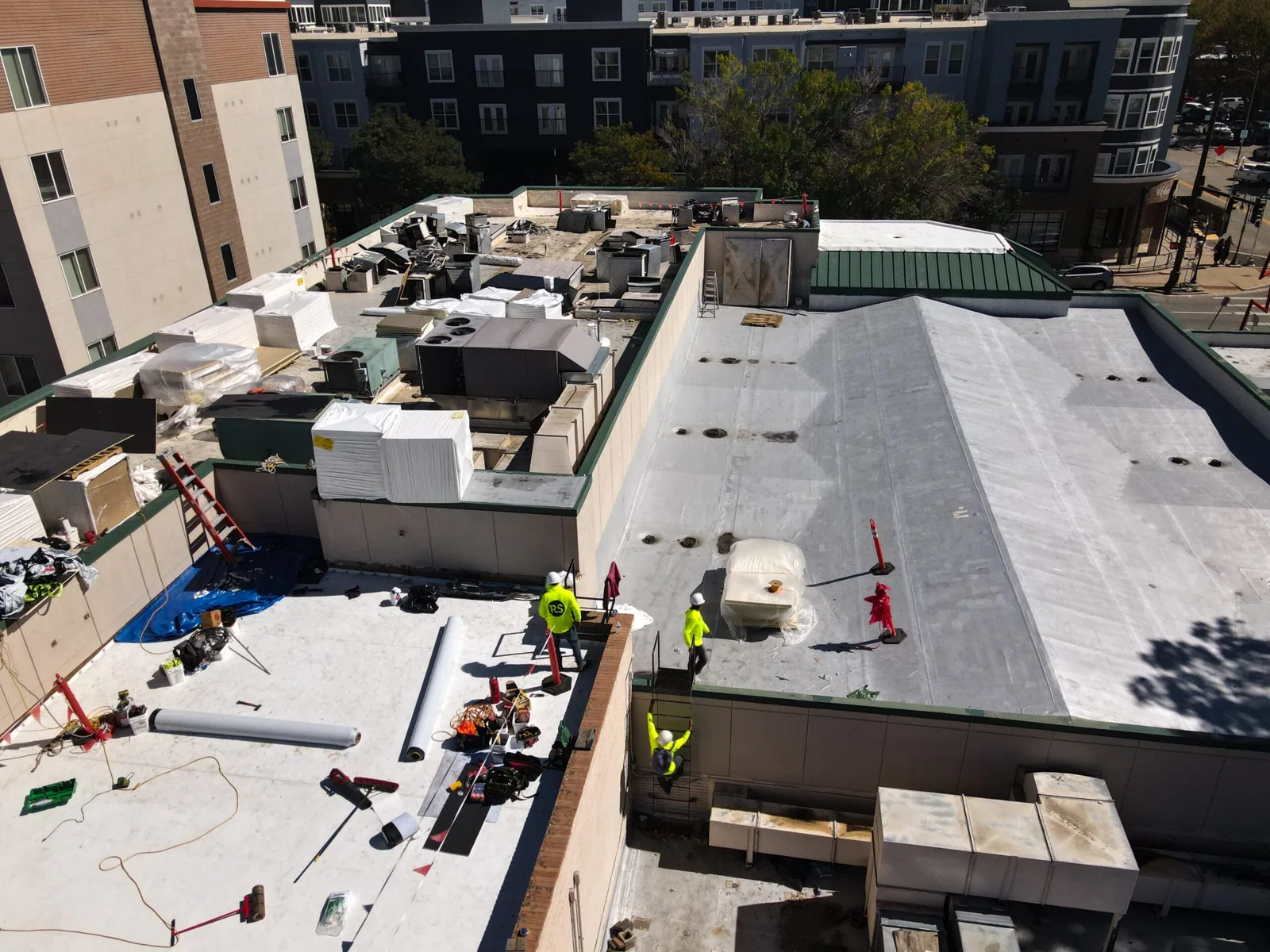
For an occupied property, our phased reroofing approach coordinates access, protection and communication with the building contact. Las Colinas in Irving has its own mix of office and multifamily uses, a useful reminder that nearby portfolio roofs may have different operations. We keep findings from Plano and Richardson separate even when the same owner requests a single comparison. No city’s roof inventory can be inferred from a neighboring market’s building mix.
What should the owner compare before approving construction?
Compare the assembly, removal assumptions, insulation, attachment, metal, drains, penetrations and protection in each proposal. A cost comparison is meaningful only when the scopes address the same repair boundary and concealed-condition assumptions. We identify what is confirmed and what may change after an opening. For a corporate portfolio, a capital plan can separate urgent water control from work that needs design, procurement or tenant coordination. The sequence should identify which areas can be completed together and which require a separate mobilization because of access, equipment or interior protection. We describe the tie-in between phases, the temporary termination that remains and the inspection needed before a later section begins. That detail helps the owner compare a single broad project with staged work without hiding the condition at each boundary.
Plano’s permit requirements and adopted codes need confirmation from its own building department. Irving’s rules do not transfer across a municipal boundary. We identify the approvals relevant to the work and account for review time in the sequence. Following construction, scheduled maintenance records drain, seam and flashing condition, giving the facilities team a basis for follow-up at each roof rather than a generic annual note. A work log can also connect the repair date, material used and roof area to a later observation. If a recurring leak appears, the manager can compare that record with the present detail instead of assuming that a previous repair addressed the current entry point.
Commercial Roofing Questions
How can a leak be traced when the ceiling stain is remote?
We examine the roof area above and around the reported stain, then follow slope, deck joints, penetrations and drainage details that could carry water laterally. Interior access can help establish the path. If the visible evidence does not locate the entry, we identify another test or selective opening that would narrow it. The repair boundary follows the confirmed mechanism rather than the ceiling mark alone.
Is a recover suitable for a manufacturing roof?
The building use does not decide that question. We check the existing layers, moisture, deck attachment, added weight, edge height and equipment transitions. The proposed assembly also needs to fit the owner’s access and operating constraints. If concealed layers are not established, a selective opening can resolve whether they are suitable to remain before the recover is approved.
What can change the schedule after work begins?
Weather, wet insulation beyond the initial boundary, unstable deck, equipment access and permit review can change the sequence. We explain the conditions that would add removal or require a trade coordination step. Phasing should include dry-in and safe daily closure, not just field installation. The manager can then connect a schedule change to a specific roof finding or approval requirement.
Can maintenance help preserve a new roof?
Scheduled visits can identify blocked drains, loose details, debris and changes at penetrations while those conditions remain addressable. We record the areas inspected and corrective actions completed. Maintenance does not replace the system manufacturer’s requirements or the owner’s records, but it gives the facilities team a usable history to compare with later leaks or capital decisions.
Ready to review the roof scope?
Request a Roof Assessment