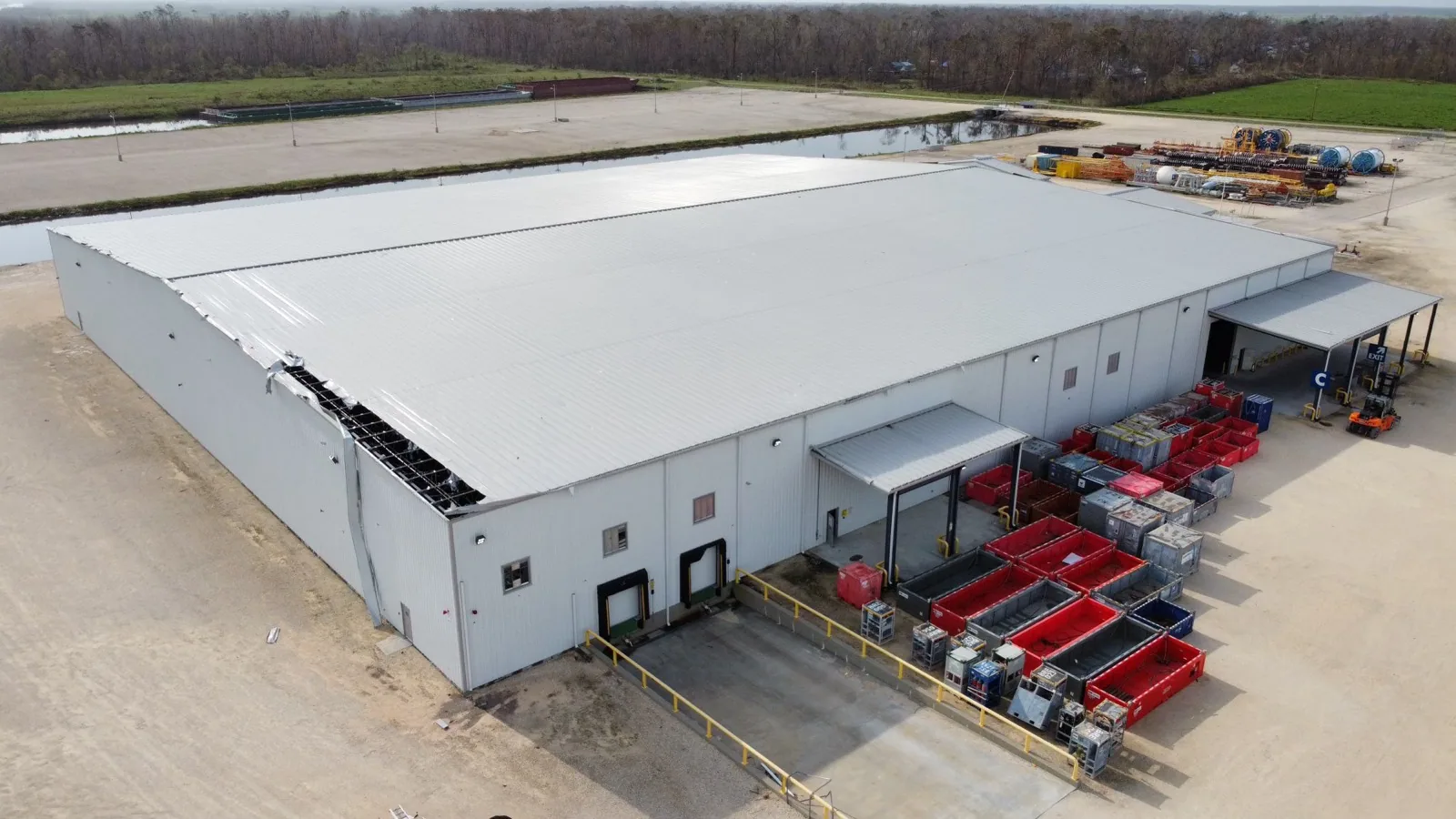
Hot Metroplex summers put a thermal cycle through membrane fields and rigid details, while spring and fall rain test the seams between them. For a Duncanville property, we start by tracing the reported water path and checking where flashing, drainage or attachment could have failed. The decision is whether those conditions stay within a repairable footprint or show broader assembly deterioration.
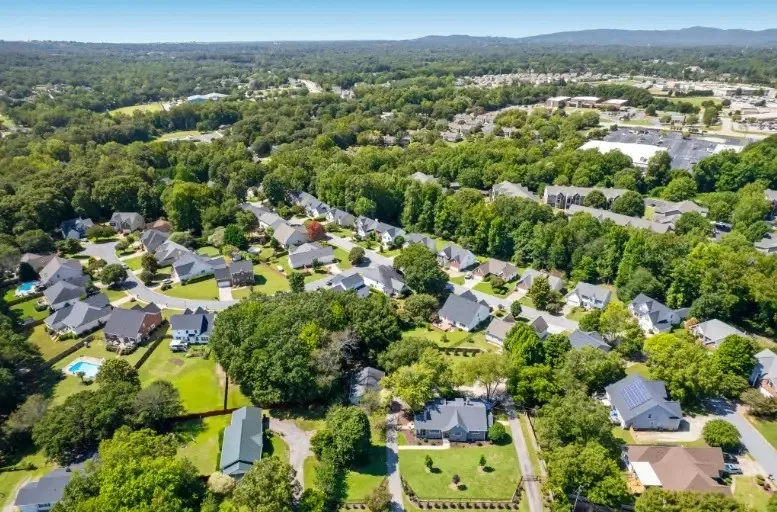
Duncanville lies west of the I-20 and US 67 intersection in southwestern Dallas County. Its documented commercial growth spread from Main Street toward shopping centers along US 67, but that history does not tell us the age or condition of a particular roof. We inspect the actual property and plan around its operations. A commercial roof inspection ties next steps to roof evidence rather than assumptions about the area.
How do we find the source when water appears indoors?
We begin with the time and location of the interior report, then inspect the roof above and around the likely path. Water can travel across a deck or insulation before it reaches a ceiling, so the nearest penetration is not automatically the source. We check seams, curbs, wall transitions, edge metal and drainage, then document which condition is confirmed and which needs a selective opening.
The Main Street to US 67 commercial growth pattern is local history, not a current inventory of roof materials. We ask how the building operates today, which spaces are occupied and whether an interior leak affects critical work. A roof condition report can give the owner photographs, a location-specific finding and a next action. That record helps separate urgent protection from a larger repair or replacement decision.
Why can a roof field look sound while a detail leaks?
The field membrane, metal edge and curb do not move together under temperature change. A connection must absorb that movement and remain watertight through repeated wetting. We examine the seam or flashing, its bond and the material below it. If the detail separates again after a patch, we check whether the repair missed a loose substrate or whether the surrounding attachment is contributing to stress.
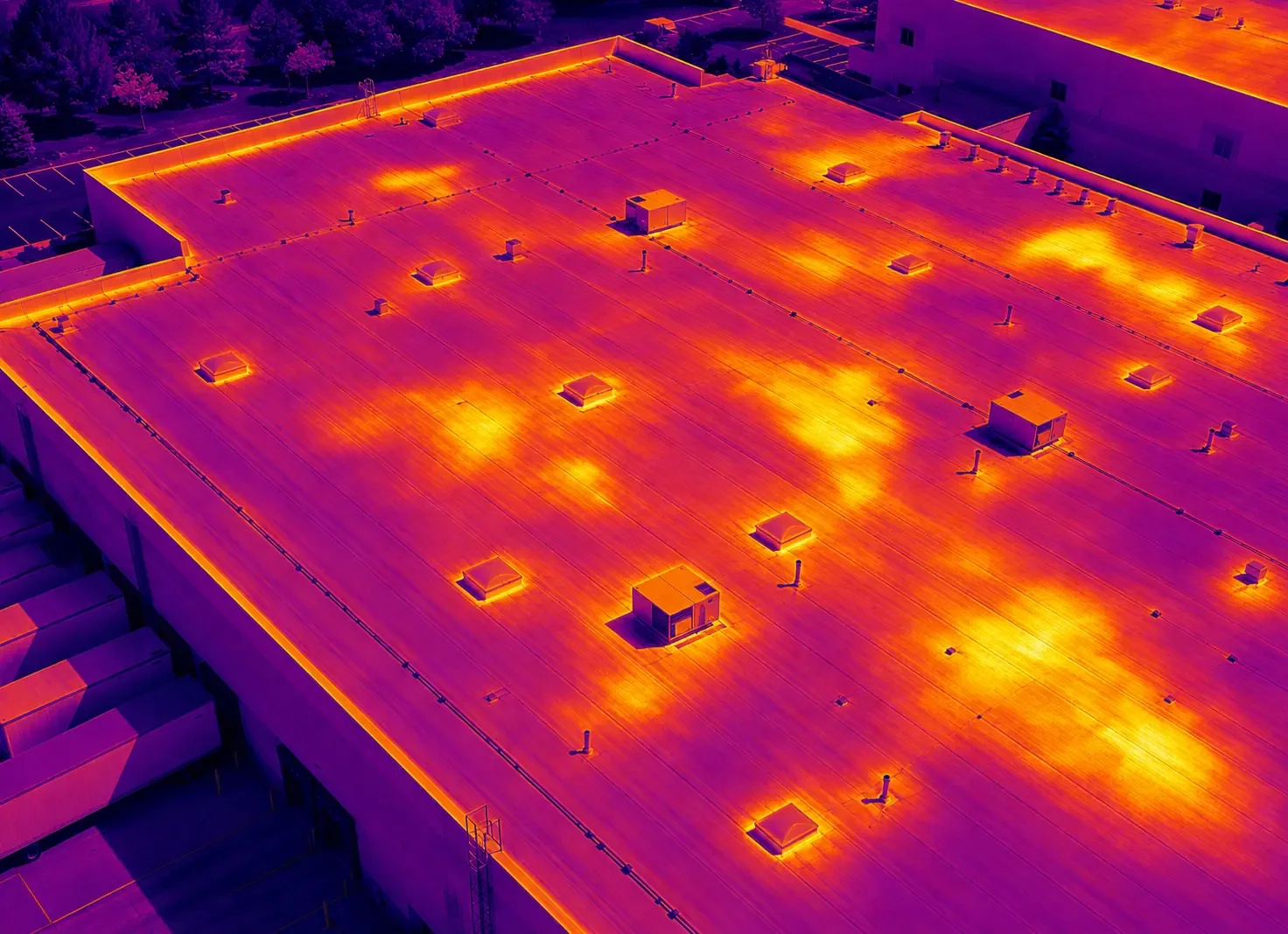
Regional Metroplex weather includes recurring hail, damaging wind and tornadoes, but no regional statement establishes that a particular Duncanville roof sustained damage. We look for physical evidence such as displaced coping, punctures or uplifted edges and compare it with reported timing. If moisture may extend beneath the membrane, a moisture survey can help select confirmation areas without treating a thermal pattern as a final diagnosis.
What does a complete repair scope need to include?
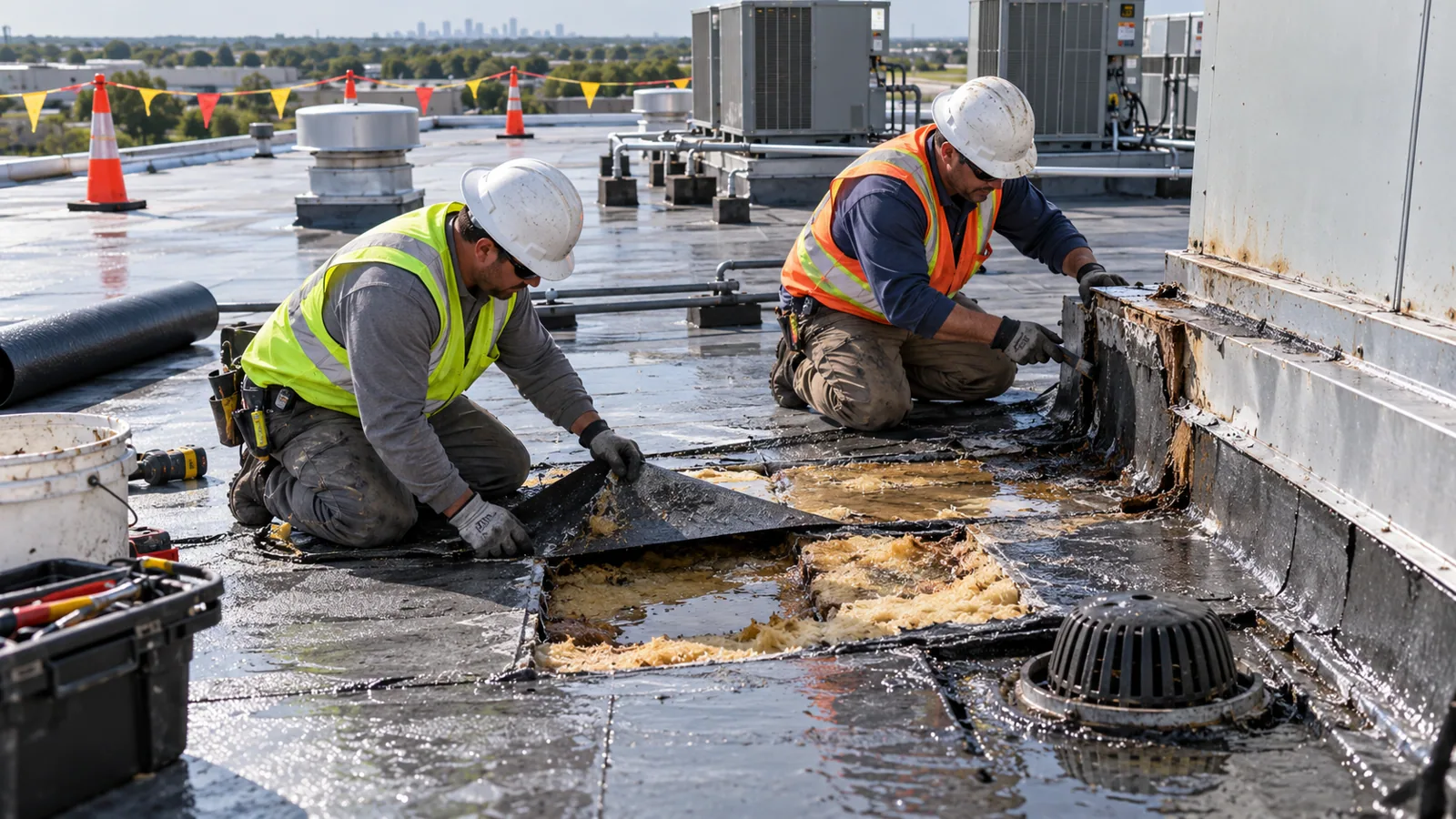
It should identify the damaged component, the preparation and material, and the point where sound substrate begins. We inspect around a puncture or open seam to see whether insulation is dry and the membrane can accept a compatible bond. A repair that ends at the stain or a loose edge can leave the cause in place. We document the affected area before closing the assembly.
If moisture or deterioration continues beyond the local defect, we widen the investigation before widening the repair scope. A selective opening may reveal whether replacement board or insulation is needed. We then compare that verified area with the cost and disruption drivers of a broader project. Our commercial repair work is defined by observable conditions and a boundary the owner can review.
How do existing roof layers affect replacement options?
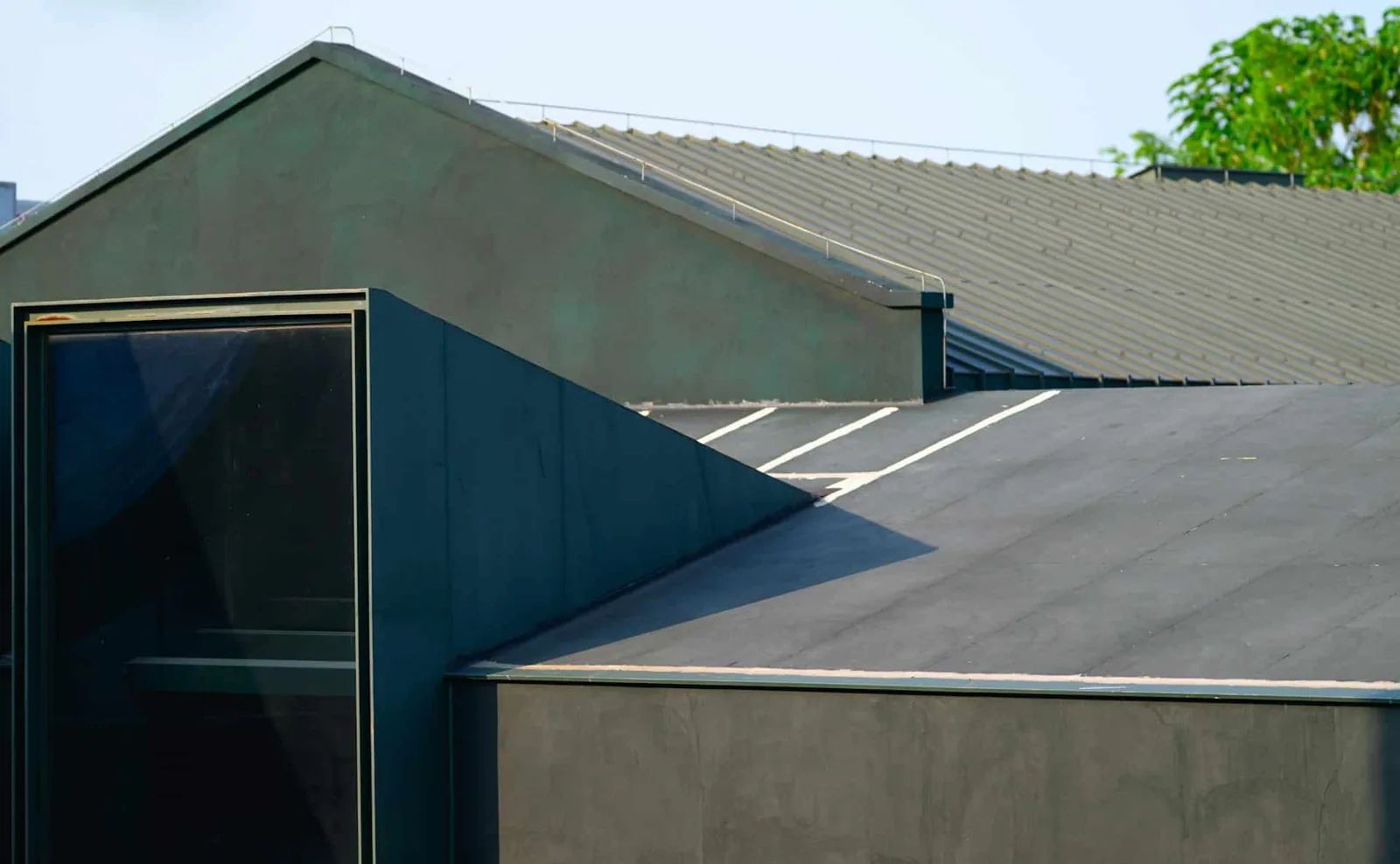
We determine whether the building has a membrane, built-up roof, modified bitumen or metal assembly and what lies beneath the exposed surface. The substrate, deck, attachment and drainage set practical limits for repair and recover options. New materials need compatible transitions at parapets, curbs and edges. Those details often decide performance more than a product label considered on its own.
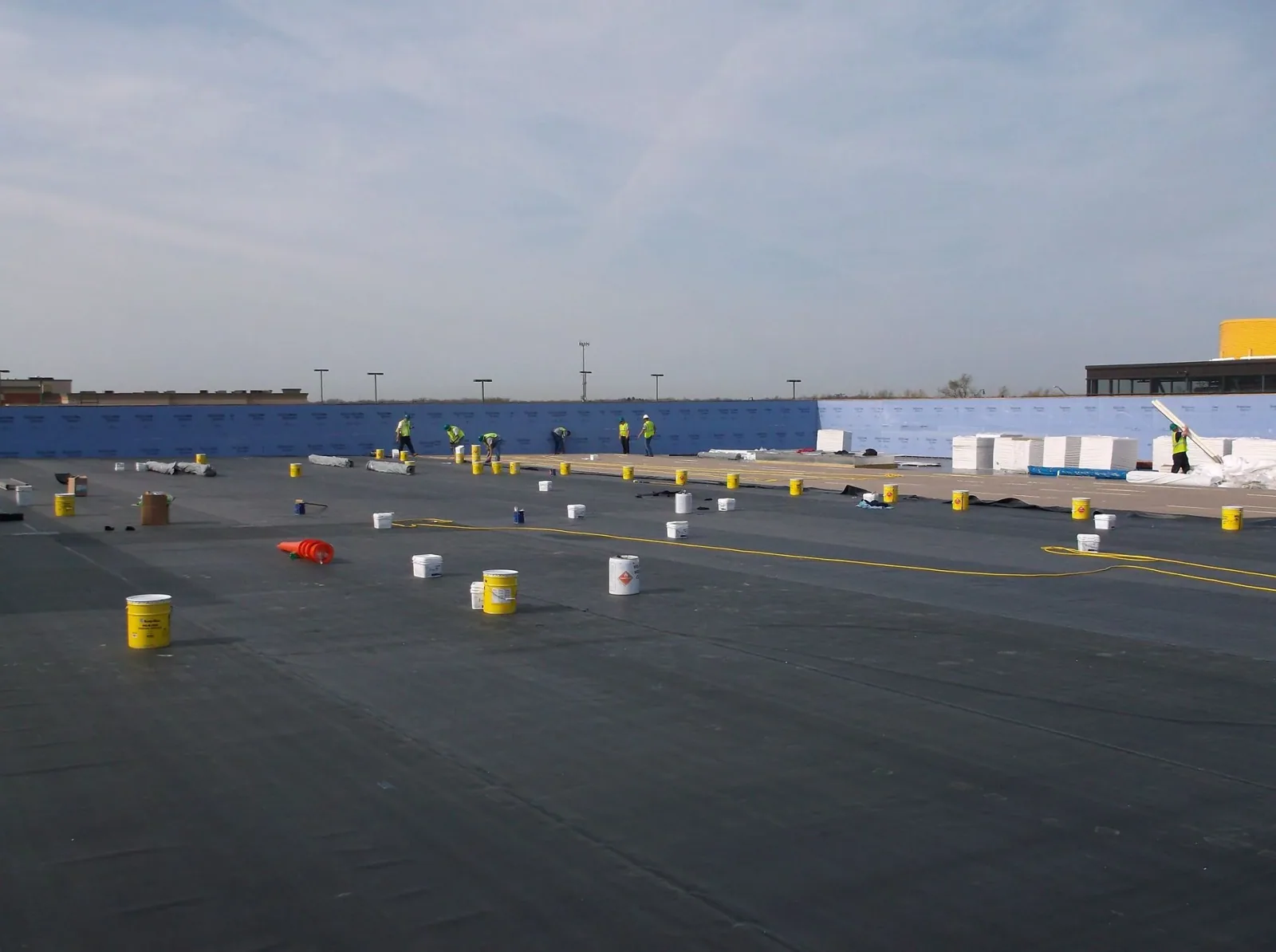
A recover can reduce tear-off, but it should not cover wet insulation or a compromised attachment pattern. A replacement allows access to concealed layers and may change insulation and perimeter details, though it requires careful temporary protection. We compare those choices against building use and weather windows. Modified bitumen roofing may be relevant when its system details match the confirmed assembly and project requirements.
How do we keep work from interrupting occupied spaces?
We map work zones, entry routes, loading and the hours when noise or rooftop activity would affect staff or tenants. A repair can often be scheduled in a compact area, while replacement needs a sequence for removing material, protecting the deck and restoring a watertight surface. We discuss the expected daily boundary and how concealed conditions will be reported before work changes.
Because a leak can worsen before a planned project starts, temporary measures may be needed to protect interiors. Our emergency roof service is available day or night throughout the week and on holidays. We distinguish that immediate stabilization from the permanent repair scope, so a property manager can see what remains unresolved and what access or material is needed next.
When do repeated repairs indicate a broader review?
Repeated repair at the same transition can point to movement, bond failure or a substrate issue. Leaks appearing across separate roof zones, moisture patterns beyond one detail, or deteriorated attachment may call for a broader assembly review. We organize conditions by area and urgency so an owner can decide whether to contain, investigate or budget replacement. The timing depends on exposure, access and material availability.At completion, we record the repaired component and the inspected boundary so the next visit can compare like with like. If the repair exposed wet insulation, weak attachment or deck damage, the owner receives the finding and a defined approval choice before that area is rebuilt. We also identify any maintenance item that belongs on a later visit, separate from the condition addressed in the current work order. When a facilities team also oversees Dallas operations, separate roof histories keep each finding tied to its building.
For capital work, we identify the proposed removal area, existing materials that may remain and conditions that could change after a selective opening. For maintenance, we note drainage and details to watch on the next visit. A roof capital plan can stage those decisions against operating needs. A separate Cedar Hill service assessment does not establish facts about a Duncanville building.
Commercial Roofing Questions
Does the I-20 and US 67 intersection tell you what type of roof a building has?
No. It locates Duncanville in the county, but roof system and condition are established through inspection. We identify the membrane or metal assembly, look at attachment and drainage, and use openings or moisture mapping only when they answer a defined question.
Why should the repair extend beyond the visible leak?
The water entry point may be separate from the interior stain, and a weak seam can continue beyond the first visible opening. We examine the adjacent detail and material below it to find sound limits. The scope explains why the repair boundary reaches the selected location.
Can a recover work if some insulation is wet?
Not over the affected material. We first establish the extent of moisture and remove or correct compromised components as needed. A recover remains a possibility only for suitable portions of the assembly with attachment and drainage conditions that support another layer.
What does an owner need for a storm damage review?
A record of the inspection areas, observed impact or displacement, photographs and recommended repairs. We distinguish storm-related physical evidence from pre-existing or unconfirmed conditions. That keeps the repair decision tied to the roof instead of a broad assumption about the weather event.
How do you plan timing for an occupied Duncanville property?
We coordinate access, work hours, staging and protection with the property contact. Weather affects preparation and exposed removal areas, while material compatibility and concealed conditions can alter sequence. The written scope identifies these factors and the approval point if the work boundary changes.
Ready to review the roof scope?
Request a Roof Assessment