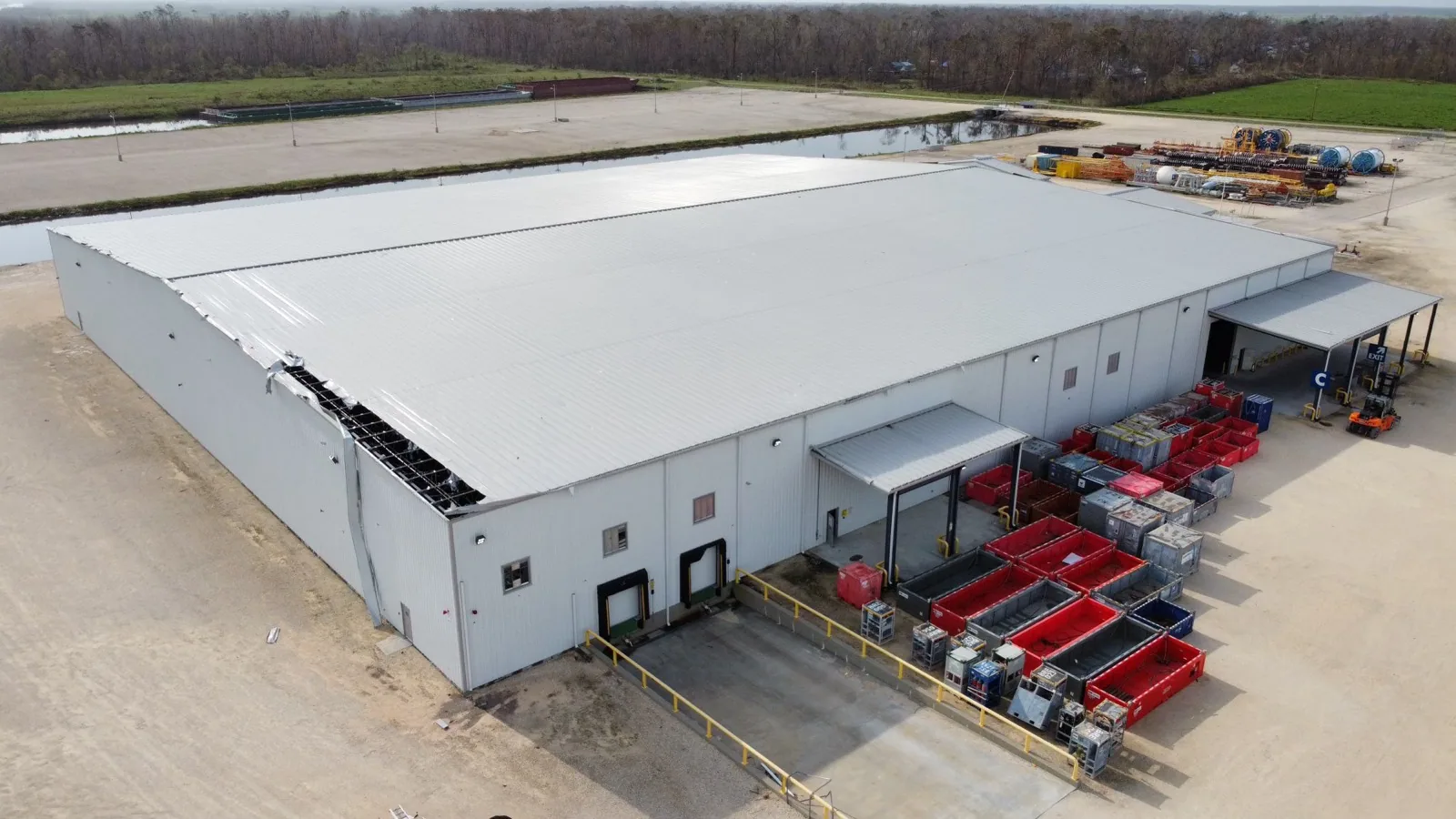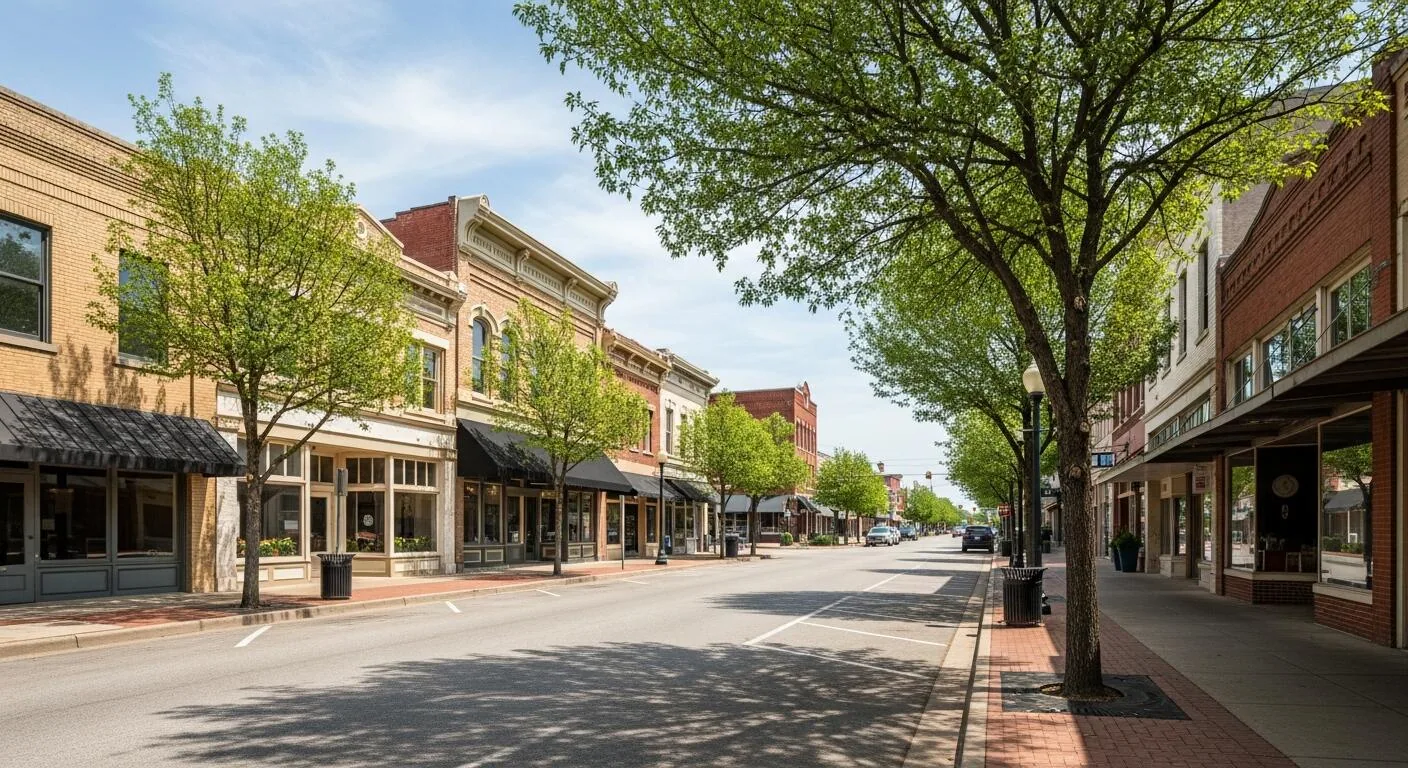
A roof in the Metroplex moves through hot summer cycles and wet spring or fall periods, but the water path and assembly condition are specific to each building. In Dallas, we inspect seams, penetrations, perimeter transitions and drainage before deciding whether a repair remains local. The choice turns on moisture distribution, attachment resistance and substrate condition, not on the scale of the business operating below.
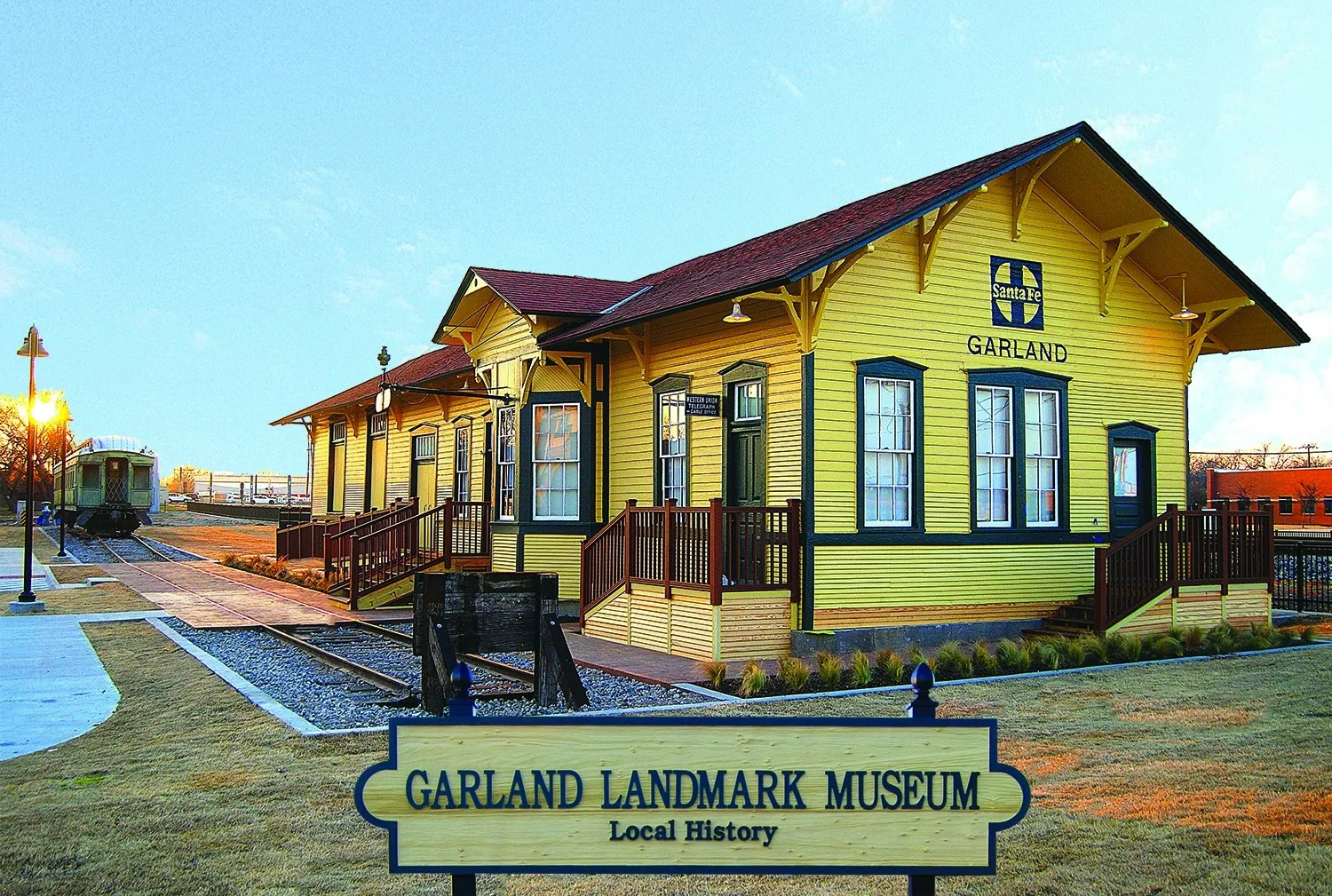
Dallas has established financial services, healthcare activity that includes research and distribution, and technology and professional services. Those sectors point to different operational requirements, not a particular roof system or condition. We ask what must remain available below the work area and inspect the actual assembly. A commercial roof inspection gives the property team a documented basis for repair, further investigation or capital planning.
Which roof findings matter to a property with continuous operations?
We first identify the reported issue, the interior area affected and the roof zone above it. Then we inspect seams, penetrations, drains, edges and equipment curbs along a plausible water path. Financial, healthcare and technology operations may place different limits on access, noise and service continuity, so we record those constraints before setting a work sequence. The building use does not substitute for identifying the roof assembly.
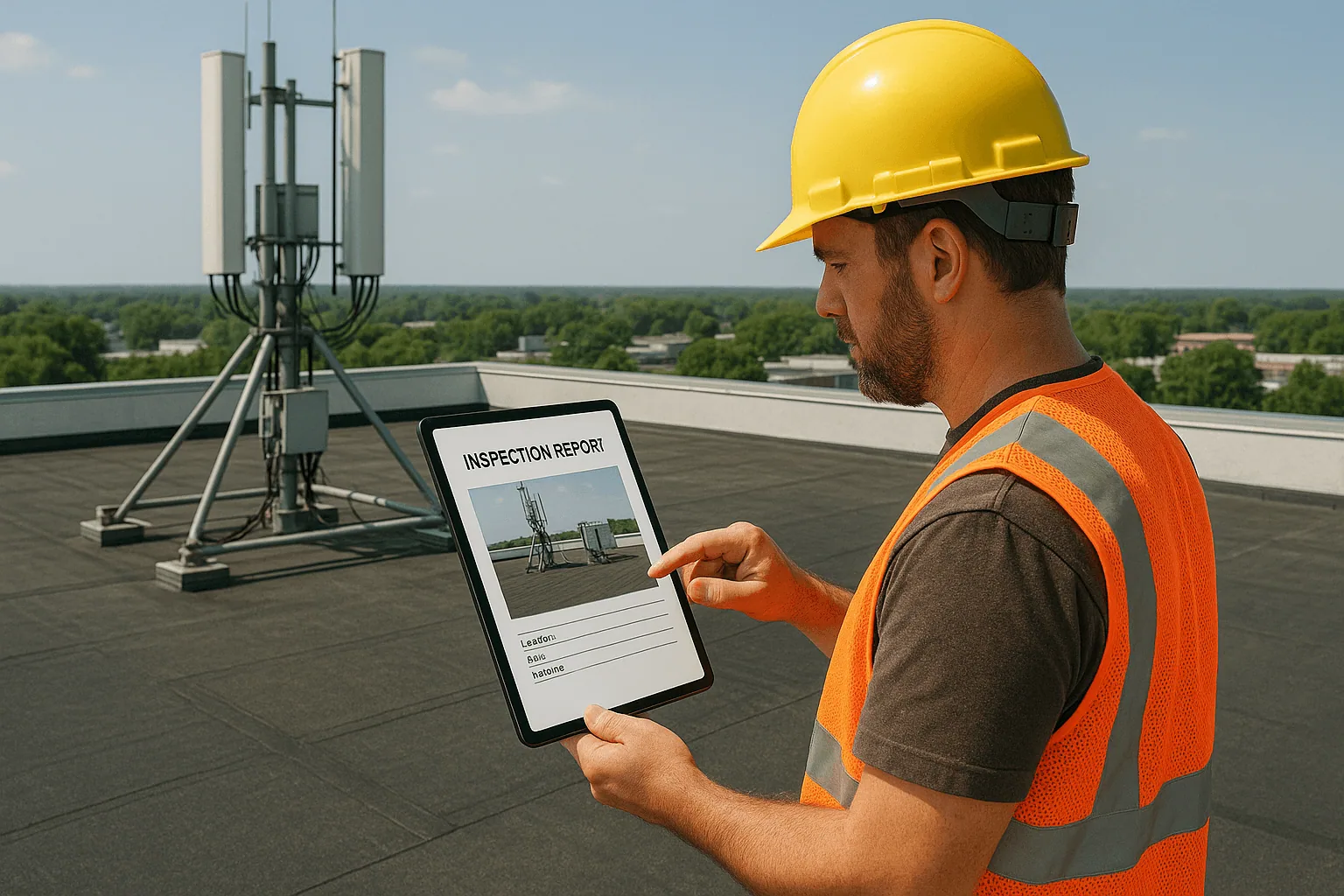
A condition report can help facilities staff coordinate maintenance, building operations and budget decisions. We photograph observed defects, locate them on the roof and separate verified conditions from areas needing confirmation. That is especially useful when several decision-makers need the same repair boundary. The roof condition report should connect the finding to an action rather than leave a list of symptoms without priority.
How can heat and moisture combine at a roof detail?
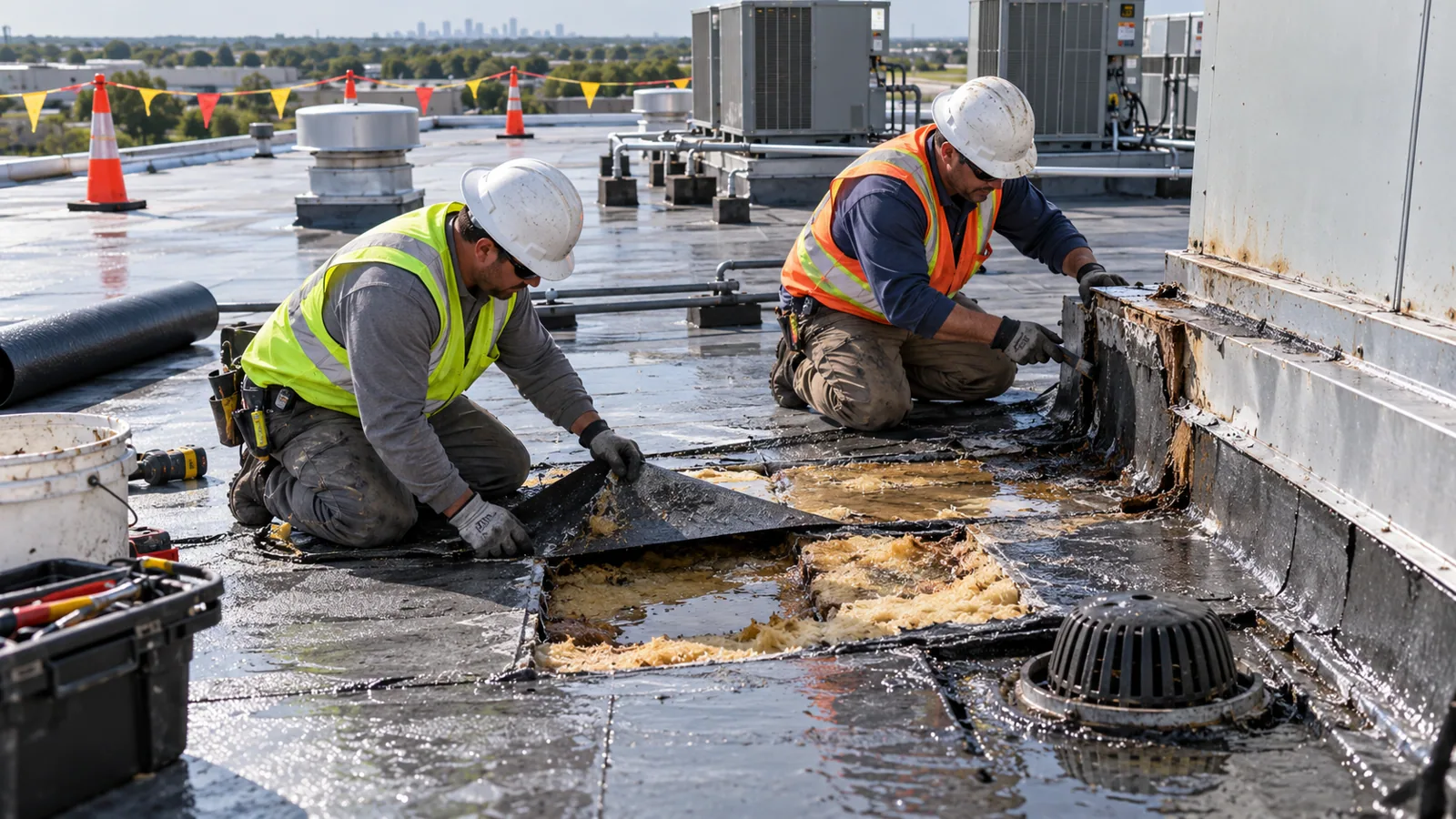
A membrane field and metal curb change dimension differently as surface temperature shifts. At a transition, movement can strain a weld or flashing bond. Rain can then test the opening, while water migrates beneath the sheet or along insulation. We inspect the detail and the adjoining material to tell whether the defect is a surface issue, a connection failure or evidence of a larger assembly problem.
Hot summers are part of the Dallas/Fort Worth regional climate, but a regional description does not measure a particular Dallas roof. Repeated thermal cycles can affect seams and edges, so we check the material response and attachment around the reported area. The inspection ties that mechanism to the specific detail and surrounding substrate, then records the repair or confirmation step that follows. Regional hail, damaging wind and tornadoes also occur, though event history does not prove a specific roof was affected.
How can a repair limit be set without hiding unknowns?
We define the work boundary at suitable material after inspecting beyond the visible opening. If insulation is wet or a bond cannot be restored on the existing substrate, the repair may need a selective opening and replacement of affected layers. We state the known condition, the method and the limits of the work. Any concealed condition that would change the scope is an explicit approval point.
A repair can be the right choice when the damage is contained and surrounding seams, attachment and drainage remain serviceable. Broader moisture or repeated failure changes the comparison. We review the repair footprint against the condition of each adjacent roof zone, then explain whether repeated spot corrections remain reasonable. The commercial repair scope should describe the mechanism corrected, not just the material applied.
What changes when a roof recover is compared with replacement?
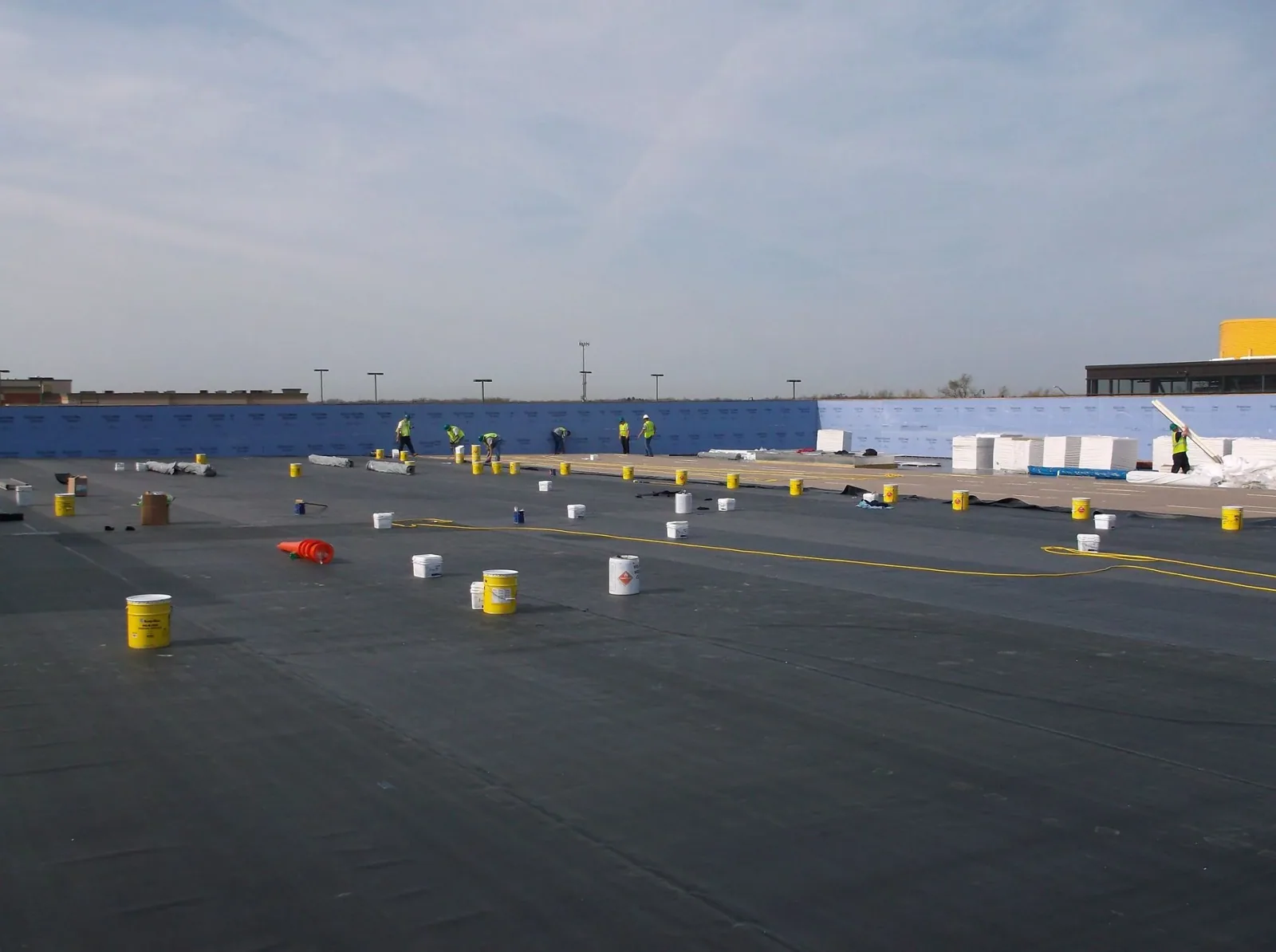
A recover may reduce tear-off and preserve operations, but only if existing layers are dry enough, secure and able to support the added assembly. Replacement offers access to insulation and deck and can correct broader attachment or drainage issues, with more disruption and weather exposure. We compare those tradeoffs from the roof itself, including the perimeter details and how the new system will terminate at walls and curbs.
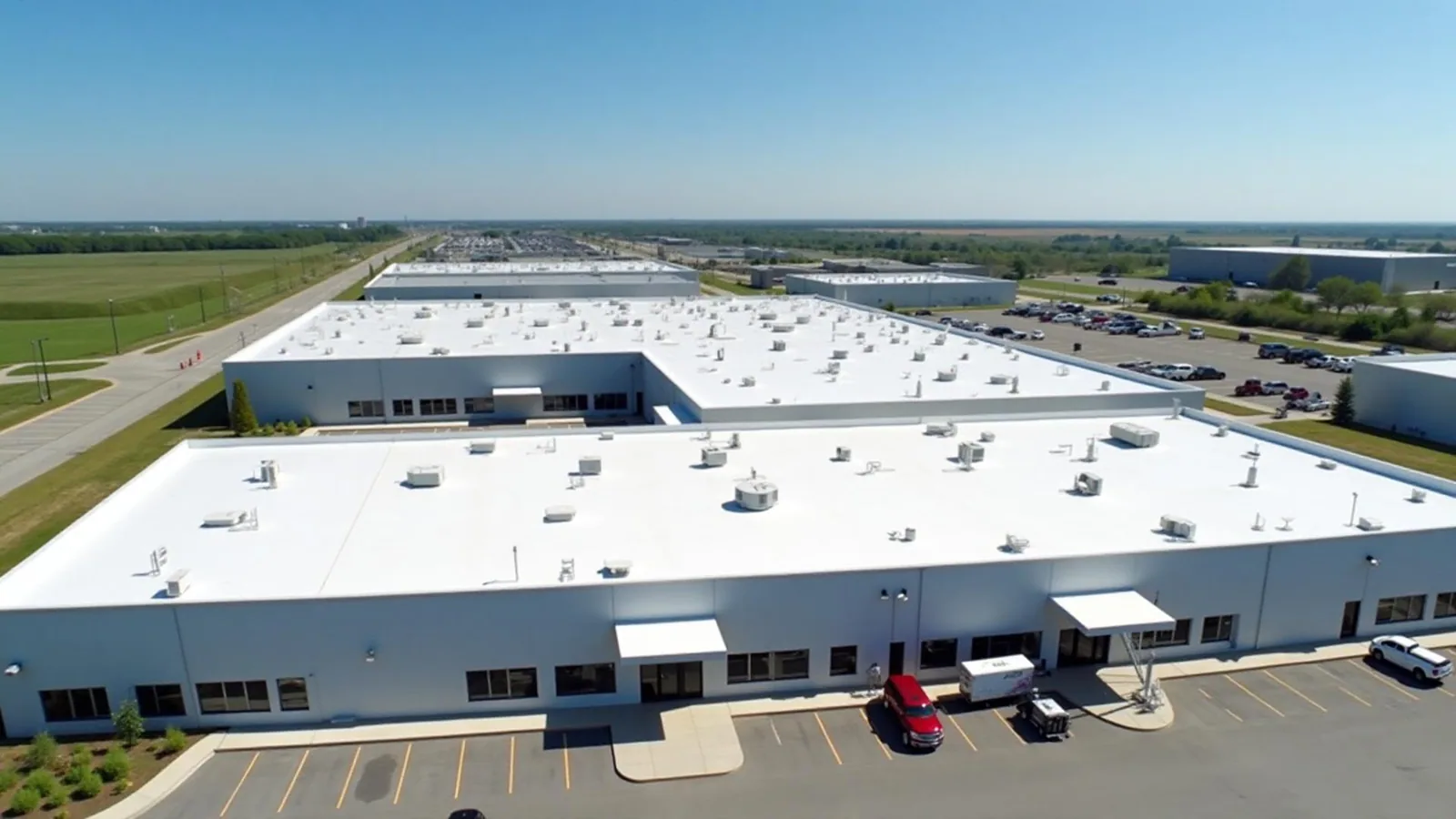
TPO, PVC, EPDM, modified bitumen, built-up roofing and metal all require different seam or connection methods. Existing system chemistry and substrate condition determine what can be repaired or layered. We review drainage and insulation together rather than select a surface product in isolation. A PVC assembly is one possible option when the project conditions and required details suit it.
How do we plan work for healthcare and technology settings?
We confirm which entries, equipment areas and interior spaces must stay available. Where a roof opening is involved, protection and weather monitoring have to match the exposed area, not a generic schedule. We coordinate deliveries, noise-sensitive periods and fire or security controls with the property contact. If work spans several zones, a daily turnover plan identifies what is closed, watertight and ready for the next shift.
A property with research or distribution activity may have critical rooms or supply routes below the roof, but we do not infer those conditions from an industry label. The owner identifies the restrictions, and we shape the sequence around them. For active water entry, emergency roof response is available all week, day and night, including holidays. We then document the permanent correction separately from temporary protection.
Which records help compare immediate work with long-term planning?
Leak history, prior repairs, moisture findings and photographs can show whether a defect is recurring or spreading. We organize observations by zone and state what requires confirmation. An owner can then compare a repair, a selective opening and a planned replacement with the operational cost of each sequence. Timing depends on weather, access, material lead time and the condition discovered as work proceeds.The closeout identifies the roof zone, repair method, materials and inspection limits. If an opening revealed a broader condition, we document it and obtain direction before extending removal. Where work was phased around active operations, the record notes the area returned to service and any remaining restriction. Those details help a facilities team coordinate future maintenance without turning a single repair finding into an unsupported conclusion about the rest of the property. A separate Duncanville roof assessment remains tied to that property's own evidence.
For an organization managing more than one property, consistent records make it easier to identify the roof that needs action first. A roof asset management program can track inspection findings and repair history without treating buildings as identical. Our nearby Hurst service area is a separate location; its local facts do not transfer to a Dallas property. Each scope remains tied to the roof examined.
Commercial Roofing Questions
Do Dallas healthcare and technology uses require one standard roof system?
No. Industry does not establish deck type, membrane, equipment load or roof condition. We confirm the existing assembly and the building’s operating constraints, then compare materials and details that fit those findings. Service continuity affects sequencing, not the technical diagnosis.
How do airport temperature normals help with a Dallas roof assessment?
They provide regional climate context, not a measurement of a property’s roof surface. We use the heat mechanism to pay attention to movement at seams and rigid transitions, then examine actual material and attachment conditions. The report keeps regional climate separate from site-specific findings.
Can we authorize urgent protection before a full replacement decision?
Yes. We can define temporary water control and the area it addresses while preserving the larger assembly decision for follow-up inspection. The record states what is stabilized, what remains uncertain and what opening or survey would help resolve the next question.
When does a moisture survey change a replacement scope?
It can identify patterns that help direct selective confirmation. The survey alone does not establish the exact condition of concealed layers. We compare the pattern with surface evidence and openings, then revise the boundary only when confirmed material conditions support it.
What causes roof replacement timing to shift?
Weather, access, material availability, operating restrictions and concealed deck or insulation conditions can all affect sequence. We identify approval points before work begins and document any condition that changes removal limits. This gives the property team a clear basis for adjusting schedule or scope.
Ready to review the roof scope?
Request a Roof Assessment