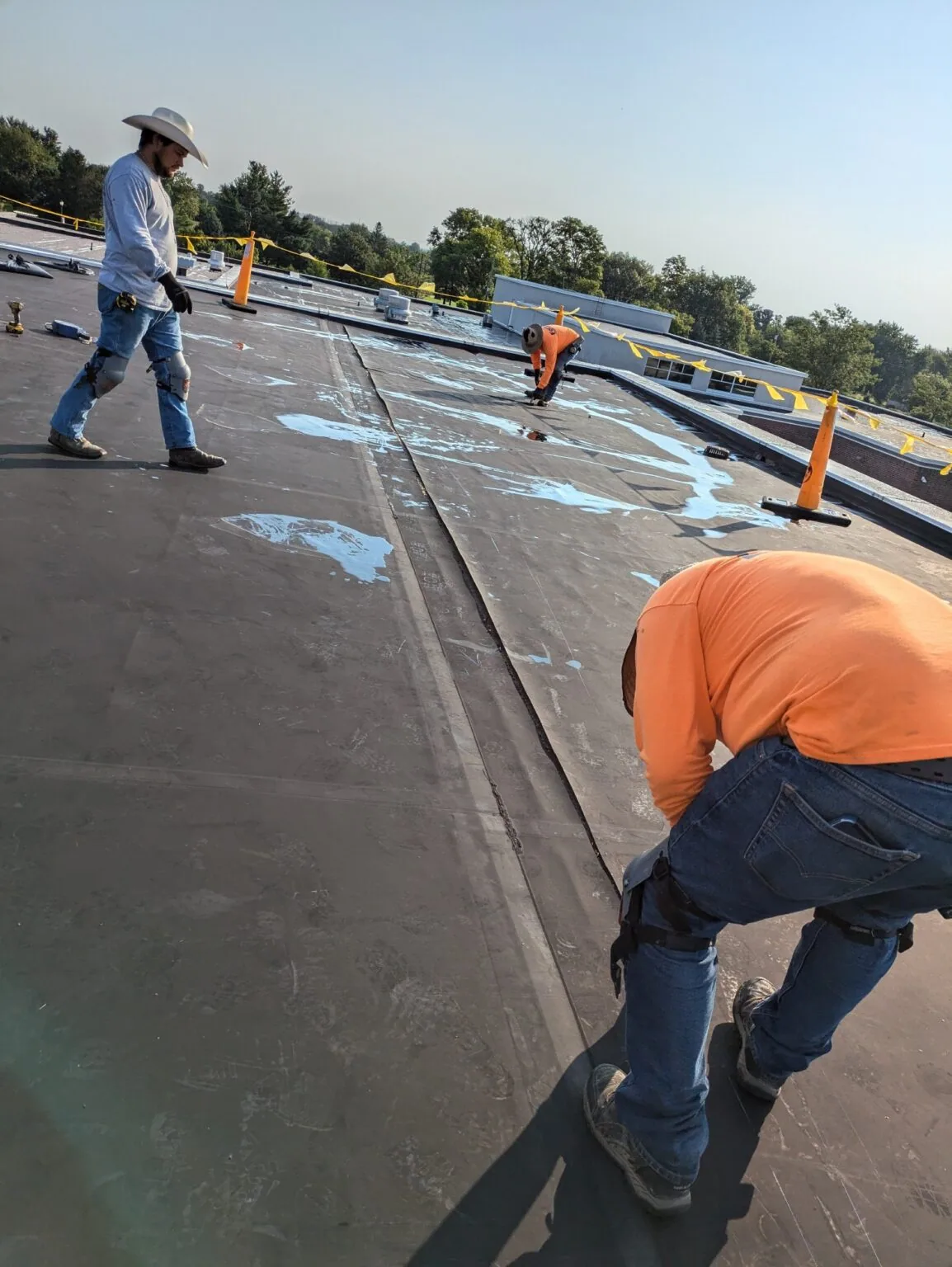
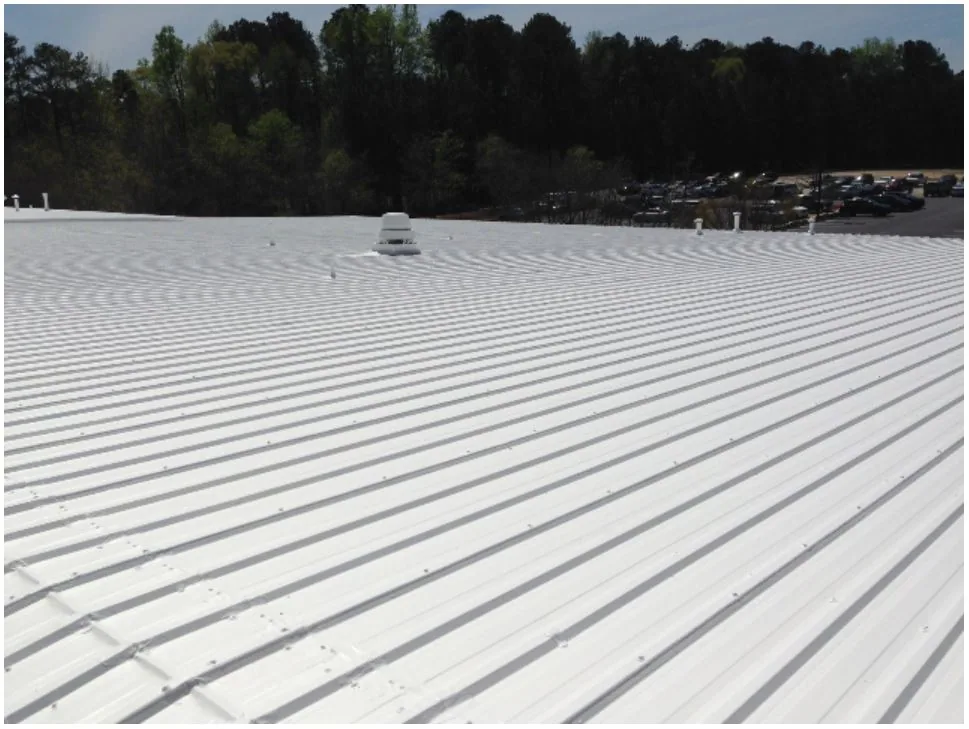
Carrollton’s location along I-35E and the rail intersections that helped it become a shipping center make movement and access familiar parts of its history. Neither fact tells us how a present building is used or what its roof contains. We begin with the actual property: identify the membrane, metal or layered system, trace the reported water path and inspect the transition where a leak or seam failure may have started.
The city’s industrial history includes light manufacturing, food packing and electronic components, but those examples are historical rather than a current tenant roster. We confirm operating constraints at the site before positioning a lift or opening material. A roof inspection records conditions by location and separates a contained defect from moisture or attachment concerns that could require a wider scope.
What should the first roof walk record?
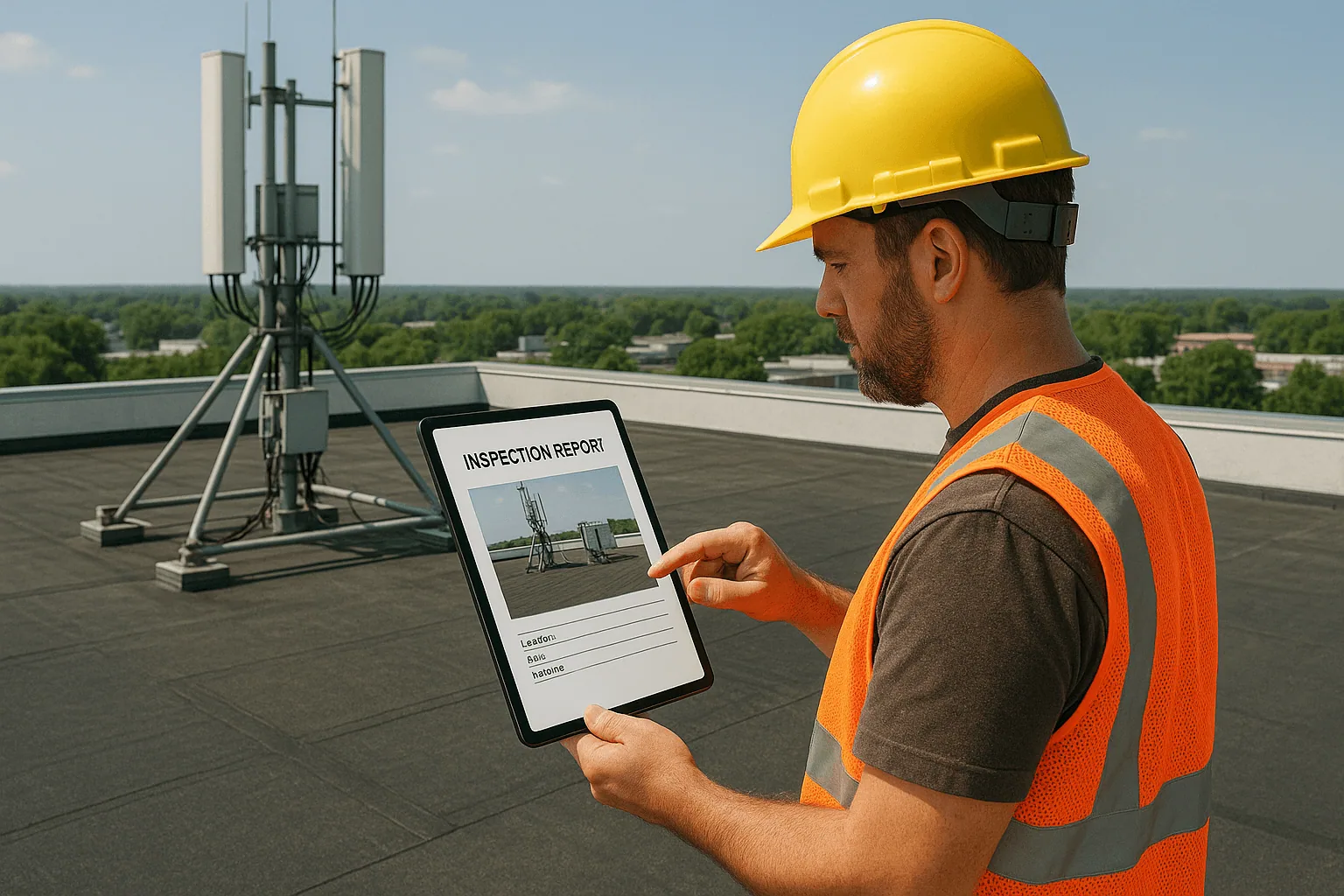
We start by identifying how the roof is assembled and where each section changes. Seams, curbs, skylights, perimeter metal, penetrations and drains are recorded alongside visible patching and any change in surface response. A commercial property may include different roof ages or prior work, so one condition cannot be applied to the whole building without examination. We also ask which interior area reported water and when it appeared, then compare that information with the roof directly above.
Historical food packing and electronics activity does not mean those operations remain in a current building. Still, the range of uses associated with Carrollton makes it useful to verify ventilation, equipment and interior sensitivities at each property. We photograph the details and identify where access or protection must be coordinated. A written condition report can preserve those observations for maintenance or capital review without turning an unconfirmed cause into a finding.
How can Metroplex weather affect the roof details?
DFW weather follows a humid subtropical pattern: strong summer heat, then wetter conditions during the spring and fall. A low-slope assembly responds to that cycle as the exposed surface heats and the deck beneath it changes temperature at a different pace. Seams and rigid transitions absorb that movement over time. We inspect bond, fasteners, flashing and edge securement where the assembly changes material or direction, then record which transition needs repair or monitoring.
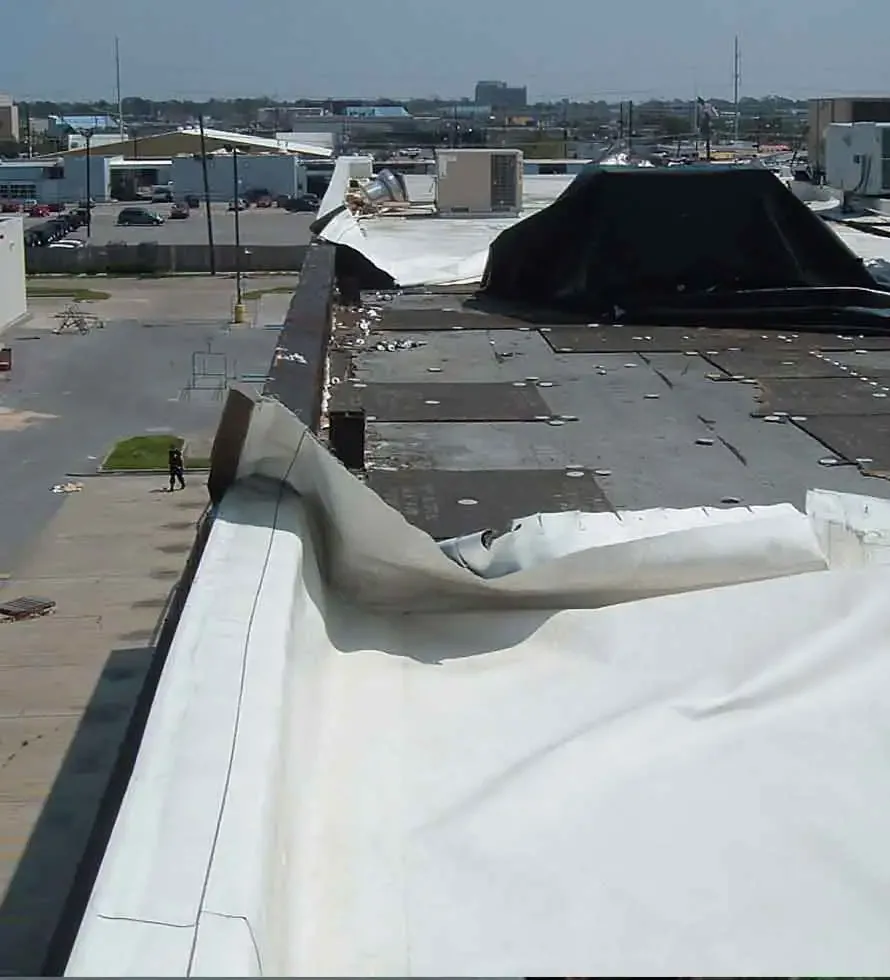
The Metroplex sees hail and damaging wind, yet a weather record alone cannot establish that a particular Carrollton roof took an impact. We look for punctures, opened laps, displaced edge metal or other evidence at the property itself. An assessment of wind-related roof damage records what is visible, while a moisture survey can help map a concealed pattern when the surface gives an incomplete picture. The repair should follow the confirmed damage and surrounding material, not the storm label alone.
Could drainage be prolonging the reported leak?
Water retained at a low point can keep a seam or repair under stress, but ponding alone does not reveal why the roof holds water. We inspect the path from the field to the drain or scupper, check for debris and deformation, and compare the conditions with the visible slope. A settled deck, blocked outlet, compressed insulation or an earlier repair can affect flow in different ways. We record what the walk supports and flag any concealed condition that needs an opening to confirm.
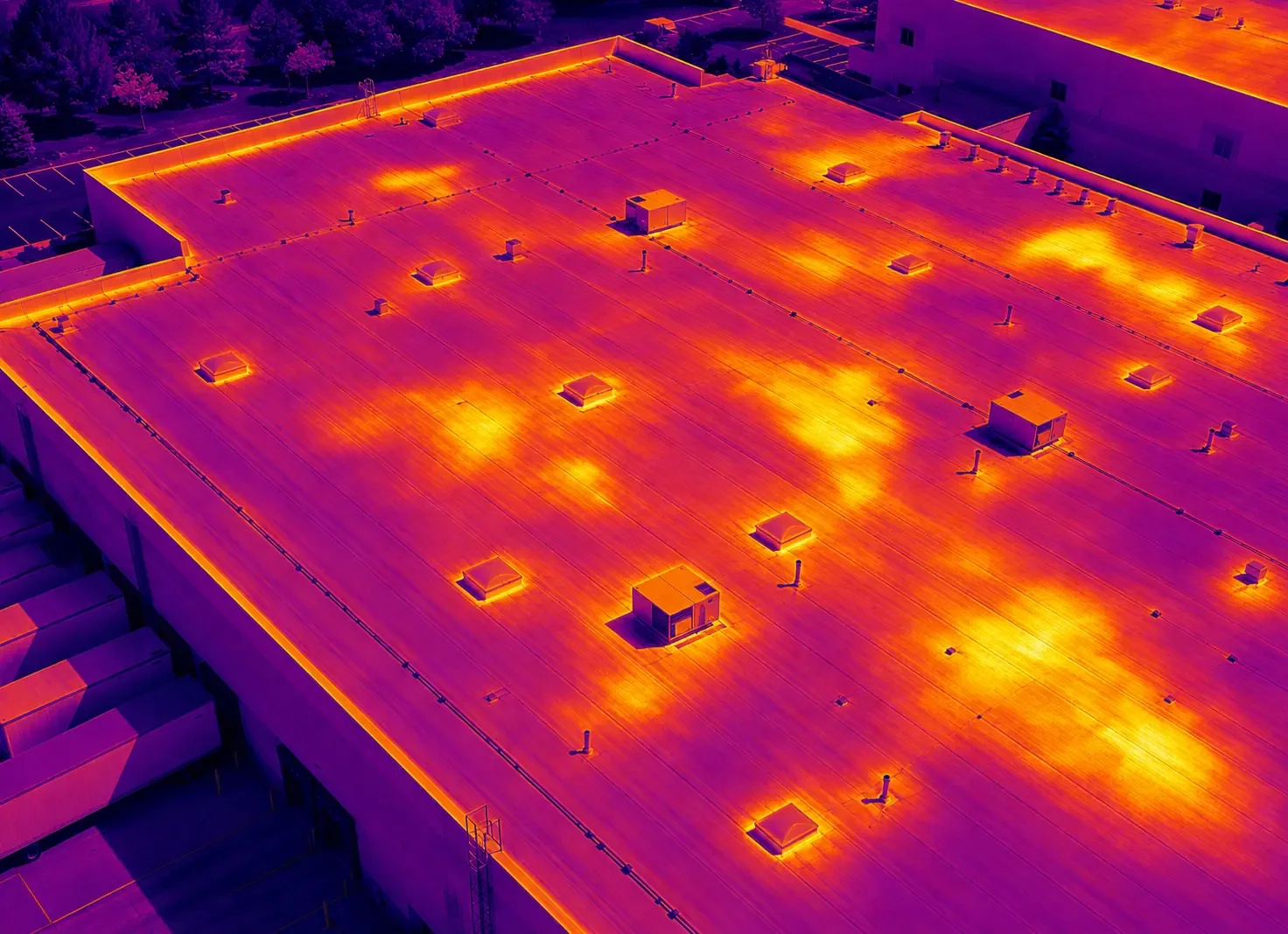
Leak tracing also follows details above and around the stain. Water may travel along a deck joint or membrane seam before reaching the interior, so the apparent location is a starting point rather than the repair boundary. We check penetrations, curbs, flashing terminations and the underside when access permits. If moisture extends beyond the visible entry, an infrared moisture survey may help locate the distribution before removal is planned. That helps keep sound sections out of a repair unless evidence points to them.
How can roof work fit building operations?
Carrollton’s shipping history does not tell us how materials reach a roof today. We check the present delivery path, loading schedule, roof entry and any tenant or production hours that restrict work. A property with multiple interior uses may need separate protection areas even when the roof scope is one continuous section. We plan the work zone with the site contact, confirm where equipment can be staged and decide how to close out each section before moving to the next.
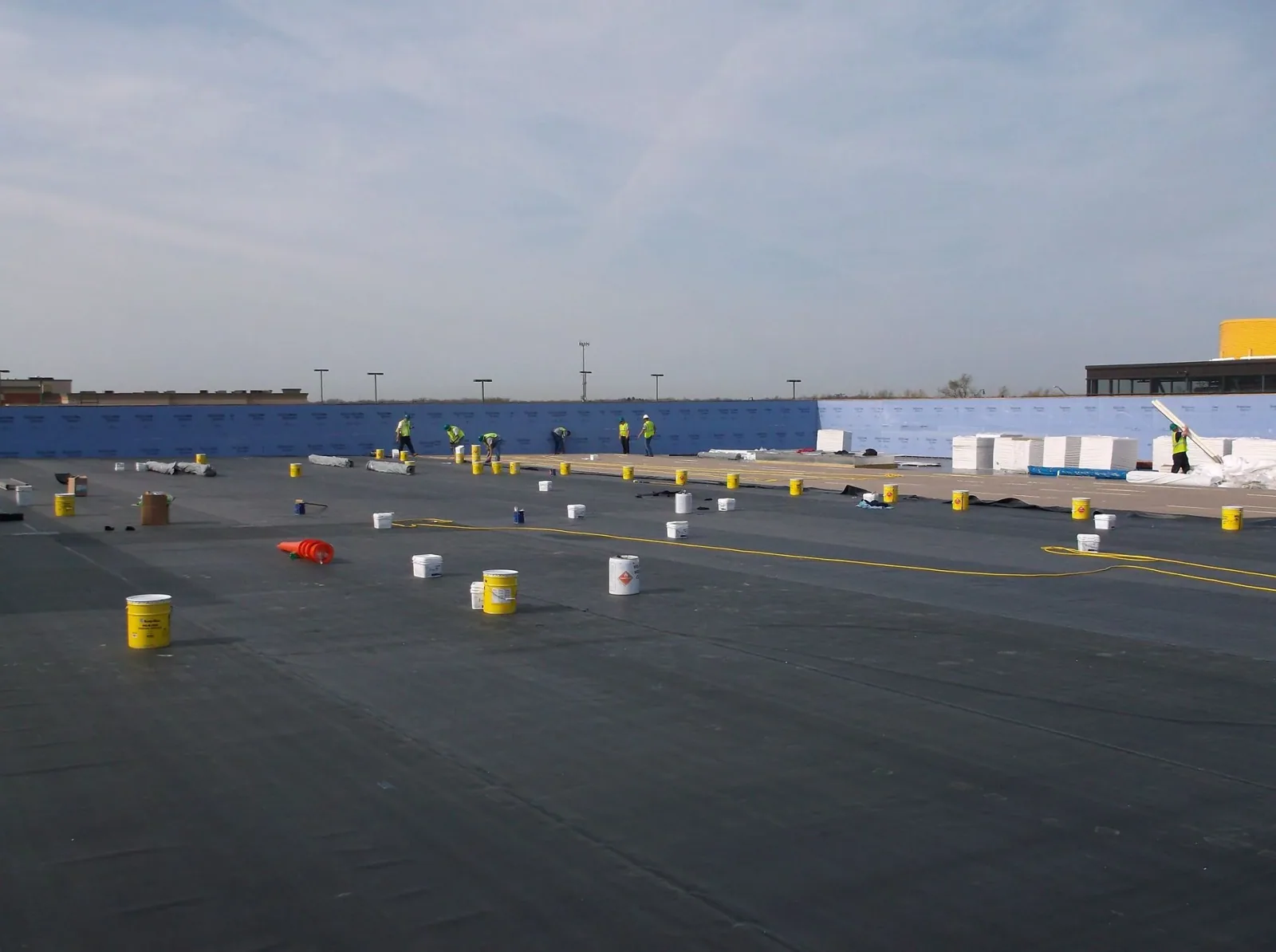
Emergency response is available overnight and on weekends or holidays when active water needs prompt attention. Planned repair or replacement follows a clear sequence for temporary dry-in, material removal and end-of-shift protection. If the existing roof is suitable and moisture is limited, a recover may reduce tear-off, subject to loading, attachment and code review. Otherwise, commercial roof replacement may address deterioration that crosses a dependable repair footprint.
Which scope fits the observed assembly?
A patch can make sense when the failure is contained and compatible material remains around it. Repair expands when adjacent seams, attachment or substrate are also compromised. A recover is compared only when the existing layers are dry enough, stable and able to support another assembly. Removal becomes the stronger option when wet insulation, repeated leaks or deteriorated attachment extends beyond selective repair. We describe the evidence behind each path and use a selective opening where the layers cannot be established from the surface. The opening is placed where it can answer a specific question about insulation, cover board or attachment, rather than cut at random. Once the layers are visible, we record their condition and close the test area with compatible materials. That confirmation matters when the roof has more than one previous repair or when moisture readings vary across the field, because the option that suits one section may not suit the next. The record can guide later comparisons.
Timing and cost turn on access, roof layers, flashing details, equipment conflicts, affected area, disposal and the operating window. The owner needs to know which choice controls immediate water and which addresses wider deterioration. A roof capital plan can preserve that comparison for budget review. For a separate site in Farmers Branch along the broader I-35 corridor, or Lewisville farther along I-35E, we make a new condition record instead of carrying Carrollton findings to another roof.
Commercial Roofing Questions
Does Carrollton’s shipping history mean a building still handles freight?
No. The rail and industrial history explains how the city developed, not a present property's operations. We confirm current loading, access and interior uses with the site contact before planning roof work.
How do you tell a localized seam issue from wider deterioration?
We inspect the seam perimeter, nearby transitions, substrate and attachment, then compare the roof evidence with interior observations. If the layer condition remains unclear, a moisture survey or selective opening helps test the proposed repair boundary.
Can ponding water be solved with a coating?
When a drain is blocked, a deck has settled or insulation is compressed, adding a coating leaves the water path or soft substrate unresolved. We inspect those conditions first, then compare a restoration system with repair or replacement.
Will a roof assessment include an operating plan?
Yes, the scope records verified access, material staging, work hours and interior protection needs. Those details affect sequence and temporary dry-in, especially when different uses share a roof area.
What drives the difference between repair and replacement timing?
The affected area, roof layers, edge and flashing work, equipment access, disposal and building schedule all matter. The scope separates the opening that can be repaired now from roof areas that require more evidence before the next work phase is set.
Ready to review the roof scope?
Request a Roof Assessment