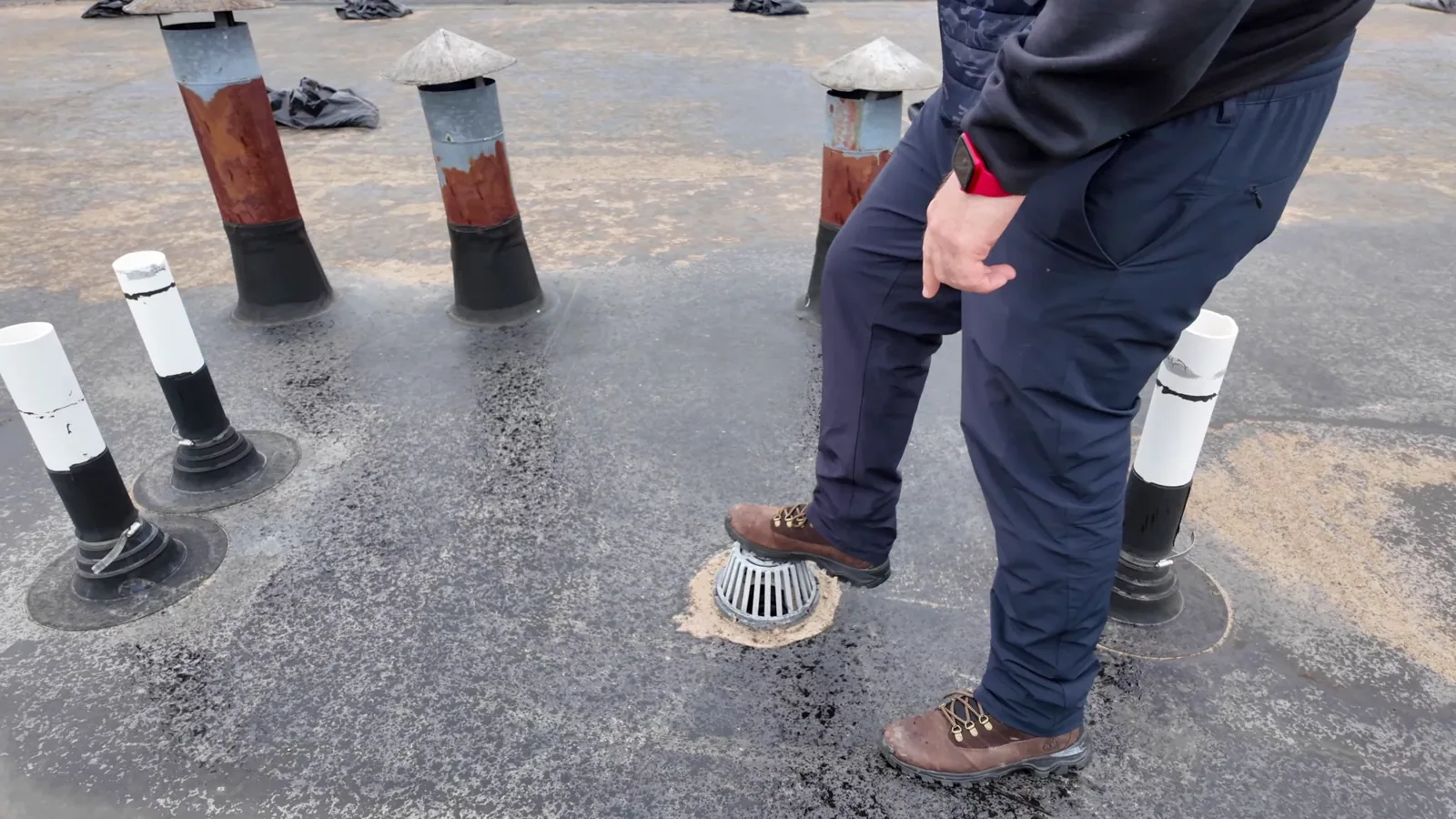
Kitchen exhaust can alter the surface near a roof curb while summer heating continues to move the membrane against its rigid termination. Restaurant roofing in Irving, TX, examines both the actual material exposure and the connection carrying that movement. Commercial Roofing Irving assesses the covering and equipment details before selecting a repair that would otherwise remain beneath the same damaging condition.
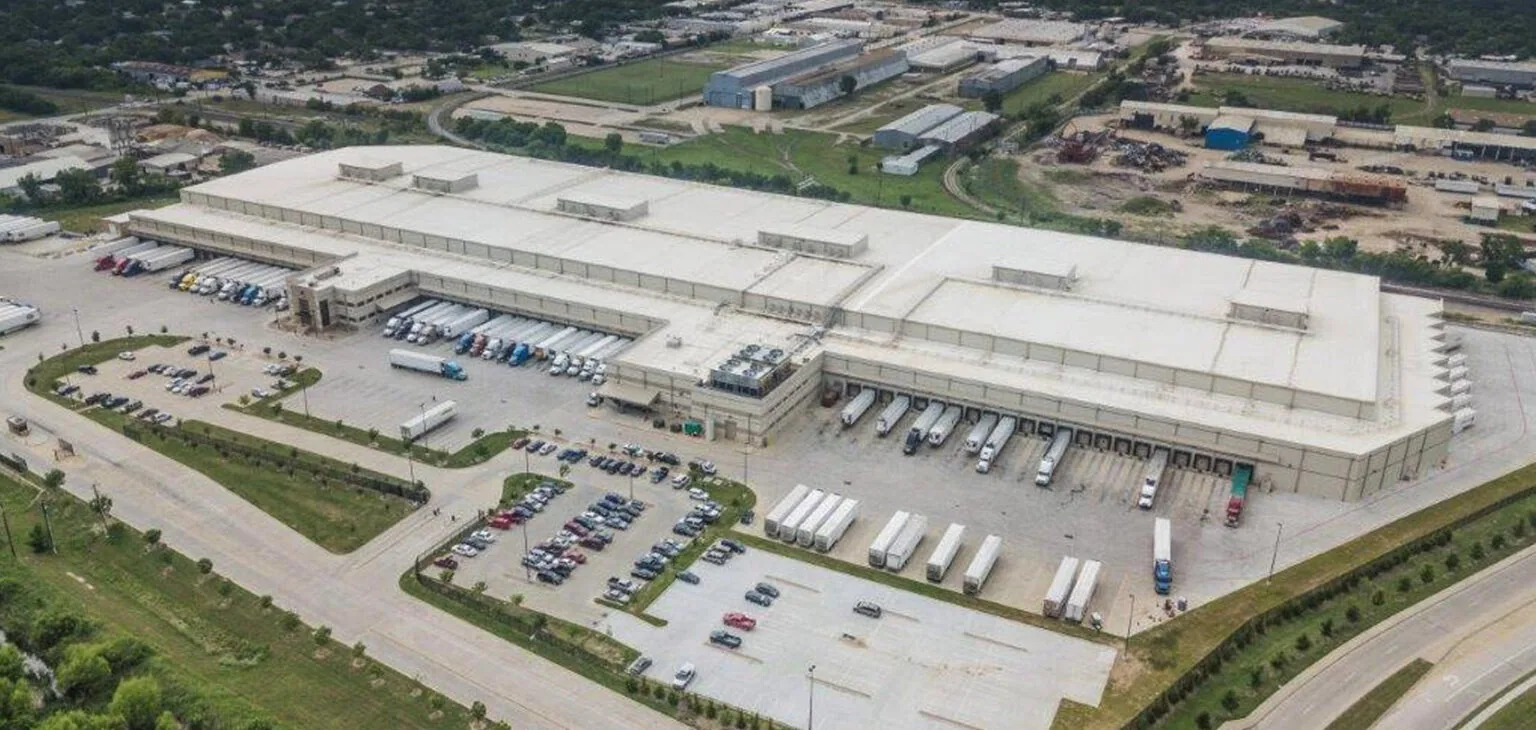
Restaurants share the Las Colinas Urban Center with offices and other commercial activity, and nearby Addison has restaurants within its business stock. Roof work at those restaurant properties needs equipment and delivery coordination alongside a compatible repair for the actual covering. We identify the project exposure and operating windows directly, with the Dallas/Fort Worth region's hot weather and rainfall considered through bonding, drainage and detail behavior.
What is the discharge doing to the roof surface?
Contamination can affect preparation and adhesion, while some exposures can deteriorate an unsuitable covering. The assessment establishes which discharge reaches the surface and how the installed covering responds before a compatible repair method is chosen. Cleaning methods need compatibility too, so an aggressive treatment is not selected merely because it removes visible residue. Where equipment correction or improved containment is needed, the appropriate service work is coordinated with the roofing scope.
PVC membrane options can be considered where the actual exposure and product requirements support them, but a restaurant use alone does not establish suitability for every substance or product. The substrate, attachment and detail interfaces remain part of the assembly choice. We examine local deterioration and choose removal boundaries that reach workable material before comparing repair with another covering or a larger project.
Where earlier cleaning or patching has changed the local surface, we assess that interface separately before extending a new repair across it. The preparation method must suit the material that actually remains.
Can the upper curb connection be reached correctly?
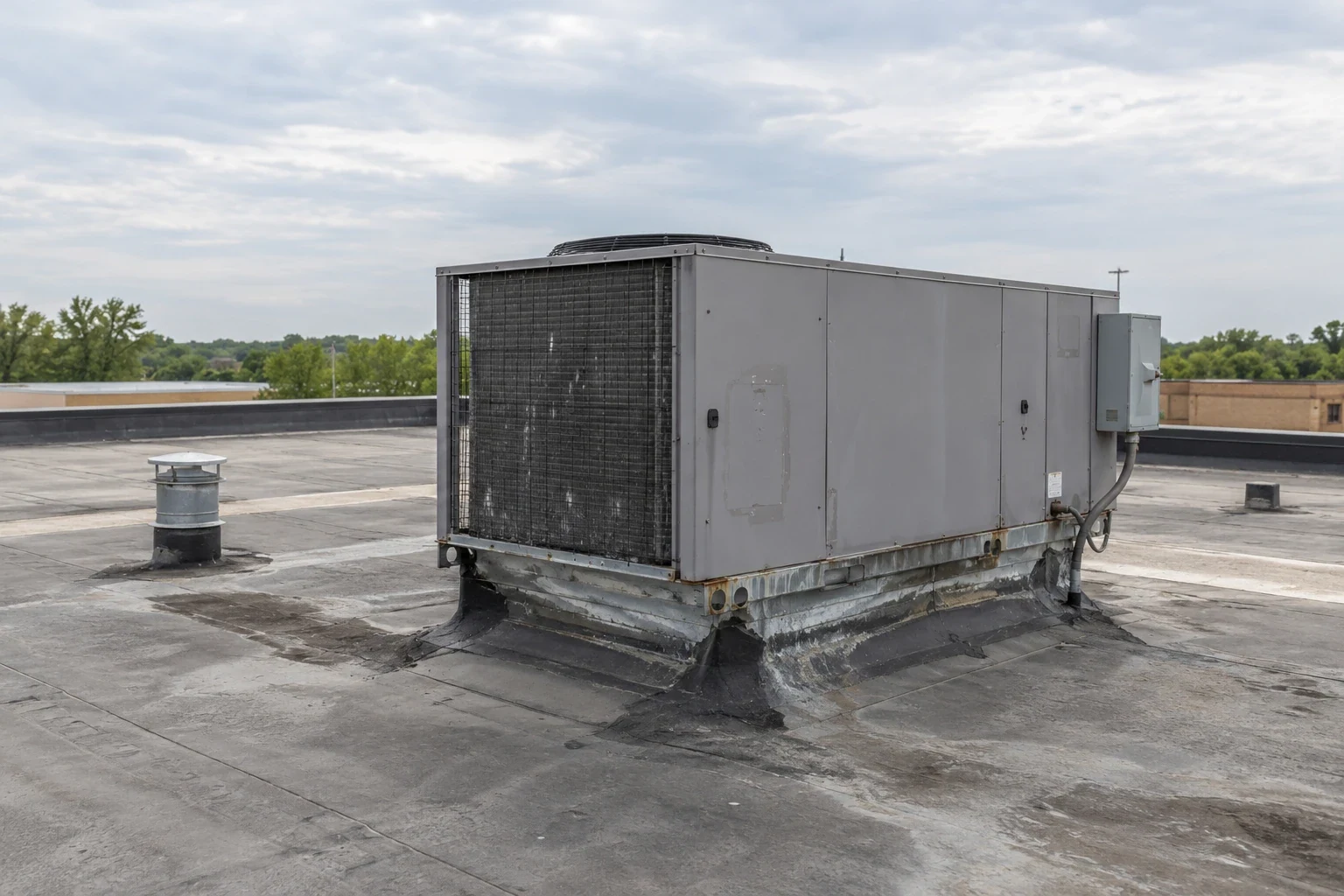
Fans and units can conceal the flashing termination or restrict access to corners. We examine the connection before deciding whether lifting or service disconnection is needed. Kitchen equipment curb coordination establishes the roofing preparation and closure sequence with the service personnel. An accessible lower patch should not be treated as completion when the failed interface remains hidden beneath the equipment.
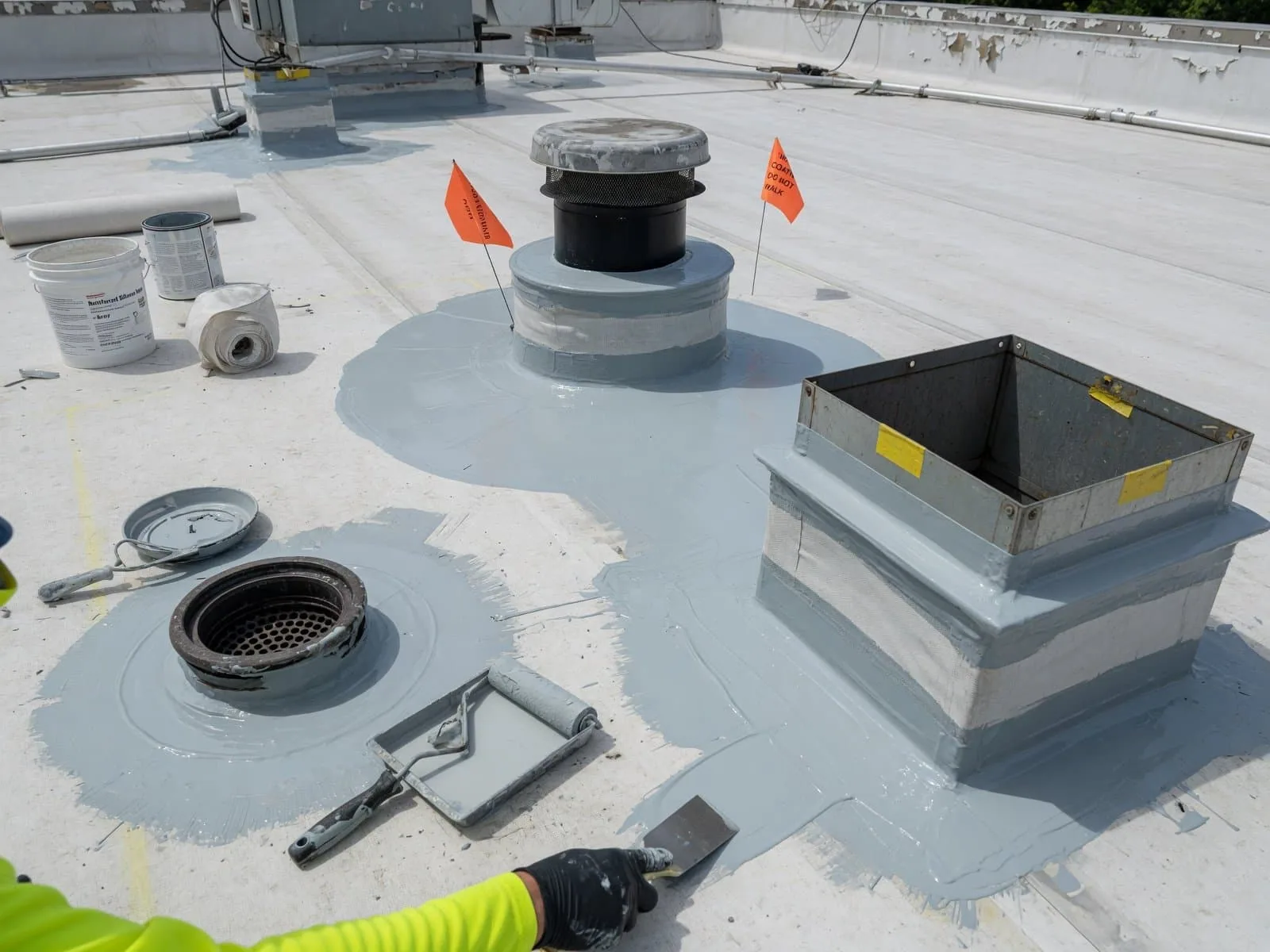
Vibration and thermal movement can contribute strain where the membrane meets a rigid curb. We examine support, fastening and the detail geometry as well as the visible split. Reconstruction needs suitable materials and movement allowance, with the upper termination shedding water continuously. Equipment changes are assessed for their effect on that connection, including whether a new adapter or support would conceal short or deteriorated flashing below it.
Does rainfall or equipment activity explain the interior water?
Reported water is compared with weather timing, service activity and roof geometry before a roofing entry is assigned. Restaurant water-path tracing examines seams, penetrations and runoff routes, coordinating interior access where useful. Condensation, plumbing or equipment discharge may need separate evaluation. The repair follows the established mechanism rather than patching a nearby curb solely because water appeared in the kitchen or dining area.
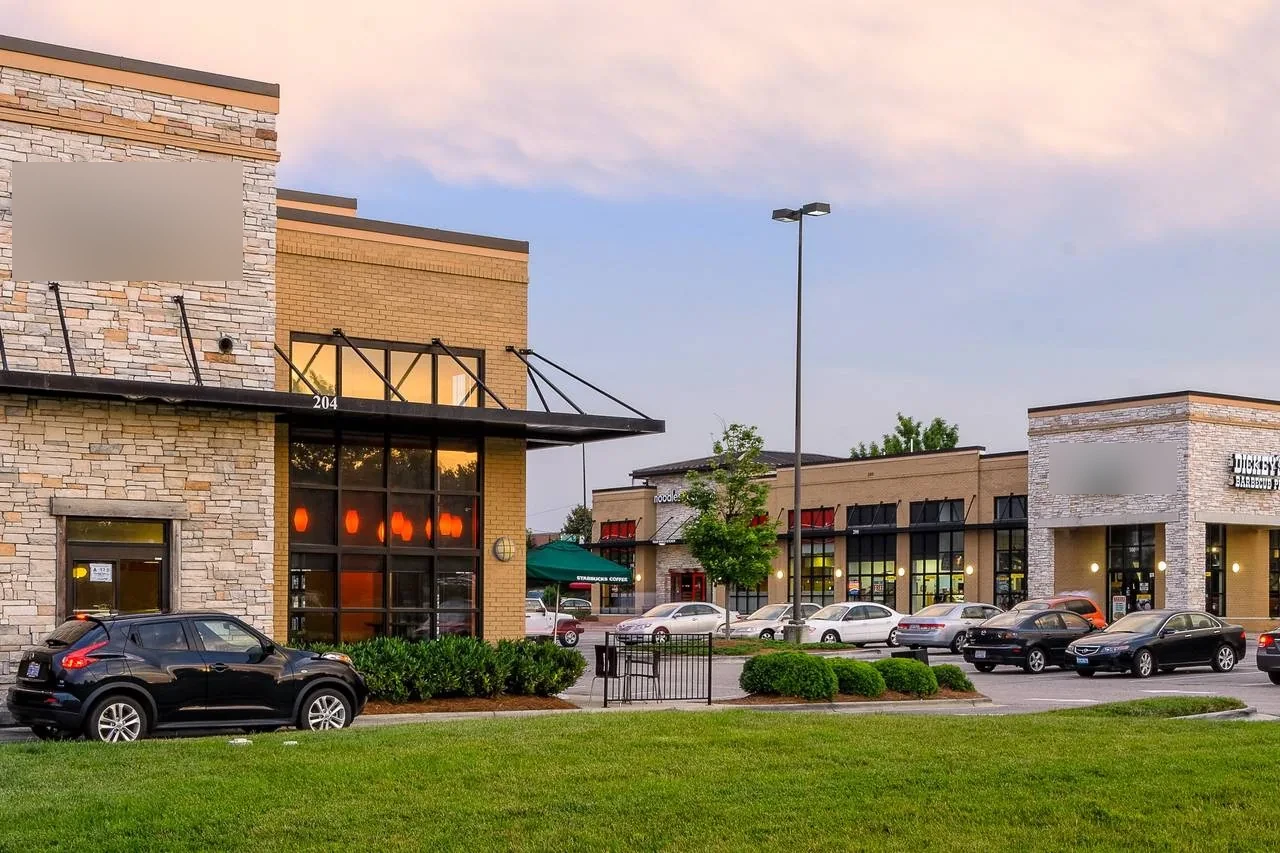
A restaurant within a shared shopping center may have drainage and concealed layers connected to adjacent tenants, while hotel dining operations can introduce another access arrangement. We establish the actual building use and roof construction instead of transferring one plan between them. The investigation identifies the affected connection and wet-material boundary, which may not coincide with the interior operation's walls.
What holds runoff beside the exhaust and service routes?
Curbs, walkway protection and accumulated debris can interrupt the path toward a drain. We examine local elevations and retained-water evidence before choosing clearing, slope correction or outlet reconstruction. Restaurant roof drainage work distinguishes those mechanisms and considers where the discharge goes below the roof. A repaired membrane connection should not remain submerged in an avoidable depression or direct water toward an occupied entrance.
Wet insulation beneath a low area needs assessment before additional material is placed above it. Direct checks and suitable investigation establish how far removal should extend, with the rebuilt layers restoring support and thickness. Changes to the package affect curb height and drain approaches, so those dimensions are resolved before the covering is closed. The completed transition should be compatible with the installed system and remain accessible for maintenance around the equipment.
What needs to fit between operating periods?
Kitchen equipment, material handling and occupied circulation require coordination before the construction window is chosen. The activity may involve lifting, noise, odors or a roof opening above sensitive operations. Restaurant reroofing phases allow for preparation, concealed repair and dependable closure as well as the immediate removal. A short service gap is compared with the physical task rather than assumed to support the whole reconstruction.
For Las Colinas Urban Center restaurants, adjacent commercial uses can also affect staging and entrances below the work. We establish the actual access arrangement with the manager. Cost follows contamination preparation, damaged-layer removal, equipment coordination and detail complexity. The scope distinguishes those construction needs from the operating window so the owner can compare contained repair with restoration or replacement according to the material findings.
After work, examination includes flashing continuity, field connections and outlet approaches. Service routes and equipment contact are reviewed so the reconstructed area is not immediately exposed to the same abrasion, discharge or loose support. Later equipment changes should include roofing coordination where penetrations or load support change. The roof remains easier to maintain when compatible repair needs and completed boundaries are identifiable instead of obscured beneath unrelated sealants.
We also discuss housekeeping at the roof level with the manager and relevant service personnel. Removed parts, cable and cleaning debris should not be left where they can damage the covering or reach drains during rain. Those localized practices preserve both the repaired membrane and the water route, while routine examination can identify a new equipment-related exposure before it affects a larger area.
Commercial Roofing Questions
Can a patch last if exhaust keeps reaching the same spot?
The actual exposure and compatibility need assessment, along with correction of avoidable discharge or contact where appropriate. A suitable roofing repair addresses damaged material, but repeated contamination may continue affecting preparation or service condition. We coordinate the equipment issue with the relevant personnel. The scope should explain both needs instead of leaving a newly reconstructed surface beneath an unresolved exposure.
Will repairing a fan curb require stopping kitchen service?
Access beneath the equipment and its service connections establish the work sequence. Some roofing can be performed with the unit in place, while concealed termination reconstruction may require lifting or disconnection. We coordinate the necessary window with the manager and equipment personnel. Preparation and closure remain part of that period, rather than limiting the repair to the visible base to avoid access planning.
Can we schedule the roofing entirely outside dining hours?
The available window needs comparison with the removal, preparation and material requirements. Some tasks may fit a separate operating period, while concealed repairs or weather exposure can require another arrangement. We establish suitable phases and protection before scheduling. The work plan follows the assembly that must be closed correctly, with operating coordination considered within that construction sequence.
Why might water continue after a roof opening is sealed?
Previously wet layers can release retained water, or another source may remain active. We compare the continuing report with weather and equipment operation, then inspect the relevant connections and materials. Wet insulation or interior finishes may need separate removal or drying. Continued water is investigated rather than assumed to be harmless residual moisture, especially where electrical equipment or unstable finishes are affected.
Ready to review the roof scope?
Request a Roof Assessment
Shopping Center and Strip Retail Roofing
See scope, options and what to expect on the roof.