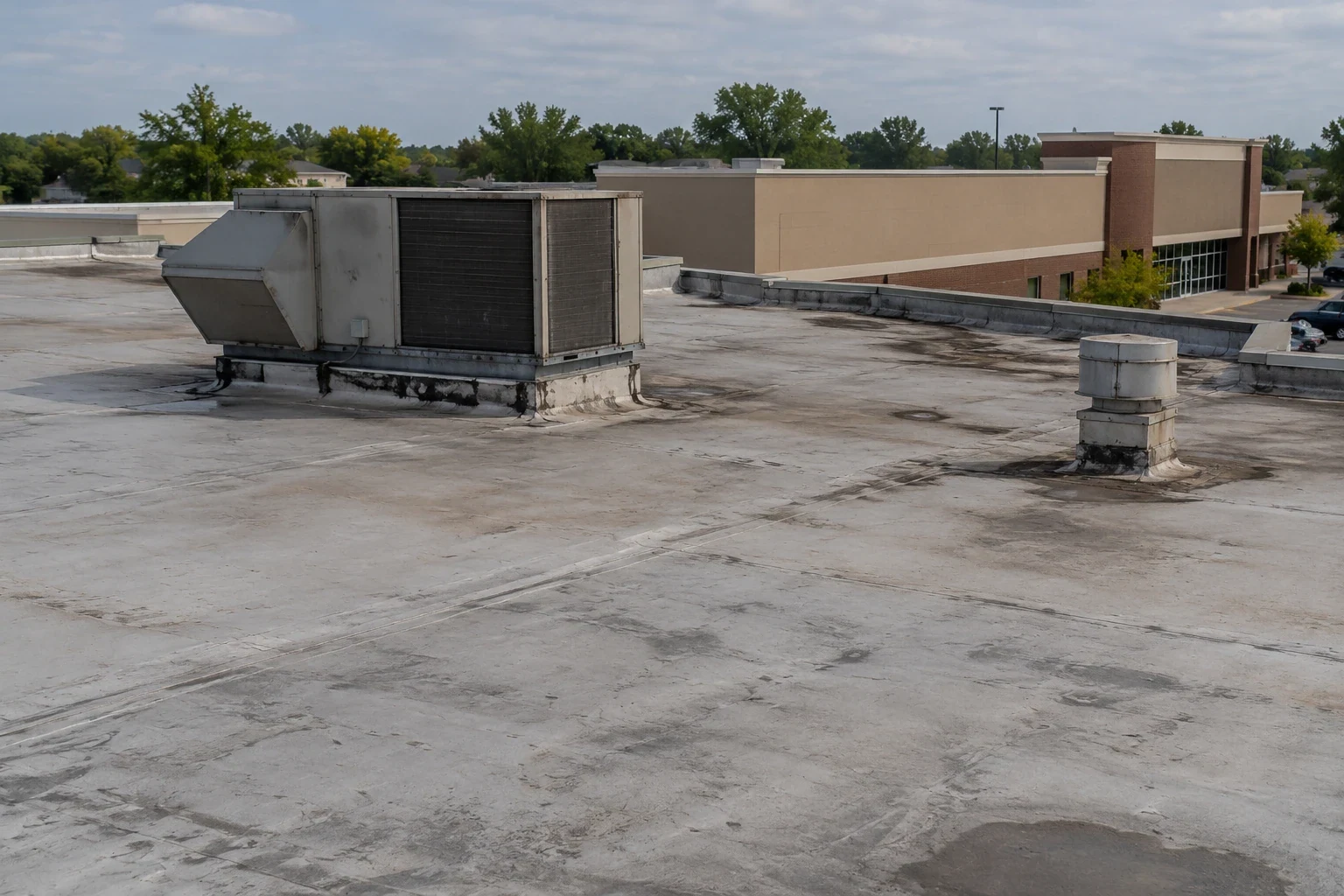
Solar heating across an open retail roof field can create a different movement response from the shaded area beside an equipment curb, making the transition a useful place to examine recurring damage. Big-box retail roofing in Irving, TX, relates that material condition to the sales floor, inventory and loading activity beneath it. Commercial Roofing Irving establishes the assembly findings before planning repair or replacement phases.
The North Irving Belt Line corridor has established retail uses, while nearby Addison's commercial inventory includes shops alongside office and hotel properties. Retail roof work in those commercial settings needs staging coordinated with occupied entrances and deliveries before removal or equipment lifting begins. We examine the actual construction, considering the hot summer climate and rainfall pattern of Dallas/Fort Worth together with the property's operating and equipment requirements.
Is the broad field built as one uniform assembly?
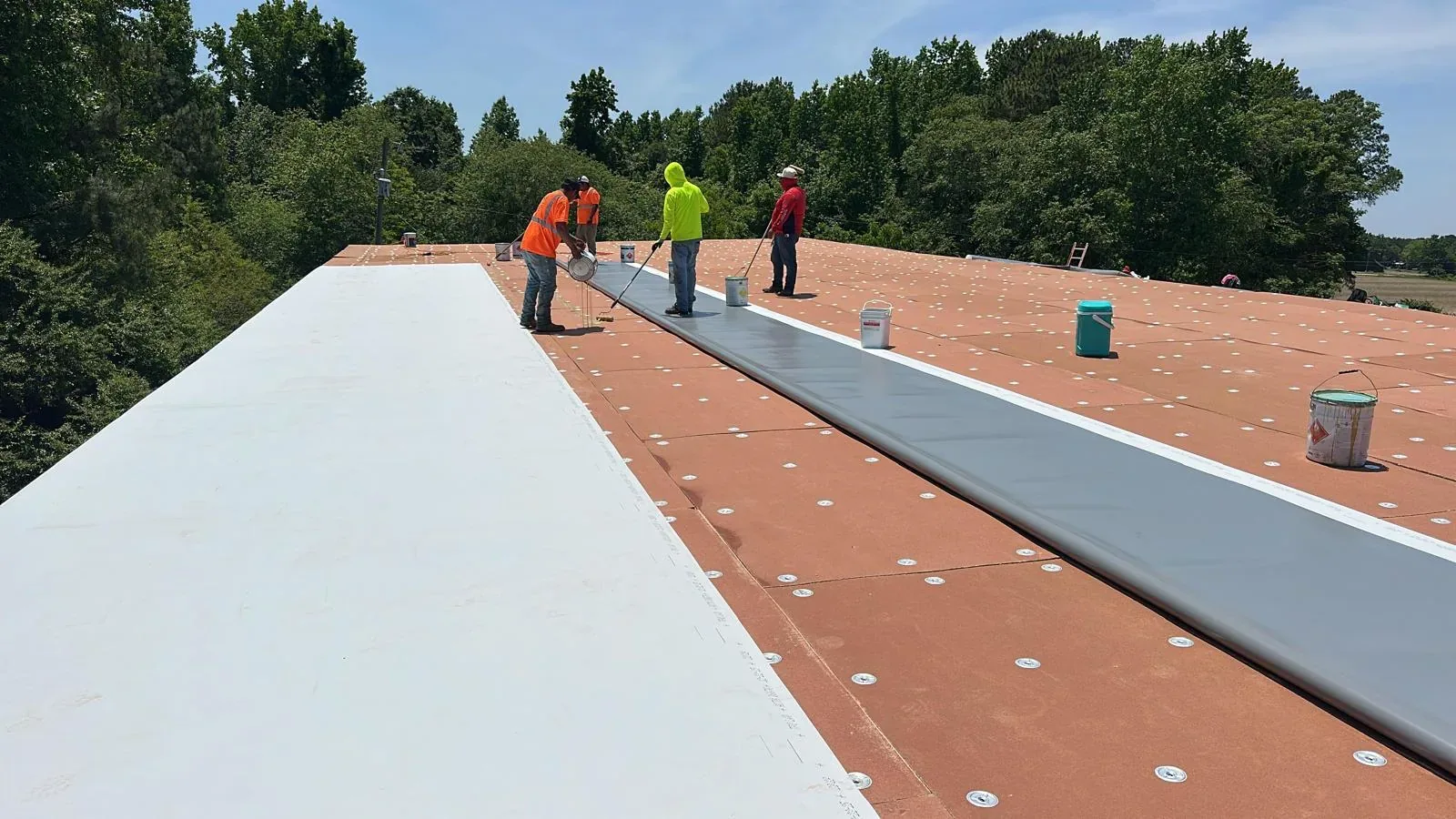
A continuous-looking surface can conceal changes in deck, insulation, attachment or earlier roof work. We identify those transitions through available construction information and suitable direct examination. The covering is assessed for seam condition, punctures and support changes, with attention to routes used for equipment service. An isolated detail can need reconstruction even where the broader field remains suitable for continued care.
Retail field examination establishes where the repair can connect to usable retained material. Old patches may need removal if they obscure a damaged seam or prevent compatible preparation. The investigation also distinguishes a surface injury from unstable support below it. A roof's size does not make one repair boundary appropriate everywhere, so the scope describes the actual affected connection and any concealed layers requiring further checks.
Which sales and inventory areas need protection?
Roof openings, dust and material handling have different consequences depending on the goods and occupied layout below. We relate the proposed work to the sales floor, storage and circulation information supplied by the manager. Interior protection and temporary restrictions are selected for the deck and removal method, not just the visible size of the surface repair. Sensitive equipment or stored material can require a separate arrangement within an otherwise active building.
A grocery operation brings different equipment and temperature-zone questions from general shopping center retail. We establish the actual use before coordinating those requirements. Shared material mechanisms do not make the operating plan interchangeable. The roof findings remain specific to the examined assembly, while the manager's information identifies which areas and activities need protection during investigation and reconstruction.
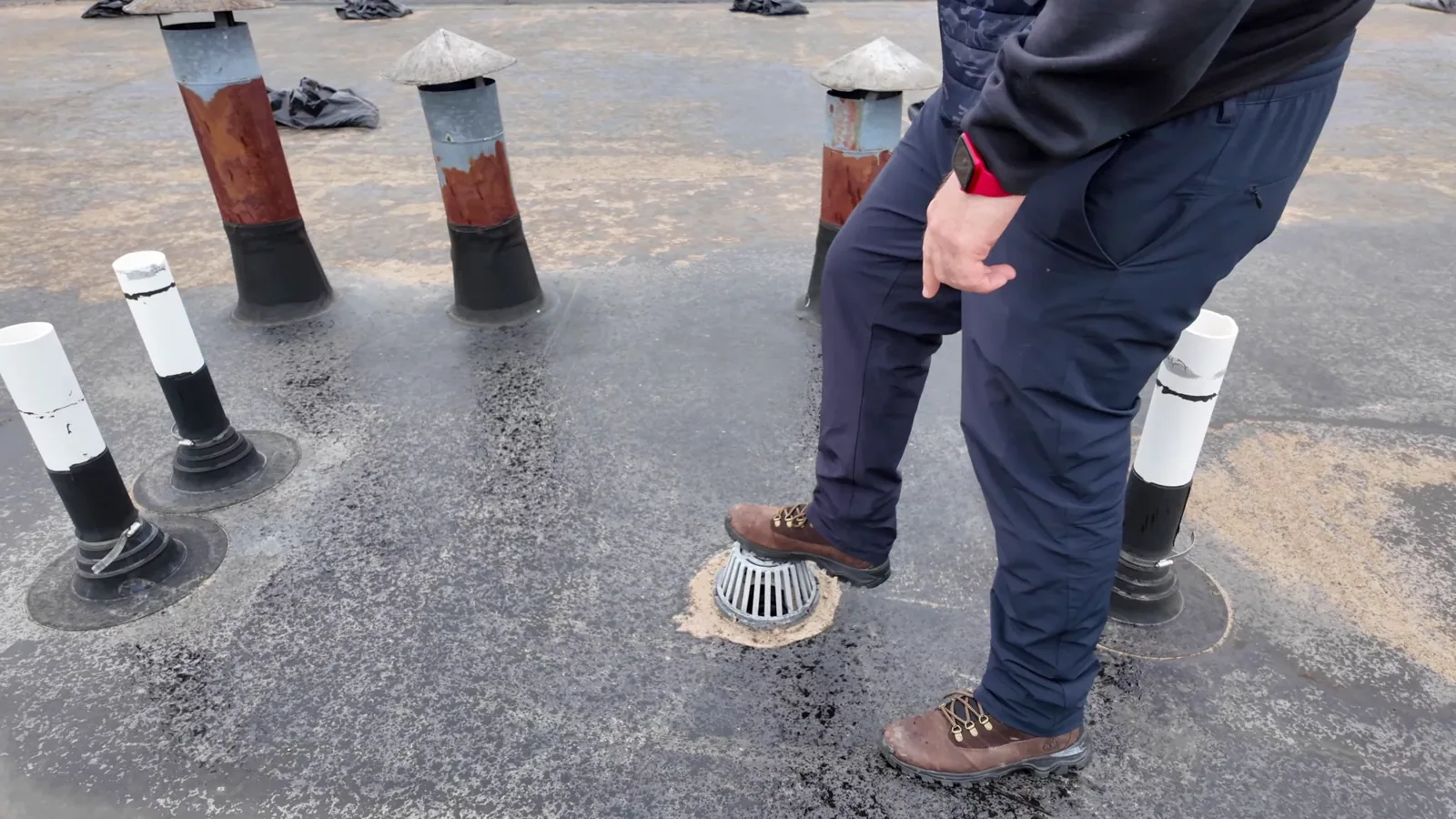
Does runoff reach the drains without collecting at details?
Low areas, equipment obstructions and outlet elevations can hold water on a retail field even when the drain opening is clear. We examine retained-water evidence and the approach to each outlet before selecting a correction. Large-field drainage assessment distinguishes debris removal from bowl repair, scupper reconstruction or revised insulation slope. The scope should explain the route water will follow after work, including any receiving gutter or lower roof.
Wet or compressed insulation beneath a depression needs investigation before more slope is added above it. A survey method may help locate suspect areas where conditions suit the assembly, with direct confirmation before removal limits are set. The rebuilt layers restore support and connect suitably to retained boards. Changes in thickness are coordinated with curb and outlet heights, so improved thermal resistance does not leave short flashing or an unsuitable drain transition.
What does equipment access require before a repair is selected?
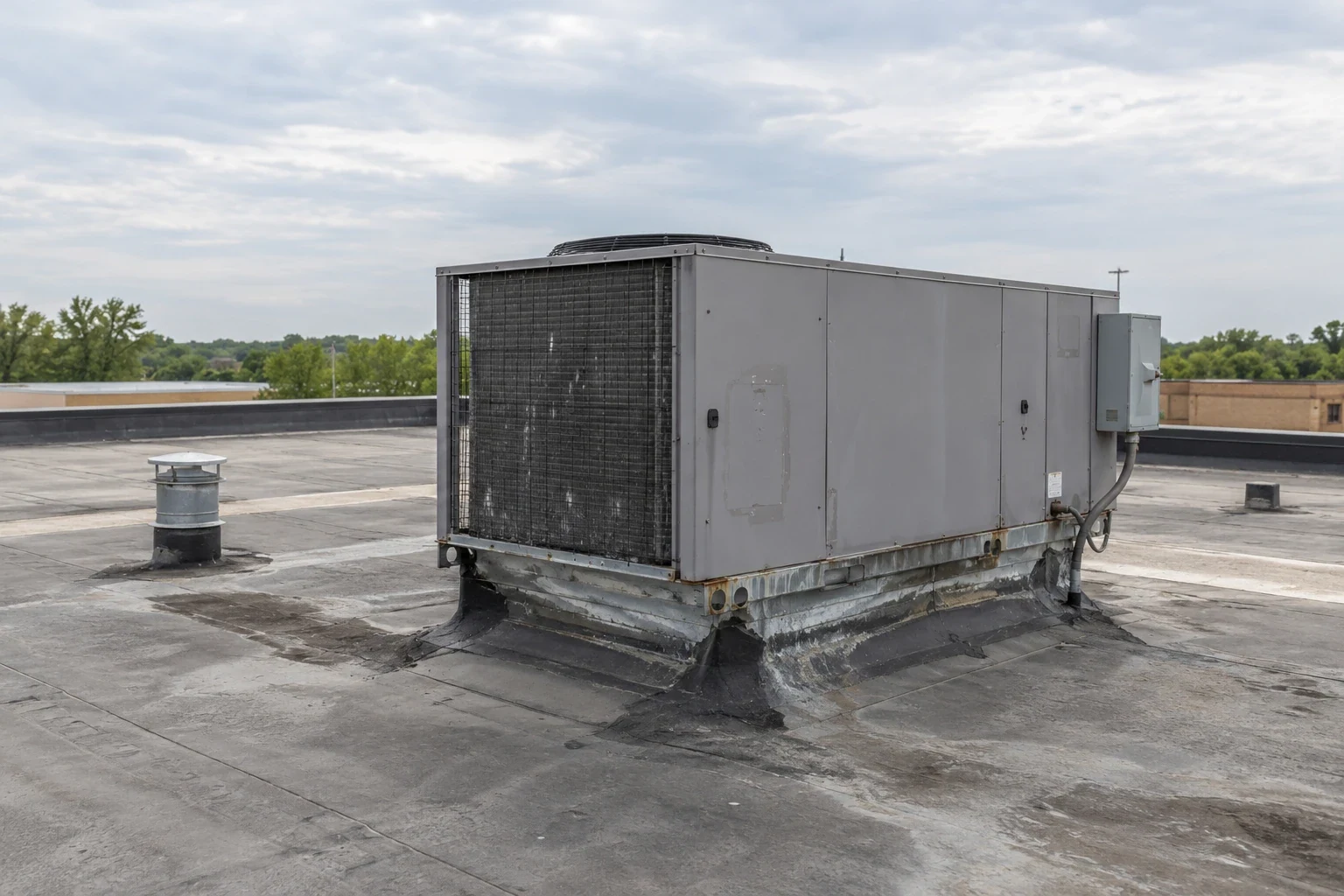
Service routes can create repeated abrasion or puncture near cooling units and penetrations. We identify the contact, support or traffic condition contributing to damage, then coordinate correction with the membrane work. Suitable walkway protection leaves drainage and fragile details accessible. Tools, parts and loose supports should not be left on the roof where another service visit will move them against the repaired surface.
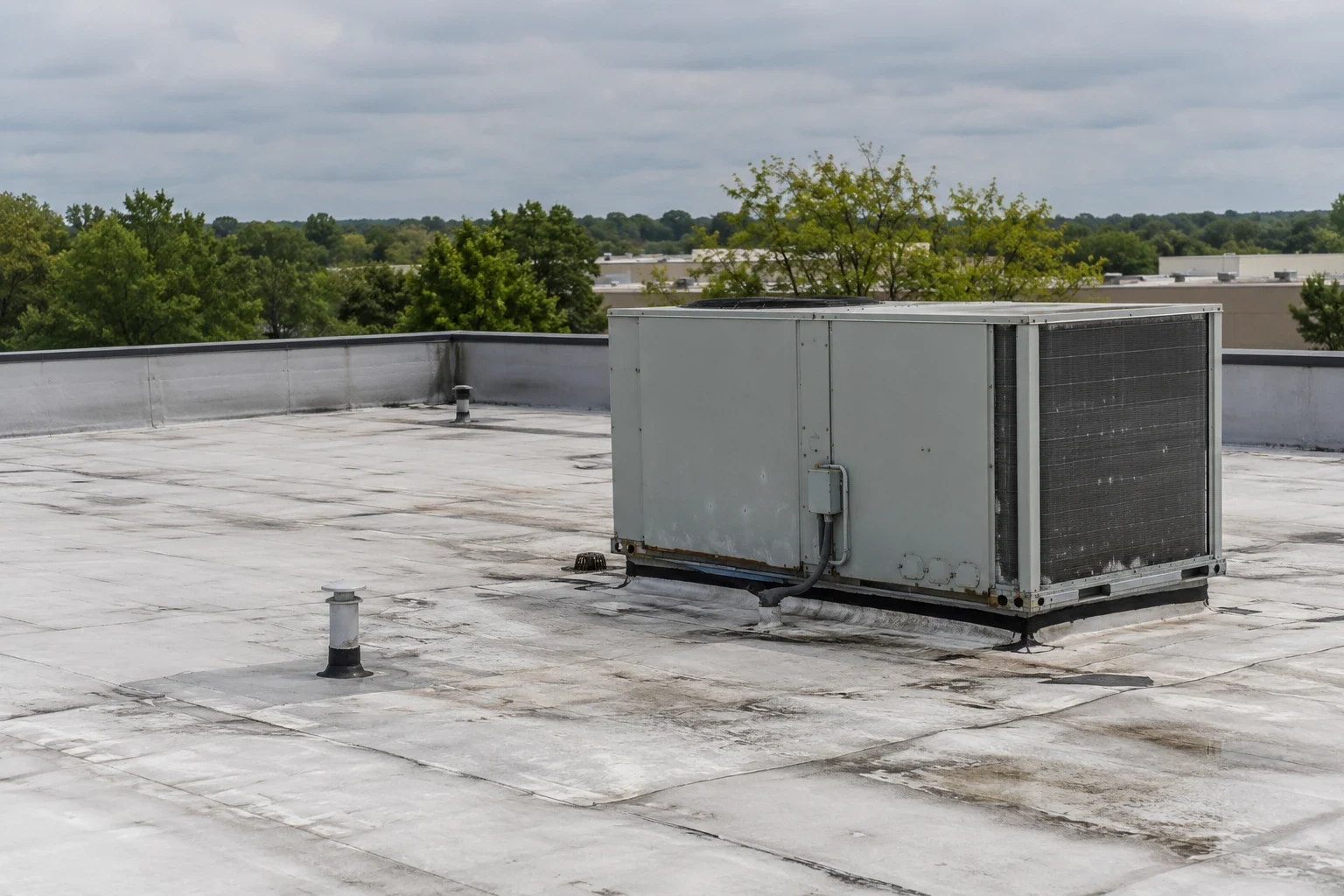
Retail equipment curb coordination examines the upper termination and corners where access beneath the unit may be needed. Lifting or disconnection is planned with service personnel before the construction window is agreed. The selected TPO roof covering or another system then receives compatible details and preparation. The material choice follows substrate and exposure requirements rather than the property's retail format.
The access review also includes how replacement equipment will be moved across completed roofing, with temporary protection and suitable load support coordinated before delivery rather than improvised after the new membrane is installed.
How can loading and customer routes remain workable?
Roof deliveries, lifting and debris removal need staging separate from occupied circulation. We identify entrances and loading activity affected by each phase and coordinate protection or another route where needed. Occupied store reroofing also sets practical roof opening limits based on removal depth, concealed repair and suitable closure. A quiet delivery period helps only if the available window accommodates the physical assembly work required.
For North Irving Belt Line retail roofs, commercial circulation is part of the local setting, while the actual schedule and staging positions are established on the project. Cost follows investigation, preparation, substrate correction, insulation, attachment and operational coordination. The scope relates each cost driver to field reconstruction, equipment access or sales-floor protection, showing how the work changes between a local repair and broader removal.
Completed areas are examined at seams, outlets and transitions to retained roofing before later phases introduce service traffic. Maintenance should keep drains and access routes clear and track reconstructed details by location. Later equipment or tenant changes can affect penetrations, supports and runoff, so the roof interfaces are reviewed when those modifications are planned rather than left for a new leak to reveal an unsuitable connection.
We also identify roof sections where earlier alterations have left an abrupt thickness change or another transition vulnerable to traffic. Rebuilding that boundary may be more useful than adding isolated patches beside it. The scope describes how the layers will meet and what can remain suitable, with the repair surface kept supported through the new connection.
Commercial Roofing Questions
Can the sales floor remain open during replacement above it?
The deck, removal exposure and goods layout need assessment with the manager before defining the phase. Suitable protection may allow some areas to continue operating while another zone is restricted. We establish the actual access and closure requirements rather than promise every activity remains unchanged. The plan is adjusted if concealed findings change the work or protection needed above an occupied area.
Will a repair around one unit require stopping all rooftop equipment?
The connection and service arrangement determine which equipment needs coordination. A contained repair may be accessible with the unit in place, while concealed flashing work can require lifting or shutdown of that unit. We identify those needs with service personnel before scheduling. Other equipment is considered where access, utilities or the work area create a specific connection to the activity.
Can drains be repaired without replacing the open field?
A suitable local boundary can support contained outlet reconstruction. We examine the bowl or scupper, approach slope and supporting layers before choosing that scope. Wet insulation or a broader depression can expand the work beyond the connection. The repair should restore positive flow and compatible membrane continuity without assuming that every drainage defect requires the same field removal.
What would justify replacement rather than continued patching?
Widespread moisture, deteriorated attachment or unsuitable surrounding membrane can make contained repairs unable to provide dependable connections. We establish that extent through examination and explain which layers need reconstruction. The comparison identifies the benefit of sectional or broader replacement against the actual findings. Roof size and reported age are context, not a substitute for the condition supporting the decision.
Ready to review the roof scope?
Request a Roof Assessment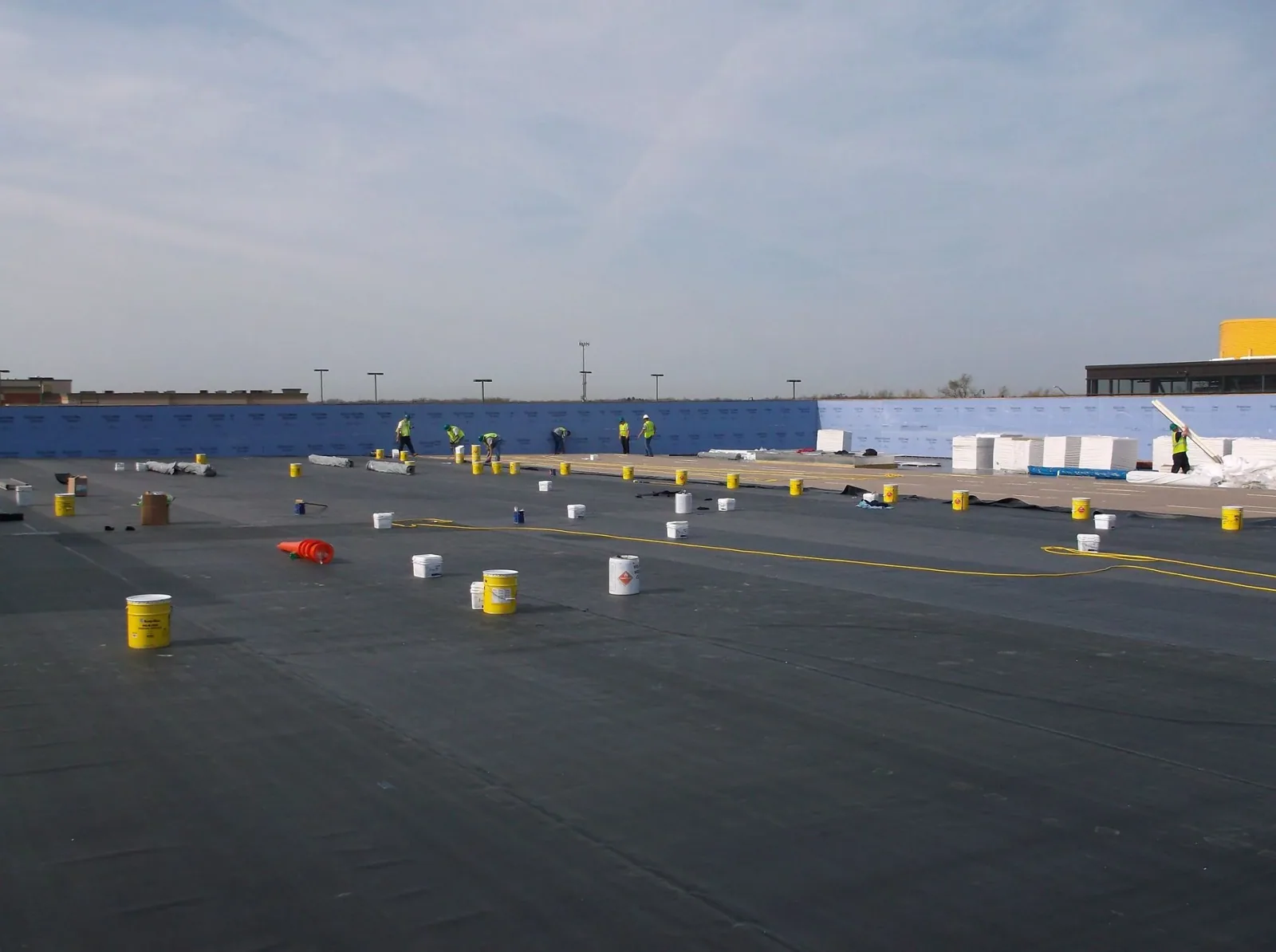
Shopping Center and Strip Retail Roofing
See scope, options and what to expect on the roof.