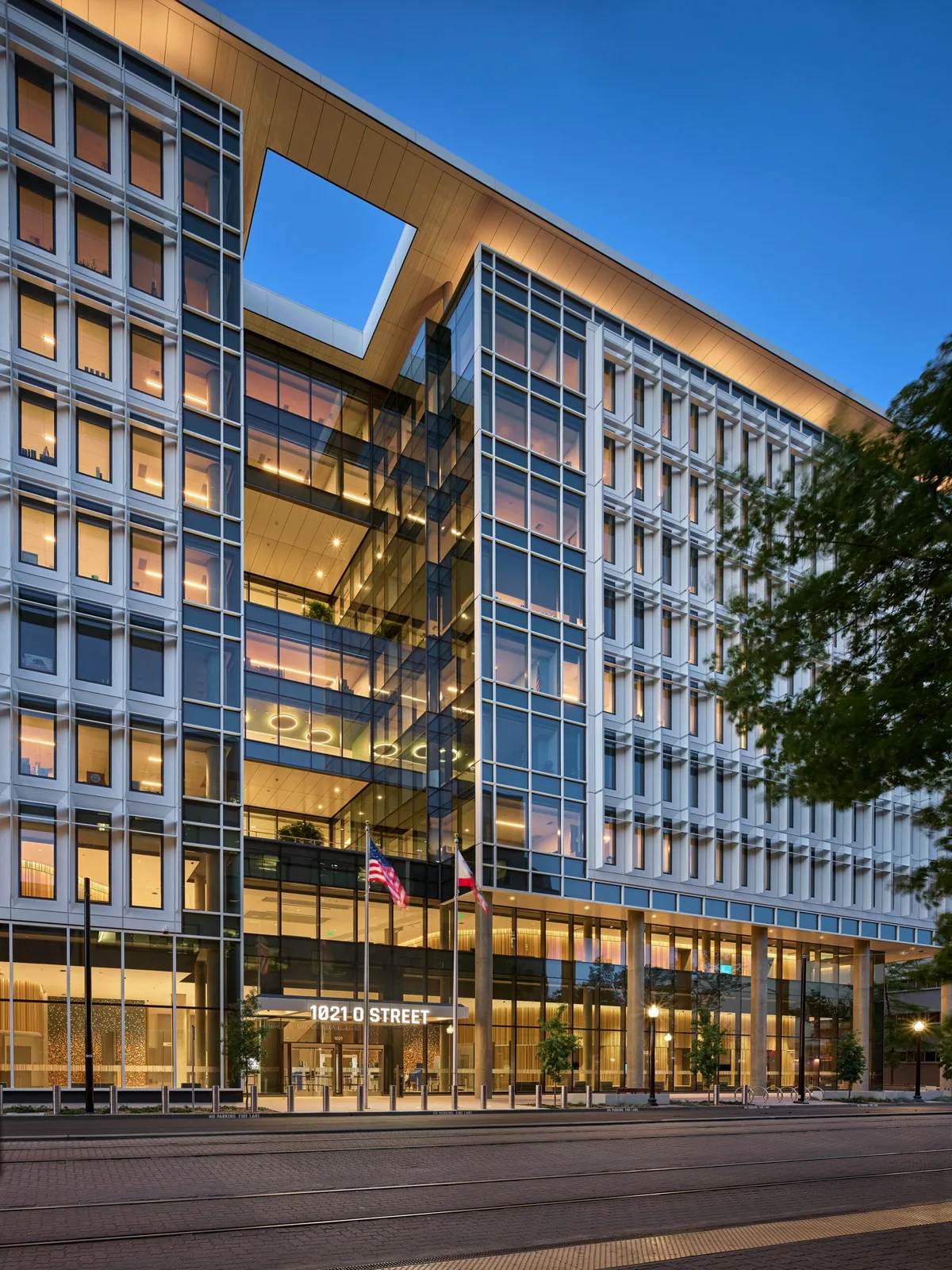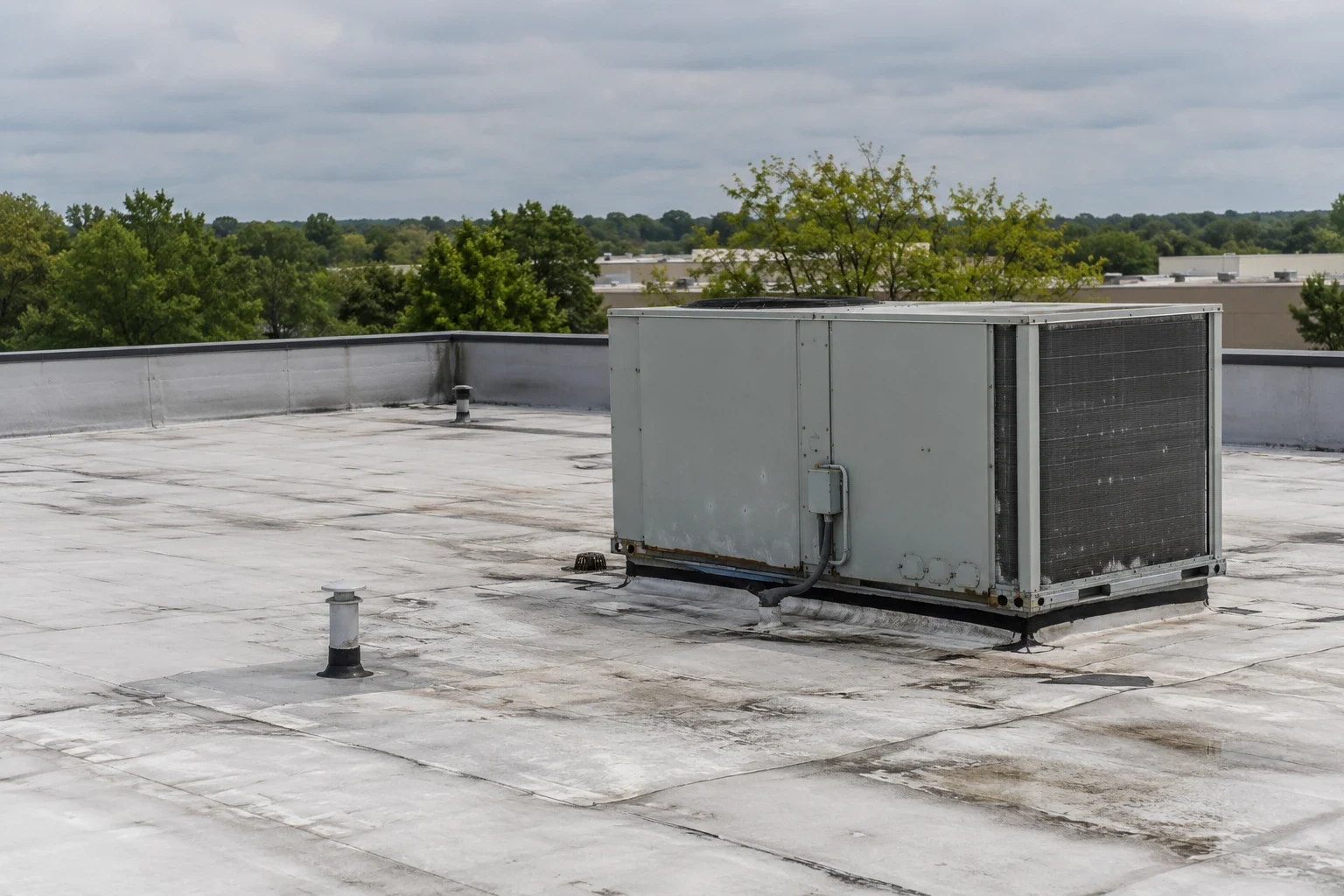
Sun-heated roof material moves around service equipment and clerestory connections that may remain comparatively rigid. Auto dealership roofing in Irving, TX, investigates the resulting strain alongside the water observed below. Commercial Roofing Irving assesses showroom and service-bay assemblies separately where their construction differs, then coordinates the correction with vehicle circulation and occupied work areas.
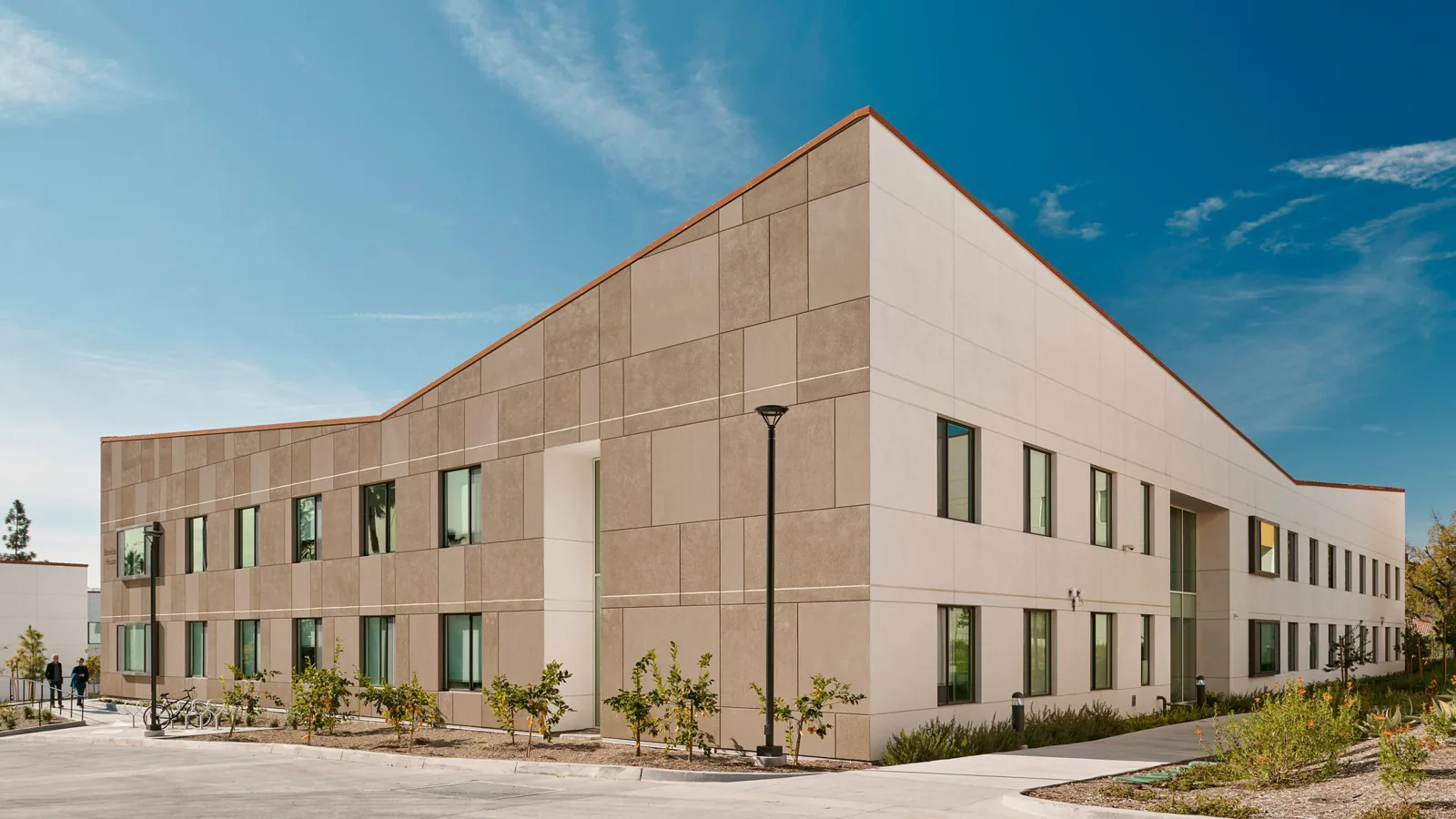
North Irving's Belt Line Road corridor includes commercial and retail development. Central Irving follows SH 183 between Dallas and Fort Worth. On a dealership property in these settings, circulation planning includes customer access, inventory and delivery routes. The Dallas/Fort Worth region's hot summers make material movement a useful inspection priority, while the particular building's drainage and roof condition determine the work required.
Are the showroom and service roofs built the same way?
A showroom roof may meet glazing, a taller wall or architectural metal that differs from the service-bay construction. We examine the actual connection rather than applying one repair method across both areas. Water can enter above the visible ceiling stain and move through concealed material before appearing. The investigation distinguishes roof flashing from wall or glazing mechanisms that may need another specialist's attention.
Dealership roof assembly examination identifies covering type, accessible support and the details around each occupied use. Where earlier additions created a height change or a concealed roof-to-wall interface, selective opening may be needed to understand the construction. Findings are recorded by area so a suitable repair above one use is not presented as evidence that every assembly on the property has the same condition.
What happens where service equipment passes through the roof?
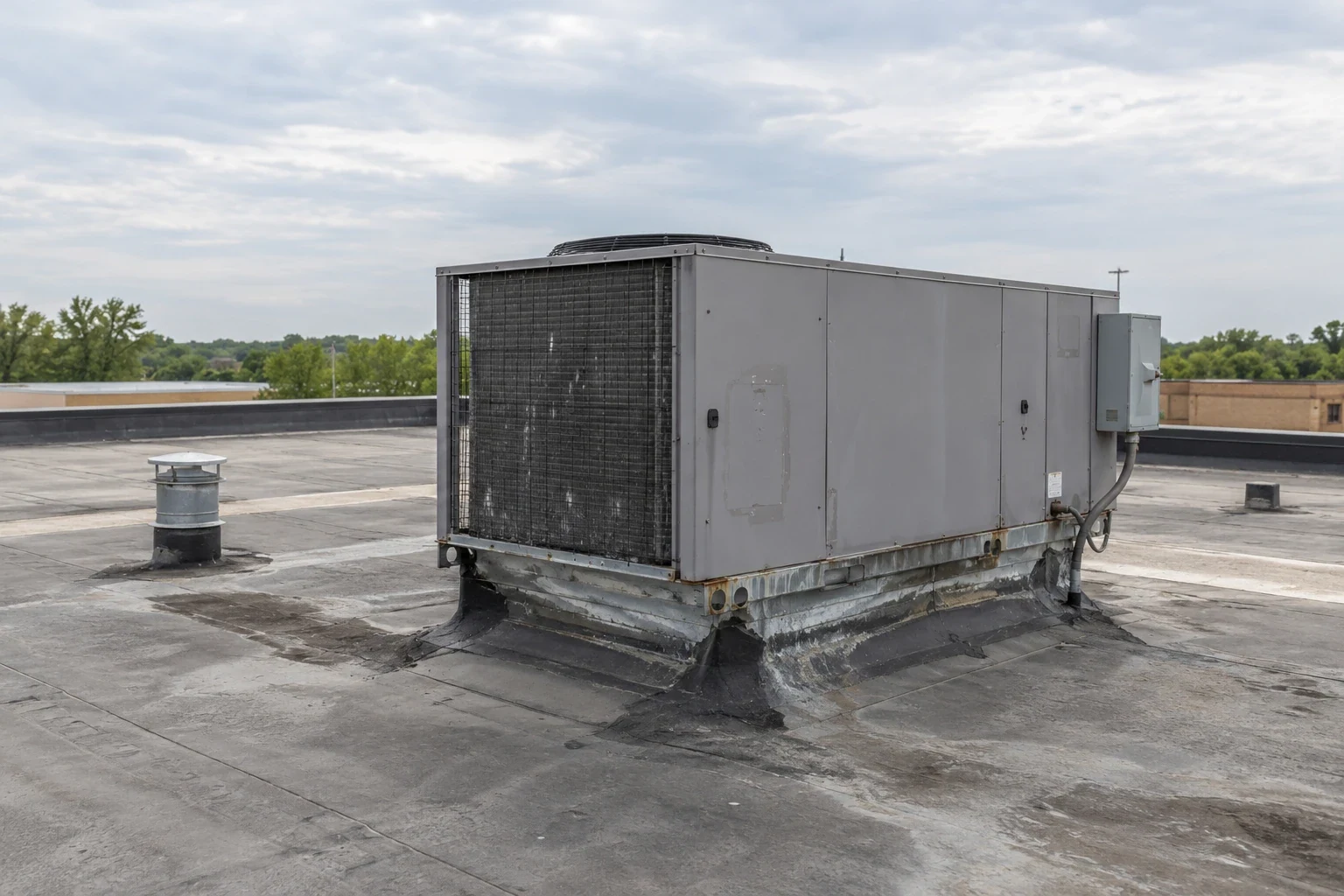
Ventilation and other service penetrations require compatible flashings and a secure supporting arrangement. Vibration or thermal movement can separate an unsuitable connection over time. We assess the curb height, fastening and membrane response before resealing the visible perimeter. A repair that cannot reach the upper termination may need equipment access coordinated with service personnel for complete reconstruction.
Service-area curb and support work separates roof waterproofing from the equipment's operating function. Disconnection, lifting or alterations are coordinated with the appropriate personnel. The repair preserves a suitable water-shedding connection while service access avoids concentrated loading on a fragile corner. Later equipment replacement also needs roofing coordination before another penetration or support is added to the covering.
Where can removal occur without exposing vehicles?
Inventory beneath an edge and traffic through a service entrance affect the lifting and debris plan. We review these locations with the manager before establishing a work zone. Moving vehicles can provide practical separation for a phase, while another arrangement may require a temporary route or operating restriction. The protection follows the actual overhead activity rather than an assumption that a short repair cannot affect the area below.
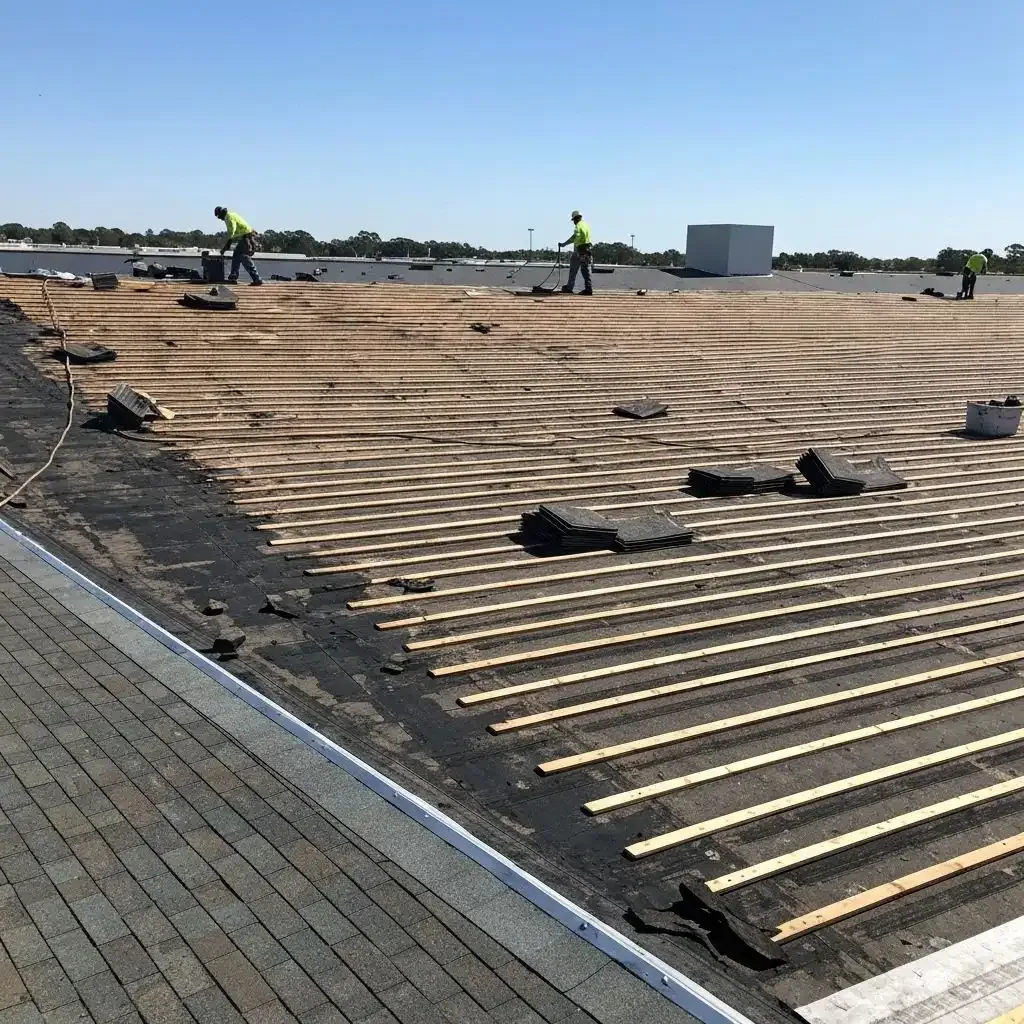
Dealership reroofing phases also include interior protection where work opens the assembly above active rooms. Preparation and closure needs determine the available window. A bay boundary below does not necessarily form an independent roof section above it, particularly where drainage or concealed insulation continues across the division. We examine those relationships before setting a phase that must close securely at its temporary edge.
The manager also identifies delivery movements that could conflict with the proposed lifting position during the agreed work period.
Is the visible outlet the whole drainage problem?
Water movement depends on field slope, receiving connections and the downstream route. A cleared drain may still receive poorly where roof deformation or unsuitable insulation geometry traps water nearby. We inspect that approach along with the outlet connection. New roof layers need coordination with the sump and flashing heights so additional thickness does not create a barrier between the field and the receiving opening.
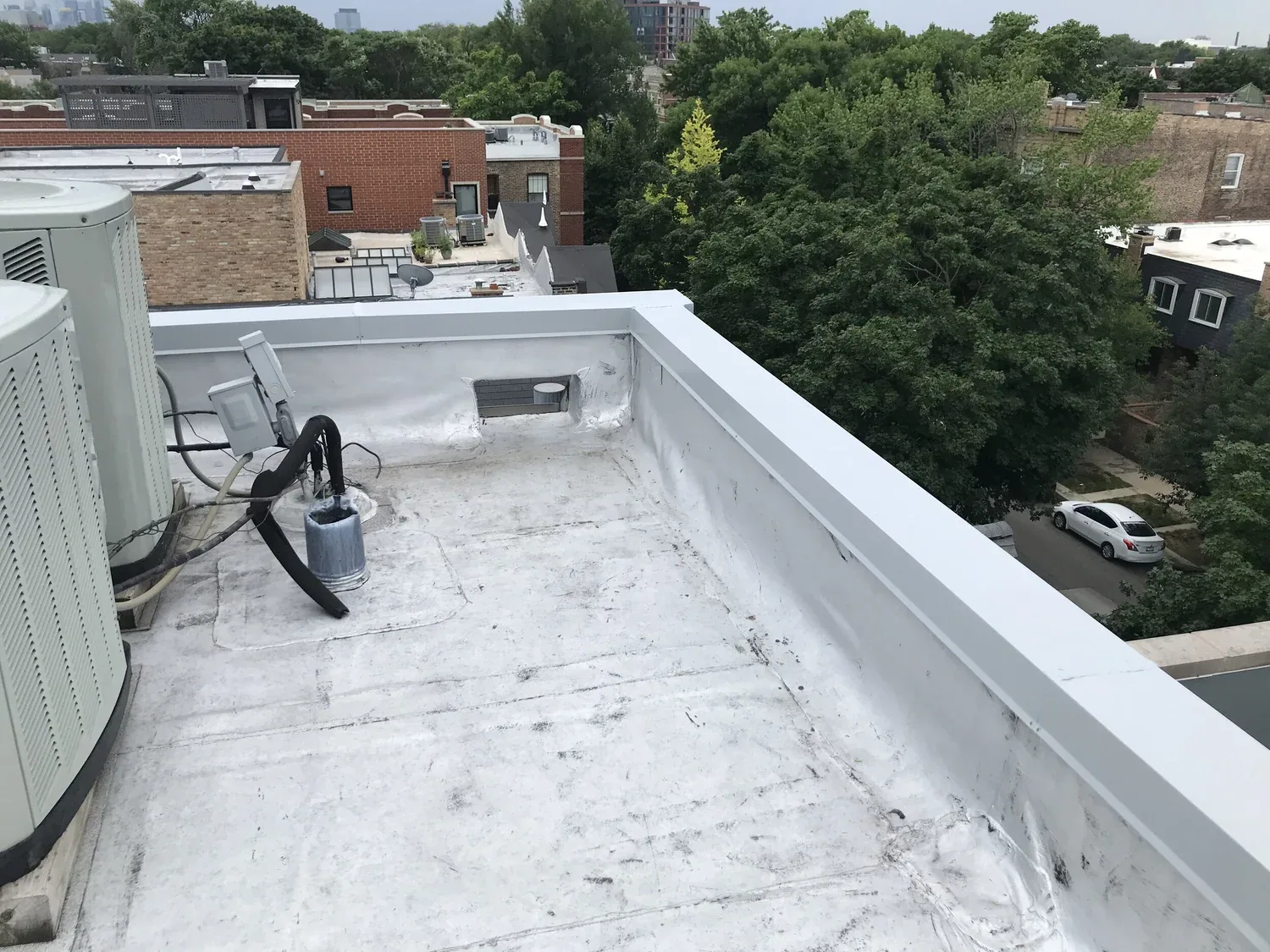
At roof edges, gutter and perimeter reconstruction examines support and discharge as well as seams. Water should not be redirected toward a retained entrance connection that was outside the original repair area. Properties combining office space with light-industrial work areas can have similar mixed roof uses. The dealership's vehicle routes and actual layout shape the receiving-roof and access plan here.
Which option corrects the condition above each use?
Repair remains a useful choice where defects are localized and neighboring covering, insulation and attachment are suitable. A larger rebuild becomes a comparison when wetting or distributed deterioration prevents a dependable local connection. We describe those findings by roof area. This makes it possible to compare a service-bay reconstruction with retained showroom material without assuming either area dictates the scope for the whole property.
An existing TPO dealership roof needs a suitable welding surface and compatible detail materials. Other coverings have different preparation and attachment requirements. Moisture confirmation helps establish where insulation must be removed before the field can be restored. A surface treatment is assessed against those conditions, with damaged support or wet layers addressed through appropriate reconstruction rather than hidden beneath the new finish.
For Belt Line Road dealership properties, staging is reviewed alongside the available drive aisles and entrance arrangement. Cost includes assembly investigation, material removal, equipment access and protection for inventory or occupied bays. The proposal shows which components belong to each phase, with concealed findings explained where they change the initial scope or require further professional assessment.
Seams, flashings and runoff connections are checked after installation. The manager receives priorities for keeping outlets accessible and coordinating subsequent service work on the roof. Vehicle protection arrangements can return to normal after the relevant overhead activity is complete, with any remaining restrictions identified clearly. A documented boundary between reconstructed and retained material also supports later investigation if another area begins to leak.
Maintenance records can note which equipment technician visited each roof section and whether supports or access pads changed. That information is useful when a new puncture appears near a previously sound detail. We assess the current material directly while using the record to target likely changes. The objective is to correct the new mechanism without unnecessarily reopening an unrelated completed repair.
Commercial Roofing Questions
Can dealership inventory stay beside the building during edge repairs?
The overhead work and debris-handling method establish the separation needed. Some inventory may need relocation while a particular edge is opened or metal is lifted. We coordinate that footprint with the manager before the phase begins. Keeping vehicles nearby is considered only where a suitable protected arrangement exists, with changes communicated if the actual reconstruction requires a larger work zone.
Does a service-bay leak require the same repair as a showroom leak?
Different coverings, penetrations and interior systems can produce different water paths. We assess the assembly above each reported location and trace plausible entry mechanisms. A leak beside equipment may need curb reconstruction, while a showroom stain may involve another transition. The proposal follows those findings instead of applying one patch type to every interior use.
Can rooftop equipment remain operating during curb repairs?
Accessible connections may permit some work with equipment in place, but concealed flashing can require coordinated lifting or service interruption. We review the interface with the appropriate service personnel. The agreed window includes preparation and reliable closure. Operational convenience should not restrict the repair to a lower exposed seal while leaving an inaccessible failed termination above it.
How is a phased replacement priced for multiple roof sections?
Each section's construction, removal and protection needs are identified before the phases are compared. Shared drainage or equipment can connect work that appears separate on a floor plan. We explain those relationships and distinguish retained material from reconstruction. The resulting scope allows the manager to assess where an operating restriction changes cost and where material deterioration drives the larger project.
Ready to review the roof scope?
Request a Roof Assessment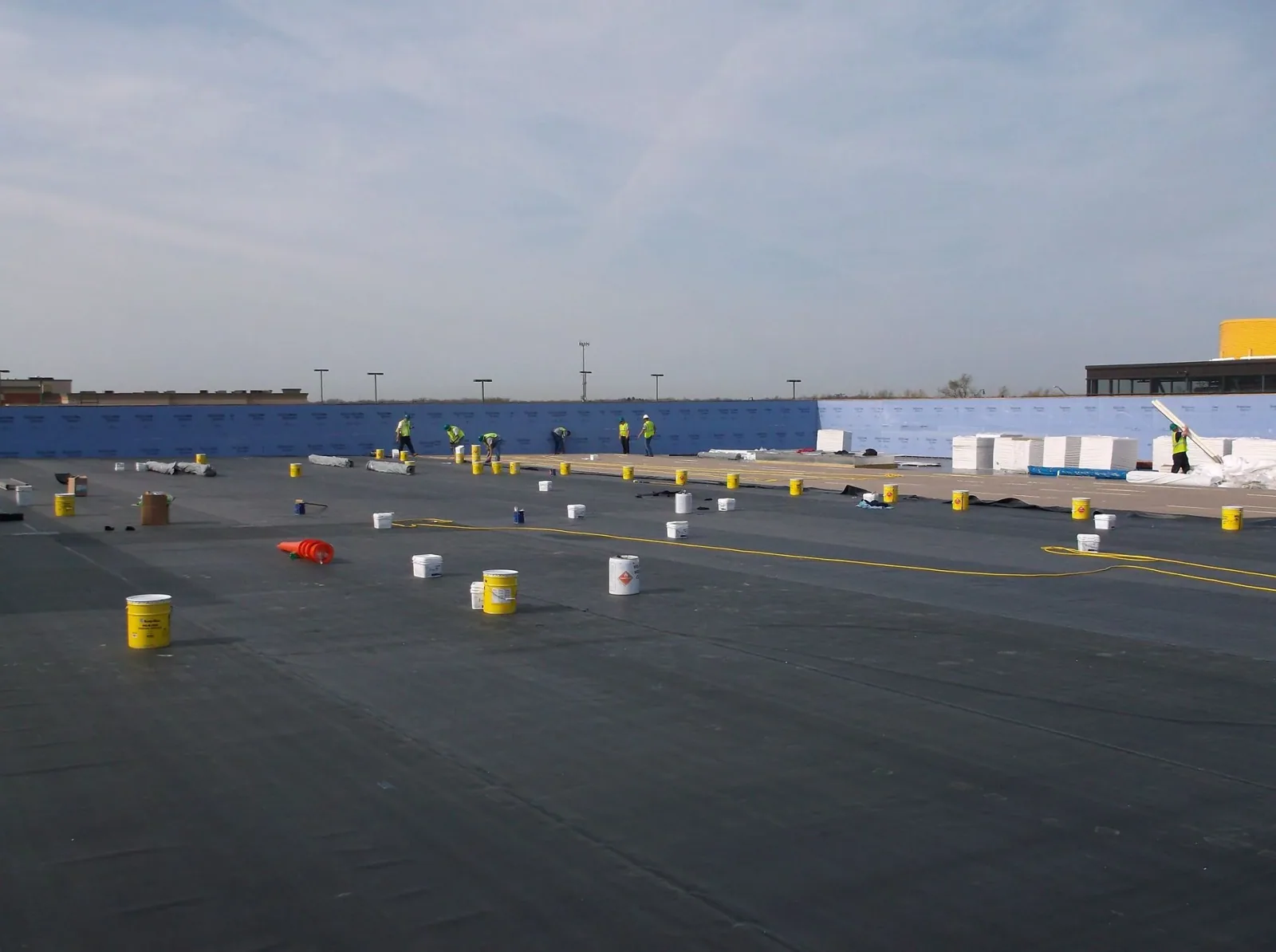
Commercial Roof Edge Metal, Coping and Gutters
See scope, options and what to expect on the roof.