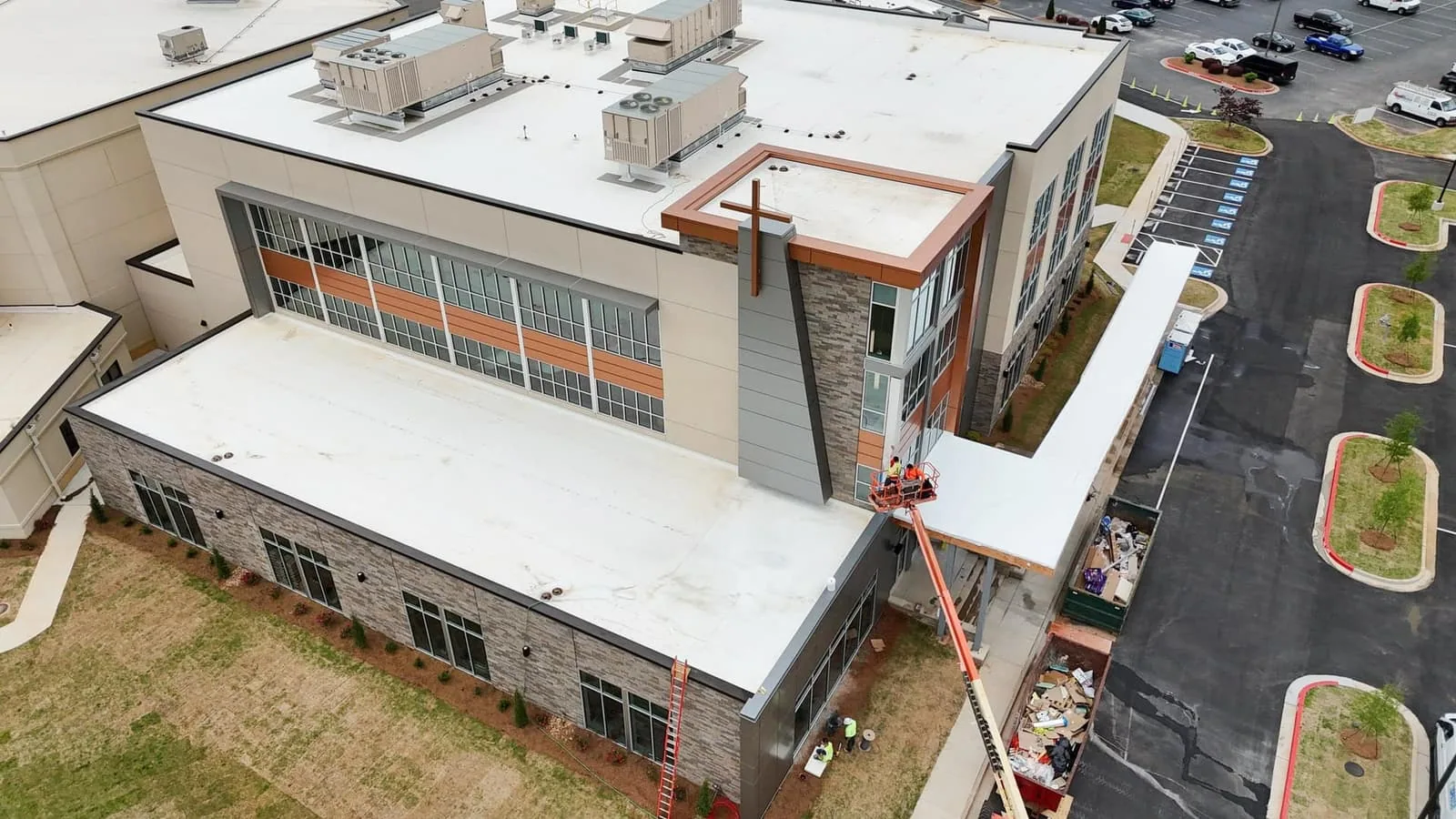
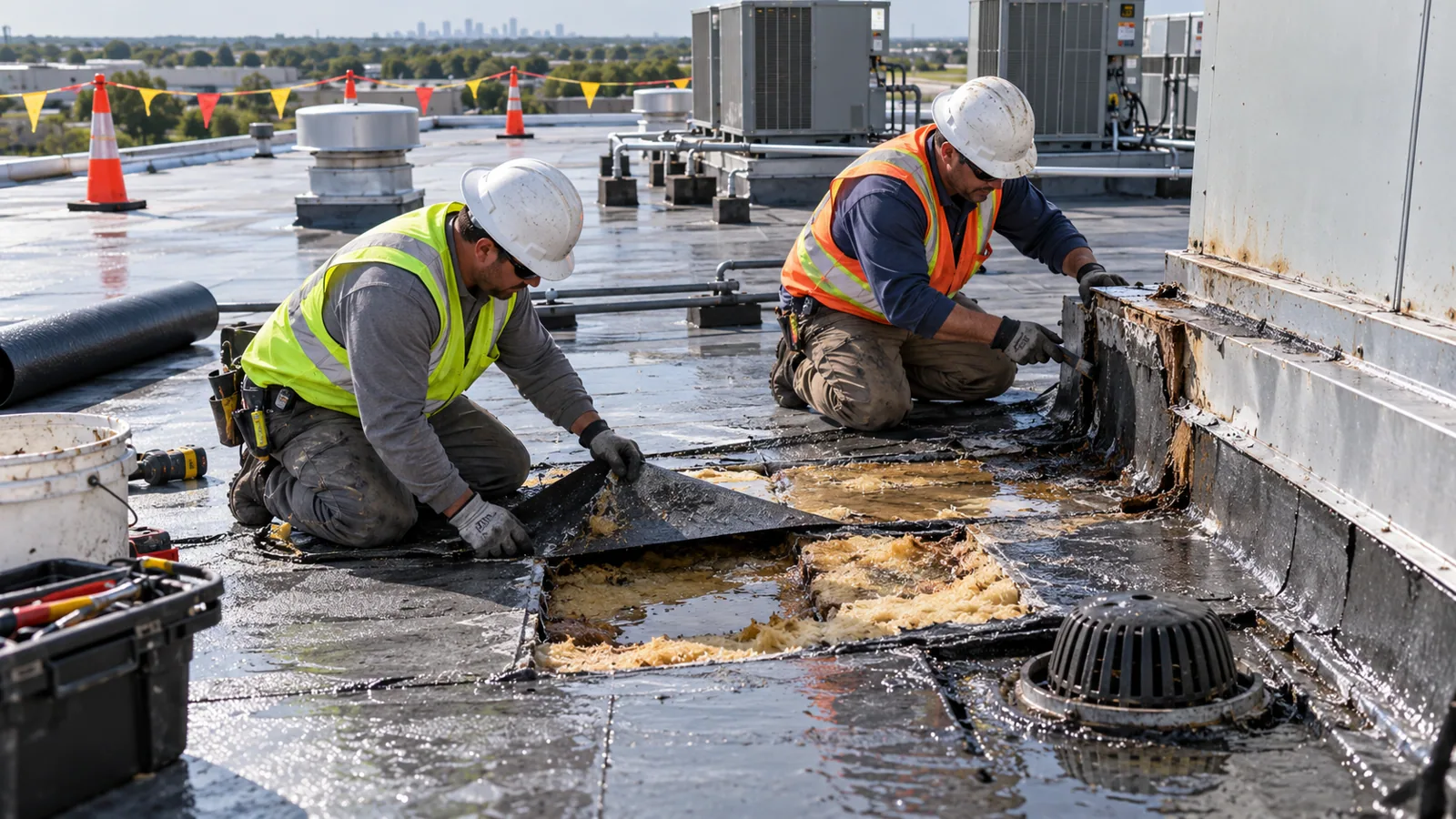
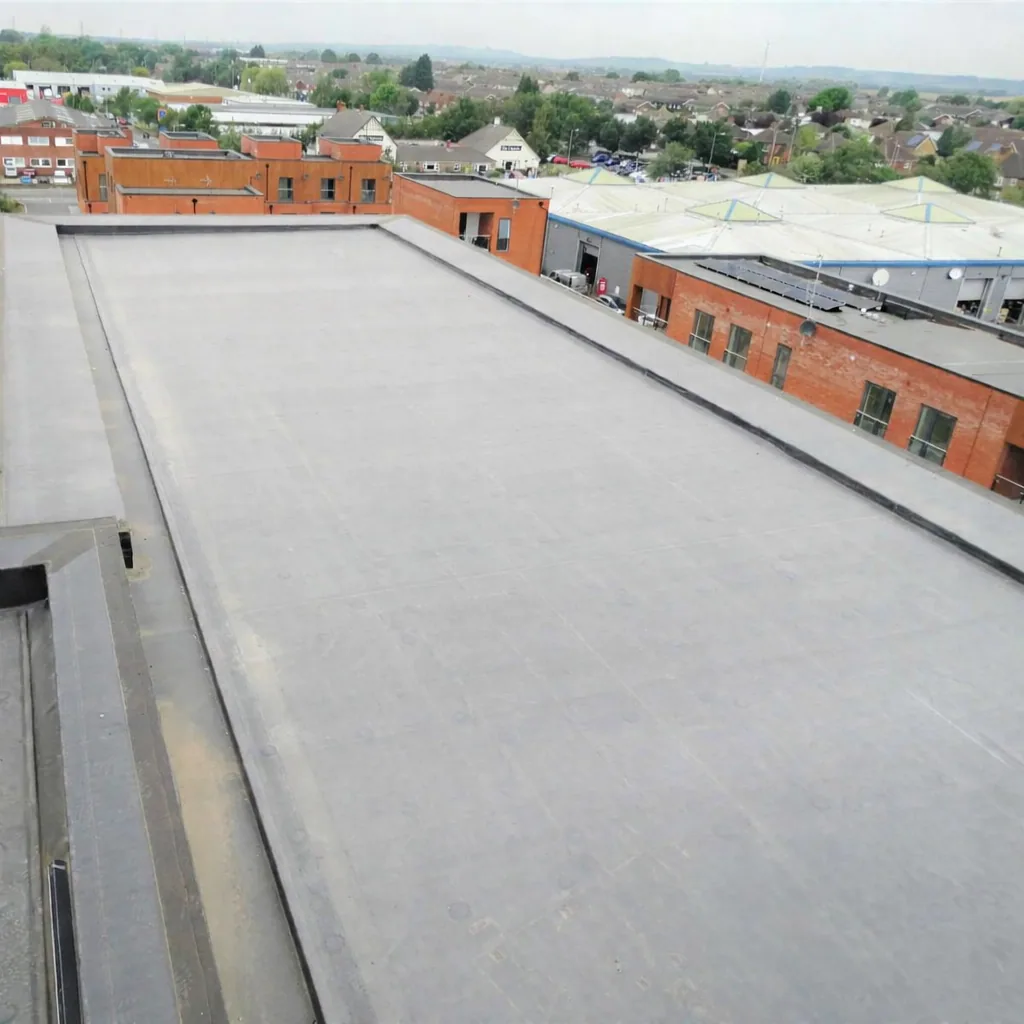
Under DFW’s hot summer conditions, a membrane sheet and rigid curb can move differently as their temperatures change, so their connection deserves a separate inspection. Versico commercial roofing in Irving, TX, needs to be assessed as a system of membrane, attachment, supporting layers and transitions. Commercial Roofing Irving records those parts before recommending a repair boundary. Las Colinas includes office, retail and multifamily properties, while Valley Ranch includes multifamily properties and commercial uses. The building’s use affects access and scheduling, but it does not establish the condition of the roof above it.
The Dallas/Fort Worth climate has hot summers and wetter spring and fall periods. Those regional conditions matter when planning exposed work and reviewing how roof details may respond to temperature changes, but they do not prove damage at a particular property. We identify the observed material, compare it with available records, trace the reported water path and distinguish confirmed conditions from questions that need selective opening. That evidence supports a proportionate comparison among local repair, recovery and replacement.
What does the product record actually identify?
Roof records can describe the manufacturer while omitting the specific system or field installation. We compare closeout documents and purchase records with membrane markings, sheet appearance, seam details and accessible edge conditions. When the roof was installed in phases, we document each field separately rather than assuming one product and attachment design carries across every section. Labels are evidence to reconcile, not a complete description of the materials concealed below the sheet.
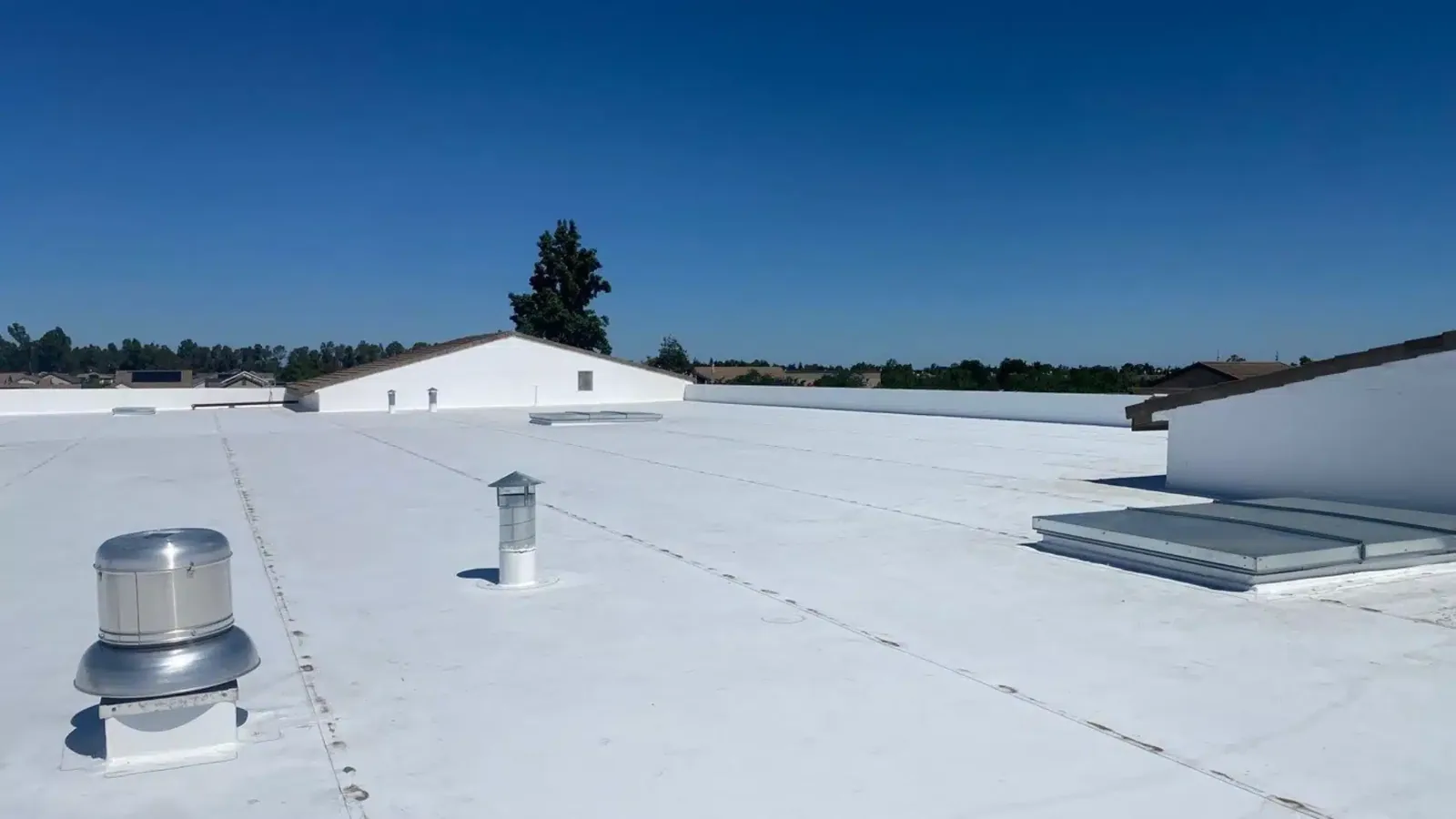
The inspection records the membrane family, approximate limits, visible repairs and the substrate clues available at the roof surface. We also note where identification is inconclusive, such as an unmarked replacement strip or a detail covered by metal. A GAF membrane assembly and a Carlisle SynTec roof can share a single-ply appearance with a TPO field, but each system still requires compatible accessories and procedures established by its records and materials.
Which observation explains the leak?
A roof leak may appear at an interior point some distance from the opening that admits water. Water can move along a deck flute, insulation joint or structural support before it becomes visible. We compare the reported area with roof slope, drains, penetrations and transitions, then examine the membrane and nearby details. The inspection records the location and limits of access so that the owner can see which areas were directly examined and which remain outside the findings.
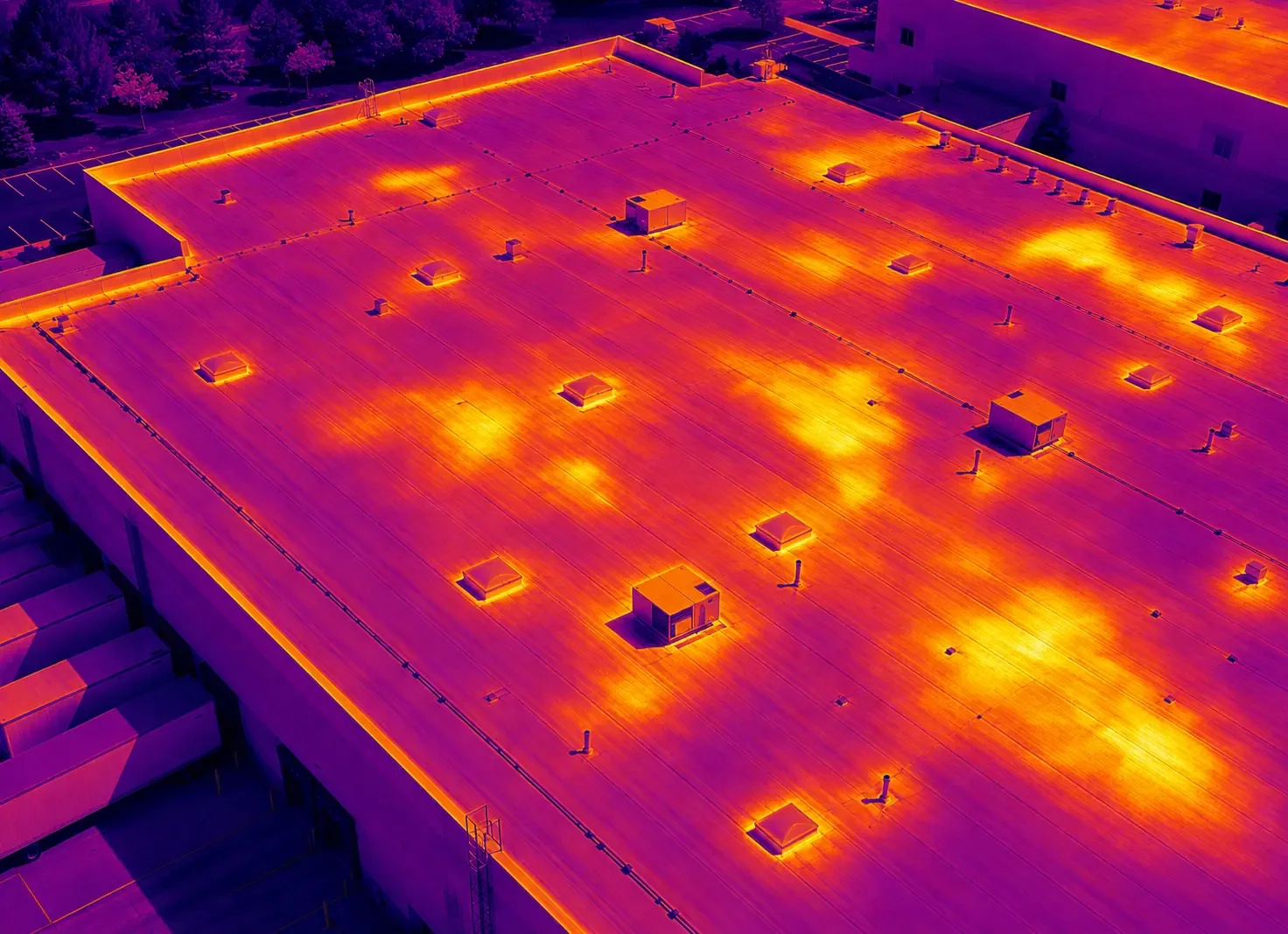
If concealed moisture could alter the proposed work, an infrared moisture survey may help direct selective confirmation when conditions are suitable. Survey indications need interpretation and, where necessary, an opening; they are not automatically a map of wet insulation. The report identifies readings or areas for further checking separately from confirmed material conditions. A commercial roof repair can remain limited when the defect and sound surrounding material support that boundary. If test results show a wider condition, the written work boundary should expand only as far as those observations justify.
How are seams and repairs evaluated?
Field seams and flashing transitions deserve separate attention. We look for a discontinuity, contamination, prior patch, exposed edge or other condition that could affect the repair preparation. A surface mark alone does not establish a failed weld, just as a seam that appears closed does not establish the condition of the layers beneath it. The report describes the visual evidence, the adjacent support and whether a closer examination is needed to determine the extent of a concern.
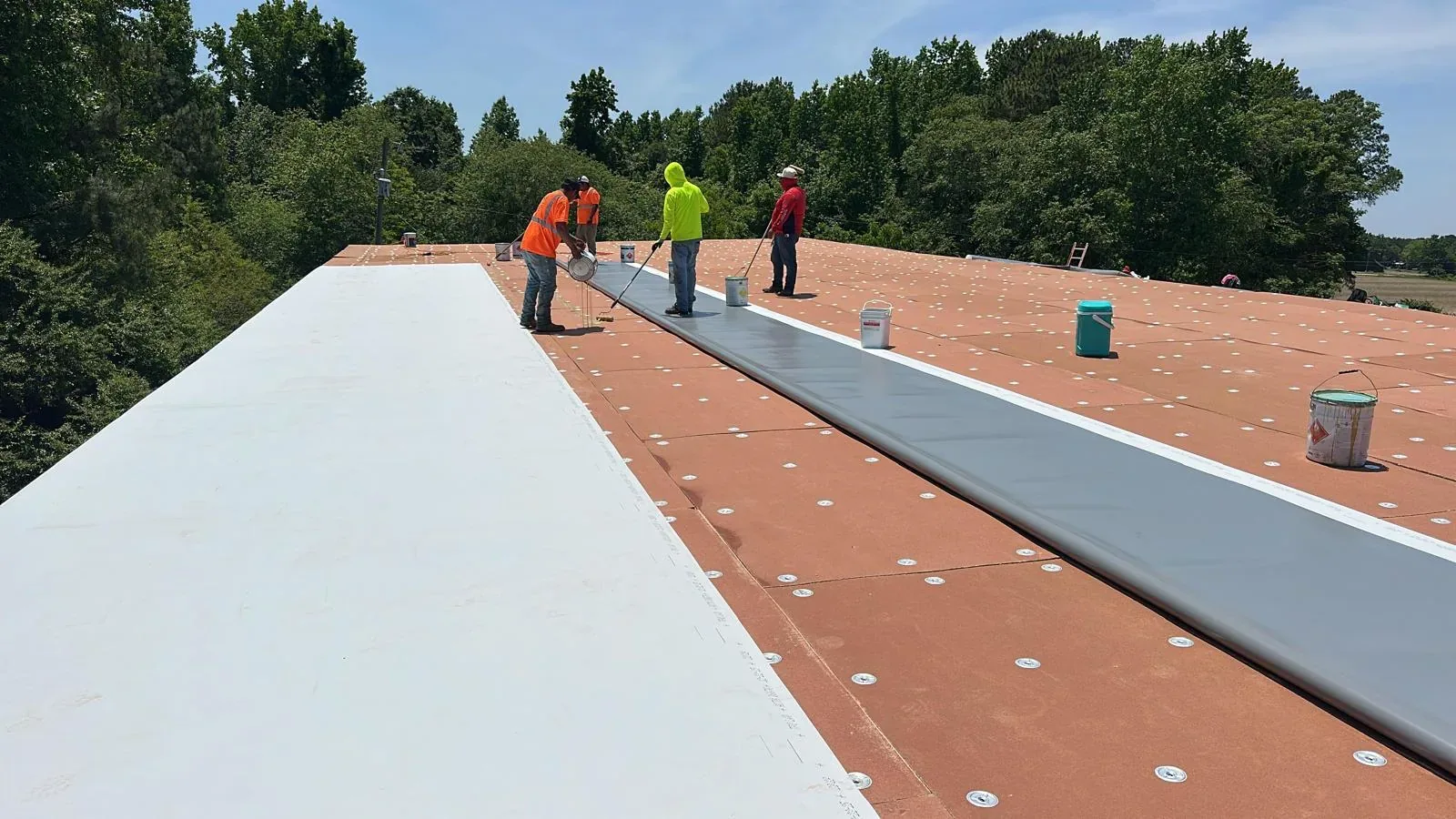
Repair material selection depends on identifying the existing sheet and following an applicable procedure for that system. A new patch should connect to suitable existing membrane, not bridge loose material or terminate at an unsupported corner. The scope states the removal limits, surface preparation, rebuilt detail and inspection point before the connection is concealed. Where a different membrane family appears in an addition, its history stays distinct until the materials and transition are examined. The same caution applies to a coating or older repair whose composition is not apparent from the surface.
Where does the roof field meet another assembly?
The membrane must connect to walls, drains, curbs and edge metal without leaving an unprotected interruption. At a parapet, we examine the termination and backing. At a curb, we check how the sheet rises and how the support meets the deck. At a drain, the relationship between the membrane, clamping components and surrounding slope affects whether water can reach the intended collection point. A failure at one of these interfaces can produce a leak even where broad field seams remain intact.
Rooftop equipment work can create penetrations, foot traffic and access limits that change how the membrane is inspected. A curb and support assessment can define the interface for coordination, while the insulation and cover-board scope addresses supporting layers. Many commercial project applications in Irving proceed through relevant city-department plan review after the permit requirement is met. A Las Colinas association process may apply in addition to city review. We describe those approval questions separately from the roof observations so the owner can route each decision to the responsible reviewer.
When can repair remain the smaller scope?
A contained repair can be appropriate when the defect is localized, compatible membrane remains beyond the repair edge and the substrate can support the new connection. The proposal defines the area to open, what layer will be replaced and how the finished seam will be checked. If an earlier patch covers the location, that material must be identified or removed as needed before a new repair can be designed. An interim measure may control active entry while a permanent correction is planned, but its temporary character and remaining exposure should be documented.
Multiple failures, widespread moisture or attachment concerns may make a recover or replacement comparison more useful. A recover review considers existing layers, moisture, deck, attachment and final detail heights. When retention is not supported, replacement planning identifies removal limits, substrate work and the new roof assembly. We explain which observations changed the comparison rather than assigning a larger scope based only on age. That makes the recommendation traceable to field evidence and gives the owner a clear list of open conditions.
How should the owner retain the roof history?
The closeout record should connect installed materials to the exact work completed. It includes accessible product identifiers, areas opened or retained, substrate observations, photographs of concealed layers and completed transitions, and changes approved during construction. Limitations remain explicit: an inaccessible section or a condition outside the contract is not represented as corrected. Those details let a future inspector distinguish the original roof from later repairs and avoid repeating an assumption that the field is uniform.
Maintenance can preserve access to drains and seams and document changes before they become an urgent leak. A planned maintenance visit can compare observations with earlier closeout photographs. Owners in Las Colinas can consider association requirements alongside municipal permit needs, which remain separate processes. The membrane and supporting layers found at the property determine which assembly is under review; a label alone cannot establish that condition. A complete record supports decisions about the next repair footprint, planned capital work and the areas that still need further investigation.
Commercial Roofing Questions
Does a Versico label identify the roof membrane by itself?
It is one record to compare with field markings, seam details and accessible layers. We identify what the evidence supports and note unresolved areas rather than infer the entire assembly from a label.
Can a Versico membrane be patched with any single-ply material?
No. Material family alone does not establish compatibility. The installed sheet, preparation, detail and applicable project instructions should be confirmed before selecting a repair.
What should be confirmed before a recover is considered?
Layer count, moisture, attachment, substrate, drainage and finished detail heights affect whether an existing roof can be retained. Selective openings may be needed to confirm hidden conditions.
Will an interior stain show exactly where water entered?
Not always. Water may travel along concealed roof or deck layers. Inspection compares the stain with slopes, penetrations, drains and transitions above it.
Ready to review the roof scope?
Request a Roof Assessment