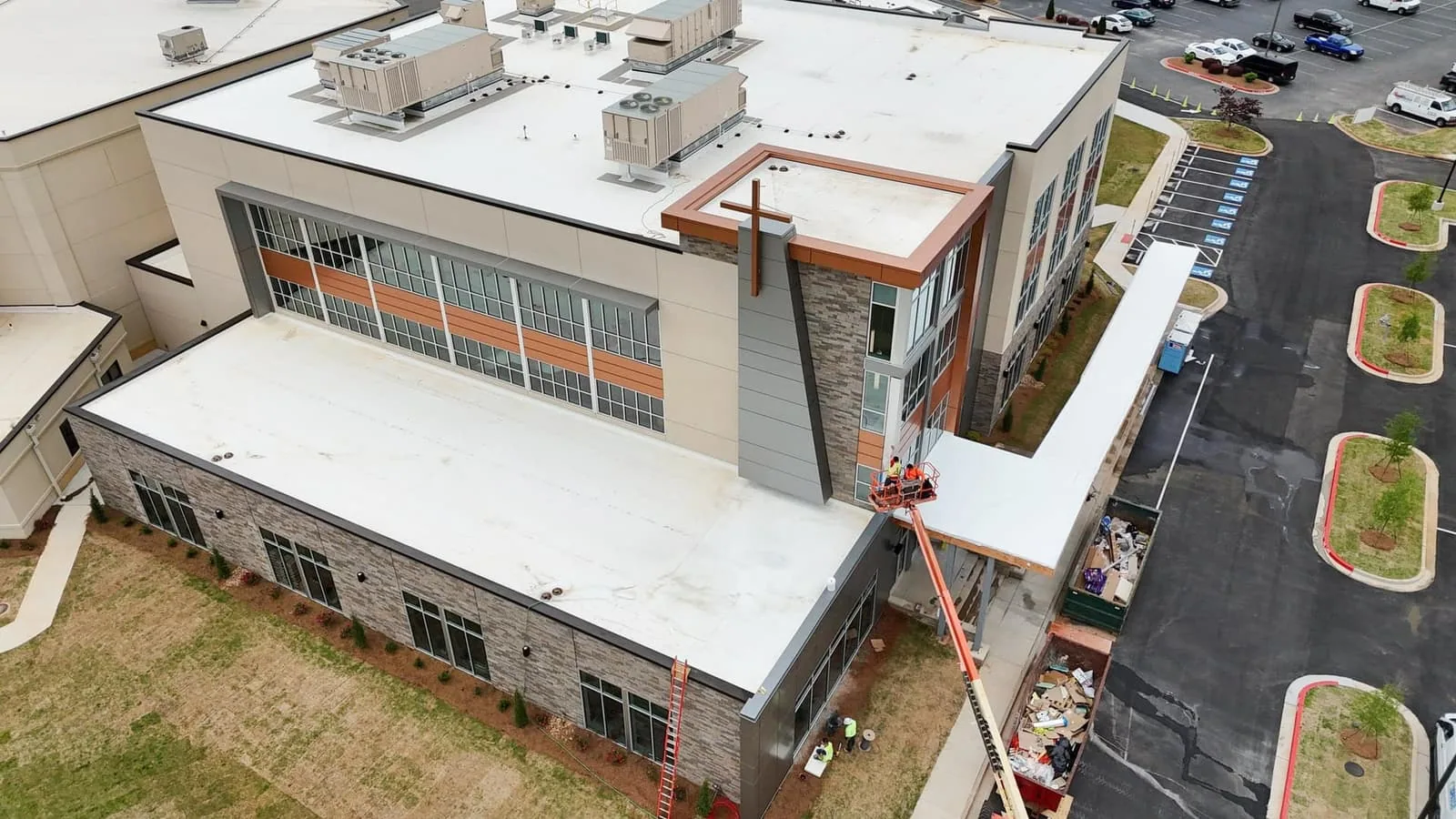
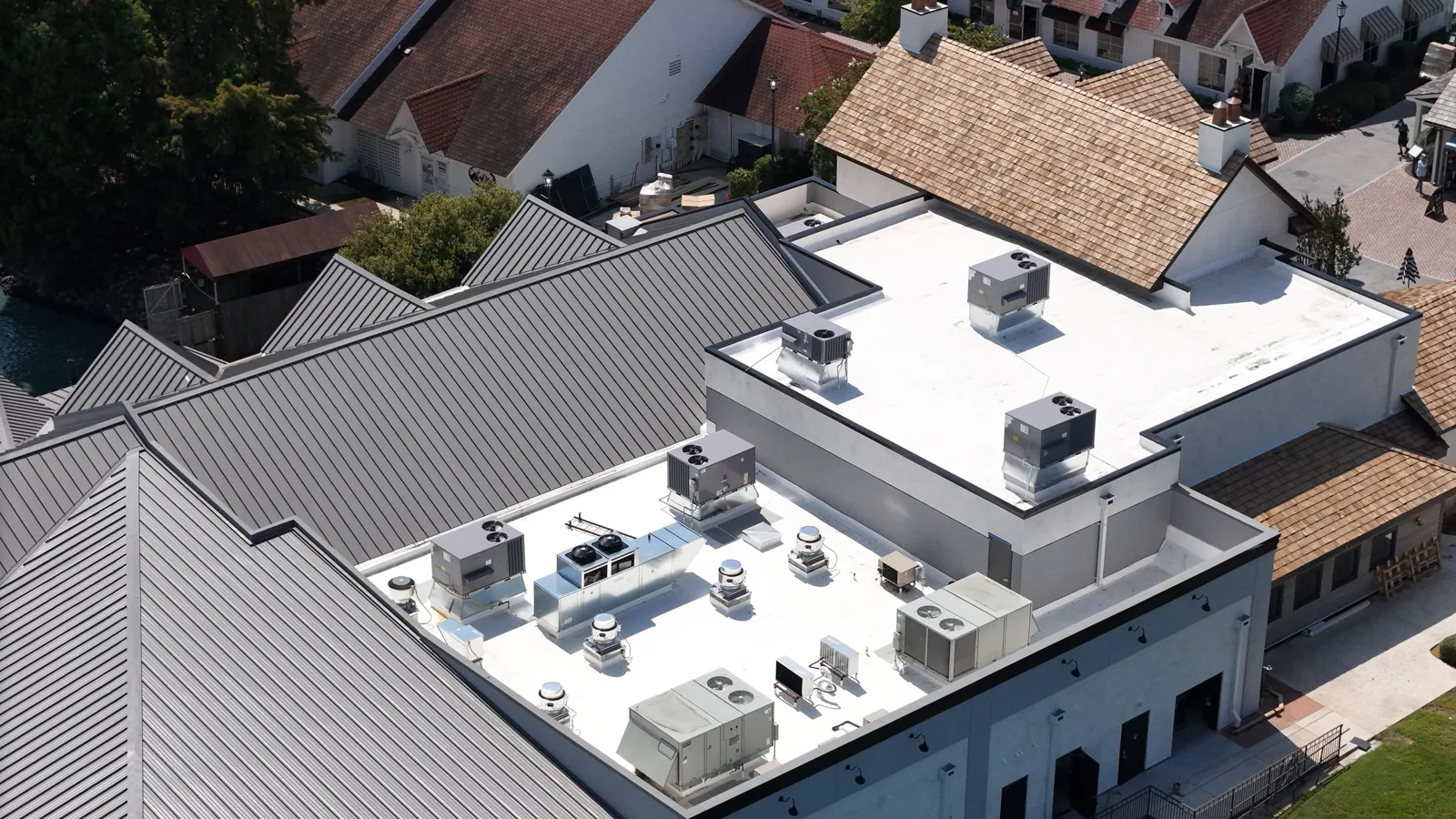
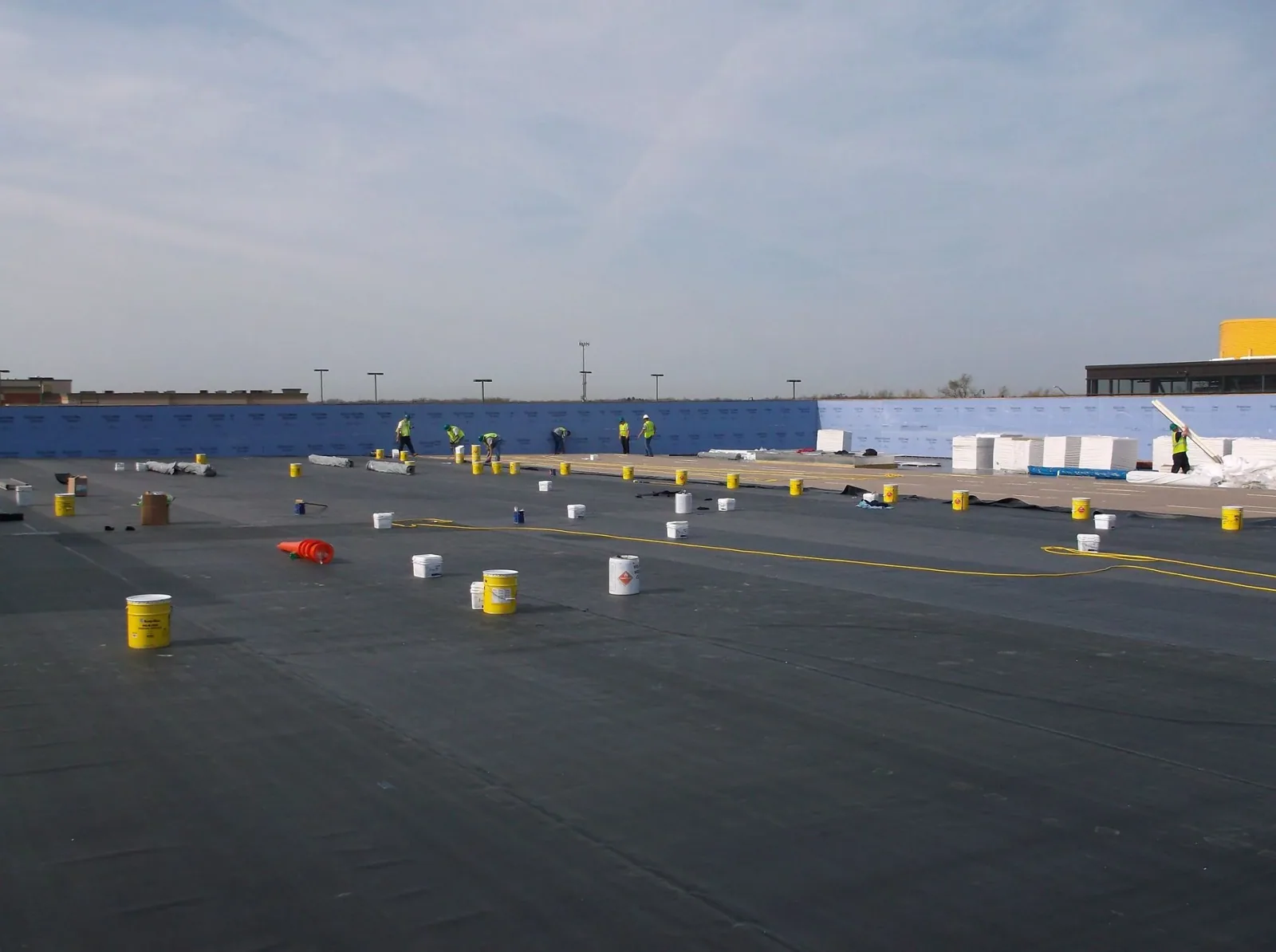
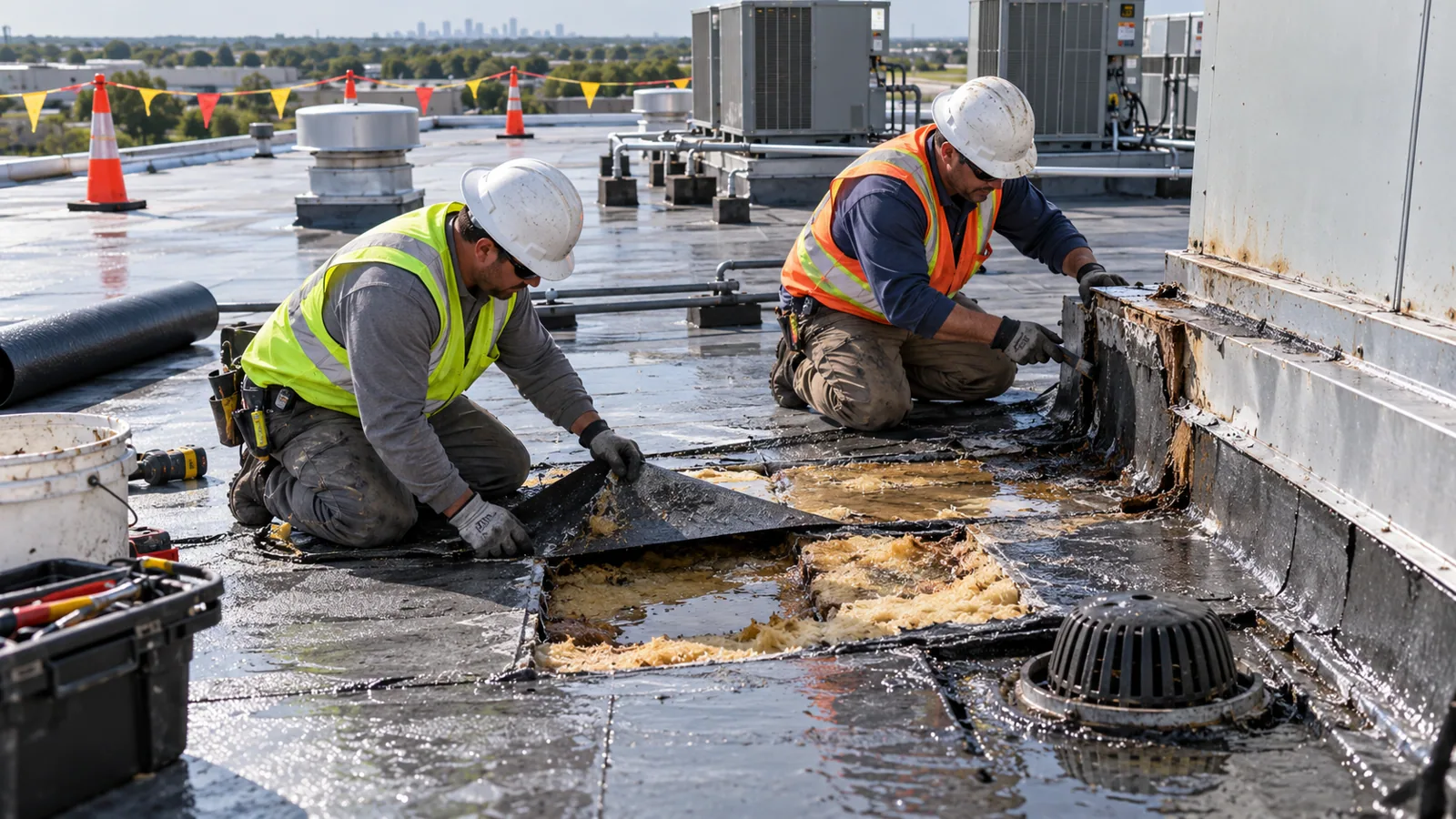
Hot DFW summers can make the surface of a single-ply roof respond differently from its deck, while welded seams remain only one part of the transition detail. Identification starts with the material and assembly, not a generic assumption about every Carlisle product. Commercial Roofing Irving examines the sheet, attachment, supporting layers and detail geometry before recommending repair or renewal. The Urban Center combines office space with restaurants and entertainment; Heritage Crossing includes older downtown commercial settings and redevelopment. Their operating patterns differ, yet neither setting identifies the membrane on an individual building.
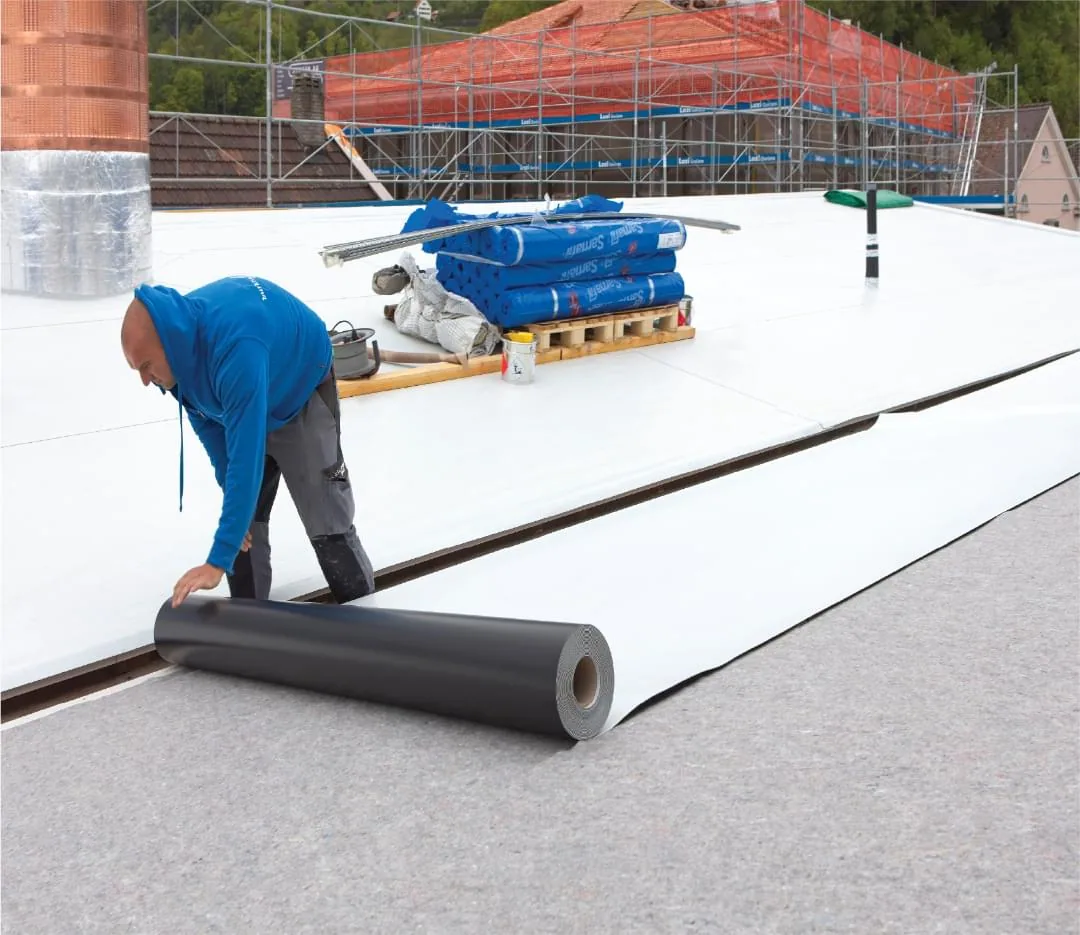
Hot summers and wetter spring and fall periods are part of the Dallas/Fort Worth regional climate. They influence the planning of exposed work and the conditions under which a connection is made. We document the actual roof response and explain how preparation, compatible materials and support affect the proposed Carlisle SynTec scope.
Which Carlisle material is installed?
Carlisle SynTec systems include more than one membrane family, so a repair begins with reliable identification. We review labels, construction records, seam characteristics and accessible transitions. A thermoplastic sheet with welded laps requires a different repair approach from an EPDM sheet with adhesive seams. We also note the insulation, cover board, deck and fastening pattern that can be seen or confirmed. If roof sections have different histories, findings remain attached to their respective areas until an opening shows how they meet.
Sure-Weld is Carlisle's TPO product family, but the name alone does not establish which sheet, reinforcement or attachment is present. We compare the identified membrane with the available product information before selecting a repair material. A GAF commercial roof or Johns Manville system may look similar from a distance, yet accessory compatibility and installation details need to match the actual Carlisle assembly. The work record should leave a later service crew able to identify what remains on the roof.
How does the seam connect to the field?
A heat-welded lap depends on suitable surface condition, preparation and the working settings used for that membrane. We examine the seam for separation, contamination, inadequate fusion or tension from a nearby restraint. At corners and changes in plane, sheet geometry can make access and reinforcement more difficult than across an open field. The repair should restore the connection to workable material and address the detail that placed stress on it, not simply hide the gap under a surface seal.
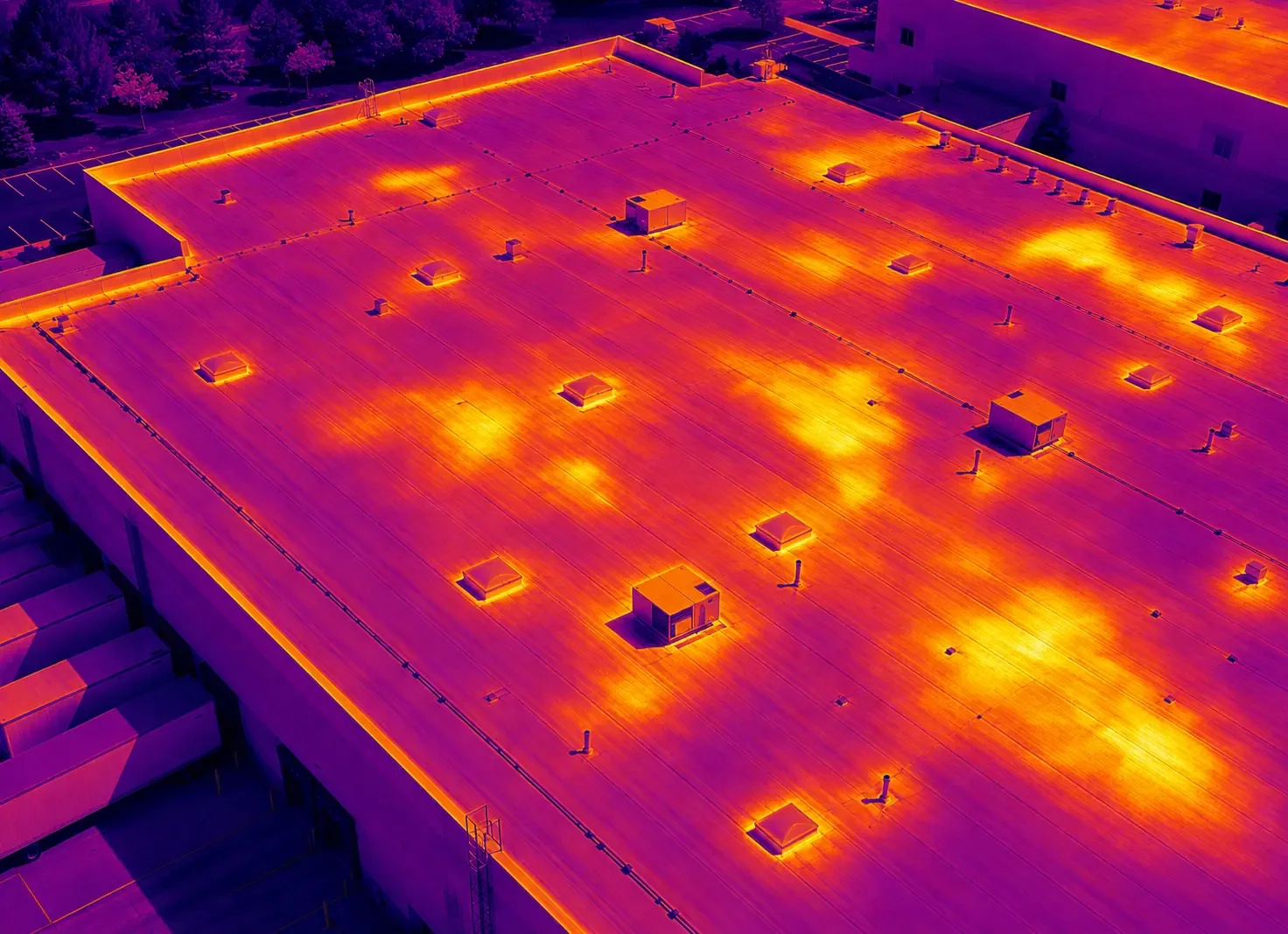
Where the Carlisle system uses an adhesive-based connection or flashing, the substrate and application conditions matter differently. We record what can be observed, then identify any access needed to determine whether bonding has failed within a concealed layer. A TPO assembly assessment can include seam continuity, curb corners and perimeter transitions as separate findings. If moisture distribution beneath the membrane could expand the removal area, a survey with selected physical checks helps connect thermal indications to the materials actually exposed.
What does the attachment tell us?
The roof's attachment path extends from the field sheet through insulation or cover board to the deck and perimeter. We identify whether the assembly is adhered or mechanically attached where access allows, and we examine the edge conditions that complete the connection. Loose fastening, damaged substrate or movement near a transition can make a localized seam repair inadequate. The scope states what is confirmed, where further review is necessary and how the proposed detail will reconnect to support that can hold it.
Metroplex hail and damaging wind events occur regionally, though not every location experiences each event. A storm history therefore does not substitute for inspection of a Carlisle roof's present attachment. We check the condition that is there, including displaced edge components and evidence of movement. At a property in Las Colinas Urban Center, a hands-on examination can document access limits and the exposed load path. For a separate membrane comparison, the EPDM system requirements should not be transferred to thermoplastic details.
When is a local repair still suitable?
A contained defect may be repaired when Carlisle material around it remains workable, the supporting layers are sound and a compatible tie-in can be prepared. We trace the affected connection, test what can be checked without opening, and define any approved cut-out needed to inspect concealed material. The written scope identifies preparation, reinforcement, closure and the acceptance check. Where a prior patch has changed the surface, we determine whether it can remain or whether it obstructs a dependable new bond or weld.
Several separated seam failures, wet insulation or substrate movement may justify comparing a broader scope. A bounded repair plan should distinguish immediate water control from permanent reconstruction. If the roof may accept another layer, a recover review assesses moisture, layer count, attachment, code limits and resulting detail height. When retained materials cannot support a reliable overlay, the comparison moves to replacement and a defined removal boundary rather than a new surface over unresolved conditions.
How should the new layer be prepared?
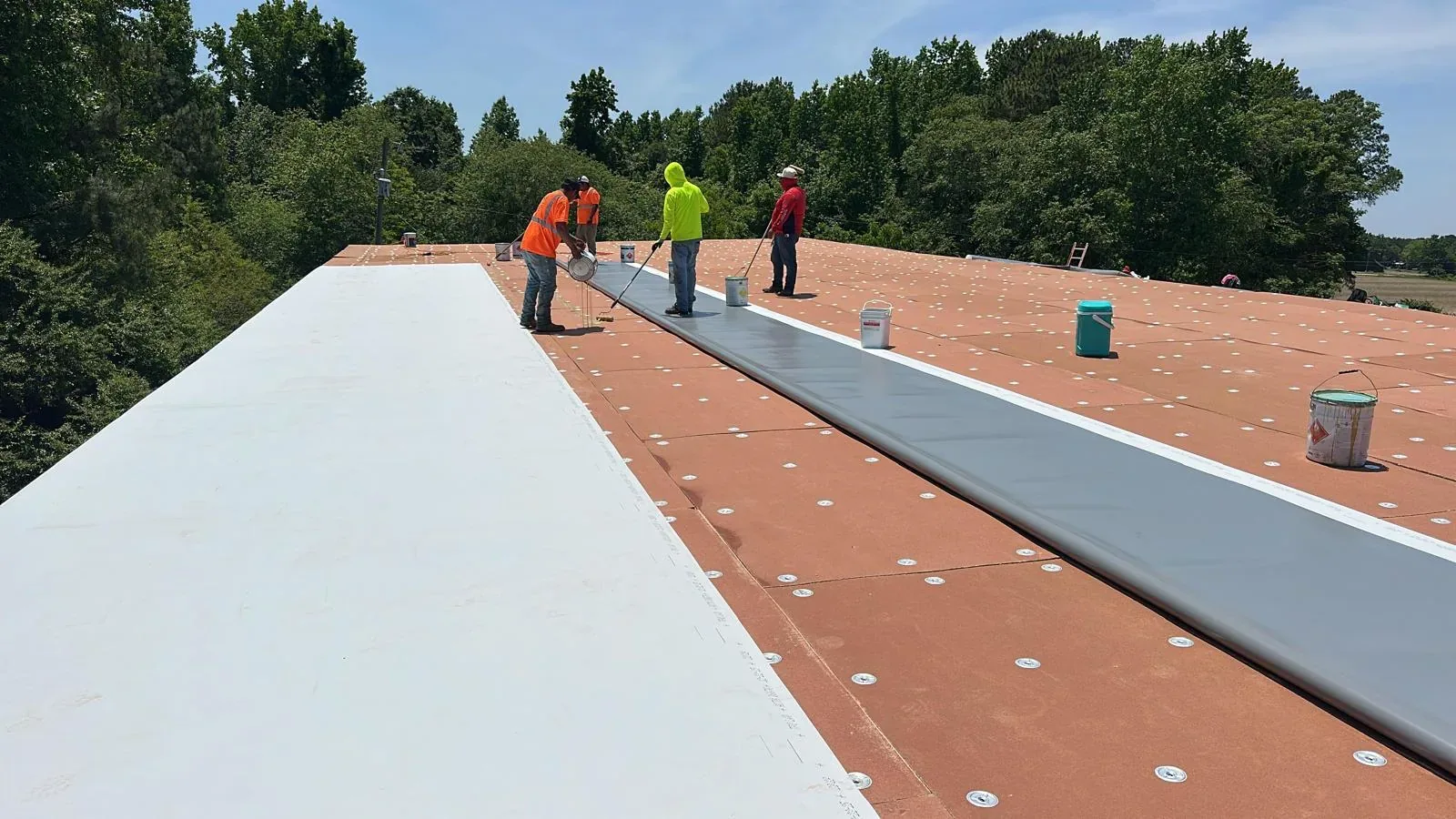
Preparation follows the Carlisle system selected for the project and the substrate that will receive it. We remove unsuitable materials, secure or replace layers that cannot remain, and establish whether the specified attachment can engage the actual deck. Adhered work needs a clean, compatible substrate and application conditions that allow the bond to develop. Mechanically attached work needs suitable fastener length and resistance through the assembly. We record those prerequisites so a material submittal is not treated as evidence that the roof is ready for installation.
Perimeter terminations, drains and equipment curbs can require a different detail than the open field. Added insulation changes elevations and available flashing height; drainage improvements must lead to an outlet rather than create another low point. Irving requires permits for commercial construction and remodel work, and relevant city departments review most applications with plans. If a project in Las Colinas also requires association review, that process remains separate from the city permit. The proposed Carlisle scope identifies those coordination points without suggesting that one review replaces another.
What belongs in the service record?
Closeout should connect the installed Carlisle material with the substrate preparation, attachment and details completed. We photograph representative seams, perimeters and penetrations, then identify where concealed layers were opened and what the openings showed. Approved changes and exclusions remain visible in the record. This gives the property manager a basis for later maintenance and helps avoid confusing an inspected repair area with an entire roof that remained outside the work boundary.
Routine care can preserve drain access and limit avoidable traffic over seams or flashing. A maintenance assessment can compare current observations with the installation or repair record. Owners working in Las Colinas Urban Center can plan access around office, restaurant and entertainment uses documented for the district, while the roof findings remain specific to the property. The next person should be able to identify the membrane, locate the work and understand which unresolved condition requires another examination.
Commercial Roofing Questions
How can I distinguish a Carlisle TPO roof from another membrane?
We review product records, labels, seam construction and accessible details together. If those clues do not establish the material, an approved examination may be needed before compatible repair products are selected.
What can make an otherwise small Carlisle seam repair expand?
Moisture beneath the sheet, weak support or strain from a nearby curb can change the repair boundary. We identify those conditions and show what further opening would confirm before extending removal.
Can Carlisle membrane be bonded over an older repair?
Preparation and material compatibility decide whether the existing repair can stay. We inspect its surface and edge condition, then state whether the new connection can reach suitable material.
What should a Carlisle closeout record include?
It should identify the membrane and supporting layers, show representative connections, and locate repairs or openings. We also record accepted changes, exclusions and any observation that remains unresolved.
Ready to review the roof scope?
Request a Roof Assessment