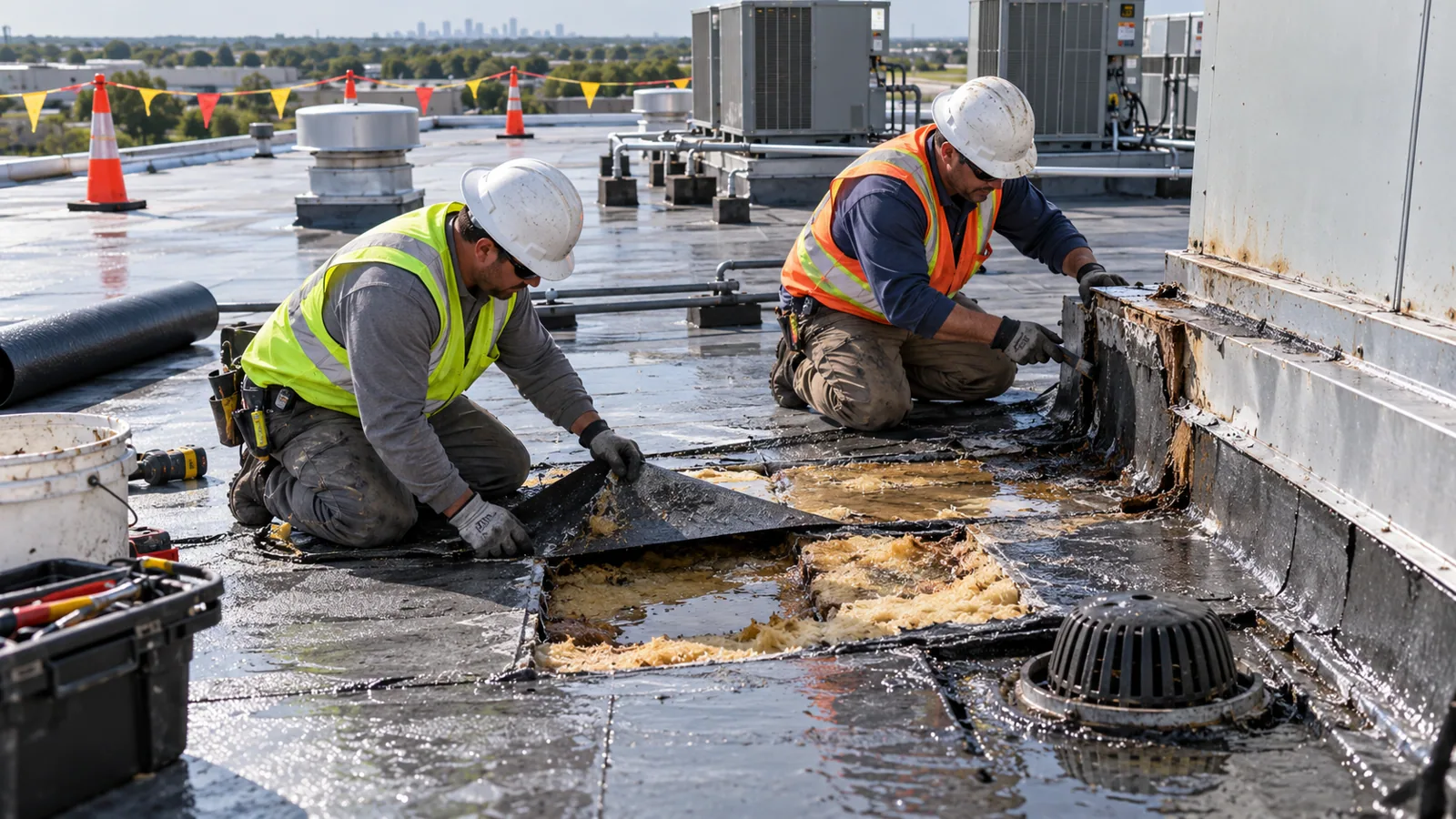
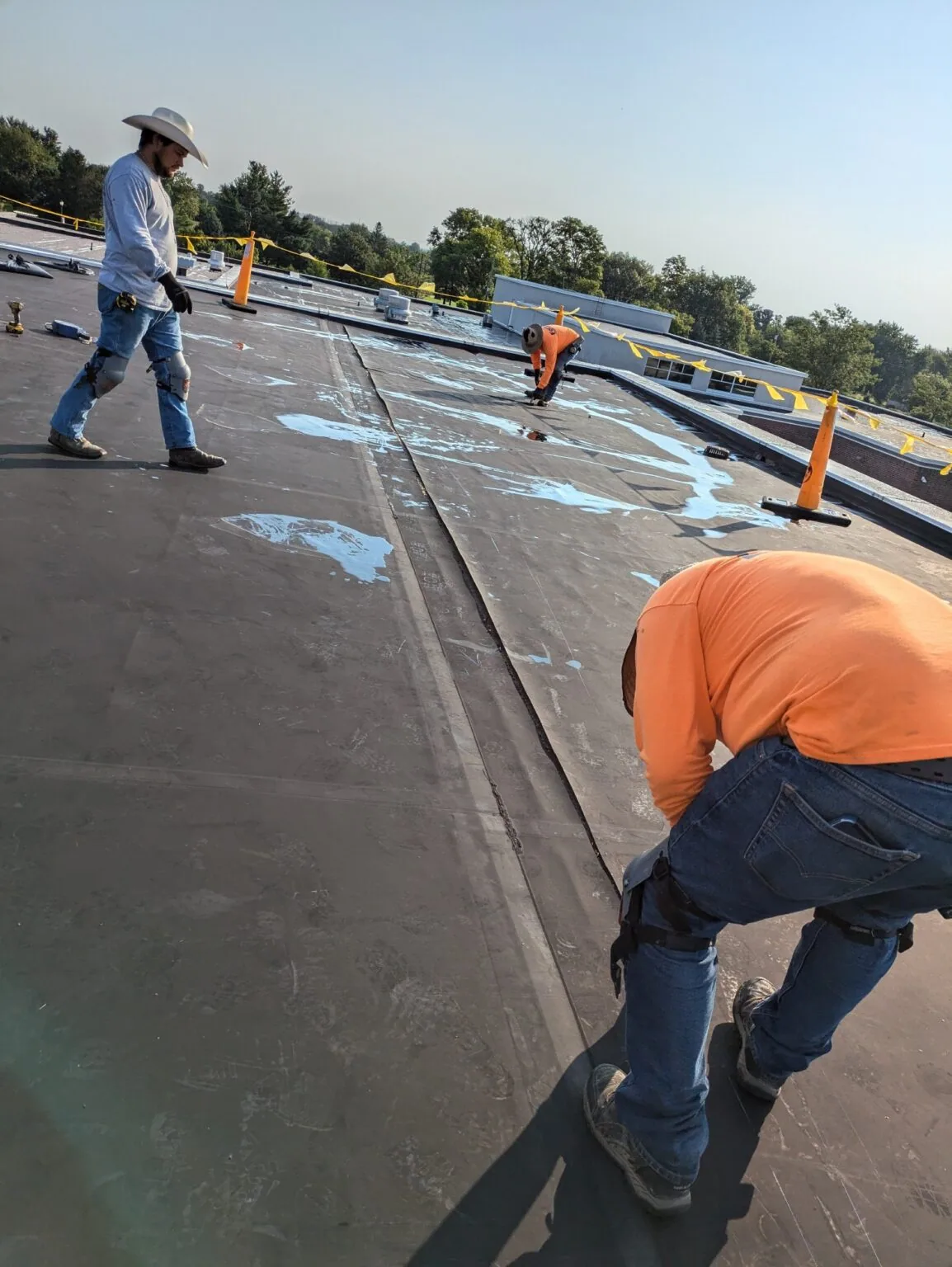
Hot DFW summer conditions challenge insulation beneath the field before the sheet shows an opening; moisture or compression can change support without a visible membrane split. Moisture, compression or a weak attachment interface can change the assembly beneath a field that still appears intact. For Johns Manville commercial roofing in Irving, TX, we identify the installed system and inspect how the membrane, insulation, cover board and deck work together. Las Colinas includes office, retail and multifamily buildings, and corporate office complexes form an important part of Irving’s development activity. Those settings make the consequences of roof work important, but they do not establish the materials hidden above a tenant space.
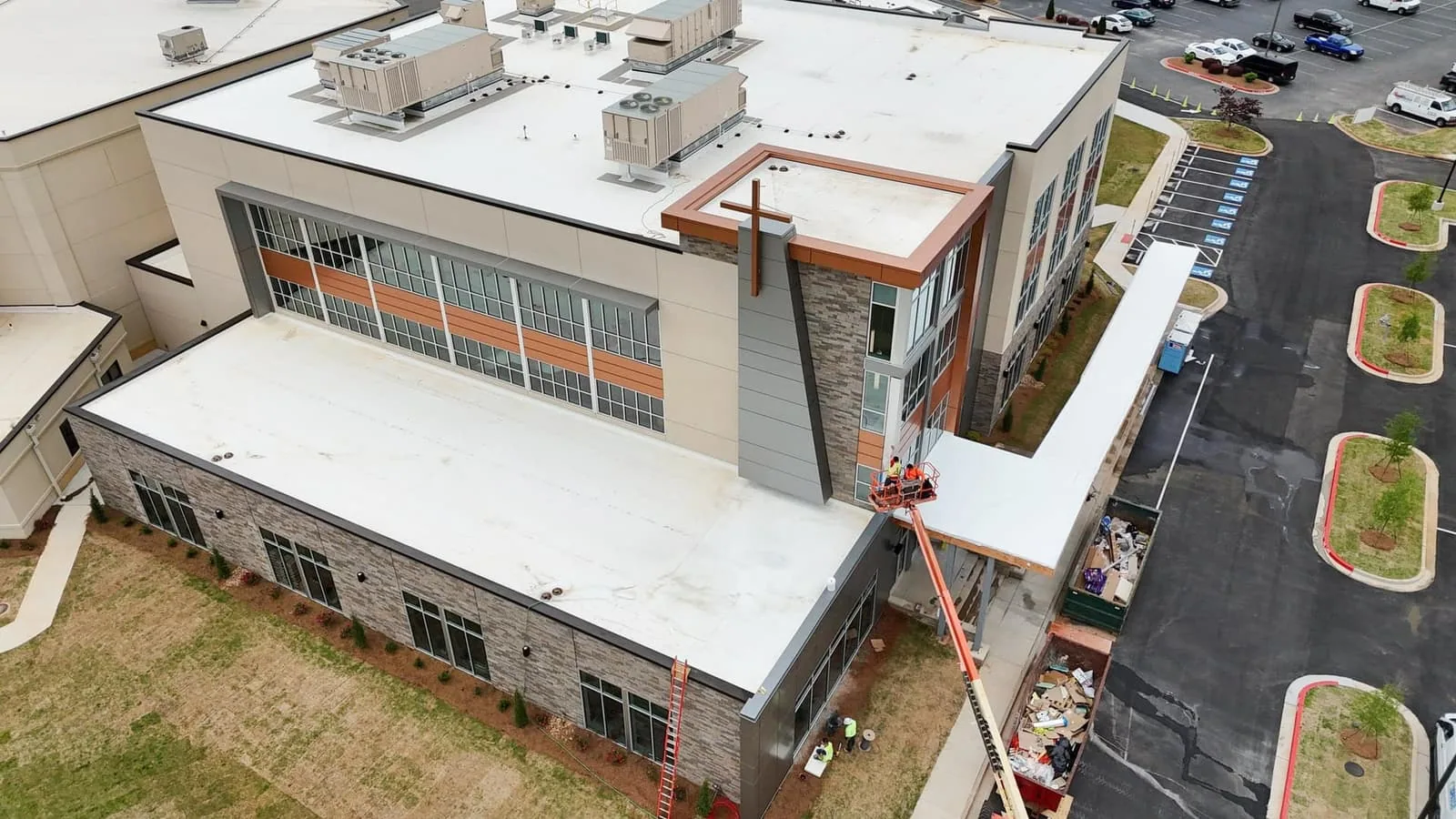
Dallas/Fort Worth heat and spring/fall rainfall affect how long a roof can remain exposed during the work sequence. That regional pattern informs when roof layers can be exposed; current site conditions still govern the work window. We document the assembly and connect each recommendation to the materials observed or confirmed through an approved opening.
Which Johns Manville system needs service?
Johns Manville supplies commercial roofing materials across more than one system category. The installed assembly may include a single-ply membrane, modified bitumen or another specified roof construction. We do not infer the system from color, a building record alone or a manufacturer name on an old proposal. Labels, seam form, flashing details and product submittals are compared with the accessible roof. The inspection also records which layers belong to the area under review and where an addition or prior reroof could change the sequence.
Product selection follows the verified material and its intended use. A new membrane needs compatible components, suitable insulation and a connection to the deck that meets the project design. A Versico membrane assembly or Soprema roof system has its own submittal and installation details, even where the same broad material family is involved. The owner receives a comparison of the proposed Johns Manville system with the condition of the roof being retained or removed.
What does the insulation condition change?
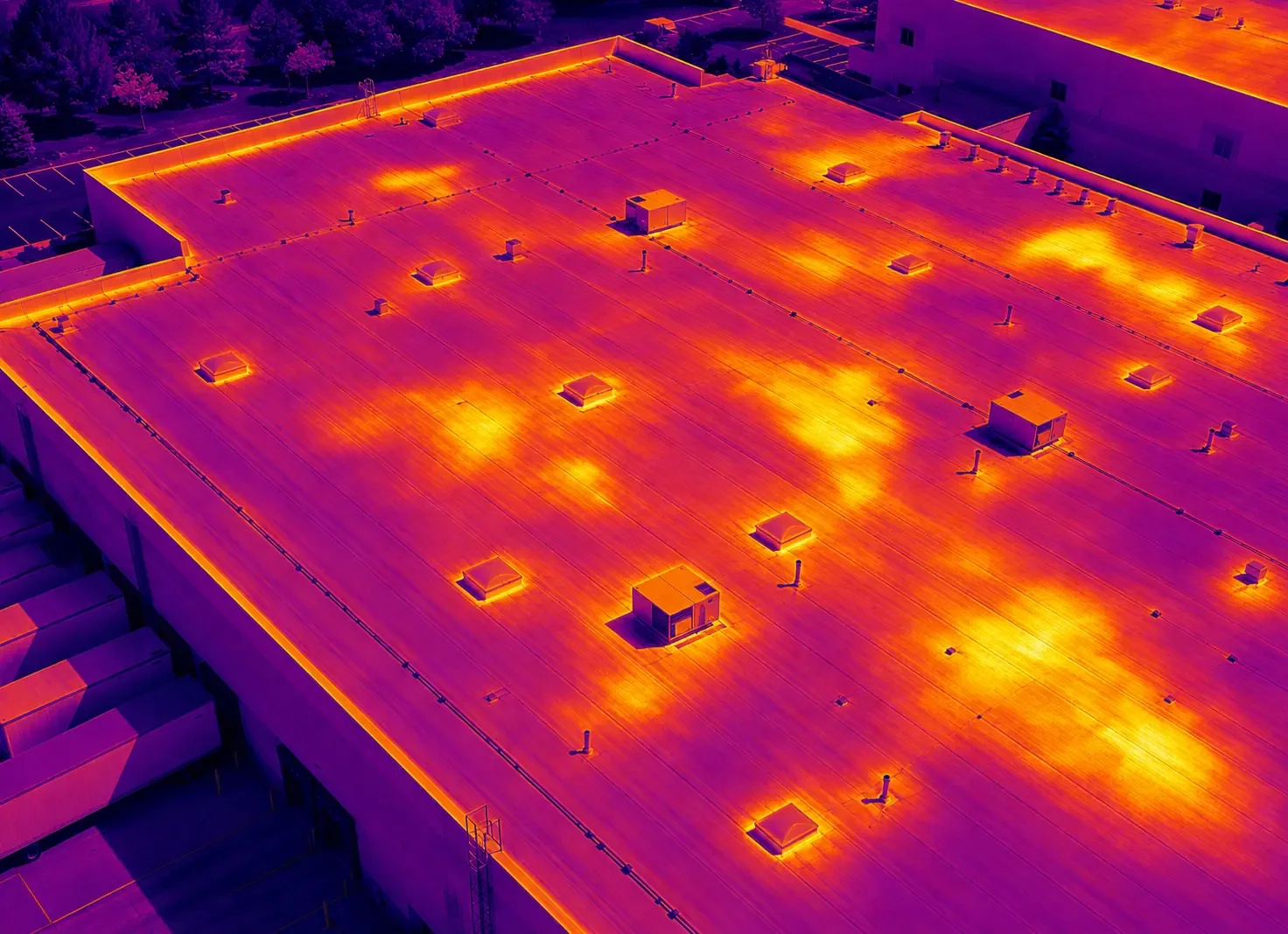
Insulation affects thermal performance and supports the membrane, but a surface temperature pattern does not identify a specific layer by itself. We look for changes in compression, moisture indication, board movement and attachment. Where information is incomplete, a thermal survey with selective confirmation can help identify areas for physical checking under appropriate conditions. An opening records the material at its location and the observed condition; it does not automatically establish that disconnected roof areas are the same.
When an assembly has several insulation layers or a cover board, we record their orientation and relationship to seams, curbs and drains. The removal limit should reach material suitable to receive the planned connection. A cover-board and insulation scope explains whether the proposed work replaces damaged support, improves the surface for attachment or changes finished height. Those are distinct decisions. The recommendation states which one is supported by the examination and which hidden condition remains unresolved.
How do membrane details meet rigid components?
A membrane field has to turn up at walls, curbs and penetrations, then terminate against components that move differently from the sheet. We examine support, flashing height and the path water can follow at each junction. A seam opening near a curb may reflect strain or movement rather than a simple defect in the field weld. The scope identifies the detail to be rebuilt and states whether equipment access or another trade needs coordination before the waterproofing can be completed.
Drain bodies, scuppers and edge metal also influence how an assembly performs. A perimeter-metal examination considers attachment and termination at the roof edge, while drainage work follows the outlet and surrounding slope. Replacing one component does not correct an unrelated elevation or obstruction. We identify the connection that must remain compatible with the selected Johns Manville system and show how the completed detail will be examined before it is concealed.
When should the owner compare repair and replacement?
A local repair can suit a contained seam or flashing defect when surrounding material remains serviceable and the supporting layer can accept a compatible connection. We define the repair footprint, surface preparation and acceptance check. Where moisture, loss of attachment or deteriorated insulation extends beyond that boundary, repeating isolated patches may preserve the wrong part of the assembly. We explain what is confirmed, what remains hidden and what additional inspection could change the conclusion.
A repair assessment can distinguish immediate water control from permanent reconstruction. A recover retains existing material only when the layer count, moisture and substrate support it; replacement exposes more of the assembly but changes removal and occupied-building logistics. The replacement comparison sets those limits against the actual condition. In Heritage Crossing, older downtown commercial settings and redevelopment form part of the district context, but a particular roof still needs an examination of its own history and details.
What governs a new Johns Manville installation?
Substrate preparation and attachment need to be settled before membrane placement. We identify the deck type where accessible, confirm the specified fastener or adhesive approach, and inspect whether the surface can receive the chosen components. A mechanically attached system depends on fastening into suitable support; an adhered system depends on preparation and compatible bonding conditions. The proposal should show how the field transitions to the perimeter, drains and penetrations rather than treat those interfaces as accessories selected later.
Irving requires permits for commercial construction or remodel work, and most applications need plans reviewed by relevant city departments. The project team establishes which review applies to the proposed scope. When a building is in Las Colinas, association declarations and any supplementary requirements are a separate consideration from municipal approval. We coordinate the roofing submittal and installation sequence with those project conditions, then photograph concealed work and keep the specified material record connected to the area it serves.
How does closeout help the next roof decision?
A useful handover shows what was installed, what was removed, and where existing material remained. We retain photographs of representative attachment and flashing details, note any approved change from the initial scope, and identify items that were not included. If further investigation was deferred, its location and reason remain clear. This record helps a property manager compare a later observation with completed work instead of relying on a product label to explain a roof built in phases.
For a corporate office or an occupied property in Las Colinas, the inspection record can be paired with a roof condition report that separates observations from recommended action. The next maintenance visit can then examine drains, seams and equipment transitions at known locations. A planned roof review should account for the installed system and the access rules confirmed with the building contact. The owner receives a practical basis to decide whether a new concern is local, connected to an earlier repair or outside the area previously examined.
Commercial Roofing Questions
How do you confirm a Johns Manville roof system?
We compare records with labels, visible membrane characteristics, seams and accessible flashing details. If the materials cannot be established from those observations, an approved opening or additional product documentation may be needed before specifying a repair.
What if only one section has wet insulation?
That finding applies to the opened or confirmed area. We map its boundary against related roof sections and identify where another check could determine whether removal should extend farther.
Can the existing cover board remain below a new membrane?
Its condition, attachment and compatibility with the proposed assembly need examination. We record areas that can remain and define removal where support or moisture findings do not support retention.
Why review the roof edge during a membrane replacement?
A new field depends on a suitable termination and attachment at the perimeter. We inspect the backing, edge component and membrane turn-up, then include any reconstruction needed to complete that connection.
Ready to review the roof scope?
Request a Roof Assessment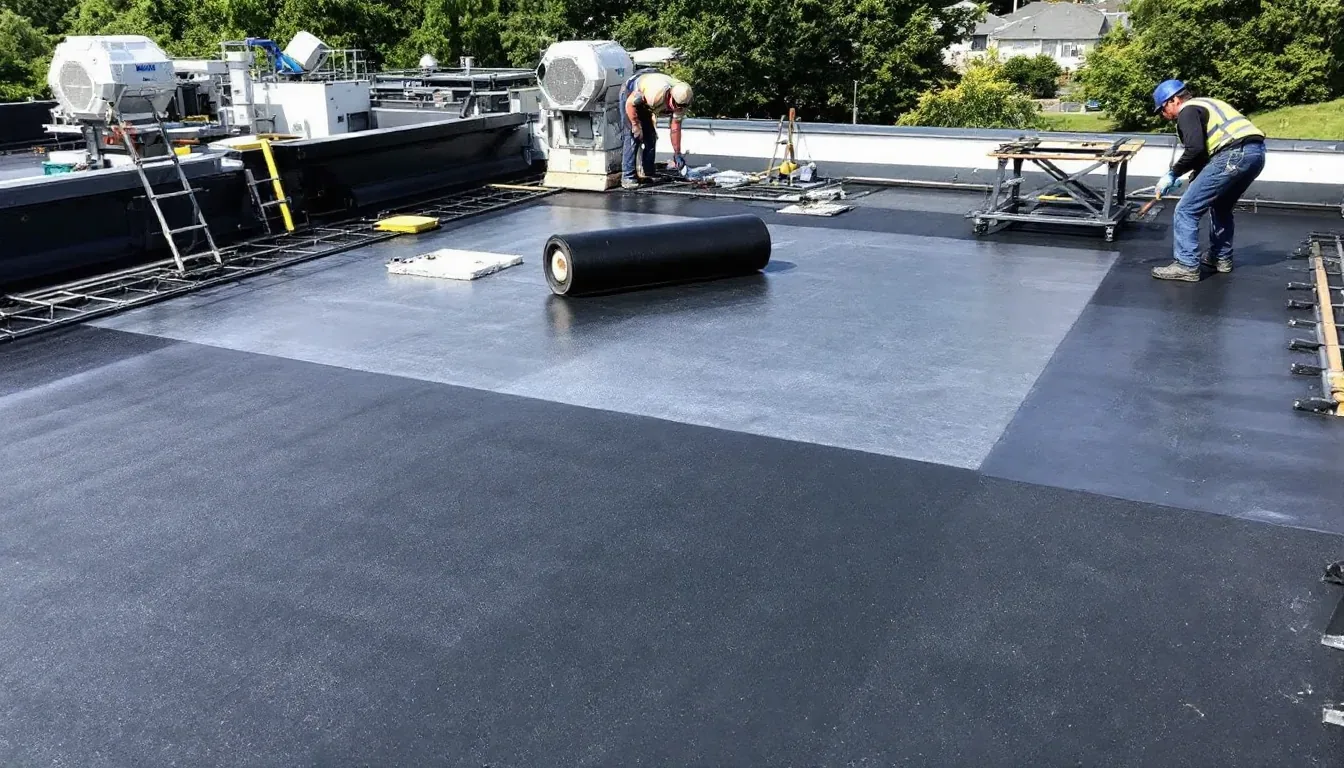
Commercial Roof Insulation and Cover Board
See scope, options and what to expect on the roof.