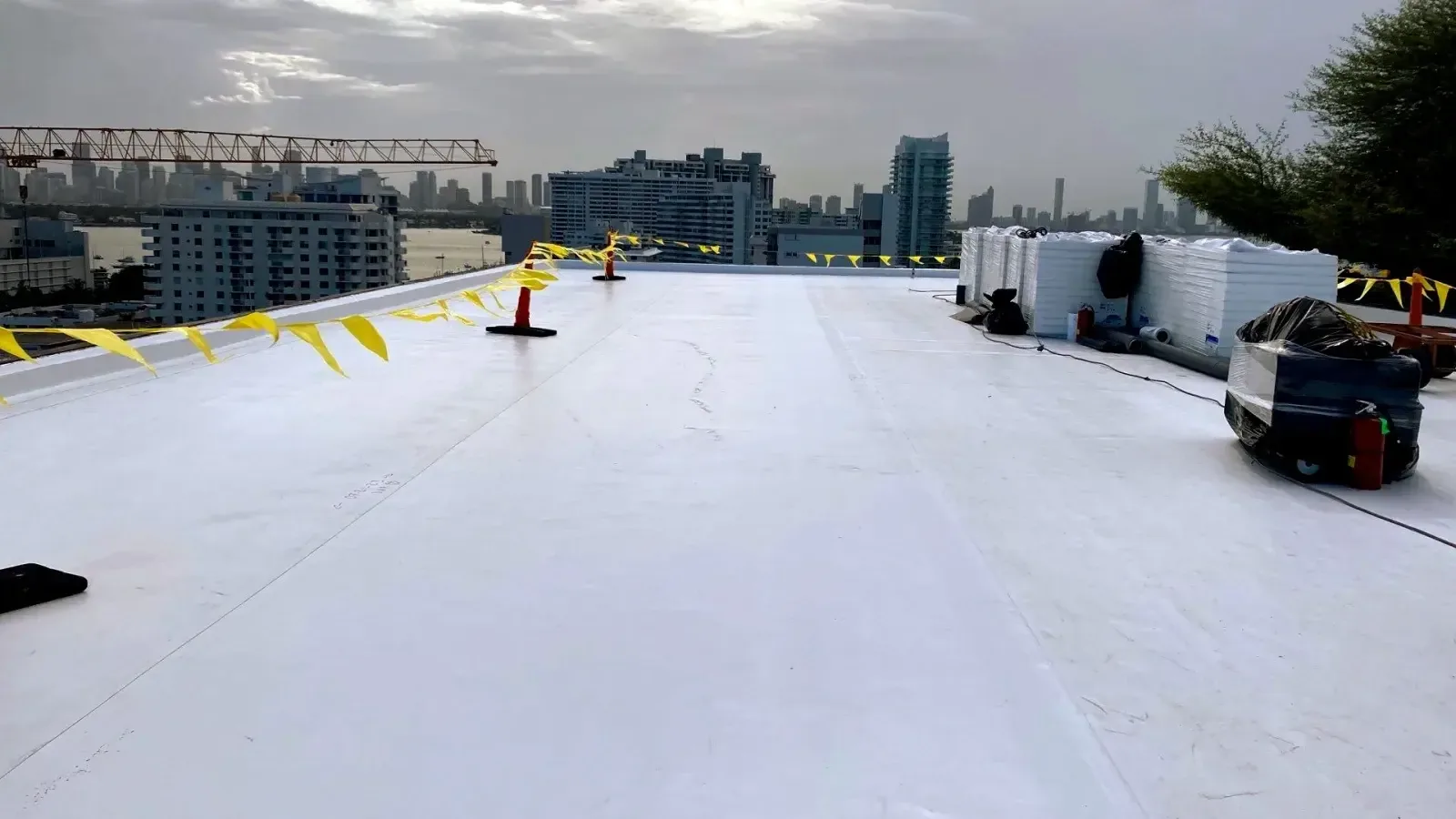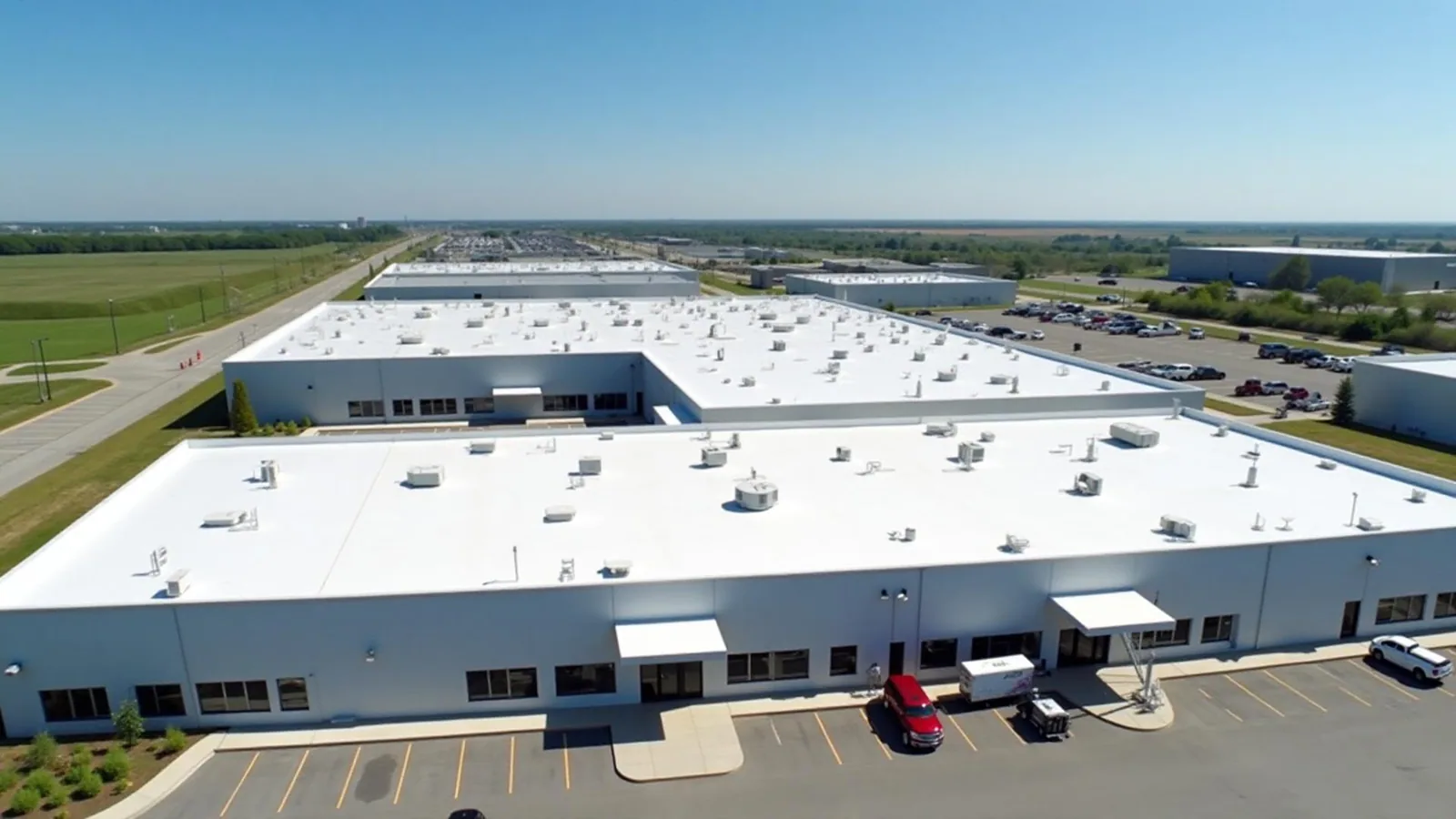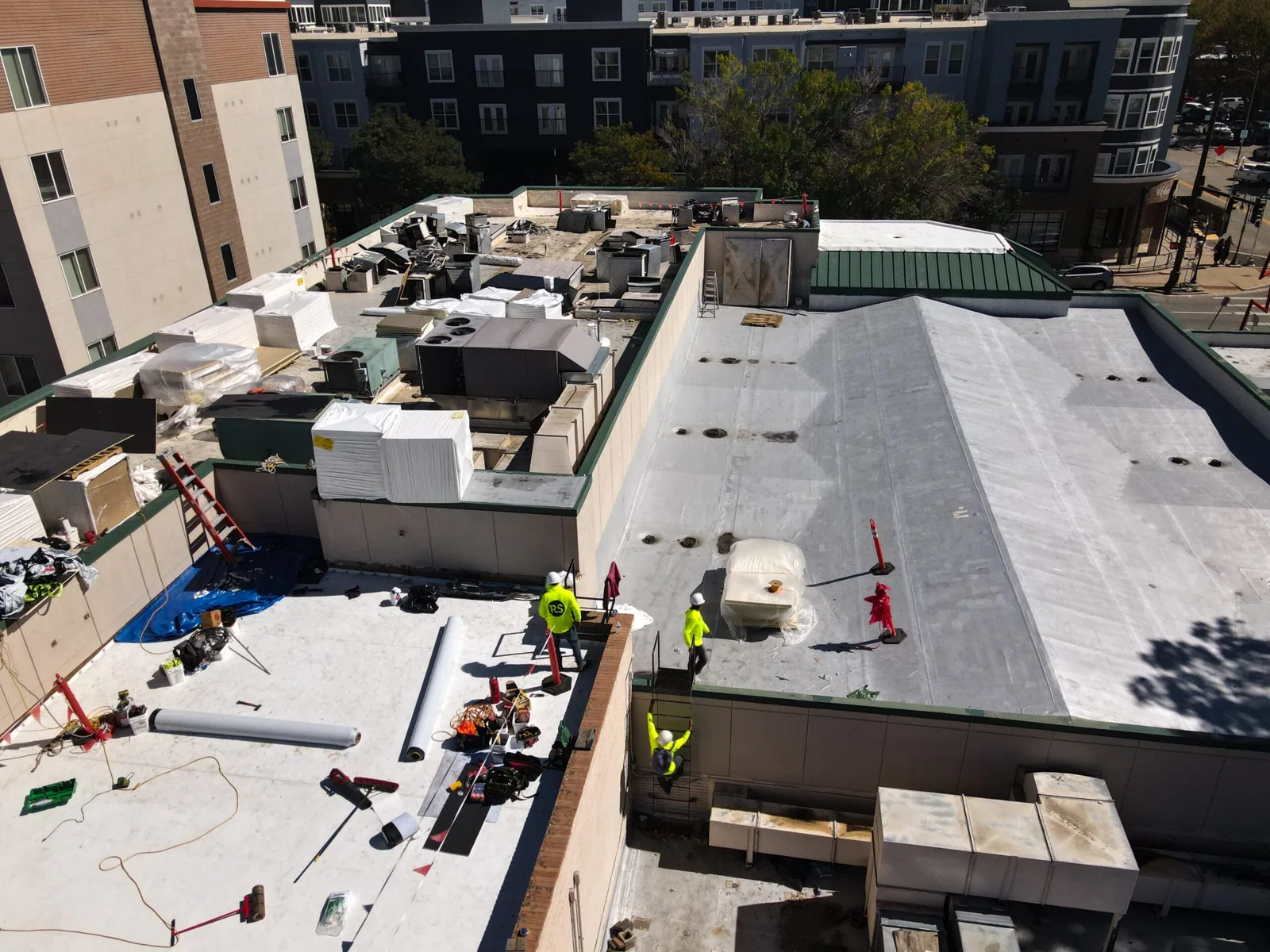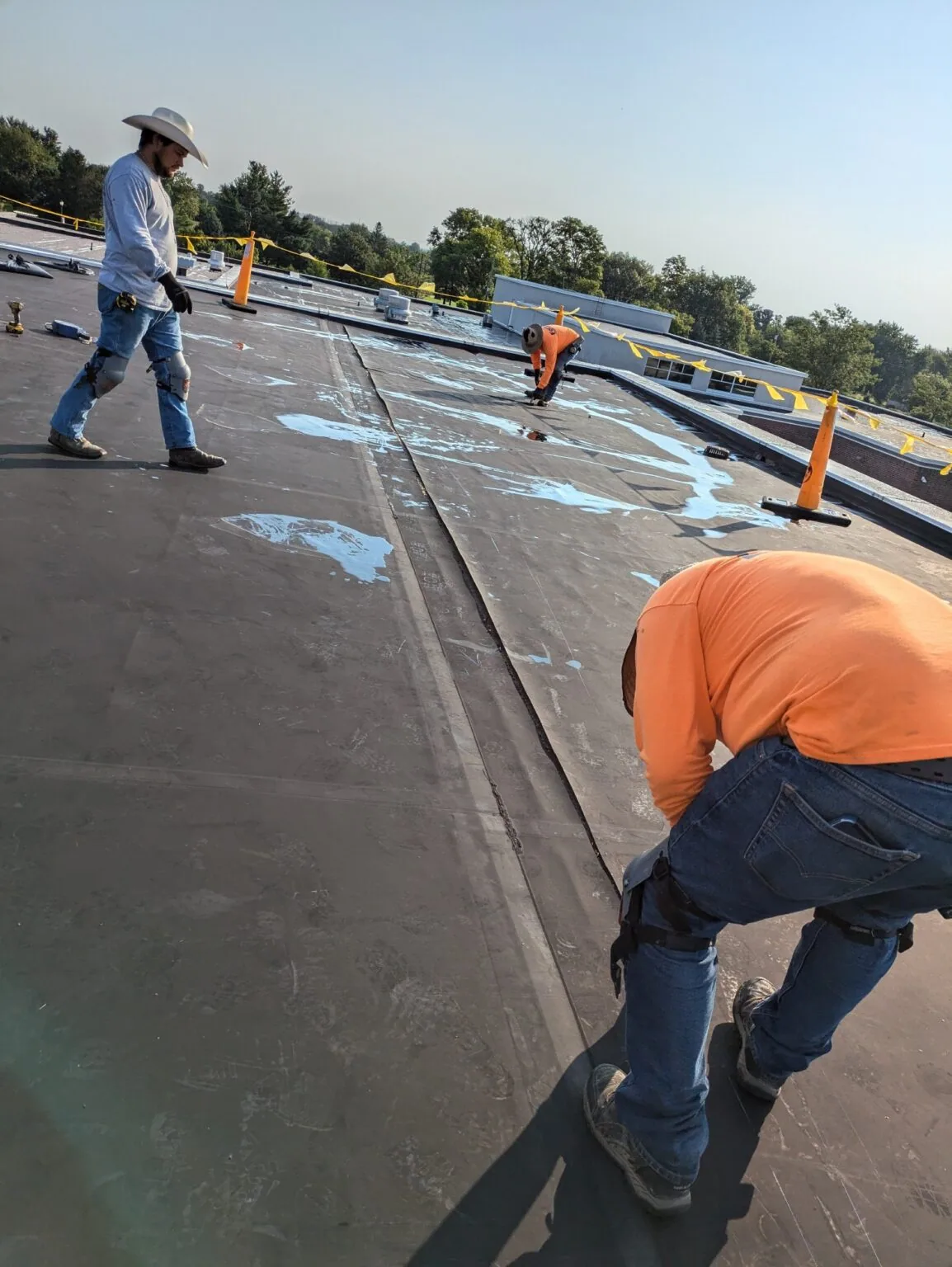
Hot DFW afternoons warm exposed PVC above cooler roof layers, putting movement stress into seams where a sheet field meets curbs and wall flashings. On a Sika Sarnafil assembly, the condition of a visible area depends on the seam, flashing and support around it as well as the membrane itself. Commercial Roofing Irving examines those connections before selecting a repair scope. Las Colinas spans office, retail and multifamily uses. Valley Ranch includes commercial uses among its multifamily properties. Those building types affect how roof access, equipment routes and work timing are arranged, even when two properties use a similar membrane family.
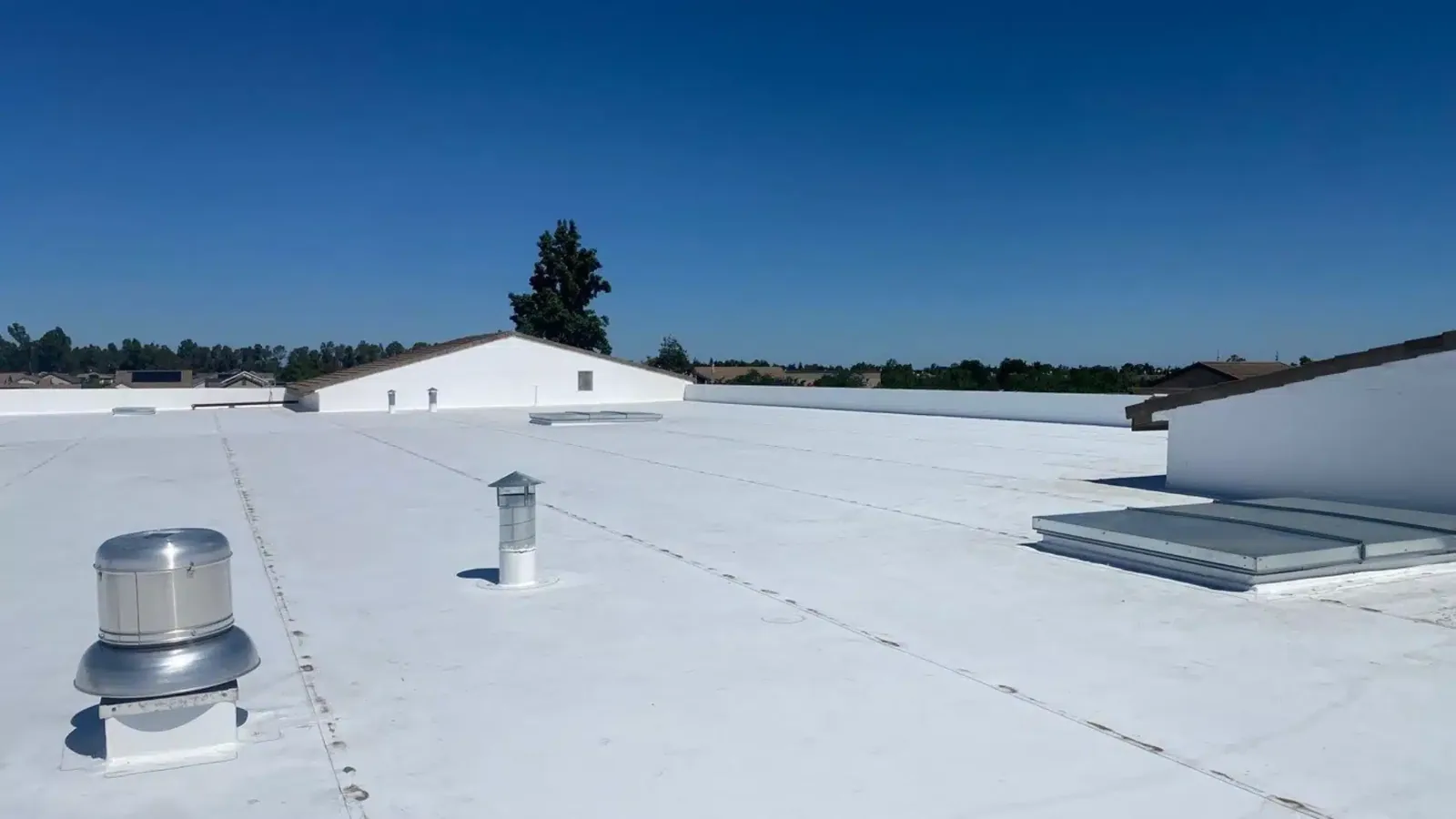
For Irving, regional seasonality means hot summers with wetter spring and fall intervals. We use that background to plan open-roof work; findings still come from the installed sheet and its details. We identify the installed sheet and layer sequence, examine how the field is attached, and trace the reported water path to a roof detail. The resulting comparison distinguishes a contained seam repair from a wider area where wet insulation, compromised attachment or repeated transition failures would change the decision.
How does a welded PVC seam carry continuity?
PVC membrane sheets are joined through heat-welded seams. The weld depends on clean, appropriately prepared material and suitable heat, travel speed and pressure for the conditions at the work area. A seam that appears closed from above still needs examination where it meets a curb, corner, drain or previously repaired section. We check accessible seam edges and transitions, note the location of irregularities and distinguish surface marks from an opening that affects continuity. The report names the observed condition without presuming a cause before nearby layers and details are reviewed.
Product families can share a broad material category while using different sheet formulations, accessories or approved procedures. A Holcim membrane system and a Sika Sarnafil roof should not be treated as interchangeable because both are thermoplastic. We verify the installed material from records and field evidence before identifying a compatible repair approach. A PVC roof assembly depends on membrane, attachment and details working together; project documents govern the selected products and work requirements.
What explains the reported moisture?
The interior drip location does not always sit directly below the roof entry point. Water may move along a deck flute, insulation joint or support before appearing inside. We compare the reported area with roof slopes, drains, penetrations and transition details, then inspect the accessible membrane around the likely route. The field record includes photographs, measured locations and the limits of access. If two roof areas differ in construction or installation date, we keep their observations separate until a connection between them is supported.
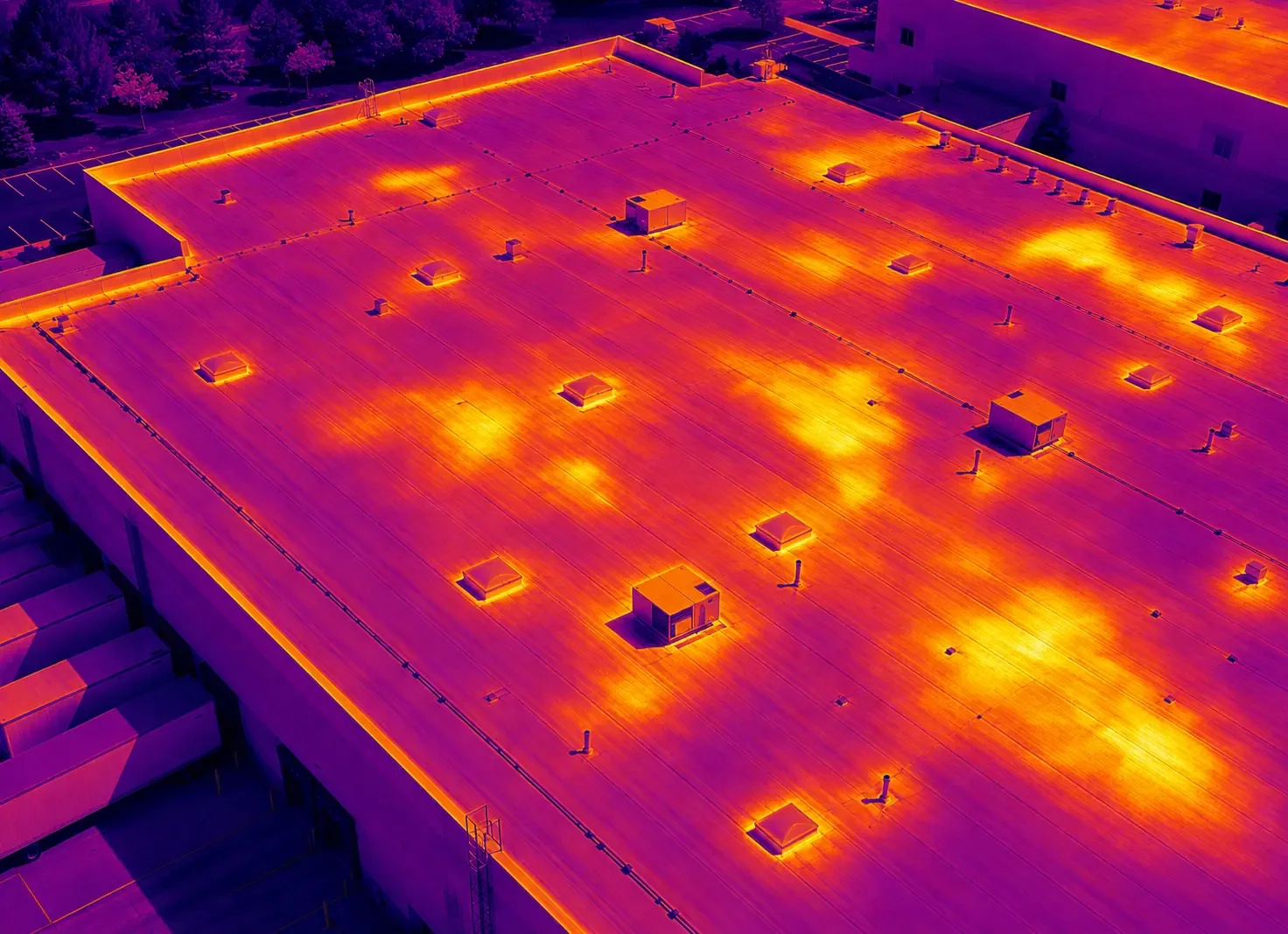
When concealed moisture could affect whether a repair or recover is appropriate, an infrared moisture survey can help direct selective openings under suitable conditions. Instrument indications are not the same as confirmed wet material, so the report labels each step. A roof condition report can connect those observations to the repair boundary and identify what remains unknown. This prevents a limited test point from being treated as a finding about the entire roof and gives the owner a more proportionate basis for the next decision.
Where does sheet geometry change?
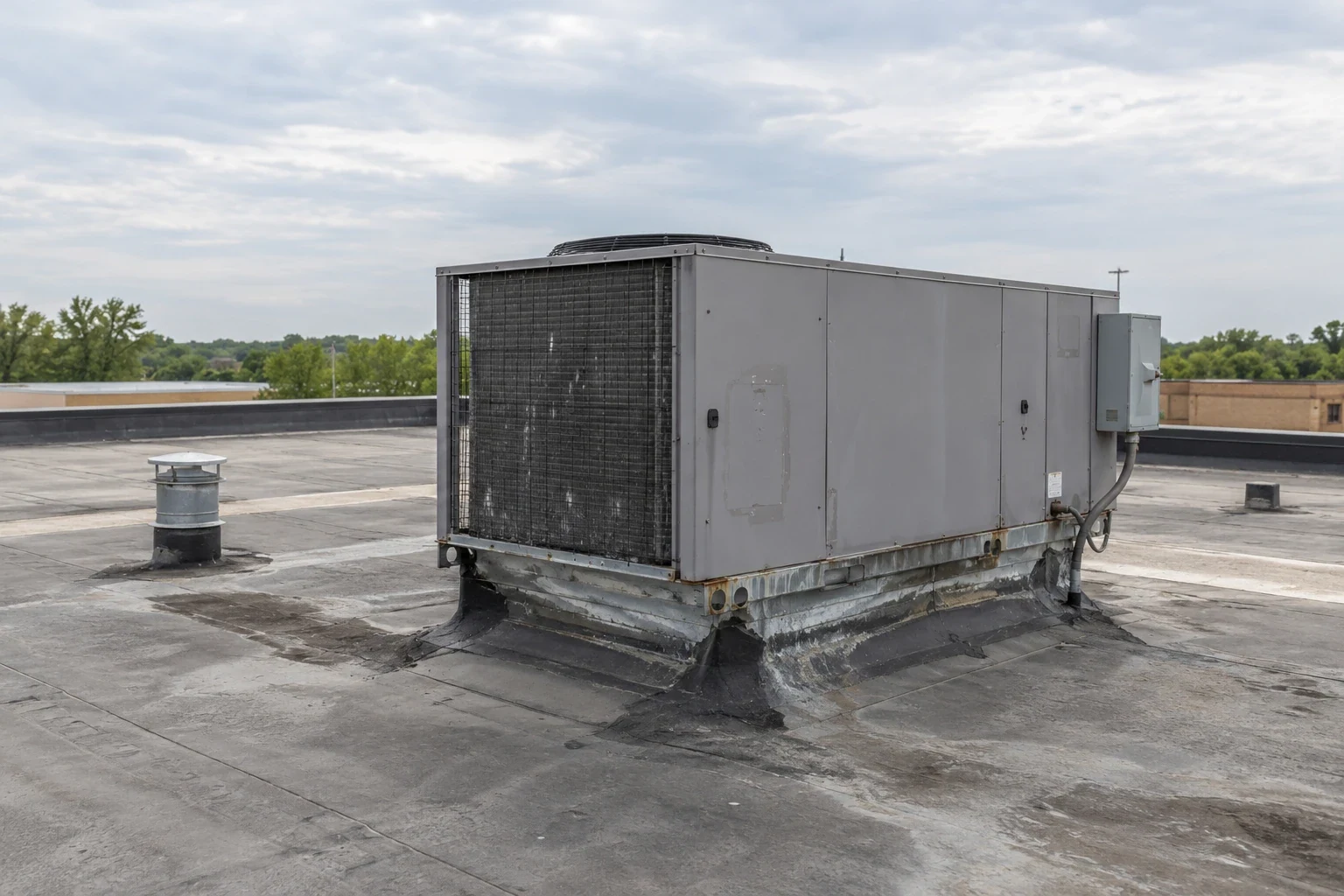
Flat field areas are comparatively simple; roof geometry becomes more demanding at inside corners, parapets, equipment curbs, expansion joints and drains. These transitions require the membrane to turn, terminate or connect to another material without leaving a path for water. We look for unsupported flashing, strained corners, loose termination bars and changes introduced by later equipment work. A detail may be the source of an opening even where the surrounding field seams remain intact. The scope describes the component and its support so that the repair addresses the connection rather than covering only the visible symptom.
Rooftop equipment changes can create new penetrations or restrict access to existing seams. The curb and support detail scope helps coordinate those interfaces, while drain and scupper work addresses water collection points. In Irving, commercial construction and remodeling permits are required, and many applications need plans reviewed by relevant city departments. Association review in Las Colinas can be an additional process beyond city approval. We identify the project detail under consideration without representing that a roof inspection itself grants approval.
When can a seam repair stay contained?
A localized repair is a fair option when the opening is limited, adjacent membrane remains suitable for preparation, and the supporting layers can accept the rebuilt connection. The proposed work should show how far material will be removed, where new sheet will lap onto existing membrane and how the completed weld will be examined. If the existing surface carries contamination, coatings or prior patches, the repair plan identifies how those conditions will be handled. A patch that spans incompatible material or loose substrate can leave the original cause active beneath a new surface.
Several openings in one roof area, broader loss of adhesion or moisture extending outside a local boundary may justify comparing more extensive work. A recover evaluation considers existing layers, moisture, attachment and finished details before the old field is retained. If those conditions do not support an overlay, replacement planning defines removal, substrate work and the new assembly boundary. A short-term dry-in can reduce exposure while the permanent scope is organized, but it should be recorded as temporary with follow-up conditions stated clearly.
What controls a new PVC assembly?
A replacement specification coordinates the roof deck, insulation, cover board, membrane attachment, perimeter securement and penetrations. The design also addresses slope and drainage so that water is directed toward intended collection points. The selected Sika Sarnafil products and application requirements need to be verified against current project documents and manufacturer instructions. A product name by itself does not establish the roof build-up or approve a detail. The assembly schedule should distinguish field areas, high-stress transitions and locations where other trades will add equipment or services.
During installation, the work sequence should preserve a dry building and allow concealed layers to be reviewed before they are covered. The scope identifies preparation, temporary protection, exposed-work limits and inspection points for representative seams. Changes at curbs and edges are coordinated before the membrane is closed around them. For an operating property, an occupied-building reroof plan can organize access and sequencing. A commercial roof inspection can record existing conditions and document the work area before the replacement scope is finalized.
How should the membrane work be documented?
The closeout record should identify the installed membrane and supporting materials from available product records, not assume identity from appearance. It includes locations opened, areas retained, substrate observations, completed transitions and photographs taken before concealment. Authorized scope changes are listed with their reasons. If access prevented review of a location, the record says so. This establishes a useful boundary between work observed and work that was outside the contract or inaccessible, reducing the risk that a limited closeout note is read as a blanket condition statement.
Owners can use the record to plan maintenance around drains, seams, equipment routes and changes in roof geometry. A maintenance visit can compare new observations with prior work and identify a condition that needs further investigation. A Las Colinas property may also have association requirements that remain distinct from city permits. A Carlisle SynTec roof assembly requires its own product records and field details, while the building file remains the source for the roof actually installed. That distinction keeps decisions tied to evidence, system requirements and the owner’s intended service life.
Commercial Roofing Questions
How is a PVC membrane seam checked?
We inspect accessible weld edges, transitions and surrounding support, then document locations and limitations. If the surface condition prevents a reliable conclusion, the report states what additional examination is needed.
Can another PVC product be used to repair a Sika Sarnafil roof?
The shared material category does not establish compatibility. Product identity, preparation, detail design and current project instructions must be checked before selecting repair materials.
What can make a seam repair expand into replacement work?
Repeated openings, broad attachment concerns, wet insulation or unsuitable substrate may change the repair footprint. Selective openings help establish how far the condition extends.
Does a PVC roof need the same detail at every curb?
No. Curb dimensions, support, adjacent sheet layout and project requirements affect each connection. The inspected detail and design documents should define the work.
Ready to review the roof scope?
Request a Roof Assessment