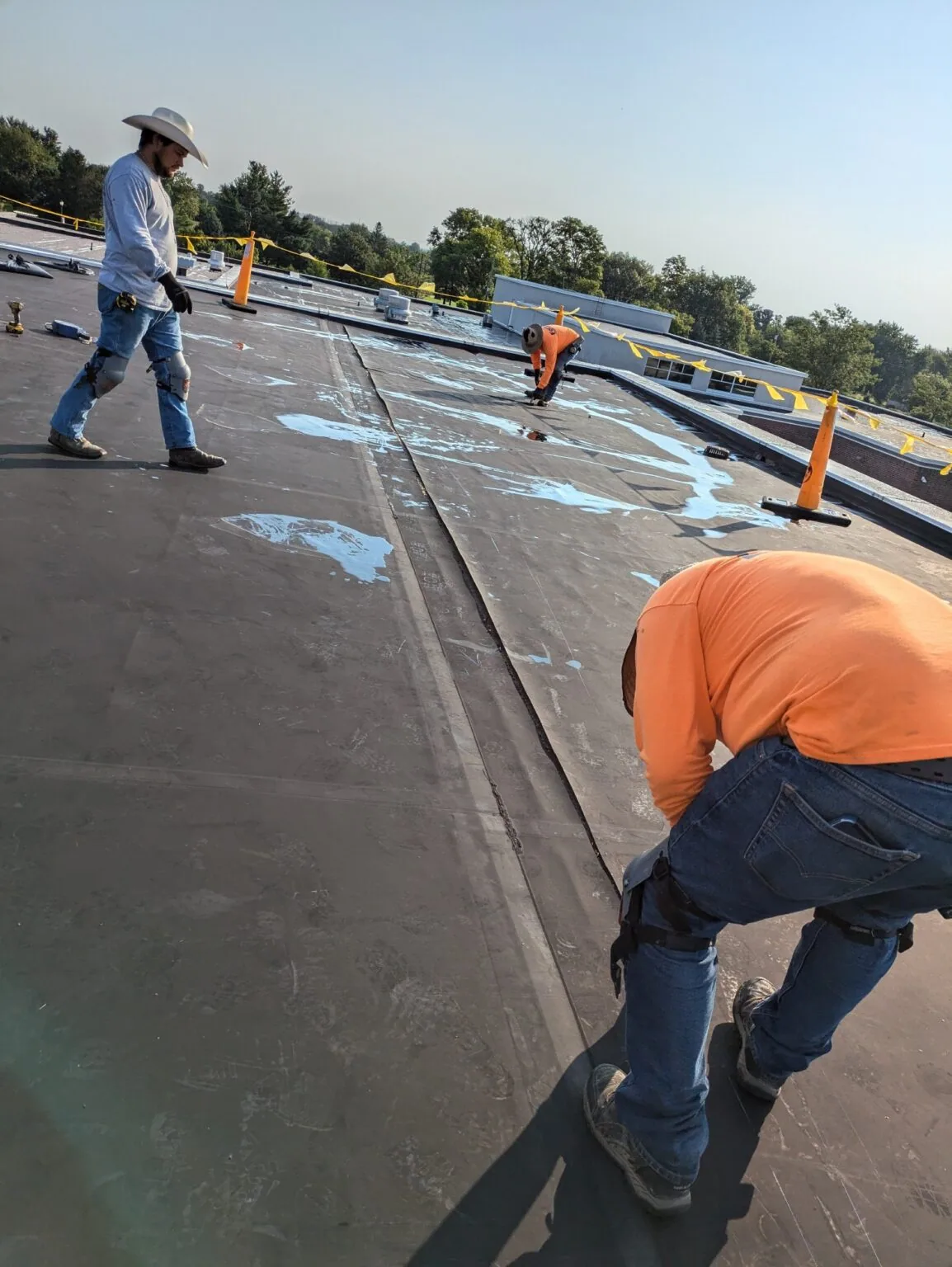
Office roofs in Addison, TX, can place a large, uninterrupted membrane beside rooftop equipment, wall transitions and occupied space that cannot simply be closed during a repair. The town reports more than twelve million square feet of office space, a scale that makes roof-area identification and work sequencing practical concerns rather than paperwork. Commercial Roofing Irving inspects the assembly, locates the failure mechanism and scopes repair or replacement against the building’s use.
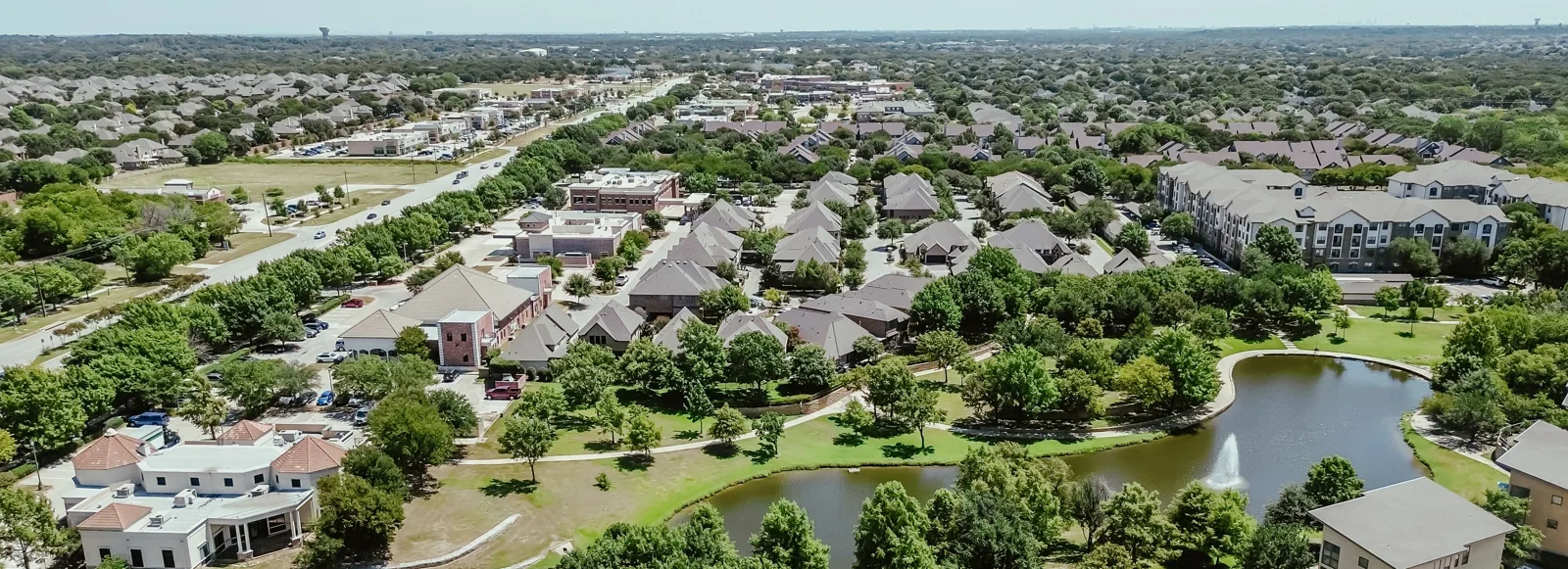
Summer heat changes the exposed membrane faster than the deck below it, while regional storm wind and hail can test seams, edge metal and penetrations. Dallas/Fort Worth climate evidence describes those regional conditions, not the condition of an individual Addison roof. We examine the actual surface and connections before assigning cause. A property manager comparing an Addison office with a building in Las Colinas needs findings tied to each roof, not a regional assumption carried from one address to another.
Where does heat put movement into a roof detail?
On a hot afternoon, the roof covering and metal at a curb can reach a different temperature from the supporting deck. Repeated expansion and contraction concentrate movement at seams, perimeter terminations and equipment supports. We inspect those interfaces for open laps, pulled fasteners, brittle sealant, displaced counterflashing and repairs that no longer bond to the surrounding material. A temperature cycle does not prove damage by itself; it tells us where a close examination can separate normal movement from a connection that has lost continuity.
When a leak report follows a storm, the reported time and ceiling location help direct the inspection but do not establish the entry point. We follow the roof slope, drains and transitions above the affected area, then compare the observed detail with the assembly around it. A focused commercial roof inspection can record the repair footprint and the condition that should remain in service. If water has spread beyond a visible seam, infrared survey may help identify where confirmation is worthwhile.
How do office, hotel and retail uses change the scope?
Addison’s commercial inventory includes hotels and retail shops, and restaurants are prominent in the town’s business stock. Those facts help frame operating considerations, not the roof material or condition on a particular property. A hotel may need careful planning around guest rooms, kitchen exhaust or arrival areas; a retail operator may need protected entrances and delivery access. We confirm the actual building layout with the manager before setting staging and isolation points.
For an occupied building, a repair plan should state which area remains open, where materials will be carried and how temporary protection will be maintained if work pauses. Restaurant exhaust, refrigeration lines and electrical equipment can create penetrations that deserve separate inspection, but we do not assume every property has the same equipment. We identify each curb and flashing that is present, then coordinate access with the trades responsible for systems that need temporary shutdown. A work sequence for an occupied property can keep roofing decisions connected to the operating schedule.
The Las Colinas Urban Center also mixes offices with restaurants and entertainment. A portfolio manager may compare its access constraints with an Addison property, but roof findings stay property-specific.
What evidence separates a repair from a larger removal?
A visible split may support a contained repair when the membrane around it remains flexible, dry and suitable for a compatible bond. The same opening can sit above wet insulation or a weak deck attachment, in which case replacing only the top sheet would leave the mechanism in place. We examine seams, penetrations, perimeter details and prior repairs, and use a selective opening only when the hidden layer will change the recommendation. A written record should show what was observed and what remains concealed.
Drainage is part of that comparison. We check whether the outlet is open, whether the surrounding membrane is secure and whether the low area reflects a local obstruction or a broader profile issue. A coating can protect a compatible surface, but it cannot correct saturated insulation, loose attachment or a drain configuration that keeps water in place. Where the substrate and bond are suitable, coating restoration may be considered alongside localized repairs. For a system comparison, we review TPO assemblies or another suitable membrane against the existing layers and details.
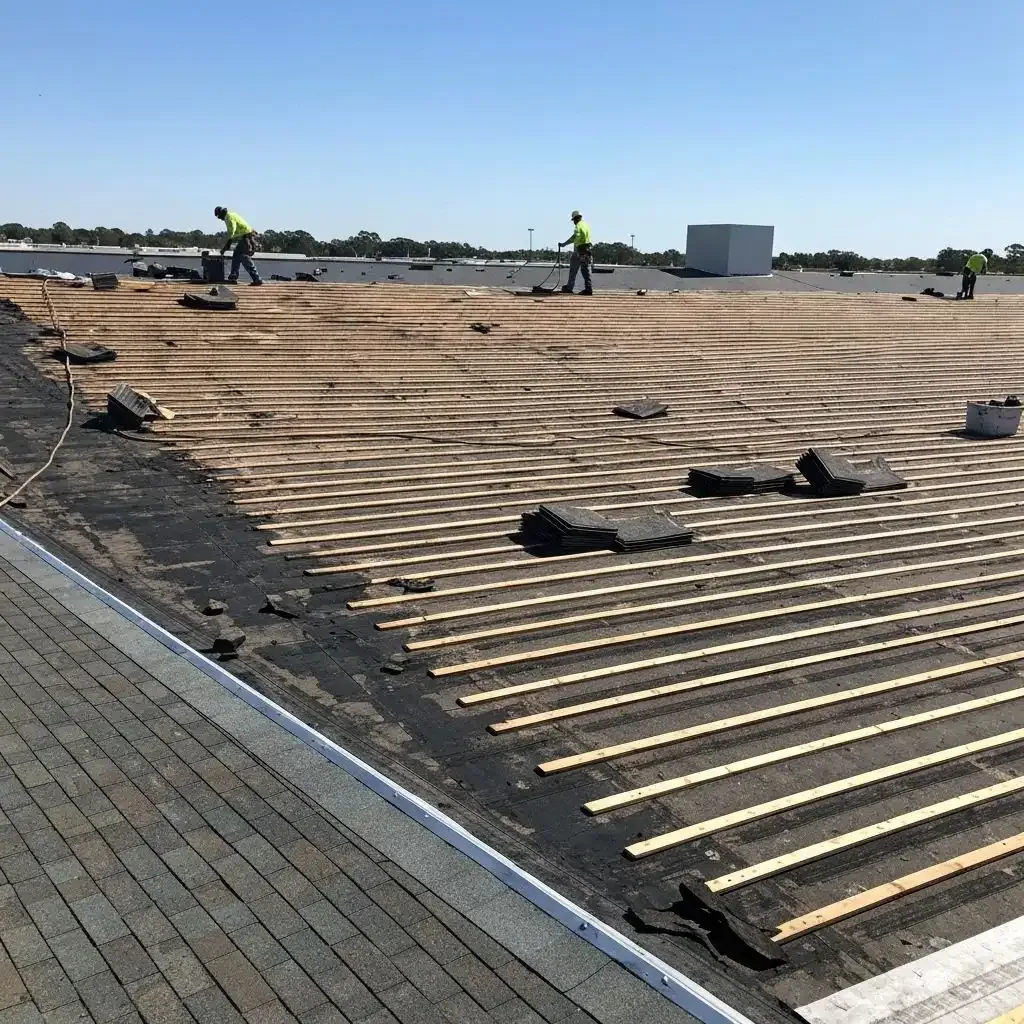
Our flashing repair work follows the failure at the transition, not just the stain below it. The resulting scope can distinguish a detail rebuild from insulation removal or a replacement area whose limits are established by examination.
Which roof option fits the condition that was found?
Repair is appropriate when the defect can be isolated and the retained material can accept a durable compatible connection. Sectional replacement may fit where deterioration crosses a clear boundary, while full replacement enters the comparison when the assembly has broader moisture, attachment or drainage problems. A recover is a separate option, not a shortcut: we first establish whether the existing roof can remain, whether added weight is acceptable and whether transitions can be raised without creating new flashing problems.
The replacement scope should state the proposed membrane, insulation strategy, edge work, drain changes and treatment of rooftop equipment. A capital plan compares that work with repair and maintenance on the same assumptions. We explain the condition that supports each path and what additional testing could change it.
Permitting and plan review must be checked with the jurisdiction that governs the property. Irving’s code adoption or permit requirements do not automatically apply in Addison. Before construction, we confirm applicable local review, required submittals and any separate property approvals instead of carrying a neighboring city’s rules into the scope.
How can construction proceed without losing control of the building?
Work planning begins with roof access, material handling, weather protection and the sequence needed to close each exposed area at the end of a shift. For a retail or hotel property, the manager may need a route that avoids public entrances and preserves service access. We identify the area to be opened, the expected tie-in point and the temporary condition if rain interrupts progress.
A maintenance program can keep drains, seams and penetrations under observation between larger projects. We document debris removal, loose components and repairs with locations that can be revisited on the next visit. Where a storm prompts an urgent call, around-the-clock response is available throughout the week, including holidays.
Reports with photographs can help the owner track each area and separate completed work from recommendations. For Addison properties and the Coppell business area, we plan around actual roof conditions rather than assume nearby cities share an identical assembly.
Commercial Roofing Questions
Can a leak be repaired while an Addison office remains occupied?
A repair can often be sequenced around occupied areas, but the workable method depends on access, roof height, weather protection and the location of the leak. We identify the area that must be isolated, coordinate interior protection with the manager and close each exposed section before leaving it. If equipment or tenant activity affects access, that constraint becomes part of the schedule rather than an afterthought.
Does a roof coating solve recurring water entry?
Only when the existing surface and substrate can support the coating system and the source of water has been corrected. We check adhesion, moisture, drainage, seams and flashing before recommending a restoration. A coating over wet insulation or an open transition can conceal the same failure mechanism. Where those conditions are not suitable, repair or removal may be the more direct choice.
What should a manager compare in two replacement proposals?
Compare removal assumptions, insulation, attachment, edge details, drainage, equipment transitions, protection and closeout requirements. We explain which quantities are confirmed and which depend on concealed conditions. Two scopes may describe the same membrane but include different work at drains and penetrations. A consistent assembly comparison shows whether the proposals solve the same roof problem.
When is infrared scanning useful for an office or retail roof?
Infrared can help locate areas for confirmation when suitable weather, surface and roof conditions create a useful thermal pattern. It does not independently prove moisture. We interpret the survey alongside visual inspection and confirm consequential findings with an appropriate test or selective opening. That sequence helps set a repair boundary without treating a thermal image as a diagnosis by itself.
Ready to review the roof scope?
Request a Roof Assessment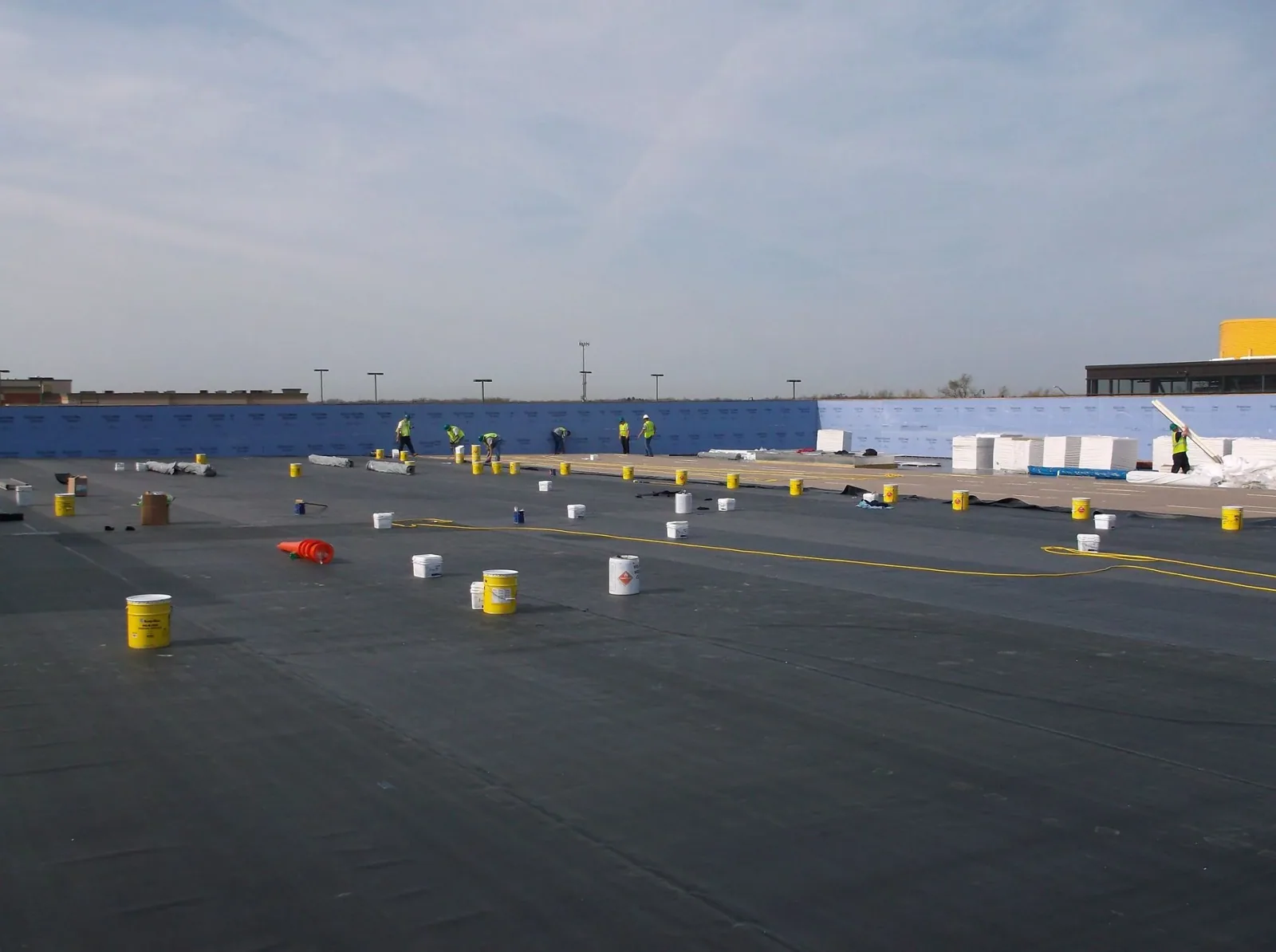
Commercial Roof Flashing Failure Repair
See scope, options and what to expect on the roof.