A metal lap that repeatedly heats and cools can lose its weather seal while the neighboring panel remains sound. Self-storage roofing in Irving, TX, examines that connection with the moisture observed below, including whether rain entry or condensation is responsible. Commercial Roofing Irving relates the repair to the existing covering, support and tenant access rather than treating every damp storage space as the same roof failure.
Across the Dallas/Fort Worth region, summer heat alternates with the generally wetter conditions of spring and fall. Those cycles make lap movement and runoff important review points. North Irving includes a substantial retail and commercial corridor along Belt Line Road, while Valley Ranch includes commercial and multifamily uses. The specific storage property's roof layout and access arrangement establish how work can proceed in either setting.
Is water entering through the covering or forming below it?
Rain entry can show a relationship to storm timing, slope and a defect at a lap or penetration. Condensation follows surface temperature and moisture conditions that can differ from rainfall. We examine the available observations before choosing a repair. A wet underside alone does not establish that sealing the roof above it will correct the cause, especially where storage spaces have different ventilation or conditioning.
Storage-roof water tracing compares the visible wetting with plausible routes and nearby construction. Tenant information about timing can help target examination, with appropriate access coordinated through the property manager. Where insulation or concealed layers may be damaged, selective checks establish the affected material. The proposal separates the entry correction from any replacement required by prolonged moisture exposure.
Observations are recorded by unit and roof location so separate incidents do not become one assumed leak. A unit that wets only during particular weather may need a different examination from one with persistent dampness. Comparing those patterns helps target selective access while preserving the distinction between evidence of entry and the materials that have actually been examined.
What is allowing the panel connection to open?
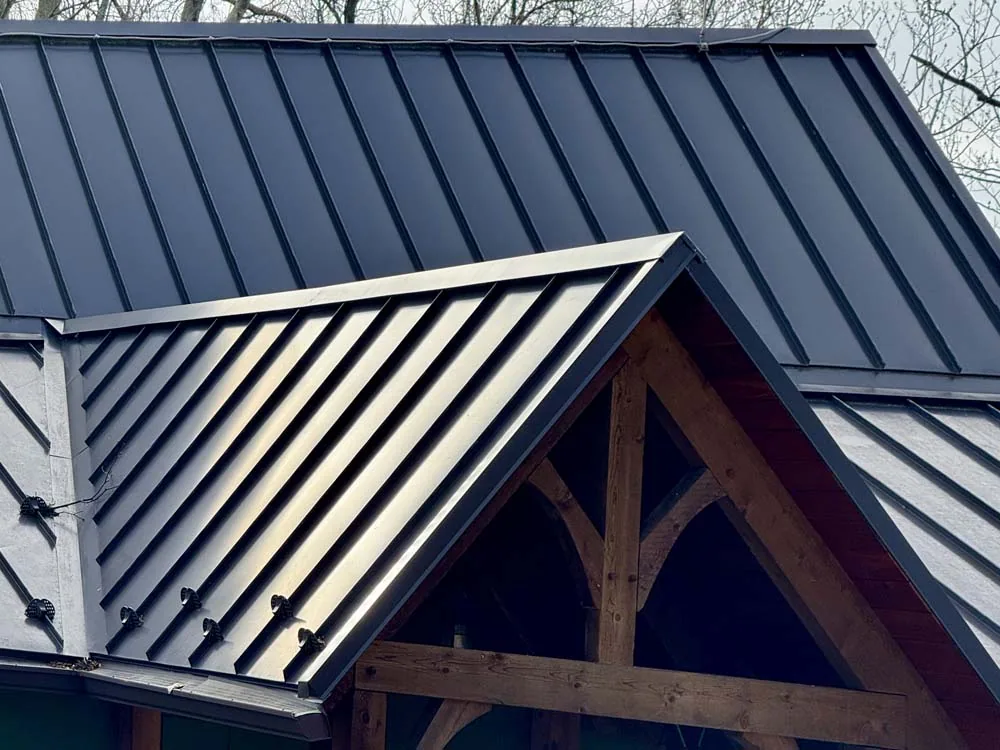
Exposed fasteners and panel laps need examination for movement, deterioration and the suitability of the supporting material. A deteriorated washer can be one part of the condition, while an enlarged hole or unstable substrate changes the needed repair. Tightening without assessing engagement can leave the connection unreliable. The suitable correction preserves weather shedding and the panel's intended movement instead of relying on a rigid bead across a stressed joint.
For an existing standing seam storage roof, clip behavior and seam condition are reviewed as part of the assembly. Another panel design has different fastening details. We identify which construction is present before selecting materials. Repair at an edge also considers the attachment beneath the visible metal, since the covering cannot resist wind exposure independently of its secure load path.
How can work be separated from occupied storage rows?
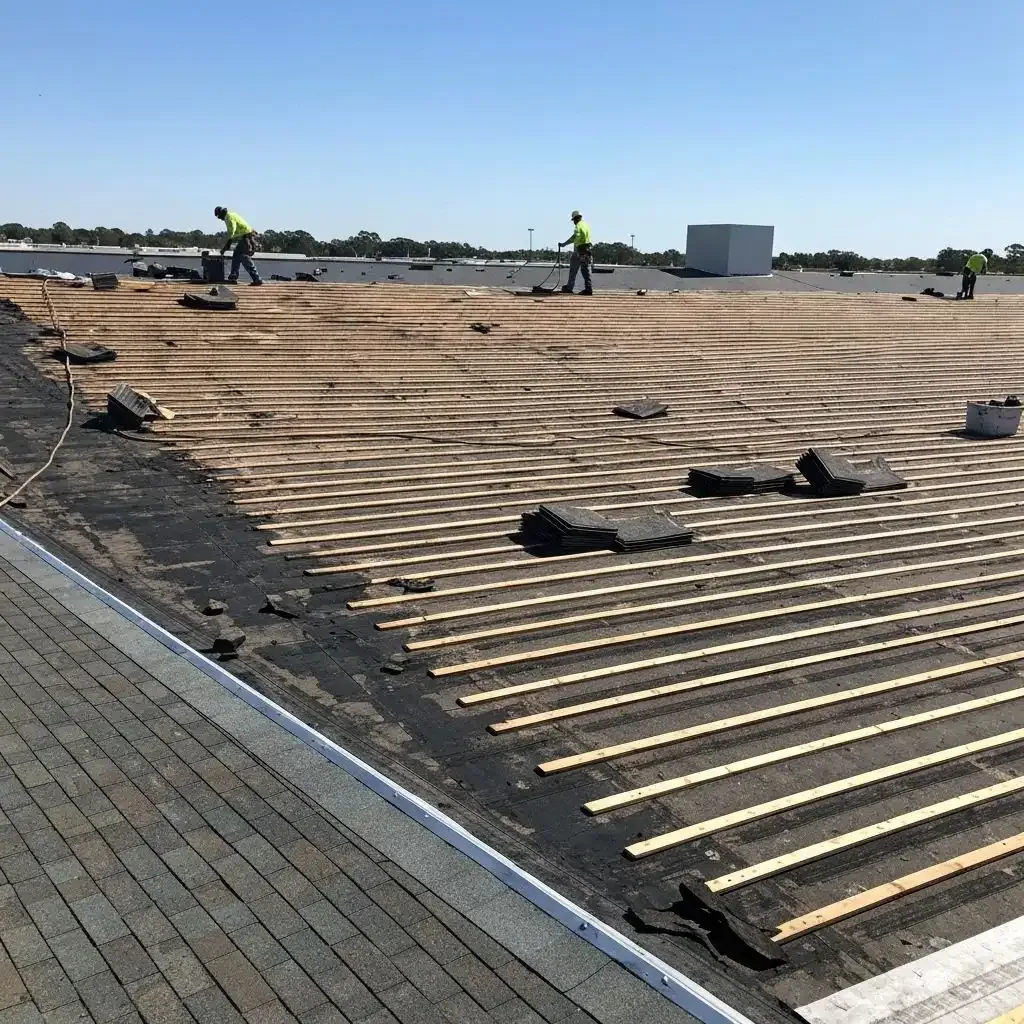
Removal above a tenant unit requires coordination for contents and interior access. We discuss the affected footprint with the manager before an opening is made. A row that looks convenient from the roof may not provide a suitable ground-level staging area or a safe route for debris. The work arrangement separates tenants from overhead activity and identifies any temporary access restriction in advance.
At multistory or enclosed properties, roof equipment and interior corridors introduce other protection requirements. Occupied storage reconstruction plans the preparation and closure sequence around the actual construction. A larger project may proceed in phases where stable transitions exist, with the open area kept within practical weather protection limits. That boundary follows the roof assembly rather than an assumption that every unit division forms an independent roof section.
Does the row drain through a shared low point?
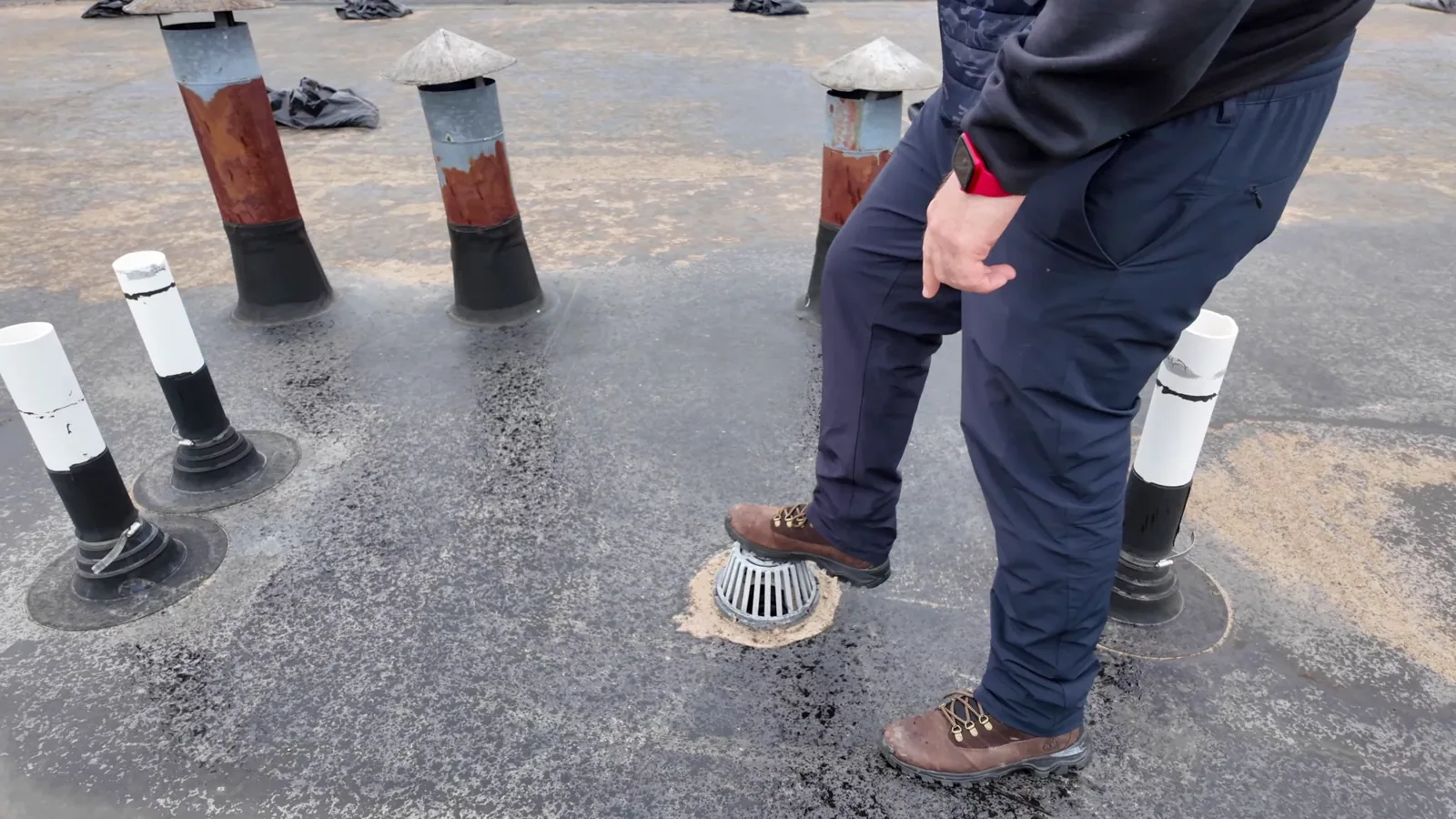
Long roof runs can direct water toward a gutter or outlet serving several units. We examine the slope and receiving connection alongside debris conditions. Replacing a damaged panel without addressing a sagging support or unsuitable outlet may leave the same wetting route. The assessment establishes whether the depression belongs to the covering, underlying structure or another connection needing separate evaluation.
Storage outlet and runoff work also reviews maintenance access and discharge beyond the roof edge. Where new layers are proposed, the field height needs coordination with the drain and flashing geometry. A temporary phase should not block a shared route serving a retained row. Similar long-run drainage questions can arise on warehouse roofs and flex-industrial properties, with storage access shaping the work sequence here.
Would restoration leave unsuitable material in place?
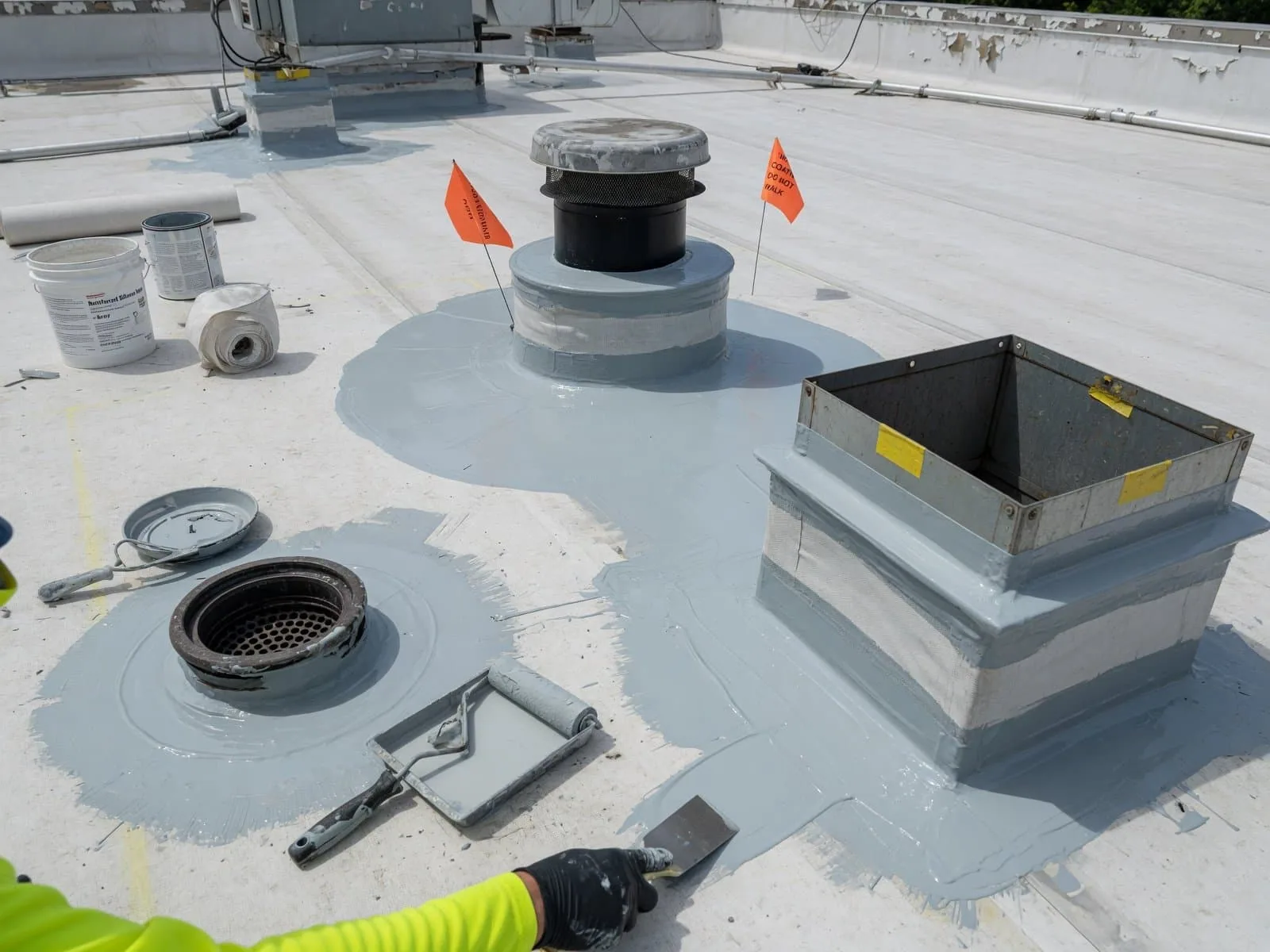
A coating option depends on sound, compatible material and correction of defects before application. Preparation includes surface condition and the stability of laps, fasteners and penetrations. Where corrosion or support loss prevents a dependable repair, covering that area with coating does not reconstruct the missing strength. We distinguish suitable restoration from panel replacement or a wider assembly project according to the examined condition.
Moisture in concealed insulation can also prevent simple surface treatment from being the appropriate scope. Direct confirmation helps establish where affected layers need removal. A contained repair is compared with larger reconstruction by describing the components each option changes. Cost includes investigation, access to tenant areas, removal, drying or replacement and secure closure, rather than only the area of material visible from above.
For North Irving storage roof work, the Belt Line Road commercial corridor makes property access and delivery circulation practical planning concerns. We review the specific drive aisles with the manager. Material staging should preserve circulation and avoid placing weight on unverified roof support. If a proposed load or structural alteration needs professional review, that input is coordinated before work proceeds.
The completed repair is checked at connections and the runoff route. Maintenance priorities identify debris collection points and the details most affected by later service access. Records distinguish a repaired lap from a retained area where observation is recommended. Changes to rooftop equipment or interior conditioning can alter moisture behavior, requiring renewed investigation if wetting appears under different circumstances.
Commercial Roofing Questions
Can every tenant keep access during roof replacement?
The safe separation available at each work area establishes the access arrangement. Removal or lifting beside a drive aisle may require a restriction even where the roof opening is small. We coordinate the affected units and timing with the manager. A usable alternative route and protected closure are considered before promising uninterrupted access throughout every phase.
Will a coating stop condensation in a storage unit?
Surface coating is a weatherproofing treatment, with condensation requiring investigation of temperature and moisture conditions. The wetting may involve indoor air, insulation or ventilation rather than an opening through the covering. We identify the plausible mechanism and coordinate further building-system input where appropriate. Treating the exterior without that distinction can leave the interior cause unchanged.
Can isolated corroded panels be replaced without reroofing the row?
Suitable neighboring material and support can make a localized replacement practical. We examine the connecting laps, attachment and runoff before setting its boundary. Corrosion that extends into support or multiple adjoining panels can enlarge the necessary reconstruction. The replacement needs secure compatible connections to retained material, with the tenant protection arrangement suited to the actual opening.
What changes the cost of a small storage roof repair?
Concealed damage, working access and the closure detail can matter as much as visible size. Removing material above occupied units requires a different protection plan from work over an accessible empty area. We identify those requirements and explain the chosen reconstruction. A proposal connects the cost to suitable support and weather shedding rather than treating every small opening as identical work.
Ready to review the roof scope?
Request a Roof Assessment