Hot summer conditions in the Dallas/Fort Worth region expose a roof surface to repeated heating while the deck and interior respond more slowly. That temperature difference can affect membrane movement, coating response and connections around rigid curbs. Commercial Roofing Irving examines surface condition and the layers beneath before labeling wear as a local failure or recommending a repair in Irving, TX.
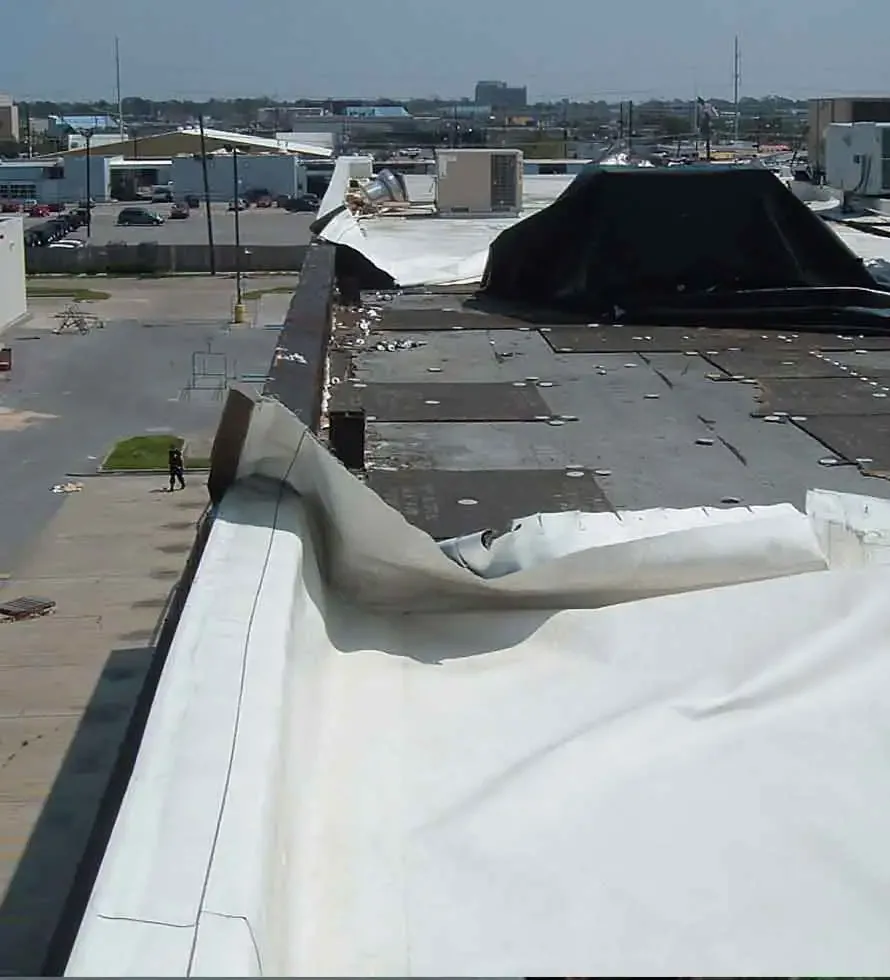
Las Colinas includes office, retail and multifamily buildings, and Heritage Crossing includes older downtown commercial settings and redevelopment. These uses bring different access and occupancy needs, but neither establishes a roof's age or material. We inspect the actual covering, observe where the surface has changed and determine whether the change affects water shedding, attachment or the ability to accept a compatible repair.
Is the change limited to color or to material function?
Fading or chalking can reflect surface exposure without proving that a membrane has failed. Cracking, brittleness, exposed reinforcement, open laps or loss of coating thickness call for closer examination. We compare the affected area with shaded and protected transitions, then check whether a change follows roof slope, ponding or a drainage path. That comparison helps distinguish surface response from a condition that lets water enter or weakens the covering.
Coatings need a suitable substrate and compatible bond. If the underlying membrane is wet, loose or deteriorated, a new coating can cover the symptom while leaving the assembly unresolved. We assess adhesion, surface preparation and prior layers before considering restoration. Where hot afternoons create a fast-changing surface temperature, installation timing and material limits matter. A direct roof inspection records the conditions supporting repair or a wider scope.
Where does heat concentrate stress?
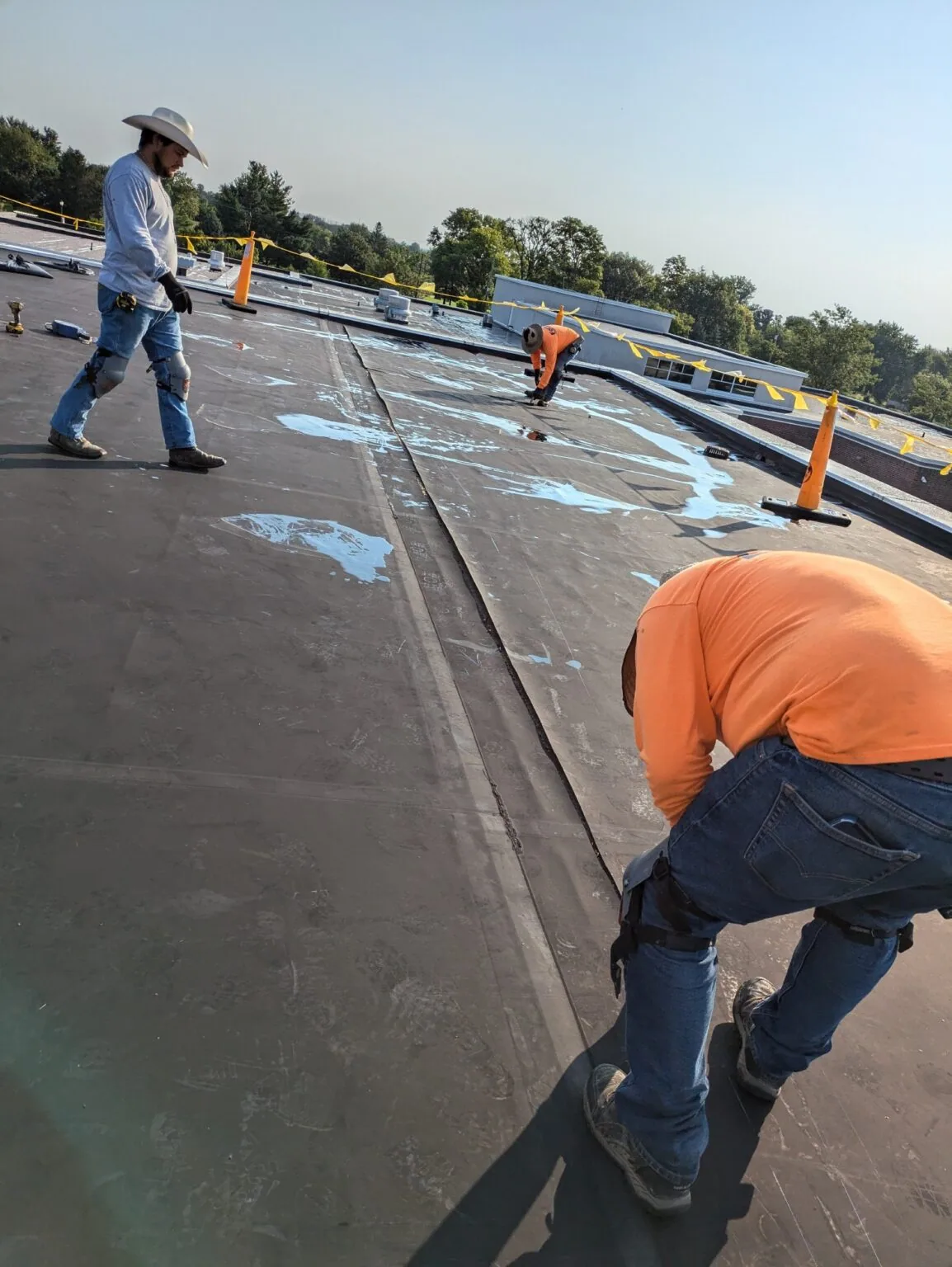
Flexible membrane expands and contracts differently from metal, concrete and equipment curbs. Repeated movement can load a corner, seam or upper termination where those materials meet. We inspect the connection and whether fasteners, welds or adhesive remain suitable. A surface crack near a rigid transition may indicate movement at the detail rather than broad field failure. The repair should restore movement allowance where needed instead of locking two dissimilar materials into a brittle bridge.
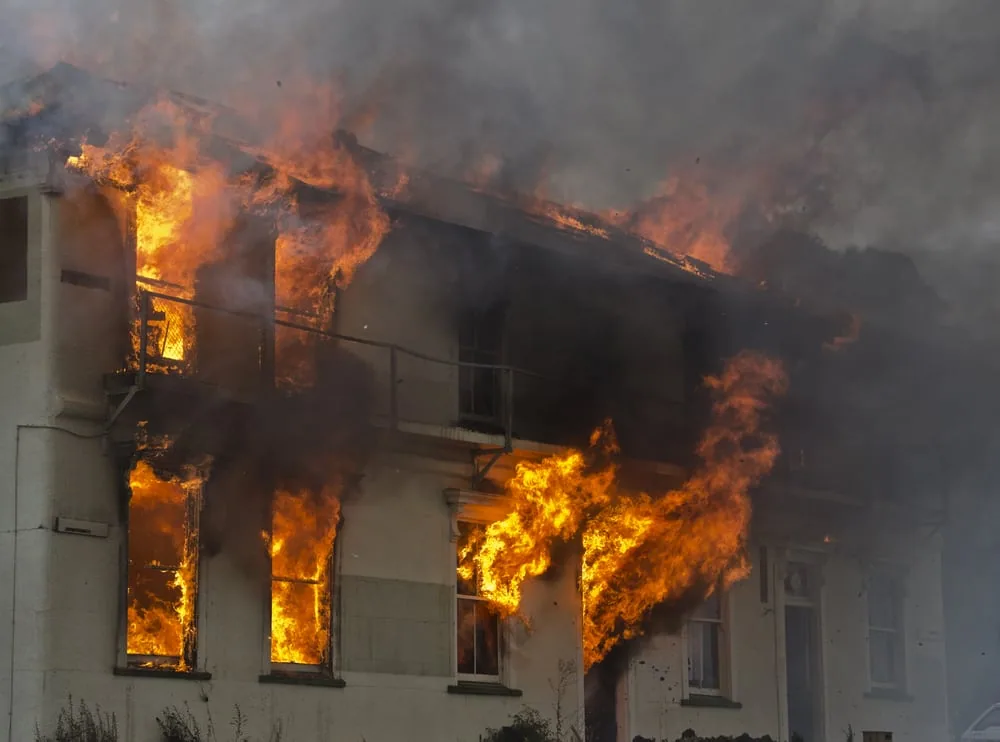
Metal roofs also respond to temperature changes through panel movement and clip behavior. We examine seam engagement and fasteners for displacement before recoating or replacing a section. If a curb or wall transition has opened, flashing reconstruction may be more appropriate than a field coating. If fire or concentrated heat changed the material, fire-related roof assessment addresses the affected assembly and supporting layers.
What does the temperature difference reveal below the sheet?
A surface that heats quickly can feel different from the roof deck underneath, but temperature alone does not confirm wet insulation. We consider construction, shade, moisture reports and observed compression before selecting a test. An infrared survey may direct selective openings under suitable conditions; direct confirmation establishes the layer condition. Wet or compressed insulation can create a low area where water remains longer, connecting a thermal symptom with drainage and support questions.
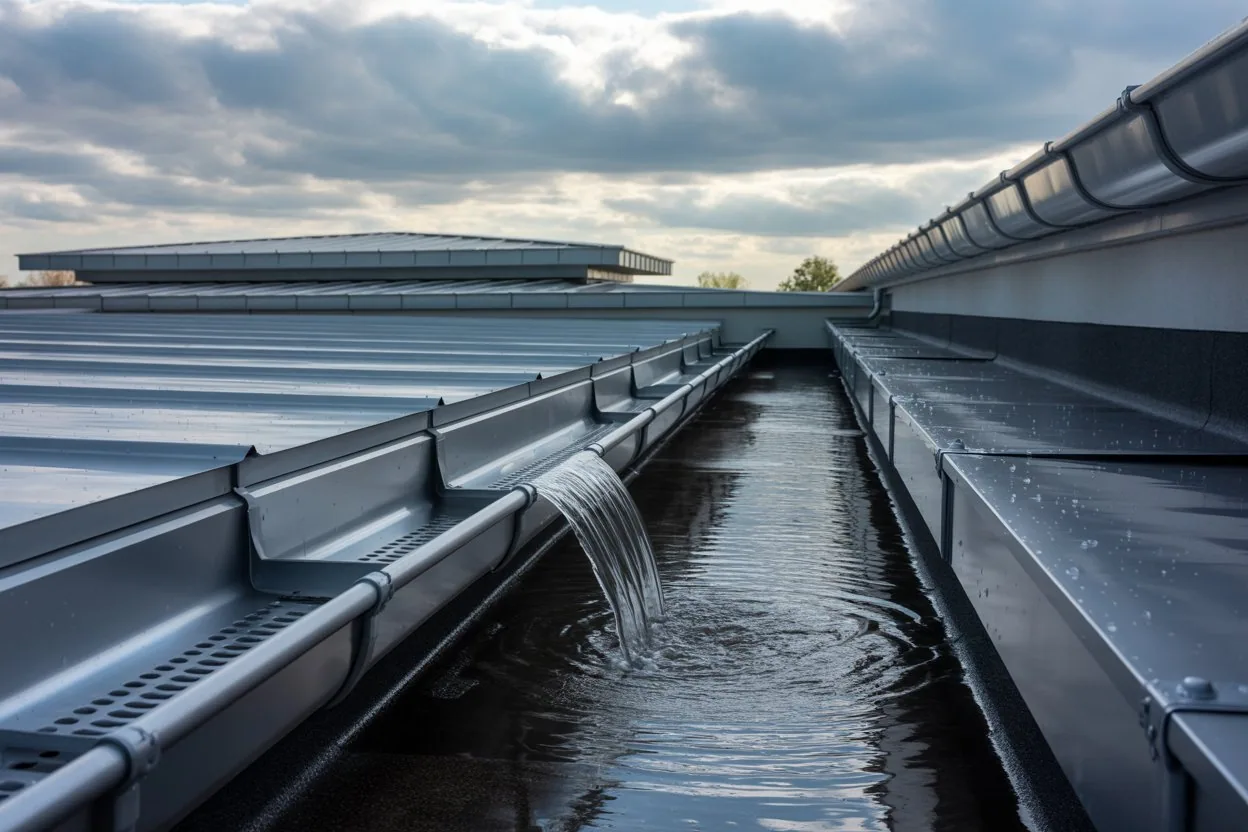
Where the assembly has lost support, we remove affected material to sound layers and rebuild the substrate before installing a compatible covering. A coating cannot restore compressive strength or deck attachment. We evaluate whether a localized repair can reach stable material or whether removal should extend farther. If runoff stays at the same low point, ponding-water correction may be part of the scope so the repaired surface has a usable path to its outlets.
Can restoration keep a serviceable roof in place?
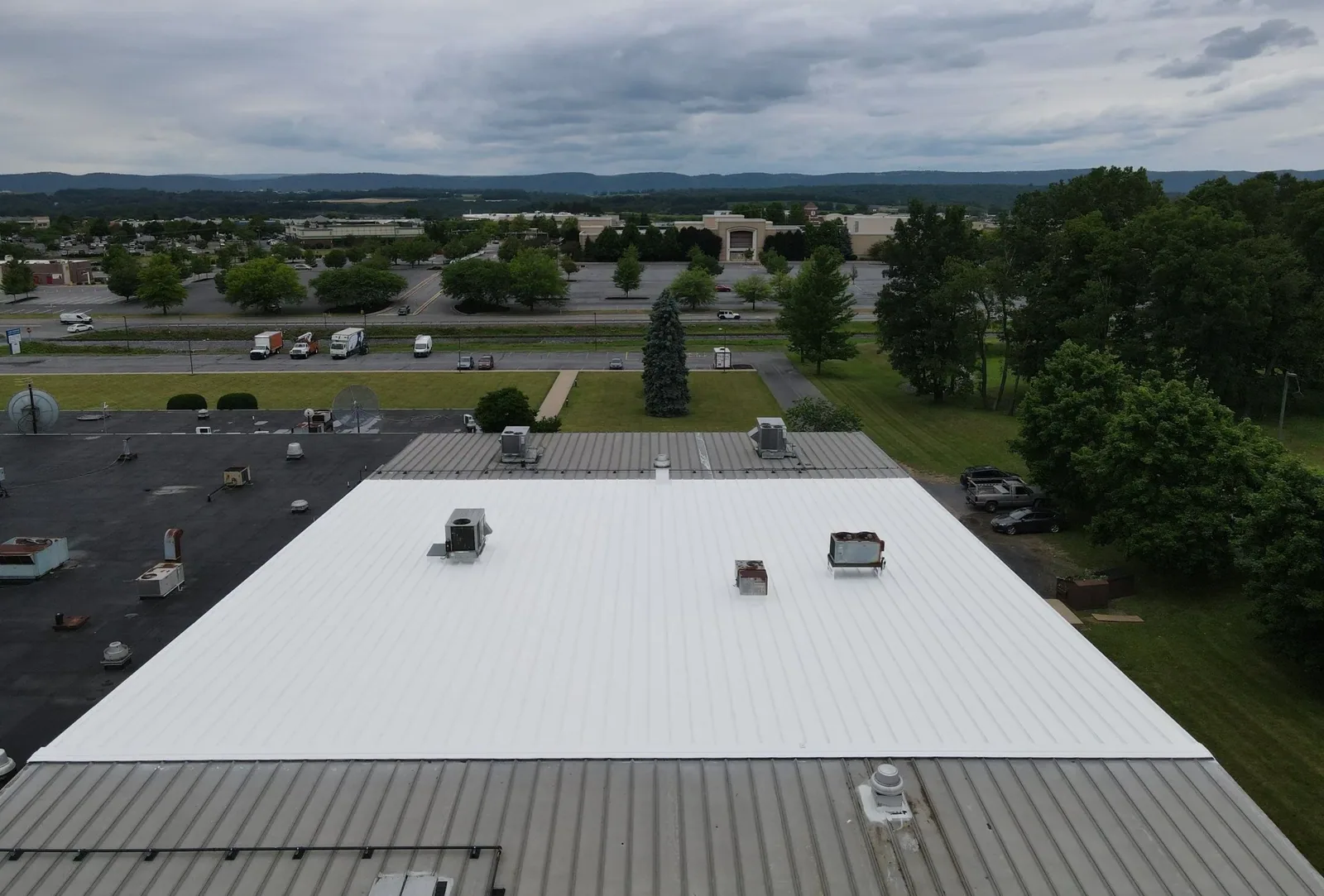
A recover or coating can be compared when the existing roof is dry, attached and able to support the added system. We check layer count, compatibility, surface preparation and transition heights. Widespread brittleness, wet insulation or poor attachment can make replacement a more suitable comparison. Coating restoration depends on a sound substrate and cannot correct concealed deterioration by itself. The recommendation explains what remains and how it will accept the selected materials.
When an assembly needs removal, replacement planning considers insulation, cover board, fastening and drainage as a coordinated system. Cost depends on removal depth, access, surface preparation, wet material and the number of details needing reconstruction. We compare repair and replacement using the same observed conditions, with each option showing what it corrects and what it leaves in place. That gives the owner a useful decision instead of an unsupported statement that heat alone requires a new roof.
How do building use and access shape the work?
For Las Colinas office and retail buildings, we coordinate roof access around equipment service, tenant activity and entrances. In Heritage Crossing commercial settings, redevelopment work or occupied older space can affect staging and the transition between retained and new materials. We plan protection for exposed layers and select a work window that meets the chosen system's preparation requirements. The property schedule does not substitute for a suitable surface condition.
Photos and located condition records show surface changes, repair boundaries and any opened insulation. Maintenance can track the same areas over time, including seam corners and drainage transitions where movement concentrates stress. We explain any access limit that prevented examination and identify the check needed to resolve it. For active leakage, temporary protection can proceed separately from the permanent restoration scope.
When does heat-related wear justify replacement?
Replacement becomes a stronger comparison when material can no longer accept a compatible repair, insulation is broadly wet or attachment has deteriorated beyond a contained area. Surface discoloration by itself is not that finding. We identify the layer that limits repair, show the affected extent and compare recover or replacement options where appropriate. If the evidence is incomplete, the scope states what selective opening would clarify before removal limits are set.
Cost and timing depend on the measured roof condition, insulation needs, access and weather during installation. A useful report separates confirmed deterioration from aging that does not yet affect performance. It also notes details that remain serviceable and any maintenance action that protects them. Request an Irving heat and UV assessment when cracks, coating loss or repeated seam movement appear; the decision follows substrate condition and attachment, not the summer temperature alone.
Commercial Roofing Questions
Does a faded roof need a new coating?
Color change alone does not establish that a coating is needed or that the membrane has failed. We check surface integrity, adhesion, moisture and existing layers before considering restoration. If the substrate is unsuitable, coating may conceal rather than correct the problem. The recommendation states what can remain and what preparation is required.
Can hot weather make a seam open?
Temperature movement can contribute stress where a flexible sheet meets a rigid curb, wall or metal termination. We inspect seam condition and adjacent attachment to learn whether that movement is the active cause. A weld or lap repair needs a stable boundary and compatible preparation. The correction also addresses any transition restraining the sheet.
Will infrared testing show heat damage?
An infrared survey can identify thermal patterns under suitable conditions, but it does not measure membrane strength or prove moisture without confirmation. We use it to guide checks when it can answer a useful question about the assembly. Surface damage and material condition still require direct examination at the relevant detail.
How do you compare coating with replacement?
We first determine whether the existing roof is dry, attached and suitable for a compatible coating or recover. Wet layers, poor bond or widespread deterioration can shift the comparison toward removal. The scope explains preparation, insulation and detail work for each option. Cost and timing then follow the actual material and access requirements.
Ready to review the roof scope?
Request a Roof Assessment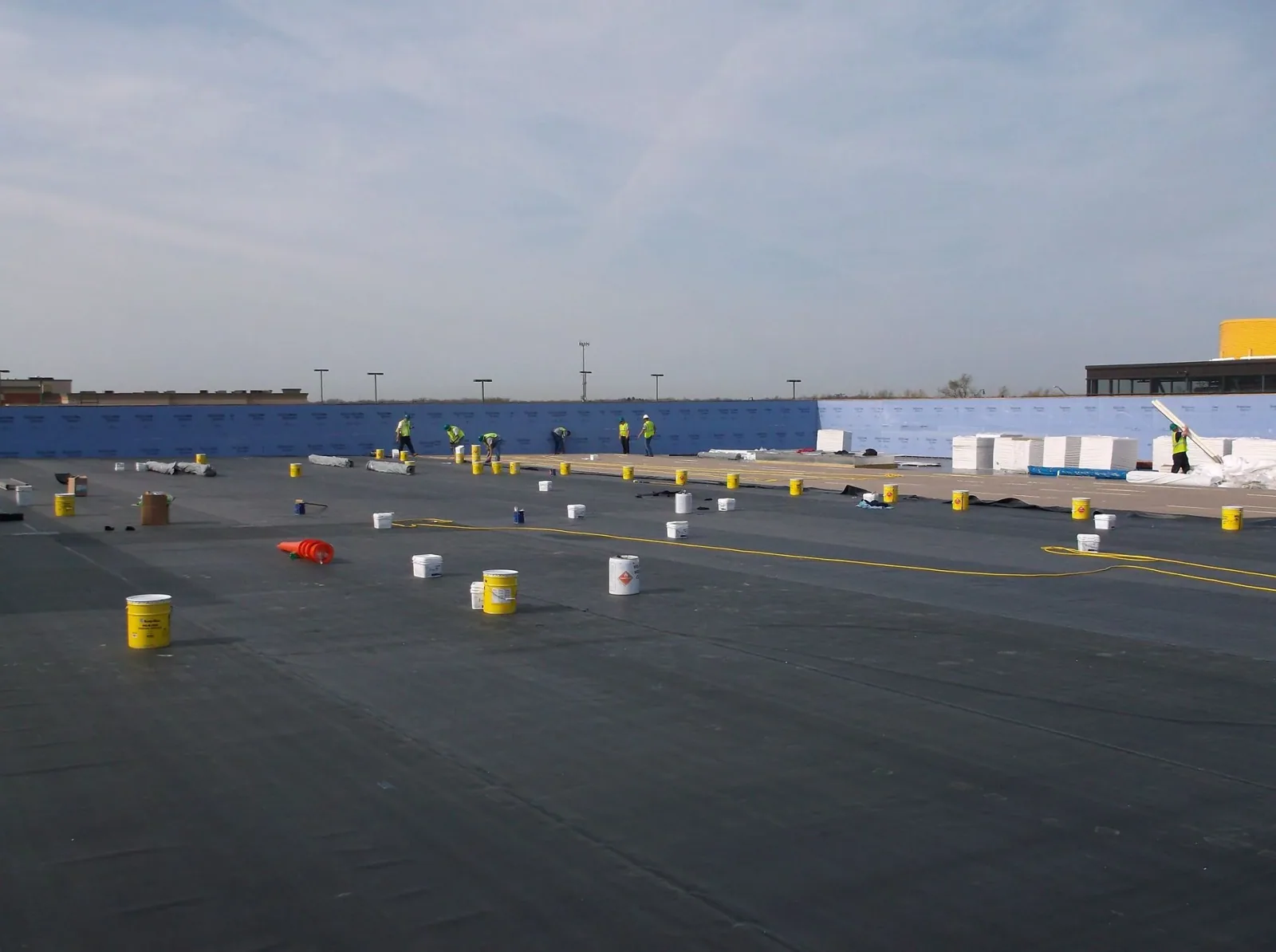
Commercial Roof Flashing Failure Repair
See scope, options and what to expect on the roof.